NEWS

Hanabi 8c+ FA by Yuji Hirayama (52)
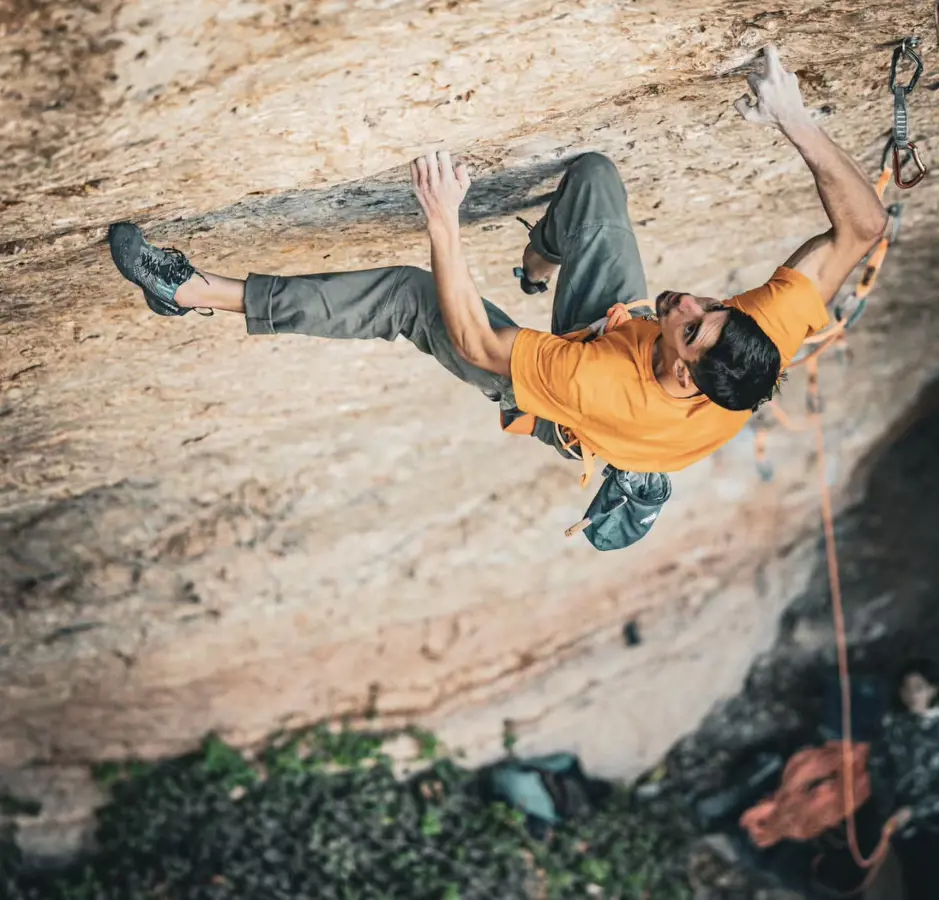
Yuji Hirayama, one of the true climbing legends, reports on Insta that he has done the FA of Hanabi 8c+, which means firework, Mt Futago. (c) Shinta Ozawa

Since 1986, when Yuji did Le Specialist 8b+, the now 52-year-old has been on the cutting edge. In 1991, he won his first World Cup and in 1998, as well as in 2000, he won overall. After his competition career, he made the FA of Flat Mountain 9a/+ in 2003 and the next year he onsighted White Zombie 8c. A few years later he did Cobra Crack 8c trad and the FA of an MP in Borneo including one 9a pitch. In his resume, being one of the best multi-discipline climbers in history, he has also made boulders up to 8B+, DWS up to 8b+, several big walls including also several times have had the Speed record up on El Cap. Since 2010, he runs Climb Park Base Camp which over the years have organized several competitions. He has also been active in the Japanese Federation and helping out IFSC getting climbing into the Olympics.

Kimera 8C by Niccolรฒ Ceria
Niccolรฒ Ceria has published the full story of sending Christian Core's Kimera (8C) 8C in Rifugio Barbara - Lowrie. In 2007, Ceria watched a DVD video when Core made the FA and since then it has been on his mind. Previously, only Elias Iagnemma had repeated it although it was put up in 2006.

So did you spend like 40 sessions on it or even more?
I think less. I would say nearly 40 check-days. In most of these times, I returned back to the car for humid/wet holds. On other occasions, I only tried the dry part.

Is this the most you have ever worked a boulder?
Yes. Considering the whole experience it was definitely my longest journey on a boulder, even if I only had a couple of moments in 8 years when it was potentially fully climbable. I spent a lot of sessions just repeating the first half because of the complicate conditions which are anyway part of the story :)

In the last episode of Beyond Focus with Adam Ondra, he shows us how he trained in a sauna, how he dealt with pressure and the media and says that he sacrificed two years of outdoor climbing.

IFSC informs that the China World Cup event in Chongqing 6-9/10 will be run in the same point scoring format as for the Olympic Games in Paris 2024. It should be mentioned that this event is outside the World Cup series. Here is a sum-up of the rules that also will be used during the Combined European Championship during 11-21 August.

1. Boulder scoring:
The maximum score of the Boulder phase is 100;
There will be four boulders in each round, all featuring two zones and one top;
The maximum score of each problem is 25 points โ€“ athletes will earn 3 points by securing the first zone, then move to 6 points if they secure the second zone, and claim the full 25 points if they secure the top;
0.1 point will be deducted for each fall while attempting to top*.
(In the IFSC news it says 1 point but that must be a typo.)
2. Lead scoring:
The maximum score of the Lead phase is 100;
There will be one Lead route per round, and only the final 30 moves of each route will award points;
Counting back from the top of the route, the last 15 moves will earn the athlete 5 points each, the previous 10 moves will earn the athlete 2 points each, and the previous five moves will earn the athlete 1 point each;
Any moves prior to the last 30 will earn the athlete 0 points.

In practice, based on an example that a route includes 50 moves, here are the number of points that will be received:
Hold 10 = 0 points
Hold 20 = 0 points
Hold 25 (midways) = 5 points
Hold 30 = 15 points
Hold 35 = 25 Points
Hold 40 = 50 points
Hold 45 = 75 points
Hold 50 (Top) = 100 points

This new point scoring system will increase the pressure of the route setters. If the boulders or the routes are made too easy or too hard, the Combined medals could be based on the results in just one discipline. One good point of this format is that before every climber in Lead, the commentators can say exactly which the climber needs to achieve in order to make Top-3 etc.

Ondra and Megos' updated gradings and advanced theory
Adam Ondra made the FA of La Capella in 2011 but was very uncertain if it was 9b or 9a+ and finished his logbook comment with. "Time will tell." Now ten years later and with the recent quick repeats, in the sector, and personal grades by Alex Megos and Jakob Schubert, the Czech has added to his logbook comment. "Update 2021: changed the grade to 9a+."

Alex Megos has later made some grade comments on Insta in regards to his latest quick sends in Siurana. His personal opinion seems to be that La Capella is the hardest and that King Capella is roughly the same grade and that Furia de Jabali is a little bit easier. "All in all, I think it depends so much on the style and whether it suits you or not; it feels almost impossible to grade such short routes."

Furthermore, it seems that La Capella is harder for short climbers and that is probably the reason why the first repeaters, Daniel Woods and Stefano Ghisolfi (both 169 cm), confirmed Ondra's 9b FA suggestion. Then Will Bosi, (176 cm) repeated it and said it was soft and used that as a reference for giving his FAs Furia de Jabali 9b and King Capella 9b+. Alex Megos did the first repeats and then also Jakob Schubert did them rather quickly and suggested downgrades.

Downgradings are basically always based on Time Comparising Grading, i.e. if you send harder graded routes very quickly, it is an indication that they are not that hard. If we go into more advanced grading theory, it is not the consensus that should set the grades. It is instead the climbers that are best opted for the climb that should set the grades. In this case, if we take a very conservative approach and also take the grade inflation into consideration, one possibility is to say that all three routes are 9a+ and actually that Furia de Jabali is a soft one.

Hallucination 8C+ by Kazuma Ise (19)
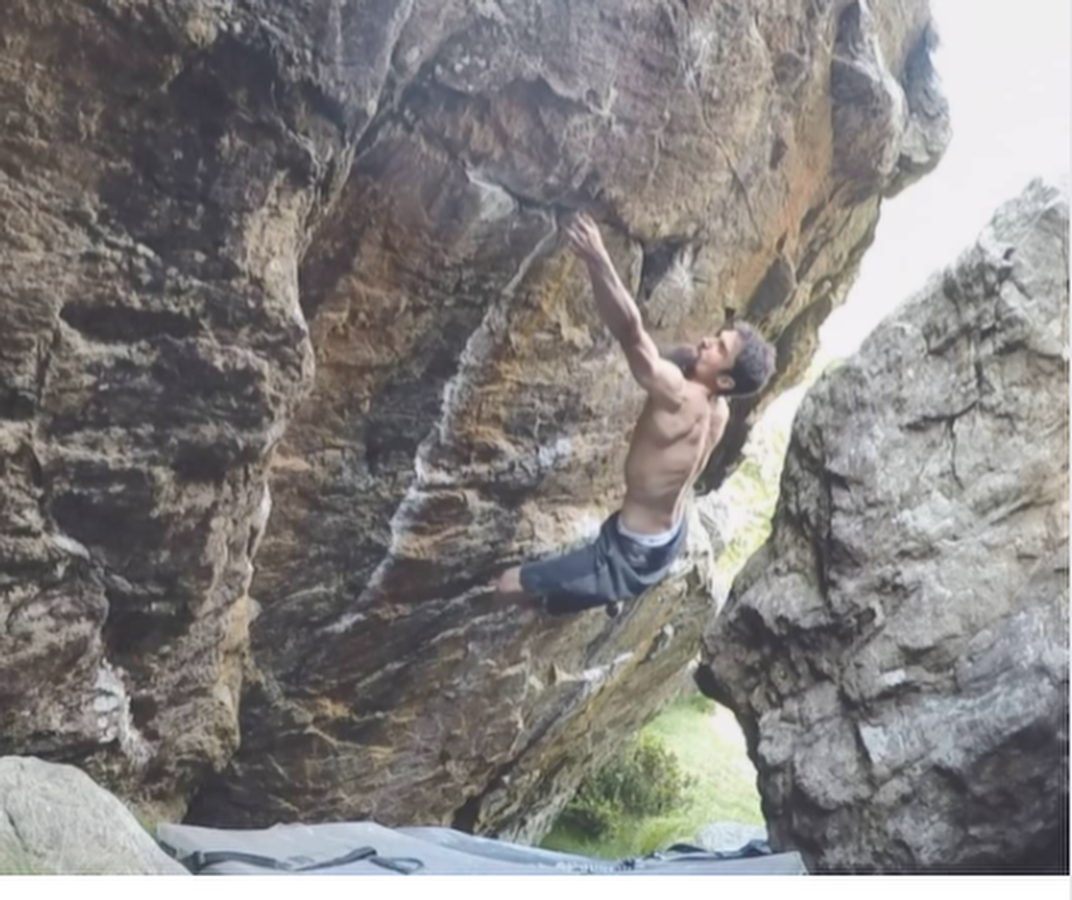
Kazuma Ise has made the FA of Hallucination 8C+ in Hourai, after the break. Dai Koyamada put it up as an 8B+ in 2003 and over the years many have tried to repeat it in the new much harder version. In the new crux you first make a dead point to a crimp from a one-finger sidpull and then another dead point to one more one-finger sidepull.

How much and How did you train for your project?
I only trained twice a week for five hours each. On my non-training days I work part-time, go to school and hang out with girlfriend. I did't train for anything other than the project. There was a possibility of getting a severe injury, so I decided that training twice a week was appropriate.
How do you train during the five-hour session?Warming up can be done in 15 minutes. Afterwards, crimp training, one finger training and weighted crimp pull-ups for two hours. The last two hours are free session time.


What are your next plan? Floatin 8C+ in Mt.Mizugaki and Epitaph (after the break) in Horai, probably also 8C+. These are my goals for 2022 and also to send 9A. Maybe Finland's BOD or a new 9A.

Der mit dem Fels tanzt 8C by Luis Gerhardt
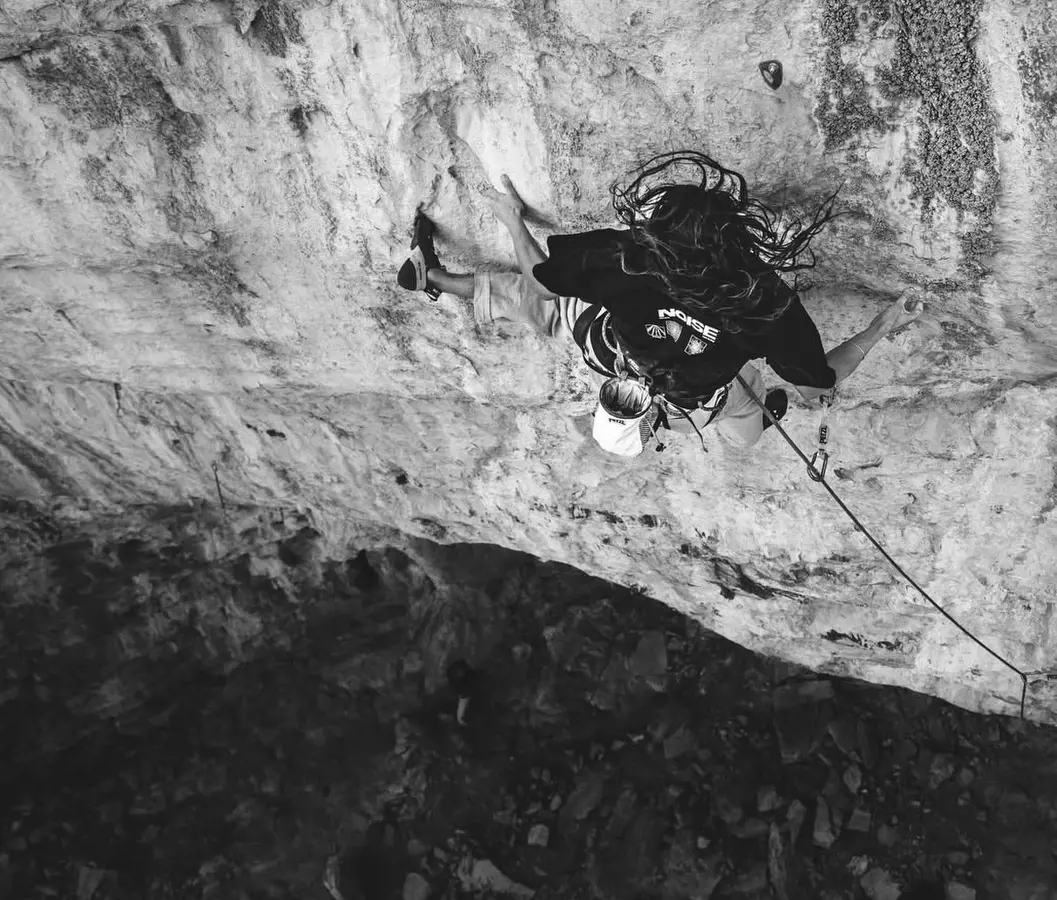
Luis Gerhardt has repeated Martin Keller's Der mit dem Fels tanzt (8C) in Chironico. "This one got on my nerves after falling twice at the mantle that day! After another silly foot slip close before the end I wanted to finish the session. I felt pretty exhausted but wanted to give one more try before it got dark! Not sure how but on the last try I found myself standing on top of the boulder!" (c) Nora Pailer

How many sessions did it take?
It took 8 - 10 sessions including the other variations (Insanity, Delusion, Einfisch) :)