NEWS

8c+ and 8c by Drew Ruana (16)
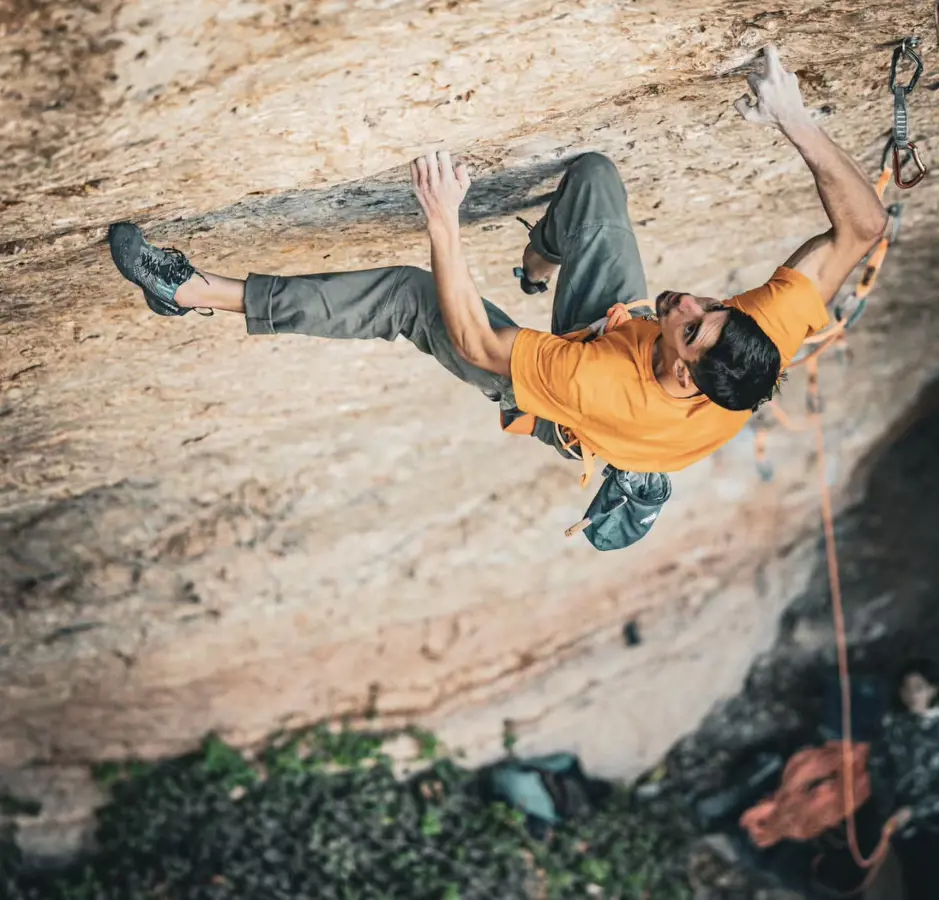
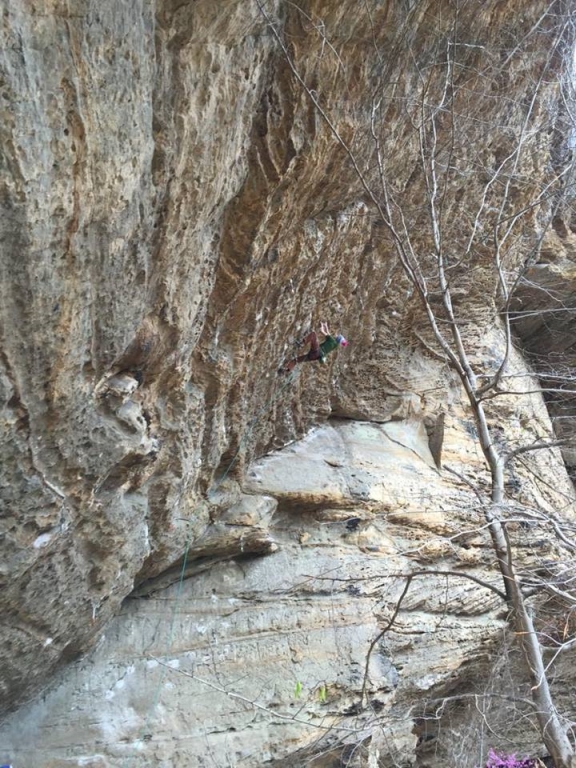
Drew Ruana, who started climbing when he was four and who has done many headlines throughout the years, including a 9a FA, has had an amazing day in Red River Gorge. "Super fun day 2 here at the red! I flashed Kaleidoscope (8a+), managed to send Southern Smoke (8c+) after two days of effort, and I surprised myself by sending Thanatopsis (8c) in three tries in a single day of effort!" (c) Kyle O'Meara What is the plan and ambition 2016 and what about training and comps? There are a couple local routes I want to do in the 9a range, and I want to do Le cadre in Ceuse this summer. Maybe some local bouldering in the 8B range. I train 3-4 days a week. Lots of boulder training and also lots of route/endurance training. My training fluctuates a lot. I just have a coach who also coaches a lot of other people. No Youth World Championship. I am just doing the American Youth circuit.

I am afraid of falling and it often has a negative impact on my climbing. I have read some articles and fought with it for ten years and it does not get better. What can I do? There are some ways to get less afraid of falling but you have to "train" hard to trick your head and you will always have to work on it unless you are a junior or a new-comer, who can possibly be cured once and for all. Training in order to get less scared means in practice that you should step out of your comfort zone, but just barely, as often you can. Start every session with warming up also mentally by talking falls on top rope or and then steadily progress to take also lead falls. Make this a comfortable routine but do not push yourself. If you include this in your warming up to let go several times you will be less scared. The key is to do it minimal step by minimal step and do not overdo it. In practice this could mean that you start to let go on top rope when you are two meters off the ground but to do it 20 - 100 times during every climbing session. Good luck... I am in the same boat :)

Based on some 1 000 unique votes from the pole "Do you work with a trainer?", we can see that still few use a trainer even if most would like to. In comparison to an identical poll in 2011, we can see that the results are more or less the same. Just send in coaching questions to [email protected] or write them in the forum and we will help you to climb harder :) 11% My trainer decides my program (8 % in 2011) 8% I take advice from trainers/classes (8%) 31% I take advice from friends (31%) 21% I do not need trainers/advice (18%) 41% I wish I had a trainer (35%)

8a is strengthening its position as global sport climbing website
Based on Similarweb statistics 8a has tremendously strengthened its position during 2016 with an increase in traffic of 39%. The most striking figures are however that the average 8a visitor stays over 15 minutes and that 84% come direct, instead of coming from Facebook, Google, etc. The average "Time on site" for our competitors are below 3 minutes and they get below 40% of their visitors "direct", which means that most of their traffic comes from Facebook and Google. 8a is also the only website which is spread evenly around the globe while all our competitors get some 50% of their traffic from their country of origin. To sweeten up the story, the first week of April has also started up with a new record when it comes to visits and unique visitors.

Ask the 8a coach #2: How to peak in three weeks?
I am going to Kalymnos in three weeks and I want to be in my best shape ever and to onsight my first 7b+. How should I train, having trained hard for the whole winter Onsighting 7b+ in Kalymnos means you will most probably go for a semi-endurance challenge. Most important is actually to avoid being super pumped during the last three weeks. You can still train hard but not do more than about 20 moves in a row. Try to climb on holds similar to the style of Kalymnos, meaning pockets, knee drops, pinches etc. Try to learn to adopt to this style and also to find good rest positions. From a more strategic perspective, check the 8a database and find a dozen 7b+'s with a high onsight percentage. Once you start challenging your onsight, climb fast and take some risk. It is better to fall off early than to struggle for 30 minutes and fall at the top. Once you have been super pumped a couple of times you will loose your peak unless you take rest days. It just might be that you do not onsight your 7b+ until you try your tenth but that demands that you climb fast without getting super pumped. Good luck with Tufa King Pumped :), which is on the picture by Spyros Apostolopoulos.

Lowe from Tendon - The lightest thickest rope
8a has tested Tendon's latest rope, the 9.7 mm Lowe at 55 g/m. For a climbing nerd it is a surrealistic feeling to hold it up because you can see and feel that it is normal size but at the same time it weighs less. Sure what we are talking about just that you save abut 300 grams (10%) on a 60-meter-long rope but possibly that could help you to set a new personal best. If ask Tendon how this works, they will say it is a secret. The most important advantage with a light but thick rope is of course safety when it comes to using an old Grigri etc. Other than that, the durability seems to be normal but as it is below average pricing, it should be a very good deal. Technical data EN 892 yes number of UIAA falls min 6 max. impact force (kN) 8.6 static elongation (%) 7.4 dynamic elongation (%) 32

Many have said we cannot climb much harder. We have reached the physical human limit and actually there was some stagnation going on some years ago. However, 2015 was a record year when it comes to achieved grades for the community; especially for the youngsters and the female. Interesting is that this trend has continued during 2016 but it relates mainly to doing longer routes and boulders. If the trend continues, male doing 9a endurance routes will soon stop creating headlines. It might be that in 2020, ten guys including Ashima Shiraishi will do 9b and Climbing will be recognized as the most gender-equal sport in the world. At the same time, the first 9A boulder and several 8C+'s will be done including also female ascents. When it comes to grades and ages, there might be several showing the same standard as Adam Ondra and Ashima Shiraishi. In a longer run, there will be loads of 50+ doing 9a's and 8B+'s. The future looks bright :)

Iban Larrion sends 8B+/C and a 9a+
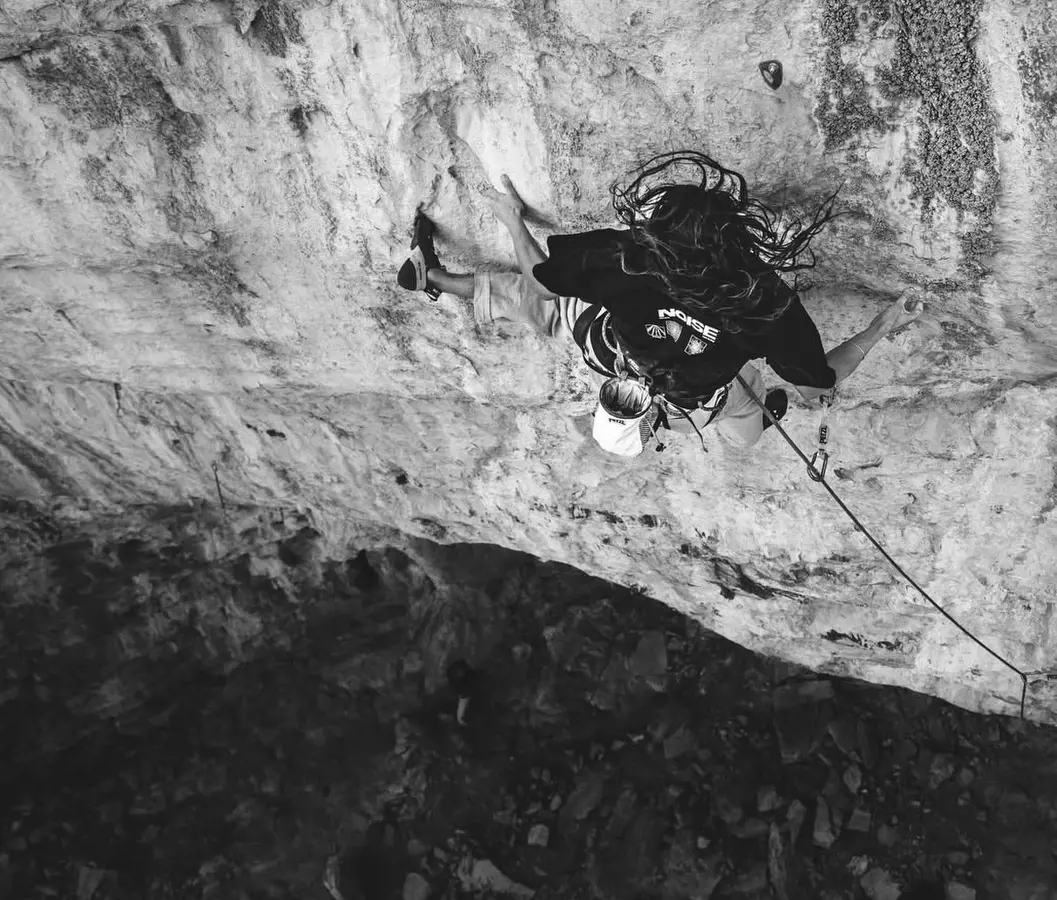
About a month and a half ago Iban Larrion added a new boulder-route in a smaller grotto aside the Baltzola cave, Mikelon, for which he suggested 8B+/C (remember that in 2012 and at the same spot he also made the FA of 'Airian', suggesting 8C for it). At that time we talked with him in this interview, where we also asked him about his long standing project with a rope in the same area, Iรฑi Ameriketan 9a+, which he was finally able to send about 2,5 weeks ago after trying it for 6 years. Picยฉ Estibaliz Dรญaz. Iban is the fourth to clip the chains of what was born as a 100% natural route (so far just a crimp broke and was glued back on the same spot) bolted by Iรฑigo Basterra in 1995 which first ascent was claimed by Rikar Otegi in 2002 saying it was a 9a. One year later it was bagged by Patxi Usobiaga agreeing with such difficulty proposal. Second repetition didn't happen till 2014 with an Adam Ondra well used to revise a good number of routes downward but registering this one with a 9a+ in his scorecard with the following comment: "Harder than 'Il Domani', even though easier beta than Patxi and Rikar used has been found. 2 days, sent in humidity." Iban confirmed us that Ondra used his method and coincide with him on his grading, even if "an intermediate in the crux section broke off, but this didn't mean that plus." We, in the Spanish 8a.nu site, have asked him some few more questions that you can read in this new interview.

New topo of Maltatal
Gerhard Schaar has published a new topo of Malatal, which offers around 350 sport routes, 80 multi pitch routes, 10 selected alpine climbs and about 200 boulders. "The Maltatal is quite unique, because first of all you climb from a sea level of 800m up to 3350m. And secondly there are a lot of climbs right next to the many amazing waterfalls. There are a lot of lines from 7a up to 8c+, and a good share of great and easy climbing on slabs with superb quality. Me and Markus Pucher started bouldering here around 1993, when we opened the majority of easier problems. With the arrival of Klem Loskot in 1997 the Maltatal started to be recognized as top secret spot and attracted much more climbers, leading to all the access issues mentioned before. To cut a long story short I was planning to a guidebook as I was amongst the busiest pioneers in bouldering, as well as the main developers for sport climbs by opening about 250 lines over about 20 years. Facebook and here you can buy buy the topo for 31 Euro.

I have been training hard indoors, following different programs but I do not feel any progress outdoors on my route projects. How should I change my indoor training? This is quite logical as indoors and outdoors climbing sometimes challenges different strength. Focus on climbing many easier routes in order not to compare and be so performance-oriented outdoors, which can create anxiety. Regarding your indoor training, try do focus on more outdoor look-alike moves, which usually means Bouldering less steep and especially using smaller footholds. It just might be that your outdoor projects involve some closed crimping moves which you probably have not trained so much indoors during the winter. If so, just do a couple of sessions where you focus a bit more on crimping in order to recruite the strength which may be needed for your projects. Good luck! Feel free to ask more questions in the forum or send them to [email protected]