
NEWS
5 April 2025
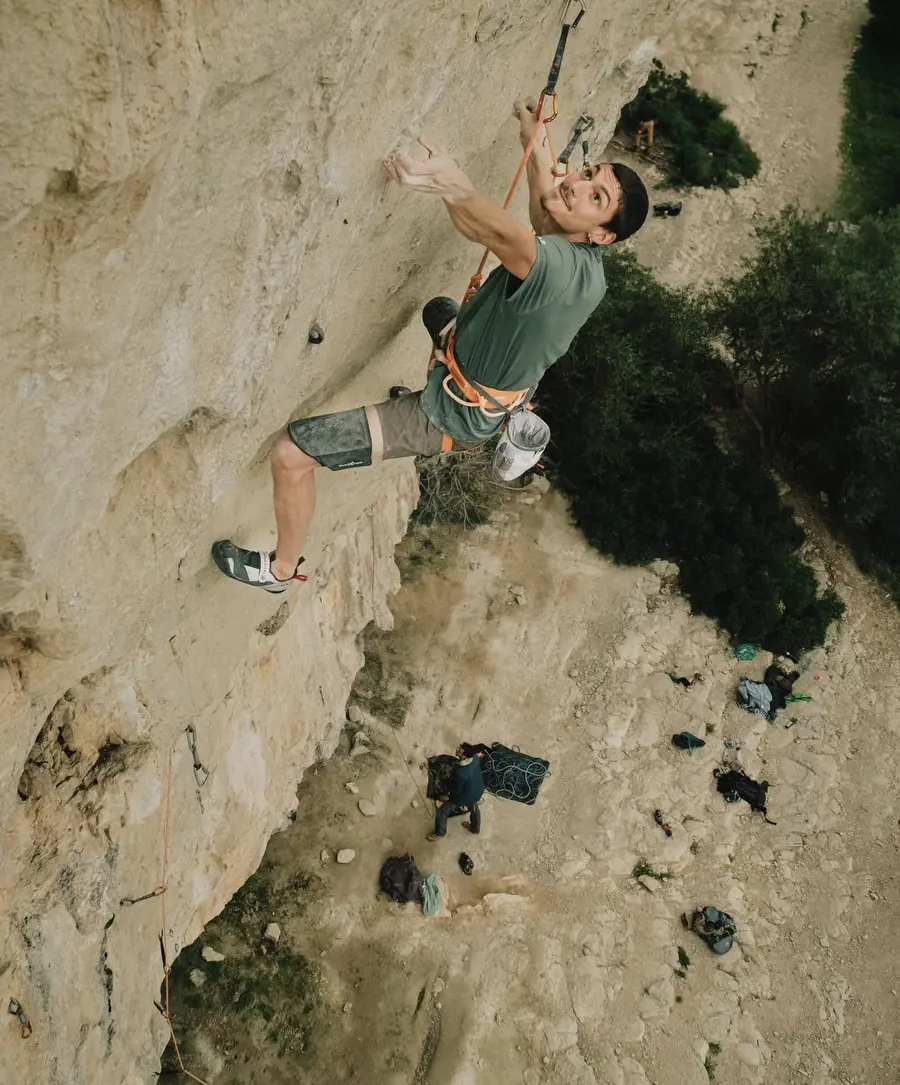
Jules Marchaland ticks Guère de bruit (9a)
Jules Marchaland, with five 9a+’ under his belt, has repeated Seb Bouin’s Guère de bruit (9a) in Claret. ”Really good flash attempt [3 moves to the final jug] and then didn’t check the last moves so fucked up the 2nd go and send first go next sesh. 2 really cool crimpy boulder with a good rest beetween. The direct line is Savage.” (c) Yulen Calleja Ordiz
What is the plan for the upcoming weeks?
I’m trying the direct Line of this 9a, probably a hard 9a+. Then just enjoy climbing and go back on Ratstaman Vibrations [Megos 9b in Céüse].
What is the plan for the upcoming weeks?
I’m trying the direct Line of this 9a, probably a hard 9a+. Then just enjoy climbing and go back on Ratstaman Vibrations [Megos 9b in Céüse].
Read more
17
0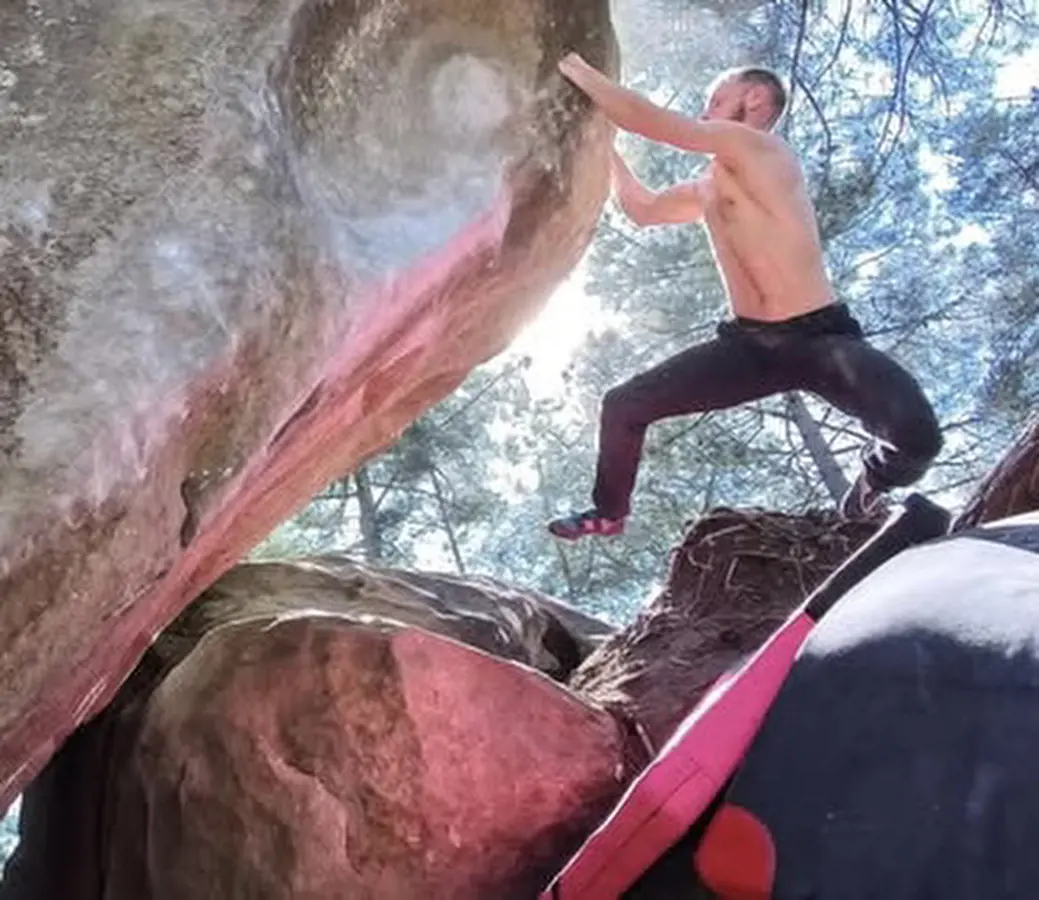
5 April 2025
Erwan Lievin does 7C+ with one hand
Erwan Lievin, who was born with one hand, has done Le Pilier du Désert (7C+) in Fontainebleau. The 22-year-old was #3 in a World Cup one year after he started climbing.
Can you tell us more about your climbing background and sending your first 7C+?
I started climbing 3 and a half years ago at the USBY club (Union sportive de bures sur Yvette), which I really thank and which continues to support me in my current projects with my coach Ludovic Delmotte, whom I also thank. I've been representing the French team on the international circuit for 3 years now, but that won't be the case this year as I finished 3rd at the French championships and wasn't selected. So I'll be able to concentrate on my outdoor crosses, whether in Fontainebleau or in other spots!
Last year, in May, I'd already done my first Bagheera 7C, and that's when I really fell in love with hard outdoor bouldering! And 5 days after the French championships, I took on the desert pillar, which gave me the chance to exact my revenge. To describe the boulder for those who don't know it, the desert pillar is a very physical compression boulder, to a jump start, where you have to arrive with precision on a right-hand arch and a left-hand flat ramp. Then you bring your left heel up to the level of your hand to move up the ramp to the point where it holds best, put your right foot on a flat hold and send everything you've got into a very good sloper where the crux is not to touch the pads and to hold the swing.
This was followed by a short, not very hard traverse on super-class holds and a really uncomplicated mantle. This boulder was a project for me last year, when I put in 3 or 4 sessions during the winter without any conclusive attempts and without ever landing the big move in the middle, which is the crux for me. I did, however, manage to set the jump start, the handstand and the traverse at the end. All I needed was this move... This winter I didn't go back because I had other projects in mind that I wanted to try out, but they didn't come out in the end.
I thought about this boulder again and motivated myself to go back and see if I was better than last year, and boom, I made the middle move by doing a sort of arm coordonination where I brought my left hand up in another press to hold the sing ! I was so happy! But I couldn't send it that session. I went back a week and a half later and tried to reposition the big move, but I couldn't do it again...
Either I don't take the hold correctly or I hit it too far from the sloper... But I'm not discouraged, I tell myself I might as well do some lower runs. The first try I hit the sloper but I can't hold the swing The next run is the right one, I slam the move and succeed just as I'd planned! All I have to do now is stay focused so as not to fall at the end, and I'm back on top of this great pillar!
For me, it means a lot because I've not been at my best all winter, between complicated conditions, injuries and a daily life full of pitfalls, it's been tough! It's like a big liberation, a weight lifted off my shoulders, and it's also a new personal and para-climbing limit that's just been broken! Now I've already got my eyes set on the next objectives, and the main one will be to get into the 8th degree single-handed!
What is your sport background and what got you hooked for climbing?
When I was younger, I did a lot of sports like handball, table tennis, swimming... But it wasn't until very late that I discovered climbing, at the age of 18, when I went to university, they asked me to choose a sports speciality. I'd been able to do some climbing for my baccalaureate and I thought it was really cool, so I thought why not? That's where it all started at first, for the first few months it was just a leisure activity, until I heard that there were handisport competitions, and that's when I joined the USBY and really started training with the aim of becoming strong. I discovered a super-cool environment with an ambulance and just incredible people. Alongside this, I discovered outdoor climbing and gradually began to fall in love with climbing For me, the next logical step is to continue pushing the limits of para-escalation, enter the 8th degree and travel to do major bouldering.
Can you tell us more about your climbing background and sending your first 7C+?
I started climbing 3 and a half years ago at the USBY club (Union sportive de bures sur Yvette), which I really thank and which continues to support me in my current projects with my coach Ludovic Delmotte, whom I also thank. I've been representing the French team on the international circuit for 3 years now, but that won't be the case this year as I finished 3rd at the French championships and wasn't selected. So I'll be able to concentrate on my outdoor crosses, whether in Fontainebleau or in other spots!
Last year, in May, I'd already done my first Bagheera 7C, and that's when I really fell in love with hard outdoor bouldering! And 5 days after the French championships, I took on the desert pillar, which gave me the chance to exact my revenge. To describe the boulder for those who don't know it, the desert pillar is a very physical compression boulder, to a jump start, where you have to arrive with precision on a right-hand arch and a left-hand flat ramp. Then you bring your left heel up to the level of your hand to move up the ramp to the point where it holds best, put your right foot on a flat hold and send everything you've got into a very good sloper where the crux is not to touch the pads and to hold the swing.
This was followed by a short, not very hard traverse on super-class holds and a really uncomplicated mantle. This boulder was a project for me last year, when I put in 3 or 4 sessions during the winter without any conclusive attempts and without ever landing the big move in the middle, which is the crux for me. I did, however, manage to set the jump start, the handstand and the traverse at the end. All I needed was this move... This winter I didn't go back because I had other projects in mind that I wanted to try out, but they didn't come out in the end.
I thought about this boulder again and motivated myself to go back and see if I was better than last year, and boom, I made the middle move by doing a sort of arm coordonination where I brought my left hand up in another press to hold the sing ! I was so happy! But I couldn't send it that session. I went back a week and a half later and tried to reposition the big move, but I couldn't do it again...
Either I don't take the hold correctly or I hit it too far from the sloper... But I'm not discouraged, I tell myself I might as well do some lower runs. The first try I hit the sloper but I can't hold the swing The next run is the right one, I slam the move and succeed just as I'd planned! All I have to do now is stay focused so as not to fall at the end, and I'm back on top of this great pillar!
For me, it means a lot because I've not been at my best all winter, between complicated conditions, injuries and a daily life full of pitfalls, it's been tough! It's like a big liberation, a weight lifted off my shoulders, and it's also a new personal and para-climbing limit that's just been broken! Now I've already got my eyes set on the next objectives, and the main one will be to get into the 8th degree single-handed!
What is your sport background and what got you hooked for climbing?
When I was younger, I did a lot of sports like handball, table tennis, swimming... But it wasn't until very late that I discovered climbing, at the age of 18, when I went to university, they asked me to choose a sports speciality. I'd been able to do some climbing for my baccalaureate and I thought it was really cool, so I thought why not? That's where it all started at first, for the first few months it was just a leisure activity, until I heard that there were handisport competitions, and that's when I joined the USBY and really started training with the aim of becoming strong. I discovered a super-cool environment with an ambulance and just incredible people. Alongside this, I discovered outdoor climbing and gradually began to fall in love with climbing For me, the next logical step is to continue pushing the limits of para-escalation, enter the 8th degree and travel to do major bouldering.
Read more
80
3On March 28th, Boulder local Kate Kelleghan and French climber Laura Pineau broke the speed record on The Naked Edge (6c+) in Eldorado Canyon. The 200 m classic climb was simul-climbed, using 18 pieces of gear, getting back to the base in just 37.08 minutes. (c) James Lucas
The Naked Edge is a historic and storied route. Because of its short cruxes and relatively straight line up the formation, it has attracted a subset of climbers who ascend 200 meters in a single pitch with a short rope and a handful of micro traxions, and time themselves. Kate has spent several years honing this climb and previously established the female speed record at 37:40 with Boulder Guide Becca Droz in 2021. With Laura visiting from Europe, the two women decided to have a go at breaking the record. On their 4th speed attempt, the partners shaved off 32 seconds, ringing in at 37 minutes and 8 seconds.
The Speed Tactics: Warm-up Lap: Climbing the route without any running, trying to keep heart rate in Zone 3 or less, which the athletes can see on their Coros watch thanks to the arm bands they can wear while climbing.
Speed Lap: From the moment the clock starts, Laura and Kate are sprinting. They maintain Zone 3 or 4 for the entire effort, never stop moving, and never take breaks. They barely chalk up. From the summit, the pair runs/crawls down 5th class slab and then flat out sprints back to the bridge, where the clock stops. On March 28, the warm-up lap went smoothly. However, on the speed lap, some shoelace issues and a loose rope coil landed the duo 10 seconds too slow. In an unorthodox decision, they decided to try a third lap, max effort. After taking a few hours to wait out the hottest part of the day, Laura and Kate returned to the bridge and gave a third attempt to everything they had. They sprinted across the bridge at 37 minutes and 08 seconds, slicing 32 seconds off the previous record. The real secret to beating the record? For Kate: 80 laps on the route. For Laura: The willingness to run down 5th class slab in TC Pros.
”The climb itself took us 20 minutes and we simul-climb the whole route in one pitch. Kate and I only meet at the top but never on the route and we used 3 micro-traxions. We used a total of 18 protections on the whole climb (a mix of camelots and QuickDraws). And I was the one following her and I collected everything on the way up. We came down with everything on us, gear and rope, we also free climb the whole route. There is no pulling on gear.”
The Naked Edge is a historic and storied route. Because of its short cruxes and relatively straight line up the formation, it has attracted a subset of climbers who ascend 200 meters in a single pitch with a short rope and a handful of micro traxions, and time themselves. Kate has spent several years honing this climb and previously established the female speed record at 37:40 with Boulder Guide Becca Droz in 2021. With Laura visiting from Europe, the two women decided to have a go at breaking the record. On their 4th speed attempt, the partners shaved off 32 seconds, ringing in at 37 minutes and 8 seconds.
The Speed Tactics: Warm-up Lap: Climbing the route without any running, trying to keep heart rate in Zone 3 or less, which the athletes can see on their Coros watch thanks to the arm bands they can wear while climbing.
Speed Lap: From the moment the clock starts, Laura and Kate are sprinting. They maintain Zone 3 or 4 for the entire effort, never stop moving, and never take breaks. They barely chalk up. From the summit, the pair runs/crawls down 5th class slab and then flat out sprints back to the bridge, where the clock stops. On March 28, the warm-up lap went smoothly. However, on the speed lap, some shoelace issues and a loose rope coil landed the duo 10 seconds too slow. In an unorthodox decision, they decided to try a third lap, max effort. After taking a few hours to wait out the hottest part of the day, Laura and Kate returned to the bridge and gave a third attempt to everything they had. They sprinted across the bridge at 37 minutes and 08 seconds, slicing 32 seconds off the previous record. The real secret to beating the record? For Kate: 80 laps on the route. For Laura: The willingness to run down 5th class slab in TC Pros.
”The climb itself took us 20 minutes and we simul-climb the whole route in one pitch. Kate and I only meet at the top but never on the route and we used 3 micro-traxions. We used a total of 18 protections on the whole climb (a mix of camelots and QuickDraws). And I was the one following her and I collected everything on the way up. We came down with everything on us, gear and rope, we also free climb the whole route. There is no pulling on gear.”
Read more
10
0Yves Gravelle is featured in the latest Magnus Midtbo video. The 39-year-old put up two 8C’s and three 8B+’ in 2021 but later he has focused more on building strength and competing. One of his next goals is to travel to Finland and try Burden of Dreams (9A). Below is some Q & A with Yves.
How does a normal climbing/training week look?
My training schedule varies greatly depending on my current objectives, whether I’m preparing for competitions, outdoor projects, grip strength challenges, or specific contests. I always try to balance things based on available time between work, coaching, and family. For competitions specifically, I find that I need significantly more hours on the mats to feel confident — usually 14+ hours a week. I perform best when I dedicate a large amount of time to practicing comp-specific skills like coordination and balance (especially slabs). I try to structure my week by alternating between lower-intensity technical sessions and short, high-intensity efforts to allow for maximum recovery. Interestingly, I find that slab and balance-focused sessions are a great way to get in meaningful practice without accumulating too much fatigue. However, the time investment needed to see lasting improvement in these skills is quite high — you don’t get exhausted, but progress comes slowly and requires consistency.
Regardless of my objectives, I always incorporate a few finger training exercises at the start of my sessions. They help me feel physically prepared for the climbs ahead and give me a quick sense of my readiness for the day. Additionally, I include some form of mobility or stretching routine 4 to 6 times a week, usually at the end of practice, to maintain range of motion and aid recovery. When time permits, I aim for 9 to 20 hours of climbing and training per week, typically spread over 4 to 6 days, with sessions lasting anywhere from 90 minutes to 4 hours, depending on the focus. How has your strength progressed over the last five years?
During the COVID period, I shifted my focus more toward outdoor climbing and developing local areas. Since then, my grip strength training has come in cycles depending on how much time I have. When I have more availability or I’m preparing for competitions, I’ll push specific qualities based on my goals. When time is tight, I focus on maintaining my level by keeping shorter but consistent sessions, aiming for at least twice a week to stay in shape. But, to answer your question, I do feel like I’ve seen steady progress on my finger strength specially when I focus on grip training goals. I have been putting a lot of time working my technique climbing skills and mental game the past few years. I feel there more for me to gain working on those qualities than just focusing on getting stronger. How much do you climb outdoors and are you currently projecting anything hard?
Unfortunately, I haven’t climbed outside for the past two years. That said, I’m planning to get back on some local projects this season. I’m also aiming to try Burden of Dreams either this fall or next spring. My goal this year is to train specifically for that problem and give myself the best chance of success when I finally get to try it.
How does a normal climbing/training week look?
My training schedule varies greatly depending on my current objectives, whether I’m preparing for competitions, outdoor projects, grip strength challenges, or specific contests. I always try to balance things based on available time between work, coaching, and family. For competitions specifically, I find that I need significantly more hours on the mats to feel confident — usually 14+ hours a week. I perform best when I dedicate a large amount of time to practicing comp-specific skills like coordination and balance (especially slabs). I try to structure my week by alternating between lower-intensity technical sessions and short, high-intensity efforts to allow for maximum recovery. Interestingly, I find that slab and balance-focused sessions are a great way to get in meaningful practice without accumulating too much fatigue. However, the time investment needed to see lasting improvement in these skills is quite high — you don’t get exhausted, but progress comes slowly and requires consistency.
Regardless of my objectives, I always incorporate a few finger training exercises at the start of my sessions. They help me feel physically prepared for the climbs ahead and give me a quick sense of my readiness for the day. Additionally, I include some form of mobility or stretching routine 4 to 6 times a week, usually at the end of practice, to maintain range of motion and aid recovery. When time permits, I aim for 9 to 20 hours of climbing and training per week, typically spread over 4 to 6 days, with sessions lasting anywhere from 90 minutes to 4 hours, depending on the focus. How has your strength progressed over the last five years?
During the COVID period, I shifted my focus more toward outdoor climbing and developing local areas. Since then, my grip strength training has come in cycles depending on how much time I have. When I have more availability or I’m preparing for competitions, I’ll push specific qualities based on my goals. When time is tight, I focus on maintaining my level by keeping shorter but consistent sessions, aiming for at least twice a week to stay in shape. But, to answer your question, I do feel like I’ve seen steady progress on my finger strength specially when I focus on grip training goals. I have been putting a lot of time working my technique climbing skills and mental game the past few years. I feel there more for me to gain working on those qualities than just focusing on getting stronger. How much do you climb outdoors and are you currently projecting anything hard?
Unfortunately, I haven’t climbed outside for the past two years. That said, I’m planning to get back on some local projects this season. I’m also aiming to try Burden of Dreams either this fall or next spring. My goal this year is to train specifically for that problem and give myself the best chance of success when I finally get to try it.
Read more
29
02 April 2025
Carlo Traversi completes The Big Island (8C)
Carlo Traversi, with a dozen 8C and beyond under his belt, has sent
The Big Island (8C) in Fontainebleau. The 36-year-old has also done routes up to 9a+ and trad up to 8c+.
”An iconic line. Feeling grateful to have been able to climb it. Have tried it a few sessions over the last 10+ years and it has always felt impossible. I didn't really have any intention to try it this trip, but I found myself there early last month with good conditions and managed to do all the moves for the first time. It took quite a bit of work to refine everything and I managed to slip off the lip a few times, but was lucky to pull off one of those effortless feeling sends today before heading home in a few days. As with everything in the forest, it's always about positioning, and I learned some nice lessons with this one. Considering where I'm at these days I would say this is probably the easiest 8C I've climbed, but I still think it warrants the grade.”
Do you think you have goten stronger or what made you send this season?
Not sure what the difference was this year. I don’t feel much stronger at the moment but I feel like the new beta with the toe hooks makes the problem a little more about hanging and body positioning than pure power. It felt like more of a test of precise movement and positioning than strength. I’m happy that my ability to move on rock continues to improve.
”An iconic line. Feeling grateful to have been able to climb it. Have tried it a few sessions over the last 10+ years and it has always felt impossible. I didn't really have any intention to try it this trip, but I found myself there early last month with good conditions and managed to do all the moves for the first time. It took quite a bit of work to refine everything and I managed to slip off the lip a few times, but was lucky to pull off one of those effortless feeling sends today before heading home in a few days. As with everything in the forest, it's always about positioning, and I learned some nice lessons with this one. Considering where I'm at these days I would say this is probably the easiest 8C I've climbed, but I still think it warrants the grade.”
Do you think you have goten stronger or what made you send this season?
Not sure what the difference was this year. I don’t feel much stronger at the moment but I feel like the new beta with the toe hooks makes the problem a little more about hanging and body positioning than pure power. It felt like more of a test of precise movement and positioning than strength. I’m happy that my ability to move on rock continues to improve.
Read more
41
52 April 2025
Lukas Mokrolusky, 17, ticks Action Directe (9a)
Lukas Mokrolusky, who was #8 in the Euro Boulder Cup four weeks ago, has completed Action Directe (9a) in Frankenjura. This was the 34th ascent of the Wolfgang Gullich’ classic from 1991, widely considered as the first 9a in the world. (c) Vojtěch Růta
Can you tell us more about your journey doing AD?
The journey started when I climbed my first 8a, which was right next to AD. After that climb, I promised myself that AD would be my first 9a, and I kept my promise. It took me 2 years and so many attempts to climb it. The first time I tried AD was in the summer of 2022. I just tried the moves; I didn’t even make the first jump and went down from the middle of the route because I was too weak.
My first serious attempts came in the spring of 2023 when I started focusing on this route with Vojtěch Trojan. We went to Frankenjura a couple of times together to try AD, and we were super close. He did it after some tries, but I was falling on that last pogo jump from a small crimp to another crimp. This move took me almost 2 years until I finally stuck it and completed the route. I was so happy to have finally fulfilled my childhood dream, kept my promise, and joined the 9a club with this absolute masterpiece. :)
What is next?
I don’t know yet, but I want to try some 9a+ in Frankenjura and also some 8B+ boulders but now I need to focus on comp climbing as well :)
What are your competition goals?
My goal is YWCH in Helsinki, where I want to make podium and make some semis on WC’s or final. I want my goals to be realistic so I would be happy with the semi :)
Can you tell us more about your journey doing AD?
The journey started when I climbed my first 8a, which was right next to AD. After that climb, I promised myself that AD would be my first 9a, and I kept my promise. It took me 2 years and so many attempts to climb it. The first time I tried AD was in the summer of 2022. I just tried the moves; I didn’t even make the first jump and went down from the middle of the route because I was too weak.
My first serious attempts came in the spring of 2023 when I started focusing on this route with Vojtěch Trojan. We went to Frankenjura a couple of times together to try AD, and we were super close. He did it after some tries, but I was falling on that last pogo jump from a small crimp to another crimp. This move took me almost 2 years until I finally stuck it and completed the route. I was so happy to have finally fulfilled my childhood dream, kept my promise, and joined the 9a club with this absolute masterpiece. :)
What is next?
I don’t know yet, but I want to try some 9a+ in Frankenjura and also some 8B+ boulders but now I need to focus on comp climbing as well :)
What are your competition goals?
My goal is YWCH in Helsinki, where I want to make podium and make some semis on WC’s or final. I want my goals to be realistic so I would be happy with the semi :)
Read more
42
01 April 2025
Victor Guillermin does Aloha (9a)
Victor Guillermin, who last year won one Euro Youth Cup, has done Aloha (9a) in Kronthal. The 19-year-old, with one 9a+ from 2022 under his belt, just needed one afternoon for the send. (c) Yann Corby - who bolted it in 2006.
Can you tell us more about the ascent and the process behind?
My story in "Aloha" begins four years ago when I tried the 8c that shares the same 7a start. I couldn't do it. I touched the first holds in Aloha but couldn't move at all. Then I forgot about this route. A few weeks ago, I came across some pictures of it taken by Yann Corby, which brought it back to mind. I decided to give it another shot, hoping to be strong enough. I searched everywhere for beta and photos to prepare myself. The route consists of two parts: an 8c traverse leading to a tricky 7C+ crux boulder problem. So this weekend, we headed to Alsace and warmed up under the sun. My first attempt was about testing the moves and finding my beta. I managed all the traverse sequences—it required intense body tension and biceps—but the crux, six powerful moves over the roof lip, shut me down. On my second go, I linked the traverse in two sections but still couldn't do the crux in one. However, I refined my beta: a tricky toe hook, a bad heel over the lip, and a dyno to the final jug.
Piece by piece, I unlocked every move but foolishly skipped trying the last 7a slab... An hour later, exhausted from the two long sessions in the roof, I was still determined to give it a proper try. It felt like a competition—I had only one shot in good conditions at sunset and prepared to give it my all. I knew I had done all the moves, so a perfect run could be enough. Still, it seemed incredibly hard. Then, something clicked. I felt the flow—pure focus took over. With a huge fight, I stuck the crux but remember nothing of it, completely absorbed in the moment. I reached the rest before the final slab, trusting the videos I had watched to guide me through. Every move felt nerve-wracking—I didn’t want to slip, haha. Clipping the anchor was unreal. Just an hour earlier, the route had felt impossible, yet now it was done. It was my first time climbing perfectly outdoors on my first real attempt. Afterward, we captured some great shots for a video.
What is coming up next?
Now, I’m shifting focus to the upcoming World Cups before returning to Alsace for the harder start of Aloha—likely a 9a+! Huge thanks to Yann Corby for his support, photos, and stories!
Can you tell us more about the ascent and the process behind?
My story in "Aloha" begins four years ago when I tried the 8c that shares the same 7a start. I couldn't do it. I touched the first holds in Aloha but couldn't move at all. Then I forgot about this route. A few weeks ago, I came across some pictures of it taken by Yann Corby, which brought it back to mind. I decided to give it another shot, hoping to be strong enough. I searched everywhere for beta and photos to prepare myself. The route consists of two parts: an 8c traverse leading to a tricky 7C+ crux boulder problem. So this weekend, we headed to Alsace and warmed up under the sun. My first attempt was about testing the moves and finding my beta. I managed all the traverse sequences—it required intense body tension and biceps—but the crux, six powerful moves over the roof lip, shut me down. On my second go, I linked the traverse in two sections but still couldn't do the crux in one. However, I refined my beta: a tricky toe hook, a bad heel over the lip, and a dyno to the final jug.
Piece by piece, I unlocked every move but foolishly skipped trying the last 7a slab... An hour later, exhausted from the two long sessions in the roof, I was still determined to give it a proper try. It felt like a competition—I had only one shot in good conditions at sunset and prepared to give it my all. I knew I had done all the moves, so a perfect run could be enough. Still, it seemed incredibly hard. Then, something clicked. I felt the flow—pure focus took over. With a huge fight, I stuck the crux but remember nothing of it, completely absorbed in the moment. I reached the rest before the final slab, trusting the videos I had watched to guide me through. Every move felt nerve-wracking—I didn’t want to slip, haha. Clipping the anchor was unreal. Just an hour earlier, the route had felt impossible, yet now it was done. It was my first time climbing perfectly outdoors on my first real attempt. Afterward, we captured some great shots for a video.
What is coming up next?
Now, I’m shifting focus to the upcoming World Cups before returning to Alsace for the harder start of Aloha—likely a 9a+! Huge thanks to Yann Corby for his support, photos, and stories!
Read more
21
0”April Fools’ 😀.” In an unprecedented collaboration, Vertical-Life, the IFSC, and the UIAA have announced a groundbreaking update to the climbing grading scale, in order to equalize soft and sandbagged areas in the VL Ranking Game. To ease the transition, this new system mirrors the French scale but introduces "dialects" starting at 4a. Climbers will now see grades like 7c(b) for Belgian, 7b+(y) for Yosemite, 8a+(g) for Greek, and 8a(s) for the Standard dialect. Above 9b, all routes universally adopt the 9b(s) grade. Like real dialects, these are subject to change, some might merge or new ones appear.
For those chasing points in the VL ranking game, here's the new currency for 2025: send an 8a(s), climb a 7c(b), sketch up a 7b+(y), or snag an 8a+(g) to earn a 1000 points! (c) John Price - Lorenzo "Lez" Doria doing Aegialis (7c). This route will get 7c(g) on the new scale.
UIAA spokesman Willy Welzenbach shared his enthusiasm: "It was high time we addressed the chaotic reality of our grading system. The old 'one-size-fits-all' French scale simply wasn't cutting it. It was either revamp the translation tables or give each climbing culture its own voice."
Francis Veber from Belgium added, "The climbing seasons in Freyr used to see a surge of overinflated egos returning from Ulassai and Kalymnos. Climbers were riding high until they hit the local routes and their scores plummeted. With the new system, we expect fewer mood swings and more realistic self-assessment."
Over the next few weeks, each area will choose its "dialect," allowing for a smooth transition of existing rankings to this innovative system. Preliminary simulations confirm what we've always known: Adam Ondra remains the greatest, regardless of the dialect! Stay tuned to cast your vote on which grading "dialect" your area / country should adopt. Let's make climbing grades fair (and a bit more complicated) again!
For those chasing points in the VL ranking game, here's the new currency for 2025: send an 8a(s), climb a 7c(b), sketch up a 7b+(y), or snag an 8a+(g) to earn a 1000 points! (c) John Price - Lorenzo "Lez" Doria doing Aegialis (7c). This route will get 7c(g) on the new scale.
UIAA spokesman Willy Welzenbach shared his enthusiasm: "It was high time we addressed the chaotic reality of our grading system. The old 'one-size-fits-all' French scale simply wasn't cutting it. It was either revamp the translation tables or give each climbing culture its own voice."
Francis Veber from Belgium added, "The climbing seasons in Freyr used to see a surge of overinflated egos returning from Ulassai and Kalymnos. Climbers were riding high until they hit the local routes and their scores plummeted. With the new system, we expect fewer mood swings and more realistic self-assessment."
Over the next few weeks, each area will choose its "dialect," allowing for a smooth transition of existing rankings to this innovative system. Preliminary simulations confirm what we've always known: Adam Ondra remains the greatest, regardless of the dialect! Stay tuned to cast your vote on which grading "dialect" your area / country should adopt. Let's make climbing grades fair (and a bit more complicated) again!
Read more
22
631 March 2025
Colin Duffy does Pegasus (8C)
Colin Duffy, who was #4 in the Paris Olympics, has done
Pegasus (8C) in Joe's Valley (UT). The 21-year-old did his first 8C, out of four, only four months ago.
Can you tell us more about the trip and the ascent of Pegasus?
It was a nice short trip, Pegasus was my main goal but I mostly wanted to check out some of the classics since it was my first time in Joe’s Valley. I tried Pegasus on the 1st day of my trip. Pegasus is the low start to Pagan Poetry Low (8B) which is the low start to Pagan Poetry (8A). I flashed Pagan Poetry and did the intro sequence of Pegasus on my first try, so after figuring out the crux of Pagan Low I started giving attempts from the start. After about 4-5 tries I found myself at the top.
The next day I worked the moves on Sound of Violence (8C), which is the left exit of Pegasus, but it was too warm to give send goes. On my last day I returned and after reworking the moves I sent first try from the bottom.
What are your comp plans in 2025?
I plan on doing all of the bouldering world cups, but I will wait to compete in lead until Innsbruck. I’ll also compete at the World Championships in both boulder and lead.
Can you tell us more about the trip and the ascent of Pegasus?
It was a nice short trip, Pegasus was my main goal but I mostly wanted to check out some of the classics since it was my first time in Joe’s Valley. I tried Pegasus on the 1st day of my trip. Pegasus is the low start to Pagan Poetry Low (8B) which is the low start to Pagan Poetry (8A). I flashed Pagan Poetry and did the intro sequence of Pegasus on my first try, so after figuring out the crux of Pagan Low I started giving attempts from the start. After about 4-5 tries I found myself at the top.
The next day I worked the moves on Sound of Violence (8C), which is the left exit of Pegasus, but it was too warm to give send goes. On my last day I returned and after reworking the moves I sent first try from the bottom.
What are your comp plans in 2025?
I plan on doing all of the bouldering world cups, but I will wait to compete in lead until Innsbruck. I’ll also compete at the World Championships in both boulder and lead.
Read more
25
031 March 2025
Matteo Gambaro, 50, ticks Creuza de ma (8c+)
Matteo Gambero, who last autumn did his seventh 9a, has repeated Davide Carena’s Creuza de ma (8c+) in Finale.
Can you tell us more about your latest ascent?
I love climbing always motivated on the projects I try. Sometimes they are beautiful and in beautiful places, sometimes less so, but it is the process of improvement and the inner journey that can sometimes prevail over the objective beauty of the route. This route was bolted by friends in a particular place. It is a former quarry and the rock is often dusty, but even if it rains you can climb. furthermore this route is very modern and physical with some precarious kneebars. I really enjoy trying it when the weather was bad and it was a great workout. Now the good season begins and in addition to bolting new lines I will dedicate myself to even more ambitious projects!
How does a normal climbing week look like and what is the focus pushing for the more ambitious projects at age 50?
I don't have a particular routine but I try to prepare myself as best as possible by trying the projects I choose and training my shortcomings specifically. I always look for new projects both by bolting new lines and by trying routes that I've already climbed but that fascinate me. I live climbing as always and if I'm in good health I don't feel the difference and the weight of age. It's certainly very different now than at 30 but the present is what counts.
Can you tell us more about your latest ascent?
I love climbing always motivated on the projects I try. Sometimes they are beautiful and in beautiful places, sometimes less so, but it is the process of improvement and the inner journey that can sometimes prevail over the objective beauty of the route. This route was bolted by friends in a particular place. It is a former quarry and the rock is often dusty, but even if it rains you can climb. furthermore this route is very modern and physical with some precarious kneebars. I really enjoy trying it when the weather was bad and it was a great workout. Now the good season begins and in addition to bolting new lines I will dedicate myself to even more ambitious projects!
How does a normal climbing week look like and what is the focus pushing for the more ambitious projects at age 50?
I don't have a particular routine but I try to prepare myself as best as possible by trying the projects I choose and training my shortcomings specifically. I always look for new projects both by bolting new lines and by trying routes that I've already climbed but that fascinate me. I live climbing as always and if I'm in good health I don't feel the difference and the weight of age. It's certainly very different now than at 30 but the present is what counts.
Read more
11
0 Favorites
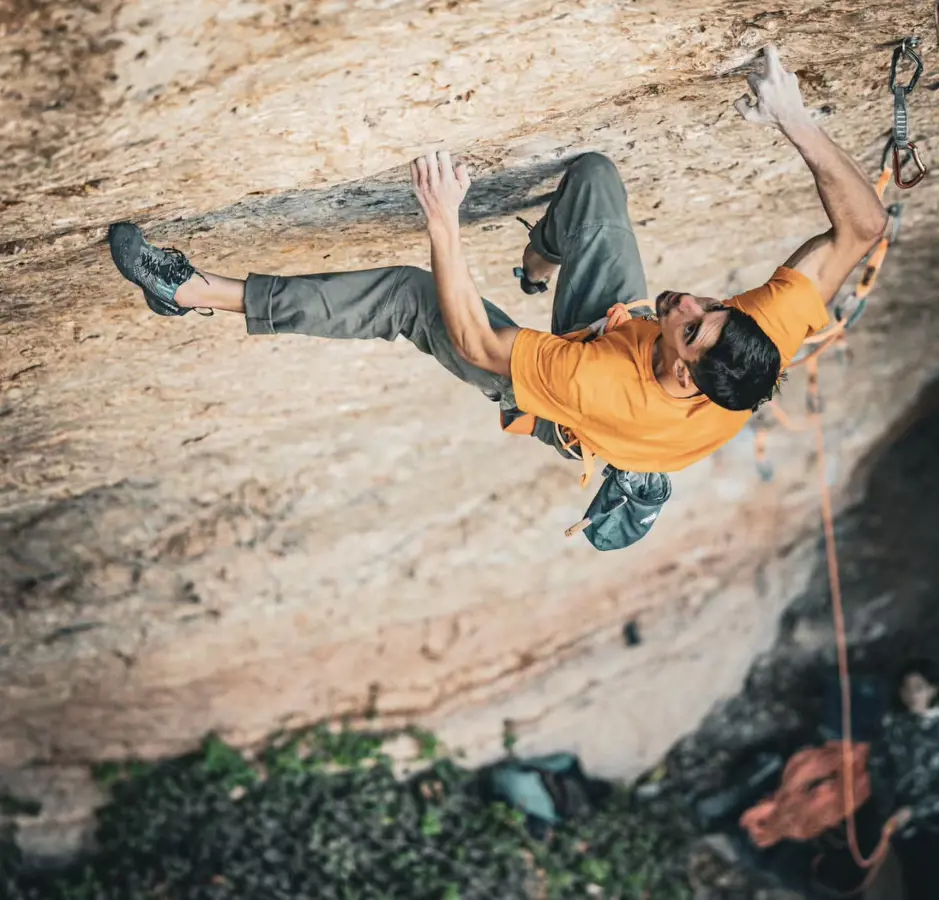
Jorge Diaz-Rullo reports on Instagram that he has made the first ascent of Cafe Colombia in Margalef. At 27, he’s already stacked four 9b+ sends and now he’s ad…
285
81
”I stopped focusing on competition bouldering after last year’s World Cup in Prague, partly because I can already feel it on my body, especially in my shoulders. The modern competition style, with a lot of jumping from one hold to another, is very demanding for the shoulders.
Outdoor bouldering is…
189
13Sean Bailey reports on Instagram that he has done the first ascent of Duality of Man (9c) in Dry Canyon. ” After four total years and three seasons of climbing,…
163
69 Most commented
Jorge Diaz-Rullo reports on Instagram that he has made the first ascent of Cafe Colombia in Margalef. At 27, he’s already stacked four 9b+ sends and now he’s ad…
285
81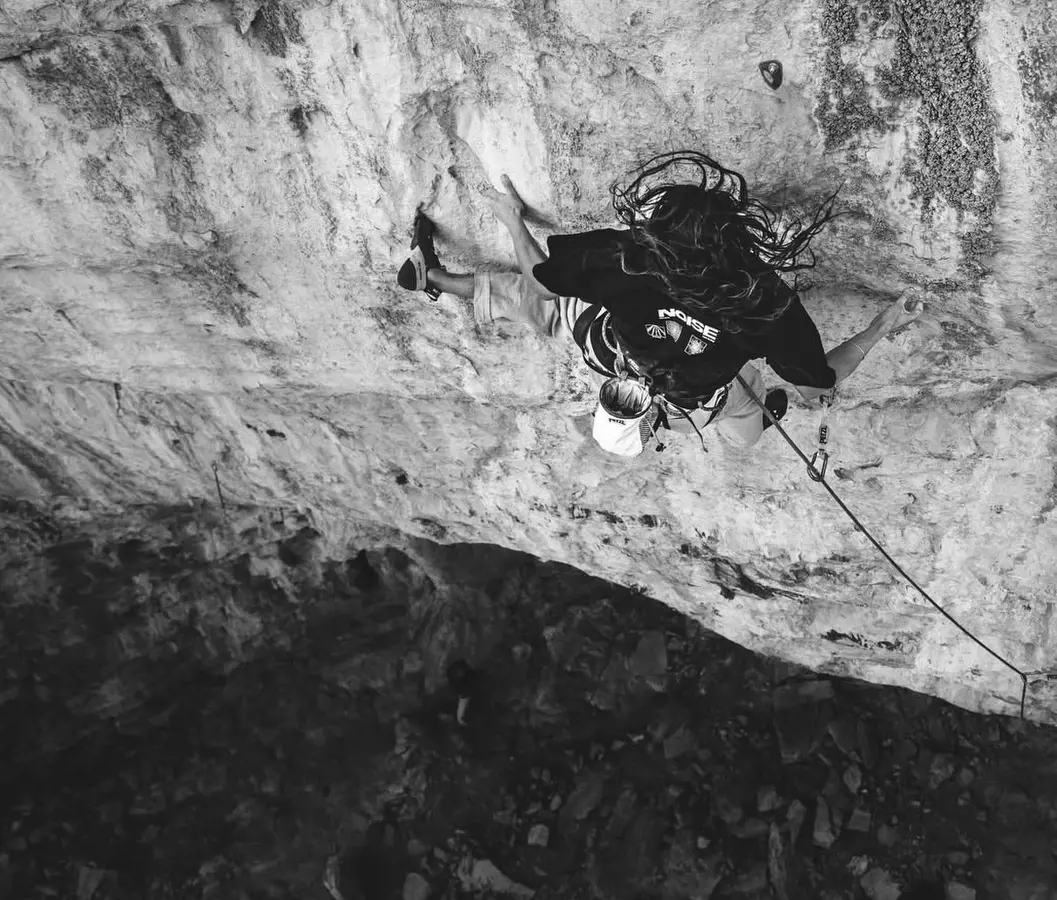
Sean Bailey reports on Instagram that he has done the first ascent of Duality of Man (9c) in Dry Canyon. ” After four total years and three seasons of climbing,…
163
69Jorge Diaz-Rullo elaborates on the reasons for him to suggest 9c for Café Colombia on Instagram, which he took down last week after projecting it for 240 sessio…
119
63