
NEWS

13 February 2021
Air bags part of the climbing future?
In an emergency situation, you could jump from up to 25 meters into a giant airbag, roll over and walk back home. Such airbags are also increasingly found in ski slopes, gymnastic halls and climbing gyms. As a matter of a fact, already in 2015 8a reported on a climbing comp in Austria where participants would fall from 12 meters into an enormous airbag. Since then, many smaller airbags have been developed where an experienced boulderer could land from up to ten meters. The size of the Air Pit by BagJump, in the picture, is 5 * 3 * 1 meters. The dilemma is, nevertheless, that it weighs 60 kg, you need a power station, and the costs start at Euro 3 800. On the good side, it just takes some minutes to inflate and unpack them. Video from a climbing gym with an airbag.
A possible future is that some gyms could rent them out for events or even to climbers who want to set a personal best. If this turns out successful, smaller ones may be developed and it may become quite common to rent them for a day and bring them to your project. 8a asked Andi Winter about possibilities for making them smaller and about the future:
"It is certainly possible to make even smaller airbags. We can customize them completely to the need of the client. A bag that small could definitely be done and after the right amount of testing, we’d be more than comfortable to promote that as well. We’re always willing to work with athletes to work on future developments. They know best what they can do and try the things that need to be done for the product to fit their needs. Maybe we should organize an outdoor boulder session with a small bag together?
A small bag of course can’t match a bigger one in terms of softness. A boulderer that uses a crashpad, however, will be more than comfortable to switch to a bag. It most certainly reduces the risk of injury! The question is, how does it react to a fall. That’s what we’d like to test. Like you said, in the short run and now already, our airbags are a great addition to climbing facilities of any kind, and for the future, we will be working on more solutions to make airbags a part of outdoor climbing and bouldering as well."
A possible future is that some gyms could rent them out for events or even to climbers who want to set a personal best. If this turns out successful, smaller ones may be developed and it may become quite common to rent them for a day and bring them to your project. 8a asked Andi Winter about possibilities for making them smaller and about the future:
"It is certainly possible to make even smaller airbags. We can customize them completely to the need of the client. A bag that small could definitely be done and after the right amount of testing, we’d be more than comfortable to promote that as well. We’re always willing to work with athletes to work on future developments. They know best what they can do and try the things that need to be done for the product to fit their needs. Maybe we should organize an outdoor boulder session with a small bag together?
A small bag of course can’t match a bigger one in terms of softness. A boulderer that uses a crashpad, however, will be more than comfortable to switch to a bag. It most certainly reduces the risk of injury! The question is, how does it react to a fall. That’s what we’d like to test. Like you said, in the short run and now already, our airbags are a great addition to climbing facilities of any kind, and for the future, we will be working on more solutions to make airbags a part of outdoor climbing and bouldering as well."
Read more
1
212 February 2021
Seb Bouin doing unrepeated 9a's
Read more
7
811 February 2021
Innovative 9A tricks by Lorenzi
Simon Lorenzi just made the FA of Soudain Seul, aka The Big Island assis, 9A, in Fontainbleau after some 25 sessions. In the end, the Belgian had to come up with two innovations to ascend this boulder. First, he removed the heel hook rubber and put it on his stiffer shoes. Second, by taping a pocketbook onto his knee under his kneepad, this 168 cm tall guy increased the length of his leg in order to get full use of a kneebar.
Customizing shoes by carving out ridges for better heal hooking, or by adding rubber for better toe hooking, have been practiced before. There are also shoes on the market with small rubber heal hook hooks/ridges. The use of double or even triple kneepads has also occurred, but Lorenzi is possibly the first to use a book under his kneepad.
There have been comments that this practice should be called aid climbing. However, it seems like people are mostly impressed by the innovation. Apart from the 8a Practice and Ethics from 2002, there few written ethical rules in climbing - instead, the word is spread around. Over time, ethics have also changed - chalk, pre-placed quick draws and kneepads are examples of innovations that were condemned in the beginning. Even in competition climbing, there are few rules and nothing says you cannot squeeze a book under your kneepad if it helps you. The latest news in comps is that some athletes bring in a fan, which by the way Lorenzi also used.
The 8a ethics use the traffic light system, providing examples of "yellow flag" behaviours, which anyhow make the ascents legitimate. We do not think you can draw an exact line for what is ok or not, but by giving examples of "grey areas" we hope climbers will regulate themself. At the same time, whenever climbers are using some greyish tricks, it is essential that you come clean, for example by openly stating that "I had three carabiners pre-clipped". Other climbers can then be credited for doing it in a better style.
Lorenzi should be applauded for his honesty and for sharing his extended leg tricks. Being honest is the way forward, especially for top climbers, and he should be credited for having done the FA of Soudain Seul. In my book, I nevertheless give him a yellow card. I mean, if you start building up big hooks on your knees which could be used on underclings on kneebars, I would personally think it is not a valid ascent. I have discussed this with several climbers and many top climbers agree that Lorenzi's 9A is ok but that we should not push this technique further.
Paul Robinson: "I think it is OK. I mean there is plastic inside of climbing shoes to make it stiffer so why can't you put that on a knee pad. Seems like the same to me."
I have also been discussing it with Lorenzi who comes with the great news that there is a video coming out revealing all his tricks. "For me I think it's something smart and it doesn't change the use that you can do with it. If you change completely the form and you can grab something with it, is not the same game. It is like dry-tooling in this case. I used a spray that physiotherapists use for the taping on my leg. The book wasn't really thick, like 3 cm. I tried with a bigger one and it was unstable."
Customizing shoes by carving out ridges for better heal hooking, or by adding rubber for better toe hooking, have been practiced before. There are also shoes on the market with small rubber heal hook hooks/ridges. The use of double or even triple kneepads has also occurred, but Lorenzi is possibly the first to use a book under his kneepad.
There have been comments that this practice should be called aid climbing. However, it seems like people are mostly impressed by the innovation. Apart from the 8a Practice and Ethics from 2002, there few written ethical rules in climbing - instead, the word is spread around. Over time, ethics have also changed - chalk, pre-placed quick draws and kneepads are examples of innovations that were condemned in the beginning. Even in competition climbing, there are few rules and nothing says you cannot squeeze a book under your kneepad if it helps you. The latest news in comps is that some athletes bring in a fan, which by the way Lorenzi also used.
The 8a ethics use the traffic light system, providing examples of "yellow flag" behaviours, which anyhow make the ascents legitimate. We do not think you can draw an exact line for what is ok or not, but by giving examples of "grey areas" we hope climbers will regulate themself. At the same time, whenever climbers are using some greyish tricks, it is essential that you come clean, for example by openly stating that "I had three carabiners pre-clipped". Other climbers can then be credited for doing it in a better style.
Lorenzi should be applauded for his honesty and for sharing his extended leg tricks. Being honest is the way forward, especially for top climbers, and he should be credited for having done the FA of Soudain Seul. In my book, I nevertheless give him a yellow card. I mean, if you start building up big hooks on your knees which could be used on underclings on kneebars, I would personally think it is not a valid ascent. I have discussed this with several climbers and many top climbers agree that Lorenzi's 9A is ok but that we should not push this technique further.
Paul Robinson: "I think it is OK. I mean there is plastic inside of climbing shoes to make it stiffer so why can't you put that on a knee pad. Seems like the same to me."
I have also been discussing it with Lorenzi who comes with the great news that there is a video coming out revealing all his tricks. "For me I think it's something smart and it doesn't change the use that you can do with it. If you change completely the form and you can grab something with it, is not the same game. It is like dry-tooling in this case. I used a spray that physiotherapists use for the taping on my leg. The book wasn't really thick, like 3 cm. I tried with a bigger one and it was unstable."
Read more
2
1211 February 2021
Colin Duffy (17) Olympic preperation interview
Colin Duffy, youth world champion twice, qualified to Tokyo last spring by winning Pan American. This was the first international IFSC senior competition by this 167 cm tall 16-year-old. "I didn't really have my eyes on the Olympics until the start of 2020."
How is your Olympic preparation going?
I am climbing 4-5 days a week, making sure to train each discipline during the week. I typically speed climb once a week and train endurance and comp style boulders the rest of the time. Along with climbing, I am working with a physical trainer to improve general strength and doing mobility work for flexibility.
What is your goal in Tokyo?
My Olympic dream would be to create memories I will remember forever and climb to the absolute best of my ability.
What are your Speed record, training and goal?
My official speed PB is 6.92 seconds. My speed goal for the Olympics would be to be in 6.6-6.7 range. To train for speed I like to do different drills such as working different sections of the route. These drills help me work on minor details. I also like to train leg power by doing exercises like box jumps and squats.
How has Covid-19 affected your training?
As of now Covid-19 doesn't have too much of an impact on my training, however, it affected me when the pandemic first started. When Covid was first spreading in the first few months of 2020, the gyms were closed and I was forced to train on my home wall. To adapt, I set different climbs on my wall and worked on physical training as well. Thankfully, I have full access to climbing gyms now and my training isn't affected. I have adapted to climbing in a mask though haha.
Who are your training partners and what do they mean to you?
Normally I train with my climbing team during the week so I don't really have any set training partners. I have been training a bit with Brooke Raboutou though who is a friend and fellow Olympian for Team USA. My training partners are very important to me as they help push and motivate me to be better!
Interview of his background from when he qualified to the Olympics winning the Pan American last spring. "I started climbing when I found the sport at a local recreation center around 4 years old. I fell in love with the challenge of the wall and would beg my parents to let me do it again. From there I practiced the sport periodically until I started taking it seriously at age 8. I'd say my coach Robyn Raboutou has meant the most for my career. When I started on team ABC in 2012, she has always believed in me and motivated me to try harder and perform better."
How is your Olympic preparation going?
I am climbing 4-5 days a week, making sure to train each discipline during the week. I typically speed climb once a week and train endurance and comp style boulders the rest of the time. Along with climbing, I am working with a physical trainer to improve general strength and doing mobility work for flexibility.
What is your goal in Tokyo?
My Olympic dream would be to create memories I will remember forever and climb to the absolute best of my ability.
What are your Speed record, training and goal?
My official speed PB is 6.92 seconds. My speed goal for the Olympics would be to be in 6.6-6.7 range. To train for speed I like to do different drills such as working different sections of the route. These drills help me work on minor details. I also like to train leg power by doing exercises like box jumps and squats.
How has Covid-19 affected your training?
As of now Covid-19 doesn't have too much of an impact on my training, however, it affected me when the pandemic first started. When Covid was first spreading in the first few months of 2020, the gyms were closed and I was forced to train on my home wall. To adapt, I set different climbs on my wall and worked on physical training as well. Thankfully, I have full access to climbing gyms now and my training isn't affected. I have adapted to climbing in a mask though haha.
Who are your training partners and what do they mean to you?
Normally I train with my climbing team during the week so I don't really have any set training partners. I have been training a bit with Brooke Raboutou though who is a friend and fellow Olympian for Team USA. My training partners are very important to me as they help push and motivate me to be better!
Interview of his background from when he qualified to the Olympics winning the Pan American last spring. "I started climbing when I found the sport at a local recreation center around 4 years old. I fell in love with the challenge of the wall and would beg my parents to let me do it again. From there I practiced the sport periodically until I started taking it seriously at age 8. I'd say my coach Robyn Raboutou has meant the most for my career. When I started on team ABC in 2012, she has always believed in me and motivated me to try harder and perform better."
Read more
1
19 February 2021
Lorenzi suggests 9A for The Big Island assis
Simon Lorenzi from Belgium did the Big Island in October after just two sessions. After another 23 sessions, he yesterday did the FA of The Big Island assis, i.e. from starting sitting. On Insta he describes the process, saying that he personally thinks it is either a hard 8C+ or a 9A. Based on that some other guys who have tried it think it is 9A, the Belgian concludes that 9A is probably the appropriate grade (c) Gilles Charlier
How hard do you think both parts are individually?
For me, it is a hard 8B (like harder than all the 8B I did) into a hard 8B+. But it's weird because this first part is so conditioned dependant. With 12°c it felt way harder than the second part and then if it's between 0 and 5°c it feels like 8B.
How good is the hold in between? Can you chalk there or somewhere?
All the way to the top without chalking up :) So just chalk up once before climbing. The end is complicated on the slopers.
Did you make a replica or just train at the site? What was the key for eventually taking it down?
Training at the site mostly because it's tricky and if I don't try it for a week I lose the feeling. Good short résistance and optimise every detail to spend less energy.
Did you have to use any special tricks being just 168 cm tall, beside your +8 cm ape index?
1: Using stiff shoes instead of soft shoes to put more pressure into the kneebar.
2: Using a stiff kneepad with something under (I first tried with old chunks of wood).
3: Stretch my upper body to gain mobility. Like that, I improved my arm reach a bit.
4: Using a different beta for the crux of the stand start.
What is next?
Next it's the world cup season in bouldering (I hope). And after that back outdoor to try hard stuff!
How hard do you think both parts are individually?
For me, it is a hard 8B (like harder than all the 8B I did) into a hard 8B+. But it's weird because this first part is so conditioned dependant. With 12°c it felt way harder than the second part and then if it's between 0 and 5°c it feels like 8B.
How good is the hold in between? Can you chalk there or somewhere?
All the way to the top without chalking up :) So just chalk up once before climbing. The end is complicated on the slopers.
Did you make a replica or just train at the site? What was the key for eventually taking it down?
Training at the site mostly because it's tricky and if I don't try it for a week I lose the feeling. Good short résistance and optimise every detail to spend less energy.
Did you have to use any special tricks being just 168 cm tall, beside your +8 cm ape index?
1: Using stiff shoes instead of soft shoes to put more pressure into the kneebar.
2: Using a stiff kneepad with something under (I first tried with old chunks of wood).
3: Stretch my upper body to gain mobility. Like that, I improved my arm reach a bit.
4: Using a different beta for the crux of the stand start.
What is next?
Next it's the world cup season in bouldering (I hope). And after that back outdoor to try hard stuff!
Read more
18
459 February 2021
Angeschossenes Wolf 8C by Philipp Gassner
Philipp Gaßner has done Toni Lamprect's Angeschossens Wolf 8C in Kochel. "The boulder is a harder exit version of Real Absurdistan‘ that I did a week ago. Then it took me one more session send it and grab its first repeat. Close to the finish it turns right and adds an explosive dead point to the saving top hold. The key to success was to climb the lower part as fast and precise as possible in order to save the necessary power for the last move. That boulder is just the epitome of my style and for now, I feel very fortunate about having these boulders at my home crag. So already looking forward to return for some remaining projects. There is Bokassas Fridge 8c that I'm psyched to try and a few easier ones."
Read more
9
19 February 2021
Ondra and Caldwell Dawn Wall talk
Read more
6
09 February 2021
Missing most due to Covid-19?
Based on 800+ unique votes, Climbing trips abroad are what the climbers miss the most due to Covid-19.
Read more
0
08 February 2021
The Big Island assis by Simon Lorenzi
Simon Lorenzi reports on Insta that he has made the sit start of The Big Island. It has been a project for many years and James Webb has said that just the sit into the stand start is at least 8B+. ” The sit start is an incredible project. For me personally the bottom is at least 8B+ and maybe even harder than The Big Island itself. The intro (10 moves for my method) is very powerful, yet technical with a tricky kneebar that links you through to the stand. Once you’re there you just have to take a deep breath and with absolutely no rest climb the Big Island.”
Lorenzi has not yet suggested a grade, but if the grades stand, adding an 8B+ into an 8C (B+), means that it could possibly be the second 9A in the world or a very hard 8C+. The picture by Oriane Tollebeek is from last October when Lorenzi did the Big Island after just two sessions, saying it is possibly 8B+. This 168 cm tall guy has previously done three 8C's, but as they did go down in just one or two sessions, he thought they all just might be 8B+. In 2017, he did his first 9a, Action Directe, after eleven days of projecting.
One reason why we have not heard more about him is that he lives in Belgium and actually quite seldom climbs outdoors as he has focused on comps. In 2016, he won the Youth Worlds and the next year he was once #10 in the WC. Later he started to struggle. For 17 straight Boulder and Lead WCs, he was mainly #30 - 50, and it was not until the very last WC last year that he was back on track as #14.
Lorenzi has not yet suggested a grade, but if the grades stand, adding an 8B+ into an 8C (B+), means that it could possibly be the second 9A in the world or a very hard 8C+. The picture by Oriane Tollebeek is from last October when Lorenzi did the Big Island after just two sessions, saying it is possibly 8B+. This 168 cm tall guy has previously done three 8C's, but as they did go down in just one or two sessions, he thought they all just might be 8B+. In 2017, he did his first 9a, Action Directe, after eleven days of projecting.
One reason why we have not heard more about him is that he lives in Belgium and actually quite seldom climbs outdoors as he has focused on comps. In 2016, he won the Youth Worlds and the next year he was once #10 in the WC. Later he started to struggle. For 17 straight Boulder and Lead WCs, he was mainly #30 - 50, and it was not until the very last WC last year that he was back on track as #14.
Read more
32
68 February 2021
Zor 8c by Solveig Korherr
Solveig Korherr has done Zor 8c, which means hard in Turkish, in Datca. The 22-year-old German has been in Turkey for over two months now and there is no fixed end date yet. (c) Jon Shen, who comments on Insta: " I aid-climbed through this first pitch to recon a different link-up that goes into the same upper finish and I can report back that these holds are not jugs. 😂"
Solveig comments on her scorecard: "8-9 days. 10 redpoint attempts after I unlocked all the moves. A steep 8b+ bouldery section followed by endurance climbing. The lower boulder section really didn't fit me, but I had to persevere over many days despite very wet holds and seepage to find the beta that fit me. Happy it worked out! :)"
What about Covid-19 restrictions in Turkey?
I am very grateful to be here climbing and travelling in Turkey, where there are no official restrictions on tourist visitors. We are, however, being respectful and are generally isolating ourselves in our apartment. Datça is quite off the beaten path as a climbing destination. It has been very quiet here with just a handful of climbers in the area.
Solveig comments on her scorecard: "8-9 days. 10 redpoint attempts after I unlocked all the moves. A steep 8b+ bouldery section followed by endurance climbing. The lower boulder section really didn't fit me, but I had to persevere over many days despite very wet holds and seepage to find the beta that fit me. Happy it worked out! :)"
What about Covid-19 restrictions in Turkey?
I am very grateful to be here climbing and travelling in Turkey, where there are no official restrictions on tourist visitors. We are, however, being respectful and are generally isolating ourselves in our apartment. Datça is quite off the beaten path as a climbing destination. It has been very quiet here with just a handful of climbers in the area.
Read more
3
0 Favorites
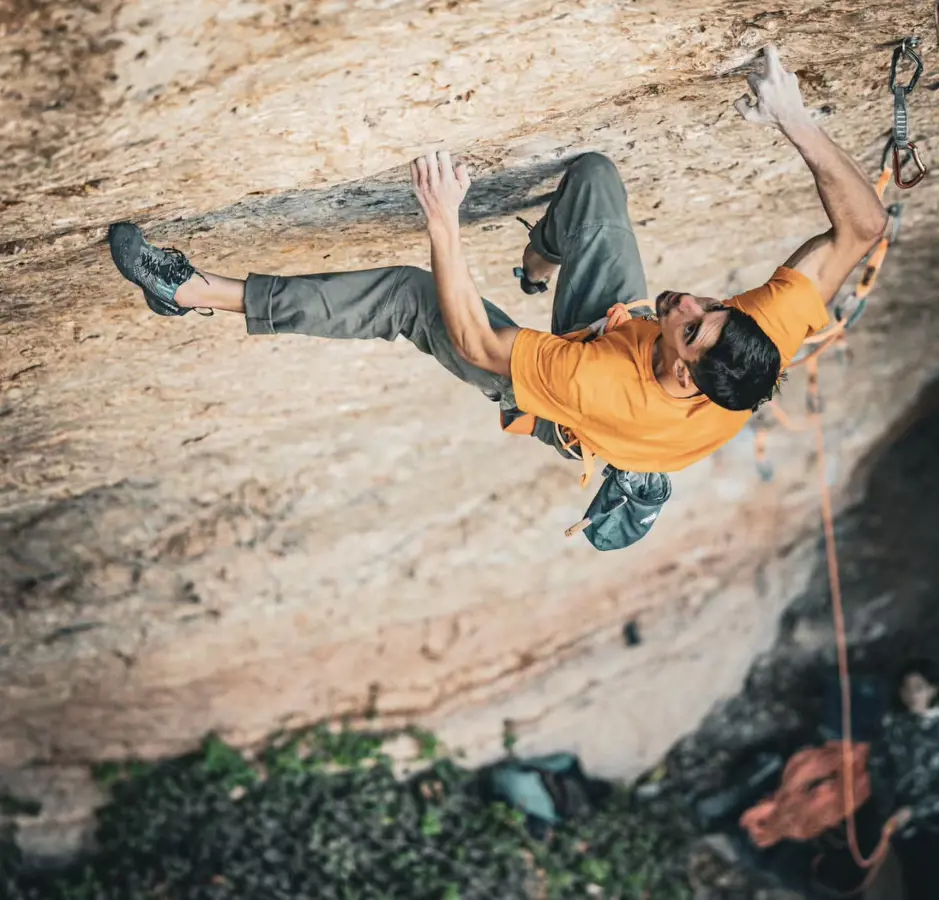
Jorge Diaz-Rullo reports on Instagram that he has made the first ascent of Cafe Colombia in Margalef. At 27, he’s already stacked four 9b+ sends and now he’s ad…
285
81
”I stopped focusing on competition bouldering after last year’s World Cup in Prague, partly because I can already feel it on my body, especially in my shoulders. The modern competition style, with a lot of jumping from one hold to another, is very demanding for the shoulders.
Outdoor bouldering is…
189
13Sean Bailey reports on Instagram that he has done the first ascent of Duality of Man (9c) in Dry Canyon. ” After four total years and three seasons of climbing,…
163
69 Most commented
Jorge Diaz-Rullo reports on Instagram that he has made the first ascent of Cafe Colombia in Margalef. At 27, he’s already stacked four 9b+ sends and now he’s ad…
285
81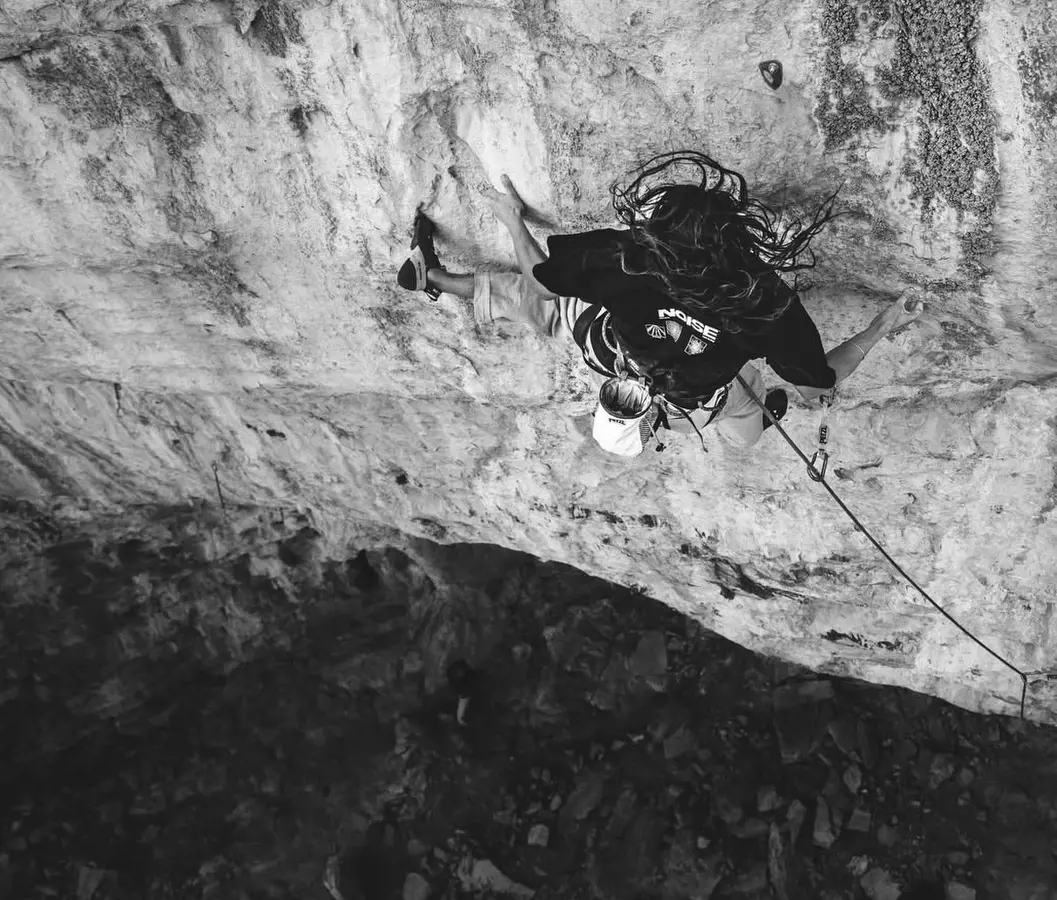
Sean Bailey reports on Instagram that he has done the first ascent of Duality of Man (9c) in Dry Canyon. ” After four total years and three seasons of climbing,…
163
69Jorge Diaz-Rullo elaborates on the reasons for him to suggest 9c for Café Colombia on Instagram, which he took down last week after projecting it for 240 sessio…
119
63