
NEWS
7 September 2021
Short or long time focus/progress
It is quite easy to get short time progress. Just find a route of your style and physical advantages and start projecting and you will probably set a new grade PB. However, your new PB will probably not be evidence that you have become a better climber. Instead, you have just sub-optimized what you are capable to do.
The setbacks of such a short-time approach are, besides getting injured, that you build up more pressure/anxiety evolving more of a grade hunter instead of enjoying the full spectrum of a "lifestyle climber." This is a process I have seen over and over again, often resulting in climbers taking long breaks from climbing or quitting altogether.
The other approach is to do as many of the best climbers in the world, ("the ones having the most fun"), not going for long-time projects until they had climbed for ten years and almost reached their full potential. Instead, just climb as many different routes as possible and focus on what is most fun, instead of grade progress. This will, most probably, make you climb more hours per week and that you will have less anxiety once you later go for an onsight PB.
The setbacks of such a short-time approach are, besides getting injured, that you build up more pressure/anxiety evolving more of a grade hunter instead of enjoying the full spectrum of a "lifestyle climber." This is a process I have seen over and over again, often resulting in climbers taking long breaks from climbing or quitting altogether.
The other approach is to do as many of the best climbers in the world, ("the ones having the most fun"), not going for long-time projects until they had climbed for ten years and almost reached their full potential. Instead, just climb as many different routes as possible and focus on what is most fun, instead of grade progress. This will, most probably, make you climb more hours per week and that you will have less anxiety once you later go for an onsight PB.
Read more
2
06 September 2021
How to transfer gym skills to enjoying rock
During this summer I have seen and heard many stories about how very skilled indoor climbers have a hard time transferring to outdoors. One reason is of course that the gym grades are so much softer so these novice outdoor climbers set the bar way too high.
Another reason is that gym climbers lack training in using very small footholds or smearing. Furthermore, outdoors there are often more resting positions and cracks or other strange way to use holds.
The best and easiest way to learn how to climb better outdoors is simply to just climb as many different routes as possible. Skip going for a personal best and instead climb easier grades.
Once you start enjoying climbing easier routes and appreciating being outdoors, your grade anxiety will disappear. Your drive will be more into climbing and not just to accomplishing hard routes. This is probably, for most climbers, the best way of transferring your gym skill to outdoors.
Another reason is that gym climbers lack training in using very small footholds or smearing. Furthermore, outdoors there are often more resting positions and cracks or other strange way to use holds.
The best and easiest way to learn how to climb better outdoors is simply to just climb as many different routes as possible. Skip going for a personal best and instead climb easier grades.
Once you start enjoying climbing easier routes and appreciating being outdoors, your grade anxiety will disappear. Your drive will be more into climbing and not just to accomplishing hard routes. This is probably, for most climbers, the best way of transferring your gym skill to outdoors.
Read more
0
06 September 2021
Dreamcatcher 9a by Paige Claassen
Paige Claassen has done her fourth 9a and the first female ascent of Chris Sharma's classic Dreamcatcher in Squamish. (c) Arjan de Kock
Could you please tell us about the process started already seven years, as you mentioned on Insta?
I first tried seven years ago, for about a month. By the end of the month, I could do all the moves and link a few moves together, but that was about it. I haven't thought about it much for the last seven years, as I've had plenty of other things to focus on. But I'd always wanted to return to Squamish to try again when it fit into my schedule and I felt well prepared. This season felt like the right time, so I made it happen. But I wouldn't say Dreamcatcher was always on my mind over the last seven years.
I've spent the last few years trying routes that are more my "anti style" - steep, physical, dynamic routes. I want to be a well rounded climber, so it's important to me that I focus on my weaknesses in order to do routes that won't come as easily to me. I believe all these routes helped lead me to a place where I was prepared for Dreamcatcher, although that wasn't the intention in choosing those routes. Prior to my Squamish trip, I trained specifically for Dreamcatcher for two months - I set some simulators, made sure my shoulders were strong, and that my body felt fresh and uninjured.
How do you rank the route quality wise?
As for the quality - it’s of course a stunning line, probably one of the most beautiful I’ve had the opportunity to climb. I especially like that there are four distinct styles throughout - slab, campus rail on slopers, pin scar crack, and technical boulder at the top.
What are otherwise the hardest routes and boulders you have done in 2021?
I've tried a few hard routes in 2021, in particular All You Can Eat (9a+) at Mt Potosi and Empath (9a+) in Tahoe but haven't succeeded on them. Since projecting is what I enjoy most, I often spend a lot of time working a route without sending.
What is next?
Next up is spending some time not caring if my fingers get wet - playing in the lakes in Squamish, maybe some easier multi pitches for fun. After I do a big project, I like to spend some time not focusing so strongly on an objective.
Could you please tell us about the process started already seven years, as you mentioned on Insta?
I first tried seven years ago, for about a month. By the end of the month, I could do all the moves and link a few moves together, but that was about it. I haven't thought about it much for the last seven years, as I've had plenty of other things to focus on. But I'd always wanted to return to Squamish to try again when it fit into my schedule and I felt well prepared. This season felt like the right time, so I made it happen. But I wouldn't say Dreamcatcher was always on my mind over the last seven years.
I've spent the last few years trying routes that are more my "anti style" - steep, physical, dynamic routes. I want to be a well rounded climber, so it's important to me that I focus on my weaknesses in order to do routes that won't come as easily to me. I believe all these routes helped lead me to a place where I was prepared for Dreamcatcher, although that wasn't the intention in choosing those routes. Prior to my Squamish trip, I trained specifically for Dreamcatcher for two months - I set some simulators, made sure my shoulders were strong, and that my body felt fresh and uninjured.
How do you rank the route quality wise?
As for the quality - it’s of course a stunning line, probably one of the most beautiful I’ve had the opportunity to climb. I especially like that there are four distinct styles throughout - slab, campus rail on slopers, pin scar crack, and technical boulder at the top.
What are otherwise the hardest routes and boulders you have done in 2021?
I've tried a few hard routes in 2021, in particular All You Can Eat (9a+) at Mt Potosi and Empath (9a+) in Tahoe but haven't succeeded on them. Since projecting is what I enjoy most, I often spend a lot of time working a route without sending.
What is next?
Next up is spending some time not caring if my fingers get wet - playing in the lakes in Squamish, maybe some easier multi pitches for fun. After I do a big project, I like to spend some time not focusing so strongly on an objective.
Read more
31
25 September 2021
Skip the multiplication format in 2024
It seems everyone agrees that the multiplication format used in the Tokyo Olympics was not ideal. The Olympics did not become a competition in who was best overall but instead benefited those who won any one of the three disciplines. If the same multiplication format will be used in Paris 2024, winning one discipline will almost guarantee a medal. Is this good or bad?
Personally, I think that as the name says "Combination", the format should premiere those who are best overall and not in a single discipline. Being runner-up in two disciplines is better than getting 1 and 4. (The latter multiplication of 4 is better due to countback who got the best individual result). When it comes to the qualification, I think it should be worse to be 2 and 18 compared to being 6 and 6, but the multiplication system will always favour uneven results.
One possible reason why the multiplication system was used in Tokyo is that this system had been in place for many years during the lead qualification. In this case, I like the system as we want the best climbers to advance to the semifinal and even if you are dead last on one route, you can still make it if you are Top-3 or 4 on the other route.
Personally, I think that as the name says "Combination", the format should premiere those who are best overall and not in a single discipline. Being runner-up in two disciplines is better than getting 1 and 4. (The latter multiplication of 4 is better due to countback who got the best individual result). When it comes to the qualification, I think it should be worse to be 2 and 18 compared to being 6 and 6, but the multiplication system will always favour uneven results.
One possible reason why the multiplication system was used in Tokyo is that this system had been in place for many years during the lead qualification. In this case, I like the system as we want the best climbers to advance to the semifinal and even if you are dead last on one route, you can still make it if you are Top-3 or 4 on the other route.
Read more
0
55 September 2021
Zelenputza 9a+ and Santo Celedon 9a by Alex Garriga
Alex Garriga, who the last week did three 9a's in Ilarduia, has done Santa Celedo 9a and Zelenputza 9a+. The latter he calls, ”The best of the best”. Both routes are link-ups of previous routes he did. During nine days, he did nine routes 8b+ to 9a+ in Ilarduia.
How often do you take rest days, being able to do that many hard routes in so short time?
In other places where the access is easy, I usually climb between 3-7 days in a row. Here the approach is 45 min going uphill in the sun. Much harder than the walk up to Céüse, in my opinion. Being lazy, I had to change my strategy because the access to the wall is very tiring so I did three climbing days followed by a rest day.
How often do you take rest days, being able to do that many hard routes in so short time?
In other places where the access is easy, I usually climb between 3-7 days in a row. Here the approach is 45 min going uphill in the sun. Much harder than the walk up to Céüse, in my opinion. Being lazy, I had to change my strategy because the access to the wall is very tiring so I did three climbing days followed by a rest day.
Read more
3
05 September 2021
Unendliche Geschichte 1+2+3 9a by Roch Oddo
Roch Oddo 🦐 has done Unendliche Geschichte 1+2+3 9a in Magic Woods. It is a seven-bolt extension to the boulder Never Ending Story 8B+ and also 8C has been suggested although clipping into a rope. Previously Roch has only done an 8b route as his focus is bouldering, where he has done several 8B's. (c) Samuel Tour
"I started trying this boulder last summer with the intention of only doing part 2, but realising how perfect the line was I immediately started to work on the low start. I did the 8b+ on my second trip (with a really uncommon toe hook beta on the crux). It felt like unfinished business to stop on the rest and the route is the better exit to me. So I started working on endurance and went back once more to finish it. I spent about 6 weeks on it in total and finished it right as my last year of med school is starting, which will represent a huge switch from the climbing focused lifestyle I could live till now. All in all, it just comes as a perfect ending to a really nice chapter of my life"
How was it to tackle the this endurance challenge?
It is really hard to get into it, but once you learn to enjoy the pump it's actually not that bad. I would advice every bouldering specialist to at least give it one serious training cycle, it is an acquired taste for sure. I did have some trouble going back into bouldering mode for the first part again, if I could start again I would have kept a little more max strenght into my regime. The training worked wonders tho, I went to the top the first time I got to the rest (after failing twice 2 moves into the route completly pumped on the previous trip). I think the right balance between burly bouldering strenght and a minimal level of endurance is one of the big challenge on this one.
"I started trying this boulder last summer with the intention of only doing part 2, but realising how perfect the line was I immediately started to work on the low start. I did the 8b+ on my second trip (with a really uncommon toe hook beta on the crux). It felt like unfinished business to stop on the rest and the route is the better exit to me. So I started working on endurance and went back once more to finish it. I spent about 6 weeks on it in total and finished it right as my last year of med school is starting, which will represent a huge switch from the climbing focused lifestyle I could live till now. All in all, it just comes as a perfect ending to a really nice chapter of my life"
How was it to tackle the this endurance challenge?
It is really hard to get into it, but once you learn to enjoy the pump it's actually not that bad. I would advice every bouldering specialist to at least give it one serious training cycle, it is an acquired taste for sure. I did have some trouble going back into bouldering mode for the first part again, if I could start again I would have kept a little more max strenght into my regime. The training worked wonders tho, I went to the top the first time I got to the rest (after failing twice 2 moves into the route completly pumped on the previous trip). I think the right balance between burly bouldering strenght and a minimal level of endurance is one of the big challenge on this one.
Read more
4
45 September 2021
TCT 9a by Gianluca Vighetti (12)
Gianluca Vighetti, who previously in 2021 has done 12 onsights 8a and harder, has become the first-ever 12-year-old to have done a 9a, TCT in Gravere. Stefano Ghisolfi did the FA in 2014 (at age 21), calling it his hardest route ever. " I want to dedicate this route to Tito Traversa (that's why I called TCT), because I want everybody will remember him forever. The start is in common with his last hard realization Pablo Diretta 8b+, he was impressive on it. Thanks to Valter Vighetti for suggesting to try this route."
Interestingly, Gianluca has previously explained where he learnt to speak English. "Watching climbing videos on YouTube. My favourite climbing Channel is Stefano Ghisolfi, his English is very good."
"TCT is a link of L’extremacura 8c and Base jump 8b+ with a partial rest in between. After I made Extrema cura plus 8c+, I tried Base jump 8b+, the second part of TCT. Immediately I thought that it wasn’t exactly my route because it’s short, bouldery and full of huge moves. When I sent it I immediately tried the 9a by doing two tries, but I fell on the 8c. For around 10 tries I always fell after the rest before the 8b+, because I wasn’t able to rest correctly. Then July came and it was too hot, so I left the project for two months.
I went to Arco and to La Saume on holiday and after all this, I came back to try the route. The first try after I came back, I fell in the last crux, a huge move between a two finger pocket and a good crimp. The day after I fell in the last move to a jug on the edge. After doing two days of rest, today I finally made it."
It should be mentioned that 12-year-old Andrea Chelleris did Puro Dreaming this summer but based on down grading suggestions, it should be considered 8c+/9a now.
Interestingly, Gianluca has previously explained where he learnt to speak English. "Watching climbing videos on YouTube. My favourite climbing Channel is Stefano Ghisolfi, his English is very good."
"TCT is a link of L’extremacura 8c and Base jump 8b+ with a partial rest in between. After I made Extrema cura plus 8c+, I tried Base jump 8b+, the second part of TCT. Immediately I thought that it wasn’t exactly my route because it’s short, bouldery and full of huge moves. When I sent it I immediately tried the 9a by doing two tries, but I fell on the 8c. For around 10 tries I always fell after the rest before the 8b+, because I wasn’t able to rest correctly. Then July came and it was too hot, so I left the project for two months.
I went to Arco and to La Saume on holiday and after all this, I came back to try the route. The first try after I came back, I fell in the last crux, a huge move between a two finger pocket and a good crimp. The day after I fell in the last move to a jug on the edge. After doing two days of rest, today I finally made it."
It should be mentioned that 12-year-old Andrea Chelleris did Puro Dreaming this summer but based on down grading suggestions, it should be considered 8c+/9a now.
Read more
8
35 September 2021
Climbing for a reason in Pakistan
"February 5th was the last day we heard from Juan Pablo Mohr and it was exactly that same day, that we knew that as soon as summer arrived, we would be there to fulfil one of his last dreams : Climbing for a Reason in Pakistan.
The fact that Jp did not physically return from the mountain is no excuse for not spiritually realizing the project he had in mind with Chilean climber Lucho Birkner, which they were already planning together from base camp with the help of Pakistani Ali Sadpara and Italian Tamara Lunger, who would later join this tribute and legacy by being the only one to descend the mountain alive.
The mission was clear, to turn Muslim women into climbers of their own rocks. Having the opportunity to give a tool like this to girls who practically live in a culture where women are forbidden or limited to perform a myriad of activities, gave us the strength to give our all.
This is how certain objectives were achieved:
-19 new sport climbing routes and the creation of the first sector in the region.
-1 reclining artificial wall with 500 holds and volumes.
-Safety workshops (girls who already know how to point a route, tie knots and climb safely).
-Basic and technical equipment donated for the next 7 years.
-In the process the creation of the first sport climbing club in the Shigar Valley.
Watching these girls climb for the first time in their lives on their new climbing wall and on their own rocks and seeing them feel like they were punching up a history of repressed women was amazing. They where in love so quick of climbing. It's really amazing when you hear a mother of them say:
"We wait a lifetime for an opportunity like this, where our little girls have a chance to grow up and be free in something that they are passionate about, that they can aspire to something, it's something that sets a new precedent for our girls and more here in Pakistan that after the birth of a baby, the woman in Pakistan has two choices: she makes herself miserable or between all of us we make her strong.“
As an organization, we have seen once again how climbing is a gigantic agent of change for children who live in life situations often lacking opportunities. Remember that Climbing for a Reason is a non-profit organization that at least once a year travels to different destinations around the world in order to turn local people into climbers on their own rocks. You can still keep helping... all proceeds go directly to the project and future of Shigar Valley:" Go Get Funding - Climbing for a reason
The fact that Jp did not physically return from the mountain is no excuse for not spiritually realizing the project he had in mind with Chilean climber Lucho Birkner, which they were already planning together from base camp with the help of Pakistani Ali Sadpara and Italian Tamara Lunger, who would later join this tribute and legacy by being the only one to descend the mountain alive.
The mission was clear, to turn Muslim women into climbers of their own rocks. Having the opportunity to give a tool like this to girls who practically live in a culture where women are forbidden or limited to perform a myriad of activities, gave us the strength to give our all.
This is how certain objectives were achieved:
-19 new sport climbing routes and the creation of the first sector in the region.
-1 reclining artificial wall with 500 holds and volumes.
-Safety workshops (girls who already know how to point a route, tie knots and climb safely).
-Basic and technical equipment donated for the next 7 years.
-In the process the creation of the first sport climbing club in the Shigar Valley.
Watching these girls climb for the first time in their lives on their new climbing wall and on their own rocks and seeing them feel like they were punching up a history of repressed women was amazing. They where in love so quick of climbing. It's really amazing when you hear a mother of them say:
"We wait a lifetime for an opportunity like this, where our little girls have a chance to grow up and be free in something that they are passionate about, that they can aspire to something, it's something that sets a new precedent for our girls and more here in Pakistan that after the birth of a baby, the woman in Pakistan has two choices: she makes herself miserable or between all of us we make her strong.“
As an organization, we have seen once again how climbing is a gigantic agent of change for children who live in life situations often lacking opportunities. Remember that Climbing for a Reason is a non-profit organization that at least once a year travels to different destinations around the world in order to turn local people into climbers on their own rocks. You can still keep helping... all proceeds go directly to the project and future of Shigar Valley:" Go Get Funding - Climbing for a reason
Read more
2
05 September 2021
Static belaying is (more) dangerous
Climbing has published an article on how to belay. In the picture, the belayer is connected to the ground which is a good piece of advice when the climber is more than 30% heavier than the belayer. The downside of being anchored to the ground is that the fall will be rather static, which especially should be avoided on trad climbing. Sure there might be some weight difference in the picture but normally grown-up males do not need to anchor themselves to the ground.
Personally, I would have taken my stance two meters to the left and possibly lifted my leg up on the first shelf there. Leaning a bit backwards with one foot against the rock is my best recommendation when it comes to situations with small weight differences. This would also have meant that the risk of getting the rope in between the legs would have been reduced for the climber in the picture, had he taken a fall. A further downside of being anchored to the ground is that you can not move in case of rockfall.
A middle way option is to connect the petit climber to a bag filled with 10 kg of rocks or similar. If you anyhow must attach yourself to the ground you should clip into the anchor with quickdraws so you can easily get rid off it.
I must also mention that in the article it says "the belayer could find somewhere comfortable to sit". This is, I am afraid, totally wrong. A belayer should never be recommended to sit down! It is also strange that in the first picture, the belayer does not use a helmet. If we were to give advice for any gym rat going out, the use of a helmet is much more important than anchoring the belayer to the ground.
Personally, I would have taken my stance two meters to the left and possibly lifted my leg up on the first shelf there. Leaning a bit backwards with one foot against the rock is my best recommendation when it comes to situations with small weight differences. This would also have meant that the risk of getting the rope in between the legs would have been reduced for the climber in the picture, had he taken a fall. A further downside of being anchored to the ground is that you can not move in case of rockfall.
A middle way option is to connect the petit climber to a bag filled with 10 kg of rocks or similar. If you anyhow must attach yourself to the ground you should clip into the anchor with quickdraws so you can easily get rid off it.
I must also mention that in the article it says "the belayer could find somewhere comfortable to sit". This is, I am afraid, totally wrong. A belayer should never be recommended to sit down! It is also strange that in the first picture, the belayer does not use a helmet. If we were to give advice for any gym rat going out, the use of a helmet is much more important than anchoring the belayer to the ground.
Read more
3
04 September 2021
Lead WC overall 2021
1. Stefano Ghisolfi ITA 319 - Janja Garnbret SLO 300
2. Sean Bailay USA 277 - Natalia Grossman USA 296
3. Masahiro Higuchi JPN 266 - Laura Rogora ITA 278
4. Luca Potocar SLO 212 - Vita Lukan SLO 269
5. Sasha Lehmann SUI 204 - Lucka Rakovec SLO 185
6. Martin Stranik CZE 195 - Aleksandra Totkova BUL 169
National Team Ranking
1. Slovenia 1 244
2. Japan 1 041
3. USA 906
4. Italy 797
5. France 594
6. Germany 547
Complete results (c) Sara Grippo
2. Sean Bailay USA 277 - Natalia Grossman USA 296
3. Masahiro Higuchi JPN 266 - Laura Rogora ITA 278
4. Luca Potocar SLO 212 - Vita Lukan SLO 269
5. Sasha Lehmann SUI 204 - Lucka Rakovec SLO 185
6. Martin Stranik CZE 195 - Aleksandra Totkova BUL 169
National Team Ranking
1. Slovenia 1 244
2. Japan 1 041
3. USA 906
4. Italy 797
5. France 594
6. Germany 547
Complete results (c) Sara Grippo
Read more
1
0 Favorites
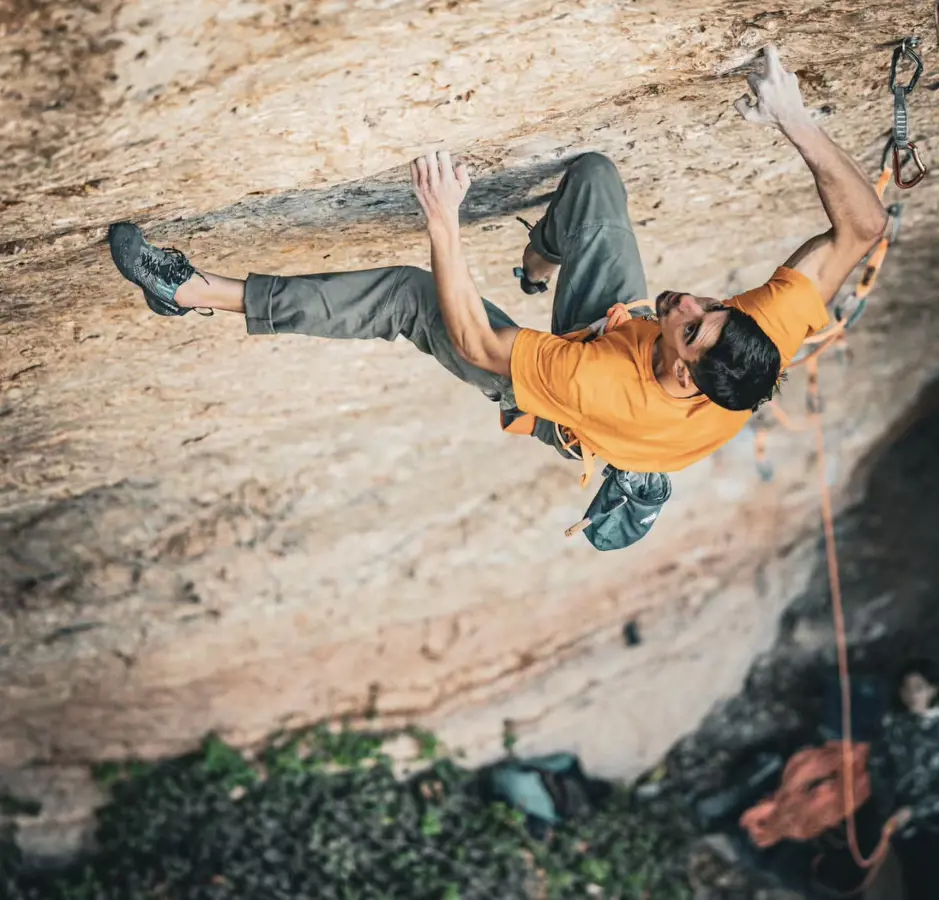
Jorge Diaz-Rullo reports on Instagram that he has made the first ascent of Cafe Colombia in Margalef. At 27, he’s already stacked four 9b+ sends and now he’s ad…
285
81
”I stopped focusing on competition bouldering after last year’s World Cup in Prague, partly because I can already feel it on my body, especially in my shoulders. The modern competition style, with a lot of jumping from one hold to another, is very demanding for the shoulders.
Outdoor bouldering is…
189
13Sean Bailey reports on Instagram that he has done the first ascent of Duality of Man (9c) in Dry Canyon. ” After four total years and three seasons of climbing,…
163
69 Most commented
Jorge Diaz-Rullo reports on Instagram that he has made the first ascent of Cafe Colombia in Margalef. At 27, he’s already stacked four 9b+ sends and now he’s ad…
285
81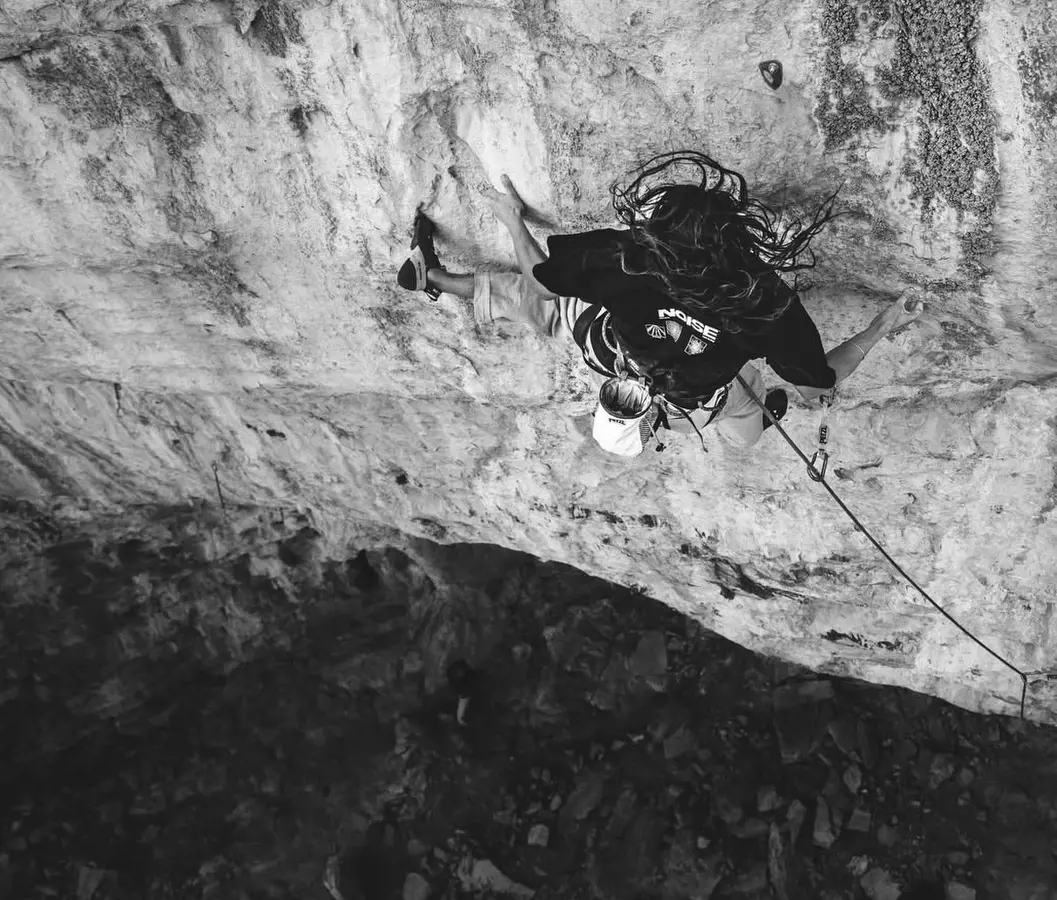
Sean Bailey reports on Instagram that he has done the first ascent of Duality of Man (9c) in Dry Canyon. ” After four total years and three seasons of climbing,…
163
69Jorge Diaz-Rullo elaborates on the reasons for him to suggest 9c for Café Colombia on Instagram, which he took down last week after projecting it for 240 sessio…
119
63