NEWS

Sean Bailey does Bibliographie 9b+
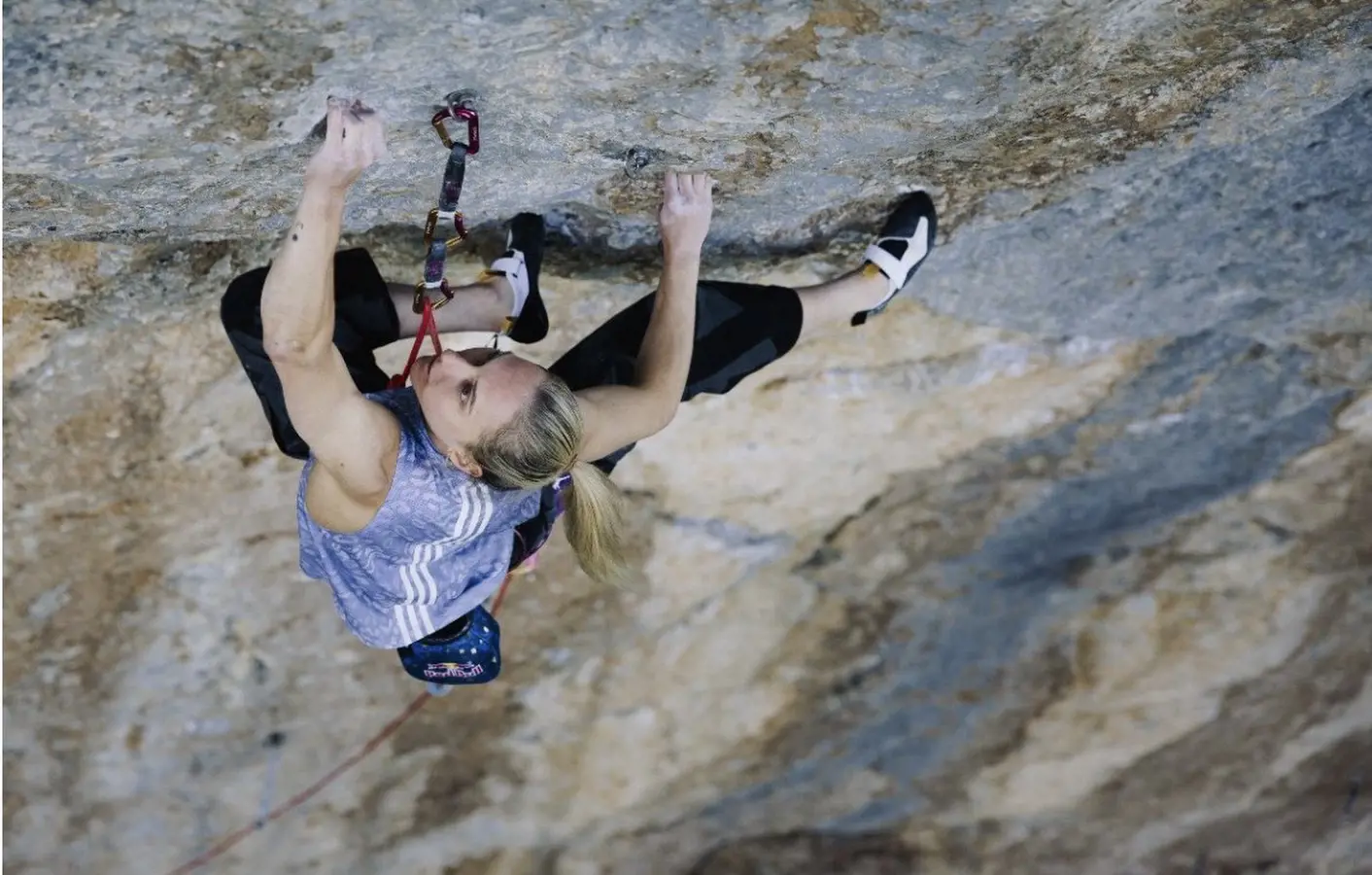
Sean Bailey, runner-up in the World Cup, reports on Insta that he has done the second repeat of Alex Megos' Bibliographie 9b+ in Cรฉรผse. Megos originally graded it 9c but then Stefano Ghisolfi found some better beta and gave it a personal 9b+ grade, which later Megos agreed upon. (c) Ben Neilson

"Easily the hardest battle Iโ€™ve waged with myself. Iโ€™ve never been so obsessed. I woke up thinking about the route. I fell asleep thinking about the route. It was nonstop."

The 163 cm tall has previously done one 9a and two 9a+'. In 2021, he has won two Lead World Cups and one in Bouldering. Last year, he was close to having made it to the Olympics in the Continental Championships.

Kinder Cakes 9a+ by Joe Kinder (41)
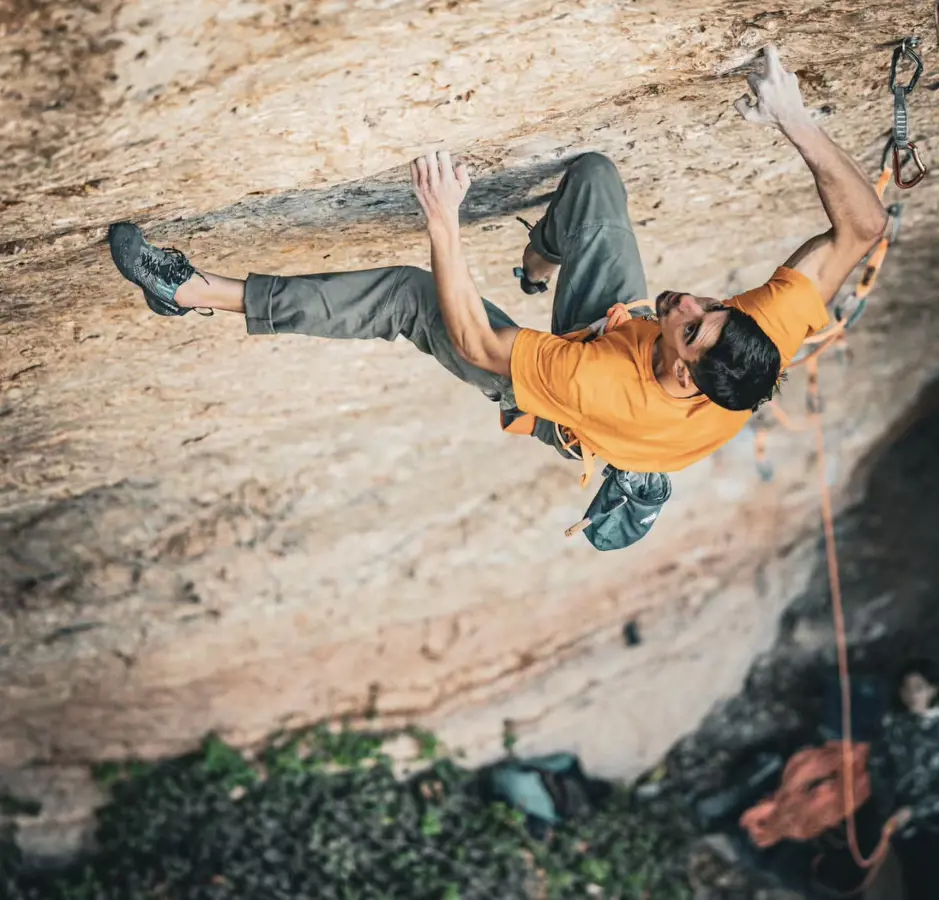
Joe Kinder has done the FA of Kinder Cakes 9a+ in Rifle and below is his full report on how he took it down. This was the 41-year-old's third 9a+, all of them FAs. (c) Ross Fulkerson

"I bolted Kinder Cakes in the fall of 2018 after I sent Diarrhea Mouth, 9a. The whole time I was trying DM I saw the hold, the line and the obvious pathway out the bulge in the roof. Literally, I was just as excited to finally bolt that line as I was when I sent DM.

In 2020 started making short trips to Rifle to sort out the line. Moving bolts, cleaning the loose rock and playing with the moves. I put a mid-way anchor in as it made sense and started to focus on that initially which became Cupcake, 8c. After that was complete I fixed a line at the mid anchor and started to focus on the second part. I remember asking Jonathan Seigrist if the line could be yielding 9b, as it simply felt like something improbable to me. He suggested just trying and trying and it will reveal itself eventually and really that's what I did. First ascents take so much time and vision and patience. There's so much more doubt and confusion with what you're doing. After some time sorting the second half of the route I worked on redpointing from the anchor (midway anchor) to anchor (top of the climb) which felt around 8c/+ in total. Next was to start piecing the whole thing together which just seemed loco. 8c is hard for me... like takes SERIOUS effort and to think of having to repeat Cupcake over and over sounded absurd. 2020's season ended with my best efforts falling at the last hold of the crux.

This season I prepared. I trained for 2 months prior which almost felt like too much time. 6 weeks would have been plenty. I did a strength cycle followed by a strength-endurance cycle. I followed a plan I made inspired by the Horst family and the tidbits I've learned along the way. My wife Lindsey supported the whole effort as she wanted to see me succeed as well. When the training was over we headed over this way to Rifle and I got to work. The conditions weren't right, but I still put in the effort and within 3 days I was back to falling at the last hold of the 5 move crux. It was wild. This continued for a month actually, I never fell in the 8c first portion, confidence was in a good place and all I needed was some tiny variable to work in my favour (conditions, mental state, luck, whatever).

Last Sunday, Sept 26th, which was an ordinary day really. The conditions weren't great or bad and my mind state was the same as any other day. I stood at the base, did some visualizing, left the ground, got to the knee-bar, calmed down and recovered, left the rest, climbed to the crux and executed the 5 moves in total. It was the first time I stuck the last move from the ground. I remember shaking at the horizontal and freaking out internally. There's still another V8 exit and all I could think about was how fuct it would be to actually blow it at that point. HA! What a moment. I left the rest and felt connected, fresh enough and very exhilarated. I swear, pulling onto the slab and putting my cheek to the wall and realizing where I was in the world was one of the best feelings I've ever had. I clipped the anchor, sat back into my harness in a state of disbelief and pure bliss. I had just climbed my baby, my hardest, my biggest goal.

I'm still happy of course, but now I want some more haha! It's never ending, isn't it??? I'd really like to thank my wife Lindsey for her support and belief in me... she gives me so much of herself and her time and I'm so grateful. Cheers to everyone for reading and all the support. I appreciate you."

Schwarz Mรถnch 9a by David Firnenburg
David Firnenburg, who previoulsy has done three 9a+, has done his 15th 9a, Schwarz Mรถnch in Gimmelwald. "Happy to send this route before the season comes to an end here. Great endurance climb with two bouldery sections. Harder than Alpenbitter and Jungfraumarathon. Felt like 9a for me. Needed 3 sessions to send it."

What is next?
Maybe I go for โ€œInfernoโ€ which is the last 9a up there and check out one of the projects. Afterwards, I am not sure yet. There is still a lot to do. Sooner or later Iโ€™ll try a project in Soyhieres which is at least 9a. Maybe harder. Temps are getting colder again which is nice ๐Ÿ‘

Are you a full-time climber now?
Nope, still a student ๐Ÿค“; Psychology, Philosophy and Sociology. Climbing as much as possible aside. There are two years left but I plan to take a break in one year together with my girlfriend Andrea (Kรผmin), if she isnโ€™t too busy with comp climbing. The break will be around half a year. Maybe an EU rock trip.

One easy way to get better endurance is to train your resting skill. Having done the crux, reaching a good hold, it is about recovery optimization. Here are some training tips that will increase your chances of sending.

1. Rest first and then clip
A common mistake is, due to you being stressed, you use the last part of your fuel tank to clip. This means that the possibility to get the power back is reduced.

2. Focus on your breathing
Get into that breathing yoga mode as quickly as possible. Focus on long breaths and start counting them.

3. Look down or close your eyes
Relaxing is about doing nothing. Create your resting bubble. Do not look up until you are fully recovered.

4. Use the friction
Hang onto the holds. Sharp edges might be painful to use but they will increase your recovery.

5. Change the positions
Try to find new positions for your feet in order to optimize the resting of all your muscles in your body.

How long to rest and in how long intervals for each hand are depending on the size of the holds, how tired you were from the beginning etc. In general, the intervals should be longer and once you reach 15-20 seconds per hand, there are probably no more gain to get in your forearms. However, being exhausted in your whole body coming to big jugs, you might need to rest for several minutes. From the other perspective, resting optimization is also something that could be done during ten seconds on a bad hold in between two cruxes. This is a very advanced skill that can only be mastered once you know how to rest properly on bigger holds.

Resting can also be done during the second your hand is moving to the next hold. Then we are practically only talking about relaxing the forearm in order to allow some new fresh blood being pumped into your muscles. One way of training this is simply to try to open up your fingers in between holds.

-

Mega classic Font 7A goes as 6B with kneepad
Holey Moley in Fontainebleau has 588 ascents in the 8a database where 79 % have logged it as 7A and the rest 7A+ or even 7B. Now one of the #kneebartheworld masters, Tor Johnson has a video on his Insta, where he uses a kneepad and comments, "7A(/6B?)".

Last year, we published the article It is time to start training knee bars with some advice by Tor.

"When I climb I always look for kneebars just as much as I look for holds. Finding a kneebar is often a game changer when you try to send a climb that is on your limit. Kneebars is not just about resting and making moves easier. Sometimes you can do totally new sequences using a kneebar. Some people say that using kneepads are cheating as they make the climbs easier. And they are right. That is the point! The same thing was said about climbing shoes and chalk when they first came around. Nowadays it seems very strange to climb without chalk! I'm sure kneepads are here to stay and I think they should be part of any climbers standard setup just like climbing shoes and chalk bags.

I train my kneebar skills at least once a week. Some people say they only use kneebars when they have to. That is strange to me. Technical kneebars require a high level of skill and specific strength just like heal hooks or drop knees. If you don't practice it, there is no way you will get the most out of the kneebars when you really need them."

As you are climbing an intensive gym route, generally, the forearm muscles are contracted and the hands are over your head. This results in a lack of fresh blood coming into your forearms and you take every opportunity to shake out in order to increase the blood circulation. Once having clipped the anchor and you are lowered down, with no muscle contraction and your arms at your side, there is a big risk that the forearms get flooded. The artery is pumping more blood into the capillaries than the veins can handle. This will create swollen forearms which will reduce blood circulation demanding a longer recovery time.

The easy way to avoid your forearms getting flooded is simply to rest by the anchor for a minute or so and shake out where your belayer takes half of your weight. If you are lowered down, you could do your shakeout procedure by grabbing the rope. Once you are on the ground, immediately grab some jugs and continue. After a minute or so, you will feel that the flooding dilemma in your forearms is reduced. To lift and lower your arms doing the first five minutes after your climb will improve your blood circulation and speed up your recovery.

Pneuma 9a by Nicholas Milburn
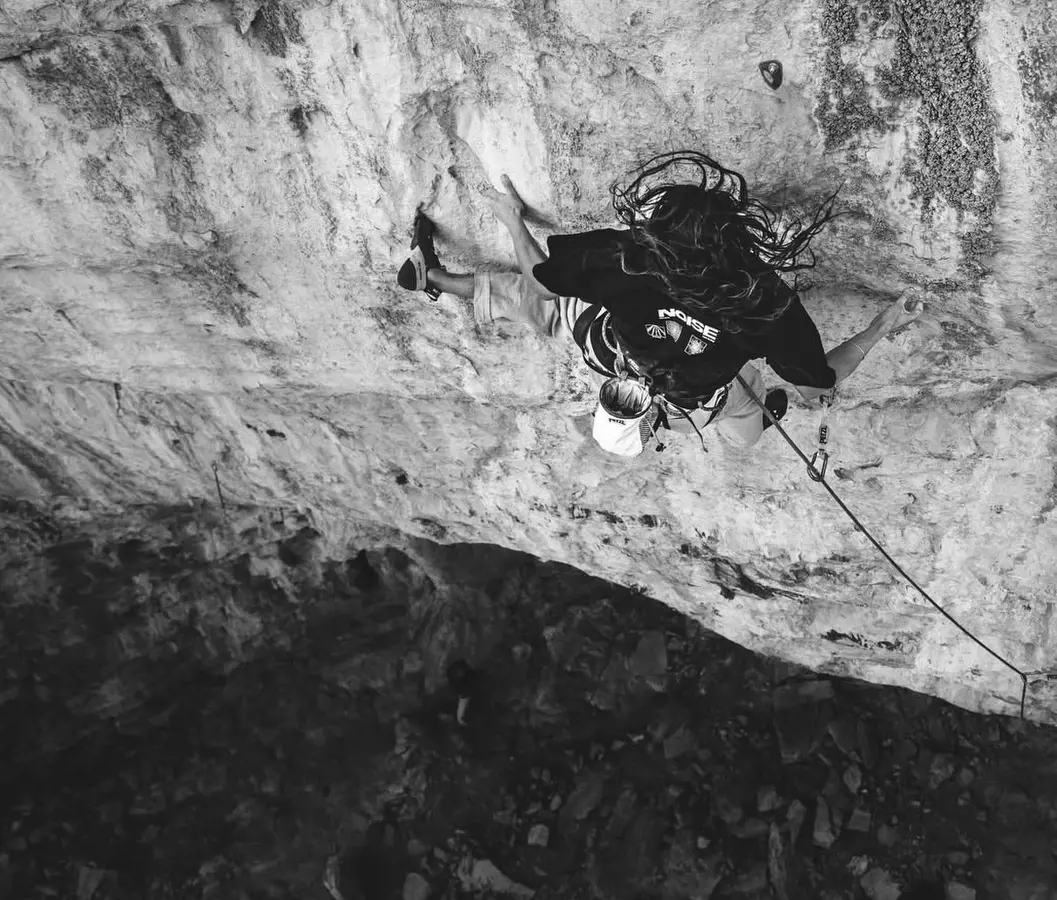
Nicholas Milburn, who three weeks ago did his third 9a, has done the second ascent of Pneuma 9a in the Temple. (c) Jessica Appelbaum

"Hot damn this thing is mega! The bulk of the route is about a 24 move ~V13 (except I normally do power endurance V13 faster than this thing) with no stopping. I skipped about every other draw and could barely even clip that many. I only chalked my right hand once and never my left. It even has an outro ~V8 boulder with a mono. One of the best power endurance routes anywhere.

Kyle O'Meara showed me this route in 2019. At this point, it was a project and I don't think anyone had put any work into it. I went up to it a couple of times to check it out. It was really dirty, but the rock was solid and the movement felt really good. I thought it felt around the 8c range. The next year, after I sent Algorithm, I spent a month trying the Temple Project. Still, nobody had tried the route, so I cleaned it up and started figuring out the beta. I started making links and I was feeling good about my progress, but I never managed to stick the middle crux move from the bottom. As time went on I started to wonder if it was harder. Maybe 8c+? I was trying it by myself, so I wasn't really sure how hard it was, but it definitely felt hard. I think I only two pieced it once that entire trip.

This year I was stronger and very excited to get back on it. I told Ben Spannuth about it and he told BJ Tilden about it and we all got psyched and tried it together. It was really fun to try it with other people after sessions by myself for so long. It was also reassuring that they both agreed it was definitely a proper hard route. I was busy with school and work, so I couldn't get up to Ten Sleep as much as I wanted, but I was feeling really good nonetheless. BJ ended up getting the first ascent after a few weeks of work and called the route Pneuma. I sent the route my next trip up. This is one of my proudest sport sends."

"I got beta from a local, (Roland Wagner) who climbed the route some years ago. He went up, brushed the holds and gave me very detailed beta. ๐Ÿ‘Œ๐Ÿผ"


How was the flash? Robot mode with full control?
Oh yes. Total robot mode. You'll see the video in a few days ๐Ÿ˜‰ Pretty much full control. Two moves were a little sketchy.

DYNOING - A ballistic science: Fly, baby fly?
Naturally, every dyno is, to a certain extent, unique in terms of holds, angles, length etc., but there is also at least one aspect in which all dynos are similar; you have to let go... What decides if you are to succeed are your physical shape, technique, but most of all your mind. Here are 10 pieces of advice and training tips.

1. Let the catching hand go as late as possible!
A very common fault among beginners is to let the catching hand go too early in the movement. Doing this, you will lose a lot of power which the hand would have generated if you had let it go later. The best way to correct this mistake is probably to do the "candle". This means trying to get the body as high (up in the air that is) as possible without letting the hands go until they lose touch with the hold through the momentum of the body.

2. Slap on the wall/hold!
When you start working a dyno, it often feels impossible. You feel there is no use even trying really, and if you do, you don't really go for it. To get a sense of improvement, start slapping the wall as high up as possible. Try to set new personal records. In time the record often gets dangerously close to the hold, and you can start trying to grab it.

3. Recruit the whole move!
It's an easy mistake to only recruit the muscles active in the first faces of a dyno, forgetting the muscles that come in to play later, in the actual grabbing-face. The reason for this is simple: you won't use the contact muscles if you can't do the catch... Recruitment-wise, the best is if you can reach the hold and put weight on it, if only for a microsecond, since, this way, all the necessary muscle fibres gets to play. If you can't reach the hold by your own power, use someone else's, or the rope. You can also, with support, try reversing the move.

4. Push with your feet!
Don't forget most of the power in a dyno originates from your legs. Try putting as much weight as possible on the footholds, to the point where you actually skids off them. It's most often an advantage to use as soft shoes as possible since you this way get the most out of the muscles in your feet. Remember, those muscles are also recruitable!

5. Use "the bungee cord" to your advantage!
To gain momentum, you should start every dyno with a vertical motion, up and then down, to kind of extend the bungee cord, to be able to use its power to be catapulted (hopefully) toward the hold you're aiming for. If you don't have enough room for this, it's also possible to gain momentum by swinging side to side.

6. Long, even applying of the power
A common mistake is to use too much power in the first face of the move. Doing this, it's very easy to lose contact with the holds, and hence the only way to keep the momentum, in the last and often deciding face. Sometimes it's best not to use all the fuel at once...

7. Use the lower hand to the maximum
Before you've managed to literally pull the lower hand off the hold, you haven't tried how much power you can apply to it. This is, of course, not true for jugs, but on smaller holds, you must push toward the limit of what's possible to gain maximum effect. In your mind, focus on the lower hand not in the upper hand grabbing the hold.

8. Use also the weight of your head
Start the dyno by leaning the head backwards or to the side. Use the momentum of your swinging head. Once you grab the hold, lean the head back again to increase the dead-point time.

9. Hyperventilate
Experiments show you'll actually gain short term power by hyperventilating. It has probably something to do with adrenaline being freed, and that you, hence, get a bit mad... Try 4-5 fast deep breaths and go for it!

10. Practice makes perfect Last, but not least, it's the amount of dedicated training you've put in that will decide your success rate. Your body needs to learn the movement so to speak, for the muscles to be able to interact perfectly. You can't think of all the advice above when you're trying a dyno, you must work them one by one until you do it naturally. Now, fly baby fly...