
NEWS
18 January 2022
Elias Iagnemma doing Ziqqurat 8C
Read more
0
0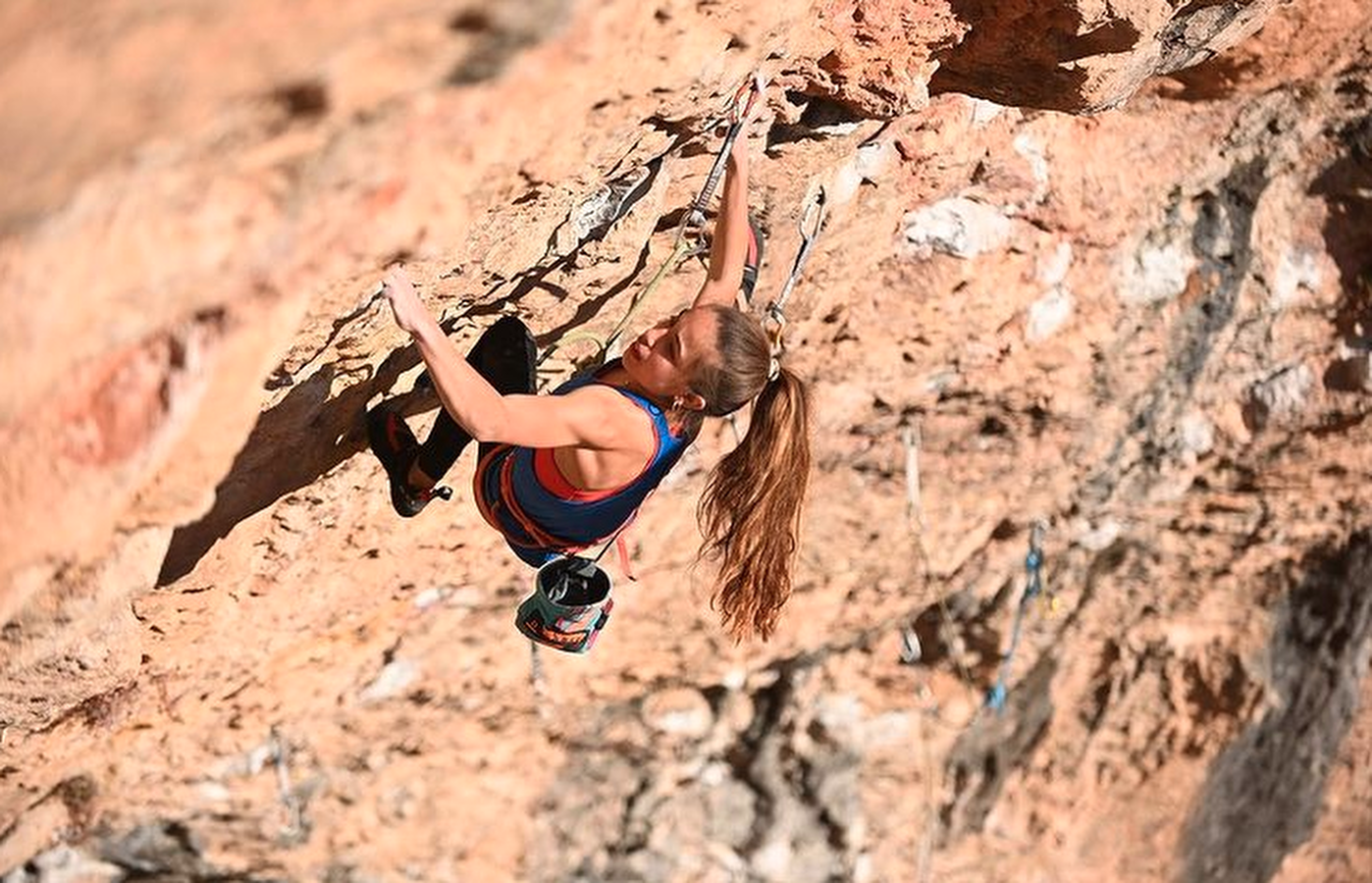
18 January 2022
Fabelita 8c by Geila Macia (13)
Geila Macia has done in Santa Linya. The 13-year-old is daughter to famous spanish climbers Berta Martin and Israel Gacia. Berta has won the Spanish Championship several times and eleven times made World Cup semis mainly in Boulder. Her best result was anyhow #9 in Speed. (c) Israel Macia
How was the process taking it down?
I was very tired of the long season of competitions but I wanted to look for a high project for the next season. So I found out that I could do every single move on Fabelita quite easily and I enjoyed the climbing. After some days on my holiday, I realized that I was getting stronger and on the route, I felt more confident. Yesterday I could make all the hardest parts from the beginning and then just climb concentrated from rest to rest till the chain. It was a nice time, lot of sunny and nice days with the family and good friends.
How much and does she train?
Berta: She trains at least 4 days a week sometimes 5. I’m her trainer and she trains with 2 guys of her age aprox. Arround 3h each day. Power, power/endurance and endurance, we increase the number of sessions and selections depending on the competitions. All training usually is focoused on comp style bouldering or when it's time for lead we do more endurance climbing routes in gyms. But if she has a rock project I try to reduce trains or adjust them for it.
What are the plans and ambitions for 2022?
Berta: We expect Geila being selected for international comps as she has won all under 14 in Spain last year. If the Spanish coach take her to Europe Cup, would be the focus on trainings for sure.
How was the process taking it down?
I was very tired of the long season of competitions but I wanted to look for a high project for the next season. So I found out that I could do every single move on Fabelita quite easily and I enjoyed the climbing. After some days on my holiday, I realized that I was getting stronger and on the route, I felt more confident. Yesterday I could make all the hardest parts from the beginning and then just climb concentrated from rest to rest till the chain. It was a nice time, lot of sunny and nice days with the family and good friends.
How much and does she train?
Berta: She trains at least 4 days a week sometimes 5. I’m her trainer and she trains with 2 guys of her age aprox. Arround 3h each day. Power, power/endurance and endurance, we increase the number of sessions and selections depending on the competitions. All training usually is focoused on comp style bouldering or when it's time for lead we do more endurance climbing routes in gyms. But if she has a rock project I try to reduce trains or adjust them for it.
What are the plans and ambitions for 2022?
Berta: We expect Geila being selected for international comps as she has won all under 14 in Spain last year. If the Spanish coach take her to Europe Cup, would be the focus on trainings for sure.
Read more
1
017 January 2022
Ray Jardin changed climbing in controversial ways
Read more
1
017 January 2022
Angie Scarth-Johnson lifestyle globetrotter since age 9
Angie Scarth-Johnson made the first 8a headline at age 9 by doing an 8b in Red River Gorge (KY). Amazingly, her parents did not climb but supported her big interest by doing nine 1 - 3 months trips to Europe and the USA until she was 16. At age eleven, she did her first 8c and we made an interview. "I don’t have a trainer, I tried for a couple of months having an online trainer but it didn’t work out, so I just went back to training myself. I write my own programs and have done this since I was 8. I find that this really works for me."
Last September, the Australian did her first 9a, Victimes del Future in Margalef where she has spent the last year. We asked Angie if she describe how it was being a lifestyle globetrotter since age 9. (c) Jan Novak
"I started climbing when I was 7 years old, not long after I began climbing outside in the local crags after school with my dad. When I started climbing, competitions weren’t really a massive thing and I wasn't really interested in it anyways. I enjoy the challenges that came with climbing rocks and the process of projecting. When I was 9 years old my parents planned our first overseas family trip to the United States. By this point, I was totally in love with climbing and it was mostly all I thought about. My parents suggested we could maybe stop by and visit some outdoor crags in the states to try out the climbing in another country. This was extremely exciting for me, with Australia being pretty far from the rest of the world, climbing in another country was a big deal.
We visited Red River Gorge. A very picturesque climbing area, especially in the autumn. I'd say after this trip I was more hooked on climbing than ever before. I sent my first 8b and a bunch of other amazing lines, my eyes were suddenly open to the possibilities within climbing. After this successful trip, I began to seek out other climbing opportunities around the world. We started to do two trips overseas per year. Eventually, the trips got longer and more frequent. With all the travelling, training and climbing going on I needed an alternative to my schooling. This is when I started a homeschooling program and I began to study at the crag, on the planes and at the gyms. My mum would teach me and we’d often visit a lot of historical sites around the world as history was my favourite subject.
A lot of people often ask if I missed out on having friends because I didn’t go to a normal school. Because of the level I climbed at, I was always surrounded by older climbers growing up, so I ended up having a lot of older friends, funnily enough, almost all of those people are still my friends today. I learned a lot through watching these people climb.
I returned back to school in the first year of high school, my parents wanted to allow me to see if I wanted to finish my schooling years back at school and spend time with kids my own age. I actually hated it, I felt lost amongst a bunch of kids, even though I was a kid. I guess I had matured a lot faster, and I was really just interested in finding myself in climbing. So, Back to the outdoors, I went with my books and my pens and I finished high school at the crag.
My schooling years were very unique, to say the least. But it allowed me to continue with my climbing and fully focus on what I loved to do. Now looking back on it I wouldn’t change a thing. At the moment I’m now spending a lot of time living between Spain and Australia. I finished school and I continue to chase my climbing goals wherever it may take me."
Last September, the Australian did her first 9a, Victimes del Future in Margalef where she has spent the last year. We asked Angie if she describe how it was being a lifestyle globetrotter since age 9. (c) Jan Novak
"I started climbing when I was 7 years old, not long after I began climbing outside in the local crags after school with my dad. When I started climbing, competitions weren’t really a massive thing and I wasn't really interested in it anyways. I enjoy the challenges that came with climbing rocks and the process of projecting. When I was 9 years old my parents planned our first overseas family trip to the United States. By this point, I was totally in love with climbing and it was mostly all I thought about. My parents suggested we could maybe stop by and visit some outdoor crags in the states to try out the climbing in another country. This was extremely exciting for me, with Australia being pretty far from the rest of the world, climbing in another country was a big deal.
We visited Red River Gorge. A very picturesque climbing area, especially in the autumn. I'd say after this trip I was more hooked on climbing than ever before. I sent my first 8b and a bunch of other amazing lines, my eyes were suddenly open to the possibilities within climbing. After this successful trip, I began to seek out other climbing opportunities around the world. We started to do two trips overseas per year. Eventually, the trips got longer and more frequent. With all the travelling, training and climbing going on I needed an alternative to my schooling. This is when I started a homeschooling program and I began to study at the crag, on the planes and at the gyms. My mum would teach me and we’d often visit a lot of historical sites around the world as history was my favourite subject.
A lot of people often ask if I missed out on having friends because I didn’t go to a normal school. Because of the level I climbed at, I was always surrounded by older climbers growing up, so I ended up having a lot of older friends, funnily enough, almost all of those people are still my friends today. I learned a lot through watching these people climb.
I returned back to school in the first year of high school, my parents wanted to allow me to see if I wanted to finish my schooling years back at school and spend time with kids my own age. I actually hated it, I felt lost amongst a bunch of kids, even though I was a kid. I guess I had matured a lot faster, and I was really just interested in finding myself in climbing. So, Back to the outdoors, I went with my books and my pens and I finished high school at the crag.
My schooling years were very unique, to say the least. But it allowed me to continue with my climbing and fully focus on what I loved to do. Now looking back on it I wouldn’t change a thing. At the moment I’m now spending a lot of time living between Spain and Australia. I finished school and I continue to chase my climbing goals wherever it may take me."
Read more
9
716 January 2022
Sharma speculates Golpe de estado being 9b+
Chris Sharma talks about his Golpe de Estado (9b) in Siurana on Insta. "Could it have actually been the worlds first 9b+ ???🤷♂️ Either way, it’s such a badass route and would be so cool to see some other top climbers check it out."
Chris says he is surprised that no climber had tried it for a longer period. It is a "powerful and explosive 9a+" that goes into the hard part of Estado Critico 9a. The FA was done in 2008 and then Adam Ondra did the only repeat in 2010 when he was 17 years old.
Ondra: "HUGE relief for me, mission accomplished despite various obstacles - notoriously strong wind, injury, flu and stomach ache just before the second trip (thus I was out of shape). After the first day in the route I did not expect I would have to dedicate so much time, but proved to be really hard and mischievous. 29 tries (mental torture for me!) during 14 days, but some days only go when I found out it is just too windy to climb at 6th bolt. I do not say it is hard 9b after breaking the hold, but 100% it is 9b now (a bit harder than Marina)."
The first 9b+ suggestion was made for Chilam Balam but today it is considered a very hard 9a+. As it stands Ondra's Change (9b+) from 2012 is today considered the first 9b+ in the world. The only repeat was done in 2020 by Stefano Ghisolfi.
Chris says he is surprised that no climber had tried it for a longer period. It is a "powerful and explosive 9a+" that goes into the hard part of Estado Critico 9a. The FA was done in 2008 and then Adam Ondra did the only repeat in 2010 when he was 17 years old.
Ondra: "HUGE relief for me, mission accomplished despite various obstacles - notoriously strong wind, injury, flu and stomach ache just before the second trip (thus I was out of shape). After the first day in the route I did not expect I would have to dedicate so much time, but proved to be really hard and mischievous. 29 tries (mental torture for me!) during 14 days, but some days only go when I found out it is just too windy to climb at 6th bolt. I do not say it is hard 9b after breaking the hold, but 100% it is 9b now (a bit harder than Marina)."
The first 9b+ suggestion was made for Chilam Balam but today it is considered a very hard 9a+. As it stands Ondra's Change (9b+) from 2012 is today considered the first 9b+ in the world. The only repeat was done in 2020 by Stefano Ghisolfi.
Read more
4
116 January 2022
La Proue 8B and Kings of Sonlerto 8A+ (B) by Brooke Raboutou
Brooke Raboutou, #5 in the Olympics, reports on Insta that she is back in Ticino having done La Proue (8B) and Kings of Sonlerto 8A+ (B). Talking about grades are personal and subjective. The latter was put up by Dave Graham in 2005 as an 8B+ and at that time he thought Fred Nicole’s well confirmed La Proue 8B was 8A+. (c) Finn Stack
The 20-year-old made her first headlines on 8a in 2010 doing her first 8a route as well as her first 7C+. Last year was Brooke’s best ever. In the Boulder World Cup she twice made the podium and in her only Lead events, she was #2 in a World Cup and #5 in the World Championship. Outdoors, she did one 8B+ and flashed her first 8A+.
The 20-year-old made her first headlines on 8a in 2010 doing her first 8a route as well as her first 7C+. Last year was Brooke’s best ever. In the Boulder World Cup she twice made the podium and in her only Lead events, she was #2 in a World Cup and #5 in the World Championship. Outdoors, she did one 8B+ and flashed her first 8A+.
Read more
6
016 January 2022
Thomas Fichtinger doing Bügeleisen 8B+
Read more
2
015 January 2022
Saruman du bas 8B by Max Bertone (14)
Max Bertone has done Saruman du bas (8B) in Fontainebleau. "Super classic of the forest. I am so happy to top this one ! A perfect try I think because I was not so easy and holds didn't stick so much today."
Read more
5
015 January 2022
Promote "out of the box" thinking and technique
We are living in a society that is more structured than ever. Climbing has become a mainstream sport and coaching, courses, competitions and trainers are the new norms for the climbing kids. Adults can get training advice from YouTubers and On-Line programs. Only some 20 years ago, this did not exist, and there were practically no coloured indoor routes, "Moon-boards", beta videos, campus and hang boards etc.
Climbing was much more about creativity and finding your own solutions and there were almost no kids climbing. Chris Sharma came along and although setting new standards, the older generation thought he could improve if he could just start using his feet better. At the same time, I had also started coaching Said Belhaj but you could actually say that I was more of an observer. None of these guys, including Adam Ondra and Alex Megos, followed any structured programs in order to get fast progress. Instead, climbing was mainly just about creating and doing your own challenges.
Around 1996 I witnessed a totally crazy example of this. Said Belhaj (15) tried to onsight a 7b route in Västervik with several hardcore guys watching him. He gets to a chipped pocket with his right hand, and apart from another drilled pocket one meter diagonally to the right, it is totally blank. Said understands that he is totally caught and that the only solution is down climbing, which does not interest him a bit. Instead, he chalks up and makes an extreme dyno hitting the blank wall leaving a tick mark. The climbers just shake their heads and asked me what was he thinking. My answer was something like:
- I think he thought climbing on a chipped route is not that interesting. Instead, he created a new challenge that also goes in line with that you should never give up. You should always end a try with an upward move instead of saying "take", in order to get as much adrenaline as possible.
I think it is very important for all junior coaches and adults following a structured plan that "out of the box" thinking and technique should be promoted. "The best climber is the one having most fun" is a saying and getting the adrenaline in the system is directly connected to having fun. Most probably, this is connected to why Sharma, Ondra and Megos became the best in the world and also why guys like Dani "a muerte" Andrada still keep pushing.
Climbing was much more about creativity and finding your own solutions and there were almost no kids climbing. Chris Sharma came along and although setting new standards, the older generation thought he could improve if he could just start using his feet better. At the same time, I had also started coaching Said Belhaj but you could actually say that I was more of an observer. None of these guys, including Adam Ondra and Alex Megos, followed any structured programs in order to get fast progress. Instead, climbing was mainly just about creating and doing your own challenges.
Around 1996 I witnessed a totally crazy example of this. Said Belhaj (15) tried to onsight a 7b route in Västervik with several hardcore guys watching him. He gets to a chipped pocket with his right hand, and apart from another drilled pocket one meter diagonally to the right, it is totally blank. Said understands that he is totally caught and that the only solution is down climbing, which does not interest him a bit. Instead, he chalks up and makes an extreme dyno hitting the blank wall leaving a tick mark. The climbers just shake their heads and asked me what was he thinking. My answer was something like:
- I think he thought climbing on a chipped route is not that interesting. Instead, he created a new challenge that also goes in line with that you should never give up. You should always end a try with an upward move instead of saying "take", in order to get as much adrenaline as possible.
I think it is very important for all junior coaches and adults following a structured plan that "out of the box" thinking and technique should be promoted. "The best climber is the one having most fun" is a saying and getting the adrenaline in the system is directly connected to having fun. Most probably, this is connected to why Sharma, Ondra and Megos became the best in the world and also why guys like Dani "a muerte" Andrada still keep pushing.
Read more
2
015 January 2022
Don't search soft grades as they might get downgraded anyhow
An easy way to find the softest grades is to search the most repeated of each grade. One good example of this is found on Escalade9 which started listing all 9a routes in the world. During the last couple of years, many of them have been downgraded and thus their list now includes 963 routes and variations 8c+/9a to 9c. Interestingly, eight of the eleven most popular routes are now considered 8c+/9a, and a couple of them should probably be considered 8c+. Noteworthy is also that all of them but Action Directe are found in Spain or Italy.
When it comes to Action Directe, the first 9a in the world established in 1991, in comparison to the other most popular listed 8c+/9a routes, I bet it is in practice at least one grade harder. It should, however, be mentioned that one reason for the suggested downgrades is the use of kneepads. One good example of how the community, besides the quality, is also selecting routes based on how soft it is, is Era Vella. Already in 2018, 8a stated that it oficially should be graded 8c+. The reasons for that were, besides the popularity, personal messages to me from climbers who did not want to go public. Some guys called it 8c+, and Jonathan Siegrist compared it with an 8c route he had done. During the last 2.5 years, it has probably only been repeated twice, while in the 2.5 years prior to the downgrade debate it was done 17 times. Another reason for the lack of interest in the superb Chris Sharma route could be rumours about a route that has become harder due to a broken hold.
Adam Ondra has since he was a teenager frequently been giving personal grades. Lately, also Alex Megos and Jakob Schubert have done the same and Stefano Ghisolfi has actually updated the grade of a dozen of his hardest climbs. It seems that we are in the stage that several of the most popular routes of each grade could be contenders for being downgraded. So, it just might be wise to skip focusing on setting a personal grade best by choosing the most popular routes as they might just get downgraded anyhow :)
Remember that the boulder scale was adjusted in 2005 when Dave Graham put up The Story of Two (Grading) World's as an 8C. Some thought this was the wrong way to go but today it is, in fact, also due to kneepads and new sequences considered a soft 8C and some have actually started to call it 8B+. In any case, Graham’s statement changed the boulder grading all over the world with countless of downgrading. It just might be that we are about getting into a similar era in route climbing.
When it comes to Action Directe, the first 9a in the world established in 1991, in comparison to the other most popular listed 8c+/9a routes, I bet it is in practice at least one grade harder. It should, however, be mentioned that one reason for the suggested downgrades is the use of kneepads. One good example of how the community, besides the quality, is also selecting routes based on how soft it is, is Era Vella. Already in 2018, 8a stated that it oficially should be graded 8c+. The reasons for that were, besides the popularity, personal messages to me from climbers who did not want to go public. Some guys called it 8c+, and Jonathan Siegrist compared it with an 8c route he had done. During the last 2.5 years, it has probably only been repeated twice, while in the 2.5 years prior to the downgrade debate it was done 17 times. Another reason for the lack of interest in the superb Chris Sharma route could be rumours about a route that has become harder due to a broken hold.
Adam Ondra has since he was a teenager frequently been giving personal grades. Lately, also Alex Megos and Jakob Schubert have done the same and Stefano Ghisolfi has actually updated the grade of a dozen of his hardest climbs. It seems that we are in the stage that several of the most popular routes of each grade could be contenders for being downgraded. So, it just might be wise to skip focusing on setting a personal grade best by choosing the most popular routes as they might just get downgraded anyhow :)
Remember that the boulder scale was adjusted in 2005 when Dave Graham put up The Story of Two (Grading) World's as an 8C. Some thought this was the wrong way to go but today it is, in fact, also due to kneepads and new sequences considered a soft 8C and some have actually started to call it 8B+. In any case, Graham’s statement changed the boulder grading all over the world with countless of downgrading. It just might be that we are about getting into a similar era in route climbing.
Read more
1
9Favorites
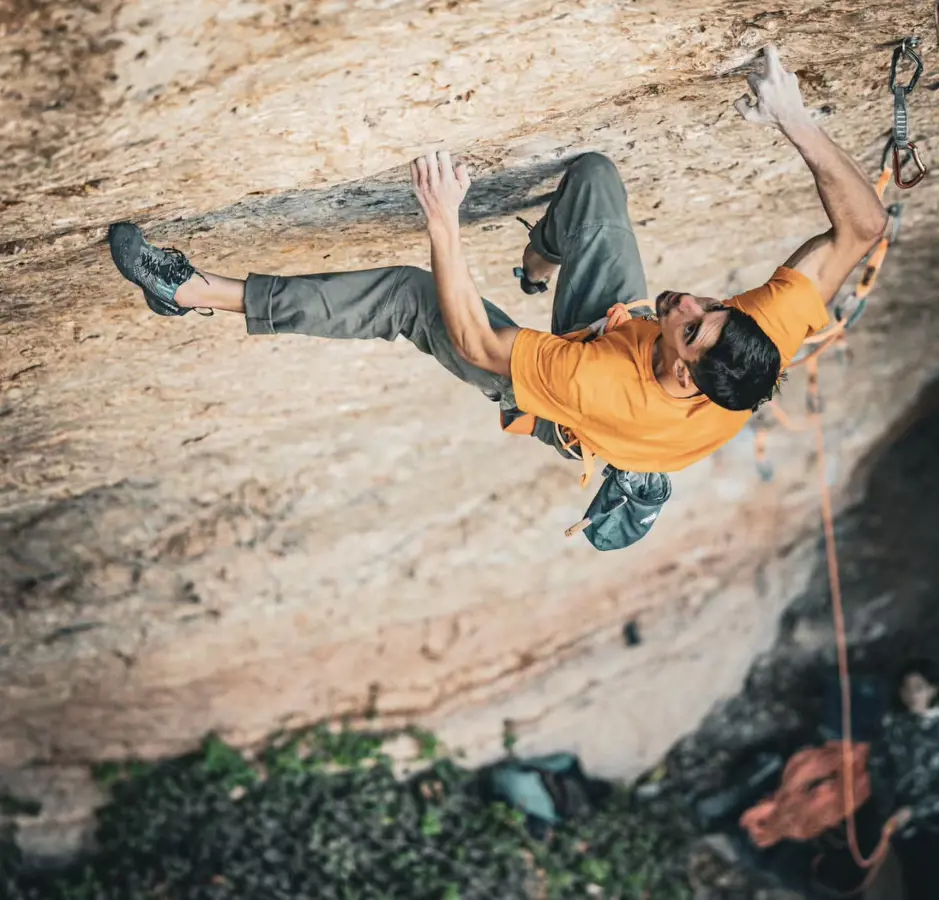
Jorge Diaz-Rullo reports on Instagram that he has made the first ascent of Cafe Colombia in Margalef. At 27, he’s already stacked four 9b+ sends and now he’s ad…
285
81
”I stopped focusing on competition bouldering after last year’s World Cup in Prague, partly because I can already feel it on my body, especially in my shoulders. The modern competition style, with a lot of jumping from one hold to another, is very demanding for the shoulders.
Outdoor bouldering is…
189
13Sean Bailey reports on Instagram that he has done the first ascent of Duality of Man (9c) in Dry Canyon. ” After four total years and three seasons of climbing,…
163
69Most commented
Jorge Diaz-Rullo reports on Instagram that he has made the first ascent of Cafe Colombia in Margalef. At 27, he’s already stacked four 9b+ sends and now he’s ad…
285
81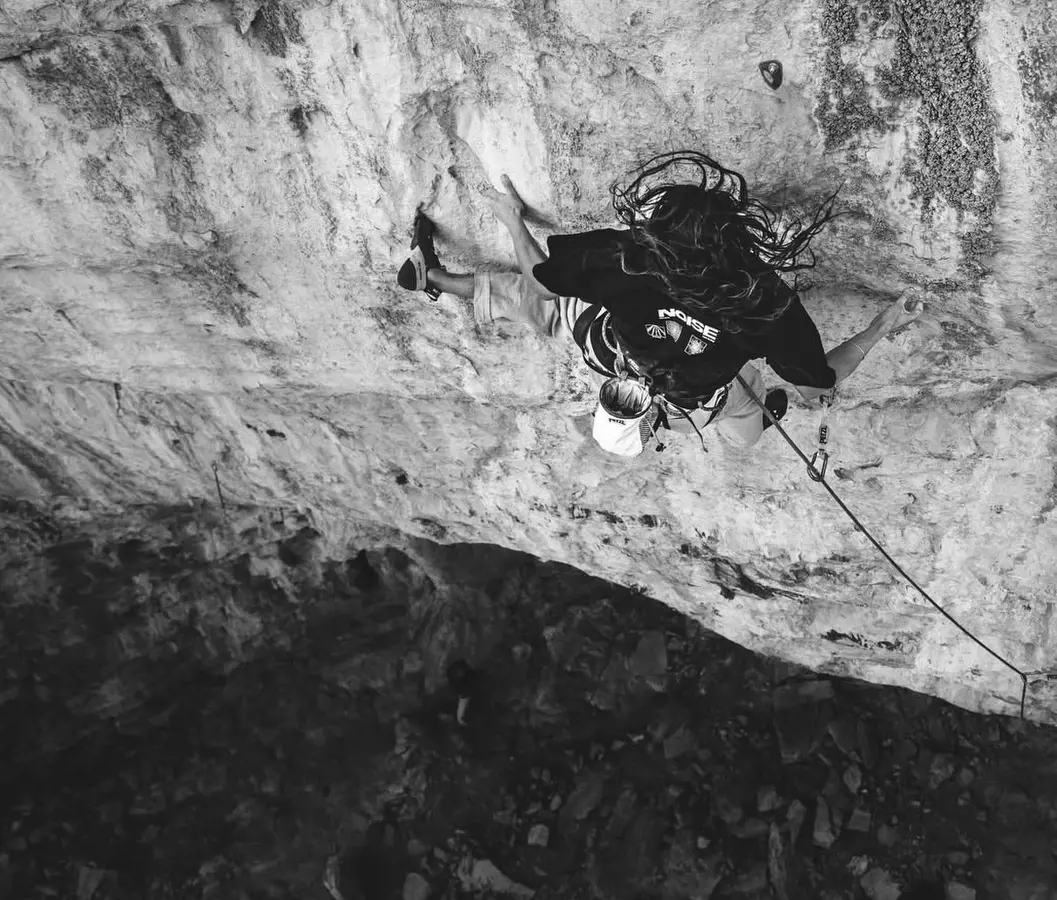
Sean Bailey reports on Instagram that he has done the first ascent of Duality of Man (9c) in Dry Canyon. ” After four total years and three seasons of climbing,…
163
69Jorge Diaz-Rullo elaborates on the reasons for him to suggest 9c for Café Colombia on Instagram, which he took down last week after projecting it for 240 sessio…
119
63