
NEWS
27 January 2022
No tops on last boulder = One more RP try
The male boulder final in the Olympics was a bit of an anticlimax finishing with a total fiasco as everyone flashed the zone and then none of the seven Olympians could make any further real progress. In fact, it is not that uncommon that nobody tops out the last boulder and there is no celebration but instead just failures at the end of the event. In the last Boulder World Cup in Innsbruck, none of the 6 + 6 males and females actually did make even the zone on the last boulder.
One simple option to increase the excitement and to almost guarantee that the last boulder will be topped out would be to give everyone, that has a chance of winning (or making the podium), one more redpoint attempt. This would mean that the finalists would start to cooperate and share beta as soon as the climbers would fall off.
There are several twists that could increase the drama and make the final more successful:
1. Most likely, the climber who is #1 after the last boulder will top out also the last boulder as he/she will see climbers topping out and can copy their beta.
2. As for Tokyo, the last climbers would probably have saved some attempts* on the last boulder as they became aware that it is too hard.
3. The third guy last out knows that topping would mean a podium is guaranteed. If not topping, he/she could drop to #6 or so.
4. The runner-up before the last climber out might want the last climber to top out as this will secure his/her silver while the lowest-ranked climber does not want the last climber to top out.
When it comes to the Olympics, Nathaniel Coleman had already secured the win and any further redpoint attempts would not have changed this. However, a change of the rules would possibly have meant that some possibly had saved their attempts on the last boulder, like in high jumping, in order to be able to win and put pressure on Coleman.
In practice, most likely, Tomoa Narasaki #3 and Mickael Mawem #2 would only have tried the last boulder once or twice and saved the last attempt to have a redpoint go. In theory, even Adam Ondra who was #6 could have won if he did it on his second try, i.e. his first redpoint try. In any case, even by doing multiple tries as he did, Adam could still have been #2 if he would have been the only one redpointing it.
One simple option to increase the excitement and to almost guarantee that the last boulder will be topped out would be to give everyone, that has a chance of winning (or making the podium), one more redpoint attempt. This would mean that the finalists would start to cooperate and share beta as soon as the climbers would fall off.
There are several twists that could increase the drama and make the final more successful:
1. Most likely, the climber who is #1 after the last boulder will top out also the last boulder as he/she will see climbers topping out and can copy their beta.
2. As for Tokyo, the last climbers would probably have saved some attempts* on the last boulder as they became aware that it is too hard.
3. The third guy last out knows that topping would mean a podium is guaranteed. If not topping, he/she could drop to #6 or so.
4. The runner-up before the last climber out might want the last climber to top out as this will secure his/her silver while the lowest-ranked climber does not want the last climber to top out.
When it comes to the Olympics, Nathaniel Coleman had already secured the win and any further redpoint attempts would not have changed this. However, a change of the rules would possibly have meant that some possibly had saved their attempts on the last boulder, like in high jumping, in order to be able to win and put pressure on Coleman.
In practice, most likely, Tomoa Narasaki #3 and Mickael Mawem #2 would only have tried the last boulder once or twice and saved the last attempt to have a redpoint go. In theory, even Adam Ondra who was #6 could have won if he did it on his second try, i.e. his first redpoint try. In any case, even by doing multiple tries as he did, Adam could still have been #2 if he would have been the only one redpointing it.
Read more
1
027 January 2022
Chironico Mega Classics #2 by Topishko
Read more
2
027 January 2022
The Big Bang 9a story by Emma Twyford
Read more
0
026 January 2022
Estado Critico 9a by Marco Zanone
Marco Zanone, who just did his first 9a+, has done Estado critico (9a) and in Siurana. (c) Esteban Lahoz
"Estado Critico is a well-known route situated in the El Pati sector in Siurana and It became very famous since it was the first 9a ever onsighted (Alex Megos). I've always been attracted by this route, but I was intimidated as well since the first part it's very steep and because it looks huge when you look at it from the ground. During the first tries, I actually realized it was shorter and less endurance than I expected. The first 40 moves around 8a go by very quickly until you get to a good rest. From there on, the route turns right, getting into the crux which suited me well since day one. The fact that I was trying this route after First Ley (9a+) made me really strong in the head and of course I was feeling super fit, especially on short and hard sections. Passing through the crux from the bottom was not a problem at all, actually on my first try from the bottom, on day two, I basically fell at the top, a few moves before the top out. I was definitely very surprised about my endurance which has always been my weak point.
Then I had to leave Spain for a couple of days of work and once I was back I felt very motivated to try my best. On my third try of the day, after messing up once below the highpoint, I clipped the chain of this beast. I must say I definitely felt it easy for the grade, especially if you are tall, which helps a lot on the crux sequence, but I must also say I'm feeling in very good shape."
How can you explain being in your best shape ever?
I don't know if I'm witnessing the best shape of my life but I'm climbing that hard simply because I have more time to spend on the rock. In 2021 I worked a lot as a filmmaker and my time for rock climbing was very limited, but from mid-December on, the work slowed down and I could finally spend more time on the rock. At the moment I'm living in Spain, working on a film project about exploration in Norway while climbing in these world-class areas. So yeah, I'm feeling in great shape but the fact that I could invest more time on the rock it's giving me extra power. :)
"Estado Critico is a well-known route situated in the El Pati sector in Siurana and It became very famous since it was the first 9a ever onsighted (Alex Megos). I've always been attracted by this route, but I was intimidated as well since the first part it's very steep and because it looks huge when you look at it from the ground. During the first tries, I actually realized it was shorter and less endurance than I expected. The first 40 moves around 8a go by very quickly until you get to a good rest. From there on, the route turns right, getting into the crux which suited me well since day one. The fact that I was trying this route after First Ley (9a+) made me really strong in the head and of course I was feeling super fit, especially on short and hard sections. Passing through the crux from the bottom was not a problem at all, actually on my first try from the bottom, on day two, I basically fell at the top, a few moves before the top out. I was definitely very surprised about my endurance which has always been my weak point.
Then I had to leave Spain for a couple of days of work and once I was back I felt very motivated to try my best. On my third try of the day, after messing up once below the highpoint, I clipped the chain of this beast. I must say I definitely felt it easy for the grade, especially if you are tall, which helps a lot on the crux sequence, but I must also say I'm feeling in very good shape."
How can you explain being in your best shape ever?
I don't know if I'm witnessing the best shape of my life but I'm climbing that hard simply because I have more time to spend on the rock. In 2021 I worked a lot as a filmmaker and my time for rock climbing was very limited, but from mid-December on, the work slowed down and I could finally spend more time on the rock. At the moment I'm living in Spain, working on a film project about exploration in Norway while climbing in these world-class areas. So yeah, I'm feeling in great shape but the fact that I could invest more time on the rock it's giving me extra power. :)
Read more
4
026 January 2022
Faster and more exciting boulder format
As there are some discussions within the IFSC on how to make the bouldering format faster and more exciting, here is an update of some suggestions I have forwarded during the last 15 years. As of today, a bouldering final often takes 90 minutes although there are no breaks and there are just six athletes in the final. The idea is to have 8 finalists and this would mean a two hours event with today's format. At the same time, there are often long sequences with no action as the boulders are too hard and, furthermore, in the end, sometimes there is no drama as the winner has been decided before the last boulder.
Having eight finalists is clearly better also from the point of view that more nations will have competitors in the final. As it stands, sometimes there are just males from japan plus two more climbers in the final. More finalists also increase the possibility that more climbers will battle for the win on the last boulder.
The easiest format change to make it faster and more exciting is simply to have two competitors climb simultaneously on the first two boulders. You can let new climbers start as soon as one boulder is topped today. Alternatively, you can rotate with a fixed four-minute schedule, with a two-minute initial separation. This would mean that all eight finalists have done the two first problems after around 24-34 minutes.
Then there could be a short break of six minutes or so, and one climber is eliminated before boulder #3.
On boulder #3, the seven remaining competitors climb in a row and then one more is eliminated before boulder four. This would mean that the final would take around 70-90 minutes. This can be compared with the around 100-120 minutes with the current format.
There are of course more options, like starting on the first three boulders at the same time. This would reduce time, but it might just be too much action. The fastest format would be to eliminate two competitors before the last two boulders and continue with two climbers also on these boulders. Such a format would just take 50-70 minutes. It should be noted that also the duration of the qualification and the semi could be shortened by some 30 minutes if you start with climbers on all boulders directly from the start.
Having eight finalists is clearly better also from the point of view that more nations will have competitors in the final. As it stands, sometimes there are just males from japan plus two more climbers in the final. More finalists also increase the possibility that more climbers will battle for the win on the last boulder.
The easiest format change to make it faster and more exciting is simply to have two competitors climb simultaneously on the first two boulders. You can let new climbers start as soon as one boulder is topped today. Alternatively, you can rotate with a fixed four-minute schedule, with a two-minute initial separation. This would mean that all eight finalists have done the two first problems after around 24-34 minutes.
Then there could be a short break of six minutes or so, and one climber is eliminated before boulder #3.
On boulder #3, the seven remaining competitors climb in a row and then one more is eliminated before boulder four. This would mean that the final would take around 70-90 minutes. This can be compared with the around 100-120 minutes with the current format.
There are of course more options, like starting on the first three boulders at the same time. This would reduce time, but it might just be too much action. The fastest format would be to eliminate two competitors before the last two boulders and continue with two climbers also on these boulders. Such a format would just take 50-70 minutes. It should be noted that also the duration of the qualification and the semi could be shortened by some 30 minutes if you start with climbers on all boulders directly from the start.
Read more
0
625 January 2022
Cleaning steep routes with the bent gate in the rope
Cleaning quickdraws from a steep route is normally done by connecting yourself to the rope through a quickdraw. It is important to remember that the bent gate of the quickdraw should be clipped to the rope and the straight carabiner, which normally is clipped into the bolt hangers, should be clipped into your harness belay loop. The reason for this is that the straight carabiner can be sharp after having been exposed to big falls in the hangers. You do not want to have a carabiner, even with just microscopic edges, to slide down the rope. It should also be noted that quickdraws should be regularly inspected and carabiners should be discarded if they have any sharp indentations and noticeable ware marks.Video showing the risk of not using the bent carabiner in the rope.
Read more
0
225 January 2022
Fish Eye 8c and ECO thoughts by Sofie Paulus
Sofie Paulus reports on Insta that she has done Fish eye (8c) in Oliana. She is based in Bayreuth where she is doing a masters in Global Change Ecology. Going to Oliana took almost 30 hours by bus via Paris, including car-pooling, and only costed Euro 45 one way. Going to Frankenjura, she often cycles for 90 minutes. "I try hard to avoid flying and I use public transport or car-pooling whenever it is possible."
"Briefly about myself: my name is Sofie, I have been a nature-lover and rock climber since I was little. After school, my fascination for nature and our earth motivated me to study geology. It was great to learn about so many miracles and processes that naturally take place on our planet and explain today’s landscapes (and rocks ). After my bachelor’s degree, I felt the need to work more with the societal and environmental consequences of climate change and globalisation, so I started my masters in Global Change Ecology.
As often as I can, I spend time outside. Climbing and being in nature with other people is incredibly inspiring and healing to me. Climbing has always been that part of my life, where I feel ‘at home’ and instead of planning and setting training goals, I try to find balance and well-being whenever I climb. Nevertheless, I also like challenges and try routes that require high concentration, physical effort, and strength. Two weeks ago, I successfully climbed Fish Eye (8c) in Oliana, which is my hardest grade so far. The character of this endurance route and the atmosphere at the crag are unique and amazing. During the process, I consistently enjoyed finding the right beta and linking the sequences, exchanging, and trying the route with other climbers. It wasn't a real ECOPOINT, video, (definition later in the text), but at least I managed to travel to Catalunya by bus and carpooling.
In many faces of life, I see a need for conscious change to live in a more balanced way with nature. As climbing is an essential part of my life, I had to think about the approach to the crags where I climb. Taking the car to get there each time created an inner conflict. I started looking for alternatives. Sometimes, I took the train to places where other climbers picked me up to access the climbing area car parks. It is not always easy and takes additional time to organize the approach. Last year, I started challenging myself by cycling more frequently to reach local crags. For sure, the whole climbing experience is a bit different, the body feels more tired, but in the end, I always have a great experience. It is a privilege to live relatively close to climbing areas, but even if you live further away, it is always interesting to look for alternatives to flying or driving individually. In my opinion, an alternative view of achievement in climbing would be useful. I don’t feel like ECOPOINTING would prevent me from climbing hard and if so, it doesn’t really matter. Quite the contrary, it is awesome to feel the effort that one has already made to get to the cliffs and to ultimately arrive at the climbing routes with a lower carbon footprint. Moreover, after some bike training, the approach already feels less energy-draining.
Lena Marie Müller and I would like to invite other climbers to share their experiences and personal efforts when it comes to climbing using a more environmentally friendly approach. Climbing a route 'Ecopoint' describes the idea of using public transportation, cycling, or walking to approach the climbing area. It is often challenging and takes more time to access the climbing area by more environmentally friendly means. In my opinion, it simultaneously prolongs the experience of climbing outdoors and feels more intense and richer. Let's start adding Ecopoints to our scorecard wherever it appears possible to us. Let's try to combine the love for our sport with the motivation and the urgent need to fight climate change. It contributes to reducing our impact on the environment.
I feel that taking more time, for one thing, helps a lot and is a precious gift we give ourselves. It is not easy in our world, where so many options exist, where we can do more and more in less time. However, this rushed aspect is also questionable. Doing important things with passion and in a concentrated manner is so much more sustainable than doing many things at once. Regarding climate justice, we need to act now. But here as well, it is also important to find out what we can do as individuals and then take the time and energy we can to focus on the changes we would like to make. Environmentalism is not about denying people what they love, but about rethinking what we really want, about our approach and about exchanging ideas."
"Briefly about myself: my name is Sofie, I have been a nature-lover and rock climber since I was little. After school, my fascination for nature and our earth motivated me to study geology. It was great to learn about so many miracles and processes that naturally take place on our planet and explain today’s landscapes (and rocks ). After my bachelor’s degree, I felt the need to work more with the societal and environmental consequences of climate change and globalisation, so I started my masters in Global Change Ecology.
As often as I can, I spend time outside. Climbing and being in nature with other people is incredibly inspiring and healing to me. Climbing has always been that part of my life, where I feel ‘at home’ and instead of planning and setting training goals, I try to find balance and well-being whenever I climb. Nevertheless, I also like challenges and try routes that require high concentration, physical effort, and strength. Two weeks ago, I successfully climbed Fish Eye (8c) in Oliana, which is my hardest grade so far. The character of this endurance route and the atmosphere at the crag are unique and amazing. During the process, I consistently enjoyed finding the right beta and linking the sequences, exchanging, and trying the route with other climbers. It wasn't a real ECOPOINT, video, (definition later in the text), but at least I managed to travel to Catalunya by bus and carpooling.
In many faces of life, I see a need for conscious change to live in a more balanced way with nature. As climbing is an essential part of my life, I had to think about the approach to the crags where I climb. Taking the car to get there each time created an inner conflict. I started looking for alternatives. Sometimes, I took the train to places where other climbers picked me up to access the climbing area car parks. It is not always easy and takes additional time to organize the approach. Last year, I started challenging myself by cycling more frequently to reach local crags. For sure, the whole climbing experience is a bit different, the body feels more tired, but in the end, I always have a great experience. It is a privilege to live relatively close to climbing areas, but even if you live further away, it is always interesting to look for alternatives to flying or driving individually. In my opinion, an alternative view of achievement in climbing would be useful. I don’t feel like ECOPOINTING would prevent me from climbing hard and if so, it doesn’t really matter. Quite the contrary, it is awesome to feel the effort that one has already made to get to the cliffs and to ultimately arrive at the climbing routes with a lower carbon footprint. Moreover, after some bike training, the approach already feels less energy-draining.
Lena Marie Müller and I would like to invite other climbers to share their experiences and personal efforts when it comes to climbing using a more environmentally friendly approach. Climbing a route 'Ecopoint' describes the idea of using public transportation, cycling, or walking to approach the climbing area. It is often challenging and takes more time to access the climbing area by more environmentally friendly means. In my opinion, it simultaneously prolongs the experience of climbing outdoors and feels more intense and richer. Let's start adding Ecopoints to our scorecard wherever it appears possible to us. Let's try to combine the love for our sport with the motivation and the urgent need to fight climate change. It contributes to reducing our impact on the environment.
I feel that taking more time, for one thing, helps a lot and is a precious gift we give ourselves. It is not easy in our world, where so many options exist, where we can do more and more in less time. However, this rushed aspect is also questionable. Doing important things with passion and in a concentrated manner is so much more sustainable than doing many things at once. Regarding climate justice, we need to act now. But here as well, it is also important to find out what we can do as individuals and then take the time and energy we can to focus on the changes we would like to make. Environmentalism is not about denying people what they love, but about rethinking what we really want, about our approach and about exchanging ideas."
Read more
18
625 January 2022
Sunshine 8A by Jenn Debellis
Jenn DeBellis has done in Hueco Tanks (TX). "Really psyched to piece this all together! Ended up being a pretty desperate totally pumped out of my mind topout which makes it all the better. Way cooler than I expected."
Interestingly, the 27-year-old started climbing only in 2016 and then it took her two years to go outdoors and within some months she did her first 7C. "I’ve gotten a much later start than many of my friends and I wasn’t sure how far I’d be able to take things with my training and climbing. I learned about Hueco when I was first getting stoked on bouldering and reading about its history and it’s cool to be here for the first time to experience it. “Sunshine” will be a special memory for me! As you walk into East Mountain it’s so easy to see how striking of a line it is. I enjoyed the climb for how much shoulder and body tension it requires to hold onto the rail feature and that you have to fight through some pump at the end."
Interestingly, the 27-year-old started climbing only in 2016 and then it took her two years to go outdoors and within some months she did her first 7C. "I’ve gotten a much later start than many of my friends and I wasn’t sure how far I’d be able to take things with my training and climbing. I learned about Hueco when I was first getting stoked on bouldering and reading about its history and it’s cool to be here for the first time to experience it. “Sunshine” will be a special memory for me! As you walk into East Mountain it’s so easy to see how striking of a line it is. I enjoyed the climb for how much shoulder and body tension it requires to hold onto the rail feature and that you have to fight through some pump at the end."
Read more
3
024 January 2022
Max Bertone (14) does Saruman 8B
Read more
1
024 January 2022
Alizee Dufraisse does Versace 8B
Alizee Dufraisse has done Versace (8B) in Brione. The Frenchwoman has been one of the best female climbers in the world since 2003 when she won the Youth World Championship and was Top-9 in both a boulder as well as in a Lead World Cup. She finished her competition career in 2016 and have since done five 8B's and two 9a's. During the last winters, she has spent some 50 sessions projecting La Rambla 9a+.
How was the process taking it down?
The process was pretty long and challenging! After two years of route climbing, I was not sure if my next challenge would be route climbing in Spain or bouldering in Switzerland :) Hard to change when you know that you are in shape for routes. I had no clue what bouldering in Switzerland would be like… How long would it take me to transfer my shape in routes for bouldering? Would I succeed to find my way climbing on granite, which I never really experienced before? Could I handle the cold temps? Will the forecast will be ok in the full wintertime? Will I find some boulders that I get inspired by?
At the last moment, we (Dave and me) decided to go to Swiss. We actually both needed a change from the Spanish scene (even if we love it). As predicted I needed some time to learn how to deal with all the factors I was scared about. The weather was pretty tough when we arrived with a lot of rain/snow/cold. I needed to climb slowly on harder and harder stuff. I needed also to get more and more used to the height, being able to climb without a rope and fall properly. Versace is a boulder in Brione, next to the river. First time I went on it I loved the place and felt good on the moves. I liked the style, the type of rock and features and I could slowly (re)-learn the process of bouldering. It took me 15 days to send the boulder, every day learning something new about climbing and about dealing with my mind :) Now that I start feeling better and better in bouldering, I enjoy more and more every step of the way. I think I will keep bouldering here and maybe Magic Wood afterwards, where I have never been, trying the challenge myself more and more :)
What about the status on La Rambla?
I think a change is good for me. La Rambla has really become mental for me so I think climbing on other stuff, maybe also other routes before coming back is good!! But it's a route and a place I love so I have all the time to come back ❤️. You know I am happy to climb in general and that's the most important for me. Challenging and learning about myself. I try to be a better climber and that goes obviously with trying harder grades. But I don't do that as a competition thing… so I don t really count in this way I meant 😄
How was the process taking it down?
The process was pretty long and challenging! After two years of route climbing, I was not sure if my next challenge would be route climbing in Spain or bouldering in Switzerland :) Hard to change when you know that you are in shape for routes. I had no clue what bouldering in Switzerland would be like… How long would it take me to transfer my shape in routes for bouldering? Would I succeed to find my way climbing on granite, which I never really experienced before? Could I handle the cold temps? Will the forecast will be ok in the full wintertime? Will I find some boulders that I get inspired by?
At the last moment, we (Dave and me) decided to go to Swiss. We actually both needed a change from the Spanish scene (even if we love it). As predicted I needed some time to learn how to deal with all the factors I was scared about. The weather was pretty tough when we arrived with a lot of rain/snow/cold. I needed to climb slowly on harder and harder stuff. I needed also to get more and more used to the height, being able to climb without a rope and fall properly. Versace is a boulder in Brione, next to the river. First time I went on it I loved the place and felt good on the moves. I liked the style, the type of rock and features and I could slowly (re)-learn the process of bouldering. It took me 15 days to send the boulder, every day learning something new about climbing and about dealing with my mind :) Now that I start feeling better and better in bouldering, I enjoy more and more every step of the way. I think I will keep bouldering here and maybe Magic Wood afterwards, where I have never been, trying the challenge myself more and more :)
What about the status on La Rambla?
I think a change is good for me. La Rambla has really become mental for me so I think climbing on other stuff, maybe also other routes before coming back is good!! But it's a route and a place I love so I have all the time to come back ❤️. You know I am happy to climb in general and that's the most important for me. Challenging and learning about myself. I try to be a better climber and that goes obviously with trying harder grades. But I don't do that as a competition thing… so I don t really count in this way I meant 😄
Read more
8
0Favorites
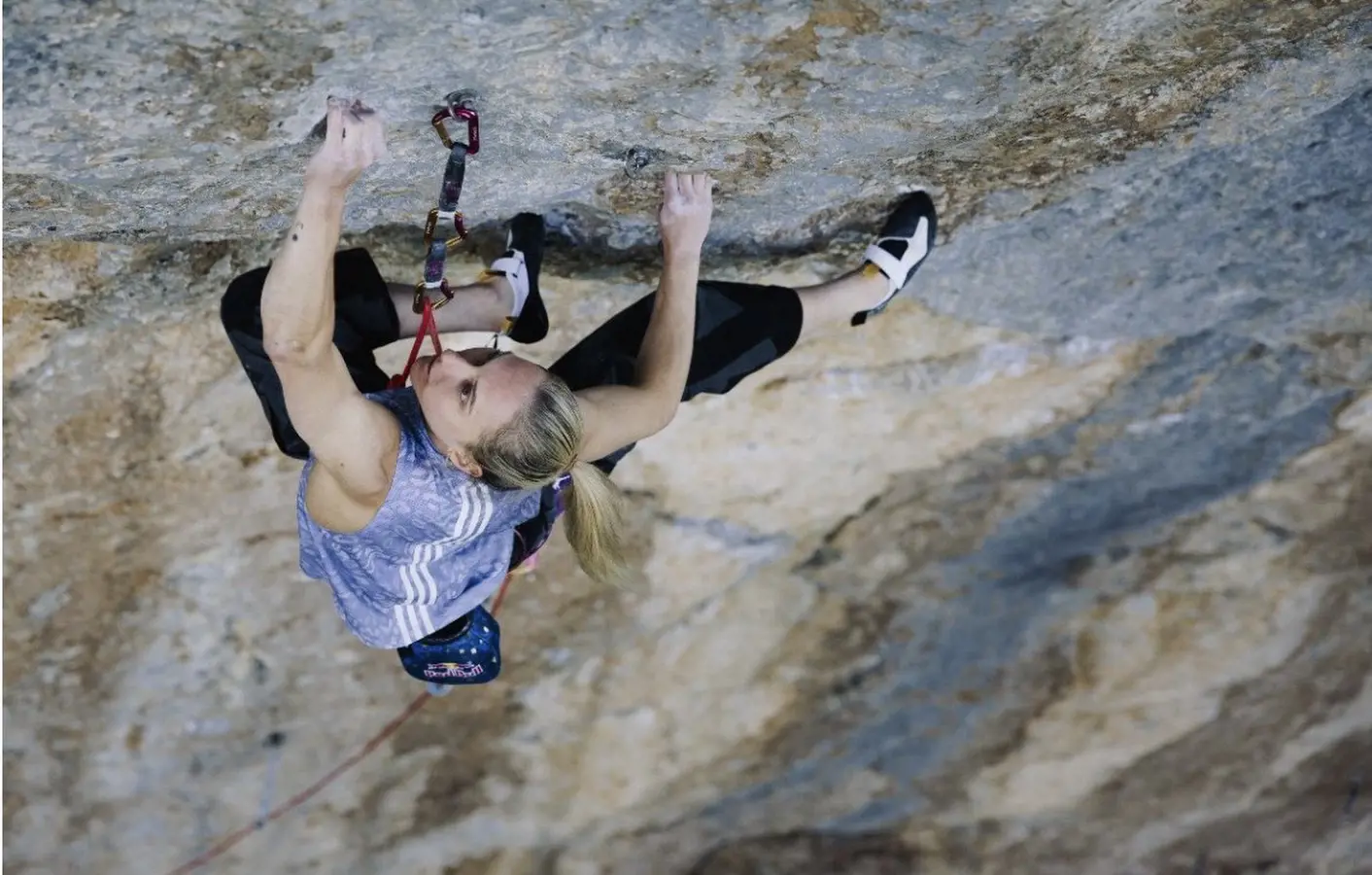
Janja Garnbret has added another milestone to her remarkable climbing career by becoming the first woman to climb Bibliographie (9b+) in Céüse, one of the harde…
362
48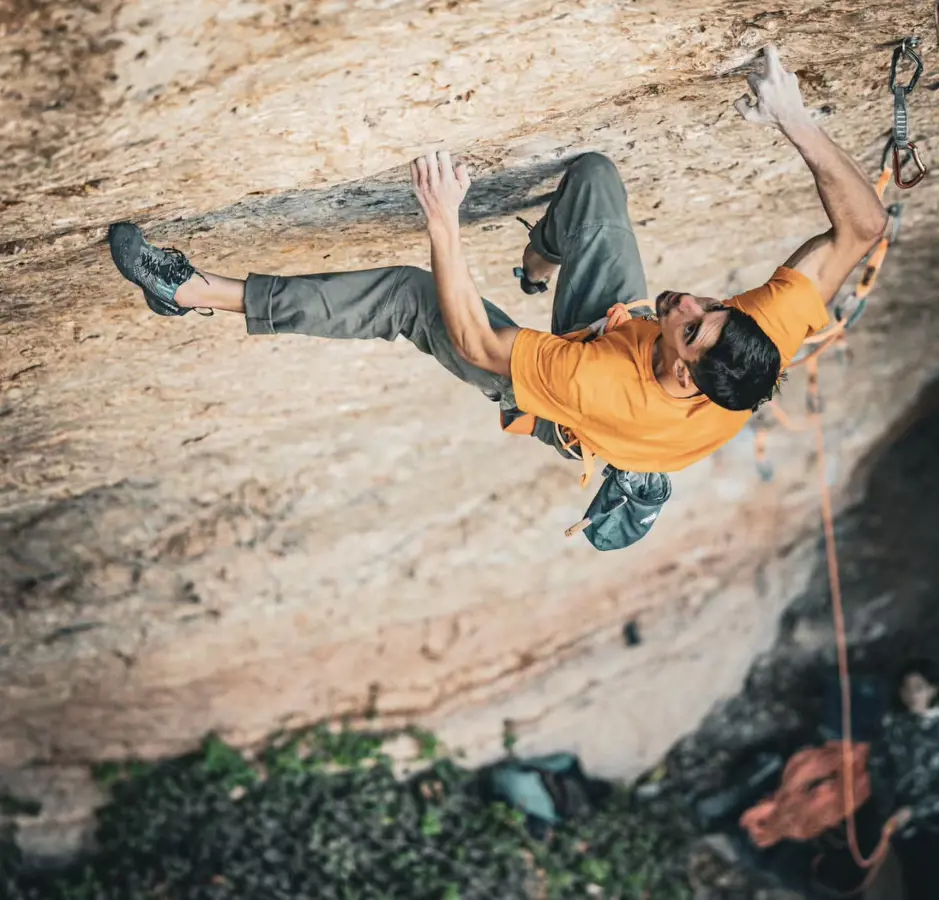
Jorge Diaz-Rullo reports on Instagram that he has made the first ascent of Cafe Colombia in Margalef. At 27, he’s already stacked four 9b+ sends and now he’s ad…
286
81
”I stopped focusing on competition bouldering after last year’s World Cup in Prague, partly because I can already feel it on my body, especially in my shoulders. The modern competition style, with a lot of jumping from one hold to another, is very demanding for the shoulders.
Outdoor bouldering is…
189
13Most commented
Jorge Diaz-Rullo reports on Instagram that he has made the first ascent of Cafe Colombia in Margalef. At 27, he’s already stacked four 9b+ sends and now he’s ad…
286
81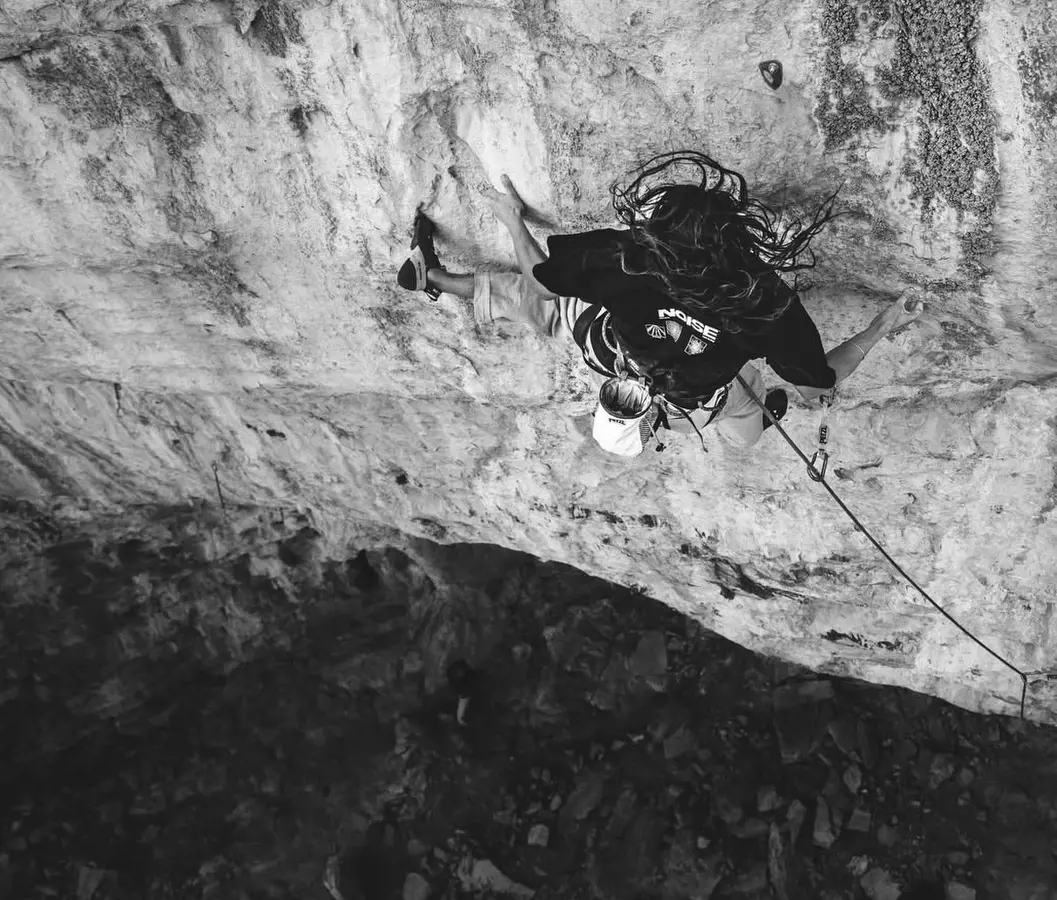
Sean Bailey reports on Instagram that he has done the first ascent of Duality of Man (9c) in Dry Canyon. ” After four total years and three seasons of climbing,…
163
69Jorge Diaz-Rullo elaborates on the reasons for him to suggest 9c for Café Colombia on Instagram, which he took down last week after projecting it for 240 sessio…
119
63