
NEWS
22 June 2022
Five flashes for Ogata and Ito in Innsbruck
Japan dominated the qualification in the Innsbruck Boulder World Cup. In total, they got four female and six male competitors into the Top-20 semifinals. Yoshiyuki Ogata and Futaba Ito were the only ones able to flash all five problems. Winners of the other groups were Rei Kawamata also from Japan and Stasa Gejo from Serbia. Japan impressively had eight male contestants in the Top-23. Team USA also had five athletes making it to the semis. The most surprising negative sensation was that Oriane Bertone was #33. Complete results
The male semifinal will take place on Thursday at 1 pm followed by the final at 7.45 pm. Then on Friday, the female semifinal will run following the same schedule. Here is how to watch the Innsbruck World Cup.
The male semifinal will take place on Thursday at 1 pm followed by the final at 7.45 pm. Then on Friday, the female semifinal will run following the same schedule. Here is how to watch the Innsbruck World Cup.
Read more
1
4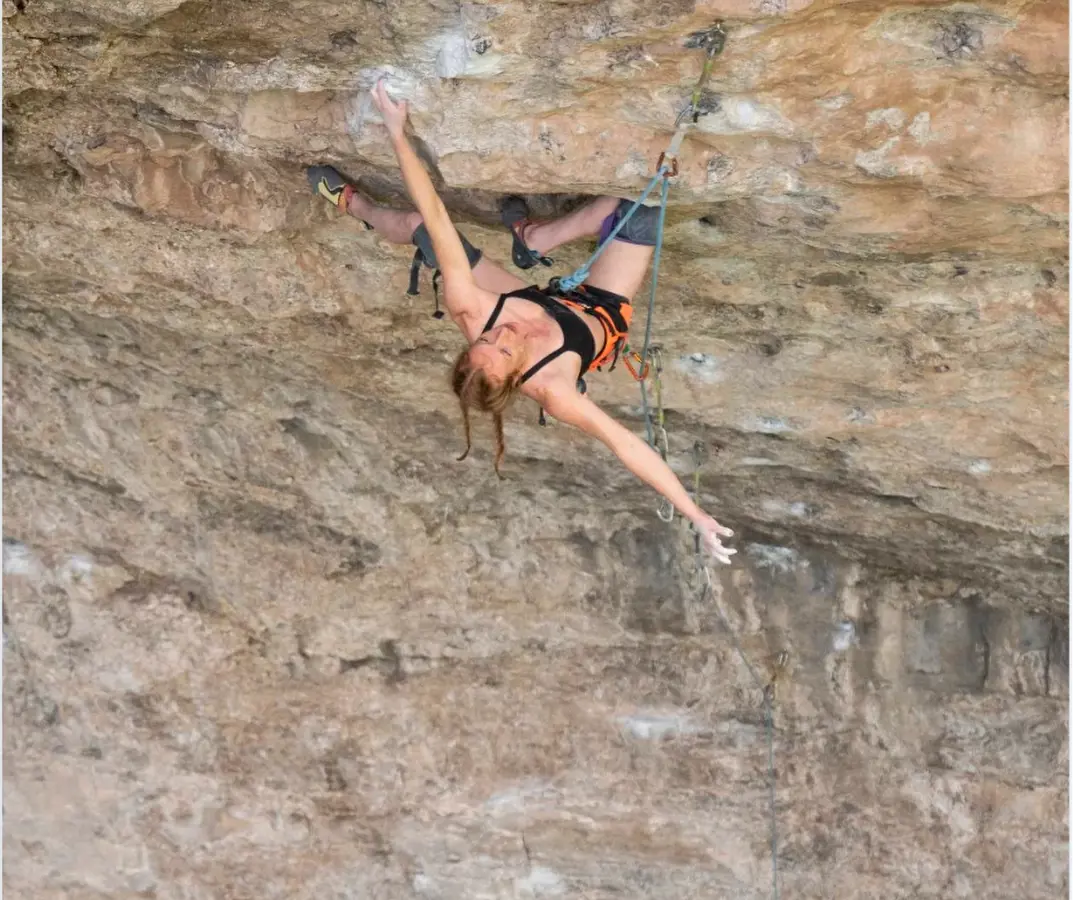
21 June 2022
The Crew 8c+ by Delaney Miller
Delaney Miller reports on Insta that she has done The Crew (8c+) in Rifle (CO). (c) James Lucas
"The route meant a lot to me. I started working on it last year and thought it would go down easily. Then I had a few minor injuries come up that really hindered my progress. I spent the winter recovering and rebuilding, and I'm damn proud of myself for making this breakthrough. A huge thanks to everyone who supported me in the process, and especially to Chris Knuth for having the vision. I've climbed one other route of the grade, Solid Gold in Utah, but this one was on another level."
The 27-year-old has been an active competition climber for ten years until 2018. In 2015, she had her best year being Top-13 four times in the World Cup. Three months ago, she published an article in Climbing focusing on the competition career. "It's an honest reflection of when you chase a dream and don't quite succeed, but ultimately walk away with a trove of memories". In November 2020, she did her first 8c+, Solid Gold but no media has reported it although she is the Digital Editor of Climbing Magazine.
Why did you think Solid Gold was so much easier?
It was more my style, with more sustained climbing and worse rests. I did that in November 2020. The Crew has a series of hard boulder problems separated by kneebar rests, and I'm really bad at kneebars. I'd also venture to say that The Crew is just harder for the grade, although I don't actually have the experience climbing 14c's (8c+) to say that with any kind of authority.
"The route meant a lot to me. I started working on it last year and thought it would go down easily. Then I had a few minor injuries come up that really hindered my progress. I spent the winter recovering and rebuilding, and I'm damn proud of myself for making this breakthrough. A huge thanks to everyone who supported me in the process, and especially to Chris Knuth for having the vision. I've climbed one other route of the grade, Solid Gold in Utah, but this one was on another level."
The 27-year-old has been an active competition climber for ten years until 2018. In 2015, she had her best year being Top-13 four times in the World Cup. Three months ago, she published an article in Climbing focusing on the competition career. "It's an honest reflection of when you chase a dream and don't quite succeed, but ultimately walk away with a trove of memories". In November 2020, she did her first 8c+, Solid Gold but no media has reported it although she is the Digital Editor of Climbing Magazine.
Why did you think Solid Gold was so much easier?
It was more my style, with more sustained climbing and worse rests. I did that in November 2020. The Crew has a series of hard boulder problems separated by kneebar rests, and I'm really bad at kneebars. I'd also venture to say that The Crew is just harder for the grade, although I don't actually have the experience climbing 14c's (8c+) to say that with any kind of authority.
Read more
7
021 June 2022
Paris 2024 qualification process
IOC has published the Paris 2024 qualification process: Top-3 in the World Championships (Bern 2023), 5 Continental winners and the Top-10 from an Olympic qualifying series during March to June 2024. There will also be one host country and one Universality quota place per gender. In practice, as the USA will probably fulfil their quota places and likely no Universality climber will make it to the Olympic series, it is most likely that the Top-12 from the series will get an Olympic ticket.
Only invited athletes, based on the 2023 results, will be allowed to compete in the Olympic series, and there will be a quota of max participants per gender and nation. No specific details for these series have been given: "Exact procedure to be determined." The tricky part of the formula is the max quota and the possibility that the USA, Japan and some European countries fulfil their quota after the Continental Championships, which take place in 2023.
Another big dilemma is what will happen with the World Cup 2024 as most of the best climbers will focus on the Olympics even more than before Tokyo 2020. There are many tough decisions that have to be made, and there will also be two zones in bouldering and a totally different scoring system in the Olympic qualifications compared to the current World Cups and WcH format.
Only invited athletes, based on the 2023 results, will be allowed to compete in the Olympic series, and there will be a quota of max participants per gender and nation. No specific details for these series have been given: "Exact procedure to be determined." The tricky part of the formula is the max quota and the possibility that the USA, Japan and some European countries fulfil their quota after the Continental Championships, which take place in 2023.
Another big dilemma is what will happen with the World Cup 2024 as most of the best climbers will focus on the Olympics even more than before Tokyo 2020. There are many tough decisions that have to be made, and there will also be two zones in bouldering and a totally different scoring system in the Olympic qualifications compared to the current World Cups and WcH format.
Read more
2
020 June 2022
Ghisolfi's perfect crag
Read more
0
020 June 2022
Stefano Ghisolfi presentation
Read more
3
019 June 2022
IFSC Brixen Highlights
Read more
0
0Joel Kinder has done the FA of Resisting Arrest (9a) in Robber's Roost which Cameron Hörst repeated ten minutes later. Andy Raether bolted it in 2010 and then Joel took it over 2019. One month ago he invited some friends to try it out and in the beginning they thought it might be 9a+ (c) JP Melville
"I started trying it and realized that this was not specifically my story. Normally with the first ascents and routes, I put up I like to see them through on my own and finish the story. But this climb was different as Andy had bolted it. I had prepped it and it was more or less at a very approachable spot which made it a great opportunity to include everybody that was interested in trying the thing. And the word spread fast as the route is such high quality. There were a few of us grouped up sharing beta and sessioning together. It’s like when you go bouldering and you’re all climbing on the same thing together and there’s such high energy. I feel like with sport climbing and especially first ascents you don’t get that vibe much.
Cam and I are both ultra-focused and we feed off of each other. I’ve climbed a lot with Cam in the past year. He is seriously one of my favourite people to climb with. He’s young and strong as f-ck and I learn a ton from him. But he also learns from me because I’m an old guy with all of the experience. Ha ha, it’s so classic.
I’m really grateful to be able to put as much time into my Climbing as I have been able to. I’m older now but what’s weird is I’m climbing better than I ever have in my entire life. And I am sitting here with a giant question mark over my head as to why? All I know dude is that I’m having a good time, I love climbing and I don’t have to answer to anyone (except my wife hehe). That feels f-cking good."
"I started trying it and realized that this was not specifically my story. Normally with the first ascents and routes, I put up I like to see them through on my own and finish the story. But this climb was different as Andy had bolted it. I had prepped it and it was more or less at a very approachable spot which made it a great opportunity to include everybody that was interested in trying the thing. And the word spread fast as the route is such high quality. There were a few of us grouped up sharing beta and sessioning together. It’s like when you go bouldering and you’re all climbing on the same thing together and there’s such high energy. I feel like with sport climbing and especially first ascents you don’t get that vibe much.
Cam and I are both ultra-focused and we feed off of each other. I’ve climbed a lot with Cam in the past year. He is seriously one of my favourite people to climb with. He’s young and strong as f-ck and I learn a ton from him. But he also learns from me because I’m an old guy with all of the experience. Ha ha, it’s so classic.
I’m really grateful to be able to put as much time into my Climbing as I have been able to. I’m older now but what’s weird is I’m climbing better than I ever have in my entire life. And I am sitting here with a giant question mark over my head as to why? All I know dude is that I’m having a good time, I love climbing and I don’t have to answer to anyone (except my wife hehe). That feels f-cking good."
Read more
10
016 June 2022
Kinematix 9a by Jules Marchaland
Jules Marchaland, who did his first 9a one month ago, has done his third, Kinematix in Gorges du Loup. "I'm very happy to do this route which is a connection between Total Eclatch a short 8c+ very physical, and Honk a 8b+ very resistant! The whole of the two-section is a very hard resistance effort! I took two sessions to readjust the movements before being able to put good runs and after three falls in the last three movements, I did it! So happy to do it quite quickly!"
Interesting is that he did his first 8c+ at age 16 in 2017 but then his motivation dropped and he did not do any hard routes until 2021. "I have been training very hard for several months and the work has paid off. I knew I had a good level and I am very happy to see the results of the training."
What are your next plan?
Yesterday I went to spot the movements in "Just two fix” a 9a/+ that Pierre Le Cerf did last summer! It's really not easy and really very long. We'll see what happens after a few sessions but it's not for now.
Interesting is that he did his first 8c+ at age 16 in 2017 but then his motivation dropped and he did not do any hard routes until 2021. "I have been training very hard for several months and the work has paid off. I knew I had a good level and I am very happy to see the results of the training."
What are your next plan?
Yesterday I went to spot the movements in "Just two fix” a 9a/+ that Pierre Le Cerf did last summer! It's really not easy and really very long. We'll see what happens after a few sessions but it's not for now.
Read more
5
2Germany had their best World Cup, possibly ever, with Yannick Flohé winning and Hannah Meul getting the silver. Before the women's final, 8a talked to the German Head coach, Ingo Filzwieser, and congratulated him for the great results and also for having four guys in the male semi. Asking him about the reason for the impressive progress the German team has made, he hesitated and gave it a long thought.
"I think most important is the mindset. Everyone is stronger mentally and somehow myself and they (the athletes) all think they can make finals. We have a great team and train together (and) at the same time, Hannah for example is doing most of her training with her personal coach in Cologne. You know, everyone is (an) individual and different approaches are necessary but at the same time we often meet and train together. I am not surprised that Hannah made it to the final and she can send all problems in the final."
We asked Ingo the reason for getting mentally stronger and he pointed out towards their new coach, Sagi Damti from Israel, in the picture. We had a short chat with Sagi and I was blown away by his story and passion for climbers. "I am just one of the coaches. All athletes are equally important for me. Please do not focus just on Yannick and Hannah, it is about the team... Megos for example is the best teammate you could think about."
In short, Sagi's story goes something like this: He started climbing in the Dolomites. He was going for a base jump and in the end, he had to make a 4-pitch 6a but in the end, they had to drag him up as he was terrified. Going back home he jumped off the train station and with his suitcase in his hand he went across the street to a climbing gym and signed up for a course. A few months later the manager asked him if I could run some training groups for kids. His background was working with kids with special needs and the manager said that was enough. Some months later, he started putting up routes and some years later he started to work as a coach for the Israeli team.
They met the Germans in competitions and sometimes they trained together. Last year, he was asked if he could apply to be their boulder coach and he did, even though he knew that one of the other applications came from a trainer he had looked up to for several years, almost like an idol. At 7 o'clock he gets the phone call (and an offer) and he does not know what to say. He asked Alex Khazanov for advice and approval and was convinced. "It is time for you to focus a bit on yourself and in the long run you can come back to us and then you can help Israel even more."
Asking Sagi if he can explain something about how he works he gives examples like. "When I am next to an athlete, I make them understand that my job is 100 % about assisting them. It can be setting some specific boulders for them, reflecting on their thoughts or simply just bringing them a coffee. It is about breaking their comfort zone. Everyone is different and there are no magic words. I express myself as a trainer through route setting I guess. I am obsessed with it and even on my free days, I cannot help myself ending up in the gym thinking about how I can challenge the athletes. Nevertheless, Ingo is the smartest trainer I know, he is doing all the hard training planning. I am just having fun." and that big smile comes again.
"I think most important is the mindset. Everyone is stronger mentally and somehow myself and they (the athletes) all think they can make finals. We have a great team and train together (and) at the same time, Hannah for example is doing most of her training with her personal coach in Cologne. You know, everyone is (an) individual and different approaches are necessary but at the same time we often meet and train together. I am not surprised that Hannah made it to the final and she can send all problems in the final."
We asked Ingo the reason for getting mentally stronger and he pointed out towards their new coach, Sagi Damti from Israel, in the picture. We had a short chat with Sagi and I was blown away by his story and passion for climbers. "I am just one of the coaches. All athletes are equally important for me. Please do not focus just on Yannick and Hannah, it is about the team... Megos for example is the best teammate you could think about."
In short, Sagi's story goes something like this: He started climbing in the Dolomites. He was going for a base jump and in the end, he had to make a 4-pitch 6a but in the end, they had to drag him up as he was terrified. Going back home he jumped off the train station and with his suitcase in his hand he went across the street to a climbing gym and signed up for a course. A few months later the manager asked him if I could run some training groups for kids. His background was working with kids with special needs and the manager said that was enough. Some months later, he started putting up routes and some years later he started to work as a coach for the Israeli team.
They met the Germans in competitions and sometimes they trained together. Last year, he was asked if he could apply to be their boulder coach and he did, even though he knew that one of the other applications came from a trainer he had looked up to for several years, almost like an idol. At 7 o'clock he gets the phone call (and an offer) and he does not know what to say. He asked Alex Khazanov for advice and approval and was convinced. "It is time for you to focus a bit on yourself and in the long run you can come back to us and then you can help Israel even more."
Asking Sagi if he can explain something about how he works he gives examples like. "When I am next to an athlete, I make them understand that my job is 100 % about assisting them. It can be setting some specific boulders for them, reflecting on their thoughts or simply just bringing them a coffee. It is about breaking their comfort zone. Everyone is different and there are no magic words. I express myself as a trainer through route setting I guess. I am obsessed with it and even on my free days, I cannot help myself ending up in the gym thinking about how I can challenge the athletes. Nevertheless, Ingo is the smartest trainer I know, he is doing all the hard training planning. I am just having fun." and that big smile comes again.
Read more
4
016 June 2022
The Brixen World Cup success story and recap
Just over 3 months ago, the IFSC suspended the Boulder World Cup and the local organizers in Brixen were asked if they were interested in hosting a replacement event. Three weeks later the dates were fixed and Alexandra Ladurner, Youth World Champion in 2010, started her full-time work preparing for this World Cup. "I have not been able to climb as much as I am used to but it has been a fun process." The 30-year-old is the type of manager that always seems to have everything under control without ever seeming stressed out. She's on top of every detail, we even caught her picking up garbage that some athletes had left. "I can not help myself. It (the venue) needs to look nice and clean," she says with a smile. (c) IFSC
Talking to several athletes and coaches, they all agree that it has been a well organized event and that the venue is perfect for hosting World Cups. Kilian Fischhuber, 5-time winner of the Boulder WC and now a coach for the Austrians, pointed out the great benefit of a curtain in front of the wall covering the route setters' work. Others mentioned that the wall is wider and steeper than most other walls on the circuit. The warm-up wall was great, and the after party and band were also well received.
When it comes to the route setting, the only major complaint heard was the perhaps too hard men's final. However, many coaches and athletes thought it is better too hard than too easy. One coach mentioned that there were again some moves that were not good for the shoulders and Natalia Grossman seemed to have some pain after the final.
Overall though, the route setting was nothing less than spectacular. The number of different solutions that were done on almost each boulder problem was impressive and highly entertaining. On one of the female final boulder problems, all six girls used six unique approaches to do one single move.
We also noticed more interaction among athletes and coaches from different nations, compared to some years ago. The athletes seemed to be more at ease and relaxed at this event and there were long queues of kids and their parents waiting for an autograph.
Brixen went a long way in highlighting the spectacle and legitimacy of climbing and climbing competitions, but constructively speaking there's still room for competitions to improve. The result service is much better than it used to be, but it is still hard for the viewer to understand who is in the lead after each boulder and what is needed for each competitor to make it to the final or to get onto the podium etc. Having a short presentation/clip of each of the 6 finalists both directly after the semi and just before the final would also be a welcomed addition.
The time it takes for each round to be completed is also something that has to be looked at with a little more scrutiny. Perhaps the IFSC could explore limiting the number of athletes, starting with climbers on all five boulders in the semi, trialling a 3+ minute climb time and in the finals, maybe even consider eliminating the lowest placed climbers after the first two boulders.
Talking to several athletes and coaches, they all agree that it has been a well organized event and that the venue is perfect for hosting World Cups. Kilian Fischhuber, 5-time winner of the Boulder WC and now a coach for the Austrians, pointed out the great benefit of a curtain in front of the wall covering the route setters' work. Others mentioned that the wall is wider and steeper than most other walls on the circuit. The warm-up wall was great, and the after party and band were also well received.
When it comes to the route setting, the only major complaint heard was the perhaps too hard men's final. However, many coaches and athletes thought it is better too hard than too easy. One coach mentioned that there were again some moves that were not good for the shoulders and Natalia Grossman seemed to have some pain after the final.
Overall though, the route setting was nothing less than spectacular. The number of different solutions that were done on almost each boulder problem was impressive and highly entertaining. On one of the female final boulder problems, all six girls used six unique approaches to do one single move.
We also noticed more interaction among athletes and coaches from different nations, compared to some years ago. The athletes seemed to be more at ease and relaxed at this event and there were long queues of kids and their parents waiting for an autograph.
Brixen went a long way in highlighting the spectacle and legitimacy of climbing and climbing competitions, but constructively speaking there's still room for competitions to improve. The result service is much better than it used to be, but it is still hard for the viewer to understand who is in the lead after each boulder and what is needed for each competitor to make it to the final or to get onto the podium etc. Having a short presentation/clip of each of the 6 finalists both directly after the semi and just before the final would also be a welcomed addition.
The time it takes for each round to be completed is also something that has to be looked at with a little more scrutiny. Perhaps the IFSC could explore limiting the number of athletes, starting with climbers on all five boulders in the semi, trialling a 3+ minute climb time and in the finals, maybe even consider eliminating the lowest placed climbers after the first two boulders.
Read more
2
2Favorites
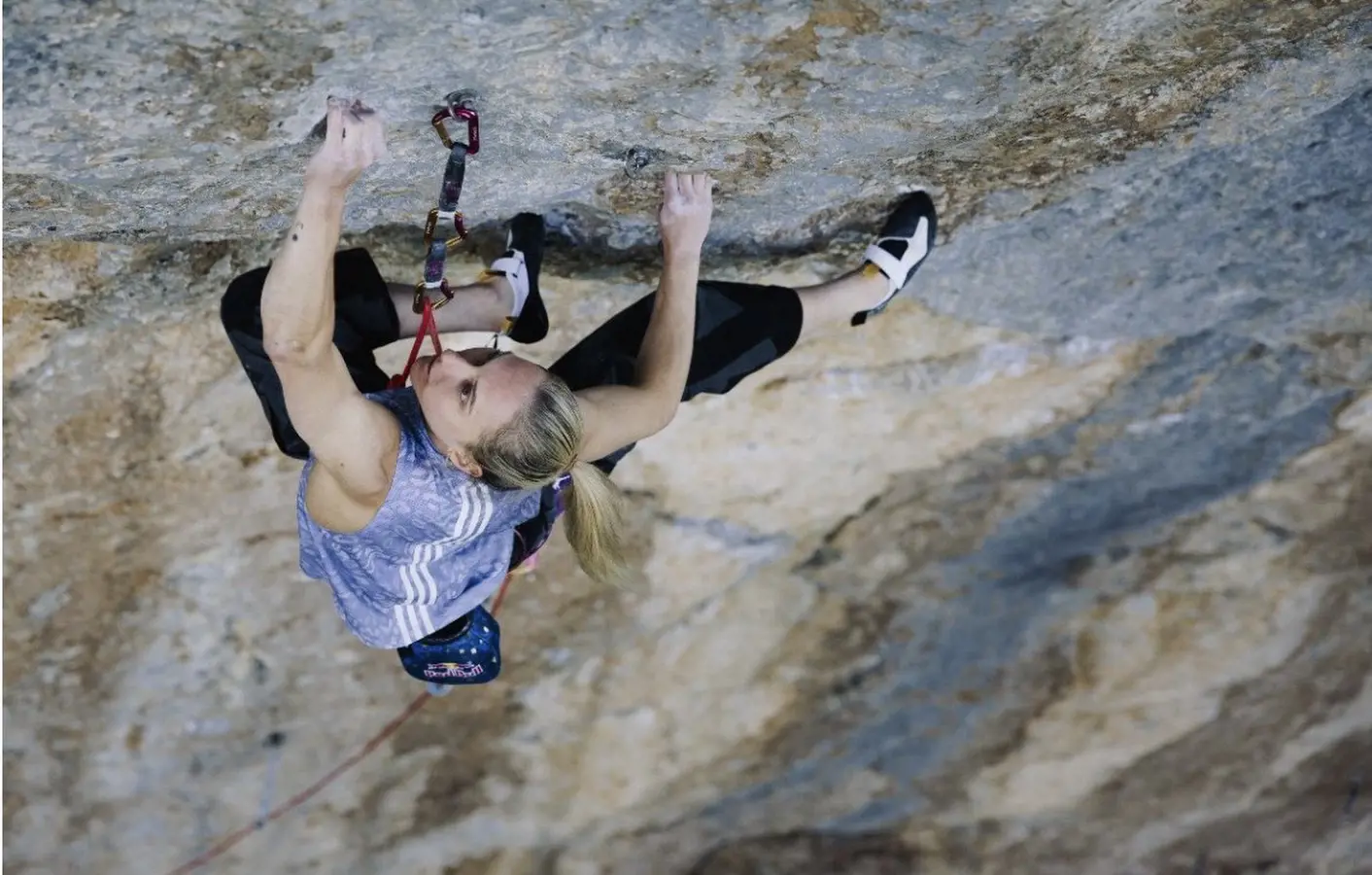
Janja Garnbret has added another milestone to her remarkable climbing career by becoming the first woman to climb Bibliographie (9b+) in Céüse, one of the harde…
364
48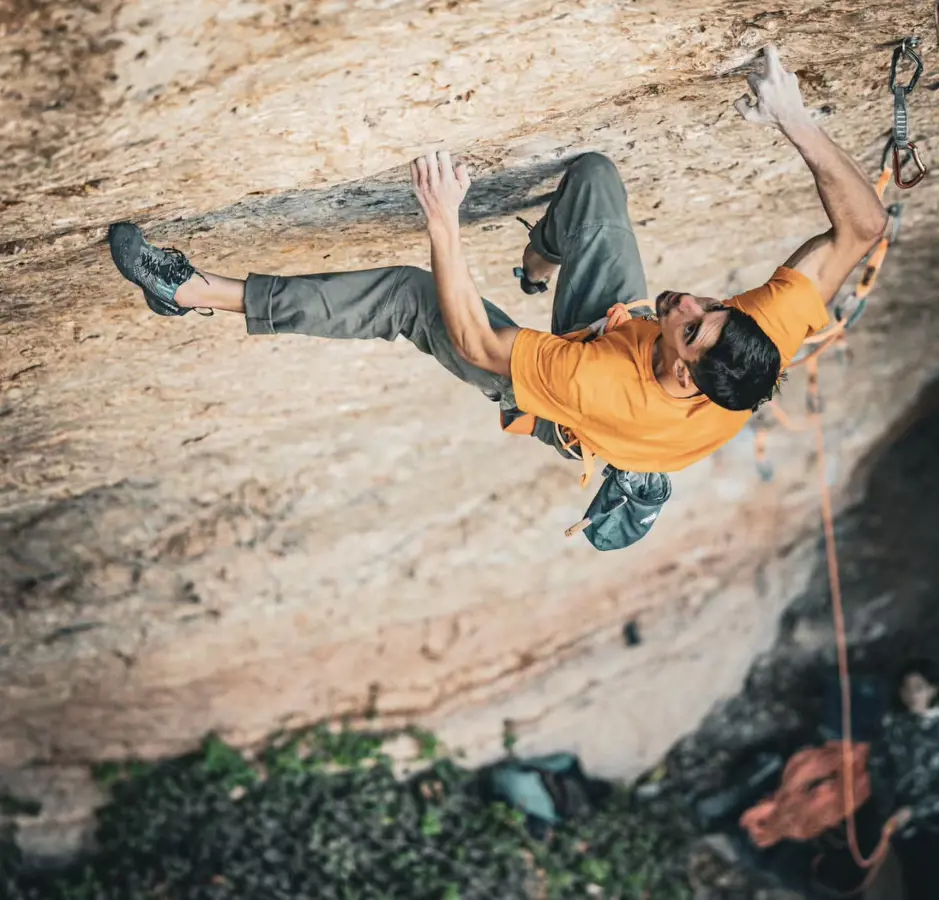
Jorge Diaz-Rullo reports on Instagram that he has made the first ascent of Cafe Colombia in Margalef. At 27, he’s already stacked four 9b+ sends and now he’s ad…
286
81
”I stopped focusing on competition bouldering after last year’s World Cup in Prague, partly because I can already feel it on my body, especially in my shoulders. The modern competition style, with a lot of jumping from one hold to another, is very demanding for the shoulders.
Outdoor bouldering is…
189
13Most commented
Jorge Diaz-Rullo reports on Instagram that he has made the first ascent of Cafe Colombia in Margalef. At 27, he’s already stacked four 9b+ sends and now he’s ad…
286
81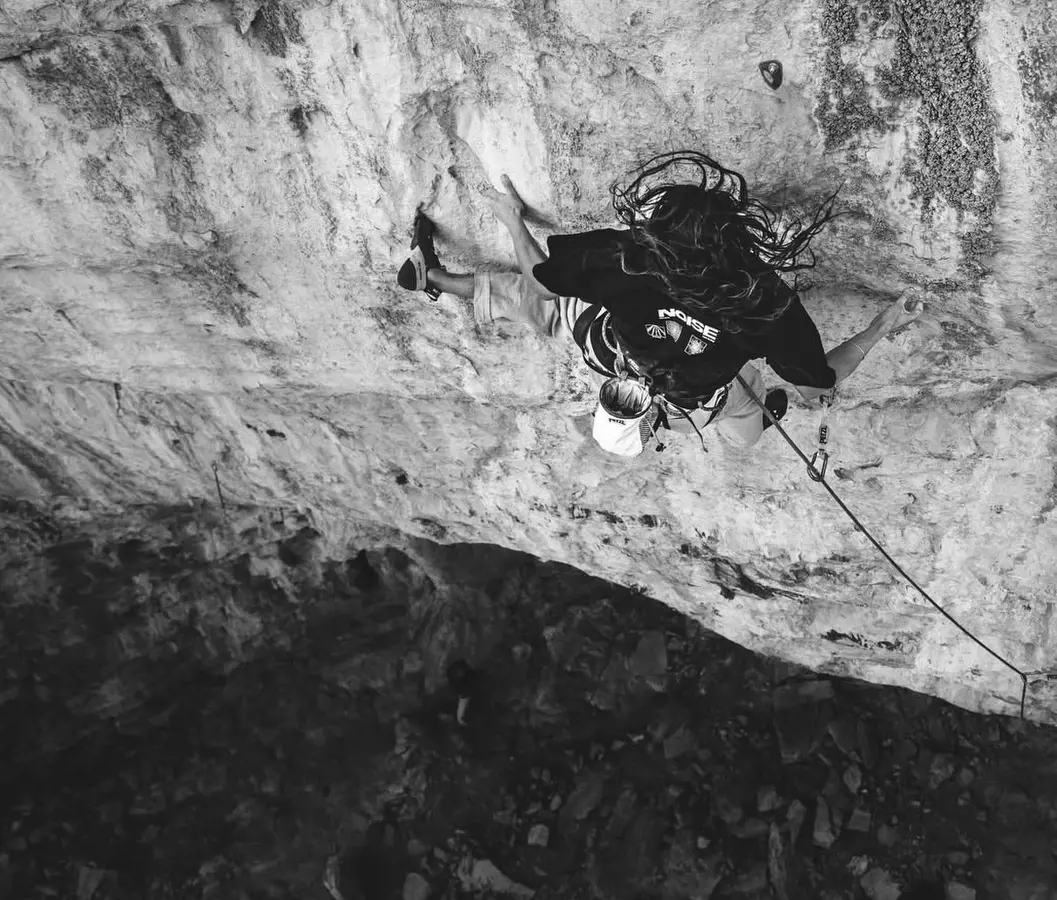
Sean Bailey reports on Instagram that he has done the first ascent of Duality of Man (9c) in Dry Canyon. ” After four total years and three seasons of climbing,…
163
69Jorge Diaz-Rullo elaborates on the reasons for him to suggest 9c for Café Colombia on Instagram, which he took down last week after projecting it for 240 sessio…
119
63