NEWS

Oblivion 9a FA by Alex Rohr
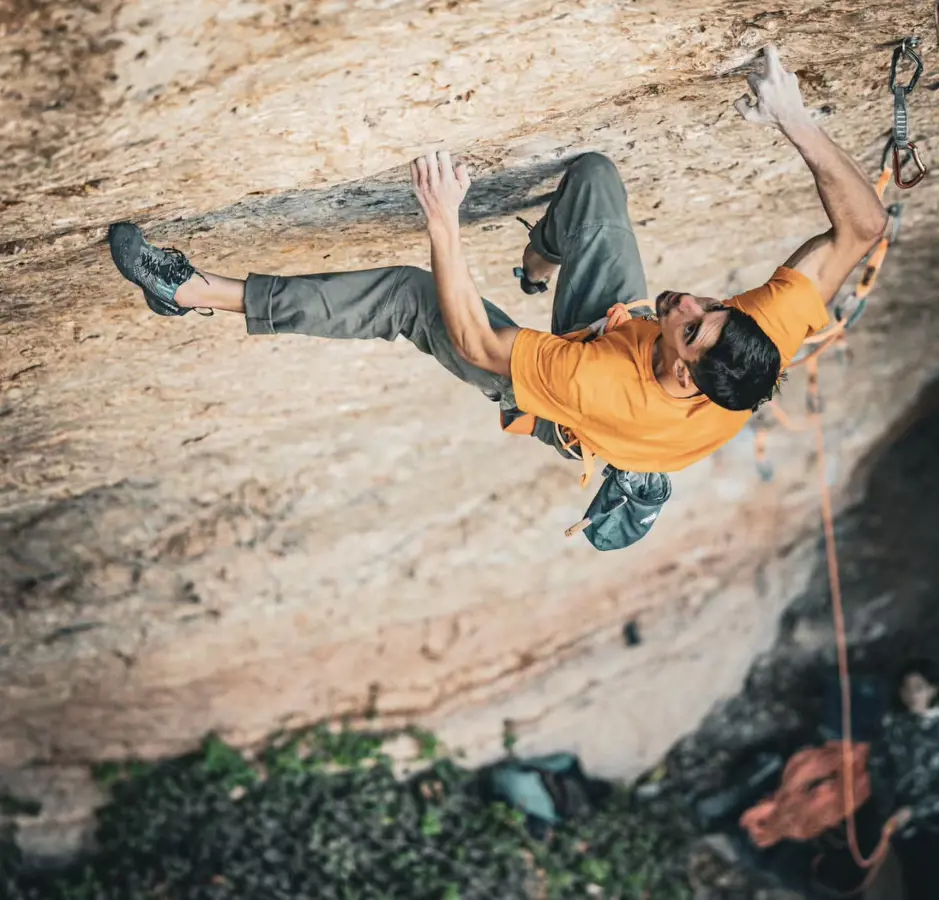
Alexander Rohr has done the FA of Oblivion (9a) in Gimmelwald. The 26-year-old has previously done a dozen 9aโ€™s and last month he did his first 9a+, Change P1. (c) John Thornton

โ€Yesterday I could do the first ascent of an old project in Gimmelwald. It is a link-up between Alpenbitter (8c+/9a) and Renardo Rules(8c/8c+). It consists of the first and easier part of Alpenbitter, a hard boulder crux, ~8A+, in the middle and the finish of Renardo Rules. There is no real rest and the main problem of the route is doing the 4 move boulder crux a little tired. The first two moves of the crux are not very hard but offer very tricky climbing with high probability of doing mistakes. One little mistake and the two last moves felt impossible.

I wanted to do this route before Flatanger but couldnโ€˜t finish it. After returning from Norway, I immediately jumped on that challenge again and spent another four days until yesterday, when I could finally link all the moves together. I hesitated about the grade a little, but after the successful try, I repeated Alpenbitter as a training and had to realize, that the new link-up must be harder.โ€

SINGING ROCK โ€“ 30 Years in the Vertical World
It's been 30 years since the former owners of Singing Rock met at a trade fair in Munich and decided to start a company together and to produce harnesses, backpacks and sandals. We don't make sandals anymore, but we still develop and produce harnesses and other climbing equipment. Over the years, our product range has naturally expanded to include equipment for working at heights.

In those 30 years Singing Rock has gone through all the processes of transformation from a small garage company to one of the leading manufacturers of climbing equipment. Whether it was finding skilled workers and reliable suppliers, moving the company headquarters, expanding production capacity, changing the product portfolio, changing the company owners - these are some of the milestones Singing Rock has gone through and mastered, so that this year, it can share this rich history with you.

Singing Rockโ€˜s success is based on good leadership, but, more importantly, on the employees who create the good atmosphere in the company. It is still true that we are a purely Czech and truly climbing company. Singing Rock has been around for 30 years, and we believe that we will continue making products for your vertical world.

Deltaplane Man Direct 8c+ by Graham Owens (17)
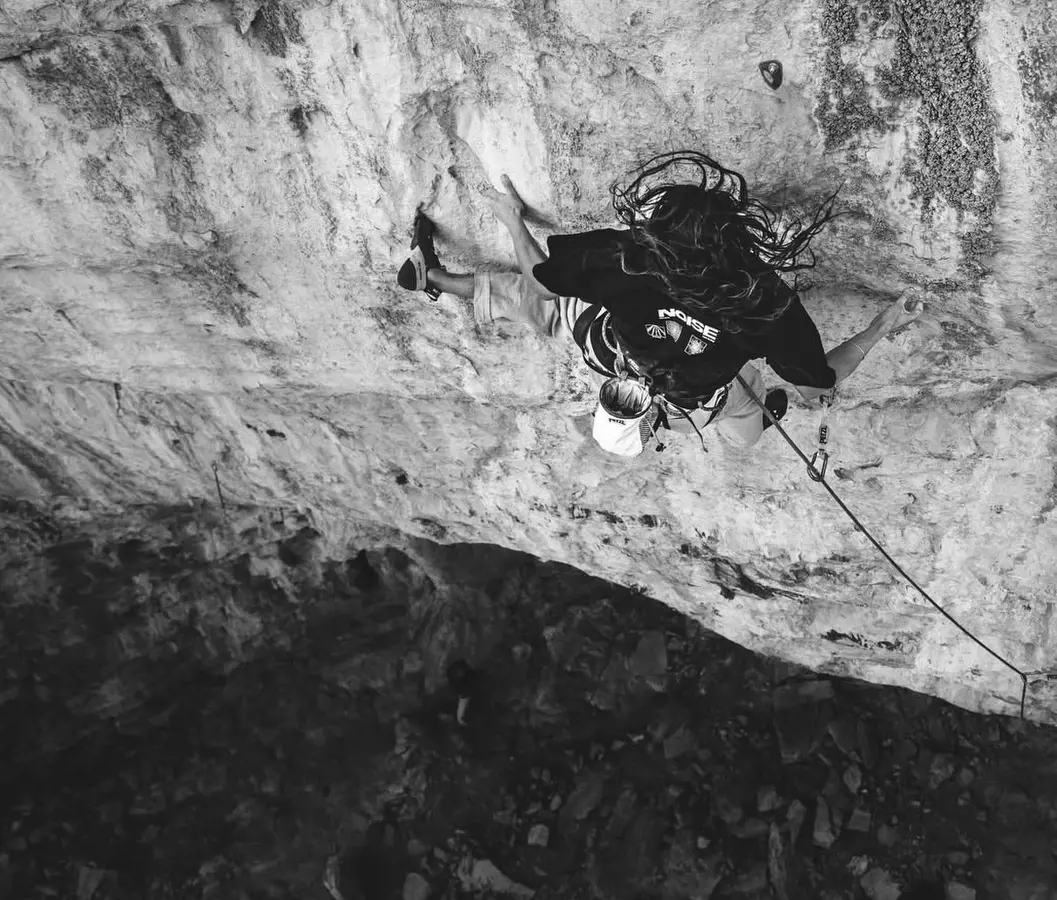
Graham Owens has done Deltaplane man direct (8c+) in Entraygues. The 17-year-old has previously done one 9a and three 8c+.

Could you say something about the process of how you took it down?
It was a cool process. I did the 8b version quickly but worked out the top part and found one move quite hard. I took a break from the route and came back in better conditions, which helped a lot. I sent on the third go of that day with the same direct beta of jumping to the crux crimp.

What is the autumn plan?
This fall the plan is to rage Jaws II (9a+) at Rumney which Iโ€™ve been seriously trying since I sent my first 9a last year. The route is hard and low percentage but Iโ€™ve made good progress and feel psyched on it. Iโ€™ll also try to do some bouldering and maybe a few open comps.

Zangerl and Larcher comment on their amazing Eternal Flame ascent
In July, Barbara Zangerl and Jacopo Larcher made a six-day onsight/flash ascent of the 650m Eternal Flame 7c+ in Pakistan, topping out at 6 240m. Babsi and Jacopo chose to โ€˜swing-leadsโ€™ - meaning they each led alternate pitches. However, they also decided they would both lead the four hard crux (7c-7c+) pitches on the route. All removable protection was placed on lead, as they climbed. Here are some further details of their amazing ascent as well as a mini-interview. (c) Austin Sidak - Reel Rock

What were the driving forces going for such a big project, doing Eternal Flame?
Eternal Flame was always a dream route for us. Inspired by the vision of Kurt Albert and Wolfgang Gรผllich. All pictures we saw about this free-standing tower kept us psyched to finally visit this place and try to repeat it. We were already there last year but didnโ€™t get lucky enough with the weather. So last year we spent all our time hiking up and down the gully with just a very little of climbing. All in all, it was a fantastic trip anyway. The country the culture, the people the food, the landscape, staying in this beautiful place without cell phone service or internet far away from everything was kind of a new and great experience. We knew it wonโ€™t be our last visit.

What were climbing-wise the biggest challenges for you?
The biggest challenge is of course the altitude and the conditions. You donโ€™t always feel very well at this altitude, everything that you do up there is way more exhausting compared to normal. You donโ€™t really recover from climbing or donโ€™t sleep much during the night. It is also a very long and steep approach in a dangerous gully because of rock falls.

It takes approximately one week to get from home to base camp and then you need to get acclimatized before you even can start to climb this wall. For the first 8 days, we just carried up all the gear, food, tents, the portaledge, and sleeping bags. We went up and down multiple times and slept a couple of times at 5000-5500m before we started our ground-up push. So it takes a lot of time to finally get into climbing mode. And last but not least you need very good conditions otherwise you canโ€™t free climb up there.

How do you feel climbing at such a high altitude? Grading-wise, would the hardest pitch be 7c+ also at sea level?
Yes, I think that the grading is ok where ever it would be. It is just way harder to climb at this altitude. If you donโ€™t have perfect conditions you canโ€™t even think about climbing at 6000m.

Last year we have spent 5 weeks at the Trango Towers and there was not a single chance to climb Eternal flame. It was wet or there was ice in the cracks. So you need to be also very lucky to find the route in good condition. And even if you have good weather it can be pretty cold up there. So compared to other walls we did beforeโ€ฆ.it was definitely more challenging and complicated all in all.

Day 1 โ€“ 18th July
At 4 a.m they got up and carried their load up to the base of the wall. They climbed the first 9 pitches, up to โ€˜Sun Terraceโ€™. (swinging leads) (Lead: 7a+ Babsi, 6c+ Jacopo, 5c Babsi, 5c Jacopo, 5b Babsi, 5b Jacopo, 5c Babsi, 6c Jacopo, 3b Babsi) They set up their bivi at Sun Terrace for the night.

Day 2 โ€“ 19th July
They climbed 6 pitches up to the bottom of the first 7b (the 7b was completely wet. So they decided to rappel back down to sun terrace) They spent the afternoon there and rested for the rest of the day. (Lead: 5b Babsi, 7a-Jacopo, 7a+ Babsi, 7a Jacopo, Babsi 7a, Jacopo 6c+)

Day 3 โ€“ 20th July
Babsi and Jacopo jumared up to the previous dayโ€™s high point. They were quite early and it was so cold that they couldnโ€™t start climbing until the sun came around the corner. They were waiting at the hanging belay for 2 hours. Jacopo climbed the 7b pitch with numb fingers and toes. The wind was blowing and it was very hard and took lots of energy. That day they only climbed 3 pitches (7b, 6c+,7c). Both leading the 7c (first Jacopo, then Babsi), then swinging leads on the others. They were exhausted after this day and the next 7c was still completely wet. So we abseiled back to the sun terrace on the fixed lines.

Day 4 - 21st July
They jumared up to the last dayโ€™s high point. Babsi climbed the next 7c in ok conditions. A bit of ice and water at the start of the pitch which made it tricky. Afterward, Jacopo also sent this pitch on lead. Babsi took the next 6c on lead. Jacopo then following her to the snow ledge. They took a rest on the snow ledgeโ€”Edu was filming on the next crack pitch- and after one hour they kept on climbing. Jacopo led the next 6c, Babsi 7b, Jacopo 6c, Babsi led the 7c+ on sight then Jacopo also led it first try (flash) After this, they abseiled back down to the snow ledge for the night.

Day 5 โ€“ 22nd July
They jumared back to their high point. Jacopo onsighted the next 7c, Afterward Babsi also flashed it on lead, Babsi 6c+ lead, Jacopo 7a lead, Then back to snow ledge for the night.

Day 6 โ€“ 23rd July
Babsi 4c, Jacopo 5c, Babsi 5c, Jacopo 5c/M5, then Babsi led the last pitch to the top. They rappelled down the same day and went back to base camp. Some days later they went back to the wall to clean all the ropes.

Spirit Quest 9a by  Jonathan Siegrist
Jonathan Siegrist has repeated Spirit Quest (9a) in Squamish, after a handful sessions. "Hateful conditions for the most part but the route is just so insanely good that I had to keep trying it! Truly one of the best granite sport climbs... on earth? Big respect to Tom for the vision and to Mike on the FA. Stoked to see that I can still climb tech!"

The 35m route was bolted by Tom Wright and it was Mike Foley who did the FA in 2021 and then Ben Harnden made the first repeat, shortly after. FA video

What is next?
Next, Iโ€™d like to do some classics around Squamish, both trad and sport! There are also some cool projects for me to try.

Men's Lead ranking after 5 out of 7 events
-

Mori and Potocar win their first WC
Ai Mori from Japan, who took the bronze in the WCH in 2019 at age 15, won the World Cup in Koper by climbing three holds further than Janja Garnbret from Slovenia. This was the first WC in 2022 that the 18-year-old Japanese climber took part in. Brooke Raboutou from the USA took the bronze. Complete results (c) Dimitris Tosidis

Among the men, Luka Potocar from Slovenia earned his first WC victory, winning over Sascha Lehmann from Switzerland on countback. Luka has previously been #2 in the WCH in 2021 and he is now #2 also in the total ranking. Yannick Flohรฉ from Germany, getting the bronze, was one hold behind. Interestingly, Japan had five guys in the Top-11, which is their best result ever as a team. Complete results

Idรฉe fixe 8c by Birte Gutmayer
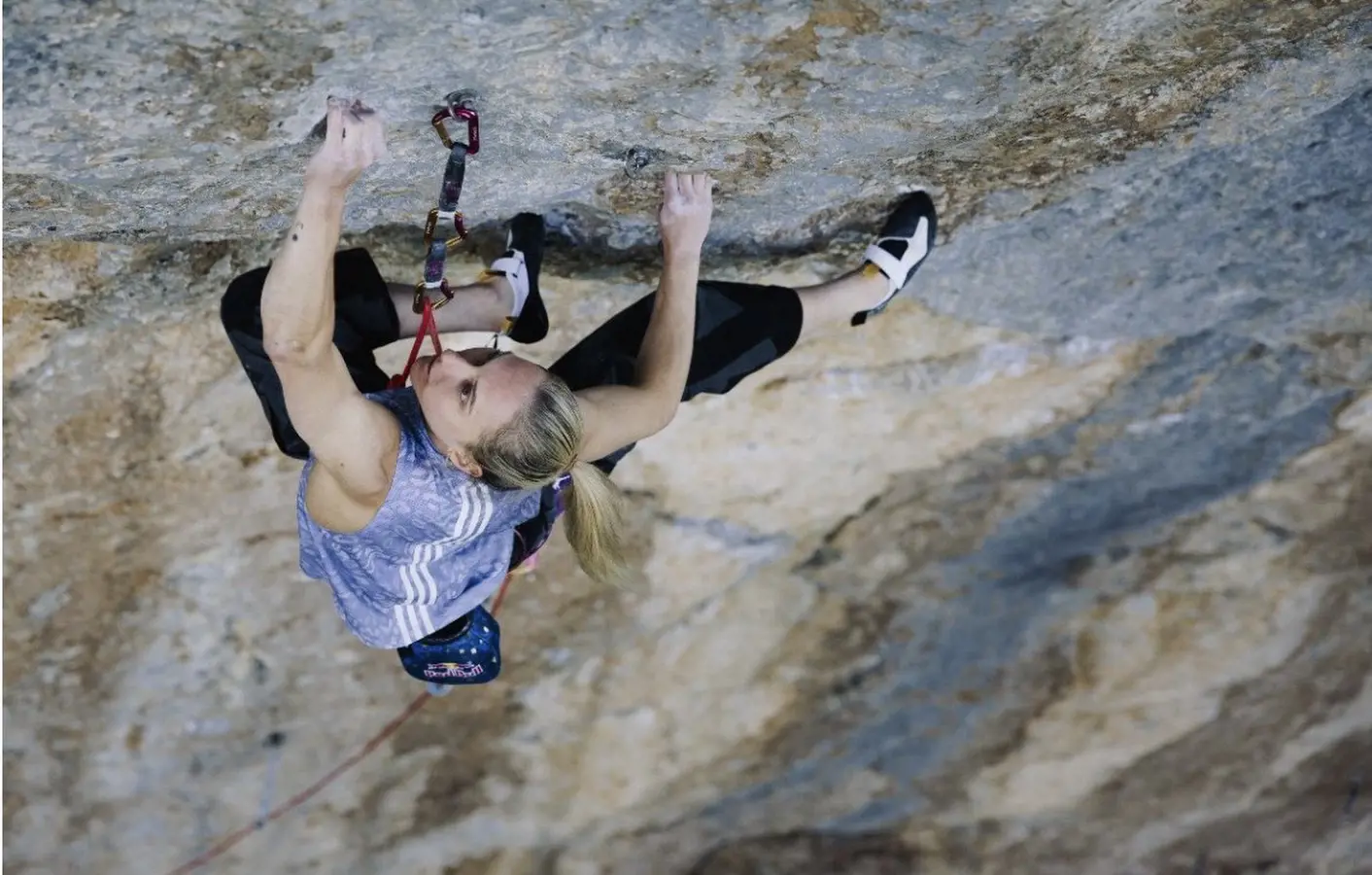
Birte Gutmayer has done Idรฉe fixe (8c) in La Saume. "~7c+ to a good rest, followed by a 12-move power endurance crux where precision and beta were key for me. The right mindset and good conditions had to come together to realize this project."

The 32-year-old's grade pyramid is very impressive and in total, she has logged 1 150 routes with comments in the 8a database. In her latest Insta from July, she comes with interesting thoughts.

"To find a well matching climbing partner is as hard as finding a good hold on Frankenjura limestone. Some look good but wonโ€™t bring you further. Others are maybe deep enough but donโ€™t fit your fingers. Others may be to fragile and they break once you put force on them. Joy, motivation and awareness are some of the key features my climbing partner should bring to the crag. Positive energy is as essential as the air I breathe but nevertheless the choice of good climbing partners is often underestimated in an individual sport as climbing.

The choice of climbing partners is sometimes based on their maxgrade - the higher the better - but this doesnโ€™t tell you much about the personality. They are probably motivated to climb but also to belay? Is your success of similar importance as their own? Other climbers choose their climbing partners based on fun - the funnier the better. It is getting complicated as soon as the evening beer is preferred to another belay session.

In my opinion good climbing partners are always aware and with confidence. They give me advice and share the perfect beta. While resting they donโ€™t stare at their smartphones but enjoy our common real life with good vibes. They encourage me at the start and cheer at the right moment so I can push to my limits and beyond."


Could you tells us more about your ascent?
In June with โ€žIdรฉe fixeโ€œ in my mind I came to Briancon to check out the route. The line in dark grey rock looked like the perfect endurance test piece where I could take advantage of my strengths. I had six days of projecting in three weeks with really good progress. In this phase I rehearsed all the moves, tried to optimize the beta and only did links between the rests. As a side project I climbed โ€žSaume sweet homeโ€œ whose crux is part of Idรฉe fixe. But โ€žIdรฉe fixeโ€œ has a harder crux in the midsection. In the fourth week of my stay in the Briancon area I started to do redpoint attempts. I realized that Idรฉe fixe wonโ€˜t be a matter of endurance because I didn't even get really pumped until the crux moves but my fingers and shoulders werenโ€™t strong enough to do the last three hard moves on crimps. In three days I fell nine times at the same move without any improvement and I felt close to my physical abilities. Also the heat wave in mid July didn't increase my chances. So I decided to drive back home for training.

My motivation for training was high. So I was confident when I came back in August. But in my first week back on the route I struggled a lot with single moves due to quite humid conditions. After a weak the conditions changed. The humidity dropped down to 40% and I could do a big linkup from two moves after the first rest to the end of the 8c crux sequence.

I got psyched again to have some promising tries the next day. And finally it happened on my second try then. Compared to the 8c crux in control the 8b-part to the anchor was a bit shaky and risky because I took the gamble to not climb this part in one link since my first stay back in july. The whole process had its ups and downs but probably thatโ€™s part of projecting at your limit. And so I am even happier to climb this great power endurance test piece.