
NEWS
2 August 2023
Marine Thevenet does Steppenwolf (8B)
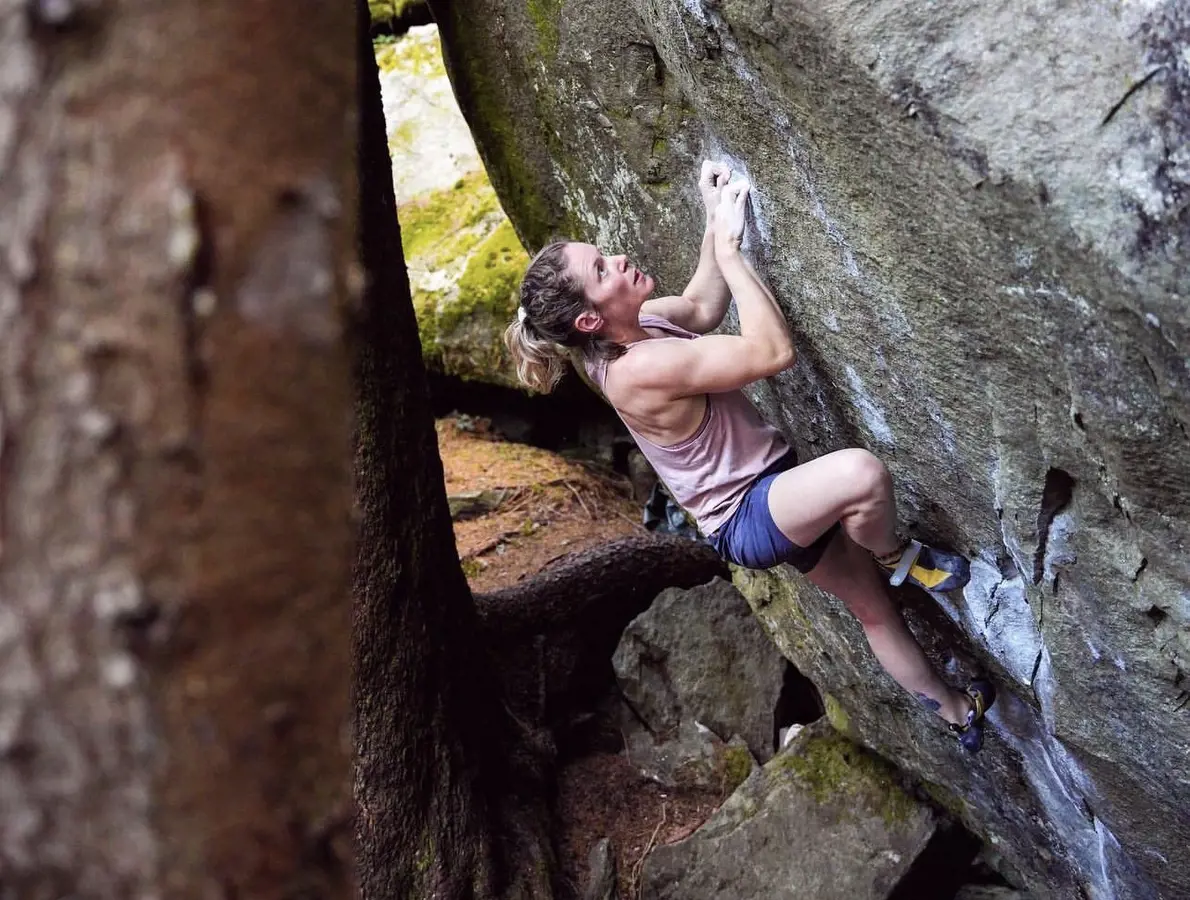
Marine Thevenet, who has completed over 90 boulders 8A and harder, has done Steppenwolf (8B) in Magic Wood. The former lawyer has just started her own business as a sports manager to help climbers and outdoor athletes to find sponsors. (c) Clement Lechaptois
”I tried Steppenwolf 2 sessions 2 years ago. At that time, I did some promising attempts :) This year I was really psyched to come back to Magic Wood to finish it since we didn't have the chance to climb in MW last year. I was curious to see if I had made some progress or not!
The first session this year was disastrous! I had a finger injury in April and I was not able to crimp at 100% with my right hand, but I naively believed that maybe I could compensate with something else 🤷♀️ Magic Wood quickly reminded me how strong in crimps you should be to send boulders haha! But being less in shape allowed me to find an easier beta for the end than the one I did some years ago. So I came back home with frustration and motivation to come back stronger with a totally fixed finger 😈 We came back for a short trip of 4 days in mid-July and, this time, I was able to climb at my best :)”
”I tried Steppenwolf 2 sessions 2 years ago. At that time, I did some promising attempts :) This year I was really psyched to come back to Magic Wood to finish it since we didn't have the chance to climb in MW last year. I was curious to see if I had made some progress or not!
The first session this year was disastrous! I had a finger injury in April and I was not able to crimp at 100% with my right hand, but I naively believed that maybe I could compensate with something else 🤷♀️ Magic Wood quickly reminded me how strong in crimps you should be to send boulders haha! But being less in shape allowed me to find an easier beta for the end than the one I did some years ago. So I came back home with frustration and motivation to come back stronger with a totally fixed finger 😈 We came back for a short trip of 4 days in mid-July and, this time, I was able to climb at my best :)”
Read more
12
0
2 August 2023
Monkey Wedding (8C) by Austin Hoyt, 19,
Austin Hoyt, who previously has sent six 8B+, has done Monkey Wedding (8C) in Rocklands.
”All in all Monkey Wedding took me about eight days to piece together on this a little more than a month long trip. I tried it the second day I climbed in Rocklands for the first time, I quickly unlocked all but two moves in a short session. The second day on it was the same situation just working through moves again, finally on the third session I found a sequence that worked for me did all the moves! I ended up going with the original beta that Fred, Paul, and Daniel all do with a little extra small left hand to slide into. On session four and five I managed to fall on the last move four times! Slowly it became more of a mental battle. Come session eight, my last fresh day trying the boulder and I managed to send it! Couldn’t have done it without Bryce Viola!”
What is your climbing background?
I began climbing about 11 years ago at High Exposure Climbing in Northvale New Jersey, and I still climb there today! Ever since starting I’ve been obsessed and likely climb five days a week. Training mostly focuses on board climbing, weight lifting, and a lot of projecting! Luckily I’m here in Africa with long time friend and training partner Adam Shahar, he’s insanely strong and going to rack up an insane tick list himself! We’ve pushed each other since day one, without the very friendly competition I don’t know if either of us would ever be where we are now.
”All in all Monkey Wedding took me about eight days to piece together on this a little more than a month long trip. I tried it the second day I climbed in Rocklands for the first time, I quickly unlocked all but two moves in a short session. The second day on it was the same situation just working through moves again, finally on the third session I found a sequence that worked for me did all the moves! I ended up going with the original beta that Fred, Paul, and Daniel all do with a little extra small left hand to slide into. On session four and five I managed to fall on the last move four times! Slowly it became more of a mental battle. Come session eight, my last fresh day trying the boulder and I managed to send it! Couldn’t have done it without Bryce Viola!”
What is your climbing background?
I began climbing about 11 years ago at High Exposure Climbing in Northvale New Jersey, and I still climb there today! Ever since starting I’ve been obsessed and likely climb five days a week. Training mostly focuses on board climbing, weight lifting, and a lot of projecting! Luckily I’m here in Africa with long time friend and training partner Adam Shahar, he’s insanely strong and going to rack up an insane tick list himself! We’ve pushed each other since day one, without the very friendly competition I don’t know if either of us would ever be where we are now.
Read more
27
81 August 2023
Japan dominate the male boulder qualis in Bern
The World Championships in Bern started today with the men’s boulder qualification. Yoshiyuki Ogata and the 16-year-old wonderkid Sorato Anraku, both from Japan, won their respectively groups, doing all five boulders. Runner-ups were Yannick Flohe (GER) and Sam Avezou (FRA) followed by another three from team Japan. It can be mentioned that also France did get five males to the semifinal. (c) Jan Virt/IFSC
Adam Ondra just barely made it to the semi by being #19 with two tops. Overall, 130 males participated and basically there were no big sensational results.
Yannick commented to IFSC, ”It was pretty good. I did all five boulders. I did the two slabs, and this year I haven’t done any slabs in the World Cups so I’m happy. I tried to have a little break after the last World Cups and have a good training block to refocus, I think that helps a lot, because there was a lot of competitions and after Villars I was pretty ‘comp burned out’ so some structured training helped me to get back to feeling good, and I am feeling good right now.”
Adam Ondra just barely made it to the semi by being #19 with two tops. Overall, 130 males participated and basically there were no big sensational results.
Yannick commented to IFSC, ”It was pretty good. I did all five boulders. I did the two slabs, and this year I haven’t done any slabs in the World Cups so I’m happy. I tried to have a little break after the last World Cups and have a good training block to refocus, I think that helps a lot, because there was a lot of competitions and after Villars I was pretty ‘comp burned out’ so some structured training helped me to get back to feeling good, and I am feeling good right now.”
Read more
3
031 July 2023
The World Championships schedule and stats
Here is the schedule for the World Championships in Bern where the medalists in the Combined Lead/Boulder will get a ticket to the Paris Olympics. In total, there will be just over 250 participants in both Boulder and Lead. IFSC has published the stats; A total of 428 athletes are registered to compete at Bern 2023 – 236 male and 192 female – setting a record for the highest number of climbers participating at a World Championships."
SCHEDULE AUGUST 1 - 12
1st 09:00 - MEN'S BOULDER QUALIFICATION
2nd 11:00 - WOMEN'S LEAD QUALIFICATION
3rd 09:00 - MEN'S LEAD QUALIFICATION & 16:00 WOMEN'S BOULDER QUALIFICATION
4th 10:00 - MEN'S BOULDER SEMI & 18:30 MEN'S BOULDER FINAL
5th 10:00 - WOMEN'S BOULDER SEMI & 18:30 WOMEN'S BOULDER FINAL
6th 10:00 - WOMEN'S/MEN'S LEAD SEMI & 18:30 LEAD FINAL
9th 09:00 WOMEN'S COMBINED SEMI BOULDER & 13.00 MEN'S COMBINED SEMI BOULDER & 20:30 SEMI LEAD
11th 19:00 WOMEN'S BOULDER & LEAD FINAL
12th 16:00 MEN'S BOULDER & LEAD FINAL
SCHEDULE AUGUST 1 - 12
1st 09:00 - MEN'S BOULDER QUALIFICATION
2nd 11:00 - WOMEN'S LEAD QUALIFICATION
3rd 09:00 - MEN'S LEAD QUALIFICATION & 16:00 WOMEN'S BOULDER QUALIFICATION
4th 10:00 - MEN'S BOULDER SEMI & 18:30 MEN'S BOULDER FINAL
5th 10:00 - WOMEN'S BOULDER SEMI & 18:30 WOMEN'S BOULDER FINAL
6th 10:00 - WOMEN'S/MEN'S LEAD SEMI & 18:30 LEAD FINAL
9th 09:00 WOMEN'S COMBINED SEMI BOULDER & 13.00 MEN'S COMBINED SEMI BOULDER & 20:30 SEMI LEAD
11th 19:00 WOMEN'S BOULDER & LEAD FINAL
12th 16:00 MEN'S BOULDER & LEAD FINAL
Read more
1
031 July 2023
Minyoung Lee ticks Jungle Boogie (9a+)
Minyoung Lee, who last year did his first 9a+, has repeated Adam Ondra's Jungle Boogie (9a+) in Céüse. In 2021, Lee was #12 in a Boulder WC but now his focus is rock climbing. (c) Marco Bergonzi
Can you tell us more about Jungle Boogie?
To explain my story. In 2019 when I first visited Céüse, I could have opted for Biographie but as a kid, I watched videos of my idol Sachi Amma doing Jungle Boogie and I fell in love the first time I tried the route. On that first trip, I fell in the last crux section, below the two-finger pocket. The second trip was last year in April. I was finally able to come back after the covid was over and I was full of confidence to send it. I could feel my growth compared to the first visit. However, past the crux, going for the jug, my foot slipped and I fell. It was very disappointing, but I was happy to think that I’d make it through the remaining climbing days. But the weather didn’t help, it rained, and then it snowed. In the end, it failed and it was mentally very difficult.
I finally came back this year feeling stronger physically. What I felt at the beginning was amazing I was shaking my hands as I climbed and chalked it up. Because it was so intense I had to push it. My fitness was more prepared than ever when I challenged this route. Even so, the situation of failure made my mind hard and made me extremely sensitive. I couldn’t help but think of the short schedule of time and money to come here from Korea. By the time halfway through the schedule, I was tired, so I took a break for two days to recover and remind myself of my skin and finally made it. It was a really tough fight and made me grow up in every way. I will do more fun and wonderful things in the future. Thank you Dad for being with me on this journey and thank you again for your attention to my success🙌
How long have you been climbing?
I'm 23years old. I started climbing in 2008. When I was a young kid I started climbing with my dad. I participated in competitions and later in international competitions until recently. Lately, I‘ve been wanting to focus more on rock climbing.
Can you tell us more about Jungle Boogie?
To explain my story. In 2019 when I first visited Céüse, I could have opted for Biographie but as a kid, I watched videos of my idol Sachi Amma doing Jungle Boogie and I fell in love the first time I tried the route. On that first trip, I fell in the last crux section, below the two-finger pocket. The second trip was last year in April. I was finally able to come back after the covid was over and I was full of confidence to send it. I could feel my growth compared to the first visit. However, past the crux, going for the jug, my foot slipped and I fell. It was very disappointing, but I was happy to think that I’d make it through the remaining climbing days. But the weather didn’t help, it rained, and then it snowed. In the end, it failed and it was mentally very difficult.
I finally came back this year feeling stronger physically. What I felt at the beginning was amazing I was shaking my hands as I climbed and chalked it up. Because it was so intense I had to push it. My fitness was more prepared than ever when I challenged this route. Even so, the situation of failure made my mind hard and made me extremely sensitive. I couldn’t help but think of the short schedule of time and money to come here from Korea. By the time halfway through the schedule, I was tired, so I took a break for two days to recover and remind myself of my skin and finally made it. It was a really tough fight and made me grow up in every way. I will do more fun and wonderful things in the future. Thank you Dad for being with me on this journey and thank you again for your attention to my success🙌
How long have you been climbing?
I'm 23years old. I started climbing in 2008. When I was a young kid I started climbing with my dad. I participated in competitions and later in international competitions until recently. Lately, I‘ve been wanting to focus more on rock climbing.
Read more
14
030 July 2023
First 9a by Robert De Lafondue
Robert De Lafondue, the poet well known for his hilarious verses in french, left as comments, on his scorecard ascents, has done Autoengaño (9a) in . (Google translate)"I climb by passion but it is in rap that I excel because I am the spark. I grew up with the authors and like with big brothers, they became my tutors. So, finished the Baudelaires and Verlaine, place to Nakamura and wejdene, who by dint of singing, murdered the alphabet. You will have understood, between Robert and Buddha, here are two ways to reach nirvana!! Little thought to bebou, I'll put a wind to you tah the mistral, the punch is masterful. Thanks to the fanatic team and special mention to my gold charm. 9 sessions, 8c+?"
Read more
6
129 July 2023
Noah Wheeler has flashed two 8B's in Rocklands
Noah Wheeler, who last year ticked his first three 8C’s, has flashed Sky (8B) and The guest list (8B) in Rocklands. In the 8a ranking game, the 21-year-old is #10.
Can you tell us more about flashing your second and third 8B?
One of my goals for the trip was to flash Sky, but the day before we went to the boulder I had no sleep, and upon reaching the crag, I felt pretty tired. However, I decided I may as well give a flash rip for fun. I had watched a few videos prior where the climbers used a high right foot to keep their body from swinging in the first move, which seemed like the perfect beta for my height. The second crux move is just a pure board style throw, and as that is what I primarily train on, I knew I would have a pretty good chance to top once I hit the first hold. To my surprise, I stuck the first move pretty well, and just kept it together to the top.
I was close on the new 8c G-Master that Vadim Timinov recently put up but I kept punting on the v8 or so top section due to tired fingers. But yeah I also flashed the Guest List (the 8B which Master G climbs into) earlier in the session. In the 8B, the crux revolves around a controlled throw into a half pad or so crimp, which is a movement in line with my style. I knew I would have a good chance on the flash and just so happened to keep it together well enough to make it happen.
Can you tell us more about flashing your second and third 8B?
One of my goals for the trip was to flash Sky, but the day before we went to the boulder I had no sleep, and upon reaching the crag, I felt pretty tired. However, I decided I may as well give a flash rip for fun. I had watched a few videos prior where the climbers used a high right foot to keep their body from swinging in the first move, which seemed like the perfect beta for my height. The second crux move is just a pure board style throw, and as that is what I primarily train on, I knew I would have a pretty good chance to top once I hit the first hold. To my surprise, I stuck the first move pretty well, and just kept it together to the top.
I was close on the new 8c G-Master that Vadim Timinov recently put up but I kept punting on the v8 or so top section due to tired fingers. But yeah I also flashed the Guest List (the 8B which Master G climbs into) earlier in the session. In the 8B, the crux revolves around a controlled throw into a half pad or so crimp, which is a movement in line with my style. I knew I would have a good chance on the flash and just so happened to keep it together well enough to make it happen.
Read more
22
029 July 2023
Mark Brand does Unendliche Geschichte 1+2+3 (9a)
Mark Brand has done Unendliche Geschichte 1+2+3 (9a) in Magic Wood. "Funny that a route is the highlight of a bouldering trip. Part 3 adds some great climbing to The Never Ending Story (8B+) and makes it feel like the proper line. Standing on top of the boulder felt so much better than stopping halfway and jumping off."
Can you tell us more about your trip and completing 1+2+3 ?
This trip I wanted to try and climb The Never Ending Story (8B+). Last year I decided to try the boulder on the last day as I didn't have any open projects at that time and I did two parts some days before. I almost did the link second go but I just missed a hold. So I was quite certain that I could do it this year. This year I had a short session at the end of the day familiarizing myself with the moves again, two days later I returned and could do The Never Ending Story in my first real go of this trip. Linking the two parts left me a bit unsatisfied as you jump off not even halfway up the boulder, so I started looking at part 3.
A few days later I worked the moves of part 3 which adds a 7B-C boulder with a crux from a slopey pinch and a slippery foothold making it quite insecure and easily droppable. The route wasn't really the main focus of the trip and the conditions were a bit tricky, so a proper go only came at the end of the trip. I had done The Never Ending story again to keep the moves dialled some days before and felt really solid on it but the top was wet. On the day of the send I had already climbed quite a bit and didn't feel great during the warm-up for the route. Somehow it all came together in my first attempt at linking parts 1,2 and 3. Parts 1 and 2 had felt easier previously but I could recover at the jug and luckily I didn't drop the move in part 3. The rain of the next days made me realize that it had been my only shot of climbing the route this trip, so I am very happy that it all came together that evening. Part 3 adds some great climbing to The Never Ending Story and standing on top of the boulder was way more rewarding to me.
Can you tell us more about your trip and completing 1+2+3 ?
This trip I wanted to try and climb The Never Ending Story (8B+). Last year I decided to try the boulder on the last day as I didn't have any open projects at that time and I did two parts some days before. I almost did the link second go but I just missed a hold. So I was quite certain that I could do it this year. This year I had a short session at the end of the day familiarizing myself with the moves again, two days later I returned and could do The Never Ending Story in my first real go of this trip. Linking the two parts left me a bit unsatisfied as you jump off not even halfway up the boulder, so I started looking at part 3.
A few days later I worked the moves of part 3 which adds a 7B-C boulder with a crux from a slopey pinch and a slippery foothold making it quite insecure and easily droppable. The route wasn't really the main focus of the trip and the conditions were a bit tricky, so a proper go only came at the end of the trip. I had done The Never Ending story again to keep the moves dialled some days before and felt really solid on it but the top was wet. On the day of the send I had already climbed quite a bit and didn't feel great during the warm-up for the route. Somehow it all came together in my first attempt at linking parts 1,2 and 3. Parts 1 and 2 had felt easier previously but I could recover at the jug and luckily I didn't drop the move in part 3. The rain of the next days made me realize that it had been my only shot of climbing the route this trip, so I am very happy that it all came together that evening. Part 3 adds some great climbing to The Never Ending Story and standing on top of the boulder was way more rewarding to me.
Read more
17
028 July 2023
Janja Garnbret shares her thoughts on RED-S
Janja Garnbret has, one week before the World Championship starts in Bern, made a strong statement on her Instagram in regards to eating disorders and RED-S.
Here is part of what she says. "I encourage coaches to hire dietitians or other professionals to speak about nutrition to their athletes and train coaches on eating disorders in sport. RED-S screenings should be mandatory for all World Cup and Continental Cup participants. And yes, I believe that sanctions from competitions are needed if thresholds set by experts are not met. This being said, I‘m skeptical towards putting national federations in charge of this as for understandable reasons there can be too much personal closeness to see the truth or dependency on an athlete’s success to actually make the necessary calls.
I said it before and I'll say it again. Malnutrition and RED-S in climbing needs to be tackled asap. Preventing athletes and our sport in general from further damage should be in all of our interest and on top of the @ifsclimbing agenda."
One month ago, IFSC Medical Commission Doctors Volker Schöffl and Eugen Burtscher resigned in protest as a consequence of the non-action of the IFSC concerning the RED-S problems of the athletes.
Here is part of what she says. "I encourage coaches to hire dietitians or other professionals to speak about nutrition to their athletes and train coaches on eating disorders in sport. RED-S screenings should be mandatory for all World Cup and Continental Cup participants. And yes, I believe that sanctions from competitions are needed if thresholds set by experts are not met. This being said, I‘m skeptical towards putting national federations in charge of this as for understandable reasons there can be too much personal closeness to see the truth or dependency on an athlete’s success to actually make the necessary calls.
I said it before and I'll say it again. Malnutrition and RED-S in climbing needs to be tackled asap. Preventing athletes and our sport in general from further damage should be in all of our interest and on top of the @ifsclimbing agenda."
One month ago, IFSC Medical Commission Doctors Volker Schöffl and Eugen Burtscher resigned in protest as a consequence of the non-action of the IFSC concerning the RED-S problems of the athletes.
Read more
23
3Favorites
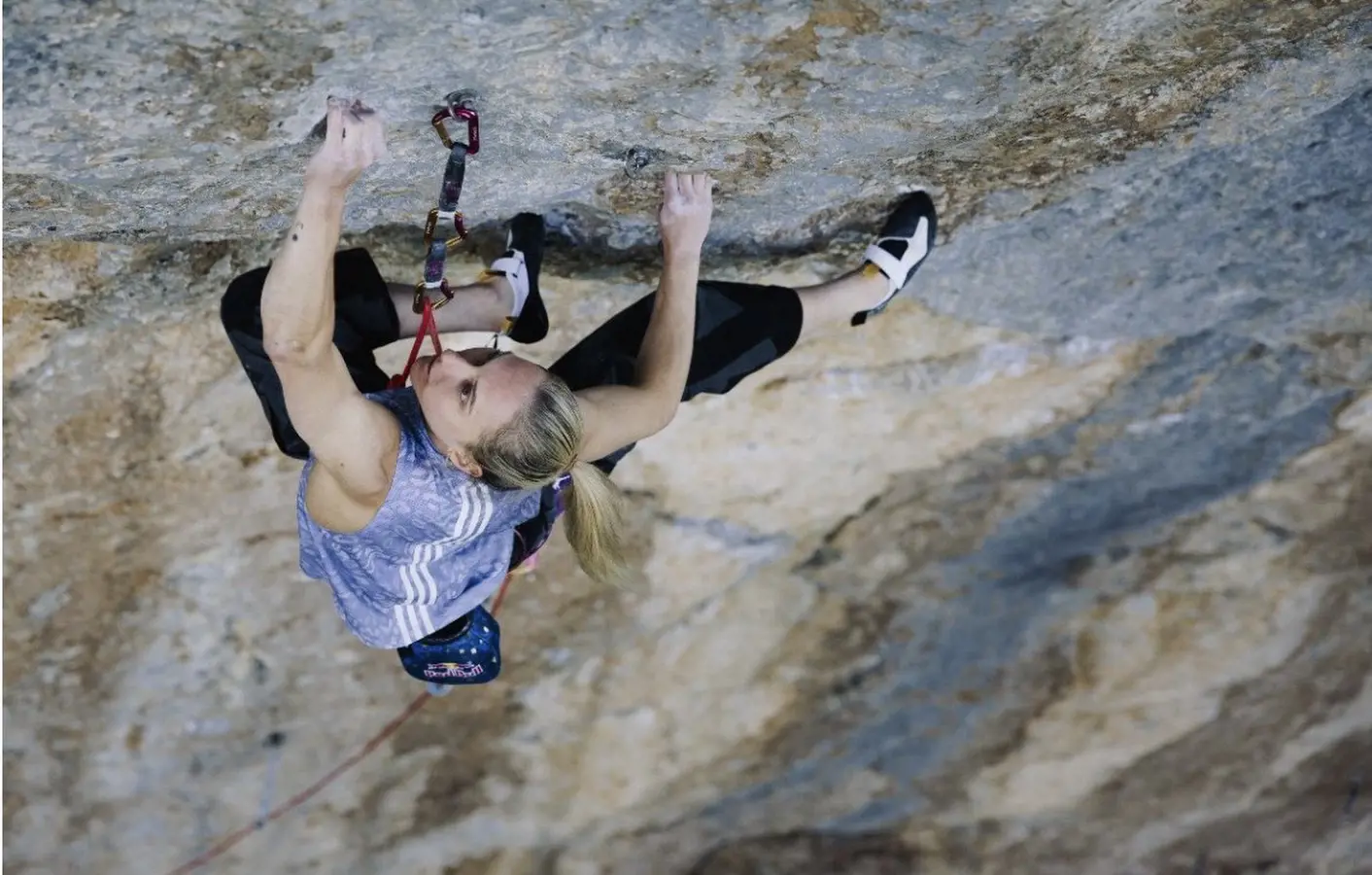
Janja Garnbret has added another milestone to her remarkable climbing career by becoming the first woman to climb Bibliographie (9b+) in Céüse, one of the harde…
367
48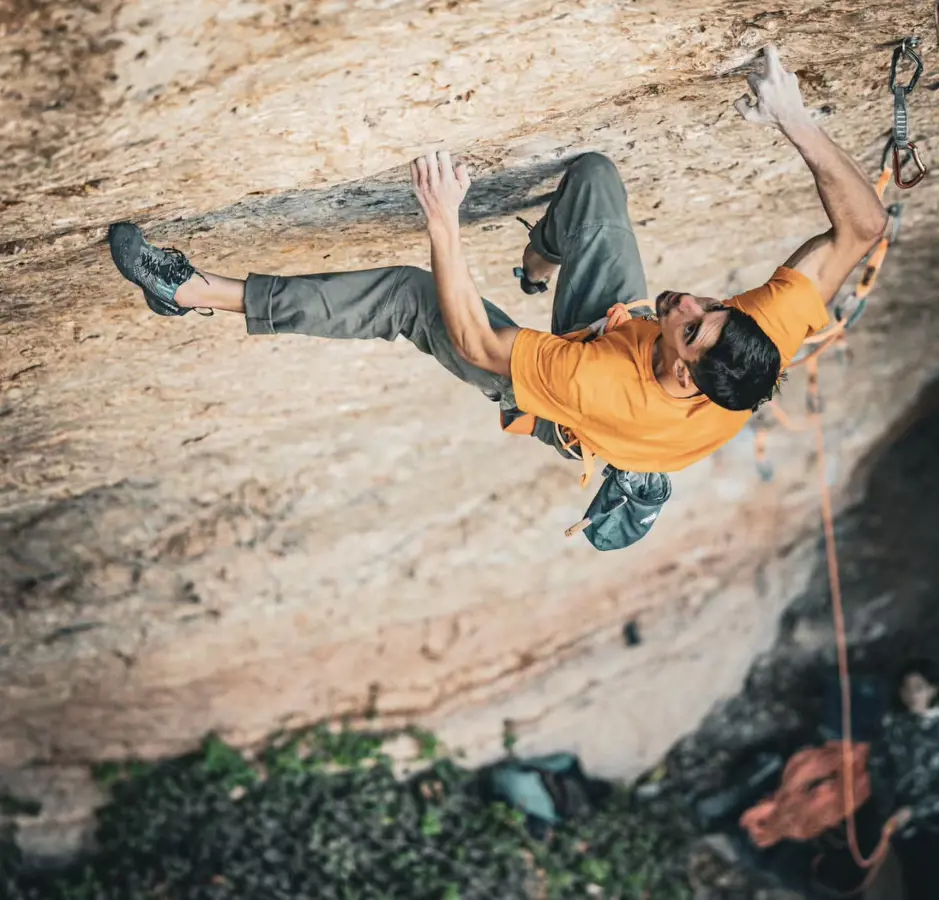
Jorge Diaz-Rullo reports on Instagram that he has made the first ascent of Cafe Colombia in Margalef. At 27, he’s already stacked four 9b+ sends and now he’s ad…
286
81
”I stopped focusing on competition bouldering after last year’s World Cup in Prague, partly because I can already feel it on my body, especially in my shoulders. The modern competition style, with a lot of jumping from one hold to another, is very demanding for the shoulders.
Outdoor bouldering is…
189
13Most commented
Jorge Diaz-Rullo reports on Instagram that he has made the first ascent of Cafe Colombia in Margalef. At 27, he’s already stacked four 9b+ sends and now he’s ad…
286
81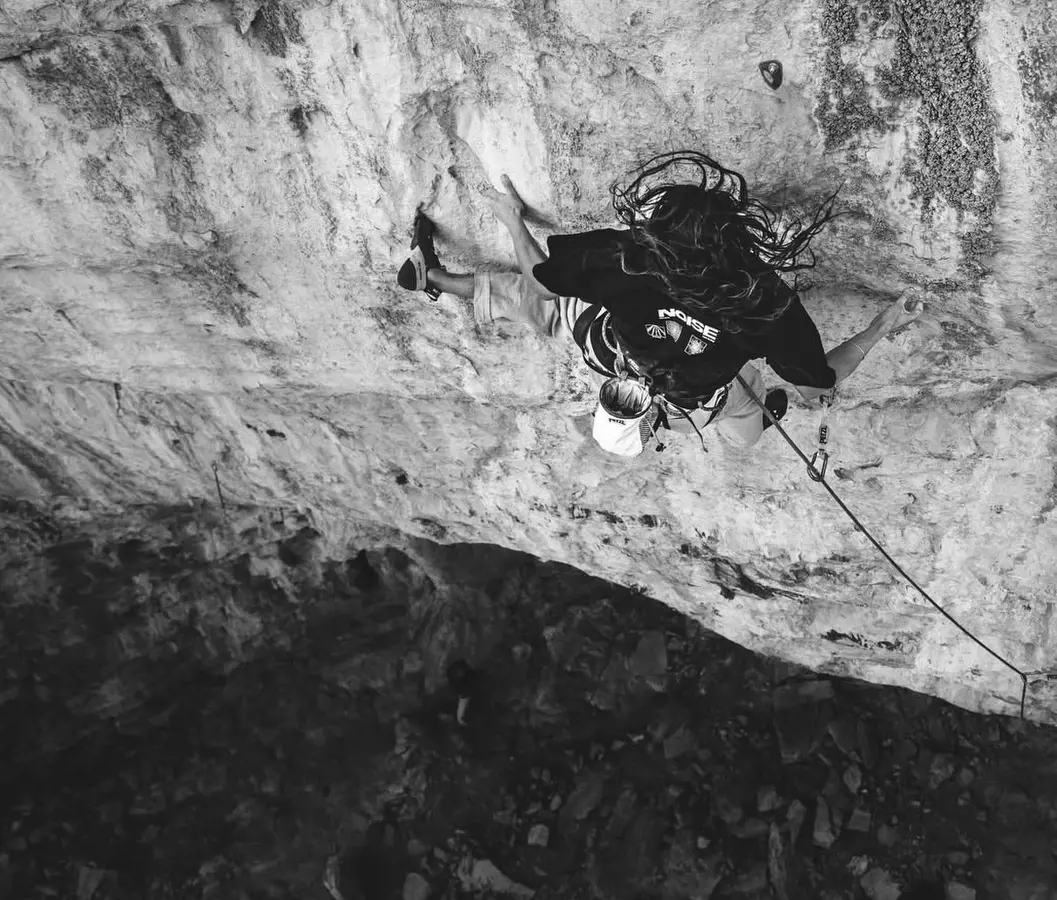
Sean Bailey reports on Instagram that he has done the first ascent of Duality of Man (9c) in Dry Canyon. ” After four total years and three seasons of climbing,…
163
69Jorge Diaz-Rullo elaborates on the reasons for him to suggest 9c for Café Colombia on Instagram, which he took down last week after projecting it for 240 sessio…
120
63