
NEWS
23 November 2021
Narasaki and Co. in Mizugaki
Read more
0
0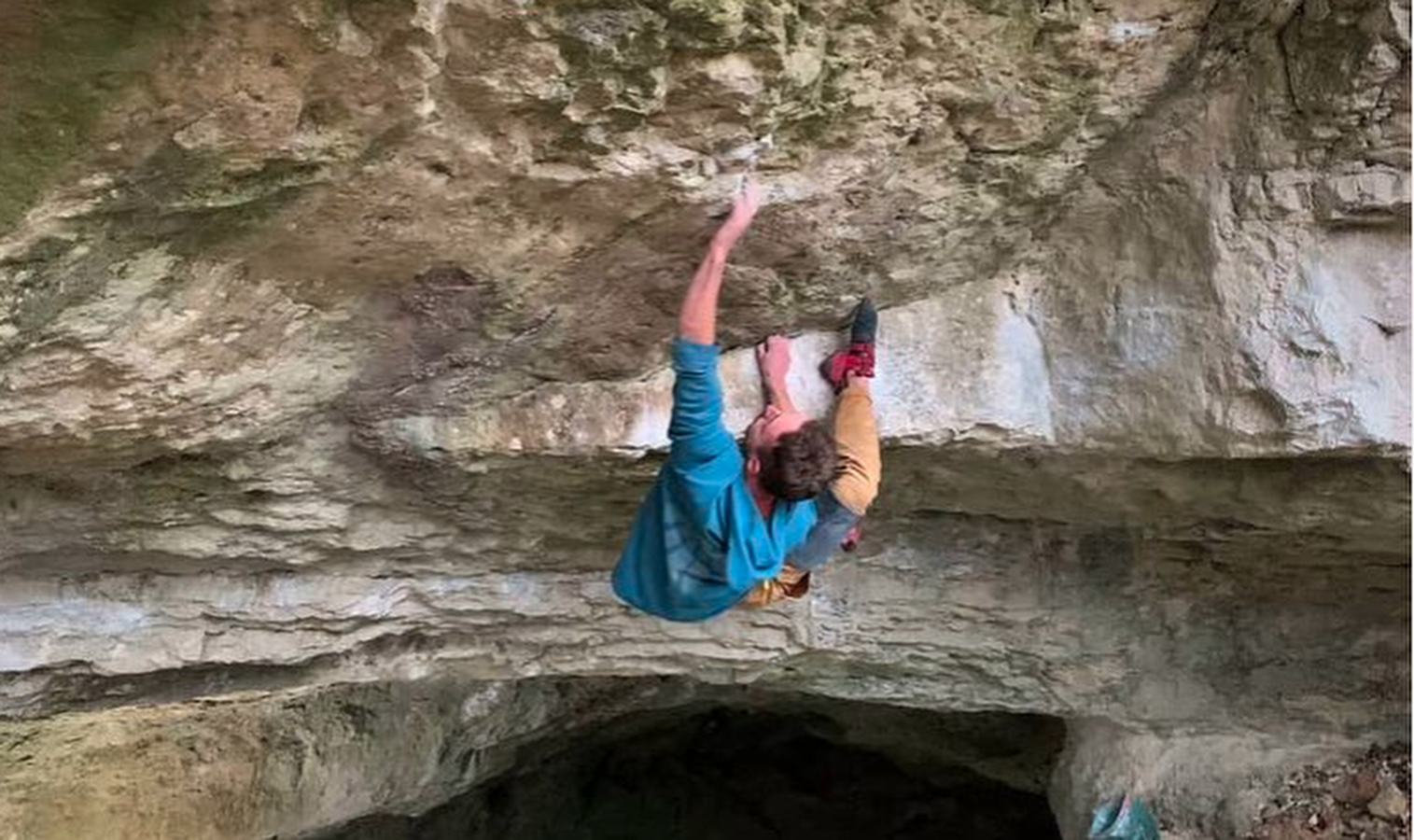
23 November 2021
Half-Life 8C and Wrath of the Lichking 8C (B+) by Moritz Welt
Moritz Welt has in Frankenjura done Half-Life (8C), "Never did a boulder this hard, so cannot really grade. Must be quite a soft one tho." and Wrath of the Licking 8C (B+). "Geißel Gottes 8B into Mopedsurfer 8A+, originally graded 8C but we found some good kneebar in between which makes it more like a hard 8B+. First session of the season, feeling fresh. "The 20-year-old has previously done 15 routes 9a and harder and these were his first 8C boulders.
How can you explain having stepped up the bouldering game?
Well I just started the bouldering season two weeks ago, so I'm still a little bit in the lead mode. All of the boulders I've done recently are more like 15+ moves power endurance, which made me feel quite comfortable. For example, Half-Life adds a 7 move 7C/+ into the start of Gordon so you're just more pumped on the hard part. On the other hand, I have been working a lot as a routesetter over the last months and therefore I spent quite some time in the bouldering gym. Maybe that's why I'm feeling that strong right now :)
Do you have any winter plans or projects?
There are still some pretty hard bouldering projects in the Frankenjura, that I've already been trying for some winters, so I'm curious how those will feel now :) Also, I'm planning a trip to Ticino.
What about going for Action Directe?
Honestly, I'm trying it every year for a few sessions and I've actually been close. But it's really hard for me to make steady progress on it.
How can you explain having stepped up the bouldering game?
Well I just started the bouldering season two weeks ago, so I'm still a little bit in the lead mode. All of the boulders I've done recently are more like 15+ moves power endurance, which made me feel quite comfortable. For example, Half-Life adds a 7 move 7C/+ into the start of Gordon so you're just more pumped on the hard part. On the other hand, I have been working a lot as a routesetter over the last months and therefore I spent quite some time in the bouldering gym. Maybe that's why I'm feeling that strong right now :)
Do you have any winter plans or projects?
There are still some pretty hard bouldering projects in the Frankenjura, that I've already been trying for some winters, so I'm curious how those will feel now :) Also, I'm planning a trip to Ticino.
What about going for Action Directe?
Honestly, I'm trying it every year for a few sessions and I've actually been close. But it's really hard for me to make steady progress on it.
Read more
5
523 November 2021
God's Own Stone 8b+ by Audrey Sniezek (50)
Audrey Sniezek, who did her first 8c at age 41, has done God's Own Stone (8b+) in Red River Gorge (KY). Noteworthy is that the 50-year-old did not climb much in 2021 until August. “Pretty happy with how this came together. Less than 10 tries, but I put a little time on it some years ago, not sending because I couldn't clip the crux quickdraw. I had no trouble clipping it this time! Such a beautiful line that I'm kind of sad it's over so fast!"
Could you please describe the process of taking it down?
9 years ago I was having a conversation with a young Margo Hayes under this beautiful climb called God’s Own Stone at the Red River Gorge in Kentucky. I was rushing out to try one more attempt before flying to Argentina. The route seemed so close to sending. I knew it could go that day. Margo was struggling and in tears because she hadn’t sent it, yet. She asked what I would do about the crux clip. Would I clip it or skip it? It was something I’d had to decide so I was familiar with the debate. There are people who skip it, but I told her it was part of my crux and that I was unwilling to skip it and take a potential fall higher up. Then, I followed that statement with whatever she decides, she needed to decide on the ground and stick to it. Otherwise, she would get to the quickdraw and potentially hesitate, wondering if she should or could clip. This would put her send at risk, wasting precious energy.
I don’t know what happened on her subsequent attempts, but she did eventually send the route. I, however, did not. I gave a good effort, found myself at the spot to clip the crux draw on point but couldn’t and because I refused to skip it, I ended up coming off the wall and not sending. While I was disappointed, I remembered how upset Margo was earlier and how upset I used to get at failure, too. I resolved to not be upset and to show Margo that she can enjoy the climb, have fun climbing, and that it didn’t matter if she sent or not. I don’t know if that was the impression I left but I didn’t cry after failing to send and my spirits were still high despite that. I left excited for Argentina hoping I would return and clean it up when I got back, but I lacerated my leg on a petrified tree stump there and that ended my climbing season for a while.
I’ve never forgotten about the route. Various life events kept me from getting back to try it again, including taking time to compete in the World Cups for as long as I could, then several injuries, and my own confidence in my ability leading up to trying again. Last year I shifted my mindset around what I could try and set about getting on routes that intimidated me. I got hooked on Omaha Beach and was super close to sending but weather didn’t hold up and I walked away. That spring I injured myself stripping caulk from my bathtub trying to fix some things to prepare my place to be rented out. That was the end of my hopes for Omaha Beach that spring, and any training or climbing dwindled to recreational attempts indoors.
Then, my nephew died in April and my whole world turned upside down. I stopped climbing and turned to the mountains, summiting Mt. Rainier and some other Cascade peaks. I thought this would have a healing benefit for my elbow but when September came and I was headed back to the Red River Gorge where my nephew had been living and died, I wasn’t sure how much climbing I would be able to do. Afterall, on top of facing this place without him, I hadn’t been outside climbing for most of the summer. When I arrived, I started on moderates. Just repeat what I knew I could do or should be able to do. Then, I started chipping away at mini-projects like Astro Dog, which is a fabulous but cruxy (for shorties) 5.12d/7c in Muir Valley. After sending a few of those, I thought it was time I test what I could do and go back to some unfinished business: Castle Has Fallen 5.13b/8a, Buttercup 5.13c/ba+, and God’s Own Stone 5.14a/8b+ were at the top of the list. I honestly thought it would take me longer to accomplish all of them. I gave Castle Has Fallen a couple goes the year before but strained my shoulder in the crux and walked away. I gave it one project burn this season, then went back and sent it my 2 nd go on Day 2 “working” the climb (total of 3 attempts this year). Buttercup I tried a few years earlier and fell at the crux quickdraw, not willing to skip it and risk falling higher. I had tweaked my finger with my beta in the crux anyway. This season, I gave it one bolt-to-bolt quick session, then walked it, improvising in the crux on my first redpoint attempt, clipping the crux draw as I went. When I got back on God’s Own Stone, my first go (Day 1) was horrible. I thought “how did I ever get close to redpointing this years ago?” My 2nd go (Day 2) was much better. I focused on the individual sections just trying to do the moves and make the clips. I struggled figuring out the crux. My 3rd go (Day 3), I stuck the crux move from the dog and went to the top, twice. Now I felt optimistic. I gave it 3 more goes on Day 4, sticking the crux and going to the top but only off the dog on my 3rd attempt. Scrounging a partner to go back there was a challenge but I found someone for Day 5 and walked the route, clipping the crux draw, on my first attempt.
This is my fifth 5.14 and first not in Washington State. It’s been a goal of mine to achieve that although I had hoped it would have been a route in the Frankenjura. I don’t put any emphasis on my age but having just turned 50 and sending 5.14 feels pretty good. It gives me hope that I still have time to achieve some other long standing climbing goals.
What were your level in August and how can you explain sending 8b+ at age 50 with so little climbing until August? Any specific training?
I was climbing 5.11 for a long time, maybe top roping 5.12- then I gradually started leading 5.12-, then 2 weeks before I left I was leading 5.12+ and linking the hardest lines I could as inside projects. I just gradually started challenging myself in onsighting, link ups, back to backs, difficulty. It was really about pushing only hard enough that my elbow didn't get inflamed and then seeing how it held up to see if I could notch it up in some way.
There wasn't any specific thing like hang board, or 4x4, or other "training", it was a combination of what I already understand about what I need, the resistance I was going for, and aiming to increase power without hurting myself and all on a rope. so creativity really helped, too.
Could you please describe the process of taking it down?
9 years ago I was having a conversation with a young Margo Hayes under this beautiful climb called God’s Own Stone at the Red River Gorge in Kentucky. I was rushing out to try one more attempt before flying to Argentina. The route seemed so close to sending. I knew it could go that day. Margo was struggling and in tears because she hadn’t sent it, yet. She asked what I would do about the crux clip. Would I clip it or skip it? It was something I’d had to decide so I was familiar with the debate. There are people who skip it, but I told her it was part of my crux and that I was unwilling to skip it and take a potential fall higher up. Then, I followed that statement with whatever she decides, she needed to decide on the ground and stick to it. Otherwise, she would get to the quickdraw and potentially hesitate, wondering if she should or could clip. This would put her send at risk, wasting precious energy.
I don’t know what happened on her subsequent attempts, but she did eventually send the route. I, however, did not. I gave a good effort, found myself at the spot to clip the crux draw on point but couldn’t and because I refused to skip it, I ended up coming off the wall and not sending. While I was disappointed, I remembered how upset Margo was earlier and how upset I used to get at failure, too. I resolved to not be upset and to show Margo that she can enjoy the climb, have fun climbing, and that it didn’t matter if she sent or not. I don’t know if that was the impression I left but I didn’t cry after failing to send and my spirits were still high despite that. I left excited for Argentina hoping I would return and clean it up when I got back, but I lacerated my leg on a petrified tree stump there and that ended my climbing season for a while.
I’ve never forgotten about the route. Various life events kept me from getting back to try it again, including taking time to compete in the World Cups for as long as I could, then several injuries, and my own confidence in my ability leading up to trying again. Last year I shifted my mindset around what I could try and set about getting on routes that intimidated me. I got hooked on Omaha Beach and was super close to sending but weather didn’t hold up and I walked away. That spring I injured myself stripping caulk from my bathtub trying to fix some things to prepare my place to be rented out. That was the end of my hopes for Omaha Beach that spring, and any training or climbing dwindled to recreational attempts indoors.
Then, my nephew died in April and my whole world turned upside down. I stopped climbing and turned to the mountains, summiting Mt. Rainier and some other Cascade peaks. I thought this would have a healing benefit for my elbow but when September came and I was headed back to the Red River Gorge where my nephew had been living and died, I wasn’t sure how much climbing I would be able to do. Afterall, on top of facing this place without him, I hadn’t been outside climbing for most of the summer. When I arrived, I started on moderates. Just repeat what I knew I could do or should be able to do. Then, I started chipping away at mini-projects like Astro Dog, which is a fabulous but cruxy (for shorties) 5.12d/7c in Muir Valley. After sending a few of those, I thought it was time I test what I could do and go back to some unfinished business: Castle Has Fallen 5.13b/8a, Buttercup 5.13c/ba+, and God’s Own Stone 5.14a/8b+ were at the top of the list. I honestly thought it would take me longer to accomplish all of them. I gave Castle Has Fallen a couple goes the year before but strained my shoulder in the crux and walked away. I gave it one project burn this season, then went back and sent it my 2 nd go on Day 2 “working” the climb (total of 3 attempts this year). Buttercup I tried a few years earlier and fell at the crux quickdraw, not willing to skip it and risk falling higher. I had tweaked my finger with my beta in the crux anyway. This season, I gave it one bolt-to-bolt quick session, then walked it, improvising in the crux on my first redpoint attempt, clipping the crux draw as I went. When I got back on God’s Own Stone, my first go (Day 1) was horrible. I thought “how did I ever get close to redpointing this years ago?” My 2nd go (Day 2) was much better. I focused on the individual sections just trying to do the moves and make the clips. I struggled figuring out the crux. My 3rd go (Day 3), I stuck the crux move from the dog and went to the top, twice. Now I felt optimistic. I gave it 3 more goes on Day 4, sticking the crux and going to the top but only off the dog on my 3rd attempt. Scrounging a partner to go back there was a challenge but I found someone for Day 5 and walked the route, clipping the crux draw, on my first attempt.
This is my fifth 5.14 and first not in Washington State. It’s been a goal of mine to achieve that although I had hoped it would have been a route in the Frankenjura. I don’t put any emphasis on my age but having just turned 50 and sending 5.14 feels pretty good. It gives me hope that I still have time to achieve some other long standing climbing goals.
What were your level in August and how can you explain sending 8b+ at age 50 with so little climbing until August? Any specific training?
I was climbing 5.11 for a long time, maybe top roping 5.12- then I gradually started leading 5.12-, then 2 weeks before I left I was leading 5.12+ and linking the hardest lines I could as inside projects. I just gradually started challenging myself in onsighting, link ups, back to backs, difficulty. It was really about pushing only hard enough that my elbow didn't get inflamed and then seeing how it held up to see if I could notch it up in some way.
There wasn't any specific thing like hang board, or 4x4, or other "training", it was a combination of what I already understand about what I need, the resistance I was going for, and aiming to increase power without hurting myself and all on a rope. so creativity really helped, too.
Read more
9
123 November 2021
Niky Ceria pioneers the Riverside
"The process behind these lines started in 2019 with the research, the find and the selection. Once I realized that something interesting could come out of those rocks, I started the cleaning process which is the most artistic one. This part can be rich in surprises: you never know how things develop and evolve and I love it.
Then the last part of this process was mostly about logistics, understanding how to protect the falls and of course climbing. Riverside bouldering has for me a unique line: the line that stays not too far but also not too close to the water. The rock texture on this idealistic line has a perfect balance between being polished and rough. The thing is that it is hard to follow this line. And this setting reduces the chances of finding what is for me a king line. So the exploration process in this environment required a lot of doubts and questions.
Most of the boulders are scattered and isolated. I guess there is potential for future lines as well, but my guess is a hypothesis and not a certainty. I like to think there are some untouched rocks out here, but still to be explored. The North West of Italy has many boulders which have been developed. Mostly from historical climbers as Marzio Nardi, the B side climbing crew, Christian Core and so on. Some areas exist, but my focus has been mostly orientated on single pieces."
Which are the hardest until now and how many sessions did it take to set up?
No idea; these lines have been developed from A to Z almost always by myself so every rock required loads of time and days as the climbing was just a part of it.
Then the last part of this process was mostly about logistics, understanding how to protect the falls and of course climbing. Riverside bouldering has for me a unique line: the line that stays not too far but also not too close to the water. The rock texture on this idealistic line has a perfect balance between being polished and rough. The thing is that it is hard to follow this line. And this setting reduces the chances of finding what is for me a king line. So the exploration process in this environment required a lot of doubts and questions.
Most of the boulders are scattered and isolated. I guess there is potential for future lines as well, but my guess is a hypothesis and not a certainty. I like to think there are some untouched rocks out here, but still to be explored. The North West of Italy has many boulders which have been developed. Mostly from historical climbers as Marzio Nardi, the B side climbing crew, Christian Core and so on. Some areas exist, but my focus has been mostly orientated on single pieces."
Which are the hardest until now and how many sessions did it take to set up?
No idea; these lines have been developed from A to Z almost always by myself so every rock required loads of time and days as the climbing was just a part of it.
Read more
4
023 November 2021
Shadow Walker 8B+ by Isabelle Faus
Isabelle Faus, who previously has done five 8B+, has send Shadow Walker 8B (+) in Swissco. Fausey has been one of the best female boulderers for many years and when it comes to FAs, she is #1 with at least six boulders 8B and harder.
How was the process taking it down?
Was a good process, took awhile to do it but I was okay with that. first really hard thing for me after I hurt my finger in January. very very technical tricky thing that feels impossible at first. It took prolly 4 days before I felt like it was maybe something I could actually do. Then another 5ish days to actually do it.. it was nice to throw my self into something that was gonna take a lot of work. I’ve kinda learned to like the suffering/failing part of projecting. it was so fun and I’m super grateful for the experience.
How was the process taking it down?
Was a good process, took awhile to do it but I was okay with that. first really hard thing for me after I hurt my finger in January. very very technical tricky thing that feels impossible at first. It took prolly 4 days before I felt like it was maybe something I could actually do. Then another 5ish days to actually do it.. it was nice to throw my self into something that was gonna take a lot of work. I’ve kinda learned to like the suffering/failing part of projecting. it was so fun and I’m super grateful for the experience.
Read more
4
022 November 2021
Beyond Focus Trailer - Ondra
Read more
1
022 November 2021
Is this the best boulder ever?
Read more
1
122 November 2021
Lacrima Low 8B by Tristan Chouvy (11)
Tristan Chouvy, who previously has done 13 boulders 7C to 8A, reports with an Insta video that he has done the first repeat of Lacrima Low 8B in Fontainebleau. It was put up 20 years ago by Loïc Le Denmat and this was the first repeat. What is interesting is that there also exists a 7C+ high start of the problem that has only been climbed once, by Manuel Marquès, in 2002. Furthermore, the 11-year-old actually did a 7B+ finish instead of the original 7A+ top out. (c) Pierre-Arnaud Chouvy
"Needless to say, I'm unable to confirm the grade: no experience in that grade and very little experience in the 8a grade. All I can say is that it felt hard and painful. Hard all the way in fact, till the very top! 😁." It should be noted that by looking at his Bleau.info profile we can see that most of his sends are 7A's. In any case, Tristan is the second youngest climber to have done an 8B boulder after Ashima Shiraishi who did it a couple of weeks before she turned eleven.
What is the climbing background of your family and what is your level?
My wife and I (Pierre-Arnoud) are long-time climbers and both of our children grew up climbing since they could walk. Living in the Fontainebleau Forest helps of course. Tristan has a twin sister who just did her first 7A. I have climbed 7C but have been climbing much less since I spot them all the time. I don't want them to fall too much at such a young age.
How come your son started trying an unrepeated 8B in Font?
Well, after he climbed Duel 8A, Philippe Le Denmat, who did Duel's first ascent, advised him to try Lacrima, whose first and only ascent had been done by his son Loïc twenty years ago. It became Tristan’s somehow unrealistic project: when he first tried months ago it just felt impossible, especially the first move of the low start.
What do you think are the reasons Tristan has been able to climb so hard?
Tough question. He has always had a natural inclination towards climbing, even as a very young child. Climbing is just natural for him and he has an internal drive to progress and to push his limits. He doesn't doubt himself and is not deterred by a high grade. He clearly feels the moves and fine-tunes each step. So, altogether, I guess that makes a very good climber. In the end, he's lucky to have been exposed to the sport he was maybe made for. And living near the forest, he's lucky to be able to spend all his free time climbing. Which is not everybody's case.
"Needless to say, I'm unable to confirm the grade: no experience in that grade and very little experience in the 8a grade. All I can say is that it felt hard and painful. Hard all the way in fact, till the very top! 😁." It should be noted that by looking at his Bleau.info profile we can see that most of his sends are 7A's. In any case, Tristan is the second youngest climber to have done an 8B boulder after Ashima Shiraishi who did it a couple of weeks before she turned eleven.
What is the climbing background of your family and what is your level?
My wife and I (Pierre-Arnoud) are long-time climbers and both of our children grew up climbing since they could walk. Living in the Fontainebleau Forest helps of course. Tristan has a twin sister who just did her first 7A. I have climbed 7C but have been climbing much less since I spot them all the time. I don't want them to fall too much at such a young age.
How come your son started trying an unrepeated 8B in Font?
Well, after he climbed Duel 8A, Philippe Le Denmat, who did Duel's first ascent, advised him to try Lacrima, whose first and only ascent had been done by his son Loïc twenty years ago. It became Tristan’s somehow unrealistic project: when he first tried months ago it just felt impossible, especially the first move of the low start.
What do you think are the reasons Tristan has been able to climb so hard?
Tough question. He has always had a natural inclination towards climbing, even as a very young child. Climbing is just natural for him and he has an internal drive to progress and to push his limits. He doesn't doubt himself and is not deterred by a high grade. He clearly feels the moves and fine-tunes each step. So, altogether, I guess that makes a very good climber. In the end, he's lucky to have been exposed to the sport he was maybe made for. And living near the forest, he's lucky to be able to spend all his free time climbing. Which is not everybody's case.
Read more
9
022 November 2021
Comparing different Boulder scoring methods
Here is a quick comparison of the current Bouldering scoring with Tops/Zones, the newly suggested IFSC 100 point system and the 11 point system I presented to an IFSC working group in Munich in 2017. The comparison is based on evaluating the three criteria; Understandable, Fair and Countback.
Understandable: How easy is it for the spectators and the commentators to follow and analyse the score? The best example describing how hard it is to understand the current scoring system is that in most events the commentators misunderstand and actually mislead the audience. On the contrary, when it comes to the 11 point system, it is super simple to do the maths as you only add 1, 3, 10 or 11 points together. In the IFSC 100 point system, you might end up in a situation where some of us need a calculator, i.e. 55 + 25 and 35 + 25 etc
Fair: In the current system, Tops always beats zones. In the 11 point system, in theory, 1 Top and 0 zones could be beaten by getting 8 zones. I think this is an interesting twist which some actually would think is fairer. I mean, if you just get one Top and do not reach even the lower zones on the remaining three problem, I think it is fair that a climber that possibly touches the top on all four problems could be ranked higher. In any case, in the suggested IFSC 100 point system, there is a much bigger risk/chance that zones win over Tops.
Countback: Today, if two climbers have done the same number of Tops and zones, we use the number of attempts to the Tops/zones as a tie-breaker. This is happening often as in practice there are just 25 different scoring possibilities. When it comes to the 100 point system, the risk for ties are even higher as there are just 18 different scoring possibilities. This can be compared with 40 different scoring possibilities for the 11 point system.
It should be mentioned that there are several other scoring possibilities and in practice, it is all about trade-offs. As an example, we could add 10.2 points for topping on the second go. This would mean that the 11 point system would be less understandable but at the same time, we would need fewer countbacks. On the other hand, we could decide to give two points for the second zone. This would make the system a bit more understandable, Tops would always beat zones but there would be many more ties, demanding countback. In practice, it is all about defining and giving weight to the three criteria and then applying different maths.
In order to create a Combined point system for the Olympics, we could instead work on a max score of 50 points in each discipline. This would mean giving 12.5 points for a flash instead of 11 points. This would possibly make it a bit less understandable but on the other hand, such a system would significantly reduce the risk for countback and many would say such a system would also be fairer.
It is also important for me to say that my counterpart developing the different point systems has been Reino Horak, team manager in Norway. As a matter of a fact, he will try the 11 point system in one of their comps in December. This comp will also include a new format with more climbers rotating allowing more climbers taking part in the final, just like in the suggested IFSC 100 point system.
Understandable: How easy is it for the spectators and the commentators to follow and analyse the score? The best example describing how hard it is to understand the current scoring system is that in most events the commentators misunderstand and actually mislead the audience. On the contrary, when it comes to the 11 point system, it is super simple to do the maths as you only add 1, 3, 10 or 11 points together. In the IFSC 100 point system, you might end up in a situation where some of us need a calculator, i.e. 55 + 25 and 35 + 25 etc
Fair: In the current system, Tops always beats zones. In the 11 point system, in theory, 1 Top and 0 zones could be beaten by getting 8 zones. I think this is an interesting twist which some actually would think is fairer. I mean, if you just get one Top and do not reach even the lower zones on the remaining three problem, I think it is fair that a climber that possibly touches the top on all four problems could be ranked higher. In any case, in the suggested IFSC 100 point system, there is a much bigger risk/chance that zones win over Tops.
Countback: Today, if two climbers have done the same number of Tops and zones, we use the number of attempts to the Tops/zones as a tie-breaker. This is happening often as in practice there are just 25 different scoring possibilities. When it comes to the 100 point system, the risk for ties are even higher as there are just 18 different scoring possibilities. This can be compared with 40 different scoring possibilities for the 11 point system.
It should be mentioned that there are several other scoring possibilities and in practice, it is all about trade-offs. As an example, we could add 10.2 points for topping on the second go. This would mean that the 11 point system would be less understandable but at the same time, we would need fewer countbacks. On the other hand, we could decide to give two points for the second zone. This would make the system a bit more understandable, Tops would always beat zones but there would be many more ties, demanding countback. In practice, it is all about defining and giving weight to the three criteria and then applying different maths.
In order to create a Combined point system for the Olympics, we could instead work on a max score of 50 points in each discipline. This would mean giving 12.5 points for a flash instead of 11 points. This would possibly make it a bit less understandable but on the other hand, such a system would significantly reduce the risk for countback and many would say such a system would also be fairer.
It is also important for me to say that my counterpart developing the different point systems has been Reino Horak, team manager in Norway. As a matter of a fact, he will try the 11 point system in one of their comps in December. This comp will also include a new format with more climbers rotating allowing more climbers taking part in the final, just like in the suggested IFSC 100 point system.
Read more
2
021 November 2021
King Capella 9b? (+) by Alex Megos
Alex Megos reports on Insta that he after some ten days of projecting has done the first repeat of Will Bosi's King Capella (9b+) in Siurana. The German do neither confirm or suggest a grade but he says, "I also used slightly different beta than Will taking a very wide pinch, which felt a little easier to me than what Will did. He couldn't do the move the way I did it though, so I guess it's personal preference." (c) Esteban Lahoz
Analyzing what grade Alex might opt for, we have his comments from this spring when he tried it for the first time. "I tried two of his FA's there and they are hard! Both of them 9b for sure. The one he thought was easier I couldn't do one move. On "King Capella" I did all the moves, but linking then will be very hard. I'd be super psyched to go and try to repeat his routes at some point! 😁 Very strong lad 💪🏼."
Furthermore, putting ten days in a fictive Time Comparison Grading table for Alex, 9b would probably fit better rather than 9b+, although he has said the route fits him rather well. "The grade time comparison doesn't work as well though because the route is so short. It's much easier to try a short route multiple times a day than a long one."
In total, Megos has now done 100+ routes 8c+/9a and harder, out of which five are 9b or 9b+.
Analyzing what grade Alex might opt for, we have his comments from this spring when he tried it for the first time. "I tried two of his FA's there and they are hard! Both of them 9b for sure. The one he thought was easier I couldn't do one move. On "King Capella" I did all the moves, but linking then will be very hard. I'd be super psyched to go and try to repeat his routes at some point! 😁 Very strong lad 💪🏼."
Furthermore, putting ten days in a fictive Time Comparison Grading table for Alex, 9b would probably fit better rather than 9b+, although he has said the route fits him rather well. "The grade time comparison doesn't work as well though because the route is so short. It's much easier to try a short route multiple times a day than a long one."
In total, Megos has now done 100+ routes 8c+/9a and harder, out of which five are 9b or 9b+.
Read more
18
16Favorites
Janja Garnbret has added another milestone to her remarkable climbing career by becoming the first woman to climb Bibliographie (9b+) in Céüse, one of the harde…
361
48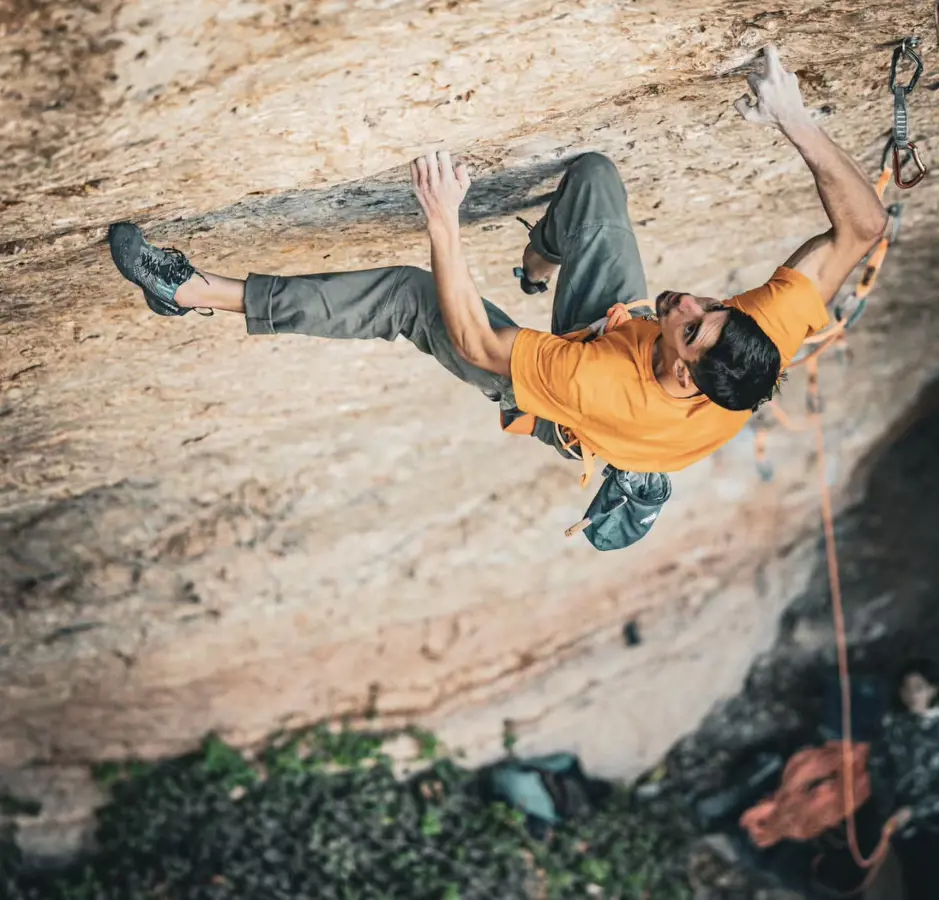
Jorge Diaz-Rullo reports on Instagram that he has made the first ascent of Cafe Colombia in Margalef. At 27, he’s already stacked four 9b+ sends and now he’s ad…
285
81
”I stopped focusing on competition bouldering after last year’s World Cup in Prague, partly because I can already feel it on my body, especially in my shoulders. The modern competition style, with a lot of jumping from one hold to another, is very demanding for the shoulders.
Outdoor bouldering is…
189
13Most commented
Jorge Diaz-Rullo reports on Instagram that he has made the first ascent of Cafe Colombia in Margalef. At 27, he’s already stacked four 9b+ sends and now he’s ad…
285
81
Sean Bailey reports on Instagram that he has done the first ascent of Duality of Man (9c) in Dry Canyon. ” After four total years and three seasons of climbing,…
163
69Jorge Diaz-Rullo elaborates on the reasons for him to suggest 9c for Café Colombia on Instagram, which he took down last week after projecting it for 240 sessio…
119
63