
NEWS
15 December 2024
Jonathan Siegrist onsights 8b’s and 8b+ in Pizarra
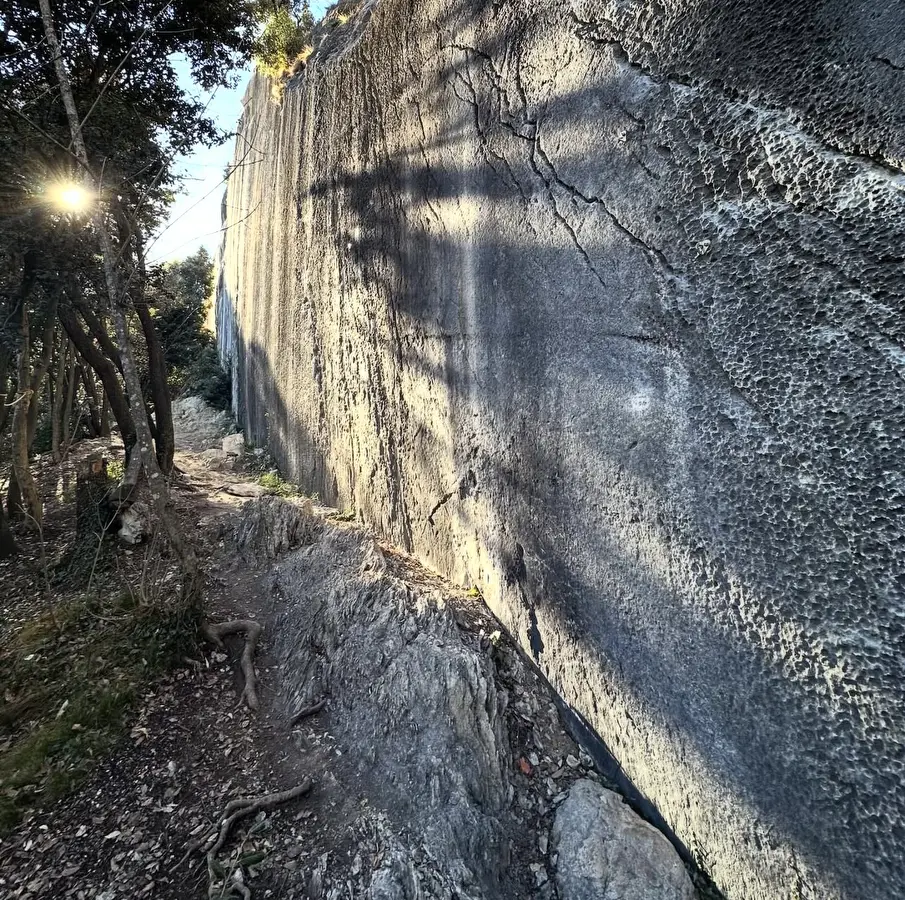
Jonathan Siegrist has onsighted Panem et Circensis (8b) and Arco and I Riflessi del Rosso (1st pitch) (8b+) in Pizarra. In the VL ranking game, the 39-year-old is runner up after Jorge Diaz-Rullo. ”Absolutely brilliant! Such cool holds. Totally different than the routes more to the right.”
Can you tell us more about the onsights and Pizarra?
The wall is not so tall but the routes are actually super consistent. It’s really pumpy! You have to climb really controlled. It fits my style really well because I climb super slow. Probably too slow… The area is absolutely beautiful.
I really try to imagine as much of the route as I can from the ground. Ideally, I want to have a sequence for the first few bolts. But after that, it’s just guessing! For me, I typically do best onsights when I know an area pretty well. For this reason, I almost always save my hard flashes or onsights for the end of the trip. But honestly, I am not an expert at this style, comp climbers have it dialled it’s insane! I’m trying to improve.
Yesterday, Jonathan also onsighted Fine di un'Epoca (8b) in Arco.
Can you tell us more about the onsights and Pizarra?
The wall is not so tall but the routes are actually super consistent. It’s really pumpy! You have to climb really controlled. It fits my style really well because I climb super slow. Probably too slow… The area is absolutely beautiful.
I really try to imagine as much of the route as I can from the ground. Ideally, I want to have a sequence for the first few bolts. But after that, it’s just guessing! For me, I typically do best onsights when I know an area pretty well. For this reason, I almost always save my hard flashes or onsights for the end of the trip. But honestly, I am not an expert at this style, comp climbers have it dialled it’s insane! I’m trying to improve.
Yesterday, Jonathan also onsighted Fine di un'Epoca (8b) in Arco.
Read more
23
0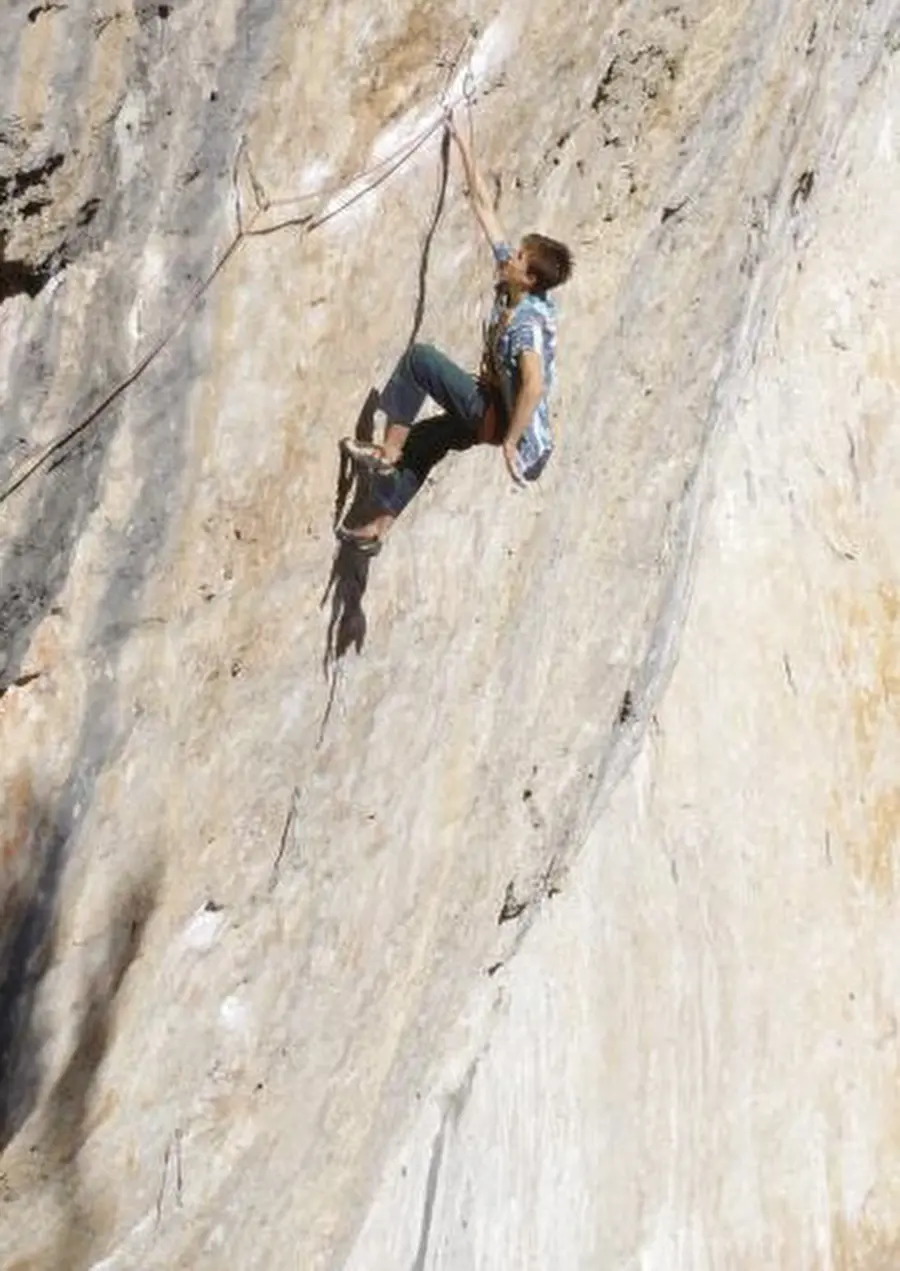
13 December 2024
Erwan Legrand, 16, FA's a very old 8c+ project
Erwan Legrand, who did his first 9a this spring, has done the FA of Les Loges De La Fuite (8c+) in Gorges du Tarn. Erwan's father is Francois Legrand who won five Lead World Cups and three World Championships during the 90'ies.
Can you tell us more about FA?
After sending an 8b flash and an amazing 8c called Adieu Wolfgang on my fifth try of the day, I was pretty tired, and I had time to do something else. So, I was looking for a route no one was trying, and I saw this line, which inspired me. I asked for some information from a local, who told me it was a project bolted 30 years ago estimated to 8c+/9a. I did two goes that day and loved it and it fit me quite well, so I decided to try again the next few days. The day after, I checked the moves again and then I decided to try from the ground. On the first crux, I had been fighting for my life but then I was reaching a small rest, recovering a bit, going for another crux before I reached another rest before the final boulder. At that moment I realized that I was going to send the route and came to the final move but was just too pumped and failed there.
After a long rest, I made two other attempts but fell at the first crux. It was frustrating after being so close on my first try, but I gave it another try. I managed the first boulder with a lot of margins, then climbed quite easily up to the final crux. I felt pretty fresh and determined, so I gave everything I had and finally made that last move. I was really happy about that send especially because it was really unexpected. About the grade, it definitely didn't feel like a 9a as I was able to send it in only 2 days but the next one will tell. The route is amazing with very beautiful holds in a perfect wall, and I really loved it, I hope more people will try it.
Can you tell us more about FA?
After sending an 8b flash and an amazing 8c called Adieu Wolfgang on my fifth try of the day, I was pretty tired, and I had time to do something else. So, I was looking for a route no one was trying, and I saw this line, which inspired me. I asked for some information from a local, who told me it was a project bolted 30 years ago estimated to 8c+/9a. I did two goes that day and loved it and it fit me quite well, so I decided to try again the next few days. The day after, I checked the moves again and then I decided to try from the ground. On the first crux, I had been fighting for my life but then I was reaching a small rest, recovering a bit, going for another crux before I reached another rest before the final boulder. At that moment I realized that I was going to send the route and came to the final move but was just too pumped and failed there.
After a long rest, I made two other attempts but fell at the first crux. It was frustrating after being so close on my first try, but I gave it another try. I managed the first boulder with a lot of margins, then climbed quite easily up to the final crux. I felt pretty fresh and determined, so I gave everything I had and finally made that last move. I was really happy about that send especially because it was really unexpected. About the grade, it definitely didn't feel like a 9a as I was able to send it in only 2 days but the next one will tell. The route is amazing with very beautiful holds in a perfect wall, and I really loved it, I hope more people will try it.
Read more
25
013 December 2024
Hannes Puman first to free The Nose via the Schnaz Variation
Hannes Puman, #8 in the European Combined Championship in September, has during his first visit to Yosemite Valley, become the first person to free The Nose on El Capitan via the Schnaz Variation (8b). This pitch bypasses the famous Changing Corners pitch, often considered the climb's crux, by traversing left on small, reachy crimps before rejoining the main line.
Brooke Sandahl and Dave Schultz bolted the Schnaz Variation in 1992 during their attempts to free The Nose, but Lynn Hill abandoned it because it was too reachy. Later, Scott Burke added a bolt in 1998, and then in 2005, Ivo Ninov put up another one and did the FA of the Schnaz pitch. At the same time, Thomas Huber and Matt Wilder repeated the pitch, but Puman did not know this during his ascent.
Puman, climbing with Jamie Lowther from Scotland, spent 6 days on the wall for the ascent. Before this, he had completed a 5-day free ascent of Freerider with Jakob Östman, resting just 2 days in between.
Can you describe the route, your process and how hard it is?
The difficulty of this pitch is resolved around a short section of intense climbing on small and sharp holds. I used a method with big reaches in between the crimps. I went in from the top one time and tried changing corners and this variation. It took a few hours to solve the moves and do some links on Changing Corners. Matilda [Söderlund] tried this variation meanwhile and to finish of the session I went up one time and felt the holds. I learned that if you have the reach and level it’s possible to do it safely and its also easy to do many tries, skin is the limiting factor.
When I came from the ground I checked out the moves 1 time properly, fell on the last hard move and did it on the third try.
For me it’s easier to do because its more simple. It’s possible to work out the moves quick but it’s more reachy and powerful so maybe not for everyone. Changing Corners is very technical so if you perfect it it will be easier, but to perfect it is difficult and takes time.
Brooke Sandahl and Dave Schultz bolted the Schnaz Variation in 1992 during their attempts to free The Nose, but Lynn Hill abandoned it because it was too reachy. Later, Scott Burke added a bolt in 1998, and then in 2005, Ivo Ninov put up another one and did the FA of the Schnaz pitch. At the same time, Thomas Huber and Matt Wilder repeated the pitch, but Puman did not know this during his ascent.
Puman, climbing with Jamie Lowther from Scotland, spent 6 days on the wall for the ascent. Before this, he had completed a 5-day free ascent of Freerider with Jakob Östman, resting just 2 days in between.
Can you describe the route, your process and how hard it is?
The difficulty of this pitch is resolved around a short section of intense climbing on small and sharp holds. I used a method with big reaches in between the crimps. I went in from the top one time and tried changing corners and this variation. It took a few hours to solve the moves and do some links on Changing Corners. Matilda [Söderlund] tried this variation meanwhile and to finish of the session I went up one time and felt the holds. I learned that if you have the reach and level it’s possible to do it safely and its also easy to do many tries, skin is the limiting factor.
When I came from the ground I checked out the moves 1 time properly, fell on the last hard move and did it on the third try.
For me it’s easier to do because its more simple. It’s possible to work out the moves quick but it’s more reachy and powerful so maybe not for everyone. Changing Corners is very technical so if you perfect it it will be easier, but to perfect it is difficult and takes time.
Read more
22
012 December 2024
Dai Koyamada, 48, FA’s Kaikien (8C)
Dai Koyamada reports with an Instagram video that he has done the FA of Kaikien (8C) at Kasagi. The project started almost a year ago when he first spent two days creating a landing.
”After several days of trying and not being able to climb, I started to lose confidence, when I discovered a good sequence in the middle. This gave me great hope. And finally, yesterday, I completed it. I was in good form, which was unusual for me. The biggest change as I get older is that I have fewer good days. When I was younger, the day after a rest was usually the best. That became once a week, then once a month, and the best days came only a few times a year. But there are still a few good days. Yesterday made me realize that if I go on a good day, I can still climb difficult problems.”
The 48-year-old first made headlines in 1998 when he was #4 in a Lead World Cup. After quitting the comp circuit, he did his first 9a in 2002; the next year, he did his first 8C boulder. Over the last 20 years, he has done close to 40 8C’s, most of which have been FAs.
”After several days of trying and not being able to climb, I started to lose confidence, when I discovered a good sequence in the middle. This gave me great hope. And finally, yesterday, I completed it. I was in good form, which was unusual for me. The biggest change as I get older is that I have fewer good days. When I was younger, the day after a rest was usually the best. That became once a week, then once a month, and the best days came only a few times a year. But there are still a few good days. Yesterday made me realize that if I go on a good day, I can still climb difficult problems.”
The 48-year-old first made headlines in 1998 when he was #4 in a Lead World Cup. After quitting the comp circuit, he did his first 9a in 2002; the next year, he did his first 8C boulder. Over the last 20 years, he has done close to 40 8C’s, most of which have been FAs.
Read more
48
912 December 2024
Diaz-Rullo summarizes his trip to Flatanger
Read more
8
011 December 2024
Stefano Ghisolfi FA’s another two 9a’s in Arco
Stefano Ghisolfi, who previously has made the FA of eleven 9a to 9b+ in Arco, has done the FA of Escaladur (9a) in Arco. Alfredo Webber bolted it and it took Stefano some eight sessions to complete his 54th 9a or beyond. (c) Finn Stack
Can you tell us more about the ascent?
I started trying this route after I sent Excalibur (9b+). It is in the left corner of Excalibur following the arete, 15 meter long. It is overhanging and has small holds, and technical with kneebars as part of the moves, but no rest. It is continuous and pumpy at the end with a hard crux. In the beginning, we thought it was 8c+ but then we realized it is probably 9a.
The next day the 31-year-old Italian did the FA of Sit Lives (9a). ”Low start of Sid Lives (8c+), starting from the ground, adds few more moves and 2 hard clipping, one is probably the hardest clip ever.”
Could you give us more details about the new beginning and the intense clip?
The original route starts in a rock pile with 2 preclipped draws. The new one starts standing on the ground with just the very first clipped, adding 4 moves and 2 hard clips (the first two that were preclipped in the original route). For the low start you cannot start with the same preclipped cause if you fall in the start you swing and hit the wall behind, so it is necessary to clip them while climbing. The second clip is one of the hardest ever, probably around 7B+ boulder move. You can skip it but if you fall you go 100% on the ground.
Can you tell us more about the ascent?
I started trying this route after I sent Excalibur (9b+). It is in the left corner of Excalibur following the arete, 15 meter long. It is overhanging and has small holds, and technical with kneebars as part of the moves, but no rest. It is continuous and pumpy at the end with a hard crux. In the beginning, we thought it was 8c+ but then we realized it is probably 9a.
The next day the 31-year-old Italian did the FA of Sit Lives (9a). ”Low start of Sid Lives (8c+), starting from the ground, adds few more moves and 2 hard clipping, one is probably the hardest clip ever.”
Could you give us more details about the new beginning and the intense clip?
The original route starts in a rock pile with 2 preclipped draws. The new one starts standing on the ground with just the very first clipped, adding 4 moves and 2 hard clips (the first two that were preclipped in the original route). For the low start you cannot start with the same preclipped cause if you fall in the start you swing and hit the wall behind, so it is necessary to clip them while climbing. The second clip is one of the hardest ever, probably around 7B+ boulder move. You can skip it but if you fall you go 100% on the ground.
Read more
29
411 December 2024
William Bosi sends Asagimadara (8C) and two 8B+’
William Bosi has sent Asagimadara (8C), Decided (8B+) and Hōtō (8B+) in Mizugaki. Just in the last year, the 25-year-old has sent 15 boulders 8B+ to 9A as well as 18 routes 9a to 9b+. (c) Teresa Coimbra
Can you tell us more about the trip to Japan?
I’ve been wanting to come check out the climbing in Japan for a long time and decided this year would be a good one to come. My original plan was to see a few different areas and get a real feel for all the climbing. However once I arrived at Mt Mizugaki and saw how good it was and how much rock there was, I quickly realised I wanted to stay there for the whole trip.
There are hundreds of boulders and thousands of lines! I had a few boulders in mind I really wanted to do and managed to tick through all but one, Floatin! I think Floatin was at the top of the list and I got really close but my skin just fell apart and never really healed enough to make it work unfortunately. I will have to return for it.
Asaigmadara was by far the best boulder I sent and one of the best lines I’ve ever done. The line is around 15-20 metres high in total and the hard climbing only stops almost half way up the boulder, so it’s a real mental challenge as well as physical. The hard climbing revolves around one cool heel hook, a bad pinch and lots of two finger pockets.
Two 8B+/V14 lines I managed Decided and Hoto are also amazing and I really enjoyed climbing. Both using cool right heel hooks as well. I would definitely recommend them. My three weeks trip to Mt Mizugaki was incredible and I really enjoyed my time here in Japan. Main take aways are the rock is crazy sharp!!! The grades are a bit all over the place and the thought of bear attack is scary.
Can you tell us more about the trip to Japan?
I’ve been wanting to come check out the climbing in Japan for a long time and decided this year would be a good one to come. My original plan was to see a few different areas and get a real feel for all the climbing. However once I arrived at Mt Mizugaki and saw how good it was and how much rock there was, I quickly realised I wanted to stay there for the whole trip.
There are hundreds of boulders and thousands of lines! I had a few boulders in mind I really wanted to do and managed to tick through all but one, Floatin! I think Floatin was at the top of the list and I got really close but my skin just fell apart and never really healed enough to make it work unfortunately. I will have to return for it.
Asaigmadara was by far the best boulder I sent and one of the best lines I’ve ever done. The line is around 15-20 metres high in total and the hard climbing only stops almost half way up the boulder, so it’s a real mental challenge as well as physical. The hard climbing revolves around one cool heel hook, a bad pinch and lots of two finger pockets.
Two 8B+/V14 lines I managed Decided and Hoto are also amazing and I really enjoyed climbing. Both using cool right heel hooks as well. I would definitely recommend them. My three weeks trip to Mt Mizugaki was incredible and I really enjoyed my time here in Japan. Main take aways are the rock is crazy sharp!!! The grades are a bit all over the place and the thought of bear attack is scary.
Read more
28
011 December 2024
David Bermudez, 15, does Cordia Maleficarum (9a)
David Bermudez Carbonell, who earlier in 2024 has sent four 9a's, has repeated Alex Garriga’s Cordia Maleficarum (9a) in Cuenca. (c) Tara Kerzhner
Can you tell us more about the route?
Cordia Maleficarum combines Corazón cofrade (8c) I did last year in a few tries and Malleus Maleficarum (9a+). The route has a lot of endurance with a harder move on the last parts on which I fell 6 tries in a row. Then I changed the beta for the move and I sent it. Three weekends ago I decided to try it and I was able to progress very fast.
What is your next plan?
I would like to continue trying hard routes in Cuenca and also I'm going to Margalef on the Christmas holidays
Can you tell us more about the route?
Cordia Maleficarum combines Corazón cofrade (8c) I did last year in a few tries and Malleus Maleficarum (9a+). The route has a lot of endurance with a harder move on the last parts on which I fell 6 tries in a row. Then I changed the beta for the move and I sent it. Three weekends ago I decided to try it and I was able to progress very fast.
What is your next plan?
I would like to continue trying hard routes in Cuenca and also I'm going to Margalef on the Christmas holidays
Read more
11
010 December 2024
Buster Martin does Supercrackinette (9a+)
Buster Martin, who this spring sent two 9a+’, has completed Supercrackinette (9a+) in Saint Léger. Alex Megos did the FA in 2016 and two years later, Adam Ondra flashed the popular line. (c) William Barselo
Can you tell us more about the ascent?
The route suited me well, but the biggest challenge was finding good conditions—it needs that sweet spot where it’s cold enough for the crimps but not so cold that you numb out. After falling a few times on the final move, I finally got a perfect weather window, and everything just came together.
This ascent was a reminder of how much patience and solid tactics matter when projecting. I’ve also been super inspired by friends and clients lately, which has brought a fresh energy to my climbing.
It’s been amazing to tick this iconic route, especially one that Adam Ondra famously flashed—it’s cool to share a connection with such a legendary climb. I’ve made more sacrifice in my life over the last year or so and it’s really paid off.
What kind of sacrifice are we talking about?
I’ve mostly been more focused on my climbing! I’ve done little other than train, project and climb this year. A lot of what it takes to climb hard sports routes is patience and putting the time in at the crag, waiting for conditions, finding partners, being away from home for long periods of time.
Can you tell us more about the ascent?
The route suited me well, but the biggest challenge was finding good conditions—it needs that sweet spot where it’s cold enough for the crimps but not so cold that you numb out. After falling a few times on the final move, I finally got a perfect weather window, and everything just came together.
This ascent was a reminder of how much patience and solid tactics matter when projecting. I’ve also been super inspired by friends and clients lately, which has brought a fresh energy to my climbing.
It’s been amazing to tick this iconic route, especially one that Adam Ondra famously flashed—it’s cool to share a connection with such a legendary climb. I’ve made more sacrifice in my life over the last year or so and it’s really paid off.
What kind of sacrifice are we talking about?
I’ve mostly been more focused on my climbing! I’ve done little other than train, project and climb this year. A lot of what it takes to climb hard sports routes is patience and putting the time in at the crag, waiting for conditions, finding partners, being away from home for long periods of time.
Read more
30
010 December 2024
Jonathan Siegrist, 39, does Tre Mou Polacche (9a)
Jonathan Siegrist, with 83 routes 9a and beyond under his belt, has repeated Tre Mou Polacche (9a) in Arco. ”Opening boulder and then crazy resistant style with nowhere to hide for like 30 moves straight! Very unique route and rock - awesome vision Gabri [Moroni].” (c) Fallon Rowe
What made you return to Europe and what are your winter plans?
Actually we never left 😆. Well that's not true I went to North America for 8 days in the middle of November for a team trip. Bascially after we left Ceuse we came to Italy - to Arco. I have always wanted to check this place out and I am so psyched I finally did! I've had a really hard time with the cold recently (I have very dry skin and I suffer to find good friction in the cold), but at a minimum it has been awesome to finally see a bunch of areas in Arco and I can't wait to come back next year. For now I badly need some mental and physical rest.. and some time at home / training time as I have been traveling since June.
This winter I am so psyched to get some mental and physical rest. I have a few injuries I am recovering from that I need to address and I want to feel refreshed mentally to get after some goals in '25. I'll start the heavy training sometime in January and then I will be back in Europe in March.
What are the differencies doing 9a’s at 39 compared to at 25?
Haha. Yeah it is for sure different. I actually feel stronger and better than when I was 25, and like I can still improve! The big difference is that I need more rest now, and I have to be attentive to any issues that come up in my body to prevent injury. I also have more responsibility now so climbing is not always top priority. The important lesson I have finally learned over the last 2 years is that I need to have more frequent periods of intentional training and intentional rest throughout my year. Training is hard on the body but so easy on the mind and so predictable. Outside projects are a bit easier on the body but can be very hard emotionally and painfully unpredictable with weather, etc. It's all a balance! I have big ambitions still in my climbing and if I want to continue to improve, I really have to pay attention and be open to learning and adaptation.
What made you return to Europe and what are your winter plans?
Actually we never left 😆. Well that's not true I went to North America for 8 days in the middle of November for a team trip. Bascially after we left Ceuse we came to Italy - to Arco. I have always wanted to check this place out and I am so psyched I finally did! I've had a really hard time with the cold recently (I have very dry skin and I suffer to find good friction in the cold), but at a minimum it has been awesome to finally see a bunch of areas in Arco and I can't wait to come back next year. For now I badly need some mental and physical rest.. and some time at home / training time as I have been traveling since June.
This winter I am so psyched to get some mental and physical rest. I have a few injuries I am recovering from that I need to address and I want to feel refreshed mentally to get after some goals in '25. I'll start the heavy training sometime in January and then I will be back in Europe in March.
What are the differencies doing 9a’s at 39 compared to at 25?
Haha. Yeah it is for sure different. I actually feel stronger and better than when I was 25, and like I can still improve! The big difference is that I need more rest now, and I have to be attentive to any issues that come up in my body to prevent injury. I also have more responsibility now so climbing is not always top priority. The important lesson I have finally learned over the last 2 years is that I need to have more frequent periods of intentional training and intentional rest throughout my year. Training is hard on the body but so easy on the mind and so predictable. Outside projects are a bit easier on the body but can be very hard emotionally and painfully unpredictable with weather, etc. It's all a balance! I have big ambitions still in my climbing and if I want to continue to improve, I really have to pay attention and be open to learning and adaptation.
Read more
27
3 Favorites
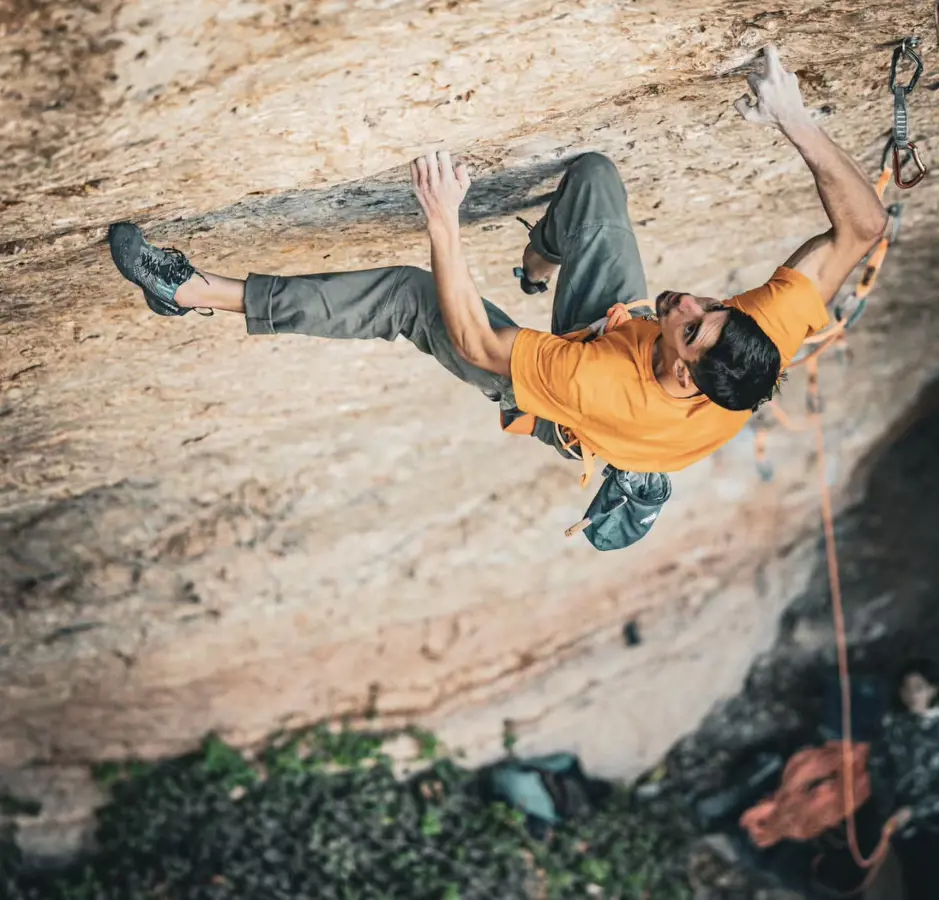
Jorge Diaz-Rullo reports on Instagram that he has made the first ascent of Cafe Colombia in Margalef. At 27, he’s already stacked four 9b+ sends and now he’s ad…
285
81
”I stopped focusing on competition bouldering after last year’s World Cup in Prague, partly because I can already feel it on my body, especially in my shoulders. The modern competition style, with a lot of jumping from one hold to another, is very demanding for the shoulders.
Outdoor bouldering is…
189
13Sean Bailey reports on Instagram that he has done the first ascent of Duality of Man (9c) in Dry Canyon. ” After four total years and three seasons of climbing,…
163
69 Most commented
Jorge Diaz-Rullo reports on Instagram that he has made the first ascent of Cafe Colombia in Margalef. At 27, he’s already stacked four 9b+ sends and now he’s ad…
285
81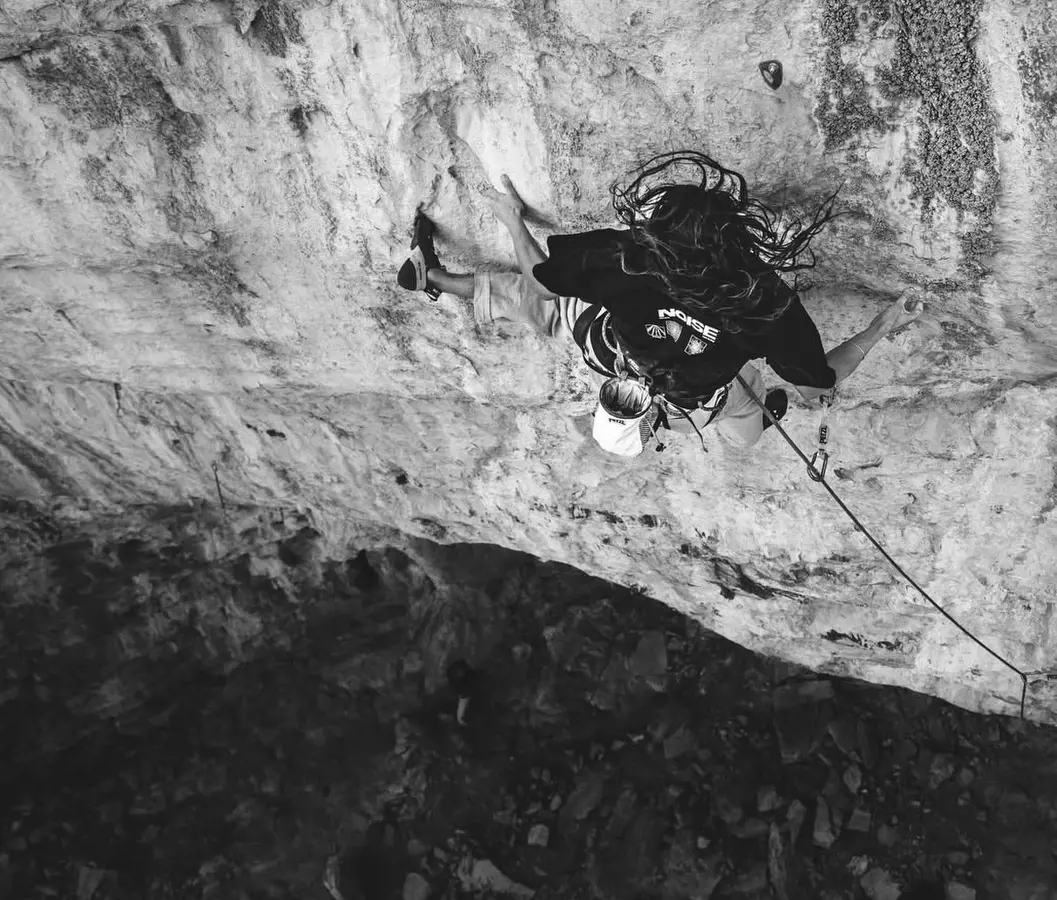
Sean Bailey reports on Instagram that he has done the first ascent of Duality of Man (9c) in Dry Canyon. ” After four total years and three seasons of climbing,…
163
69Jorge Diaz-Rullo elaborates on the reasons for him to suggest 9c for Café Colombia on Instagram, which he took down last week after projecting it for 240 sessio…
119
63