
NEWS
8 April 2025
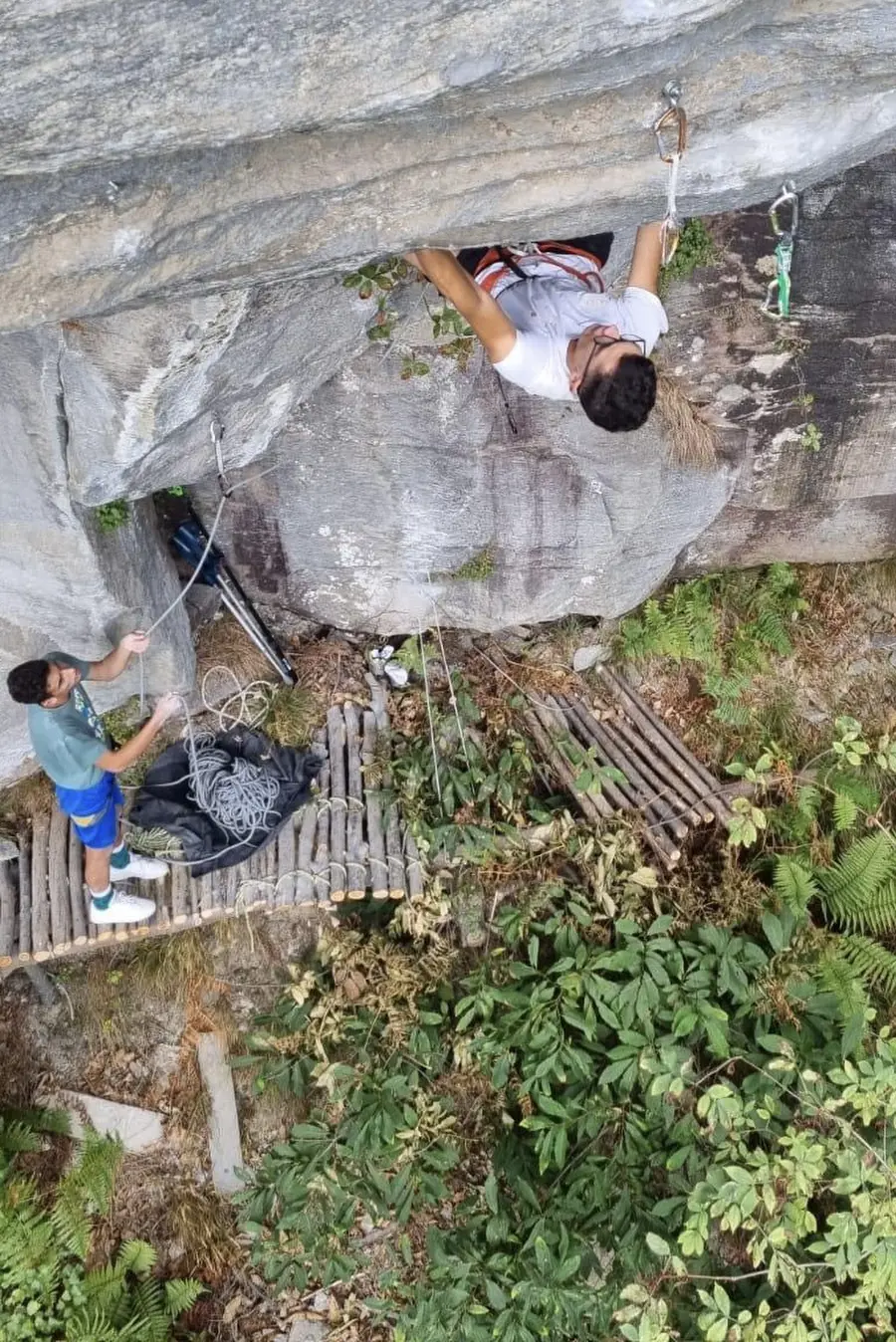
Michele Reusa FA’s Majin buu (9a)
Michele Reusa, who two years ago at age 16 did his first 9a, has done the FA of Majin buu (9a) in Falesia del ghëddo.
Can you tell us more about the first ascent?
Majin buu does the whole first part of Saiyan (8c) and then turns left with a very hard block and a resistance part, a very beautiful route with spectacular movements bolted by my father Iuri Reusa. I have already started trying a new project, Super Saiyan (9a), which could probably be 9a+. It was freed by my brother and given 9a but in my opinion it could be harder than 9a comparing it also with other pitches of the grade.
Any competition plans for 2025?
I have prepared for the 2025 Coppa Italia Lead Senior circuit and the Italian Senior Championship. I hope to participate in some senior Europa Cup!
Can you tell us more about the first ascent?
Majin buu does the whole first part of Saiyan (8c) and then turns left with a very hard block and a resistance part, a very beautiful route with spectacular movements bolted by my father Iuri Reusa. I have already started trying a new project, Super Saiyan (9a), which could probably be 9a+. It was freed by my brother and given 9a but in my opinion it could be harder than 9a comparing it also with other pitches of the grade.
Any competition plans for 2025?
I have prepared for the 2025 Coppa Italia Lead Senior circuit and the Italian Senior Championship. I hope to participate in some senior Europa Cup!
Read more
10
2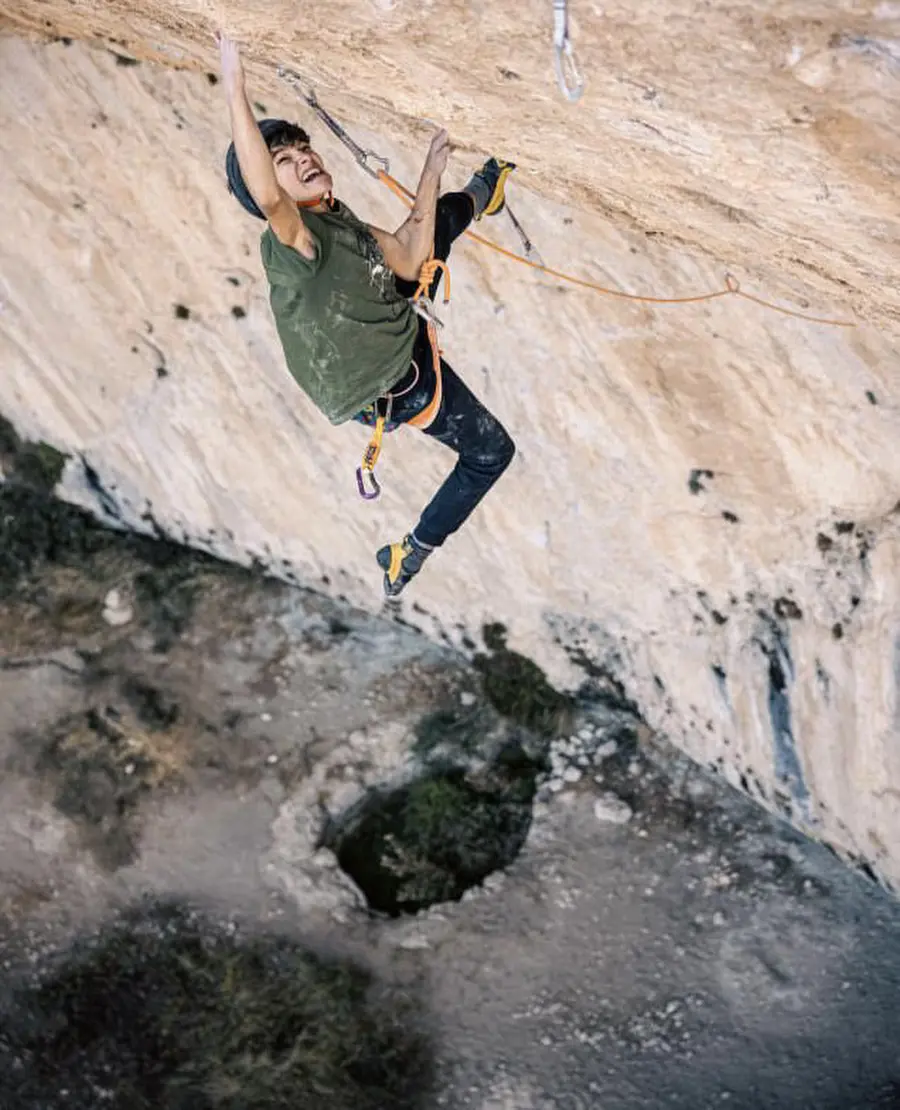
8 April 2025
David Bermudez, 15, onsights five 8a+/b
David Bermudez Carbonell, with six 9a’s under his belt, has during the last four weeks onsighted four 8a+’ and Niña mala (8b).
Can you tell us more about your focus on onsight?
I’ve always liked onsight climbing a lot, but in the past few months, I’ve been focusing on it in a different way because I’ve started traveling more to new areas with my climbing team, Sputnik Climbing. With the help of my trainers, I’ve managed to better visualize the routes from the ground and understand other important things to focus on.
In my opinion, onsight climbing is very important for developing skills that you can’t work on when trying a route multiple times. Giving an onsight attempt with all your energy is much more interesting than a redpoint, but sometimes people don’t find it appealing because onsight climbing pushes you out of your comfort zone—unlike redpointing, where you’re allowed more tries. I also like redpoint climbing, but it’s good to alternate it with onsight climbing.
Can you tell us more about your focus on onsight?
I’ve always liked onsight climbing a lot, but in the past few months, I’ve been focusing on it in a different way because I’ve started traveling more to new areas with my climbing team, Sputnik Climbing. With the help of my trainers, I’ve managed to better visualize the routes from the ground and understand other important things to focus on.
In my opinion, onsight climbing is very important for developing skills that you can’t work on when trying a route multiple times. Giving an onsight attempt with all your energy is much more interesting than a redpoint, but sometimes people don’t find it appealing because onsight climbing pushes you out of your comfort zone—unlike redpointing, where you’re allowed more tries. I also like redpoint climbing, but it’s good to alternate it with onsight climbing.
Read more
19
0Gonzalo Larrocha, who sent Selección anal del fuego (9a+) in January [pictured], has done
Grabando el pasado (9a) in Santa Linya and Brownie Chulo (9a) in Oliana.
Can you tell us more about those two ascents?
Both routes are easier versions of the original Mercenaris del passat (8c+) [not repeated since 2007 due to broken hold] and Papichulo (9a+).
Grabando el pasado: Start with a route that I bolted and then go straight to the main boulder of Mercenaris. In my opinion it is one the most endurance demanding routes in the cave.
Brownie chulo: Start on the left side of Joe Blau and arrive to Papichulo just below the second boulder after the ledge. So you should climb the second a third boulder of Papi an the upper part of this route. The main reason to try this, is that I don't feel it is possible to do the original version. This is what weak people should do.
Can you tell us more about those two ascents?
Both routes are easier versions of the original Mercenaris del passat (8c+) [not repeated since 2007 due to broken hold] and Papichulo (9a+).
Grabando el pasado: Start with a route that I bolted and then go straight to the main boulder of Mercenaris. In my opinion it is one the most endurance demanding routes in the cave.
Brownie chulo: Start on the left side of Joe Blau and arrive to Papichulo just below the second boulder after the ledge. So you should climb the second a third boulder of Papi an the upper part of this route. The main reason to try this, is that I don't feel it is possible to do the original version. This is what weak people should do.
Read more
17
5Advertorial: The new Diamond S climbing shoes redefine performance with advanced design and precision. Built on the new Excentric 2.0 last and featuring CAT rubber 1.5, they offer maximum grip, energy transfer, and comfort for bouldering, sport climbing, and indoor routes. With high asymmetry, a deep downturn, and a 3D midsole, they provide superior support and precision on edges and small holds—perfect for demanding climbs.
The concave 3D midsole ensures optimal toe positioning, while the transverse rubber strap enhances torsional stability for precise control. A side rubber strap maximizes power transfer, ensuring efficient and stable climbing.
For superior grip, the large CAT rubber 1.5 toe patch provides exceptional precision for toe-hooking on slopers, with deformation zones enhancing efficiency on slabs. The Velcro closure and tongue loop offer a secure fit and easy on-off, while the seamless heel ensures lasting comfort during intense training sessions. Built for durability, the laminated seams reinforce the shoe for technical moves, and the microfiber upper is 100% vegan, delivering high performance without animal-derived materials.
The Diamond S isn’t just another mass-produced shoe. Rather, they are carefully handcrafted directly in the Czech Republic, following our unique path with a focus on design innovation and ethics. These climbing shoes are vegan-friendly, innovative, and proudly carry the “Made in CZ” label.
Find out more here.
The concave 3D midsole ensures optimal toe positioning, while the transverse rubber strap enhances torsional stability for precise control. A side rubber strap maximizes power transfer, ensuring efficient and stable climbing.
For superior grip, the large CAT rubber 1.5 toe patch provides exceptional precision for toe-hooking on slopers, with deformation zones enhancing efficiency on slabs. The Velcro closure and tongue loop offer a secure fit and easy on-off, while the seamless heel ensures lasting comfort during intense training sessions. Built for durability, the laminated seams reinforce the shoe for technical moves, and the microfiber upper is 100% vegan, delivering high performance without animal-derived materials.
The Diamond S isn’t just another mass-produced shoe. Rather, they are carefully handcrafted directly in the Czech Republic, following our unique path with a focus on design innovation and ethics. These climbing shoes are vegan-friendly, innovative, and proudly carry the “Made in CZ” label.
Find out more here.
Read more
0
17 April 2025
France superior at Rome Euro Boulder Cup
France set a new benchmark at the European Boulder Cup in Rome, with their four male participating climbers sweeping the top four positions. On the women’s side, they added to their success by claiming both the gold and bronze medals. In the first stage of the Euro Cup held last month in Munich, four French men finished in the top six. The third event will take place in Brussel 3-4/5 and previous to that the Boulder World Cup kicks off in Keqiao, Japan on April 18. (c) IFSC
1. Leo Favet FRA 69.8 - Lily Abriat FRA 74.9
2. Antoine Girard FRA 69.6 - Stella Giacani ITA 69.6
3. Noe Moutault FRA 59.9 - Lucile Saurel FRA 59.8
The new point-based scoring system awards 25 points for reaching the top and 10 points for reaching the zone, with a deduction of 0.1 points for each attempt.
1. Leo Favet FRA 69.8 - Lily Abriat FRA 74.9
2. Antoine Girard FRA 69.6 - Stella Giacani ITA 69.6
3. Noe Moutault FRA 59.9 - Lucile Saurel FRA 59.8
The new point-based scoring system awards 25 points for reaching the top and 10 points for reaching the zone, with a deduction of 0.1 points for each attempt.
Read more
3
06 April 2025
Radek Votocek does Kompletace (9a)
Radek Votocek, who did his first 9a last month, after having completed 14 8c+’, has done Kompletace (9a) in Krkavka. ”First ascent after the crimp broke in the boulder. Climbed directly, the original beta is no possible. Difficulty is roughly the same as Senzace.”
Senzace (9a) was Radek’s first 9a, which he began attempting in 2020. Both of the 9a routes were originally established by Adam Ondra over a decade ago as 8c+, but were later upgraded after key holds broke.
Can you tell us more about the ascent and the number of sessions needed?
Kompletace is a route that shares its crux section with Senzace. A few years ago, a fairly important hold broke off. Yesterday, the temperature dropped and the wind brought good conditions for a send, so I’m really happy that I managed to complete this tough route at Krkavka fairly quickly. 😌
After sending Senzace, I came back to the line about five times and gradually worked out a new, more direct beta. The difficulty matches the crux section of Senzace.
Senzace (9a) was Radek’s first 9a, which he began attempting in 2020. Both of the 9a routes were originally established by Adam Ondra over a decade ago as 8c+, but were later upgraded after key holds broke.
Can you tell us more about the ascent and the number of sessions needed?
Kompletace is a route that shares its crux section with Senzace. A few years ago, a fairly important hold broke off. Yesterday, the temperature dropped and the wind brought good conditions for a send, so I’m really happy that I managed to complete this tough route at Krkavka fairly quickly. 😌
After sending Senzace, I came back to the line about five times and gradually worked out a new, more direct beta. The difficulty matches the crux section of Senzace.
Read more
18
05 April 2025
Jules Marchaland ticks Guère de bruit (9a)
Jules Marchaland, with five 9a+’ under his belt, has repeated Seb Bouin’s Guère de bruit (9a) in Claret. ”Really good flash attempt [3 moves to the final jug] and then didn’t check the last moves so fucked up the 2nd go and send first go next sesh. 2 really cool crimpy boulder with a good rest beetween. The direct line is Savage.” (c) Yulen Calleja Ordiz
What is the plan for the upcoming weeks?
I’m trying the direct Line of this 9a, probably a hard 9a+. Then just enjoy climbing and go back on Ratstaman Vibrations [Megos 9b in Céüse].
What is the plan for the upcoming weeks?
I’m trying the direct Line of this 9a, probably a hard 9a+. Then just enjoy climbing and go back on Ratstaman Vibrations [Megos 9b in Céüse].
Read more
17
05 April 2025
Erwan Lievin does 7C+ with one hand
Erwan Lievin, who was born with one hand, has done Le Pilier du Désert (7C+) in Fontainebleau. The 22-year-old was #3 in a World Cup one year after he started climbing.
Can you tell us more about your climbing background and sending your first 7C+?
I started climbing 3 and a half years ago at the USBY club (Union sportive de bures sur Yvette), which I really thank and which continues to support me in my current projects with my coach Ludovic Delmotte, whom I also thank. I've been representing the French team on the international circuit for 3 years now, but that won't be the case this year as I finished 3rd at the French championships and wasn't selected. So I'll be able to concentrate on my outdoor crosses, whether in Fontainebleau or in other spots!
Last year, in May, I'd already done my first Bagheera 7C, and that's when I really fell in love with hard outdoor bouldering! And 5 days after the French championships, I took on the desert pillar, which gave me the chance to exact my revenge. To describe the boulder for those who don't know it, the desert pillar is a very physical compression boulder, to a jump start, where you have to arrive with precision on a right-hand arch and a left-hand flat ramp. Then you bring your left heel up to the level of your hand to move up the ramp to the point where it holds best, put your right foot on a flat hold and send everything you've got into a very good sloper where the crux is not to touch the pads and to hold the swing.
This was followed by a short, not very hard traverse on super-class holds and a really uncomplicated mantle. This boulder was a project for me last year, when I put in 3 or 4 sessions during the winter without any conclusive attempts and without ever landing the big move in the middle, which is the crux for me. I did, however, manage to set the jump start, the handstand and the traverse at the end. All I needed was this move... This winter I didn't go back because I had other projects in mind that I wanted to try out, but they didn't come out in the end.
I thought about this boulder again and motivated myself to go back and see if I was better than last year, and boom, I made the middle move by doing a sort of arm coordonination where I brought my left hand up in another press to hold the sing ! I was so happy! But I couldn't send it that session. I went back a week and a half later and tried to reposition the big move, but I couldn't do it again...
Either I don't take the hold correctly or I hit it too far from the sloper... But I'm not discouraged, I tell myself I might as well do some lower runs. The first try I hit the sloper but I can't hold the swing The next run is the right one, I slam the move and succeed just as I'd planned! All I have to do now is stay focused so as not to fall at the end, and I'm back on top of this great pillar!
For me, it means a lot because I've not been at my best all winter, between complicated conditions, injuries and a daily life full of pitfalls, it's been tough! It's like a big liberation, a weight lifted off my shoulders, and it's also a new personal and para-climbing limit that's just been broken! Now I've already got my eyes set on the next objectives, and the main one will be to get into the 8th degree single-handed!
What is your sport background and what got you hooked for climbing?
When I was younger, I did a lot of sports like handball, table tennis, swimming... But it wasn't until very late that I discovered climbing, at the age of 18, when I went to university, they asked me to choose a sports speciality. I'd been able to do some climbing for my baccalaureate and I thought it was really cool, so I thought why not? That's where it all started at first, for the first few months it was just a leisure activity, until I heard that there were handisport competitions, and that's when I joined the USBY and really started training with the aim of becoming strong. I discovered a super-cool environment with an ambulance and just incredible people. Alongside this, I discovered outdoor climbing and gradually began to fall in love with climbing For me, the next logical step is to continue pushing the limits of para-escalation, enter the 8th degree and travel to do major bouldering.
Can you tell us more about your climbing background and sending your first 7C+?
I started climbing 3 and a half years ago at the USBY club (Union sportive de bures sur Yvette), which I really thank and which continues to support me in my current projects with my coach Ludovic Delmotte, whom I also thank. I've been representing the French team on the international circuit for 3 years now, but that won't be the case this year as I finished 3rd at the French championships and wasn't selected. So I'll be able to concentrate on my outdoor crosses, whether in Fontainebleau or in other spots!
Last year, in May, I'd already done my first Bagheera 7C, and that's when I really fell in love with hard outdoor bouldering! And 5 days after the French championships, I took on the desert pillar, which gave me the chance to exact my revenge. To describe the boulder for those who don't know it, the desert pillar is a very physical compression boulder, to a jump start, where you have to arrive with precision on a right-hand arch and a left-hand flat ramp. Then you bring your left heel up to the level of your hand to move up the ramp to the point where it holds best, put your right foot on a flat hold and send everything you've got into a very good sloper where the crux is not to touch the pads and to hold the swing.
This was followed by a short, not very hard traverse on super-class holds and a really uncomplicated mantle. This boulder was a project for me last year, when I put in 3 or 4 sessions during the winter without any conclusive attempts and without ever landing the big move in the middle, which is the crux for me. I did, however, manage to set the jump start, the handstand and the traverse at the end. All I needed was this move... This winter I didn't go back because I had other projects in mind that I wanted to try out, but they didn't come out in the end.
I thought about this boulder again and motivated myself to go back and see if I was better than last year, and boom, I made the middle move by doing a sort of arm coordonination where I brought my left hand up in another press to hold the sing ! I was so happy! But I couldn't send it that session. I went back a week and a half later and tried to reposition the big move, but I couldn't do it again...
Either I don't take the hold correctly or I hit it too far from the sloper... But I'm not discouraged, I tell myself I might as well do some lower runs. The first try I hit the sloper but I can't hold the swing The next run is the right one, I slam the move and succeed just as I'd planned! All I have to do now is stay focused so as not to fall at the end, and I'm back on top of this great pillar!
For me, it means a lot because I've not been at my best all winter, between complicated conditions, injuries and a daily life full of pitfalls, it's been tough! It's like a big liberation, a weight lifted off my shoulders, and it's also a new personal and para-climbing limit that's just been broken! Now I've already got my eyes set on the next objectives, and the main one will be to get into the 8th degree single-handed!
What is your sport background and what got you hooked for climbing?
When I was younger, I did a lot of sports like handball, table tennis, swimming... But it wasn't until very late that I discovered climbing, at the age of 18, when I went to university, they asked me to choose a sports speciality. I'd been able to do some climbing for my baccalaureate and I thought it was really cool, so I thought why not? That's where it all started at first, for the first few months it was just a leisure activity, until I heard that there were handisport competitions, and that's when I joined the USBY and really started training with the aim of becoming strong. I discovered a super-cool environment with an ambulance and just incredible people. Alongside this, I discovered outdoor climbing and gradually began to fall in love with climbing For me, the next logical step is to continue pushing the limits of para-escalation, enter the 8th degree and travel to do major bouldering.
Read more
80
3On March 28th, Boulder local Kate Kelleghan and French climber Laura Pineau broke the speed record on The Naked Edge (6c+) in Eldorado Canyon. The 200 m classic climb was simul-climbed, using 18 pieces of gear, getting back to the base in just 37.08 minutes. (c) James Lucas
The Naked Edge is a historic and storied route. Because of its short cruxes and relatively straight line up the formation, it has attracted a subset of climbers who ascend 200 meters in a single pitch with a short rope and a handful of micro traxions, and time themselves. Kate has spent several years honing this climb and previously established the female speed record at 37:40 with Boulder Guide Becca Droz in 2021. With Laura visiting from Europe, the two women decided to have a go at breaking the record. On their 4th speed attempt, the partners shaved off 32 seconds, ringing in at 37 minutes and 8 seconds.
The Speed Tactics: Warm-up Lap: Climbing the route without any running, trying to keep heart rate in Zone 3 or less, which the athletes can see on their Coros watch thanks to the arm bands they can wear while climbing.
Speed Lap: From the moment the clock starts, Laura and Kate are sprinting. They maintain Zone 3 or 4 for the entire effort, never stop moving, and never take breaks. They barely chalk up. From the summit, the pair runs/crawls down 5th class slab and then flat out sprints back to the bridge, where the clock stops. On March 28, the warm-up lap went smoothly. However, on the speed lap, some shoelace issues and a loose rope coil landed the duo 10 seconds too slow. In an unorthodox decision, they decided to try a third lap, max effort. After taking a few hours to wait out the hottest part of the day, Laura and Kate returned to the bridge and gave a third attempt to everything they had. They sprinted across the bridge at 37 minutes and 08 seconds, slicing 32 seconds off the previous record. The real secret to beating the record? For Kate: 80 laps on the route. For Laura: The willingness to run down 5th class slab in TC Pros.
”The climb itself took us 20 minutes and we simul-climb the whole route in one pitch. Kate and I only meet at the top but never on the route and we used 3 micro-traxions. We used a total of 18 protections on the whole climb (a mix of camelots and QuickDraws). And I was the one following her and I collected everything on the way up. We came down with everything on us, gear and rope, we also free climb the whole route. There is no pulling on gear.”
The Naked Edge is a historic and storied route. Because of its short cruxes and relatively straight line up the formation, it has attracted a subset of climbers who ascend 200 meters in a single pitch with a short rope and a handful of micro traxions, and time themselves. Kate has spent several years honing this climb and previously established the female speed record at 37:40 with Boulder Guide Becca Droz in 2021. With Laura visiting from Europe, the two women decided to have a go at breaking the record. On their 4th speed attempt, the partners shaved off 32 seconds, ringing in at 37 minutes and 8 seconds.
The Speed Tactics: Warm-up Lap: Climbing the route without any running, trying to keep heart rate in Zone 3 or less, which the athletes can see on their Coros watch thanks to the arm bands they can wear while climbing.
Speed Lap: From the moment the clock starts, Laura and Kate are sprinting. They maintain Zone 3 or 4 for the entire effort, never stop moving, and never take breaks. They barely chalk up. From the summit, the pair runs/crawls down 5th class slab and then flat out sprints back to the bridge, where the clock stops. On March 28, the warm-up lap went smoothly. However, on the speed lap, some shoelace issues and a loose rope coil landed the duo 10 seconds too slow. In an unorthodox decision, they decided to try a third lap, max effort. After taking a few hours to wait out the hottest part of the day, Laura and Kate returned to the bridge and gave a third attempt to everything they had. They sprinted across the bridge at 37 minutes and 08 seconds, slicing 32 seconds off the previous record. The real secret to beating the record? For Kate: 80 laps on the route. For Laura: The willingness to run down 5th class slab in TC Pros.
”The climb itself took us 20 minutes and we simul-climb the whole route in one pitch. Kate and I only meet at the top but never on the route and we used 3 micro-traxions. We used a total of 18 protections on the whole climb (a mix of camelots and QuickDraws). And I was the one following her and I collected everything on the way up. We came down with everything on us, gear and rope, we also free climb the whole route. There is no pulling on gear.”
Read more
10
0Yves Gravelle is featured in the latest Magnus Midtbo video. The 39-year-old put up two 8C’s and three 8B+’ in 2021 but later he has focused more on building strength and competing. One of his next goals is to travel to Finland and try Burden of Dreams (9A). Below is some Q & A with Yves.
How does a normal climbing/training week look?
My training schedule varies greatly depending on my current objectives, whether I’m preparing for competitions, outdoor projects, grip strength challenges, or specific contests. I always try to balance things based on available time between work, coaching, and family. For competitions specifically, I find that I need significantly more hours on the mats to feel confident — usually 14+ hours a week. I perform best when I dedicate a large amount of time to practicing comp-specific skills like coordination and balance (especially slabs). I try to structure my week by alternating between lower-intensity technical sessions and short, high-intensity efforts to allow for maximum recovery. Interestingly, I find that slab and balance-focused sessions are a great way to get in meaningful practice without accumulating too much fatigue. However, the time investment needed to see lasting improvement in these skills is quite high — you don’t get exhausted, but progress comes slowly and requires consistency.
Regardless of my objectives, I always incorporate a few finger training exercises at the start of my sessions. They help me feel physically prepared for the climbs ahead and give me a quick sense of my readiness for the day. Additionally, I include some form of mobility or stretching routine 4 to 6 times a week, usually at the end of practice, to maintain range of motion and aid recovery. When time permits, I aim for 9 to 20 hours of climbing and training per week, typically spread over 4 to 6 days, with sessions lasting anywhere from 90 minutes to 4 hours, depending on the focus. How has your strength progressed over the last five years?
During the COVID period, I shifted my focus more toward outdoor climbing and developing local areas. Since then, my grip strength training has come in cycles depending on how much time I have. When I have more availability or I’m preparing for competitions, I’ll push specific qualities based on my goals. When time is tight, I focus on maintaining my level by keeping shorter but consistent sessions, aiming for at least twice a week to stay in shape. But, to answer your question, I do feel like I’ve seen steady progress on my finger strength specially when I focus on grip training goals. I have been putting a lot of time working my technique climbing skills and mental game the past few years. I feel there more for me to gain working on those qualities than just focusing on getting stronger. How much do you climb outdoors and are you currently projecting anything hard?
Unfortunately, I haven’t climbed outside for the past two years. That said, I’m planning to get back on some local projects this season. I’m also aiming to try Burden of Dreams either this fall or next spring. My goal this year is to train specifically for that problem and give myself the best chance of success when I finally get to try it.
How does a normal climbing/training week look?
My training schedule varies greatly depending on my current objectives, whether I’m preparing for competitions, outdoor projects, grip strength challenges, or specific contests. I always try to balance things based on available time between work, coaching, and family. For competitions specifically, I find that I need significantly more hours on the mats to feel confident — usually 14+ hours a week. I perform best when I dedicate a large amount of time to practicing comp-specific skills like coordination and balance (especially slabs). I try to structure my week by alternating between lower-intensity technical sessions and short, high-intensity efforts to allow for maximum recovery. Interestingly, I find that slab and balance-focused sessions are a great way to get in meaningful practice without accumulating too much fatigue. However, the time investment needed to see lasting improvement in these skills is quite high — you don’t get exhausted, but progress comes slowly and requires consistency.
Regardless of my objectives, I always incorporate a few finger training exercises at the start of my sessions. They help me feel physically prepared for the climbs ahead and give me a quick sense of my readiness for the day. Additionally, I include some form of mobility or stretching routine 4 to 6 times a week, usually at the end of practice, to maintain range of motion and aid recovery. When time permits, I aim for 9 to 20 hours of climbing and training per week, typically spread over 4 to 6 days, with sessions lasting anywhere from 90 minutes to 4 hours, depending on the focus. How has your strength progressed over the last five years?
During the COVID period, I shifted my focus more toward outdoor climbing and developing local areas. Since then, my grip strength training has come in cycles depending on how much time I have. When I have more availability or I’m preparing for competitions, I’ll push specific qualities based on my goals. When time is tight, I focus on maintaining my level by keeping shorter but consistent sessions, aiming for at least twice a week to stay in shape. But, to answer your question, I do feel like I’ve seen steady progress on my finger strength specially when I focus on grip training goals. I have been putting a lot of time working my technique climbing skills and mental game the past few years. I feel there more for me to gain working on those qualities than just focusing on getting stronger. How much do you climb outdoors and are you currently projecting anything hard?
Unfortunately, I haven’t climbed outside for the past two years. That said, I’m planning to get back on some local projects this season. I’m also aiming to try Burden of Dreams either this fall or next spring. My goal this year is to train specifically for that problem and give myself the best chance of success when I finally get to try it.
Read more
29
0 Favorites
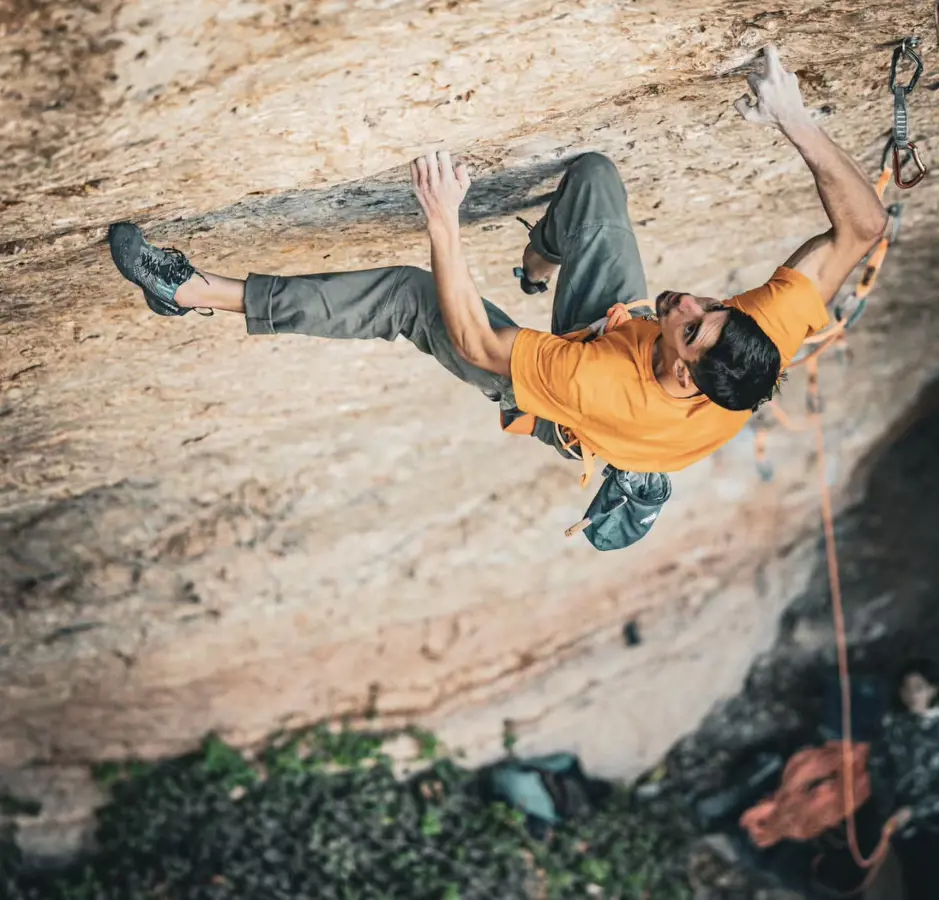
Jorge Diaz-Rullo reports on Instagram that he has made the first ascent of Cafe Colombia in Margalef. At 27, he’s already stacked four 9b+ sends and now he’s ad…
285
81
”I stopped focusing on competition bouldering after last year’s World Cup in Prague, partly because I can already feel it on my body, especially in my shoulders. The modern competition style, with a lot of jumping from one hold to another, is very demanding for the shoulders.
Outdoor bouldering is…
189
13Sean Bailey reports on Instagram that he has done the first ascent of Duality of Man (9c) in Dry Canyon. ” After four total years and three seasons of climbing,…
163
69 Most commented
Jorge Diaz-Rullo reports on Instagram that he has made the first ascent of Cafe Colombia in Margalef. At 27, he’s already stacked four 9b+ sends and now he’s ad…
285
81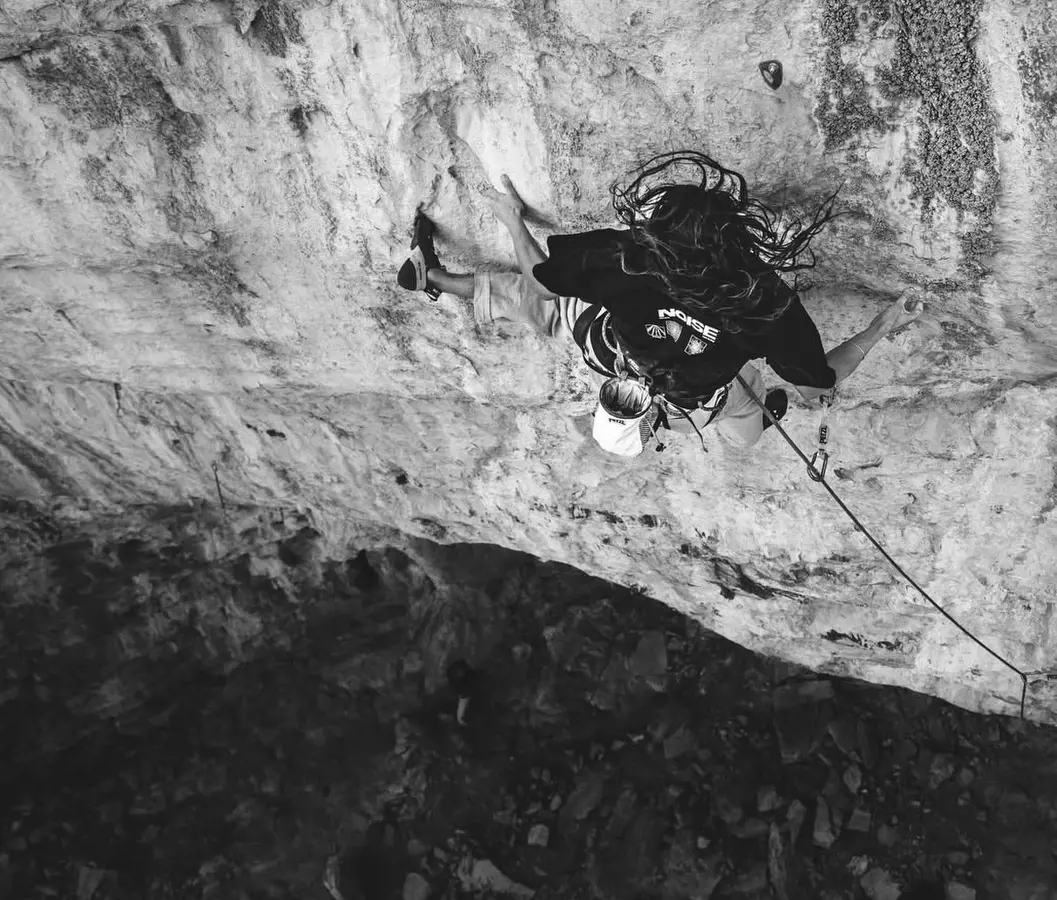
Sean Bailey reports on Instagram that he has done the first ascent of Duality of Man (9c) in Dry Canyon. ” After four total years and three seasons of climbing,…
163
69Jorge Diaz-Rullo elaborates on the reasons for him to suggest 9c for Café Colombia on Instagram, which he took down last week after projecting it for 240 sessio…
119
63