NEWS

Jonathan Siegrist reports from Las Vegas
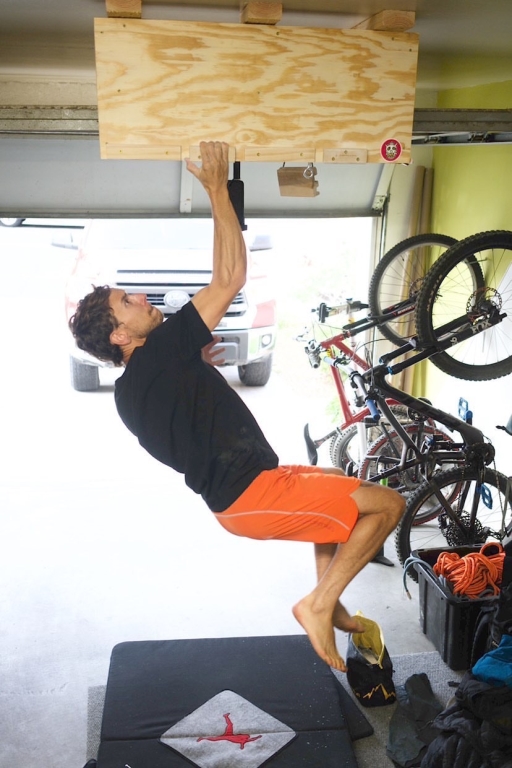
Jonathan Siegrist had just arrived in Italy where they planned to stay a month when they quickly had to return back home to Las Vegas. "All things considered, I feel very grateful. We have made some sacrifices, sure, but nothing compared to so many around the world. We are allowed to leave the house for groceries, important business, and exercise. Most of the climbing areas are closed (Red Rock, Mt Charleston, etc) so itโ€™s been a great opportunity for me to explore for new cliffs and more than anything Iโ€™ve been working on a lot of home building projects! For training I just do a series of one arm hangs (Iโ€™ve never done this before but because I donโ€™t have anything too fancy at home this is the best for me right now) also some Hangs with both hands like 2 finger etc. and some front levers and simple pull-ups. Right now I do simple training about 4-5 days a week."

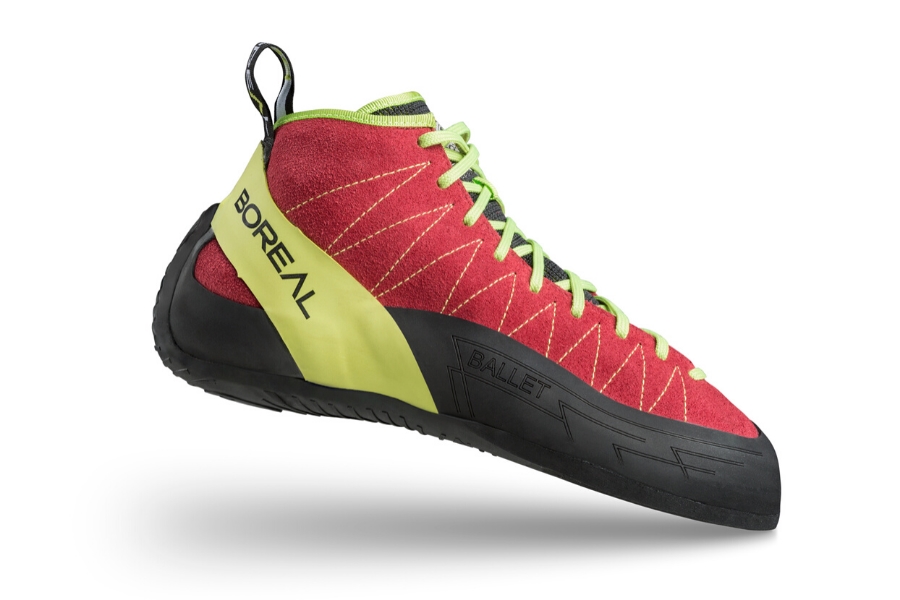
The 80โ€™s classic is reborn.
Ballet combines the best features of a traditional rock boot with performance enhancing developments of current high performance shoes. With high ankle protection, extended lacing for optimum adjustability and comfort, concave midsole and tacky Zenith Pro rubber, Ballet will let you dance up the biggest routes and longest pitches.

Pirmin Bertle reports three more 9a's in Frankenjura
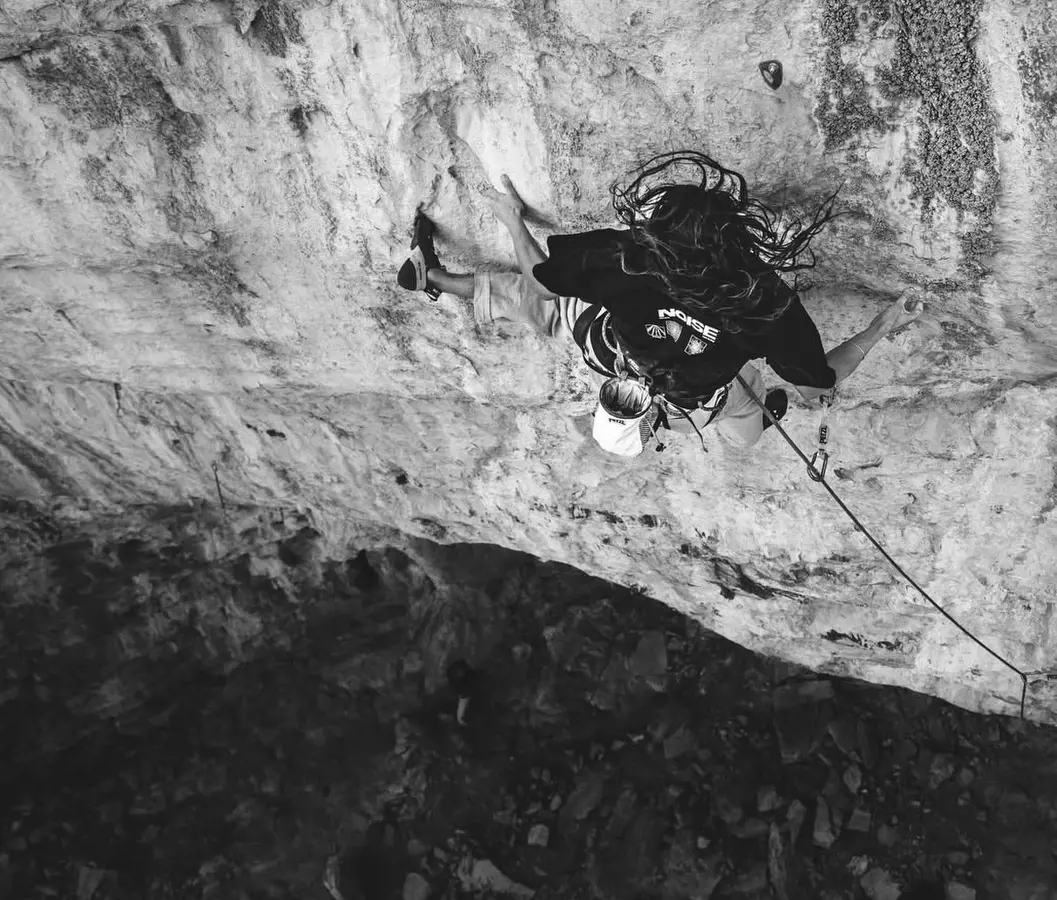
Pirmin Bertle, who just did Pantera 9a, reports in a blog that he last year did three 9a's in Frankenjura; The Essential, Black Label and House of Shock. Asking him on Facebook how these four 9a's were possible he says, "No idea! Vegan living :)". In the "Shape with no reason" blog he tries to explain how he suddenly could do the crux of Pantera. "In addition to the perfect grip, most probably it is because I stopped to eat animals (and most of their products) that I did not raise myself and because I work physically quite a lot without being repetitive. Keeping weight, inflammation-tendency (milk) and other injuries low seem to be enough to keep a basic shape. At least after 20 years of climbing." One possible explanation is a bouldering wall in their garden but even so, due to the poor winter, he has not used it very much. "I don't "train" anymore for years now, means rock climbing only, despite for the last three years when I had a bouldering wall in the garden. I did short and intensive units or tries there in something hard with extended regeneration, to do something else in between. The highest possible analogy to rock projecting: Rock holds, rather not that steep inclination, outside conditions and depending on how intensively used my fingers are in that period, I build more athletic and less crimpy boulders. Before 100% days with normally three rest days, I use the wall for reactivation the day before and in between, e.g. together with the kids, for easy climbing."

Strategy Outline for Covid-19 Risk Mitigation in Climbing Gyms  Download the strategy white paper
Vertical-Life publishes a first comprehensive version of a strategy outline for climbing gyms, intended to support them in risk management in the current situation. Through well planned measures, international cooperation and a reasonable degree of personal responsibility, solutions can be found to minimize the risk of COVID-19 infection in climbing gyms. This strategy outline is intended to provide a basis for this goal, while at the same time making it easier for national authorities to decide whether to allow gyms to reopen. The strategy outline is to be understood as work in process, to be extended and updated in the course of the next weeks together with various authors and contributors, according to feedback from representatives of the industry from all over the world and new findings on a scientific level. We invite everyone to share suggestions and input with us. Download the first draft of the strategy outline (April 17, 2020) here.

Pantera 9a and close on Corona 9a+ by Pirmin Bertle
Pirmin Bertle, who previously has done two 9b FAs and two 8C+' FA, has done Pantera 9a in Frankenjura. He was also close to sending Corona 9a+. "It was NOT my goal to hamper the fight against Covid-19 with this, but not to let pass great sending conditions is part of my job as a climber โ€“ when many other things like slide shows, workshops, and training fall apart. The risk of having an accident in such a well-equipped overhanging route after so many years of climbing is extremely low and at Schneiderloch there was as usually no one around." More comments on his blog - The almost perfect Corona day. It should be mentioned that the crag is just 10 km from his home and his belayer was his wife, who is a doctor. They stayed at the crag just over an hour, as he had warmed up at home, and they were alone the whole time. Furthermore, there is no general restrictions for climbing as long as you climb together with the ones you live together with.

Adam Ondra still trains at least 5 hours a day
What kind of restrictions do you have in Czechia? Restrictions are relatively strict, even though the situation is less serious than some of the other countries. That means all the shops and services are closed except for groceries and gas stations. In the past weeks, it has been legal to go out for a walk in the vicinity of your home, but going climbing was a grey area. Some people stayed at home, some people kept on climbing outdoors for sure. Now life is slowly getting less restricted and most people feel like rock climbing is OK at the moment. How has this affected your life and how does a normal day look like? I am very lucky to have pretty good training conditions right at home, so the training has not been compromised too much. So the training pretty much keeps on going like normal, still training at least 5 hours a day. Otherwise it feels nice to be at home with my partner Iva, have more free time and less โ€œwork dutiesโ€ than usual. What are you missing the most? Definitely rock climbing, I will go out soon. The fact that the Olympics were postponed actually makes me get to the rock earlier. Unfortunately, it does not seem we will be allowed to travel very soon, so it will be mostly my home crag that fortunately still holds some potential. Is there anything positive that could come out of the crises for you personally and for the whole world? For those who are lucky to stay healthy and at home, I think it gave us time to stop and reflect. Climbing-wise, it might make us appreciate the climbing more no matter if we send or not that day. How has Covid-19 and the postponement of the Olympics to 2021 changed your preparation plans? For sure I will not spend the next 16 months just pulling on plastic holds and training speed. I will train smartly, working on my weaknesses including speed climbing, while setting some goals outdoors as well. The best news of the last few months is that I know how to combine all of it. I have been super motivated recently. What are your training advice to climbers stuck at home? Do the exercise, but do not overtrain yourself. If you are used to climbing a few hours every day, making deadhangs for a few hours every day is the best way to get injured. Stay healthy, exercise moderately and wait for the lockdown to get over. How do you think the crises will change the climbing scene in both the short and the long run? I think it is too early to see the real impact. There are so many factors to consider like traveling and flying around the world. There might be more โ€œlocalโ€ outdoor climbing, which is good for the environment as well. You do not have to fly across half of the world to enjoy a great climbing day. (c) Pavel Klement

The start and development of sport climbing
1978 - Drilling bolts on rappell Jacques Nosley drilled bolts manually on Dingomaniaque, 6c+ in Verdon, as he was rappelling down in 1978. Some define this as the very start of the sport climbing era. Previously, hand-drilled bolts had been placed but only on lead. The rappelling created a big controversy in the community but nevertheless the sport climbing ethics were quickly spread in Europe and came to USA in 1983. Picture from the French magazine, Alpinisme in 1979, the Dingomaniaque! Other important development which had impact of the start of sportclimbing 1910 The first Climbing Carabiner 1927 The first rock drill and expansion bolts 1955 John Gill Introduces Chalk 1974 First indoor gym in Bolzano 1970s Kurt Albert introduced red point 1975 First sticky shoe on the market, (EB and Asolo etc) 1985 1st official competition, Bardonecchia 1980s Chak is getting popular 1991 The belay device GriGri 1990s The Crash Pad commercialized 2021 Olympic Sport in Tokyo