
NEWS

Toni Arbones the godfather of Siurana, started as an alpinist in the 80's but quickly also begun competing in the World Cup. Later he moved to Siurana where he put up many of the hardest and most classical routes and opened up a refugio. Since 2000, he runs Camping Siurana accommodating some 15 000 climbers every year. Toni has also over the years developed big walls in South America, Madagascar, Marocco and China where he currently lives.
"In the last years I have kept the motivation high to climb and explore many new places around the world. I am a passionate climber and I like to share with the community. After developing Siurana and the area of the Priorat, (Montsant And Capçanes) and positioning it like a world-class destination, I understood that my passion did not stop and I decided to build a crazy amount of routes in many different countries. In Taghia in Marrocco, I made 5 multi-pitches and a refugee for climbers in an amazing location. After visiting China for eight years putting up more than 200 pitches, I proposed to my family to move to China and try to build another world-class destination! Maybe if the situation is stable next year we will move all the family, to Le ye, Guangxi province, for bolting !
This is our future or maybe just a dream? Local government helps us to make everything easier and we take this chance... I like to keep dreaming about the vertical world, about movements and sequence of rock holds when I go to bed... I like to show the nicest places to my daughters, and build paradises, building rock destination, to make this crazy world better, more sociable, more sustainable, and easier to live in...
In the last years, I still manage to climb a lot, maybe fewer expeditions, but I live closer to the rocks and I can go nearly every day for a little session. Just before the quarantine, I climb again 8b+ and I was so closed to finish with another FA of an 8c but now after this period of confinement I need again to be used to this powerful climbing style... I hope asap I can do, but until I don’t succeed I keep dreaming about it."
"In the last years I have kept the motivation high to climb and explore many new places around the world. I am a passionate climber and I like to share with the community. After developing Siurana and the area of the Priorat, (Montsant And Capçanes) and positioning it like a world-class destination, I understood that my passion did not stop and I decided to build a crazy amount of routes in many different countries. In Taghia in Marrocco, I made 5 multi-pitches and a refugee for climbers in an amazing location. After visiting China for eight years putting up more than 200 pitches, I proposed to my family to move to China and try to build another world-class destination! Maybe if the situation is stable next year we will move all the family, to Le ye, Guangxi province, for bolting !
This is our future or maybe just a dream? Local government helps us to make everything easier and we take this chance... I like to keep dreaming about the vertical world, about movements and sequence of rock holds when I go to bed... I like to show the nicest places to my daughters, and build paradises, building rock destination, to make this crazy world better, more sociable, more sustainable, and easier to live in...
In the last years, I still manage to climb a lot, maybe fewer expeditions, but I live closer to the rocks and I can go nearly every day for a little session. Just before the quarantine, I climb again 8b+ and I was so closed to finish with another FA of an 8c but now after this period of confinement I need again to be used to this powerful climbing style... I hope asap I can do, but until I don’t succeed I keep dreaming about it."
Read more
13
4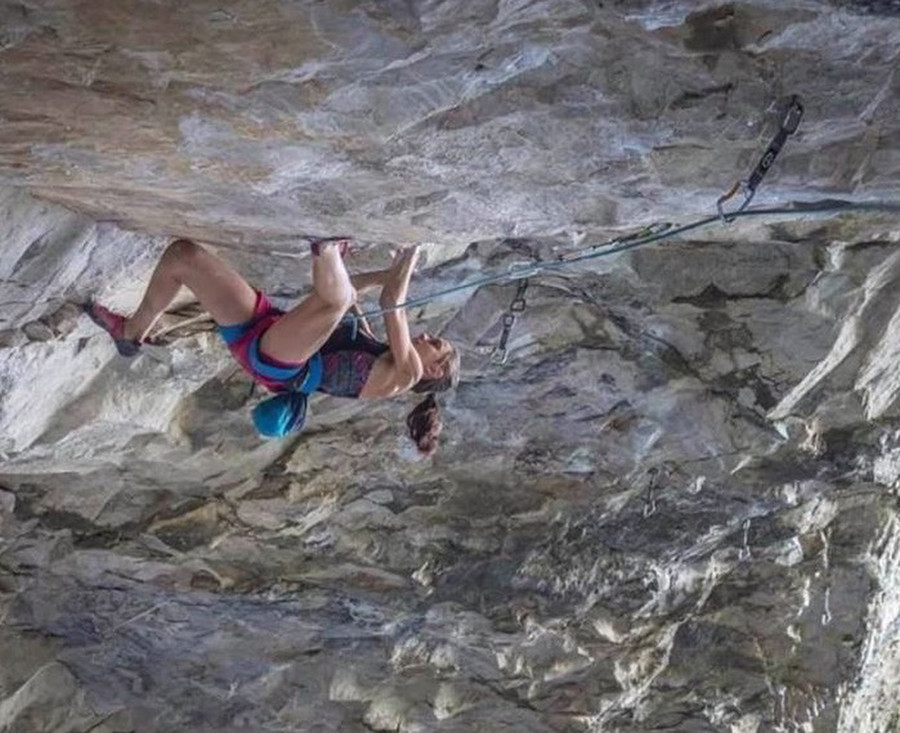
26 May 2020
Pure Dreaming 9a by Laura Rogora (19)
Laura Rogora, who has qualified for the Olympics, reports on Insta that she has done Pure Dreaming 9a in Arco in just eight tries. "It is an endurance test. The hardest moves are after 20 meters of sustained climbing (8b+). The key to send it is to climb fast and exploit the rest point on that part in order to reach the boulder with enough power."
In total, the 153 cm tall has now done 10 routes graded 8c+/9a or harder which is most out of all females. Last year she moved from Rome to Arco.
How does the climbing scene differ in between Rome and Arco? The crags around Rome are 1.30-2 hours from the city and almost everything is already bolted. There are still a few interesting projects but in Arco the situation ss totally different. There are more hard routes and still a lot to be climbed and bolted just nearby.
In total, the 153 cm tall has now done 10 routes graded 8c+/9a or harder which is most out of all females. Last year she moved from Rome to Arco.
How does the climbing scene differ in between Rome and Arco? The crags around Rome are 1.30-2 hours from the city and almost everything is already bolted. There are still a few interesting projects but in Arco the situation ss totally different. There are more hard routes and still a lot to be climbed and bolted just nearby.
Read more
16
026 May 2020
The Party's Here 9a by Stefano Carnati
Stefano Carnati has done The Party's Here 9a in Valbrona. "I first tried it one day last year when it was still a project. Then Gabri Moroni did the FA in October! Last week I decided to get back on it, despite warm and humid conditions. It was a great project to test my shape after quarantine and I’m really happy it went down!
Read more
4
025 May 2020
Beginning 9a/+ FA by Stefano Ghisolfi
Stefano Ghisolfi continues to show great form after the lockdown having done the FA of Beginning 9a/+ in Arco. "It is a connection between St. Anger and Zauberfee, the two historical routes." More info on his Insta. (c) Laura Rogora. Next for Stefano is to start bolting a new route which he has never done before.
Read more
13
125 May 2020
Oriane adds a new style
Some 20 years ago, Chris Sharma added a new style to the scene by being more dynamic and by sometimes campusing the cruxes. The old school guys were not so impressed and some said that once he learned to be precise and using the feet like the older guys he would have faster progress.
Some eight years later, Adam Ondra entered the top-level scene climbing much faster then everyone was used to. Still, the pace of Ondra is unique but many more, especially the successful Japanese competition climbers, are closing in.
In the last few years we have been used to watching amazing videos by Oriane Bertone (15) who is already one of the best female boulderers in the world. Part of her success might just be her amazing flexibility and her unique spider heal hooking style. Furthermore, often she places one foot like 50 cm above her hands. This spider style seems to be the new trend and the one being most extreme is Oriane. 8A+ video by the spider women.
Some eight years later, Adam Ondra entered the top-level scene climbing much faster then everyone was used to. Still, the pace of Ondra is unique but many more, especially the successful Japanese competition climbers, are closing in.
In the last few years we have been used to watching amazing videos by Oriane Bertone (15) who is already one of the best female boulderers in the world. Part of her success might just be her amazing flexibility and her unique spider heal hooking style. Furthermore, often she places one foot like 50 cm above her hands. This spider style seems to be the new trend and the one being most extreme is Oriane. 8A+ video by the spider women.
Read more
11
624 May 2020
Halupca 1979 9a by Jernej Kruder
Jernej Kruder, Boulder World Cup winner in 2018, has done his second 9a in May, Halupca 1979 in Osp/Misja Pec. "No comps- time to crush old projects...incredible fight." (c) Suzana Aursic
Read more
16
024 May 2020
Rest - Chalk - Clip
Once you have pushed through the crux coming up to a good hold by the clip, it is very important to first rest, then chalk and possibly 30 seconds later do the clip. The reason for this is that you would like to minimize the intensive periods with no blood circulation. Let say you have spent 20 seconds with full power doing the crux moves. If you carry on clipping directly your blood circulation will be relatively poor for another 10 seconds.
Beginning to rest on good holds after the crux means you should go from one extreme in your mindset to the opposite. You should focus on your breathing and relax your hold body like in a yoga position. After some shakeouts, you could chalk up and continue resting. Once you are fully back you could do the clip and if that in any way includes some effort, you should rest again and fully recover before continuing upwards.
Beginning to rest on good holds after the crux means you should go from one extreme in your mindset to the opposite. You should focus on your breathing and relax your hold body like in a yoga position. After some shakeouts, you could chalk up and continue resting. Once you are fully back you could do the clip and if that in any way includes some effort, you should rest again and fully recover before continuing upwards.
Read more
0
224 May 2020
Launch update
Thank you all for the feedback and support. The transition to the new database went well and the website is stable and fast. All the data is saved. Please contact support if you have problems accessing it. The team released some first bug fixes yesterday night and are working on the launch of the next couple of features for next week. Friends-, Crag- and latest ascents are among the first features to be added. Thank you for your patience and warm words.
Read more
5
1023 May 2020
Collin Duffy (16) Olympic interview
Colin Duffy participated in one IFSC comp in 2019, when he was #2 in Lead in the Youth World Championship. In 2017 and 2018 he won. By winning the final Lead event, as he was the fastest to top out, in the Pan American, he got a ticket to Tokyo. We sent over some questions to the 166 cm 16-year-old and got some interesting answers.
I started climbing when I found the sport at a local recreation center around 4 years old. I fell in love with the challenge of the wall and would beg my parents to let me do it again. From there I practiced the sport periodically until I started taking it seriously at age 8. I'd say my coach Robyn Raboutou has meant the most for my career. When I started on team ABC in 2012, she has always believed in me and motivated me to try harder and perform better.
The thing I love most about comps is the opportunity to try creative and well-set boulders/lead climbs, and hang out with other talented athletes from all over the world. The competition atmosphere is always super exciting and there is no other feeling like the adrenaline you get pre-climb.
I didn't really have my eyes on the Olympics until the start of 2020. Since I didn't compete on the adult circuit last year, I didn't know I would even have the chance to qualify until the finish of Toulouse. Also, to get to compete at the Pan American Championships I had place first go through the American Combined Championships. I'd say I gave the same effort for Olympics as I would for any big competition. I made sure my skill was peaking at the right time and I was mentally prepared. I'd say my parents had the biggest impact on me making it. They've supported me every step of the way and I was glad to have them by my side when I qualified.
During lockdown I have been mainly training on the climbing wall I have at my home, and doing virtual workout sessions with a personal trainer. While it's hard to find the motivation to train during quarantine I've tried to make the most of my sessions at home. Also, in Colorado restrictions are starting to ease up so I'll likely be able to climb in a gym regularly very soon. Just this last week I was able to get in my first session at ABC since the start of quarantine. Outdoor climbing is also an option for me but I haven't had the opportunity to get out as I've been focused on my studies.
If no comps are held this year, I'll just spend my time training specific weaknesses and working each individual discipline. Most notably I'm excited to try to make more improvement in my speed climbing. While it would be unfortunate if no comps are held this year as I lack experience on the international stage, I'll make the most out of my training.
While I still don't have as much outdoor experience as I'd like, I've gotten to go to some of America's best climbing spots in the past. My hardest boulder at this point is "The Grand Hustle" V13/8b which I did in Red Rocks, Nevada at age 11. My two hardest sport routes are "Pure Imagination" and "Southern Smoke" both located at the Red River Gorge, Kentucky and are both 5.14c/8c+. I actually did both of these routes on the same day during my short trip there. While I haven't nearly reached my potential outdoors, I look forward to getting outside in the near future and testing my limits. I'd say my goals for the next few years are to climb a V15/8c boulder and a 5.15a/9a+ lead route.
I started climbing when I found the sport at a local recreation center around 4 years old. I fell in love with the challenge of the wall and would beg my parents to let me do it again. From there I practiced the sport periodically until I started taking it seriously at age 8. I'd say my coach Robyn Raboutou has meant the most for my career. When I started on team ABC in 2012, she has always believed in me and motivated me to try harder and perform better.
The thing I love most about comps is the opportunity to try creative and well-set boulders/lead climbs, and hang out with other talented athletes from all over the world. The competition atmosphere is always super exciting and there is no other feeling like the adrenaline you get pre-climb.
I didn't really have my eyes on the Olympics until the start of 2020. Since I didn't compete on the adult circuit last year, I didn't know I would even have the chance to qualify until the finish of Toulouse. Also, to get to compete at the Pan American Championships I had place first go through the American Combined Championships. I'd say I gave the same effort for Olympics as I would for any big competition. I made sure my skill was peaking at the right time and I was mentally prepared. I'd say my parents had the biggest impact on me making it. They've supported me every step of the way and I was glad to have them by my side when I qualified.
During lockdown I have been mainly training on the climbing wall I have at my home, and doing virtual workout sessions with a personal trainer. While it's hard to find the motivation to train during quarantine I've tried to make the most of my sessions at home. Also, in Colorado restrictions are starting to ease up so I'll likely be able to climb in a gym regularly very soon. Just this last week I was able to get in my first session at ABC since the start of quarantine. Outdoor climbing is also an option for me but I haven't had the opportunity to get out as I've been focused on my studies.
If no comps are held this year, I'll just spend my time training specific weaknesses and working each individual discipline. Most notably I'm excited to try to make more improvement in my speed climbing. While it would be unfortunate if no comps are held this year as I lack experience on the international stage, I'll make the most out of my training.
While I still don't have as much outdoor experience as I'd like, I've gotten to go to some of America's best climbing spots in the past. My hardest boulder at this point is "The Grand Hustle" V13/8b which I did in Red Rocks, Nevada at age 11. My two hardest sport routes are "Pure Imagination" and "Southern Smoke" both located at the Red River Gorge, Kentucky and are both 5.14c/8c+. I actually did both of these routes on the same day during my short trip there. While I haven't nearly reached my potential outdoors, I look forward to getting outside in the near future and testing my limits. I'd say my goals for the next few years are to climb a V15/8c boulder and a 5.15a/9a+ lead route.
Read more
2
023 May 2020
Redpoint tactics
Dedicated redpoint climbers may spend years trying to send a chosen route. The way to get there often includes specific physical training, diets, stretching, visualization, and the search for perfect friction and patient belayers. Most people don't bother struggling with optimization like this. Here are 10 quick tactical tips for the lazier climbing population.
1. Avoid getting pumped during warm-up/training
Start your training session on very easy routes. Make sure to always keep good blood circulation in your forearms even though this means resting every 5th meter in the beginning.
2. Recruit specific strength needed for the crux
The more you train on the crux moves the stronger you will get. The muscle fibers will adapt to the specific move strived for. If the contact time for your fingers is longer than 10 seconds you should divide the crux into two or three parts. Rest at least 30 seconds between every hard effort.
3. Link and train on the last part of the route
Prioritize training on the last part of the route, this way you will feel comfortable and confident on your way to the anchor.
4. Tick marks/prolonged quickdraws/brushing of holds
Mark your hand and footholds with chalk where needed. If it's a complicated sequence you might even want to use L and R to indicate which hand to use. Decide the best position to clip from, even if this means prolonging the quickdraw. If the clip still is hard to decide whether the gate should be to the left or right. Brushing the holds will make you take a thorough look at them and perhaps discover a better gripping position. Don't forget to also brush your Picasso drawing after your climb.
5. Describe the crux and your plan to get through it for your belayer, don't forget your feet
By describing and discussing your plan with the belayer you will get prepared to tackle the hard parts of the route. IF you are thorough you include where to clip and chalk. Don't forget to go through the safety!
6. Cheering (-breathe, good, crimp, come on)
Most people perform better with some cheering. Get your friends to cheer and remind you of e.g. gripping positions or your breathing.
7. Wait, rest and get the urge to climb
If you don't feel 100 % ready, wait a bit longer. Eventually, you will get restless and totally focused on challenging the route and yourself with adrenaline.
8. Chalk up, breathe and start without tension
Make sure you have enough chalk and that your shoes are clean. Get rid of every indication of anxiety or tension, focus on your breathing and visualize the moves during a minute or two before starting your redpoint attempt.
9. Climb offensive and take chances
The faster you get through a hard sequence the less time you spend accumulating lactic acid which may give you a couple of extra attempts the same day. Note that faster should be interpreted as efficient and without hesitation, we are not talking about speed climbing. You should also challenge yourself to take chances or climb with very small margins to save strength for the hardest parts of the route. If you have beaten your personal record by climbing in a passive and careful way you set the goal to low.
10. Go for a new personal record and an adrenaline rush
The worst thoughts for a climber are the negative ones like - I climbed badly in the beginning, and - As tired as I am now this is never going to happen... Try to see every climb as good training where the reward is a good dose of adrenalin and maybe also a new personal best.
1. Avoid getting pumped during warm-up/training
Start your training session on very easy routes. Make sure to always keep good blood circulation in your forearms even though this means resting every 5th meter in the beginning.
2. Recruit specific strength needed for the crux
The more you train on the crux moves the stronger you will get. The muscle fibers will adapt to the specific move strived for. If the contact time for your fingers is longer than 10 seconds you should divide the crux into two or three parts. Rest at least 30 seconds between every hard effort.
3. Link and train on the last part of the route
Prioritize training on the last part of the route, this way you will feel comfortable and confident on your way to the anchor.
4. Tick marks/prolonged quickdraws/brushing of holds
Mark your hand and footholds with chalk where needed. If it's a complicated sequence you might even want to use L and R to indicate which hand to use. Decide the best position to clip from, even if this means prolonging the quickdraw. If the clip still is hard to decide whether the gate should be to the left or right. Brushing the holds will make you take a thorough look at them and perhaps discover a better gripping position. Don't forget to also brush your Picasso drawing after your climb.
5. Describe the crux and your plan to get through it for your belayer, don't forget your feet
By describing and discussing your plan with the belayer you will get prepared to tackle the hard parts of the route. IF you are thorough you include where to clip and chalk. Don't forget to go through the safety!
6. Cheering (-breathe, good, crimp, come on)
Most people perform better with some cheering. Get your friends to cheer and remind you of e.g. gripping positions or your breathing.
7. Wait, rest and get the urge to climb
If you don't feel 100 % ready, wait a bit longer. Eventually, you will get restless and totally focused on challenging the route and yourself with adrenaline.
8. Chalk up, breathe and start without tension
Make sure you have enough chalk and that your shoes are clean. Get rid of every indication of anxiety or tension, focus on your breathing and visualize the moves during a minute or two before starting your redpoint attempt.
9. Climb offensive and take chances
The faster you get through a hard sequence the less time you spend accumulating lactic acid which may give you a couple of extra attempts the same day. Note that faster should be interpreted as efficient and without hesitation, we are not talking about speed climbing. You should also challenge yourself to take chances or climb with very small margins to save strength for the hardest parts of the route. If you have beaten your personal record by climbing in a passive and careful way you set the goal to low.
10. Go for a new personal record and an adrenaline rush
The worst thoughts for a climber are the negative ones like - I climbed badly in the beginning, and - As tired as I am now this is never going to happen... Try to see every climb as good training where the reward is a good dose of adrenalin and maybe also a new personal best.
Read more
0
1 Favorites
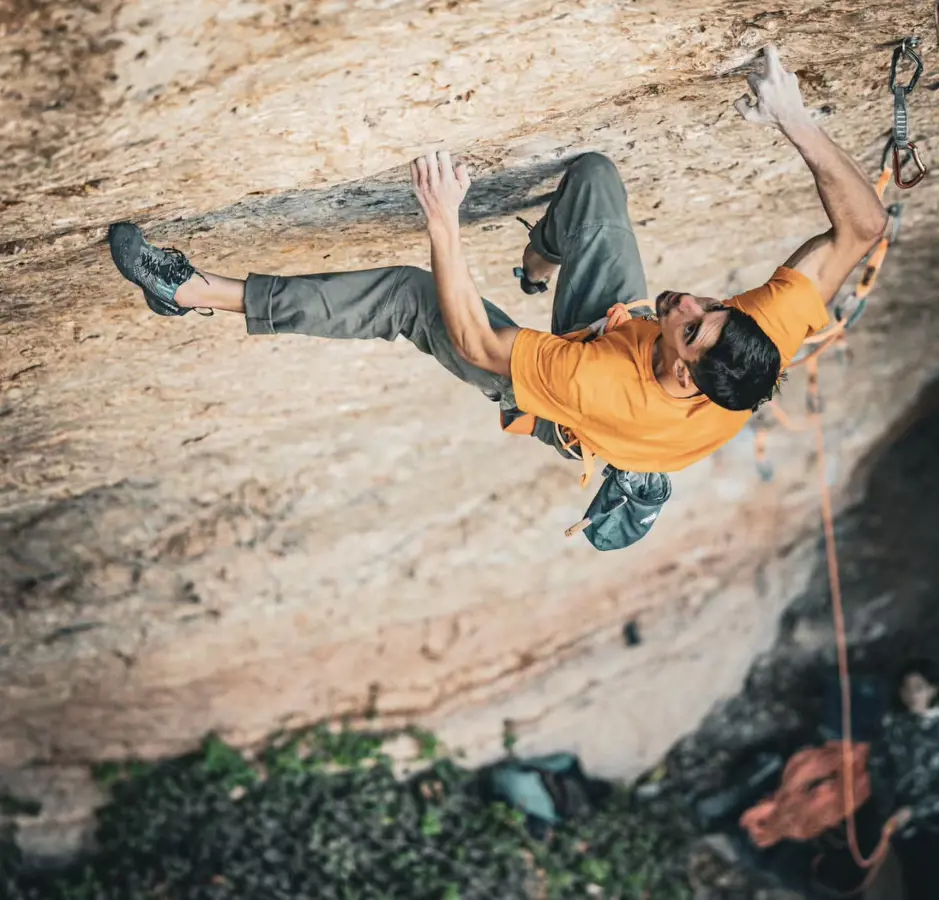
Jorge Diaz-Rullo reports on Instagram that he has made the first ascent of Cafe Colombia in Margalef. At 27, he’s already stacked four 9b+ sends and now he’s ad…
285
81
”I stopped focusing on competition bouldering after last year’s World Cup in Prague, partly because I can already feel it on my body, especially in my shoulders. The modern competition style, with a lot of jumping from one hold to another, is very demanding for the shoulders.
Outdoor bouldering is…
189
13Sean Bailey reports on Instagram that he has done the first ascent of Duality of Man (9c) in Dry Canyon. ” After four total years and three seasons of climbing,…
163
69 Most commented
Jorge Diaz-Rullo reports on Instagram that he has made the first ascent of Cafe Colombia in Margalef. At 27, he’s already stacked four 9b+ sends and now he’s ad…
285
81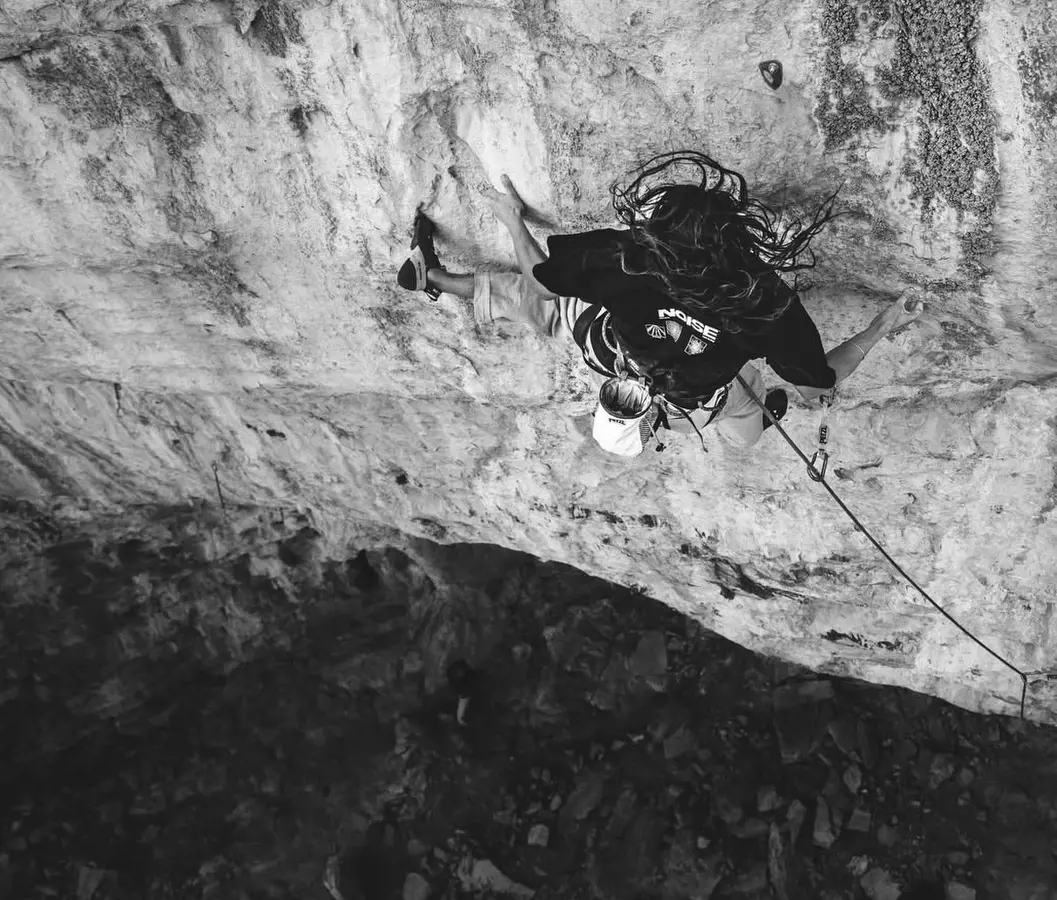
Sean Bailey reports on Instagram that he has done the first ascent of Duality of Man (9c) in Dry Canyon. ” After four total years and three seasons of climbing,…
163
69Jorge Diaz-Rullo elaborates on the reasons for him to suggest 9c for Café Colombia on Instagram, which he took down last week after projecting it for 240 sessio…
119
63