
NEWS
24 January 2021
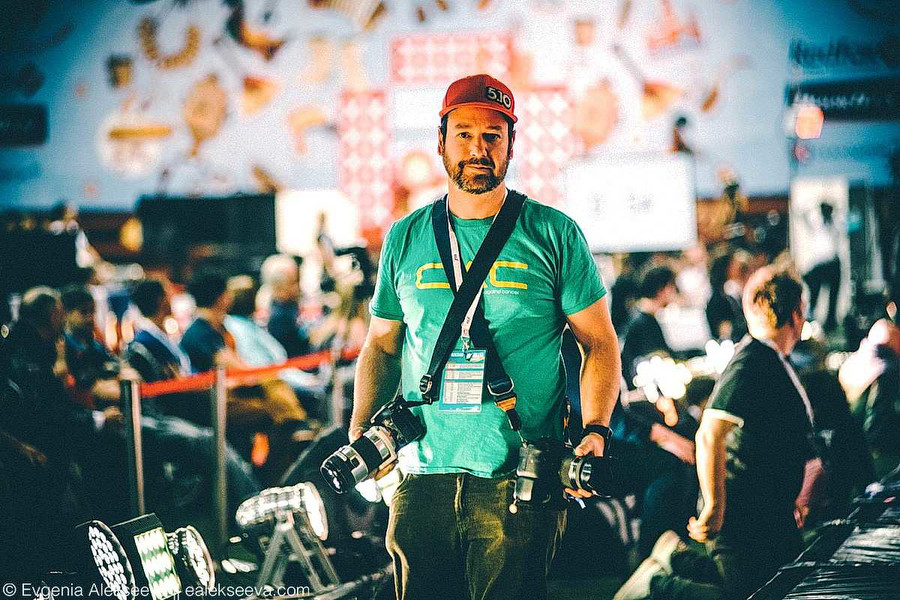
Eddie Fowke stops as IFSC photographer
So how did you become the IFSC Photographer?
As many reading this will know, I began The Circuit Climbing in 2013. Its goal was to document the competitive side of climbing and introduce the climbers and their exploits to a broader community as I felt it was extremely underrepresented in the media of the time. Seeing what I was doing, the IFSC approached me in 2014 with the offer of being the official photographer for the IFSC. By bringing me in, someone was already attending the events and had no national bias (few Kiwi’s attend World Cups) it gave them an asset who was impartial and of course, I was already promoting their product through my own platform.
How much work and travel did you put in?
It was an incredible amount of work. Being present at every round from approximately an hour before it began until its conclusion led to extremely long days. Not to mention at the end of the shooting, the sorting, editing and distribution of images began. At a normal World Cup, my workday would be 12 to 16 hours.
In my time as Official photographer, I spent as much time as possible optimizing travel, taking trains or other public transport where possible, and only flying when it was needed. Even so between 2015 and 2020, I spent more than 800 hours in the air, covering in excess of 600,000 kms. Jetlag became a part of life!
What are your best memories?
There are so many amazing memories, that it’s almost impossible to answer that. Any time a climber wins their first World Cup it gives you a huge emotional rush as you know just how much that means to them. More than a couple of times I’ve had to blink tears from my eyes to keep shooting! I also have great memories of all the people who have come up to thank me over the years, telling me stories of how my images and visual storytelling inspired them. My role has never to be “a name”, that is for the stars of climbing. But to have my work recognised and appreciated is extremely fulfilling.
Two memories that stick out are the first victories of Jernej Kruder in Meiringen and Gabri Moroni in Hachioji. To have seen the effort they both put in over the years finally rewarded was incredible. In competition there are some amazing climbers who never quite achieve what they show the promise to, some because they are in the shadow of one of the greats, others simply because of luck and timing. So seeing those to veterans of the sport finally achieve the top step of the podium after so many years of trying was something that will stick with me forever!
Who are the athletes you think will improve the most in 2021?
After a season away from the sport due to Covid-19, it’s almost impossible to say. Being that the vast majority of what we are seeing is people’s personal social media feeds, our perception is coloured by who promotes themselves better on social media which can give a false perspective. I don’t think we will get an honest gauge on the climbers' levels until 2022 at the earliest. There are several incredible young athletes like Colin Duffy from the US and Oriane Bertone from France stepping into the elite competition, and there are many for whom this is the end of their competition journey. And with the likelihood of 2021 being a disrupted season, I think we just need to wait and see!
How could the IFSC comps be improved?
I believe there are many development areas for an organisation like the IFSC. I won’t go into them here though, as they employ staff to manage the progression of the sport and how it is presented. It is on them to implement the changes required to evolve the sport. And if they don’t? Well, I think that if the IFSC doesn’t progress the sport, the sport will have enough inertia to develop itself. If we had a time machine and could travel to 2030 we would see a very different sport. Just as we are a very different sport today from where we were in 2010.
What will you work with in 2021?
The first objective of 2021 is to complete The Circuit Climbing coffee table book. A book made up of photos and essays covering competition climbing in all its guises from 2015 until the present. This has been the major project of mine (as The Circuit Climbing) during the break from competitions and is one I hope will be a document of historical relevance in the sport for years to come. Secondly, I will be photographing for several major publications within the industry as I document the competitions that happen around the world (if and when they start), as well as maintaining my relationships with the brands who rely on The Circuit Climbing to provide them with the high quality of imagery they require to promote their sponsored athletes.
As many reading this will know, I began The Circuit Climbing in 2013. Its goal was to document the competitive side of climbing and introduce the climbers and their exploits to a broader community as I felt it was extremely underrepresented in the media of the time. Seeing what I was doing, the IFSC approached me in 2014 with the offer of being the official photographer for the IFSC. By bringing me in, someone was already attending the events and had no national bias (few Kiwi’s attend World Cups) it gave them an asset who was impartial and of course, I was already promoting their product through my own platform.
How much work and travel did you put in?
It was an incredible amount of work. Being present at every round from approximately an hour before it began until its conclusion led to extremely long days. Not to mention at the end of the shooting, the sorting, editing and distribution of images began. At a normal World Cup, my workday would be 12 to 16 hours.
In my time as Official photographer, I spent as much time as possible optimizing travel, taking trains or other public transport where possible, and only flying when it was needed. Even so between 2015 and 2020, I spent more than 800 hours in the air, covering in excess of 600,000 kms. Jetlag became a part of life!
What are your best memories?
There are so many amazing memories, that it’s almost impossible to answer that. Any time a climber wins their first World Cup it gives you a huge emotional rush as you know just how much that means to them. More than a couple of times I’ve had to blink tears from my eyes to keep shooting! I also have great memories of all the people who have come up to thank me over the years, telling me stories of how my images and visual storytelling inspired them. My role has never to be “a name”, that is for the stars of climbing. But to have my work recognised and appreciated is extremely fulfilling.
Two memories that stick out are the first victories of Jernej Kruder in Meiringen and Gabri Moroni in Hachioji. To have seen the effort they both put in over the years finally rewarded was incredible. In competition there are some amazing climbers who never quite achieve what they show the promise to, some because they are in the shadow of one of the greats, others simply because of luck and timing. So seeing those to veterans of the sport finally achieve the top step of the podium after so many years of trying was something that will stick with me forever!
Who are the athletes you think will improve the most in 2021?
After a season away from the sport due to Covid-19, it’s almost impossible to say. Being that the vast majority of what we are seeing is people’s personal social media feeds, our perception is coloured by who promotes themselves better on social media which can give a false perspective. I don’t think we will get an honest gauge on the climbers' levels until 2022 at the earliest. There are several incredible young athletes like Colin Duffy from the US and Oriane Bertone from France stepping into the elite competition, and there are many for whom this is the end of their competition journey. And with the likelihood of 2021 being a disrupted season, I think we just need to wait and see!
How could the IFSC comps be improved?
I believe there are many development areas for an organisation like the IFSC. I won’t go into them here though, as they employ staff to manage the progression of the sport and how it is presented. It is on them to implement the changes required to evolve the sport. And if they don’t? Well, I think that if the IFSC doesn’t progress the sport, the sport will have enough inertia to develop itself. If we had a time machine and could travel to 2030 we would see a very different sport. Just as we are a very different sport today from where we were in 2010.
What will you work with in 2021?
The first objective of 2021 is to complete The Circuit Climbing coffee table book. A book made up of photos and essays covering competition climbing in all its guises from 2015 until the present. This has been the major project of mine (as The Circuit Climbing) during the break from competitions and is one I hope will be a document of historical relevance in the sport for years to come. Secondly, I will be photographing for several major publications within the industry as I document the competitions that happen around the world (if and when they start), as well as maintaining my relationships with the brands who rely on The Circuit Climbing to provide them with the high quality of imagery they require to promote their sponsored athletes.
Read more
6
224 January 2021
Quicker boulder sends through power spotting
A dilemma in bouldering is that you can't hang in a quick draw while working the crux. However, if the hardest part is within reach from the ground, your partner can assist you by simply eliminating some weight by pushing you on the back, i.e. power spotting.
This means you can get a feel for how to do the crux, or simply save some energy on the moves before the crux or the top out. Another possibility is to hold the foot and push it towards a small edge, so that it does not slip.
This means you can get a feel for how to do the crux, or simply save some energy on the moves before the crux or the top out. Another possibility is to hold the foot and push it towards a small edge, so that it does not slip.
Read more
2
024 January 2021
Three fast 8A's by Max Bertone (13)
Max Bertone has, in just one hour, done Atomic Playboy in Fontainebleau. It was put up by Greg Sobczak in 1993 as an 8B traverse. Later it has been called 8A+ traverse or 8A boulder.
The 154 cm tall 13-year-old has also done two other 8A's: Les Beaux Quartiers video and Big Golden assis video. He did the first in just two sessions and the latter in less than ten tries. His father Stefano actually says "This is clearly better than Oriane at the same age." Oriane is Max's 15-year-old sister that has done 15 boulders 8B and harder, currently #4 in the 8a ranking game.
The 154 cm tall 13-year-old has also done two other 8A's: Les Beaux Quartiers video and Big Golden assis video. He did the first in just two sessions and the latter in less than ten tries. His father Stefano actually says "This is clearly better than Oriane at the same age." Oriane is Max's 15-year-old sister that has done 15 boulders 8B and harder, currently #4 in the 8a ranking game.
Read more
2
223 January 2021
Hungry Hungry Hippos 8A+ by Katie Lamb
Katie Lamb, who did six 8B's in 2020, has done her 13th 8A+, Hungry Hungry Hippos in Red Rocks. In the 8a ranking game, she is #4.
"I was inspired by the recent K2 winter summit by a Nepali team and found many lessons to learn from them in seeking my own desert summit. To name a couple — push through the finger frostbite pain barrier and find power in the sun, and pray to the mountain for safe passage. Even though it was warmer than negative 76 Fahrenheit, I had trouble getting my skin warm enough to grab sandstone grips. My friend Shuggie Bain gave me some inner warmth and then summit was trivial! First session I did the stand, next session I did the full sit."
"I was inspired by the recent K2 winter summit by a Nepali team and found many lessons to learn from them in seeking my own desert summit. To name a couple — push through the finger frostbite pain barrier and find power in the sun, and pray to the mountain for safe passage. Even though it was warmer than negative 76 Fahrenheit, I had trouble getting my skin warm enough to grab sandstone grips. My friend Shuggie Bain gave me some inner warmth and then summit was trivial! First session I did the stand, next session I did the full sit."
Read more
3
023 January 2021
La Sportiva and Scarpa dominate
For the 16th year straight, we have asked: Which are the best climbing shoes? Based on some 2 000 unique poll responses, we can see that the results are almost the same as in 2020 with a total domination of La Sportiva and Scarpa, while Five Ten has lost a few percent again. The results of 2017 are shown in brackets for comparison, revealing a big drop also for Boreal. Part of that drop might be explained by 8a, on a relative basis, having fewer visitors from Spain.
43 % La Sportiva (43 % in 2017)
29 % Scarpa (18)
07 % Tenaya (4)
06 % Five Ten (15)
03 % Evolve, Ocun
02 % Mad Rock, Boreal (10)
05 % Other brands
43 % La Sportiva (43 % in 2017)
29 % Scarpa (18)
07 % Tenaya (4)
06 % Five Ten (15)
03 % Evolve, Ocun
02 % Mad Rock, Boreal (10)
05 % Other brands
Read more
2
023 January 2021
Set grade goals *10 or points
Setting a grade goal creates motivation, and just thinking of clipping the anchor of a personal grade best should make you smile. On the other hand, to just have this as your 2021 goal could create anxiety. "The best climber is the one having most fun" is another way of setting a goal. One way of combining a grade goal and having more fun is to set a goal like "I want to do ten climbs 7B or harder. With a multiple grade goal you will top out more routes instead of failing over and over again, like you would with a 7c goal.
This will make your grade pyramid wider and more similar to the professional athletes'. This will also make you a better climber in the long run as you will be challenged by different types of climbs, and the risk of injury will thus be reduced. In the same way, you can set multiple onsight goals, which should also include falls. Setting some (safe) onsight goals are good for your psych, and the adrenaline rush will most certainly give you more fun, sitting in your car describing your feelings to your friends.
One alternative, combining redpoint and onsight goals, is to set a goal in 8a points. Remember that it is more fun to have slow continuous progress rather than setting a big personal redpoint best 2021. Another risk of having a goal of one certain grade or climb is that it just might be downgraded :).
This will make your grade pyramid wider and more similar to the professional athletes'. This will also make you a better climber in the long run as you will be challenged by different types of climbs, and the risk of injury will thus be reduced. In the same way, you can set multiple onsight goals, which should also include falls. Setting some (safe) onsight goals are good for your psych, and the adrenaline rush will most certainly give you more fun, sitting in your car describing your feelings to your friends.
One alternative, combining redpoint and onsight goals, is to set a goal in 8a points. Remember that it is more fun to have slow continuous progress rather than setting a big personal redpoint best 2021. Another risk of having a goal of one certain grade or climb is that it just might be downgraded :).
Read more
1
122 January 2021
Elias Iagnemma logs eight 8C/9a's
Elias Iagnemma is a new 8a member who has recorded four 8C's and four 9a's, including the FAs of Extrasystole 8C and the 9a/+'s Ten and Ultimo Tango a Zagarolo. In 2018 he won the Italian Boulder Cup and tried some World Cups. Insta with more pics.
"Until 2018 I trained only and exclusively for competitions. Then in the last two years, my vision has changed a little and so I decided to compensate with a lot of rock climbing. In the winter of 2019, I almost stopped training but I only climbed on rock because when I wasn't climbing outside I was busy building my "BLOCKLAND" climbing gym. Once this dream was realized, I resumed training at my best but no longer exclusively aimed at competitions but also on performance on rock where it has recently given me more satisfaction. I love competitions and rock alike and I can't do without both. I hope this 2021 is a good year to get back to both of them in the best possible way. For the moment I continue to prefer outdoor climbing since with the situation of the pandemic the competitions are at risk until the last day and therefore I would not like to waste all the training performed over the months for a competition that probably will not happen. With this, I hope that we can return to normal as soon as possible and return to compete in the best possible way and in maximum safety.
After winning the Italian cup I took part in some world cups but I was injured in a finger and ankle and I couldn't give my best. Now I have recovered and I hope to return to the competition scene in this new year."
"Until 2018 I trained only and exclusively for competitions. Then in the last two years, my vision has changed a little and so I decided to compensate with a lot of rock climbing. In the winter of 2019, I almost stopped training but I only climbed on rock because when I wasn't climbing outside I was busy building my "BLOCKLAND" climbing gym. Once this dream was realized, I resumed training at my best but no longer exclusively aimed at competitions but also on performance on rock where it has recently given me more satisfaction. I love competitions and rock alike and I can't do without both. I hope this 2021 is a good year to get back to both of them in the best possible way. For the moment I continue to prefer outdoor climbing since with the situation of the pandemic the competitions are at risk until the last day and therefore I would not like to waste all the training performed over the months for a competition that probably will not happen. With this, I hope that we can return to normal as soon as possible and return to compete in the best possible way and in maximum safety.
After winning the Italian cup I took part in some world cups but I was injured in a finger and ankle and I couldn't give my best. Now I have recovered and I hope to return to the competition scene in this new year."
Read more
9
022 January 2021
Commercial auto-belays outdoors in 10 years
Climbing is one of the fastest-growing sports and part of the reason is all the auto-belays indoors. Within ten years, commercial auto-belays are probably also found outdoors on rock but also on municipal playgrounds.
Adventure parks and zip-lines are mushrooming meaning that there is probably a good market for commercial auto-belays outdoors. In the longer run, clubs and private persons might also buy one that easily could be attached to an anchor, on a day to day basis.
Another possibility is that some ordinarie belay devices have gotten an electrified motor pulling in the rope. In theory, such a motor might be possible to attach to the Revo which is shown in the picture.
Adventure parks and zip-lines are mushrooming meaning that there is probably a good market for commercial auto-belays outdoors. In the longer run, clubs and private persons might also buy one that easily could be attached to an anchor, on a day to day basis.
Another possibility is that some ordinarie belay devices have gotten an electrified motor pulling in the rope. In theory, such a motor might be possible to attach to the Revo which is shown in the picture.
Read more
1
821 January 2021
Covid-19 future: More outdoor bouldering gyms and parks
Last summer, many local crags and bouldering areas saw a record number of climbers. This local crag boom will probably continue this summer, and should also affect gyms next winter when it is too cold to climb outdoors.
At the same time, some climbers will probably be hesitant to go indoors for a couple of years due to Covid-19. This creates possibilities for gyms to build outdoor bouldering walls next to their facilities. As a matter of a fact, some gyms, especially in the Netherlands, have had such facilities for more than a decade. There are also gyms that already have integrated indoor/outdoor bouldering and climbing walls. (c) Vertikale in Brixen
Furthermore, kids' climbing walls have been part of playgrounds all over the world for many years. In other words, what is written in this article's headline is nothing new but a great possibility for all gyms and municipalities to continue developing outdoor climbing.
In the longer run, there are possibilities to further develop beginners' and kids' bouldering on the blocks outdoors. The children climbing courses are often fully booked, and until new outdoor bouldering walls are ready, courses could take place outdoors this spring in order to activate the kids.
At the same time, some climbers will probably be hesitant to go indoors for a couple of years due to Covid-19. This creates possibilities for gyms to build outdoor bouldering walls next to their facilities. As a matter of a fact, some gyms, especially in the Netherlands, have had such facilities for more than a decade. There are also gyms that already have integrated indoor/outdoor bouldering and climbing walls. (c) Vertikale in Brixen
Furthermore, kids' climbing walls have been part of playgrounds all over the world for many years. In other words, what is written in this article's headline is nothing new but a great possibility for all gyms and municipalities to continue developing outdoor climbing.
In the longer run, there are possibilities to further develop beginners' and kids' bouldering on the blocks outdoors. The children climbing courses are often fully booked, and until new outdoor bouldering walls are ready, courses could take place outdoors this spring in order to activate the kids.
Read more
5
3Favorites
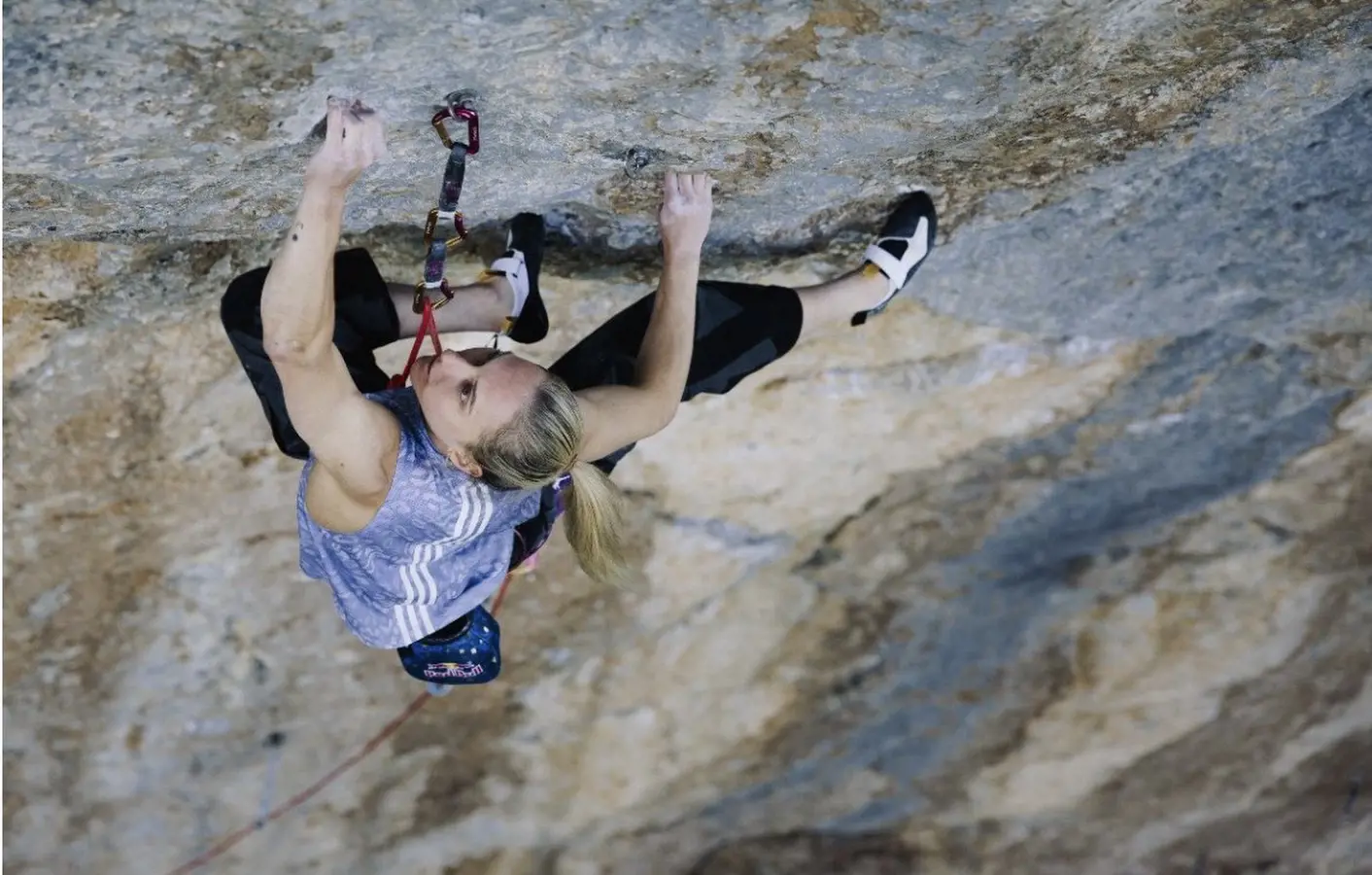
Janja Garnbret has added another milestone to her remarkable climbing career by becoming the first woman to climb Bibliographie (9b+) in Céüse, one of the harde…
364
48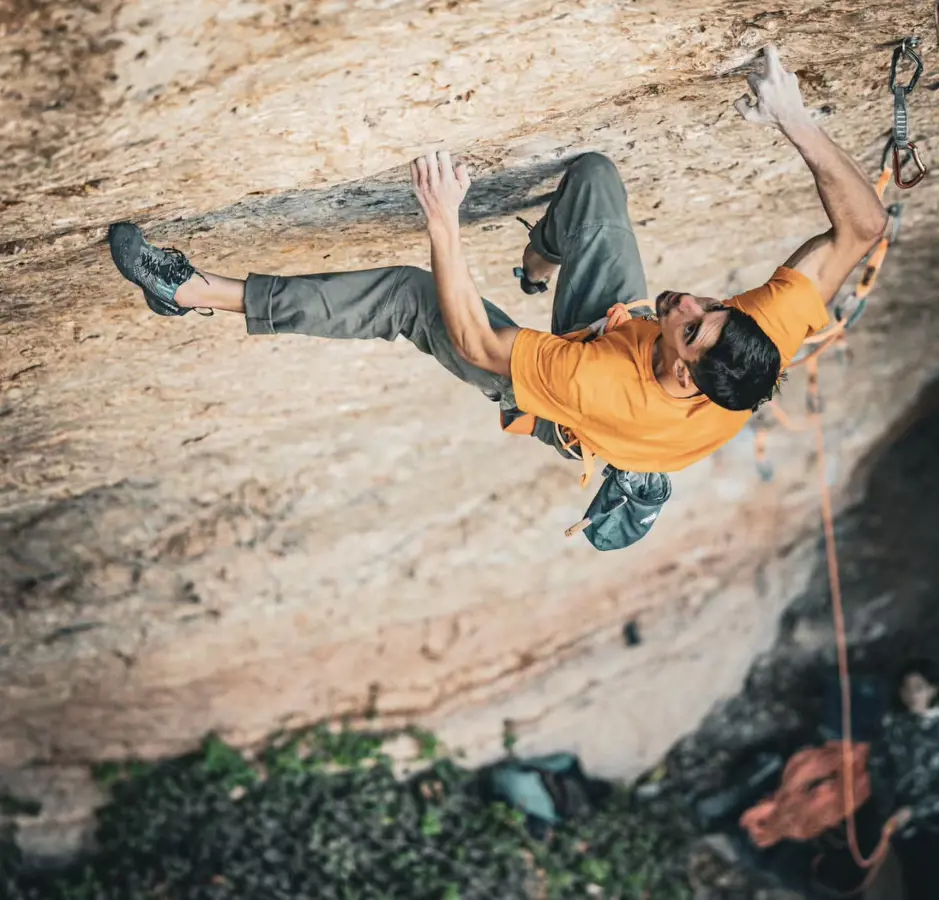
Jorge Diaz-Rullo reports on Instagram that he has made the first ascent of Cafe Colombia in Margalef. At 27, he’s already stacked four 9b+ sends and now he’s ad…
286
81
”I stopped focusing on competition bouldering after last year’s World Cup in Prague, partly because I can already feel it on my body, especially in my shoulders. The modern competition style, with a lot of jumping from one hold to another, is very demanding for the shoulders.
Outdoor bouldering is…
189
13Most commented
Jorge Diaz-Rullo reports on Instagram that he has made the first ascent of Cafe Colombia in Margalef. At 27, he’s already stacked four 9b+ sends and now he’s ad…
286
81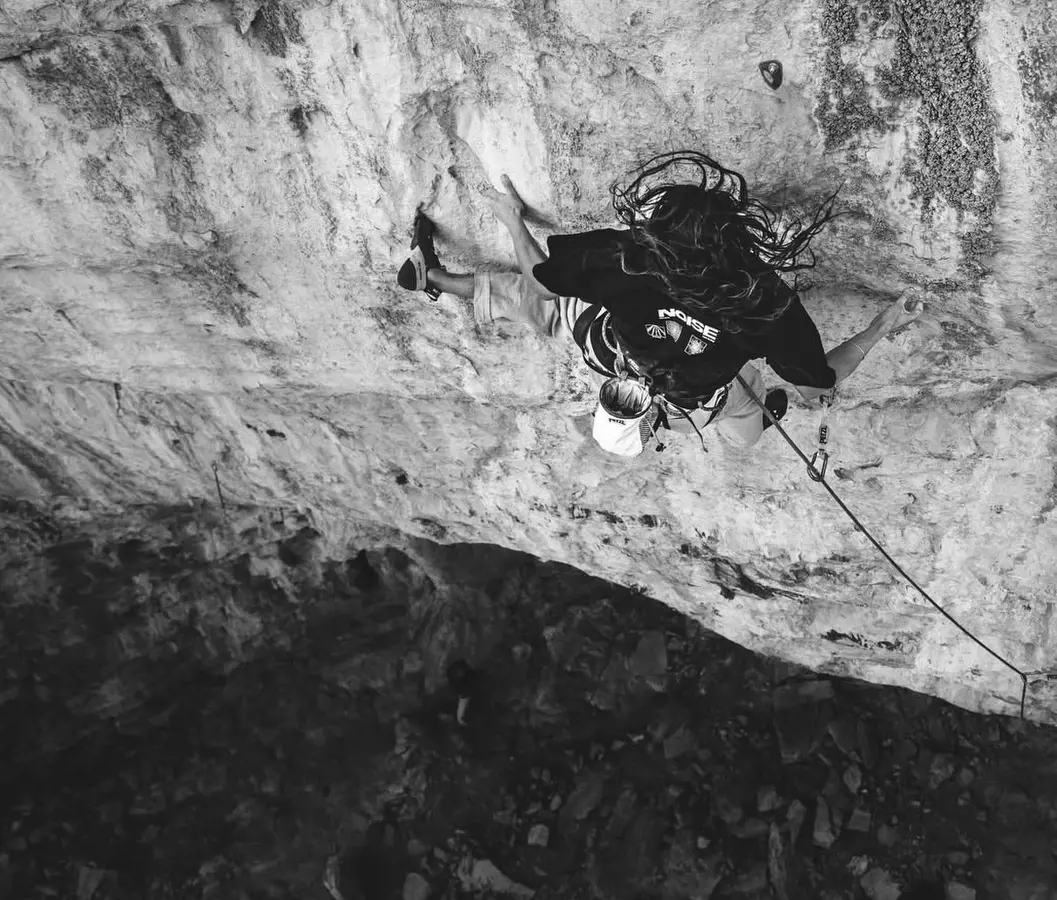
Sean Bailey reports on Instagram that he has done the first ascent of Duality of Man (9c) in Dry Canyon. ” After four total years and three seasons of climbing,…
163
69Jorge Diaz-Rullo elaborates on the reasons for him to suggest 9c for Café Colombia on Instagram, which he took down last week after projecting it for 240 sessio…
119
63