
NEWS
1 March 2021
Establishing routes over the ocean in Canada
Read more
1
1
28 February 2021
Mirage Gravitationnel 8c FA by Max Bertone (13)
Max Bertone has done two FAs in Bras de la Plaine which have been bolted by Thierry Caillaud, Addiction 8b+ and Mirage Gravitationnel 8c. "Maybe 8c+, but I don't know if adults can reduce the number of moves in the crux section. Two sessions of work to send this perfect endurance test! Thanks to Thierry Caillaud for bolting this incredible route!"
It should be mentioned that prior to Max's FA, it was thought that Mirage was 8c+. Also noteworthy is that he yesterday, on his second go, did the second ascent of A la recherche des prises perdues 8b/+, giving it a personal 8a+ grade.
The 13-year-old is a sibling to Oriane (15), the best girl in the world for a couple of years in competitions as well as on rock.
It should be mentioned that prior to Max's FA, it was thought that Mirage was 8c+. Also noteworthy is that he yesterday, on his second go, did the second ascent of A la recherche des prises perdues 8b/+, giving it a personal 8a+ grade.
The 13-year-old is a sibling to Oriane (15), the best girl in the world for a couple of years in competitions as well as on rock.
Read more
7
028 February 2021
47 % have almost not climbed this winter
The results of the 8a Poll, with almost 1 000 unique votes, "How has your Covid-19 training winter been like?", is quite chocking. 25 % did answer - "Almost no training at all" and 22 % answered - "Mainly hang boarding". In other words, half of the poll participants have had almost no climbing at all this winter. The big problem is of course that it seems many climbing gyms will remain closed until Easter but on the other side that the spring will make it possible to climb more outdoors.
25 % Almost no training
22 % Mainly hangboarding
16 % Mainly on private wall
14 % Mainly outdoors
06 % Mainly in a climbing gym
10 % A mix of everything
06 % Almost like last year
25 % Almost no training
22 % Mainly hangboarding
16 % Mainly on private wall
14 % Mainly outdoors
06 % Mainly in a climbing gym
10 % A mix of everything
06 % Almost like last year
Read more
0
028 February 2021
Vanitas 8C and 6 mm one-arm pull-up by Nomura Shinichiro
Shinichiro Nomura did his seventh 8C last month, Vanitas in Hourai, in just two sessions. "It required subtle footwork techniques rather than power, so I had a lot of frustration sometimes."
Since last year, Nomura is a full time professional climber. "My long term goal in climbing is sending difficult routes over 8C/V15 around the world and making FAs. I have three projects now. I’m sure one of them must be over 8C/V15 having really hard moves. Its size is huge and the moves required are also awesome. Another goal is making moves that are said to be impossible being short, in order to give hopes for those who don’t have long reach. My height is 159 cm."
In his latest Insta post, he is seen doing two one-arm pull-ups on a 6 mm edge. "I just concentrate on moving the first joint of fingers. Next is a 4 mm one hand pull up. My long time goal is a 1mm one hand pull-up! I’ve been climbing boulders indoors in order to overcome my weak point (reach), so I guess such training enrich my finger power consequently. I think many years of efforts have brought me the result.
I have climbed for 16 years now. I climb 5 or 6 times a week in a gym and I take about 3 hours in each climbing session. Also, I go outside climbing once in two weeks."
Interestingly, it takes 1.5 hours for him to go to the nearest climbing area by car, and it takes four hours to reach his current projects as well as his latest 8C.
Since last year, Nomura is a full time professional climber. "My long term goal in climbing is sending difficult routes over 8C/V15 around the world and making FAs. I have three projects now. I’m sure one of them must be over 8C/V15 having really hard moves. Its size is huge and the moves required are also awesome. Another goal is making moves that are said to be impossible being short, in order to give hopes for those who don’t have long reach. My height is 159 cm."
In his latest Insta post, he is seen doing two one-arm pull-ups on a 6 mm edge. "I just concentrate on moving the first joint of fingers. Next is a 4 mm one hand pull up. My long time goal is a 1mm one hand pull-up! I’ve been climbing boulders indoors in order to overcome my weak point (reach), so I guess such training enrich my finger power consequently. I think many years of efforts have brought me the result.
I have climbed for 16 years now. I climb 5 or 6 times a week in a gym and I take about 3 hours in each climbing session. Also, I go outside climbing once in two weeks."
Interestingly, it takes 1.5 hours for him to go to the nearest climbing area by car, and it takes four hours to reach his current projects as well as his latest 8C.
Read more
3
228 February 2021
Tina J Hafsaas talks about eating disorder
Tina Johnsen Hafsaas, three times a winner in the Euro Youth Cup and #4 in the WC in Chamonix in 2017, has spoken out in Norwegian climbing media, together with Magnus Midtbö, about their eating disorder. We asked Tina if she could share some thoughts on 8a. (c) Arc’teryx and Mattis G. Husby
”Growing up I felt like all the climbers I knew and looked up to were having a difficult relationship with food. I thought it was, as big part of the game, as training endurance. I watched my first world cup at 14, at the same time as I was competing as an up and coming international youth competitor. I was fueled with impressions, and the better I got in youth the better (and thinner) the people I looked up to. I guess as a teenager you shouldn’t really compare your body to adults who have trained for a decade, but when your idols looked like what they did to me it definitely made an impact on what I believed our sport was about. I think not talking about weight, training, food and consequences makes it worse, because young athletes draw conclusions of their own. Adult climbers using weight to peak performance is normal, as it is in every elite sport, but we should talk more about context. Being young you want to be the best now right away, but by having a more long-term mindset you realize that pushing your body too far with malnutrition as a teen you actually lower your potential long-term.”
What can be done to reduce the problem?
I believe for competition climbing the route setters have the power. It has been a major change in style in the last years forcing athletes to be more powerful. The massive change in climbing holds has obviously contributed to the change of style as well. The federations can always do more and better. Thanks to a lot of brave people it’s getting talked about more and we should keep it going, answer questions openly and honestly and hopefully contribute to making the sport easier to grow up in.
For rock, it’s definitely different because there are no federations or rules to follow. You can always find a route that fits your style and lose as much weight as you want just to climb it. But losing weight for most people is not just about that one climb. It’s easy to get trapped in a world of misery and sadness and no climb is worth that. I hope that climbers sharing their stories make other climbers more aware of the consequences of pushing it too far and how easy it is to lose control.
”Growing up I felt like all the climbers I knew and looked up to were having a difficult relationship with food. I thought it was, as big part of the game, as training endurance. I watched my first world cup at 14, at the same time as I was competing as an up and coming international youth competitor. I was fueled with impressions, and the better I got in youth the better (and thinner) the people I looked up to. I guess as a teenager you shouldn’t really compare your body to adults who have trained for a decade, but when your idols looked like what they did to me it definitely made an impact on what I believed our sport was about. I think not talking about weight, training, food and consequences makes it worse, because young athletes draw conclusions of their own. Adult climbers using weight to peak performance is normal, as it is in every elite sport, but we should talk more about context. Being young you want to be the best now right away, but by having a more long-term mindset you realize that pushing your body too far with malnutrition as a teen you actually lower your potential long-term.”
What can be done to reduce the problem?
I believe for competition climbing the route setters have the power. It has been a major change in style in the last years forcing athletes to be more powerful. The massive change in climbing holds has obviously contributed to the change of style as well. The federations can always do more and better. Thanks to a lot of brave people it’s getting talked about more and we should keep it going, answer questions openly and honestly and hopefully contribute to making the sport easier to grow up in.
For rock, it’s definitely different because there are no federations or rules to follow. You can always find a route that fits your style and lose as much weight as you want just to climb it. But losing weight for most people is not just about that one climb. It’s easy to get trapped in a world of misery and sadness and no climb is worth that. I hope that climbers sharing their stories make other climbers more aware of the consequences of pushing it too far and how easy it is to lose control.
Read more
5
027 February 2021
Kraftplatzl 9a by Christof Rauch
Christof Rauch, who has done more than 800 boulders 8A and harder, out of which eleven 8C's, has done his third 9a, Kraftplatzl in Berglsteiner See. Amazingly, Christof is just 26 and is working full time.
"Epic fight! Had to dig really deep on the last few moves! Perfect power endurance testpiece from David Lama! Took me two days a few years ago and three days this year. As typical for me, I did it on the last try of the day. Thanks to Tobi for the support!"
You also did an 8c+ two weeks ago but no boulders last month? Why this change of focus and what is next?
"We have really good route climbing in Tyrol and most of the boulders I'm psyched for are still wet/covered with snow. I have no big projects at the moment, just a few routes that I checked out recently."
"Epic fight! Had to dig really deep on the last few moves! Perfect power endurance testpiece from David Lama! Took me two days a few years ago and three days this year. As typical for me, I did it on the last try of the day. Thanks to Tobi for the support!"
You also did an 8c+ two weeks ago but no boulders last month? Why this change of focus and what is next?
"We have really good route climbing in Tyrol and most of the boulders I'm psyched for are still wet/covered with snow. I have no big projects at the moment, just a few routes that I checked out recently."
Read more
6
026 February 2021
Kyra Condie Olympic training interview
Kyra Condie started to climb at age 11 and almost directly it was discovered that she had severe idiopathic scoliosis. In 2010, she did spinal fusion surgery to correct her more than 70-degree curvature and the doctors did not think she could continue to climb. In 2019, she qualified to Tokyo in Toulouse by being #7 which was quite a sensation as she previously the same year, only once had been Top-13 out of 18 World Cups. Last December she was listed on the Forbes30 under 30 list.
How much does the spinal fusion surgery affect your climbing nowadays?
Basically, it affects my climbing all the time and it is why I climb the way I do. The entire section of my back can not bend or twist at all. I think if you watch me climb. I tend to stay really straight on the wall. I do not twist a ton and I do not climb super gracefully. I usually have to muscle through moves that most people would be able to bend or twist and that makes it looks nicer.
Could you please explain a normal training week?
Let’s see, a normal training week consists of five days of training and two full rest days. Each day I have to do double sessions where one session is a workout and the other session is climbing. Sometimes the workout it weights or cardio, sometimes it’s more climbing-specific like campusing or hangboarding! We also make sure to do speed once a week as well as specifically competition boulders
Who are your training partners and what do they mean to you?
I’ve been training a lot with Allison Vest who’s also my roommate! She moved down from Canada so we could train together. I also have been on the same schedule as Nathaniel Coleman so we’ve been doing a lot together, which I think is awesome for our team camaraderie and for the psych! There’s also a big group of younger girls here who are incredibly psyched and motivate me every day!
How do plan to compete before Tokyo?
The plan is to go to as many world cups that I can go to safely! As well as continue doing mock competition rounds and prepare as best as possible in Salt Lake.
How much does the spinal fusion surgery affect your climbing nowadays?
Basically, it affects my climbing all the time and it is why I climb the way I do. The entire section of my back can not bend or twist at all. I think if you watch me climb. I tend to stay really straight on the wall. I do not twist a ton and I do not climb super gracefully. I usually have to muscle through moves that most people would be able to bend or twist and that makes it looks nicer.
Could you please explain a normal training week?
Let’s see, a normal training week consists of five days of training and two full rest days. Each day I have to do double sessions where one session is a workout and the other session is climbing. Sometimes the workout it weights or cardio, sometimes it’s more climbing-specific like campusing or hangboarding! We also make sure to do speed once a week as well as specifically competition boulders
Who are your training partners and what do they mean to you?
I’ve been training a lot with Allison Vest who’s also my roommate! She moved down from Canada so we could train together. I also have been on the same schedule as Nathaniel Coleman so we’ve been doing a lot together, which I think is awesome for our team camaraderie and for the psych! There’s also a big group of younger girls here who are incredibly psyched and motivate me every day!
How do plan to compete before Tokyo?
The plan is to go to as many world cups that I can go to safely! As well as continue doing mock competition rounds and prepare as best as possible in Salt Lake.
Read more
3
026 February 2021
Work steep dynamic cruxes with rope drag
Doing a steep dyno means that your feet cut loose and it is all about stopping the swing. The most effective way of doing so while working the crux is simply by having tight belay in order to reduce the swing. The belayer can then give more and more rope for each try, until you make it without assistance from the belayer. The advanced way of hanging on, with no rope drag, is by trying to raise the knuckles if possible. This is very difficult, although it is done more or less automatically by top climbers.
Once you try to send, you can make it easier for yourself by not skipping clips or making them too long, as this will reduce the rope drag from the friction of the quickdraws. It could also be wise to tell your belayer to not unclip the first drawer until you have passed the dyno crux.
From the other side of the coin, if the belayer creates rope drag by mistake as the rope gets stuck in the belay device or similar, such an ascent is invalid even if it is not your fault. You should, furthermore, not engage in tactical choices such as asking your belayer to stand far away from the first clip or clip directly into just one carabiner the whole way.
One could also bear in mind that a thin and new rope creates less rope drag than an older, thicker one.
Feeing out enough rope in the start could result in a ground fall or hitting the wall. From a safety perspective, it is thus ethically ok to have two or even three quickdraws pre-clipped in such situations.
Once you try to send, you can make it easier for yourself by not skipping clips or making them too long, as this will reduce the rope drag from the friction of the quickdraws. It could also be wise to tell your belayer to not unclip the first drawer until you have passed the dyno crux.
From the other side of the coin, if the belayer creates rope drag by mistake as the rope gets stuck in the belay device or similar, such an ascent is invalid even if it is not your fault. You should, furthermore, not engage in tactical choices such as asking your belayer to stand far away from the first clip or clip directly into just one carabiner the whole way.
One could also bear in mind that a thin and new rope creates less rope drag than an older, thicker one.
Feeing out enough rope in the start could result in a ground fall or hitting the wall. From a safety perspective, it is thus ethically ok to have two or even three quickdraws pre-clipped in such situations.
Read more
0
025 February 2021
Elias Iagnemma doing Gioia 8C/+
Elias Iagnemma has previoulsy commented to 8a, "I only used the new method with the knee pads but it exactly respects the line and the original grips." Christian Core put it up in 2008 but around 2015 a new crimper appeared. Previously also Adam Ondra, Nalle Hukkataival and Niccolo Ceria have repeated it.
Read more
6
525 February 2021
BMI monitoring by IFSC
During the last month, several top climbers have come forward talking about their eating disorder. IFSC have for several years been aware of the problem and there is a medical commission which has the goal, "to protect Sport Climbing from deliberately induced underweight climbers - associated with eating disorders it may lead to severe health problems." In an article, they talk about BMI regulations etc., which apply to males below 18.5 and females below 17.5 BMI.
"The BMI is an easy manageable screening tool to detect a group of underweight athletes. It is calculated by dividing the body weight by the square of the height (BMI = m/h²)."
Here are some mathematical examples of differently sized climbers that according to IFSC are within the critical margins.
185 cm and 63 kg = 18.4
180 cm and 60 kg = 18.5
175 cm and 56.5 kg = 18.4
170 cm and 53.5 kg = 18.4
170 cm and 50.5 kg = 17.5
165 cm and 47.5 kg = 17.4
160 cm and 44.6 kg = 17.4
IFSC has done BMI screenings during 13 World Cups since 2012, monitoring semi-finalists. In total, 34 athletes were below the critical margin with almost all cases until 2015.
"A letter is sent to athletes and National Federations if the BMI is critical. The IFSC can show up, inform and educate, but National Federations have the responsibility to support the affected athletes with medical, psychological and nutritional help."
Interestingly, no BMI tests were done in 2019 and never on the youngsters. It is also said that in 2020 a slight adjustment was needed as the previous margins "did not reflect the whole critical group of athletes."
I think that IFSC has done a good job introducing this and handing over the BMI "problem" to the federations, as a low BMI should only be considered an indication of an earing disorder. At the same time, IFSC could start screening Youth Cups as it is normally there the underweight begins. One reason why IFSC found fewer climbers below the critical BMI regulations is probably due to reducing climbing time in Lead and also that some skinny climbers also started to train Speed and Boulder due to the Olympic format. However, as we will probably see more climbers focusing only on Lead in the coming years, it would be great that IFSC started also to monitor Youth Cups. Many of the climbers that lately have come forward talking about their eating disorder problems express that it started being a teenager.
"The BMI is an easy manageable screening tool to detect a group of underweight athletes. It is calculated by dividing the body weight by the square of the height (BMI = m/h²)."
Here are some mathematical examples of differently sized climbers that according to IFSC are within the critical margins.
185 cm and 63 kg = 18.4
180 cm and 60 kg = 18.5
175 cm and 56.5 kg = 18.4
170 cm and 53.5 kg = 18.4
170 cm and 50.5 kg = 17.5
165 cm and 47.5 kg = 17.4
160 cm and 44.6 kg = 17.4
IFSC has done BMI screenings during 13 World Cups since 2012, monitoring semi-finalists. In total, 34 athletes were below the critical margin with almost all cases until 2015.
"A letter is sent to athletes and National Federations if the BMI is critical. The IFSC can show up, inform and educate, but National Federations have the responsibility to support the affected athletes with medical, psychological and nutritional help."
Interestingly, no BMI tests were done in 2019 and never on the youngsters. It is also said that in 2020 a slight adjustment was needed as the previous margins "did not reflect the whole critical group of athletes."
I think that IFSC has done a good job introducing this and handing over the BMI "problem" to the federations, as a low BMI should only be considered an indication of an earing disorder. At the same time, IFSC could start screening Youth Cups as it is normally there the underweight begins. One reason why IFSC found fewer climbers below the critical BMI regulations is probably due to reducing climbing time in Lead and also that some skinny climbers also started to train Speed and Boulder due to the Olympic format. However, as we will probably see more climbers focusing only on Lead in the coming years, it would be great that IFSC started also to monitor Youth Cups. Many of the climbers that lately have come forward talking about their eating disorder problems express that it started being a teenager.
Read more
0
1 Favorites
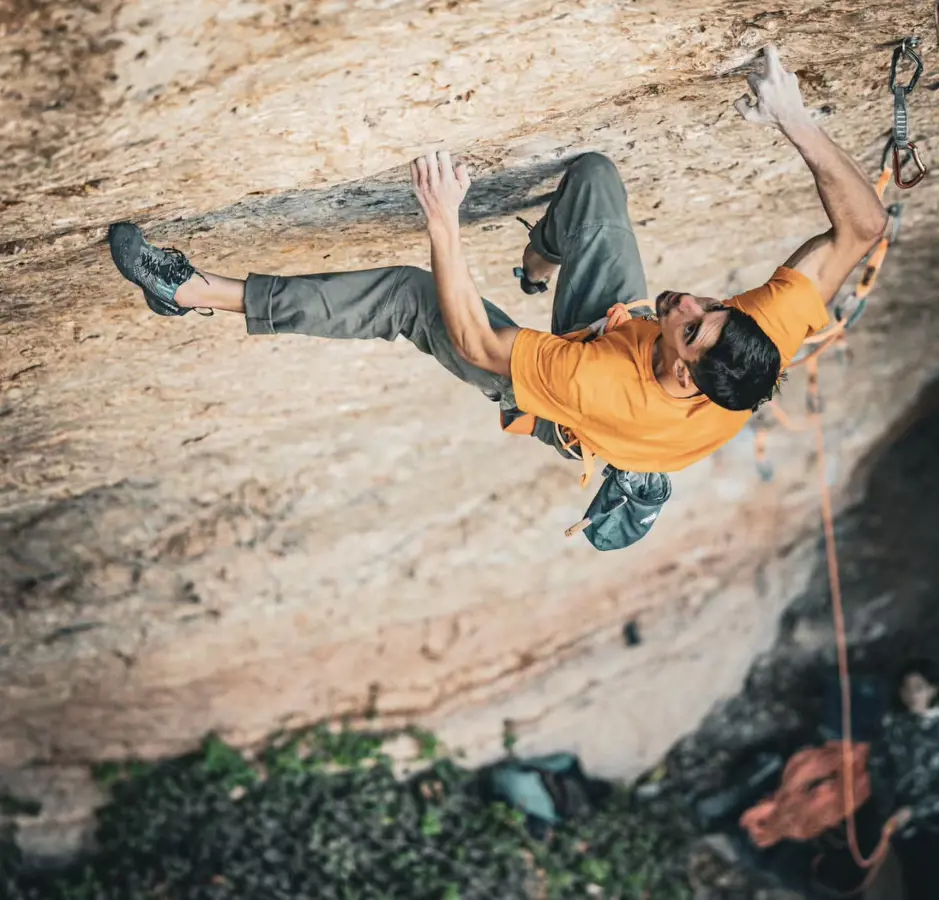
Jorge Diaz-Rullo reports on Instagram that he has made the first ascent of Cafe Colombia in Margalef. At 27, he’s already stacked four 9b+ sends and now he’s ad…
285
81
”I stopped focusing on competition bouldering after last year’s World Cup in Prague, partly because I can already feel it on my body, especially in my shoulders. The modern competition style, with a lot of jumping from one hold to another, is very demanding for the shoulders.
Outdoor bouldering is…
189
13Sean Bailey reports on Instagram that he has done the first ascent of Duality of Man (9c) in Dry Canyon. ” After four total years and three seasons of climbing,…
163
69 Most commented
Jorge Diaz-Rullo reports on Instagram that he has made the first ascent of Cafe Colombia in Margalef. At 27, he’s already stacked four 9b+ sends and now he’s ad…
285
81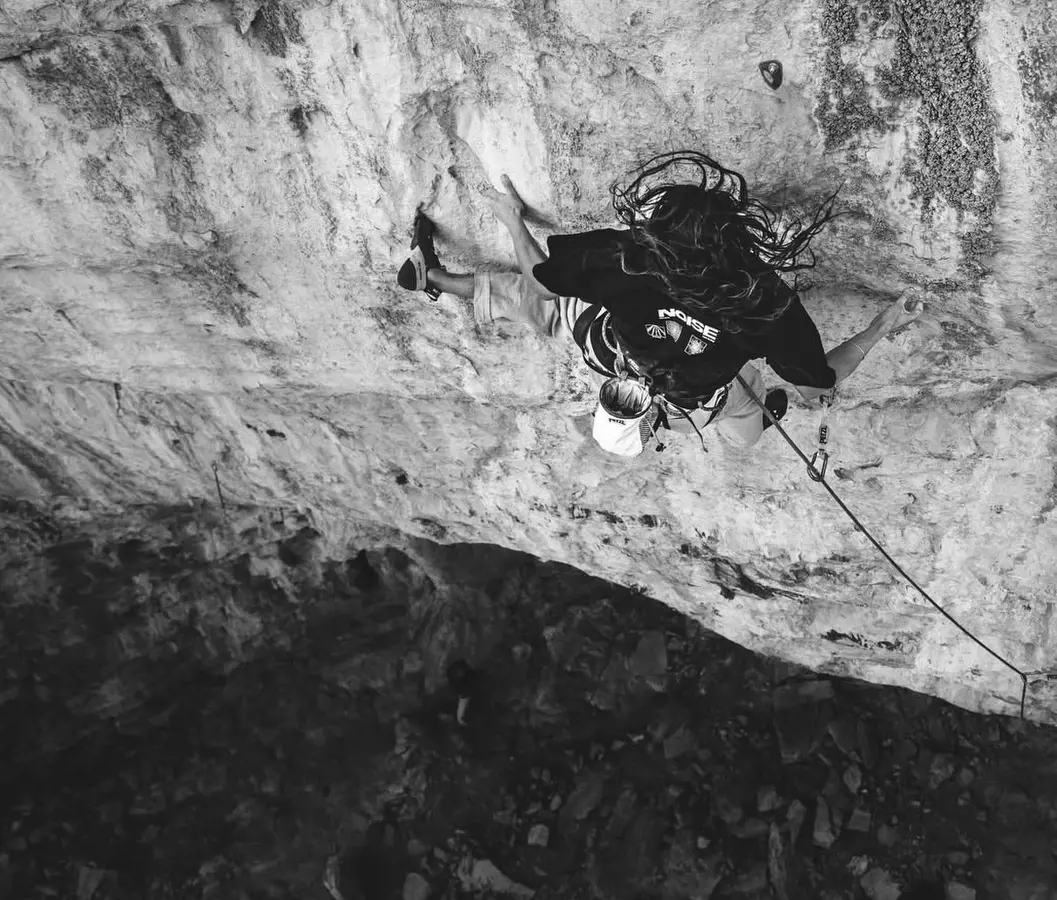
Sean Bailey reports on Instagram that he has done the first ascent of Duality of Man (9c) in Dry Canyon. ” After four total years and three seasons of climbing,…
163
69Jorge Diaz-Rullo elaborates on the reasons for him to suggest 9c for Café Colombia on Instagram, which he took down last week after projecting it for 240 sessio…
119
63