
NEWS
26 April 2021
We need bolting courses
I have put up some 500 routes and sure I have also placed some bad bolts which were later moved. Lately, I have seen more and more bad bolting around Göteborg which makes me think we need bolting courses. Drilling is easy, and so is hammering and tightening the bolt - but bolting routes involves other tasks that require substantial skills.
1. Safety
The most common mistake I see is easy routes with run-outs between the first bolts. The bolter must respect that the specific route is the first one somebody may lead and belay outdoors. Furthermore, holds can break and if the ground is not even, the bolter should place the bolts so that an injury could be avoided even if a hold breaks.
2. Onsight
"You need a long quickdraw in the fourth bolt" is not a good description to have in a topo. In such a case, one more bolt should be placed or the fourth bolt should be moved. If we are talking an 8a and the ninth bolt is a bit high, that is ok, but for a 5c for which you need to be 170 cm tall to use the best clipping position from a ledge, that bolt is placed too high for an onsight attempt.
3. Lines and Variations etc
Before you start bolting, make sure that you climb it several times together with your friends in order to find the best line. If you later would like to place a route next to it, think about how much quality the original line loses. If it is not your line, make sure you talk with the first bolter. An option is always to just create a new start or finish instead of squeezing in a route that interferes with the neighbouring routes.
4. Anchors
Clipping the anchor should not be the crux. Instead, move the anchor downwards. On the other hand, if the top has some nice moves that can take you up to a no-hands rest position and, even so, there is a possibility to place the anchor higher up, this is always the best option. Also make sure that you place the anchor so that you avoid as much rope swing as possible. In some cases, if the route gets much harder at the top, consider placing a first anchor, like many of the hardest routes have.
1. Safety
The most common mistake I see is easy routes with run-outs between the first bolts. The bolter must respect that the specific route is the first one somebody may lead and belay outdoors. Furthermore, holds can break and if the ground is not even, the bolter should place the bolts so that an injury could be avoided even if a hold breaks.
2. Onsight
"You need a long quickdraw in the fourth bolt" is not a good description to have in a topo. In such a case, one more bolt should be placed or the fourth bolt should be moved. If we are talking an 8a and the ninth bolt is a bit high, that is ok, but for a 5c for which you need to be 170 cm tall to use the best clipping position from a ledge, that bolt is placed too high for an onsight attempt.
3. Lines and Variations etc
Before you start bolting, make sure that you climb it several times together with your friends in order to find the best line. If you later would like to place a route next to it, think about how much quality the original line loses. If it is not your line, make sure you talk with the first bolter. An option is always to just create a new start or finish instead of squeezing in a route that interferes with the neighbouring routes.
4. Anchors
Clipping the anchor should not be the crux. Instead, move the anchor downwards. On the other hand, if the top has some nice moves that can take you up to a no-hands rest position and, even so, there is a possibility to place the anchor higher up, this is always the best option. Also make sure that you place the anchor so that you avoid as much rope swing as possible. In some cases, if the route gets much harder at the top, consider placing a first anchor, like many of the hardest routes have.
Read more
8
1
26 April 2021
Two 8A+ by Alex Puccio
Alex Puccio is back on track after a mental breakdown, due to Covid-19, and has done two 8A and two 8A+ in the last two weeks.
8A+, Temper Tantrum in Elevenmile Canyon: "Sent second try after doing anger management. Last move was even wilder for me since I was a little bit more tired. Hard cool swing on one hand and one foot hold on the arete and it’s the last move. Hold on for the ride or you will pay for it! :0."
8A+, Burnt in Kraft Boulders: "Soooo hoootttt out! Climbing at 9:30pm with lights and it’s still 80 degrees!"
This 157 cm tall 31-year-old has the most impressive female bouldering tick list with 225 8A and harder including eight 8B+. She has also been #1 in the 8a ranking game for almost ten years straight, even if she has had some bad injuries. Alex started out as a competition climber, and in 2006 she won the USA Nationals for the first time, out of eleven! In 2009 she won her first World Cup, and in 2018 she won again. She has also gotten silver in the World Championship in 2014. In other words, altogether Alex is the best female boulderer in history.
8A+, Temper Tantrum in Elevenmile Canyon: "Sent second try after doing anger management. Last move was even wilder for me since I was a little bit more tired. Hard cool swing on one hand and one foot hold on the arete and it’s the last move. Hold on for the ride or you will pay for it! :0."
8A+, Burnt in Kraft Boulders: "Soooo hoootttt out! Climbing at 9:30pm with lights and it’s still 80 degrees!"
This 157 cm tall 31-year-old has the most impressive female bouldering tick list with 225 8A and harder including eight 8B+. She has also been #1 in the 8a ranking game for almost ten years straight, even if she has had some bad injuries. Alex started out as a competition climber, and in 2006 she won the USA Nationals for the first time, out of eleven! In 2009 she won her first World Cup, and in 2018 she won again. She has also gotten silver in the World Championship in 2014. In other words, altogether Alex is the best female boulderer in history.
Read more
2
926 April 2021
Aaron 8c by Duygu Haug
Duygu Haug, who runs the Josito Camp in Geyik Bayiri with her husband Tobias, has done her second 8c Aaron, one year after a bicep surgery.
"It was a magical moment clipped the chain and the last year has passed through my eyes like a movie stripe at that moment. My torn biceps injury, 1-year break of climbing, trying to find another hobby to be happy, start crawling to climb well again and how patient I was, so on... I am proud of myself that I climb this miracle line today and I am thankful to my husband that he was always with me on this journey and bolted this amazing line." (c) David Kaszlikowski
How did Covid affect your climbing camp?
This season was really different from the other seasons. We didn’t expect to have a lot of guests this season because of the covid situation and travelling restrictions but it was the opposite. Most of the people stay in the camp since October from different countries. They are working and studying online living directly under the rocks. Most of the people have residence permission now in Turkey. Good to see for us that people became like a family here in these hard times
"It was a magical moment clipped the chain and the last year has passed through my eyes like a movie stripe at that moment. My torn biceps injury, 1-year break of climbing, trying to find another hobby to be happy, start crawling to climb well again and how patient I was, so on... I am proud of myself that I climb this miracle line today and I am thankful to my husband that he was always with me on this journey and bolted this amazing line." (c) David Kaszlikowski
How did Covid affect your climbing camp?
This season was really different from the other seasons. We didn’t expect to have a lot of guests this season because of the covid situation and travelling restrictions but it was the opposite. Most of the people stay in the camp since October from different countries. They are working and studying online living directly under the rocks. Most of the people have residence permission now in Turkey. Good to see for us that people became like a family here in these hard times
Read more
16
125 April 2021
Només per valents 9a FA by Ramonet (39)
Ramon Julian has done the FA of Només per valents 9a in Fussimanya. In total, he has done 20 FAs 9a or 9a+ since 2002. It should also be mentioned that several of his FAs have been upgraded up to two grades. (c) Alba Capdevila
The 39-year-old has won 21 Lead World Cups and two World Championships. By checking his 8a scorecard as well as his Insta, we can see that almost all his climbs the last year have been FAs.
The 39-year-old has won 21 Lead World Cups and two World Championships. By checking his 8a scorecard as well as his Insta, we can see that almost all his climbs the last year have been FAs.
Read more
18
525 April 2021
Megos upgrades Ramonet's 9a to 9b
Alex Megos reports on Insta that he has done the first repeat of Ramon Julian Puigblanque's Mejorando Imagen in Margalef. The FA was done in 2013 after seven tries during three days and the 159 cm tall, who is one of the best ever male Lead competition climbers, graded it 9a. It had been bolted by Iker Pou a couple of years earlier and he had thought it was 9a+ or 9b. (c) Ken Etzel
It should be mentioned that several other Ramonet FAs have been upgraded like La Reina Mora from 8c to 9a. Another example is his FA of La Rambla 9a+ which was put up with a direct harder straight finish, compared to how it is climbed into the neighbouring route today. Several other of his FAs have never been repeated. In total, he has 38 9a's and 13 9a+' in his scorecard, out of which 20 FAs. As a matter of a fact, all his last seven 9a and 9a+ since 2015, have all been FAs.
Megos says he was close to having done it on his third day but then it took him another week to finish it off. "Pulling up on the draws I decided to give it one more try to at least drive back home with bleeding fingers. I lowered to the ground, my expectations were nonexistent. I had no chance to climb it on my 6th try. I climbed so badly, I barely stuck the crux move and then I kept climbing badly to the top."
It should be mentioned that several other Ramonet FAs have been upgraded like La Reina Mora from 8c to 9a. Another example is his FA of La Rambla 9a+ which was put up with a direct harder straight finish, compared to how it is climbed into the neighbouring route today. Several other of his FAs have never been repeated. In total, he has 38 9a's and 13 9a+' in his scorecard, out of which 20 FAs. As a matter of a fact, all his last seven 9a and 9a+ since 2015, have all been FAs.
Megos says he was close to having done it on his third day but then it took him another week to finish it off. "Pulling up on the draws I decided to give it one more try to at least drive back home with bleeding fingers. I lowered to the ground, my expectations were nonexistent. I had no chance to climb it on my 6th try. I climbed so badly, I barely stuck the crux move and then I kept climbing badly to the top."
Read more
15
023 April 2021
Ça Chauffe 9a by James Pearson
James Pearson, one of the best trad climbers in the world, has done his third 9a Ça Chauffe in Seynes put up by Tanguy Mérard, video. (c) Raphaël Fourau/Wild Country
"At least on paper, Ça Chauffe (9a) should have suited me pretty well, and after climbing through the crux on my second day of red-points, I figured it would go down pretty quick. There was just one little problem– I couldn't do one of the moves in the upper 8b! With time, perseverance, lots of falls, and even more hand cream, eventually, things fell into place! This route was an excellent reminder of just how crazy climbing can be and how everybody is different."
The 36-year-old made his first 8a news headline 17 years ago and a few years later he flashed three 8B's and did his first 9a. Over the years, including videos, the Brit has made 100+ news on 8a.
"At least on paper, Ça Chauffe (9a) should have suited me pretty well, and after climbing through the crux on my second day of red-points, I figured it would go down pretty quick. There was just one little problem– I couldn't do one of the moves in the upper 8b! With time, perseverance, lots of falls, and even more hand cream, eventually, things fell into place! This route was an excellent reminder of just how crazy climbing can be and how everybody is different."
The 36-year-old made his first 8a news headline 17 years ago and a few years later he flashed three 8B's and did his first 9a. Over the years, including videos, the Brit has made 100+ news on 8a.
Read more
3
023 April 2021
Baba Yaga 9a by Samuel Ometz
Samuel Ometz, who previously has done 15 boulders 8B+ and harder, has done his eight 9a and the first repeat of Baba Yaga in Val Bavona. Video on his Insta.
"Couldn't choose between bouldering and rope climbing so I tried this route from Giuliano Cameroni which is like bouldering with a rope :) it's an aesthetic line following an obvious arete, pretty technical with many tricky heel hooks even though it's steep. Used a kneepad for the relatively easier section that Giul didn't use. Also started the climb a bit lower adding 1 hard move because shorter people (<170?) can't reach the original start.
Felt a bit easier than other short 9a's I did, but low-end 9a might be it. 7 moves ~V13 into 15 moves ~V10 into easier topout."
"Couldn't choose between bouldering and rope climbing so I tried this route from Giuliano Cameroni which is like bouldering with a rope :) it's an aesthetic line following an obvious arete, pretty technical with many tricky heel hooks even though it's steep. Used a kneepad for the relatively easier section that Giul didn't use. Also started the climb a bit lower adding 1 hard move because shorter people (<170?) can't reach the original start.
Felt a bit easier than other short 9a's I did, but low-end 9a might be it. 7 moves ~V13 into 15 moves ~V10 into easier topout."
Read more
1
023 April 2021
Use rope drag to work steep routes
Steep routes often involve a dyno where the feet cut loose. This can often be avoided by rope drag, i.e. the belayer stops the swing by not feeding out rope. It is kind of complicated but when it is done correctly, it will facilitate working and doing the move. Trying to work an overhanging route on top rope or even just the crux with the quick draw above clipped in is much more difficult.
Once you have done the hard part and clipped in, it is better to unclip and start from below again. To downclimb, once you have unclipped, is also much easier with some rope drag, i.e. the belayer is pulling the rope. This is very advanced but a good technique that also can be used stripping a steep route from quick draws. The closer to the quick draw the climber has come, the more rope drag can be used. Do, however, make sure that if the climber falls, you stop pulling and instead give a soft fall.
Another tip, in order to place the next quickdraw or reach the next holds, is to temporarily clip the rope into the upper carabiner of your quickdraw and to have a very tight knot. This will make you reach possibly 20 cm further. Another option is to clip in the quickdraw directly into your belay loop, meaning that you possibly can reach the next quickdraw and put in the rope. Note also that there are special stiff 50 cm long quickdraws that could help you reach the next bolt.
Remember also that rope drag on a dyno reducing the swing means that the ascent is not valid, even if it is only the belayers mistake. Sometimes you can actually see pictures and videos of ascents with rope drag.
Once you have done the hard part and clipped in, it is better to unclip and start from below again. To downclimb, once you have unclipped, is also much easier with some rope drag, i.e. the belayer is pulling the rope. This is very advanced but a good technique that also can be used stripping a steep route from quick draws. The closer to the quick draw the climber has come, the more rope drag can be used. Do, however, make sure that if the climber falls, you stop pulling and instead give a soft fall.
Another tip, in order to place the next quickdraw or reach the next holds, is to temporarily clip the rope into the upper carabiner of your quickdraw and to have a very tight knot. This will make you reach possibly 20 cm further. Another option is to clip in the quickdraw directly into your belay loop, meaning that you possibly can reach the next quickdraw and put in the rope. Note also that there are special stiff 50 cm long quickdraws that could help you reach the next bolt.
Remember also that rope drag on a dyno reducing the swing means that the ascent is not valid, even if it is only the belayers mistake. Sometimes you can actually see pictures and videos of ascents with rope drag.
Read more
0
022 April 2021
Keen Roof 8B by Molly Thompson-Smith
Molly Thompson-Smith, #3 in the Euro Lead Championship last November, has done her first 8B, Keen Roof in Peak District. Amazing is that in March she did her third ever 8A and that she only needed two sessions for the well-confirmed 8B. "Maybe soft? Or just really my style? I don't really know what 8B should feel like!"
Video on her Insta.
The 23-year-old has been an active competition climber since 2011. In 2017, she had her best year ever when she was #7 overall in the Lead World Cup.
So could you please describe the boulder and your feeling once you felt it could down quickly?
I think it suited me perfectly - athletic moves made easier with strong fingers. I was pretty confident I could do it soon & thought all I needed was a cooler day (I first tried it in the sun last weekend). Some easier climbing leads into a backwards snatchy move off of a 2 finger pocket and crossly undercut. Then it’s pretty hard to hold the release, before traversing the lip to the finishing jug. I was quite relieved it did go down in my second session, as I’ve had this experience before of being confident I can send a climb quickly, and it turns into a several session epic. In my first session I tried the big backwards slap, as that was the crux move. After working out the best foot positions for every move I then climbed from the crux move to the top. I decided to come back when the conditions were cooler. Today I perfected the tor sequence leading into the crux move and reminded myself of all the body positioning before trying from the start. Then it took me 3 goes from the start before I did it :) I was really excited as I thought I’m in pretty good physical shape, and climbing a boulder like this so quickly kinda confirmed that to me!
How come you picked up hard bouldering just recently after a couple of years break?
Jan, (Hojer, her partner since 3.5 years), decided he wanted to be a sport climber, so we mainly went on sport climbing trips the last couple of years😂. When I was at home in the U.K., I was focused on training for world cups and didn’t believe that comp training and rock climbing could go well together The last couple of weeks have been great to see that they both can complement each other really well, when planned in properly so I think I’ll carry on doing that. Living a 10 min drive from the Peak District & having tonnes of harder boulders to try just made it really easy to get out after a gym session or by myself. I’d like to start doing some more sport if I can find some keen partners!
Video on her Insta.
The 23-year-old has been an active competition climber since 2011. In 2017, she had her best year ever when she was #7 overall in the Lead World Cup.
So could you please describe the boulder and your feeling once you felt it could down quickly?
I think it suited me perfectly - athletic moves made easier with strong fingers. I was pretty confident I could do it soon & thought all I needed was a cooler day (I first tried it in the sun last weekend). Some easier climbing leads into a backwards snatchy move off of a 2 finger pocket and crossly undercut. Then it’s pretty hard to hold the release, before traversing the lip to the finishing jug. I was quite relieved it did go down in my second session, as I’ve had this experience before of being confident I can send a climb quickly, and it turns into a several session epic. In my first session I tried the big backwards slap, as that was the crux move. After working out the best foot positions for every move I then climbed from the crux move to the top. I decided to come back when the conditions were cooler. Today I perfected the tor sequence leading into the crux move and reminded myself of all the body positioning before trying from the start. Then it took me 3 goes from the start before I did it :) I was really excited as I thought I’m in pretty good physical shape, and climbing a boulder like this so quickly kinda confirmed that to me!
How come you picked up hard bouldering just recently after a couple of years break?
Jan, (Hojer, her partner since 3.5 years), decided he wanted to be a sport climber, so we mainly went on sport climbing trips the last couple of years😂. When I was at home in the U.K., I was focused on training for world cups and didn’t believe that comp training and rock climbing could go well together The last couple of weeks have been great to see that they both can complement each other really well, when planned in properly so I think I’ll carry on doing that. Living a 10 min drive from the Peak District & having tonnes of harder boulders to try just made it really easy to get out after a gym session or by myself. I’d like to start doing some more sport if I can find some keen partners!
Read more
7
122 April 2021
Different grading pyramids in routes/boulders
Adam Ondra and Alex Megos are the only ones that have done a 9c. At the same time, only six climbers have done 9b+ and around 25 have done a 9b, if we exclude the boulder routes. Looking at the number of routes, there are 37, 5 and 2 routes, respectively, graded 9b to 9c.
Comparing those route stats with the ones in bouldering, we can see that there is a big difference in the grade pyramids.
Daniel Woods and Nalle Hukkataival are the only ones that have done a 9A that has not been downgraded. The number of boulderers that have done 8C+ are around 30 and when it comes to 8C, we are talking several hundreds. Looking at the specific grades, there are around 150 boulders graded 8C, 15 8C+ and two 9A's.
These stats suggest that for some reason the 8C boulder difficulty grade is much wider compared to the 9b route grade. It just might be that many 8C's should be 8B+ and that some should in fact be 8C+. This is a thought I have discussed with many of the best like Daniel Woods for which most agreed.
Some 20 years ago, when bouldering become popular, the first 8C's were established. It sounds logical that at least a couple of hundreds have reached that level as the number of boulderers has skyrocketed while the training know-how and facilities are at a much higher level. With the same thinking, one could question how close to 9A+ Woods actually have been.
Comparing to routes, sport climbing was much more developed in 2000 and even so, the top-end grade ascents have progressed from 9a+ to 9c, i.e. three grades, at the same time just from 8C to 9A in bouldering.
Comparing those route stats with the ones in bouldering, we can see that there is a big difference in the grade pyramids.
Daniel Woods and Nalle Hukkataival are the only ones that have done a 9A that has not been downgraded. The number of boulderers that have done 8C+ are around 30 and when it comes to 8C, we are talking several hundreds. Looking at the specific grades, there are around 150 boulders graded 8C, 15 8C+ and two 9A's.
These stats suggest that for some reason the 8C boulder difficulty grade is much wider compared to the 9b route grade. It just might be that many 8C's should be 8B+ and that some should in fact be 8C+. This is a thought I have discussed with many of the best like Daniel Woods for which most agreed.
Some 20 years ago, when bouldering become popular, the first 8C's were established. It sounds logical that at least a couple of hundreds have reached that level as the number of boulderers has skyrocketed while the training know-how and facilities are at a much higher level. With the same thinking, one could question how close to 9A+ Woods actually have been.
Comparing to routes, sport climbing was much more developed in 2000 and even so, the top-end grade ascents have progressed from 9a+ to 9c, i.e. three grades, at the same time just from 8C to 9A in bouldering.
Read more
2
13Favorites
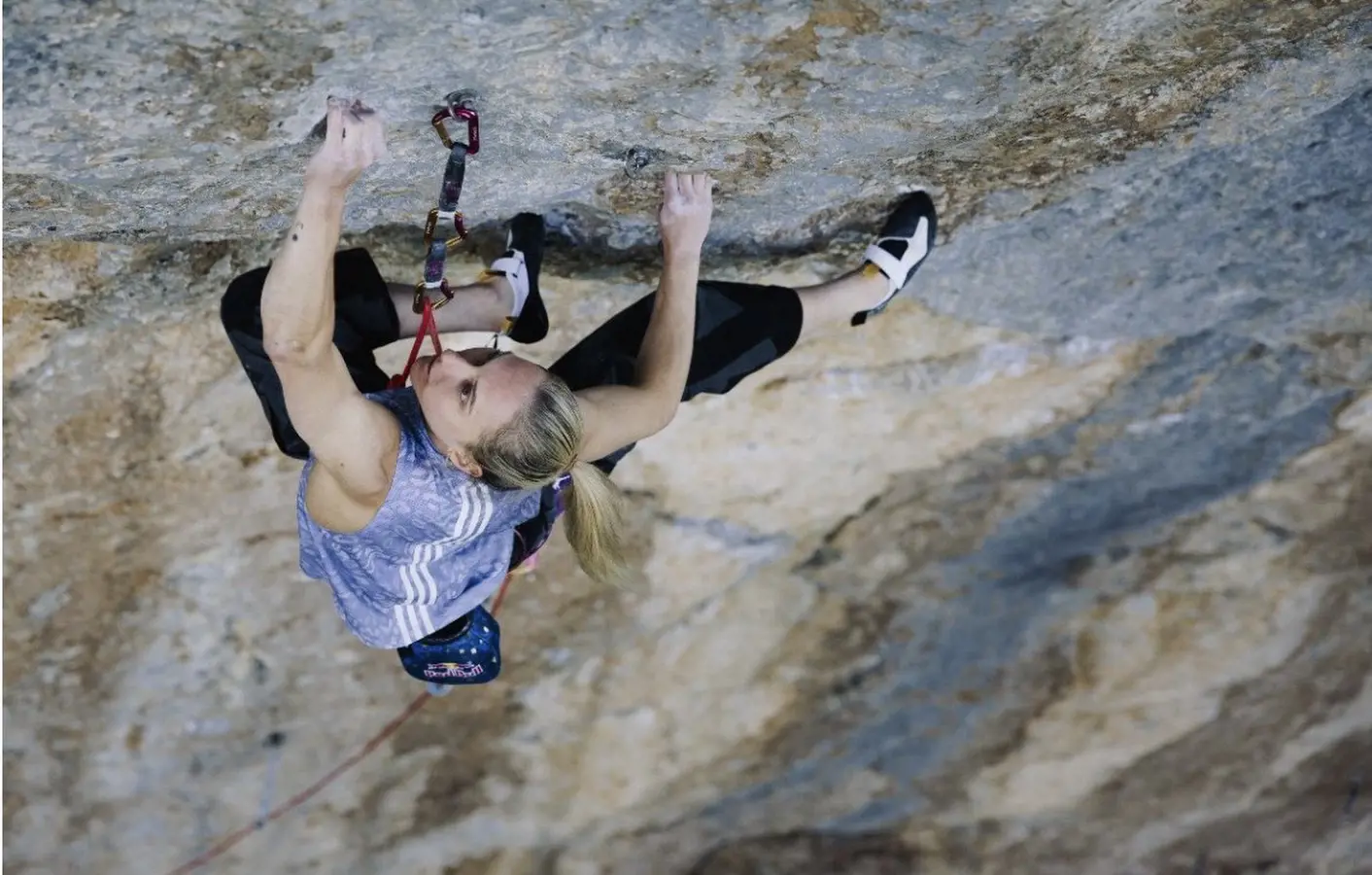
Janja Garnbret has added another milestone to her remarkable climbing career by becoming the first woman to climb Bibliographie (9b+) in Céüse, one of the harde…
361
48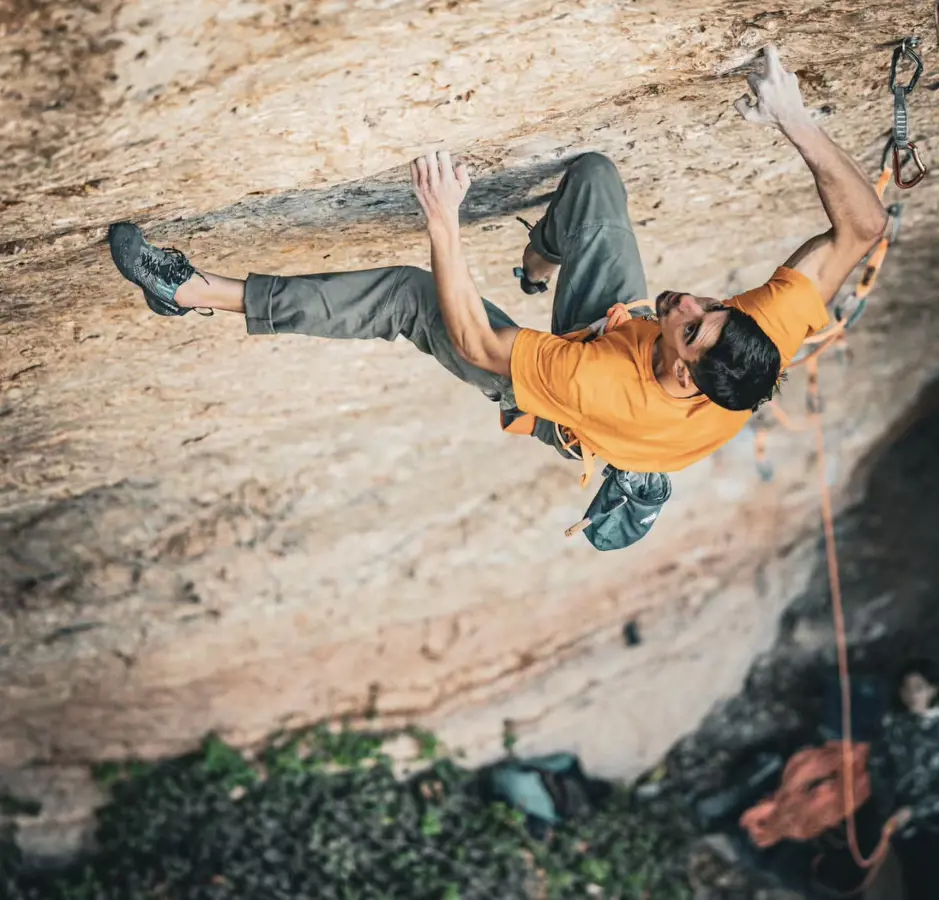
Jorge Diaz-Rullo reports on Instagram that he has made the first ascent of Cafe Colombia in Margalef. At 27, he’s already stacked four 9b+ sends and now he’s ad…
285
81
”I stopped focusing on competition bouldering after last year’s World Cup in Prague, partly because I can already feel it on my body, especially in my shoulders. The modern competition style, with a lot of jumping from one hold to another, is very demanding for the shoulders.
Outdoor bouldering is…
189
13Most commented
Jorge Diaz-Rullo reports on Instagram that he has made the first ascent of Cafe Colombia in Margalef. At 27, he’s already stacked four 9b+ sends and now he’s ad…
285
81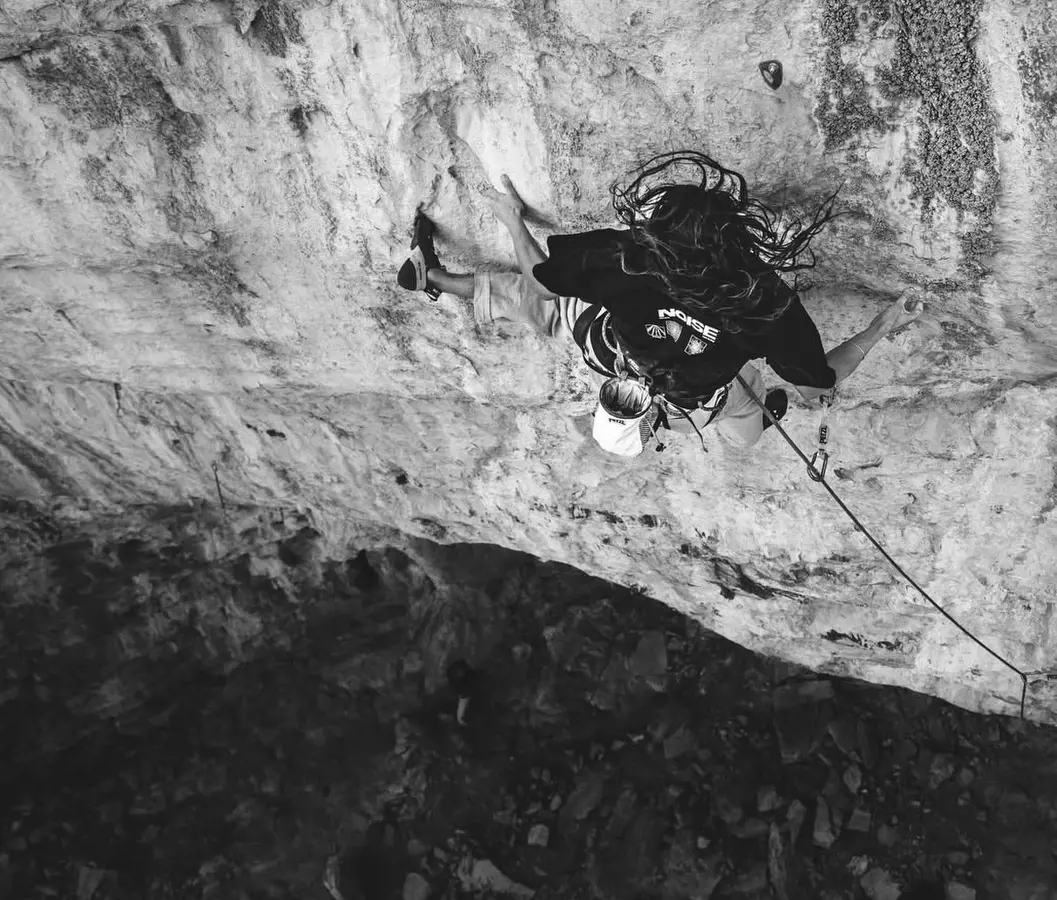
Sean Bailey reports on Instagram that he has done the first ascent of Duality of Man (9c) in Dry Canyon. ” After four total years and three seasons of climbing,…
163
69Jorge Diaz-Rullo elaborates on the reasons for him to suggest 9c for Café Colombia on Instagram, which he took down last week after projecting it for 240 sessio…
119
63