
NEWS
19 May 2021
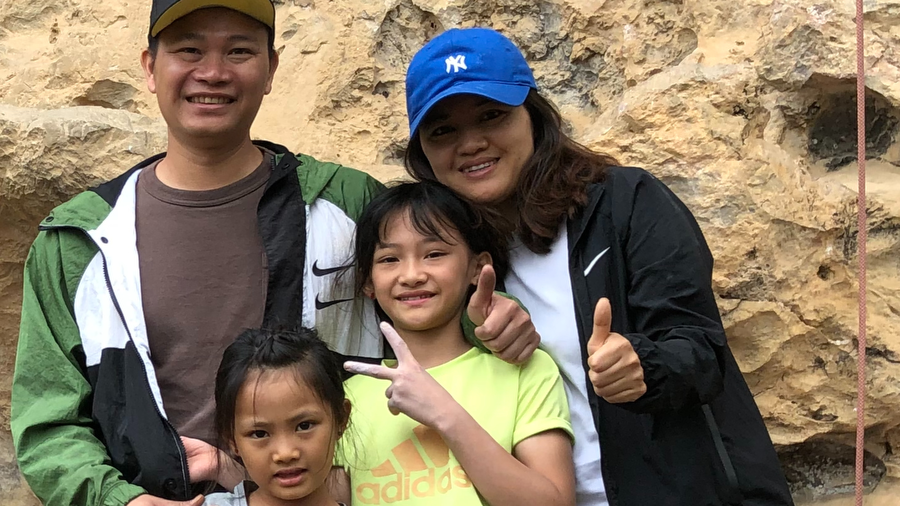
Meini Li's (11) remarkably 8b+ story
Two weeks ago, we reported that Meini Li (10) had done her first 8b+, China Climb in Yangshou. After talking to her mother Emma, the 8b+ story turns out to be something for the record book, as her parents are just beginner climbers and that they live 6+ hours from the crag. Furthermore, she began climbing outdoors last year and normally just climbs three days a week. Nevertheless, she has won 40 national titles including all disciplines the last two years.
When was the first time you realized Meini is super talented?
We do not think that Meini got any talent for climbing until now! She is short and thin. She got no advantage from this but what we really see is she loves climbing and “play” very hard on it. What she likes the most about climbing is having fun. She loves climbing as a part of her and we just follow her step now.
How do you belay her to give her soft falls?
Daddy is often the belayer when she is climbing outside. They communicate more and Meini would share more feelings with him about what is more comfortable for her to climb to the top. That's their way on it!
Is there any sports tradition in the family?
Daddy is a sports fan and he trained spriting when he was at junior and senior high school. We do not have any experiences of climbing before Meini started it. After she got passionate about it, we just begin to climb a little for knowing more about it in order to know more about her. We have to say that climbing is really good for people no matter on being a sport or character-shaping even we are not good at this.
How does Meini handle the mental pressure of giving 100 % being exposed for taking big falls?
She did love roller coaster when she was very young and she loves challenges just like her daddy. At the beginning of climbing, she had similar feelings like with roller coaster. As growing up, she is also afraid of taking falls sometimes when she is far above a quickdraw especially in a high position. The way she handles the mental pressure is trying (taking falls) over and over again. Then you would accept it.
How much does she train and what about outdoors?
Meini trains twice during the week after school for about 2.5 hours and she also trains on Saturdays. We usually go to some new climbing gyms for some new and different routes in the other city which may take us 1.5 to 2 hours by self-driving. Most of the time, she trains indoors and we have nearly no time to climb outdoors except on holidays. We began to climb outdoor just from last year due to “COVID”.
When was the first time you realized Meini is super talented?
We do not think that Meini got any talent for climbing until now! She is short and thin. She got no advantage from this but what we really see is she loves climbing and “play” very hard on it. What she likes the most about climbing is having fun. She loves climbing as a part of her and we just follow her step now.
How do you belay her to give her soft falls?
Daddy is often the belayer when she is climbing outside. They communicate more and Meini would share more feelings with him about what is more comfortable for her to climb to the top. That's their way on it!
Is there any sports tradition in the family?
Daddy is a sports fan and he trained spriting when he was at junior and senior high school. We do not have any experiences of climbing before Meini started it. After she got passionate about it, we just begin to climb a little for knowing more about it in order to know more about her. We have to say that climbing is really good for people no matter on being a sport or character-shaping even we are not good at this.
How does Meini handle the mental pressure of giving 100 % being exposed for taking big falls?
She did love roller coaster when she was very young and she loves challenges just like her daddy. At the beginning of climbing, she had similar feelings like with roller coaster. As growing up, she is also afraid of taking falls sometimes when she is far above a quickdraw especially in a high position. The way she handles the mental pressure is trying (taking falls) over and over again. Then you would accept it.
How much does she train and what about outdoors?
Meini trains twice during the week after school for about 2.5 hours and she also trains on Saturdays. We usually go to some new climbing gyms for some new and different routes in the other city which may take us 1.5 to 2 hours by self-driving. Most of the time, she trains indoors and we have nearly no time to climb outdoors except on holidays. We began to climb outdoor just from last year due to “COVID”.
Read more
4
1
19 May 2021
Why Jakob Schubert skips second SLC WC
More than half of the 40 Olympians will not do all three World Cup events in Salt Lake City the coming two weekends. Jakob Schubert and Jessica Pilz, from Austria, will as an example not compete the second weekend, so we contacted Jakob. 8a Olympic training interview from March. (c) KVÖ/Heiko Wilhelm
Why will you not compete the second weekend when there is also a Speed event?
Jessica (Pilz) and I will fly back right after the first event because we want some more time for training since this is the time for us to switch the focus to lead training. I was actually planning to not go to the US at all but since the Asian comps were postponed I decided to do the one to get some more bouldering experience. It hurts a bit since I definitely would love to spend some time in the USA and do all the comps but I feel the need for some more lead training before the Olympics, hope it works out 😉
Speed training is obviously still going on, not my main focus but always training it a bit (2 short sessions a week usually). I might do the speed WC in Villars. But in my opinion, it‘s not as important to do speed comps compared to bouldering for example since comps are not so different than training in speed.
Why will you not compete the second weekend when there is also a Speed event?
Jessica (Pilz) and I will fly back right after the first event because we want some more time for training since this is the time for us to switch the focus to lead training. I was actually planning to not go to the US at all but since the Asian comps were postponed I decided to do the one to get some more bouldering experience. It hurts a bit since I definitely would love to spend some time in the USA and do all the comps but I feel the need for some more lead training before the Olympics, hope it works out 😉
Speed training is obviously still going on, not my main focus but always training it a bit (2 short sessions a week usually). I might do the speed WC in Villars. But in my opinion, it‘s not as important to do speed comps compared to bouldering for example since comps are not so different than training in speed.
Read more
2
1The second Boulder World Cup of the season starts on Friday in Salt Lake City with the finals on Saturday, registrations. Then, the following Friday, there will be a Speed World Cup followed by another Boulder WC during the weekend, registrations. Almost all the best and the Olympians will participate. Here are some surprising notes from the registrations:
1. The four Olympians from Japan as well as Janja Garnbret will only participate in the second event.
2. Shauna Coxey will only compete during the first weekend, meaning no Speed event for her.
3. Jakob Schubert and Jessica Pilz will only compete the first weekend.
4. No Koreans or Chinese in any of the events.
5. No Bassa Mawev or Russian Speed specialists are registered.
6. The only Russian is Alexey Rubtsov, meaning that two female Olympians are missing. 7. Mia Krampl and Alberto Gines Lopez have not signed up for any events.
Overall, as it stands, less than half of the Olympians are registered to compete in all three events. Checking up some things with the athletes it seems Schubert and Pilz will just compete the first weekend. Michael Piccolruaz had planned to compete in Speed but he is not registered in Speed so he will check up on what has gone wrong. It should be noted that the registrations are closed but you can make "replacements" until May 23 for the second weekend.
1. The four Olympians from Japan as well as Janja Garnbret will only participate in the second event.
2. Shauna Coxey will only compete during the first weekend, meaning no Speed event for her.
3. Jakob Schubert and Jessica Pilz will only compete the first weekend.
4. No Koreans or Chinese in any of the events.
5. No Bassa Mawev or Russian Speed specialists are registered.
6. The only Russian is Alexey Rubtsov, meaning that two female Olympians are missing. 7. Mia Krampl and Alberto Gines Lopez have not signed up for any events.
Overall, as it stands, less than half of the Olympians are registered to compete in all three events. Checking up some things with the athletes it seems Schubert and Pilz will just compete the first weekend. Michael Piccolruaz had planned to compete in Speed but he is not registered in Speed so he will check up on what has gone wrong. It should be noted that the registrations are closed but you can make "replacements" until May 23 for the second weekend.
Read more
0
018 May 2021
Ondra's OS record as a kid is still superior
Although we have seen many super impressive redpoints by kids in the last few weeks, on par with Adam Ondra's standards, the unique thing with Adam is his multiple ascents, especially his onsights. At age 12, Adam onsighted 19 8a+' and 8 8b's. Then, within two weeks of turning a teenager, he had added two 8b+ and three 8b's onsight on his scorecard. On his 15th birthday, he did his first 8c onsight and comparing his onsight tick list of 2008 to the best adults today, he would have been one of the very best.
The lesson learnt from this is that kids, and their parents, should try to work more on their onsight level and multiple easier redpoints rather than going for a long redpoint project. It might be very hard for a kid to send an extreme redpoint grade and then realize other easier graded routes are much harder.
The lesson learnt from this is that kids, and their parents, should try to work more on their onsight level and multiple easier redpoints rather than going for a long redpoint project. It might be very hard for a kid to send an extreme redpoint grade and then realize other easier graded routes are much harder.
Read more
6
017 May 2021
Fish eye 8c by Charlotte Frank
Charlotte Frank has done her second 8c in Oliana, Fish eye. "Juhuu such a cool line! Bouldery crux in the middle that turned out to be more technical than I expected. Took me quite a lot of tries. One of my favourite routes so far :)" (c) Toni Mas Buchaca
Read more
11
217 May 2021
The kids and female grading dilemma
Rock climbing is unique when it comes to gender and age performance equality. There is no other sport where the best females and kids perform so close to the top male grades. Ashima Shiraishi is the best example of extreme girl power, doing her first 8B boulder at age eleven, two 9a's at age 13 and one 8C boulder being 14-years-old. As a matter of a fact, measuring Bouldering and Sport climbing tick lists, she was the #1 female in the world as she became a teenager. At that time her tick list was among the Top 20 for males in the world. Still, she has many "world records" when it comes to what grades 8 to 14-year-olds have done.
One reason why kids' and female performance in climbing are unique has to do with size. A shallow one finger pocket for an adult could become a deeper two-finger pocket for a kid. Small fingers could possibly dig deep with all fingers in a crack where an adult hand could not use it at all. A 140 cm tall kid could get a good no-hand rest kneebar, out of reach for an adult who might instead be thinking "this is the crux". Furthermore, kids do not face the same problem with lactic acid, i.e. getting pumped.
On the other hand, a 140 cm tall 9a climber will not be able to do all 7a's. Especially on vertical granite, shorter climbers are struggling as there are often just a few edges far apart that create the climb. On the other hand, on granite slabs a 35 kg kid shoe could create insufficient friction to stand and even move, while a heavier climber would slip. The reason for this is that both the smaller and the bigger foot get similar contact areas on the rock.
The general dilemma is that the FAs and the grades are done by adult males, i.e 170 - 185 cm. This means that a 155 cm climber will sometimes perceive an 8a as relatively easy or, in other cases, totally impossible. Logically, smaller climbers will focus on climbs where their size could be an advantage and not spend a record number of sessions putting up a big boulder dyno, which later will be downgraded by much taller guys.
Some 30 years ago, almost all climbers doing 8a's were 160 - 185 cm and their effort and opinions set the consensus grade. As, in general, females and kids do more seldom suggest personal grades, many routes keep their original grade although a big percentage of the ascents are done by 140 - 160 cm tall climbers. Obviously, there is sometimes a big mismatch in grading based on the size of the climbers and, in reality and logically, the smaller climbers often take advantage of this.
It just might be that the rumour is spread that a certain climb fits the smaller size and later it will be repeated by many kids setting a great personal best. Unfortunately, the climb would hence be at risk of being downgraded based on the selection of climbers focusing on that route. On the other hand, as soon as we start talking about top-level achieved grades like Ashima Shiraishi's 8C boulder, Horizon at age 14, her size (possibly 145 cm and 35 kg) is irrelevant. This is a world-class achievement and she has a grade pyramid that backs it up.
It should be mentioned that 8a, communicating with kids and their parents, always tries to encourage them to focus on onsights and multiple easier climbs. There is a risk that systematically searching for grade mismatches and endless projecting will create an early bird peak, with headlines and fame that will be hard to handle in the longer run.
It should also be mentioned that, as the climbing population increasingly consists of kids, the grading loses in meaning and relevance as it becomes more personal. One reason why the 8a scorecard is based on the Top-10 ascents with fixed points, is to encourage climbers to go for multiple climbs instead of redpointing just one route.
One reason why kids' and female performance in climbing are unique has to do with size. A shallow one finger pocket for an adult could become a deeper two-finger pocket for a kid. Small fingers could possibly dig deep with all fingers in a crack where an adult hand could not use it at all. A 140 cm tall kid could get a good no-hand rest kneebar, out of reach for an adult who might instead be thinking "this is the crux". Furthermore, kids do not face the same problem with lactic acid, i.e. getting pumped.
On the other hand, a 140 cm tall 9a climber will not be able to do all 7a's. Especially on vertical granite, shorter climbers are struggling as there are often just a few edges far apart that create the climb. On the other hand, on granite slabs a 35 kg kid shoe could create insufficient friction to stand and even move, while a heavier climber would slip. The reason for this is that both the smaller and the bigger foot get similar contact areas on the rock.
The general dilemma is that the FAs and the grades are done by adult males, i.e 170 - 185 cm. This means that a 155 cm climber will sometimes perceive an 8a as relatively easy or, in other cases, totally impossible. Logically, smaller climbers will focus on climbs where their size could be an advantage and not spend a record number of sessions putting up a big boulder dyno, which later will be downgraded by much taller guys.
Some 30 years ago, almost all climbers doing 8a's were 160 - 185 cm and their effort and opinions set the consensus grade. As, in general, females and kids do more seldom suggest personal grades, many routes keep their original grade although a big percentage of the ascents are done by 140 - 160 cm tall climbers. Obviously, there is sometimes a big mismatch in grading based on the size of the climbers and, in reality and logically, the smaller climbers often take advantage of this.
It just might be that the rumour is spread that a certain climb fits the smaller size and later it will be repeated by many kids setting a great personal best. Unfortunately, the climb would hence be at risk of being downgraded based on the selection of climbers focusing on that route. On the other hand, as soon as we start talking about top-level achieved grades like Ashima Shiraishi's 8C boulder, Horizon at age 14, her size (possibly 145 cm and 35 kg) is irrelevant. This is a world-class achievement and she has a grade pyramid that backs it up.
It should be mentioned that 8a, communicating with kids and their parents, always tries to encourage them to focus on onsights and multiple easier climbs. There is a risk that systematically searching for grade mismatches and endless projecting will create an early bird peak, with headlines and fame that will be hard to handle in the longer run.
It should also be mentioned that, as the climbing population increasingly consists of kids, the grading loses in meaning and relevance as it becomes more personal. One reason why the 8a scorecard is based on the Top-10 ascents with fixed points, is to encourage climbers to go for multiple climbs instead of redpointing just one route.
Read more
9
617 May 2021
8c+/9a and 8c+ by by Moritz Welt
Moritz Welt has done Gomorrha in Frankenjura, put up as an 8c by Markus Bock in 2009. "Really good line with some brutal crimp moves, originally graded 8c, but a few holds have broken, would suppose 8c+/9a now."
The day before, he did 21 Times Tha Pain 8c+ twice as also getting on tape for yet another uncut video. In total, the 20-year-old has done 17 routes 8c+ and 9a during the last year and he is #9 in the 8a ranking game.
The day before, he did 21 Times Tha Pain 8c+ twice as also getting on tape for yet another uncut video. In total, the 20-year-old has done 17 routes 8c+ and 9a during the last year and he is #9 in the 8a ranking game.
Read more
4
016 May 2021
Nacho Sanchez doing Juneru 8C
Nacho Sanchez, who did the first ever 8C in Spain in 2011, has done the first repeat of Ruben Diaz' Juneru 8C in Albarracin. In total, Nacho has done some ten 8C and harder problems.
Read more
3
016 May 2021
Graz Euro Youth - Boulder
The European Bouldering Youth Cup in Graz gathered some 250 participants and overall it was a great success with an almost perfect route setting. All but one boulder were topped and only a handful of climbers did not make any zones. Noteworthy is that Olympian Alberto Gines Lopez was #3 among the juniors after he had won the qualification. Interestingly, ten climbers competed in the final instead of the normal six, based on IFSC semi format. Most impressive was Nikolay Rusev, in the picture, who first won the qualification and then onsighted all four final boulders.
02: Barnabé Eliot FRA - Lucie Watillon BEL
04: Carmanns Leander GER - Sabina Van Essen NED
06: Nikolay Rusev BUL - Barbora Bernardova CZE
Complete results
02: Barnabé Eliot FRA - Lucie Watillon BEL
04: Carmanns Leander GER - Sabina Van Essen NED
06: Nikolay Rusev BUL - Barbora Bernardova CZE
Complete results
Read more
4
116 May 2021
Mejorando Imagen 9a+ (b) by Jorge Diaz-Rullo
Jorge Diaz-Rullo has done the third ascent of Mejorando Imagen in Margalef, which Ramon Julian Puiblanque made the FA of in 2013 as a 9a. Alex Megos did the first repeat in March and suggested an upgrade to 9b. Jorge took it down after eight working days and thinks it is 9a+/b. (c) Paul Alonso Prat
"8 working days. Incredible line equipped by Iker Pou of short resistance with explosive steps on monos and two-finger pockets. Congratulations to Ramón for that FA and to Álex Megos for the second promotion. For me, more 9a+/b, will see what repeaters will say!"
On his Insta he comments, "Of course, it will be my hardest route without kneepads 😂🥳🦵" Previously, the 21-year-old, who has been #1 in the 8a ranking years for two years, has done six 9b's.
"8 working days. Incredible line equipped by Iker Pou of short resistance with explosive steps on monos and two-finger pockets. Congratulations to Ramón for that FA and to Álex Megos for the second promotion. For me, more 9a+/b, will see what repeaters will say!"
On his Insta he comments, "Of course, it will be my hardest route without kneepads 😂🥳🦵" Previously, the 21-year-old, who has been #1 in the 8a ranking years for two years, has done six 9b's.
Read more
9
0Favorites
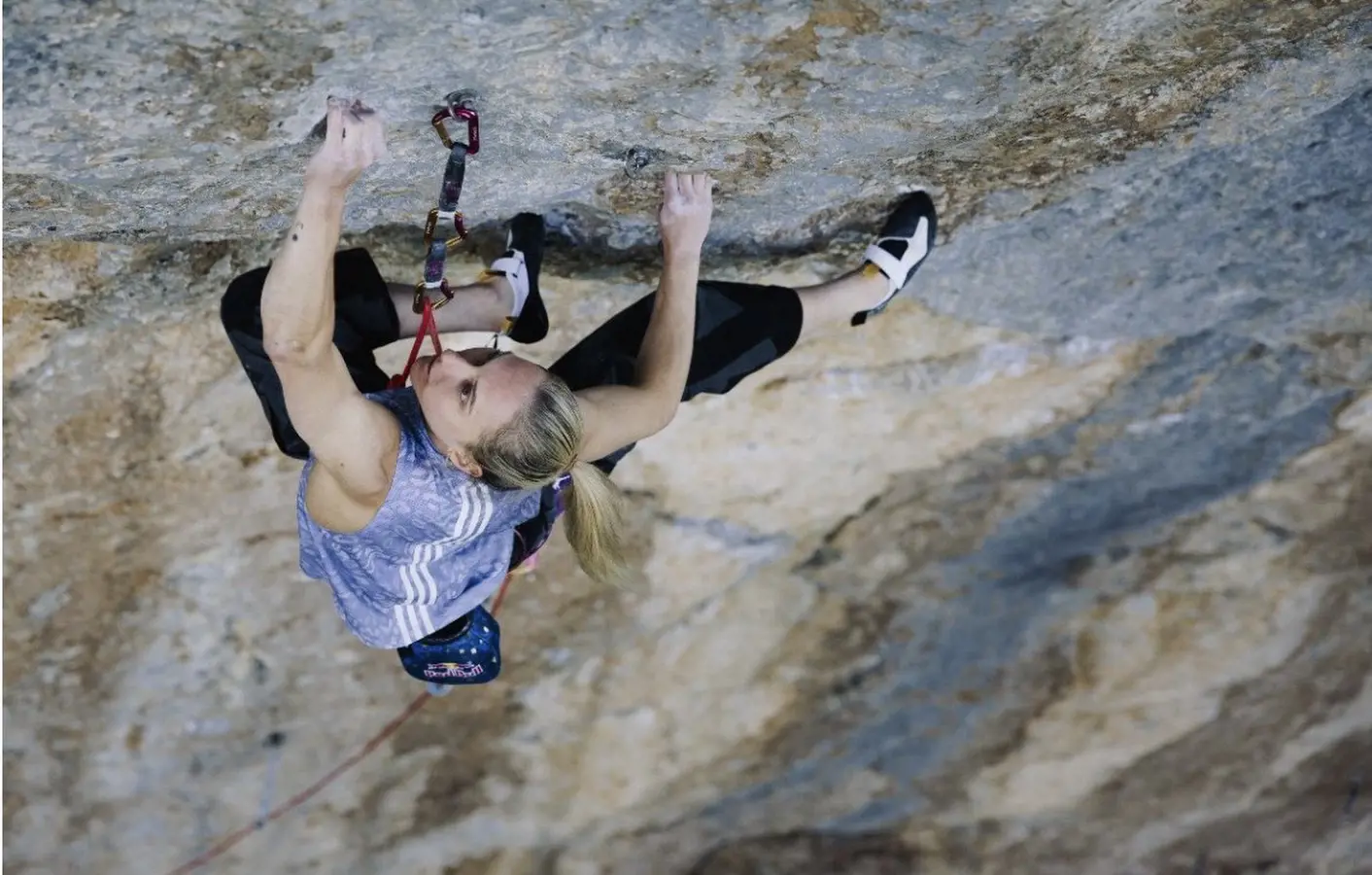
Janja Garnbret has added another milestone to her remarkable climbing career by becoming the first woman to climb Bibliographie (9b+) in Céüse, one of the harde…
361
48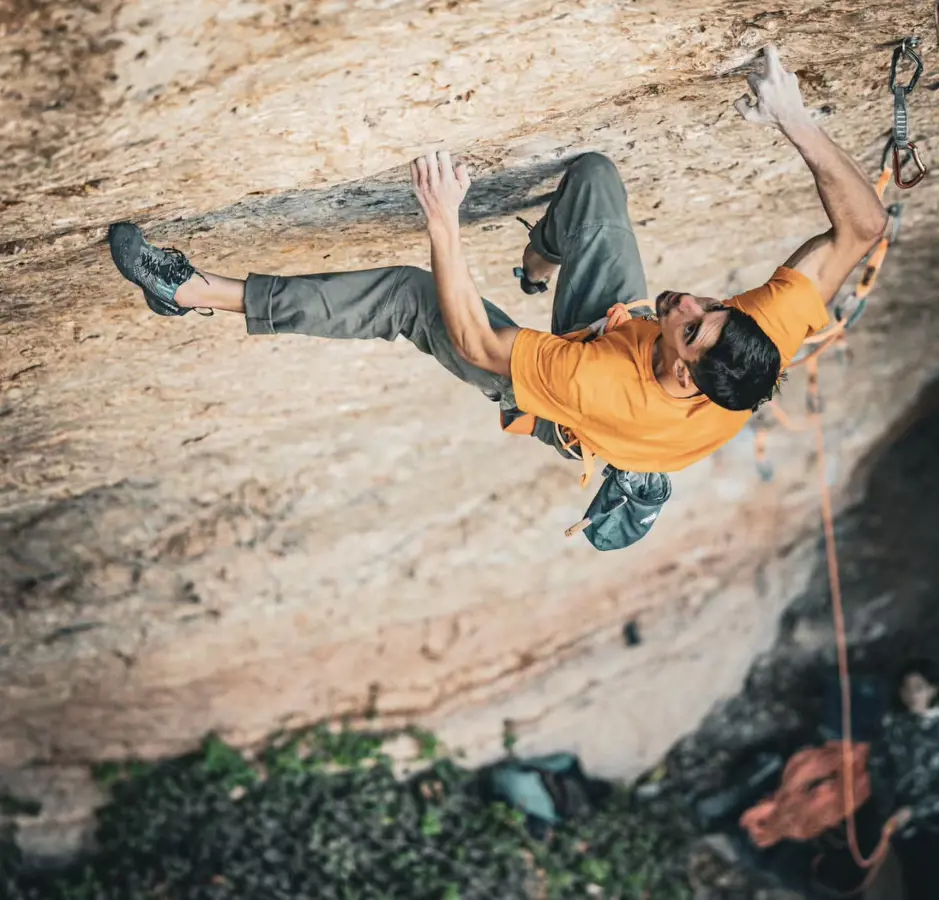
Jorge Diaz-Rullo reports on Instagram that he has made the first ascent of Cafe Colombia in Margalef. At 27, he’s already stacked four 9b+ sends and now he’s ad…
285
81
”I stopped focusing on competition bouldering after last year’s World Cup in Prague, partly because I can already feel it on my body, especially in my shoulders. The modern competition style, with a lot of jumping from one hold to another, is very demanding for the shoulders.
Outdoor bouldering is…
189
13Most commented
Jorge Diaz-Rullo reports on Instagram that he has made the first ascent of Cafe Colombia in Margalef. At 27, he’s already stacked four 9b+ sends and now he’s ad…
285
81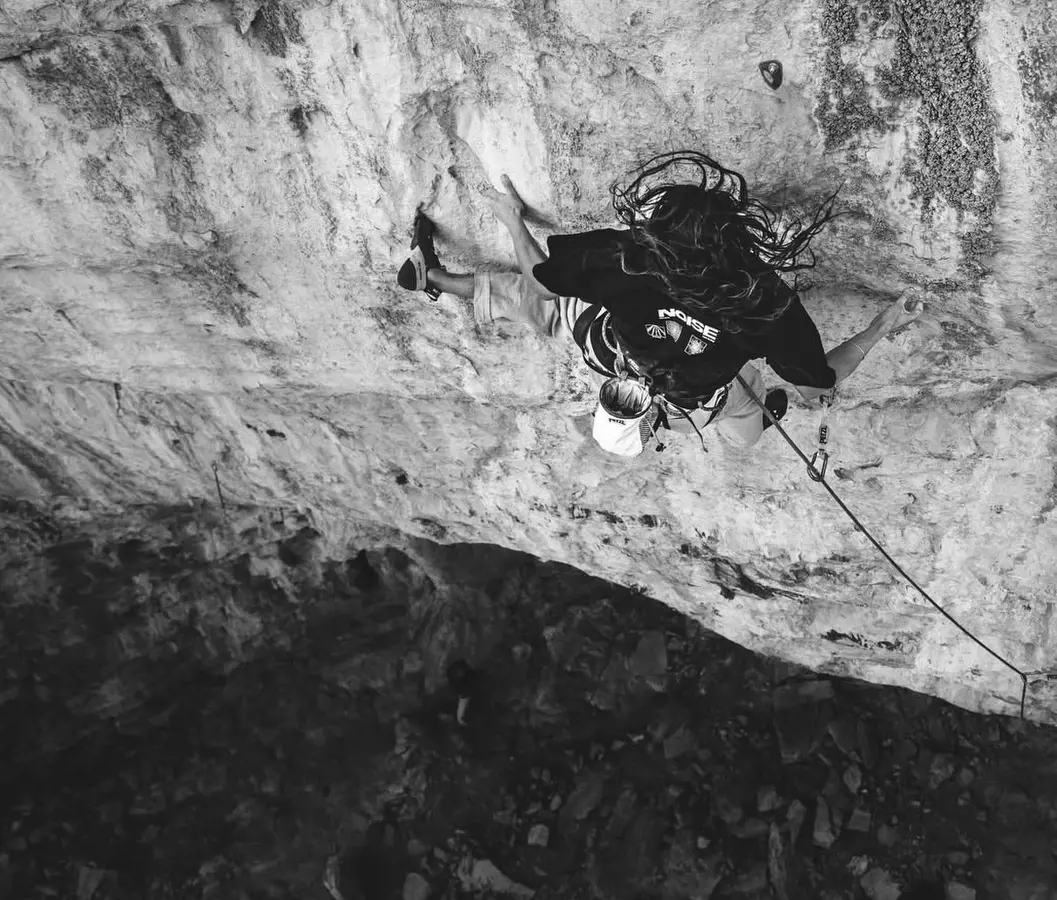
Sean Bailey reports on Instagram that he has done the first ascent of Duality of Man (9c) in Dry Canyon. ” After four total years and three seasons of climbing,…
163
69Jorge Diaz-Rullo elaborates on the reasons for him to suggest 9c for Café Colombia on Instagram, which he took down last week after projecting it for 240 sessio…
119
63