NEWS

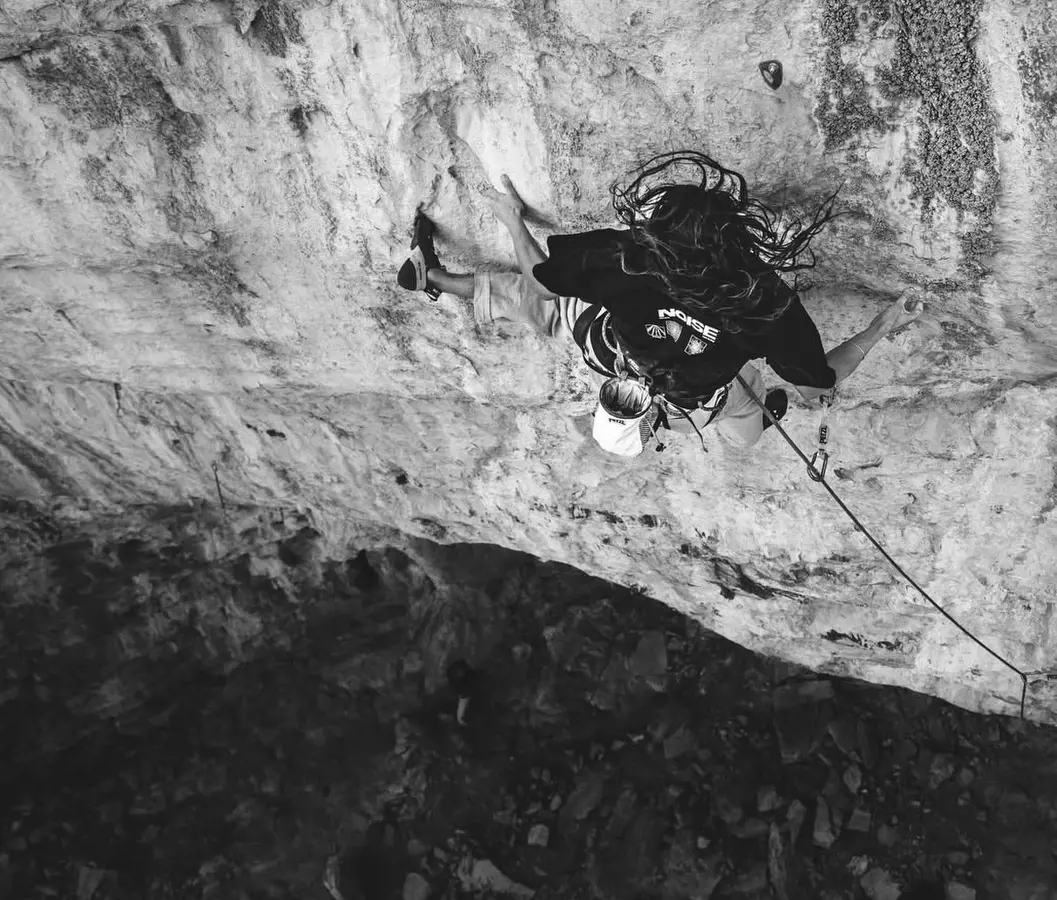
Jon Glassberg from Louder Than Eleven is possibly the only climber, together with his wife Jessica Talley, beside the IFSC official Daniel Gajda, that have gotten four days photographer accreditation to the Olympics. 8a will share some of their pictures during the competition. The 37-year-old just made his first 8C by doing The Nest and with 191 cm and 86 kg, he might be the biggest boulderer who have reached that grade.

Kill Em All 8c by Audrey Miller
Audrey Miller has done her first 8c, Kill Em All at Wolf Point after six tries over two weekends. "Last go best go, pocket slinged my way up this amazing route. Such a nice line. Sometimes a pre-climb laugh attack, a new low point, and a last Hail Mary effort are all it takes to get you to the top! Thankful for an amazing crew to keep the psych up, and a stellar line to throw myself at. Until next time Wyoming!"

What is your climbing background?
I grew up competing until I moved to Utah, then decided to focus my efforts on real rock. This year has been the most rewarding for me, as Iโ€™ve adapted my skills for outdoor climbing, and seen a lot more success than in the couple of years prior. I canโ€™t get enough of the rock out west! (her best result in a Youth Worldchampion is #12)

By looking at the registrations for Villars, we can see that most of the Olympians will not participate. Out of the big names, only Jakob Schubert, Alex Megos and Janja Garnbret will take part.

Hazel Grace 8C/+ FA by Giuliano Cameroni
Giuliano Cameroni has done yet another stunning FA, Hazel Grace 8C/+ in Gottardo, which adds an obvious sit start to the 8B+ stand he made the FA of in 2017. The 24-year-old running the Mellow Youtube channel has previously done eight FA 8C and harder. Here is part of his Insta comments: "First day of the season, what a day! A huge mountain of snow was surrounding the bloc, making it magical. Conditions were perfect and no pressure was involved. Checked out the moves, rested for half an hour and climbed it first try. Great moment where everything connected."


How many sessions did it take and what about the slash grade?
I tried it for a long time last summer and the summer before, probably around 30 sessions in total. This year I felt stronger, conditions were perfect and surprisingly it connected first go from the start. Took so long to figure out a very tricky heel hook and all the positions needed to stay on the wall. Really hard to give an opinion about the grade because there is a super tricky heel hook. Physically it felt 8C but technically 8C+. Could be both, let's see what other repetitors think.

Seb Bouin made the FA of Beyond Integral 9b/+ at Pic St-Loup last October commenting in his scorecard. "A mega line, a first 9a+ part to finish into 8A+ boulder problem. I tried many MANY times. From the impossibility to do the moves to a send..."

El Molinero 8c+ by Marco Mรผller
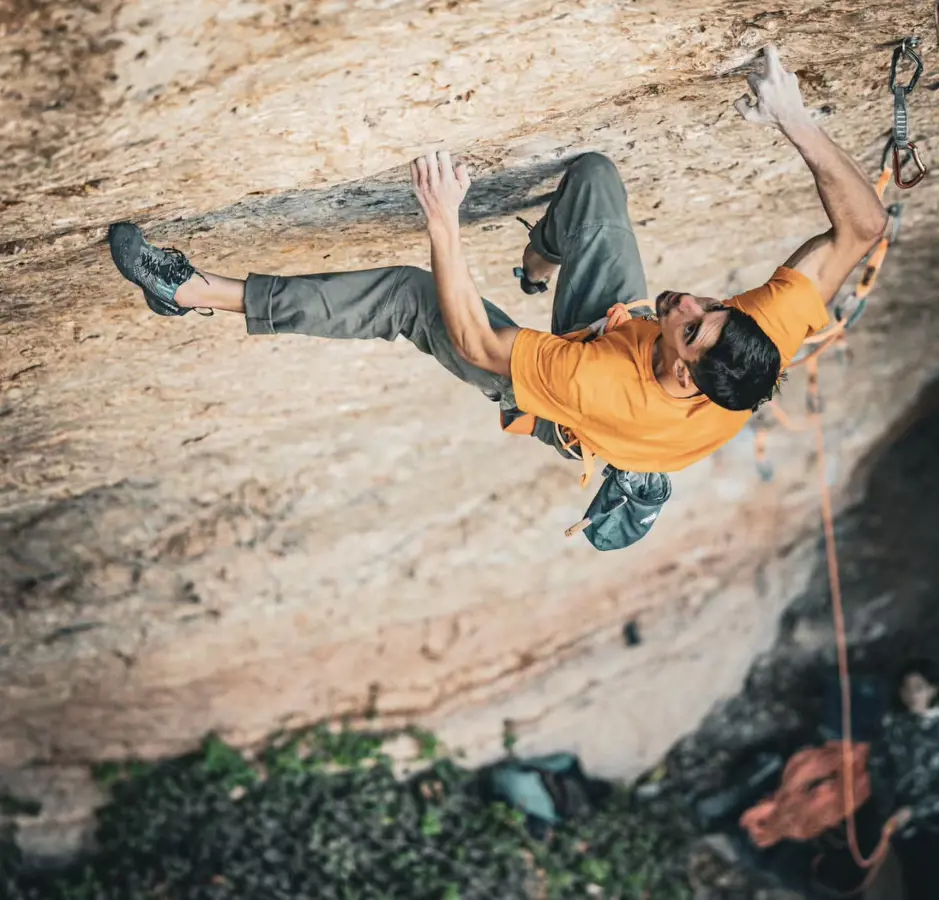
Marco Mรผller, who previously has done two 9a's, has done El Molinero 8c+ in Gimmelwald. The crag is located at 1600m and the closest city is Interlaken which is 20 km away.

"First, you take a cable car from Stechelberg to Gimmelwald and then hike approx for 45min. You can walk up, up it adds another 45min of hiking ;) There are around 30 routes, 25 of them above 8a and 4 of them 9a's.

It's a powerful and steep route with no rests. The crux is a cool jump where both feet cut loose, after that, you just rush to the top hoping the forearm pump doesn't kick in. I could climb this route in my fourth session, one last season and three this year."

Black Hole Sun 9a FA by Jonathan Siegrist
Jonathan Siegrist, who previously has done 55 routes 9a to 9b, has done the FA of Black Hole Sun in 5G. This was the 35-year-old's 17th FA 9a and harder.

" I bolted this route at the end of last season - in October. It is next to my route, Nu World. This year June was insanely hot in Southern Nevada! So I was quite nervous I wouldn't finish it before the full on summer.

One of my harder FA's and also one of my best I'd say. Intense strength endurance for the first 60 feet or so and then a 60 foot 8b+ on top of that. Quite hard at 9a, felt harder than some 9a+ to me, but hard seems to be the theme up here and I'm sick of grading stuff so this will do for now. Next week I will get another big project cleaned up and ready for the fall season...โ€

Aleksandra Miroslaw travelled all the way to Salt Lake City where she won the Speed event while she chose not to participate in Boulder. This will be her only competition before the Olympics as she has not registered for Villars. Iuliia Kaplina skipped Boulder and Lead in Innsbruck while she won the Euro Cup in Speed. She is signed up for Speed in Villars but will not do Lead. It seems that some of the best Speed specialists have done their math and skip any competition preparation whatsoever in the other two disciplines.

This is of course a logical strategy as the winner of Speed will be #4 or #5 in Tokyo even if they are dead last in the other two disciplines. Based on the results in 2021, where the Tokyo Combined favourites have strengthened their positions in all three disciplines, the risk for a Speed specialist getting the bronze has increased. As a matter of fact, it only takes that two Speed specialists are Top-2 in Speed during the qualifications while the favourites deliver good results in all three disciplines. If both Miroslaw and Kaplina make it to the Top-8 final, there is a great chance/risk that one of them will take the bronze scoring 1 * 7 * 7 = 49. When it comes to the males, also the favourites have strengthened their positions in 2021 and that goes especially for Tomoa Narasaki who several times has done sub six seconds. In other words, he could win both the qualification and Final in Speed which will almost guarantee him a bronze and make him the big favourite for the gold.

On the other hand, with the new male world record and several training times close to five seconds, it just might be that the Olympics will make several guys doing close to five seconds in Tokyo.

Innsbruck has been the epicentre for competition climbing for many years, and the shows are always well-organized. Here are some reflections from the last World Cups, besides calling Simon Lorenzi's 13-second send on his tenth attempt the most epic moment.


1. The Lead route setting was in general good but possibly too technical as most athletes actually fell due to technical mistakes instead of giving a good fight.
2. During the Boulder finals, it was too hard to get to the zone but once there, too easy to get to the top. In most cases, as soon as you got the zone, you also made it to the top. Everyone who topped did so directly after they made it to the zone.
3. Great digital result presentation in the Lead finals, but otherwise poor, making the commentators' job difficult.
4. Good job by the commentators creating a friendly and positive feeling including quick interviews.
5. The commentators misguide the viewers as they cannot analyse the result in bouldering.
6. Semis are about qualifying to the final but this is of very low interest to the commentators who focus on the show.
7. Too many competitors - max 2 per country if not having ranking points will make conditions fairer.
8. Brooke Raboutou is the new contender for a medal in Tokyo. In 2019, her best results were #15 in Lead and #21 in Boulder, out of eight events.

9. In the IFSC channel, it was announced that Laura Rogora won the semi in Lead, but later it was said she was timed out.
10. Japanese males continue their total domination in Boulder, and in Lead they had four Top-11.
11. While no male qualified for both the Lead and Boulder finals, Janja Garnbret won both quite superior.
12. The Olympic favourites strengthened their positions but most others struggle.
13. Outrageous camera work of Johanna Fรถrber
14. Bolt covers so nobody will be disqualified stepping on the bolts.