NEWS

Pustelnik Lead setting report
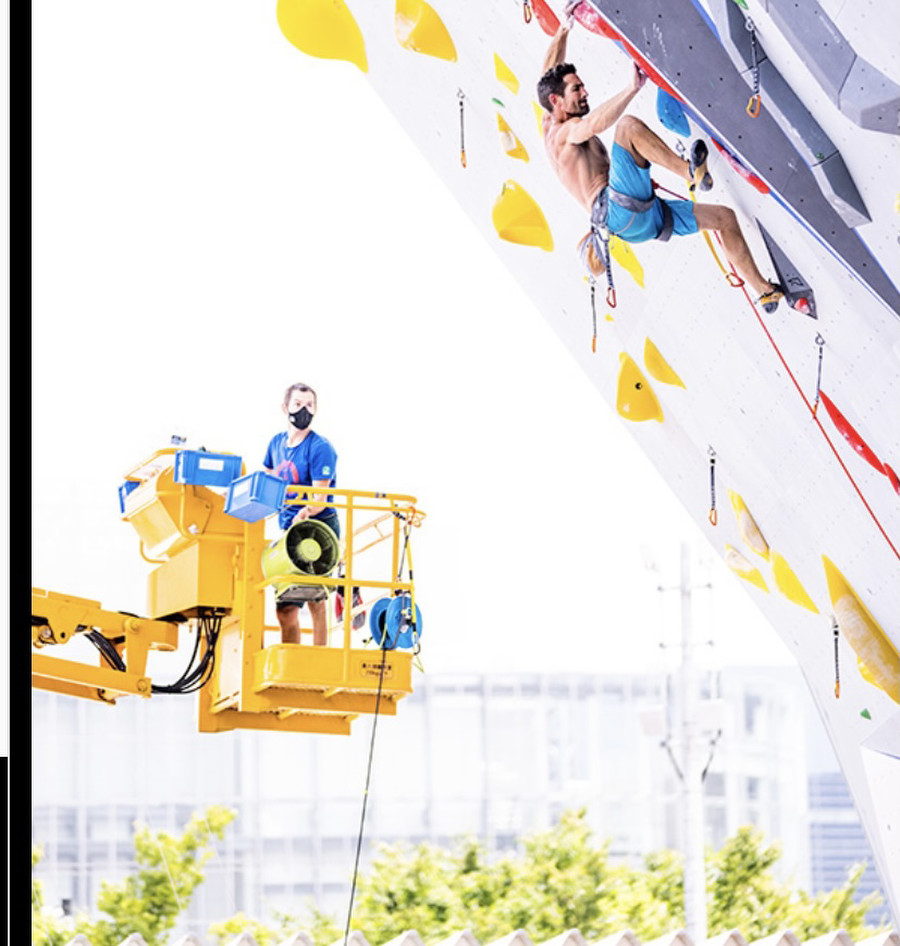
Adam Pustelnik from Poland is the chief-route Lead setter in Tokyo. In his team he also has; Jan Zbranek (CZE), Hiroshi Okano (JPN) and Akito Matsushima (JPN), which have worked together both in Innsbruck this year and in the World Champion in 2019. There are also a couple of Japanese setters helping out with the training routes etc. (c) Daniel Gajda/IFSC

"Weโ€™ve had four days of setting before the opening ceremony and then we were working three more days during the 3x3 basketball games but that included preparing routes for the training sessions. To explain a bit more, for the main competition we set 4 routes in total - a qually and a final route for men and women. In addition, we prepared 4 routes for training sessions for the athletes on the FOP that means on the actual wall of the competition. Since yesterday they have had sessions of around 2hours to try out boulders, these routes and climb on the speed wall as a form of training on the main wall.

For the question on challenges, I would say that the job weโ€™re doing does not really differ much from other competition. Itโ€™s always challenging to prepare things that will be attractive to see, showcase the best of climbing and give a good score. Of course, thereโ€™s a much bigger stake in this competition but this does not change the way we work as we always try to do our job the best we can. The difference is more about the combined format and a mix of climbers in the rounds but again weโ€™ve already experienced that and tried our best for preparing the routes."

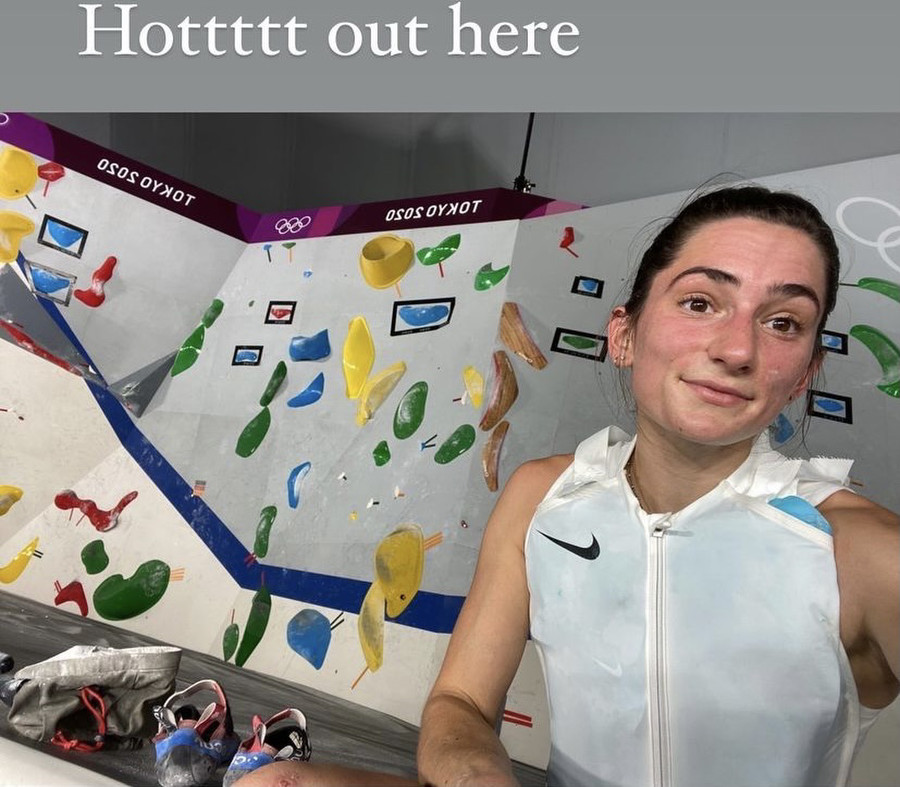
Kyra Condie reports from the first day of training
How the first day of training? Was it like a competition simulation?
No definitely not! Just used it as a chance to feel the wall angles, super nice for the slabs especially to see what you can stand on on them and how you climb on it. Speed wall knowing the texture is super nice. And on lead knowing how the clips feel and all that. Like in Briancon the clips themselves are really tight so kind of hard to clip, so knowing all that before you compete makes it less stressful.

Rubtsov reports from the Olympic Village
โ€œI arrived on Saturday July 27th. I came here alone, our team will arrive on August 1st. Training at the climbing wall began on July 29 and will continue until the start of the competition. There are 2 bouldering walls: one in the warm-up area and one in the competition area. On the lead wall 4 routes have been prepared. The speed wall is 10 and 15 meters. All this is available in the evening 2 hours a day, separately guys and girls on a schedule. A fitness room is available in the village 24 hours a day. You can also just exercise outside on the grass, stretch, or whatever. Many athletes running or cycling / skateboarding around the village. I generally like the village :)

Mostly I walk around the village and ride a skateboard :) I like the atmosphere and a huge number of the best athletes from all over the world around. I'm just enjoying this. I plan another 1-2 trainings at the climbing wall and every day I go to fitness on the territory of the village.

Brooke Raboutou is one of the favourites getting a medal in Tokyo based on her extreme progress in 2021. Including one Speed comp, her worst result out of six WC's was #12. Prior to this year, her best IFSC senior result was #15 in Lead in the World Championship in 2019. Outdoors, she has during the last year done seven boulders 8A+ to 8B+ including one flash.

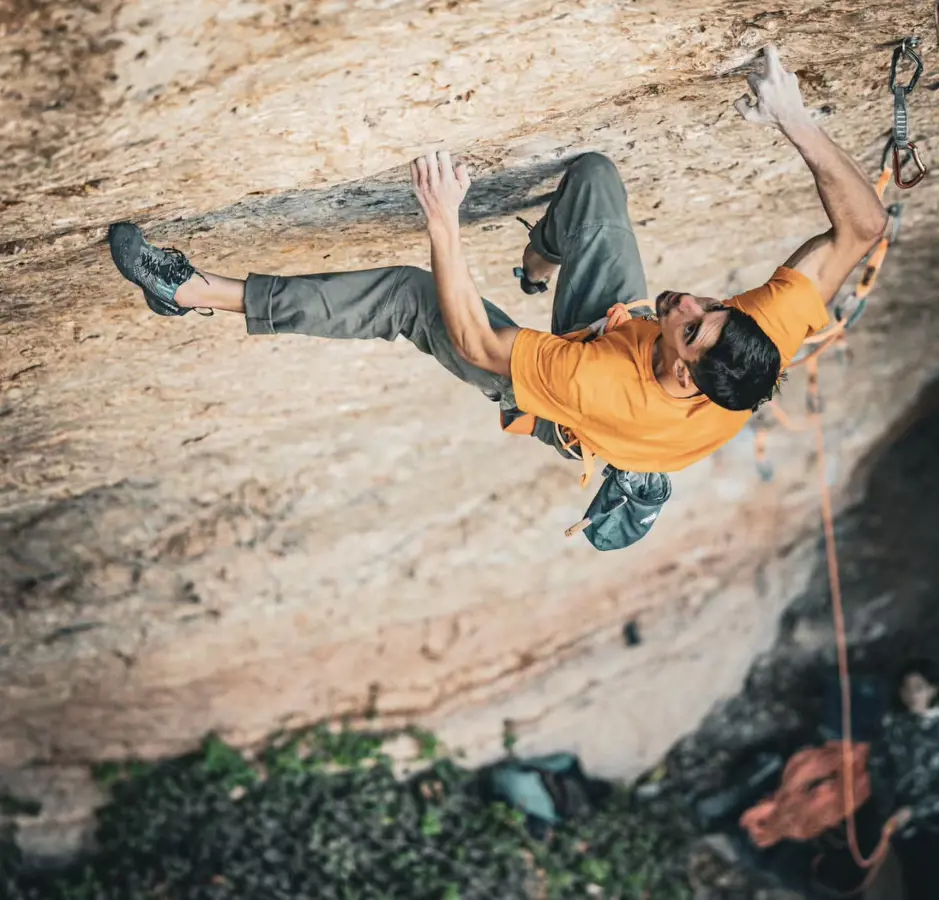
Arco Iris 8c+ MP by Seb Berthe, taking a 25m whipper
Sebastien Berthe, one of the leading multi-pitch and big wall climbers in the world, has done the first repeat of Edu Marinโ€™s 200 meter Arco Iris 8c+ in Montserrat. The Belgien confirms the 8c+ but thinks the other hard pitches were one grade easier. Still, it is one of the hardest MPs in the world. (c) Julia Cassou

โ€ Arco Iris is my hardest achievement in multipitch climbing for sure. This ancient aid route is really sustained and incredible: it follows an overhanging corner for 5 pitches (6c, 8b+, 8c+, 8b, 8a+). Edu rebolted the line with huge runouts so the freeclimb does not bother the aid, which is really important there in Montserrat. I took the longest whipper of my life, about 25m, trying hard on the 8c+... This makes it really hard for the mental, but I think he did a great job there! Despite some loosy rock, the holds are crazy and the climbing is great and so pumpy!

Sunday was my fourth day working the route, and I was'nt sure I had a chance this day. Anyway, I went "a muerte" with my belgian friend Baptiste Verdin as belayer and partner. I sent the first pitch pretty easily compared to the previous times. On my first go on the 8c+, I fell where I broke the holds the last time. I worked on the beta a bit more and took 2 hours of rest. On my second try, I climbed really well but felt more and more tired while progressing on the route. I reached the point where I fell before and shout loudly while doing the move. I really was at the limit. During the last 10m, I fought hard at every move, probably one of the biggest fight of my life! On the two following pitches, I gave my best. Despite the pump I sent them directly. After about 9 hours on the route we were on the top of the wall :-) I was so psyched and happy about it!โ€

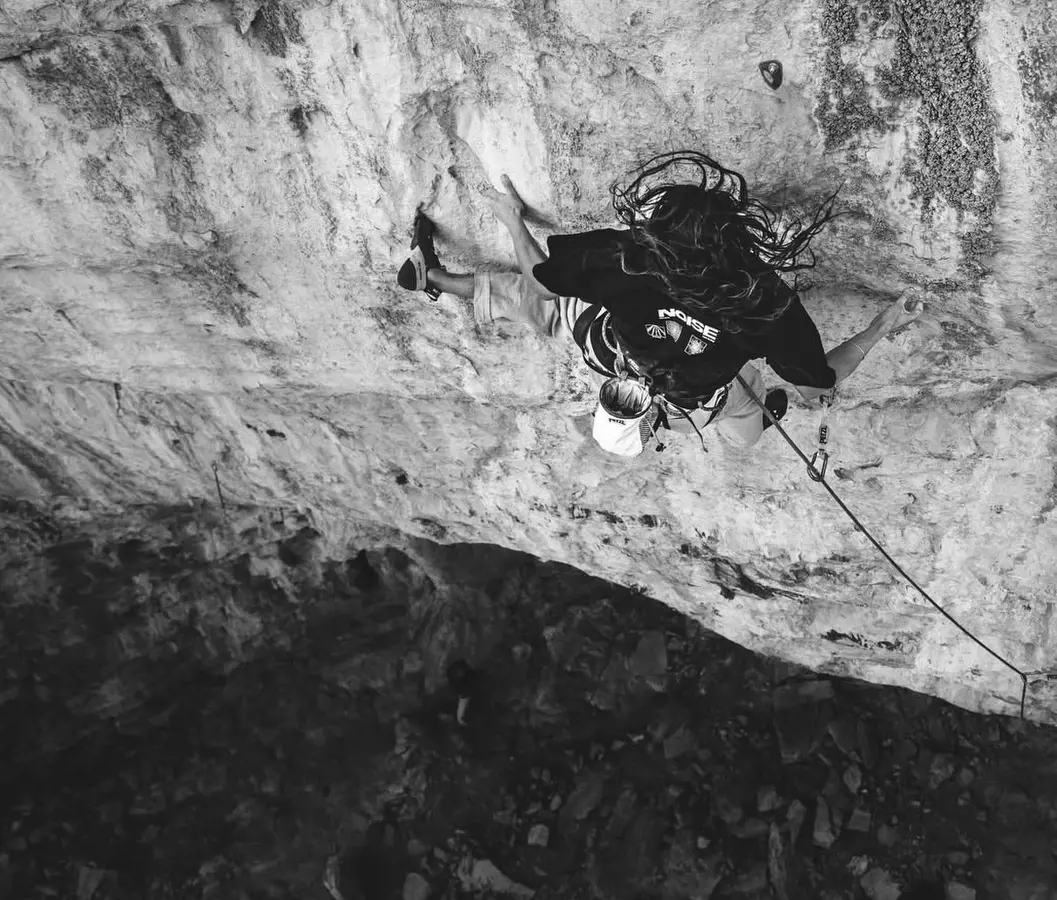
Magnus Midtbรถ, one of the best competition climbers some ten years ago, when he also was #4 in the World Champions, runs one of the most popular Climbing Youtube channels. Here he gives his 20 Pro tips including talking about eating disorder.

Amanda Watts, partner and sports dietitian to Olympian Tom O'Halloron, has reported on Insta about how the athletes can prepare the last five days living in the Olympic village. We asked Amanda if she could give more details and here is what she reported.

"1. Teams could set up training camps before they head into the village. They are a great option but required being able to cover costs of hotel quarantine while in the training camp and daily Covid testing, venue hire etc. So access to these depends on how much funding a country has for sport climbing. And what athletes want to do also.

2. Athletes are in the village for the minimum amount of time possible. I think its five days before and you could request two days earlier if you were coming from a country currently in winter, to have two extra days to get used to the heat. You have access to a strength training gym and your own hang boards etc only for those two extra days.

3. The Australians Tom Oโ€™Halloran and Oceania McKenzie arrived on the 27th of July. For all climbing athletes, the official training days and access to the climbing wall, warm-up bouldering wall, warm-up speed wall etc start on the evening of 29th July. They have five evening sessions on the wall before the comp. Everything has been organised to minimise Covid risk, take care of the athletes and give time the time they need to train. The bouldering warm-up wall is pretty huge, 20m wide!

4. The climbing athletes in the village are recovering from the travel, getting in the zone, going for a run, having a light finger board, resting, watching other sports on the TV viewing areas, eating food and getting themselves sorted for the practice days and comp days."


It should be noted that team USA did bring a portable wall that they have set up in their Olympic village.

Olympic male climbing betting odds
Here is a print screen from one betting company. How they have set up the odds is unclear, and hear are some comments:

The chances for a Speed specialist winning must be at least 999, not counting Khaibullin. Colin and Oโ€™Halloran have 51 but I think Colin has at least ten times bigger chance of winning. The Germans Hojer and Megos should, at least, shift positions.