
NEWS

19 November 2021
New search for logbooks
With the most recent update, we introduced a search feature for logbooks, and adapted the layout to resemble the other ascent lists on 8a. We hope you like it! For those who have been keeping a log for a while, this can yield some funny results that were so far quite hidden, such as the double onsight in the screenshot which, on the first entry at age 18 got the note "no chalk no shoes" and 12 years later, there is only a note about how the first bolt is too high ;-) We hope this facilitates some enjoyable trips down the memory lane!
Read more
16
0
Marco Scolaris has been the President of IFSC since it was founded in 2007. He has been very active in making Climbing getting into the Olympics. Here is part of a chat we had two weeks ago. The questions I put forward related mainly to two zones in Bouldering, route setting failures and Eating disorder.
”We have not yet reached consensus when it comes to two zones and points. IFSC will not be a top government organisation as long as I am running it. I think that in the end, we will score by points in bouldering and our working group are discussing the two zones possibilities. Topping out is what counts in bouldering and there are different calculation possibilities with two zones.
There will always be comps where the setters were not spot on, due to humidity, coincidences but also due to mistakes. Possibly, you can have some pre-runners testing the boulders.
The IFSC is constantly monitoring Athletes' Health, through its Medical Commission. In this perspective, we regularly proceed with BMI testing of the athletes during our events. We have worked hard with the eating disorder issue and we had fewer cases for several years. For some reason, it picked up again and we are discussing new ways to deal with it but there are also legal problems. Since BMI low values might be an indicator of eating disorders, we are improving our system of monitoring, studying actions to be taken, including, for sure, preparing educational programs. The health of the athletes is something which is very important for us. For sure we will start an educational program as I read on 8a that Stasa Gejo suggests. We all probably know or have seen climbers having had problems with eating disorder. Today, our sport is getting exposure through lifestreaming and television, therefore we have even more responsibility to lead the sports community by example. Eating disorders are a serious issue in our society, affecting more commonly adolescents and young adults, but not only. We have to do our part to protect the climbers' health.
I cannot talk of eating disorders as I am not a doctor and that is diagnosis. What I can say is the above regarding BMI measurement."
”We have not yet reached consensus when it comes to two zones and points. IFSC will not be a top government organisation as long as I am running it. I think that in the end, we will score by points in bouldering and our working group are discussing the two zones possibilities. Topping out is what counts in bouldering and there are different calculation possibilities with two zones.
There will always be comps where the setters were not spot on, due to humidity, coincidences but also due to mistakes. Possibly, you can have some pre-runners testing the boulders.
The IFSC is constantly monitoring Athletes' Health, through its Medical Commission. In this perspective, we regularly proceed with BMI testing of the athletes during our events. We have worked hard with the eating disorder issue and we had fewer cases for several years. For some reason, it picked up again and we are discussing new ways to deal with it but there are also legal problems. Since BMI low values might be an indicator of eating disorders, we are improving our system of monitoring, studying actions to be taken, including, for sure, preparing educational programs. The health of the athletes is something which is very important for us. For sure we will start an educational program as I read on 8a that Stasa Gejo suggests. We all probably know or have seen climbers having had problems with eating disorder. Today, our sport is getting exposure through lifestreaming and television, therefore we have even more responsibility to lead the sports community by example. Eating disorders are a serious issue in our society, affecting more commonly adolescents and young adults, but not only. We have to do our part to protect the climbers' health.
I cannot talk of eating disorders as I am not a doctor and that is diagnosis. What I can say is the above regarding BMI measurement."
Read more
1
619 November 2021
La théorie des cordes 8c and two 8b+' by Manon Hily
Manon Hily has done La théorie des cordes (8c) in St Léger. In the picture by (c) Theo Cartier, the 27-year-old does Le sonnet croisé (8b+) in Buoux, on her second go. In Buoux she he has also lately done Les brillants sonnaient (8b+).
"La theorie des cordes is one of the most beautiful lines of Praniania the sector in Saint Leger. It is like 30-35 metres with 2 different parts with different rocks. The first part is very powerful with tufas in an overhang on yellow rock and the second part is black vertical rock with small holds and you need a lot of resistance. I choose this line because of its beauty and because it is famous. I tried it last year in less than 10 days but I wasn’t in a good shape and my balance between power and endurance was bad. The holds are somewhat painful so you have only like one go per day. So I trained this year for the world cup.
About the two 8b+', the two lines are like 100 % my style, a big overhang with mono or two-finger pockets and powerful moves and you need a lot of endurance but there is always rest in between the different sections. Very beautiful to climb. These two lines are in diagonal of the wall and they are crossing."
Hily has been an active competition climber since 2009, having won Euro Youth Cups in both Lead and Boulder. In 2018, she was #4 in the Overall World Cup and did Era Vella 8c+/9a but then she had a pulley injury. Last year she had another one working on Biographie. Her next project is possible, La ligne claire 8c+ in Saint-Leger.
"La theorie des cordes is one of the most beautiful lines of Praniania the sector in Saint Leger. It is like 30-35 metres with 2 different parts with different rocks. The first part is very powerful with tufas in an overhang on yellow rock and the second part is black vertical rock with small holds and you need a lot of resistance. I choose this line because of its beauty and because it is famous. I tried it last year in less than 10 days but I wasn’t in a good shape and my balance between power and endurance was bad. The holds are somewhat painful so you have only like one go per day. So I trained this year for the world cup.
About the two 8b+', the two lines are like 100 % my style, a big overhang with mono or two-finger pockets and powerful moves and you need a lot of endurance but there is always rest in between the different sections. Very beautiful to climb. These two lines are in diagonal of the wall and they are crossing."
Hily has been an active competition climber since 2009, having won Euro Youth Cups in both Lead and Boulder. In 2018, she was #4 in the Overall World Cup and did Era Vella 8c+/9a but then she had a pulley injury. Last year she had another one working on Biographie. Her next project is possible, La ligne claire 8c+ in Saint-Leger.
Read more
5
018 November 2021
Anna hits rock bottom before sending 8c+ again
Read more
0
018 November 2021
Eternit 9a+ by Ale Zeni twice
Ale Zeni has made the first repeat of Maurizio Zanolla's Eternit in Baule and suggests an upgrade to 9a+. Interesting is that he did it twice after having tried it 23 times. The reason for the upgrade is that somebody has chopped some holds making it now possibly one of the hardest slabs in the world. In 2018, he put up Energia Cosmica as a 9a+ which Ale thinks is his hardest slab ever.
"There are routes that go beyond a simple success. Eternit was a dream for me since 2010 when I tried it for the first time, challenging myself on the route known to be the hardest ever climbed by Maurizio Zanolla. A few years later, however, this beautiful line, at first almost completely natural, has been irreparably ruined by removing some holds that I considered essential until a year ago. A shattered dream that I was able to bring back by accepting those changes. Eternit was not just a difficult route, it was a deep inner search where the impossible became possible and finally achievable, a dream that became reality despite all the obstacles I encountered along the way."
Last year you did Cryptography 9b. Is that not your hardest slab?
I chose 9b for Cryptography because I was influenced by the grade of the other two routes (Bain de sang and Bimba luna) already repeated from other strong climbers so in this case, I did the grade comparison to these routes. It's always difficult to give the correct grade on this style because there aren't many difficult slab routes around the world 😉. The only way is that some strong climbers try all of these routes and say a what think about the grade 🤔. For the attempts Energia cosmic for me was the hardest 🤷♂️.
"There are routes that go beyond a simple success. Eternit was a dream for me since 2010 when I tried it for the first time, challenging myself on the route known to be the hardest ever climbed by Maurizio Zanolla. A few years later, however, this beautiful line, at first almost completely natural, has been irreparably ruined by removing some holds that I considered essential until a year ago. A shattered dream that I was able to bring back by accepting those changes. Eternit was not just a difficult route, it was a deep inner search where the impossible became possible and finally achievable, a dream that became reality despite all the obstacles I encountered along the way."
Last year you did Cryptography 9b. Is that not your hardest slab?
I chose 9b for Cryptography because I was influenced by the grade of the other two routes (Bain de sang and Bimba luna) already repeated from other strong climbers so in this case, I did the grade comparison to these routes. It's always difficult to give the correct grade on this style because there aren't many difficult slab routes around the world 😉. The only way is that some strong climbers try all of these routes and say a what think about the grade 🤔. For the attempts Energia cosmic for me was the hardest 🤷♂️.
Read more
20
718 November 2021
Horak comments the new suggested Combined format
Reino Horak, team manager for Norway and part of the IFSC rules commission, says he is puzzled about the new suggested Combined format and here are his comments and some questions.
"I agree with the IFSC working group that a new Combined scoring system should be more understandable. I am also in favour of two zones and having eights guys rotating on four boulders which have been suggested. I have taken part in two IFSC meetings and analysed the PDF presentations and it seems like many, including myself, are a bit puzzled. With all the question marks that have been put forward, it seems a bit strange that within two weeks there will be a decision if this new Combined format would run its "test" during the European Championship next year. Here are some of my question marks; (Possibly some of them are just based on misunderstandings which then hopefully could be cleared out.)"
1. The history and the Olympics show that route setting is difficult. Sometimes we see many tops or that the climbers just reach half the wall, at the same time too many or even no tops in bouldering. In practice, we could see scoring in Paris where the result will mainly be decided based on just one discipline, i.e. in the Olympic male boulder final, almost all would have scored within 5 points, which could be the same as doing one move in bouldering
2. Currently, the boulder score is presented with four columns, i.e. 2T 3Z 3:9. It seems now it will be presented in six columns, 2T 3Z 3z 3:9:6 and then later this score will be converted to points. As a matter of a fact, first, possibly each boulder will be presented with up to six columns and then converted into points, before they are added together with another six columns and a point score.
3. How should it be commentated and presented in the live-streamings? "He topped out the first boulder (after falling four times) and possibly scored 25 points." Then after the second guy also topping out (after falling three times to the Top and two times to the second zone). "Great Top which currently gives him a score of 24.7 points." Then after the third climber also toppíng out in his fourth go and only falling one time to the second zone. "Nice Top... and based on also number of falls to the second zone...he scores 24.69 points." Later, after the next climber the commentator possibly needs to say. "Another Top...wait...it seems his score is 24.688 on boulder one." You can just imagine how difficult it then would be for both the commentator as well the audience, to sum up and present the scoring for the four boulders.
It might be that I have totally misunderstood something and are out in the blue but anyhow I wanted to share this in order so this could be made more understandable. I also understand that we could give them all 25 points on the first boulder and only do countbacks if they are tied overall also after their Lead score. In any case, I just wanted to show how the scoring would have been if the suggested format would have been used also in the World Cup.
4. How should the selection to the Combined European Championship be done in August? I mean this must be done based on the relative ranking after the Boulder and Lead events? In other words, first, a ranking based selection in order to qualify to the Combined where they use a performance-based format to select the medalists?
Overall, I personally think that the format in Lead and Boulder must be the same in the World Cup and in Combined. If we will make climbing competitions more understandable, clearly, we can not run them in different formats. From the athletes perspective, different formats would mean different strategies based on if it is a World Cup or a Combined event. In reality, during the European Championship, the athletes will first opt on doing as few attempts as possible as well as climbing fast but later in the Combined event, these tactics will have very limited impact, if non.
In other words, we need to have the same format for Boulder and Lead, no matter if it is a World Cup or a Combined event. To use the suggested format also for the Boulder and Lead World Cups in 2023 would mean that possibly one third of the climber would score 0 points in Lead and imagine how this would be for the youth and the national comps. As have been shown above, the bouldering scoring will be much more complicated and uncertain until the last climber is out.
I should also mention that for the upcoming Norweigian Bouldering Cup, we will be testing a new format on a test competition including two zones and points, where the max score is 44 points just like the max score in the Bouldering Worlds Cups, 4T and 4 Z = 44 points. In that system you will get one bonus point for a flash, which is seen directly in the result board. There are of course many more scoring alternatives possible and we should opt for the most understandable. It is great that IFSC has brought up this on the table.
"I agree with the IFSC working group that a new Combined scoring system should be more understandable. I am also in favour of two zones and having eights guys rotating on four boulders which have been suggested. I have taken part in two IFSC meetings and analysed the PDF presentations and it seems like many, including myself, are a bit puzzled. With all the question marks that have been put forward, it seems a bit strange that within two weeks there will be a decision if this new Combined format would run its "test" during the European Championship next year. Here are some of my question marks; (Possibly some of them are just based on misunderstandings which then hopefully could be cleared out.)"
1. The history and the Olympics show that route setting is difficult. Sometimes we see many tops or that the climbers just reach half the wall, at the same time too many or even no tops in bouldering. In practice, we could see scoring in Paris where the result will mainly be decided based on just one discipline, i.e. in the Olympic male boulder final, almost all would have scored within 5 points, which could be the same as doing one move in bouldering
2. Currently, the boulder score is presented with four columns, i.e. 2T 3Z 3:9. It seems now it will be presented in six columns, 2T 3Z 3z 3:9:6 and then later this score will be converted to points. As a matter of a fact, first, possibly each boulder will be presented with up to six columns and then converted into points, before they are added together with another six columns and a point score.
3. How should it be commentated and presented in the live-streamings? "He topped out the first boulder (after falling four times) and possibly scored 25 points." Then after the second guy also topping out (after falling three times to the Top and two times to the second zone). "Great Top which currently gives him a score of 24.7 points." Then after the third climber also toppíng out in his fourth go and only falling one time to the second zone. "Nice Top... and based on also number of falls to the second zone...he scores 24.69 points." Later, after the next climber the commentator possibly needs to say. "Another Top...wait...it seems his score is 24.688 on boulder one." You can just imagine how difficult it then would be for both the commentator as well the audience, to sum up and present the scoring for the four boulders.
It might be that I have totally misunderstood something and are out in the blue but anyhow I wanted to share this in order so this could be made more understandable. I also understand that we could give them all 25 points on the first boulder and only do countbacks if they are tied overall also after their Lead score. In any case, I just wanted to show how the scoring would have been if the suggested format would have been used also in the World Cup.
4. How should the selection to the Combined European Championship be done in August? I mean this must be done based on the relative ranking after the Boulder and Lead events? In other words, first, a ranking based selection in order to qualify to the Combined where they use a performance-based format to select the medalists?
Overall, I personally think that the format in Lead and Boulder must be the same in the World Cup and in Combined. If we will make climbing competitions more understandable, clearly, we can not run them in different formats. From the athletes perspective, different formats would mean different strategies based on if it is a World Cup or a Combined event. In reality, during the European Championship, the athletes will first opt on doing as few attempts as possible as well as climbing fast but later in the Combined event, these tactics will have very limited impact, if non.
In other words, we need to have the same format for Boulder and Lead, no matter if it is a World Cup or a Combined event. To use the suggested format also for the Boulder and Lead World Cups in 2023 would mean that possibly one third of the climber would score 0 points in Lead and imagine how this would be for the youth and the national comps. As have been shown above, the bouldering scoring will be much more complicated and uncertain until the last climber is out.
I should also mention that for the upcoming Norweigian Bouldering Cup, we will be testing a new format on a test competition including two zones and points, where the max score is 44 points just like the max score in the Bouldering Worlds Cups, 4T and 4 Z = 44 points. In that system you will get one bonus point for a flash, which is seen directly in the result board. There are of course many more scoring alternatives possible and we should opt for the most understandable. It is great that IFSC has brought up this on the table.
Read more
0
018 November 2021
850 Miles of hiking and biking for 15 free solos …
Read more
0
017 November 2021
New Combined points format suggested
An IFSC working group has made a presentation of a new suggested format for the Combined Olympics in Paris 2024. The background is that the format should be more understandable for the media and the public that watch a climbing competition for the first time. "The Executive Board approved the recommendation of the Boulder and Lead Small Working Group to; dismiss the pure Ranking-Based models, and (instead) proceed with the direction to elaborate the technical details of the Performance-based models."
Here is a short summary with the major suggested changes.
Boulder
4 Boulders in the final, rotating as in a WC semi
2 Boulder with two zones and 2 Boulders with one zone
25 points for a Top, 10 points for the higher Zone and 5 points for the lower zone
Comparing performances: 3T 4Z = 85 points, 1T 2Z 3z = 40 points
If there are ties; 0.1 point subtracted in each fall to the Top, and 0.01 points to the Zones
It should be mentioned that also 3T 4Z = 74.99 points are possible as well as 1 T 2Z 2z = 44.86 points are possible etc. A climber flashing four boulders gets 100 points at the same time as four Tops in nine attempts rewards 99.1 points.
Lead
Topping out = 100 points
5 points deducted last 15 holds
2 points deducted the following last 10 holds
1 point deducted the following last five holds
In practice, if you reach hold 35 on a route with 50 holds, you get 25 points and if you reach hold 34, you get 23 points.
The Olympic results will be calculated by the sum of the points awarded in each of the two disciplines. In other words, if the route is too hard, there will be a little separation in Lead, and the Boulder result will more or less decide the results. If on the other hand, one climber manages to get to the Top meanwhile the rest falls on a crux midways, he/she will most likely win no matter the result in Boulder. Flashing or doing a boulder in five attempts have very little importance. Flashing or getting to the zone(s) in five attempts have only theoretical importance overall.
Here is a short summary with the major suggested changes.
Boulder
4 Boulders in the final, rotating as in a WC semi
2 Boulder with two zones and 2 Boulders with one zone
25 points for a Top, 10 points for the higher Zone and 5 points for the lower zone
Comparing performances: 3T 4Z = 85 points, 1T 2Z 3z = 40 points
If there are ties; 0.1 point subtracted in each fall to the Top, and 0.01 points to the Zones
It should be mentioned that also 3T 4Z = 74.99 points are possible as well as 1 T 2Z 2z = 44.86 points are possible etc. A climber flashing four boulders gets 100 points at the same time as four Tops in nine attempts rewards 99.1 points.
Lead
Topping out = 100 points
5 points deducted last 15 holds
2 points deducted the following last 10 holds
1 point deducted the following last five holds
In practice, if you reach hold 35 on a route with 50 holds, you get 25 points and if you reach hold 34, you get 23 points.
The Olympic results will be calculated by the sum of the points awarded in each of the two disciplines. In other words, if the route is too hard, there will be a little separation in Lead, and the Boulder result will more or less decide the results. If on the other hand, one climber manages to get to the Top meanwhile the rest falls on a crux midways, he/she will most likely win no matter the result in Boulder. Flashing or doing a boulder in five attempts have very little importance. Flashing or getting to the zone(s) in five attempts have only theoretical importance overall.
Read more
2
1617 November 2021
Urban old-school and new generation bouldering in Copenhagen
Read more
0
017 November 2021
From Dirt Grows The Flowers 8C by Elias Iagnemma
Elias Iagnemma has done From Dirt Grows The Flowers (8C) in Chironico. The Dave Graham classical was put up in 2005 and everyone who has star rated it has given it five stars. "Incredible historical line, I only needed 3 sessions (the first two last winter under terrible conditions) to climb this difficulty." (c) Simone Antuzzi
In 2018, the Italian won the national Cup and tried some WCs. The same year he did his first 8B+ and started to focus more on outdoors. In total, he has now done eight boulders 8C and harder.
What are your winter plans and what about comps?
My winter plan is to go to Ticino and Fontainebleau to climb all the projects I have in mind and to resume competitions at the beginning of February.
In 2018, the Italian won the national Cup and tried some WCs. The same year he did his first 8B+ and started to focus more on outdoors. In total, he has now done eight boulders 8C and harder.
What are your winter plans and what about comps?
My winter plan is to go to Ticino and Fontainebleau to climb all the projects I have in mind and to resume competitions at the beginning of February.
Read more
7
0 Favorites
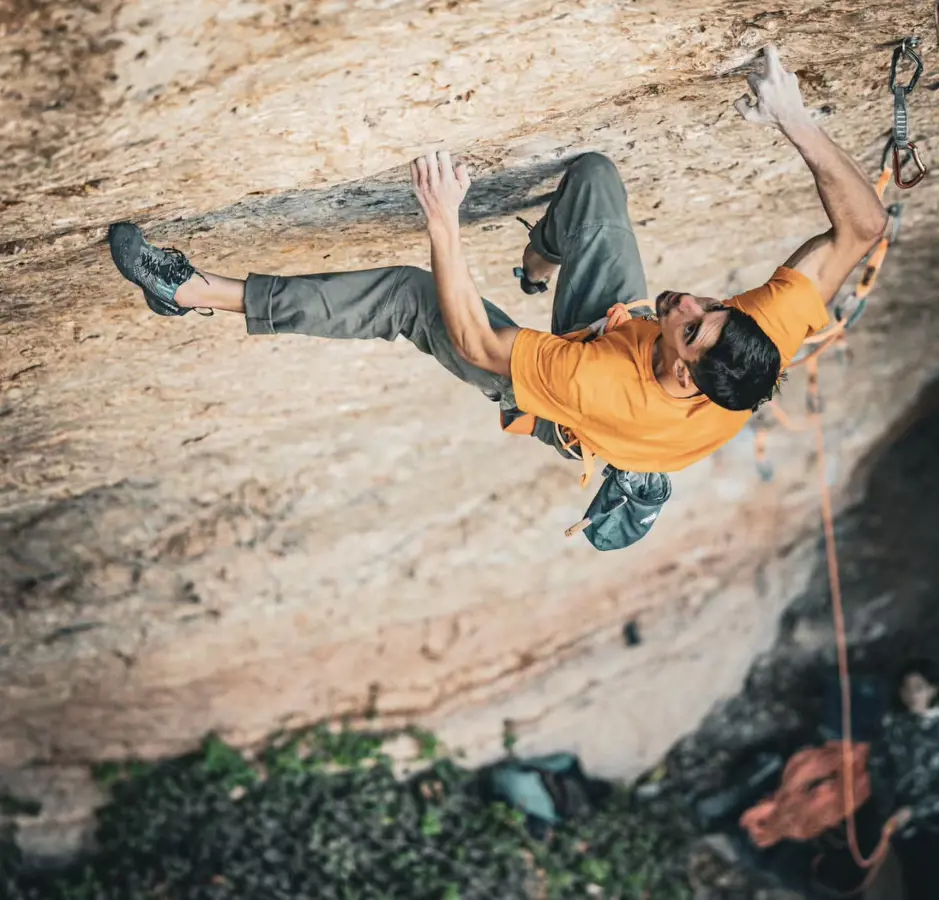
Jorge Diaz-Rullo reports on Instagram that he has made the first ascent of Cafe Colombia in Margalef. At 27, he’s already stacked four 9b+ sends and now he’s ad…
285
81
”I stopped focusing on competition bouldering after last year’s World Cup in Prague, partly because I can already feel it on my body, especially in my shoulders. The modern competition style, with a lot of jumping from one hold to another, is very demanding for the shoulders.
Outdoor bouldering is…
189
13Sean Bailey reports on Instagram that he has done the first ascent of Duality of Man (9c) in Dry Canyon. ” After four total years and three seasons of climbing,…
163
69 Most commented
Jorge Diaz-Rullo reports on Instagram that he has made the first ascent of Cafe Colombia in Margalef. At 27, he’s already stacked four 9b+ sends and now he’s ad…
285
81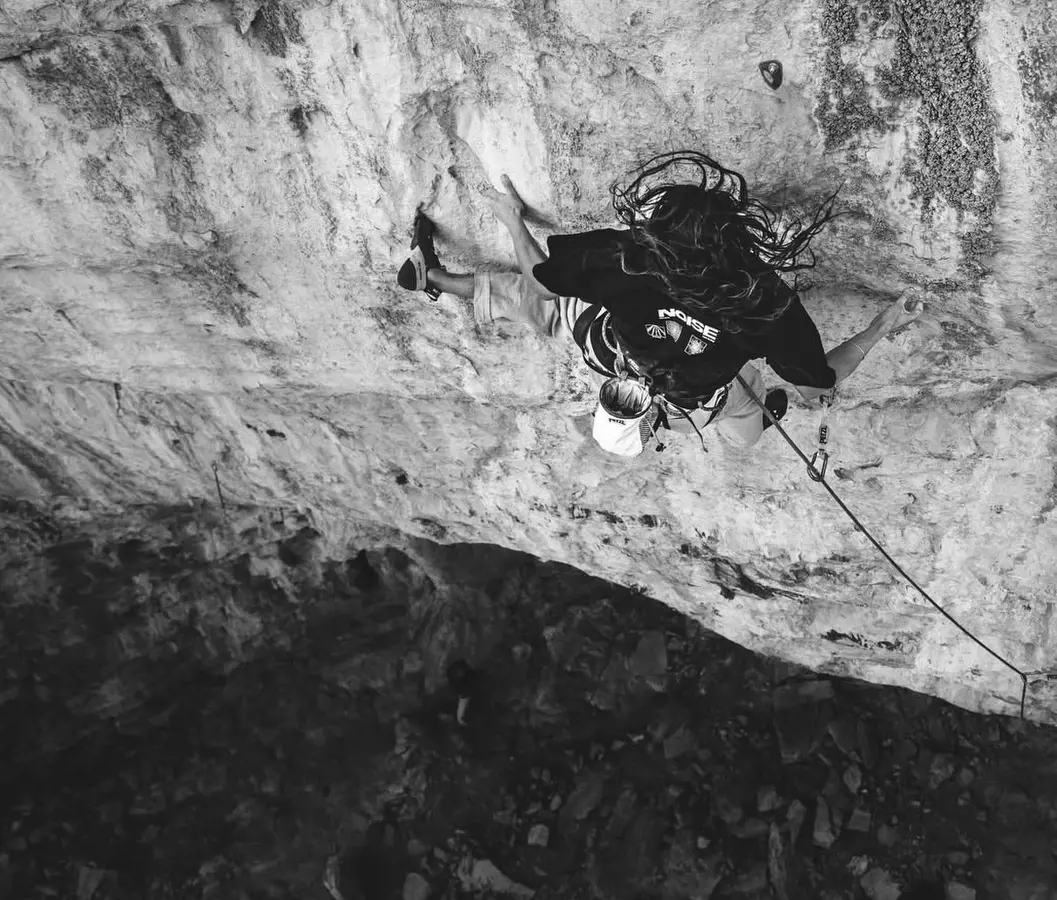
Sean Bailey reports on Instagram that he has done the first ascent of Duality of Man (9c) in Dry Canyon. ” After four total years and three seasons of climbing,…
163
69Jorge Diaz-Rullo elaborates on the reasons for him to suggest 9c for Café Colombia on Instagram, which he took down last week after projecting it for 240 sessio…
119
63