
NEWS
Onsight training article commented by Adam Ondra below:
It's hard to not feel vulnerable when onsighting which is possibly one reason why many of us avoid it. This will make you climb slower as your highest priority is to minimize the risk of every move. Instead of trying your luck pushing through the crux, you often hesitate and try every hold and sequence that in the end, even if you go for the optimal sequence, will make you fall anyway due to fatigue. As a matter of a fact, even if you make it to the top, you are probably so pumped that you can not go for a hard climb the same day and actually you might even need a rest day.
Your more "crazy" friend just might fall early on the same onsight but if she/he will continue with the same strategy, at the end of the day or during your climbing trip, her/his onsight ticklist is probably better. At the same time, being able to go for more onsights, means that such training ultimately, in the long run, produces a better climber, which Adam Ondra is an example of.
So how do you train your head to be willing to accept bigger risks of failure while climbing onsight? One way to practice this is simply by climbing faster and falling more often during training. If during your training you think you cannot not even reach the next hold and you are about to give up, just jump and try to get as close to the hold as possible and you might be surprised by doing the move or at least touching the next hold. It is about changing your mindset and trying to remove all these warning signals your brain sends out. It will take some time but once you start, you will get more adrenaline in your system, adding to the fun.
One easy way to be able to have more onsight possibilities at your gym is to combine harder routes with different colours. Alternatively, you can opt for one colour for your hands and another with your feet etc. Another option is to climb with just one foot in order to create new "onsight" sequences that you need to solve quickly.
The best onsight climber in the world is Adam Ondra and he has been since age 14, when he he did five 8b+ and one 8c onsight. Currently, he has onsighted close to 100 routes 8c and harder and meanwhile the closest runner ups have done just a handful of such hard onsights. We asked Adam if he could comment on a draft of this onsight training advice article.
"You definitely have the point. In general, I would say that people dislike onsighting because if they are going really "safe", they are hanging there forever, it is tiring, climbing has no flow and they do not enjoy, (climbing) and that is exactly the point. I would not enjoy onsighting in this way either! I love onsighting when I am just flowing up the route, when everything feels automatic and natural. Very good practice and a way to improve is to climb ALWAYS with flow and without hesitation even on your warmups or warmdowns, even if it means you end up falling off very easy routes below your limit. Don't be embarrassed in case it happens. On the other hand, be happy if you manage to onsight an easy route with perfect flow.
Your last suggestions I do not find very useful in the long term point of view - it could be an interesting refreshment of training from time to time, but climbing a lot on different new routes is impossible to replace. The solution for training is having a good spraywall and climb a lot of different new boulder/circuits, including figuring your own boulders. That helps with the visualization and reading of new sequences."
How has your onsight focus helped you grow as a climber?
My approach has always been to be the most complete climber, and I have always thought of onsighting as the complex climbing style where you get to learn the most. And today, despite admitting that working on a route for a long time has its beauty as well, I strongly recommend to the youngsters to focus on onsighting. Up until I was 11-years-old, I rarely gave a route a 2nd try and my onsight and redpoint level was very similar. The other important thing is to climb in different styles, not only the style that fits you well but try to climb as hard and as much as possible everywhere. I was lucky to grow up in my home crag where I was struggling a lot at the beginning, but I had no other option than to accept the style and today, the climbing fits me really well and I love it.
All in all, to be a good onsight climber, you need to climb a lot and mostly onsight. And lead competitions are about onsighting, and my onsighting experience from the rock might actually give me the cutting edge there.
It's hard to not feel vulnerable when onsighting which is possibly one reason why many of us avoid it. This will make you climb slower as your highest priority is to minimize the risk of every move. Instead of trying your luck pushing through the crux, you often hesitate and try every hold and sequence that in the end, even if you go for the optimal sequence, will make you fall anyway due to fatigue. As a matter of a fact, even if you make it to the top, you are probably so pumped that you can not go for a hard climb the same day and actually you might even need a rest day.
Your more "crazy" friend just might fall early on the same onsight but if she/he will continue with the same strategy, at the end of the day or during your climbing trip, her/his onsight ticklist is probably better. At the same time, being able to go for more onsights, means that such training ultimately, in the long run, produces a better climber, which Adam Ondra is an example of.
So how do you train your head to be willing to accept bigger risks of failure while climbing onsight? One way to practice this is simply by climbing faster and falling more often during training. If during your training you think you cannot not even reach the next hold and you are about to give up, just jump and try to get as close to the hold as possible and you might be surprised by doing the move or at least touching the next hold. It is about changing your mindset and trying to remove all these warning signals your brain sends out. It will take some time but once you start, you will get more adrenaline in your system, adding to the fun.
One easy way to be able to have more onsight possibilities at your gym is to combine harder routes with different colours. Alternatively, you can opt for one colour for your hands and another with your feet etc. Another option is to climb with just one foot in order to create new "onsight" sequences that you need to solve quickly.
The best onsight climber in the world is Adam Ondra and he has been since age 14, when he he did five 8b+ and one 8c onsight. Currently, he has onsighted close to 100 routes 8c and harder and meanwhile the closest runner ups have done just a handful of such hard onsights. We asked Adam if he could comment on a draft of this onsight training advice article.
"You definitely have the point. In general, I would say that people dislike onsighting because if they are going really "safe", they are hanging there forever, it is tiring, climbing has no flow and they do not enjoy, (climbing) and that is exactly the point. I would not enjoy onsighting in this way either! I love onsighting when I am just flowing up the route, when everything feels automatic and natural. Very good practice and a way to improve is to climb ALWAYS with flow and without hesitation even on your warmups or warmdowns, even if it means you end up falling off very easy routes below your limit. Don't be embarrassed in case it happens. On the other hand, be happy if you manage to onsight an easy route with perfect flow.
Your last suggestions I do not find very useful in the long term point of view - it could be an interesting refreshment of training from time to time, but climbing a lot on different new routes is impossible to replace. The solution for training is having a good spraywall and climb a lot of different new boulder/circuits, including figuring your own boulders. That helps with the visualization and reading of new sequences."
How has your onsight focus helped you grow as a climber?
My approach has always been to be the most complete climber, and I have always thought of onsighting as the complex climbing style where you get to learn the most. And today, despite admitting that working on a route for a long time has its beauty as well, I strongly recommend to the youngsters to focus on onsighting. Up until I was 11-years-old, I rarely gave a route a 2nd try and my onsight and redpoint level was very similar. The other important thing is to climb in different styles, not only the style that fits you well but try to climb as hard and as much as possible everywhere. I was lucky to grow up in my home crag where I was struggling a lot at the beginning, but I had no other option than to accept the style and today, the climbing fits me really well and I love it.
All in all, to be a good onsight climber, you need to climb a lot and mostly onsight. And lead competitions are about onsighting, and my onsighting experience from the rock might actually give me the cutting edge there.
Read more
4
41 April 2022
Ghisolfi introduces 4 new remarkable products
Read more
1
01 April 2022
Goosfraba 8c+ flash and two 9a's by Adam Ondra
Adam Ondra has enjoyed some great days in Padaro, close to Arco, where he flashed Goosfraba (8c+), "Climbs better than looks and all natural! Pretty happy to do it." The day before he sent Omen Nomen (9a). "What a bummer not to flash it! With a broken hold on the top, I did not know which beta to choose and ended up choosing the worst one... casual 2nd go."
One week ago the 29-year-old also made the FA of Pungitopo (8c+). "Bolted by Francesco Morandi. Epic line, epic rock! Hard to say the grade, tried one day with soft skin and wrong beta, then did next day with better beta. Could be 8c+." (c) Petr Chodura
One week ago the 29-year-old also made the FA of Pungitopo (8c+). "Bolted by Francesco Morandi. Epic line, epic rock! Hard to say the grade, tried one day with soft skin and wrong beta, then did next day with better beta. Could be 8c+." (c) Petr Chodura
Read more
6
11 April 2022
Sean Bailey success documentary
Read more
7
01 April 2022
Prada announces new outdoor line and fragrance
(April Fools’ Day) In addition to clothing and accessories inspired by climbing, the 2XTREME4U line also features Prada’s newest fragrance: The Essence of Sending HRDSHT. Prada’s renowned designer and the project’s principal overseer and oversprayer, Gianvittorio Grandestronzetto said, “In all my years working in the fashion industry... How do you say? Ah yes, this is for sure my proudest line yet! I had moments of self doubt but I looked down at my hands and I said out loud and to the cameras: Grandestronzetto, tho it’s hard, you still gotta send it! Let’s go! Let’s go Grandestronzetto!”
“We named the fragrance The Essence of Sending HRDSHT because it was this project’s crux sequence. To balance out the patchouli, we had to bottle that suffocating chalk cloud mixed with perspiration that you often find in climbing gyms, along with Janja’s tears of triumph from the Olympics. I’m telling you, this is really next level! Gucci, Fendi, Dolce and Gabbana... I don’t think they can repeat this let alone downgrade it!”
Prada will be presenting the 2XTREME4U line this weekend as well as announcing their 2XTREME4U Super Humble Ambastardors. Rumour has it they aggressively bought a handful of climbers out of their existing endorsement contracts and are offering their top signings five-year contracts worth over seven figures.
One of Prada’s 2XTREME4U Super Humble Ambastardors who, out of humility, didn't want to be named said, “Erm, I was pretty sure Prada and Grandestronzetto’s line was going to change climbing when I saw it. Immediately I was thinking like, oh man who is going to appreciate this new age, no sending, low point stuff that's been coming out when now there’s like this all-time super complete line. It's full send, total high point. You guys at 8a.nu are going to have to make a new Time Comparison Grading and Fashion Scale.”
“We named the fragrance The Essence of Sending HRDSHT because it was this project’s crux sequence. To balance out the patchouli, we had to bottle that suffocating chalk cloud mixed with perspiration that you often find in climbing gyms, along with Janja’s tears of triumph from the Olympics. I’m telling you, this is really next level! Gucci, Fendi, Dolce and Gabbana... I don’t think they can repeat this let alone downgrade it!”
Prada will be presenting the 2XTREME4U line this weekend as well as announcing their 2XTREME4U Super Humble Ambastardors. Rumour has it they aggressively bought a handful of climbers out of their existing endorsement contracts and are offering their top signings five-year contracts worth over seven figures.
One of Prada’s 2XTREME4U Super Humble Ambastardors who, out of humility, didn't want to be named said, “Erm, I was pretty sure Prada and Grandestronzetto’s line was going to change climbing when I saw it. Immediately I was thinking like, oh man who is going to appreciate this new age, no sending, low point stuff that's been coming out when now there’s like this all-time super complete line. It's full send, total high point. You guys at 8a.nu are going to have to make a new Time Comparison Grading and Fashion Scale.”
Read more
15
631 March 2022
Close Encounters 9a+ FA by Jonathan Siegrist
Read more
5
031 March 2022
No Sleepwalker for Schubert
Interview Katrin Strobl: Your latest YT video shows you in an unusual situation - Jakob Schubert struggles for weeks with a single boulder. Do you win or lose in the end?
Definitely both! It was a last-minute decision to fly to the US at the end of January with two very good friends, Nicolai Uznik and Michael Piccolruaz. The destination was the Red Rocks near Las Vegas and a relatively difficult boulder. The video shows the process I went through on Sleepwalker, an 8C+ boulder. In terms of difficulty, it's the hardest boulder I've ever tried, and yet I thought I had a chance of doing it relatively quickly. In the video you can see the struggles, but also how great the atmosphere is when we boulder together.
You came home from that trip 'with no result' - in hindsight, would you approach the project the same way again?
I am still convinced that I would have been able to climb the boulder and that a few slightly different decisions would have changed the result. In such a process you always learn a lot about the boulder itself. On the first days it was much too cold and therefore much too dry, actually impossible to climb. We certainly invested too much physically and destroyed skin that I simply missed at the end. Going into a boulder like that with two cuts on your fingers is anything but ideal. One or two more days of rest and more skin for the better conditions towards the end of the trip - that would have been the better recipe.
For a fortnight, your whole focus was on one boulder. You set your mind on it and want to do it at all costs, even if it means coming home 'empty-handed' - is that doggedness or stubbornness?
In the past, I always enjoyed climbing many lead routes on my second or third attempt - difficult enough that I couldn't do them onsight or flash, but not so difficult that I had to try them forever. Sending as many of them as possible in one trip, that was my goal for a long time in bouldering, too. Of course, it's cool when you're in the Rocklands in South Africa for the first time, you have all the classics in one pile, and you just go through and do a lot of bouldering that is just below your level. That also fascinates other people, when you can practically do everything in a very short time.
In the last few years, I have increasingly started to look for a very difficult project and work on it. Perfecto Mundo is a good example - it made me realize how much I'm learning about my own climbing on the rock. Everything has to be perfect when you go to the limit like that. This approach is not necessarily more fun, but it helps if you want to improve. That's what makes it exciting for me. In bouldering, I have done relatively little projecting so far, and Sleepwalker was my first trip from this other point of view. Certainly, it wasn't as much fun as if I had tried a different boulder every day. However, I came back with the feeling that I had learned a lot. This time it actually didn't turn out well, normally I still get up there somehow and have this insane feeling of happiness. Now I've had to learn that you can't always get that and would therefore say that it was the right decision.
How do you explain this meticulous approach to outsiders? How does it look in your head when you are in such a project?
I still believe that 8C+ doesn't have to be my limit, it always depends a bit on the boulder and how much it suits me. With the Sleepwalker, I had this hope that I would succeed after a few days, but I quickly realized that I would have to invest more and that was a bit frustrating. After all, you have your ego in your luggage too. As a climber, you want to be good in every style, you want to have few weaknesses. On this trip, I and the whole team were shown a few deficits. Especially on the undercuts, I felt very lost at the beginning. In the evening after a session, I think a lot about what I can do better. In the beginning, it's a lot about finding the right variation for yourself. What can be the trick that works for me? Before I go to sleep, I go through the boulder several times in my head. On the day itself, it's all about timing everything very well, always concentrating fully on the attempt at hand and getting everything out of yourself in that go. After that, you need a break, not only physically, but especially mentally. You can only put yourself in beast mode a few times in a row.
In 2021 you did practically everything 'in passing', also downgraded many routes, were untouchable and now you start 2022 with a 'negative' result. Untypical for you. What do you learn from this?
Untypical situation - yes and no. It always depends a lot on where you spend your time. La Cappella, for example, has been extremely accommodating for me, Red Rocks with the Sleepwalker not quite so. Also, you're not equally fit in every phase, but it doesn't immediately eat away at your self-confidence. I feel very good again in training now and have concentrated on World Cup preparation, even though I have a lot of plans on the rock this year. What I certainly learned is that I'm nowhere near as experienced in projecting a boulder on the rock as I am in route climbing. Next time I will definitely have to approach it tactically better, in terms of rest days, attempts and mental preparation.
Read more
7
531 March 2022
Direct Open Your Mind 9a (+) by Jonathan Siegrist
Jonathan Siegrist has done La Novena Puerta (8c+) and in Santa Linya. "I started trying it after Seleccio Anal, it was a great style change after such a long and super enduro pitch - to switch to something more bouldery. This route is kind of the classic hard one I think about when I picture Santa Linya so it was cool to finally get to try it. I found it quite hard! So many more here for me to experience, it's been so fun to learn about this classic hard cave."
In total, the 36-year-old has done 130 routes 8c+ and harder and actually his last year was his best ever, including five 9a+ and one 9b. In the 8a ranking game, he is #4 which also is his best ranking ever.
In total, the 36-year-old has done 130 routes 8c+ and harder and actually his last year was his best ever, including five 9a+ and one 9b. In the 8a ranking game, he is #4 which also is his best ranking ever.
Read more
3
331 March 2022
Era Vella 8c+/9a by Mei Kotake
Mei Kotake, #4 in the world championship in 2018, reports on Insta that she has done Era Vella in Margalef, giving it an 8c+/9a grade. The five-star route was put up by Chris Sharma and became quickly the most frequently repeated 9a in the world. Later a hold broke making it harder and during the last two years, it has only been repeated twice.
Previous on her trip, the 154 cm tall, has done Mind Control (8c) on her sixth try and Fish eye (8c) on her fourth go. Having competed actively for ten years, especially since 2016, including also Ice events, she has not been climbing that much outdoors beside the last two years. Her previous best was 8b+ and 8A+. Noteworthy is that just a few days before travelling to Spain she was #2 in the Japan Cup.
Could you tell us more about your trip and the hard routes you have done?
In total, I stayed 5 weeks in Spain. In the first half, I climbed in Oliana and sent Fish eye and Mind Control to get an understanding of how to climb such long routes.
The latter half was spent in Margalef, where I needed 13 tries over eight days to send Era Vella. On the first day, I couldn’t top it out even after two hours. The next day I had a new feeling. I could figure out some moves and then did all of the moves. After I climbed the second half of the route without falling. I was sure that when I made the first half of it, I could do it. Then the moment came.
What about competitions in 2022?
I will compete only in Lead world cups as much as possible. Competitions are a different kind of fun compared to rock. I don’t want to be obsessed with competition results, I just want to enjoy my climbing, so I’ll go back on the rock soon!
Previous on her trip, the 154 cm tall, has done Mind Control (8c) on her sixth try and Fish eye (8c) on her fourth go. Having competed actively for ten years, especially since 2016, including also Ice events, she has not been climbing that much outdoors beside the last two years. Her previous best was 8b+ and 8A+. Noteworthy is that just a few days before travelling to Spain she was #2 in the Japan Cup.
Could you tell us more about your trip and the hard routes you have done?
In total, I stayed 5 weeks in Spain. In the first half, I climbed in Oliana and sent Fish eye and Mind Control to get an understanding of how to climb such long routes.
The latter half was spent in Margalef, where I needed 13 tries over eight days to send Era Vella. On the first day, I couldn’t top it out even after two hours. The next day I had a new feeling. I could figure out some moves and then did all of the moves. After I climbed the second half of the route without falling. I was sure that when I made the first half of it, I could do it. Then the moment came.
What about competitions in 2022?
I will compete only in Lead world cups as much as possible. Competitions are a different kind of fun compared to rock. I don’t want to be obsessed with competition results, I just want to enjoy my climbing, so I’ll go back on the rock soon!
Read more
8
031 March 2022
Friend zone 8c+ trad (mix?) by William Moss (16)
William Moss has done Friend Zone (8c+) in Gunks (NY). He sent it last autumn but it did not make a headline although he was just 16 years old. Thanks to the 8a forum, we just recently found out that it pretty much could be considered a trad route and as there are perhaps just a handful of such 8c+ out there. Here we go:
"It was really fun getting into trad over quarantine with my friend Carter who taught me. I always was better at long sport climbs since I naturally have more endurance than power but I’m not near a lot of bolted crags in NYC so once I saw the lifer film with Sam Elias sending Brozone I knew I had to try it. After sending Ozone and Brozone (8b+) it looked like the next obvious project. Took me two seasons and a lot of attempts but it’s my proudest line to date."
Could you tell us more about the bolts on the route?
Ya, there are three bolts on it (two of which I clip). The first bolt protects a v7 (7A+) boulder at the bottom of Brozone and the higher bolt protects some blank 5.12+ (7b'ish) climbing on Ozone. From the next piece above the last bolt, it is a v10+ (7C+) crux into the final 12d (7c) roof.
So should we call this one of the hardest trad routes in the world or just a super hard mixed route?
Well, it just depends on how you define trad and mixed route. Many ascents of Brozone have claimed it a trad route because of the fact that the cruxes are above gear which is, even more, the case on Friend Zone.
"It was really fun getting into trad over quarantine with my friend Carter who taught me. I always was better at long sport climbs since I naturally have more endurance than power but I’m not near a lot of bolted crags in NYC so once I saw the lifer film with Sam Elias sending Brozone I knew I had to try it. After sending Ozone and Brozone (8b+) it looked like the next obvious project. Took me two seasons and a lot of attempts but it’s my proudest line to date."
Could you tell us more about the bolts on the route?
Ya, there are three bolts on it (two of which I clip). The first bolt protects a v7 (7A+) boulder at the bottom of Brozone and the higher bolt protects some blank 5.12+ (7b'ish) climbing on Ozone. From the next piece above the last bolt, it is a v10+ (7C+) crux into the final 12d (7c) roof.
So should we call this one of the hardest trad routes in the world or just a super hard mixed route?
Well, it just depends on how you define trad and mixed route. Many ascents of Brozone have claimed it a trad route because of the fact that the cruxes are above gear which is, even more, the case on Friend Zone.
Read more
6
0Favorites
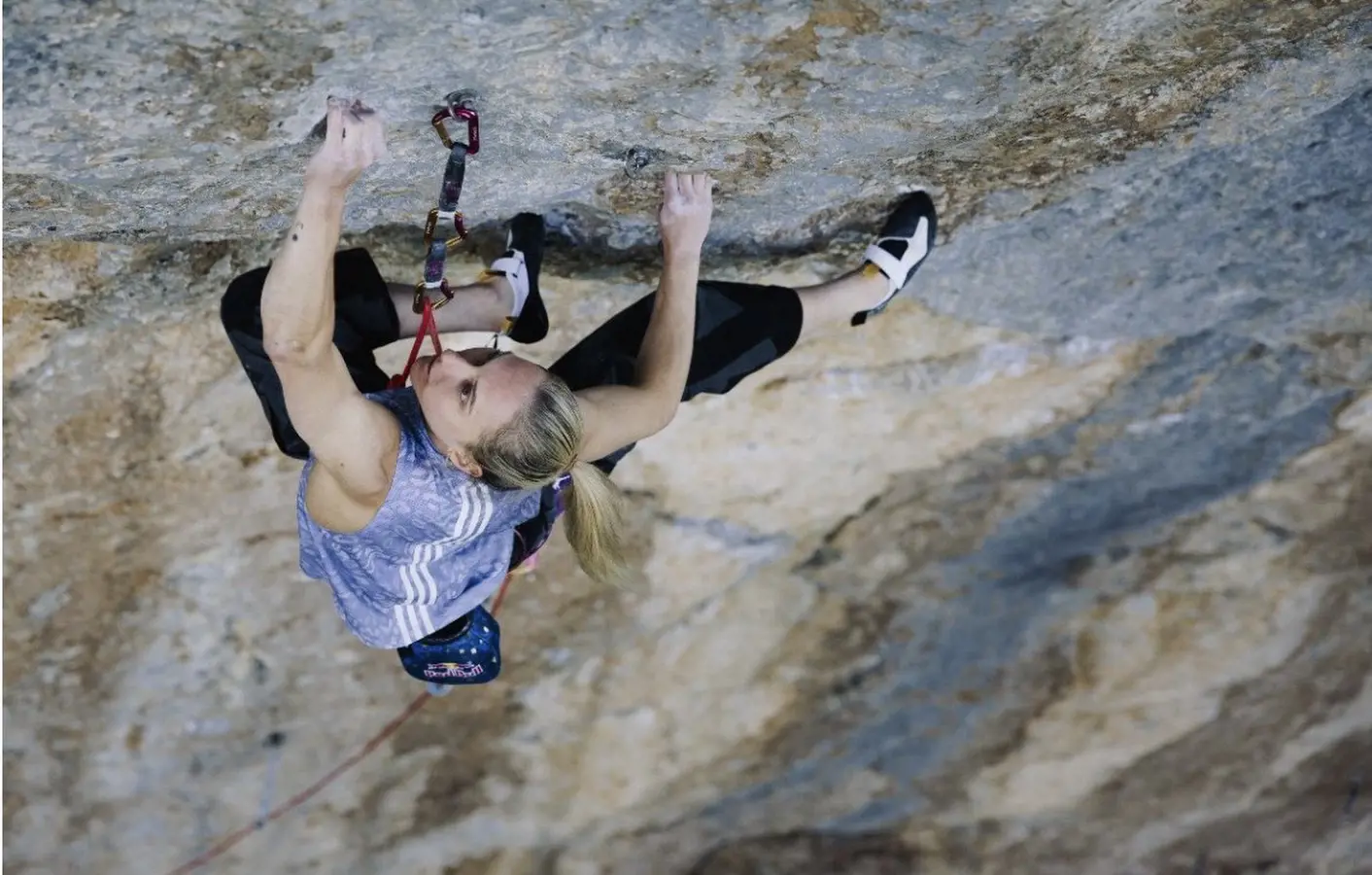
Janja Garnbret has added another milestone to her remarkable climbing career by becoming the first woman to climb Bibliographie (9b+) in Céüse, one of the harde…
363
48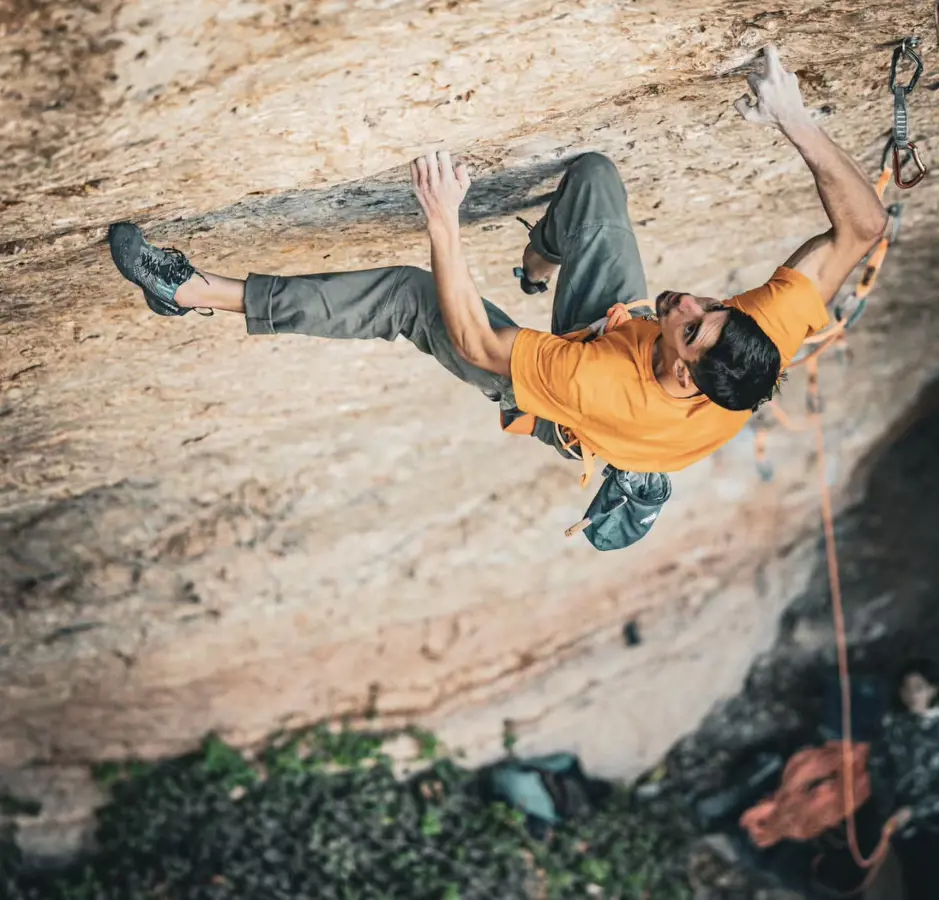
Jorge Diaz-Rullo reports on Instagram that he has made the first ascent of Cafe Colombia in Margalef. At 27, he’s already stacked four 9b+ sends and now he’s ad…
286
81
”I stopped focusing on competition bouldering after last year’s World Cup in Prague, partly because I can already feel it on my body, especially in my shoulders. The modern competition style, with a lot of jumping from one hold to another, is very demanding for the shoulders.
Outdoor bouldering is…
189
13Most commented
Jorge Diaz-Rullo reports on Instagram that he has made the first ascent of Cafe Colombia in Margalef. At 27, he’s already stacked four 9b+ sends and now he’s ad…
286
81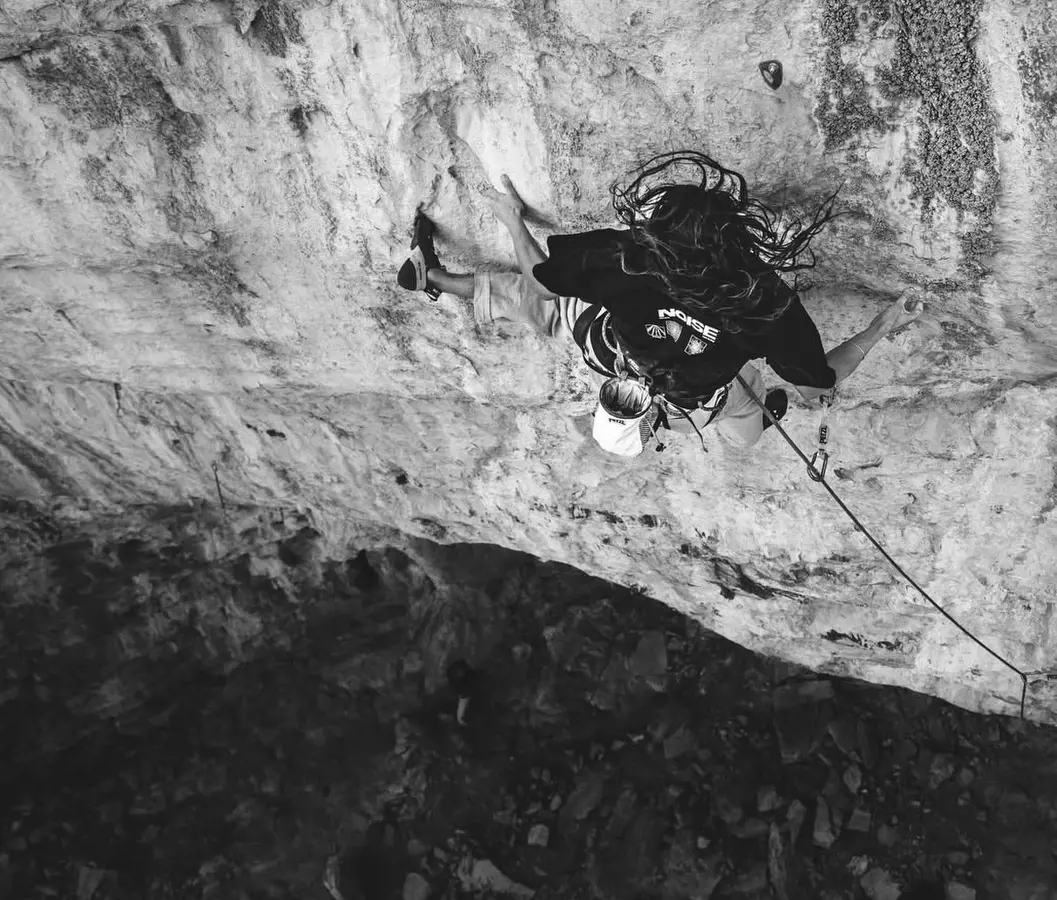
Sean Bailey reports on Instagram that he has done the first ascent of Duality of Man (9c) in Dry Canyon. ” After four total years and three seasons of climbing,…
163
69Jorge Diaz-Rullo elaborates on the reasons for him to suggest 9c for Café Colombia on Instagram, which he took down last week after projecting it for 240 sessio…
119
63