
2 April 2022
Ondra's thoughts on onsighting: "Do it more often!"
Onsight training article commented by Adam Ondra below:
It's hard to not feel vulnerable when onsighting which is possibly one reason why many of us avoid it. This will make you climb slower as your highest priority is to minimize the risk of every move. Instead of trying your luck pushing through the crux, you often hesitate and try every hold and sequence that in the end, even if you go for the optimal sequence, will make you fall anyway due to fatigue. As a matter of a fact, even if you make it to the top, you are probably so pumped that you can not go for a hard climb the same day and actually you might even need a rest day.
Your more "crazy" friend just might fall early on the same onsight but if she/he will continue with the same strategy, at the end of the day or during your climbing trip, her/his onsight ticklist is probably better. At the same time, being able to go for more onsights, means that such training ultimately, in the long run, produces a better climber, which Adam Ondra is an example of.
So how do you train your head to be willing to accept bigger risks of failure while climbing onsight? One way to practice this is simply by climbing faster and falling more often during training. If during your training you think you cannot not even reach the next hold and you are about to give up, just jump and try to get as close to the hold as possible and you might be surprised by doing the move or at least touching the next hold. It is about changing your mindset and trying to remove all these warning signals your brain sends out. It will take some time but once you start, you will get more adrenaline in your system, adding to the fun.
One easy way to be able to have more onsight possibilities at your gym is to combine harder routes with different colours. Alternatively, you can opt for one colour for your hands and another with your feet etc. Another option is to climb with just one foot in order to create new "onsight" sequences that you need to solve quickly.
The best onsight climber in the world is Adam Ondra and he has been since age 14, when he he did five 8b+ and one 8c onsight. Currently, he has onsighted close to 100 routes 8c and harder and meanwhile the closest runner ups have done just a handful of such hard onsights. We asked Adam if he could comment on a draft of this onsight training advice article.
"You definitely have the point. In general, I would say that people dislike onsighting because if they are going really "safe", they are hanging there forever, it is tiring, climbing has no flow and they do not enjoy, (climbing) and that is exactly the point. I would not enjoy onsighting in this way either! I love onsighting when I am just flowing up the route, when everything feels automatic and natural. Very good practice and a way to improve is to climb ALWAYS with flow and without hesitation even on your warmups or warmdowns, even if it means you end up falling off very easy routes below your limit. Don't be embarrassed in case it happens. On the other hand, be happy if you manage to onsight an easy route with perfect flow.
Your last suggestions I do not find very useful in the long term point of view - it could be an interesting refreshment of training from time to time, but climbing a lot on different new routes is impossible to replace. The solution for training is having a good spraywall and climb a lot of different new boulder/circuits, including figuring your own boulders. That helps with the visualization and reading of new sequences."
How has your onsight focus helped you grow as a climber?
My approach has always been to be the most complete climber, and I have always thought of onsighting as the complex climbing style where you get to learn the most. And today, despite admitting that working on a route for a long time has its beauty as well, I strongly recommend to the youngsters to focus on onsighting. Up until I was 11-years-old, I rarely gave a route a 2nd try and my onsight and redpoint level was very similar. The other important thing is to climb in different styles, not only the style that fits you well but try to climb as hard and as much as possible everywhere. I was lucky to grow up in my home crag where I was struggling a lot at the beginning, but I had no other option than to accept the style and today, the climbing fits me really well and I love it.
All in all, to be a good onsight climber, you need to climb a lot and mostly onsight. And lead competitions are about onsighting, and my onsighting experience from the rock might actually give me the cutting edge there.
It's hard to not feel vulnerable when onsighting which is possibly one reason why many of us avoid it. This will make you climb slower as your highest priority is to minimize the risk of every move. Instead of trying your luck pushing through the crux, you often hesitate and try every hold and sequence that in the end, even if you go for the optimal sequence, will make you fall anyway due to fatigue. As a matter of a fact, even if you make it to the top, you are probably so pumped that you can not go for a hard climb the same day and actually you might even need a rest day.
Your more "crazy" friend just might fall early on the same onsight but if she/he will continue with the same strategy, at the end of the day or during your climbing trip, her/his onsight ticklist is probably better. At the same time, being able to go for more onsights, means that such training ultimately, in the long run, produces a better climber, which Adam Ondra is an example of.
So how do you train your head to be willing to accept bigger risks of failure while climbing onsight? One way to practice this is simply by climbing faster and falling more often during training. If during your training you think you cannot not even reach the next hold and you are about to give up, just jump and try to get as close to the hold as possible and you might be surprised by doing the move or at least touching the next hold. It is about changing your mindset and trying to remove all these warning signals your brain sends out. It will take some time but once you start, you will get more adrenaline in your system, adding to the fun.
One easy way to be able to have more onsight possibilities at your gym is to combine harder routes with different colours. Alternatively, you can opt for one colour for your hands and another with your feet etc. Another option is to climb with just one foot in order to create new "onsight" sequences that you need to solve quickly.
The best onsight climber in the world is Adam Ondra and he has been since age 14, when he he did five 8b+ and one 8c onsight. Currently, he has onsighted close to 100 routes 8c and harder and meanwhile the closest runner ups have done just a handful of such hard onsights. We asked Adam if he could comment on a draft of this onsight training advice article.
"You definitely have the point. In general, I would say that people dislike onsighting because if they are going really "safe", they are hanging there forever, it is tiring, climbing has no flow and they do not enjoy, (climbing) and that is exactly the point. I would not enjoy onsighting in this way either! I love onsighting when I am just flowing up the route, when everything feels automatic and natural. Very good practice and a way to improve is to climb ALWAYS with flow and without hesitation even on your warmups or warmdowns, even if it means you end up falling off very easy routes below your limit. Don't be embarrassed in case it happens. On the other hand, be happy if you manage to onsight an easy route with perfect flow.
Your last suggestions I do not find very useful in the long term point of view - it could be an interesting refreshment of training from time to time, but climbing a lot on different new routes is impossible to replace. The solution for training is having a good spraywall and climb a lot of different new boulder/circuits, including figuring your own boulders. That helps with the visualization and reading of new sequences."
How has your onsight focus helped you grow as a climber?
My approach has always been to be the most complete climber, and I have always thought of onsighting as the complex climbing style where you get to learn the most. And today, despite admitting that working on a route for a long time has its beauty as well, I strongly recommend to the youngsters to focus on onsighting. Up until I was 11-years-old, I rarely gave a route a 2nd try and my onsight and redpoint level was very similar. The other important thing is to climb in different styles, not only the style that fits you well but try to climb as hard and as much as possible everywhere. I was lucky to grow up in my home crag where I was struggling a lot at the beginning, but I had no other option than to accept the style and today, the climbing fits me really well and I love it.
All in all, to be a good onsight climber, you need to climb a lot and mostly onsight. And lead competitions are about onsighting, and my onsighting experience from the rock might actually give me the cutting edge there.
4 comments
Sort by:
Date
Reply
Most commented
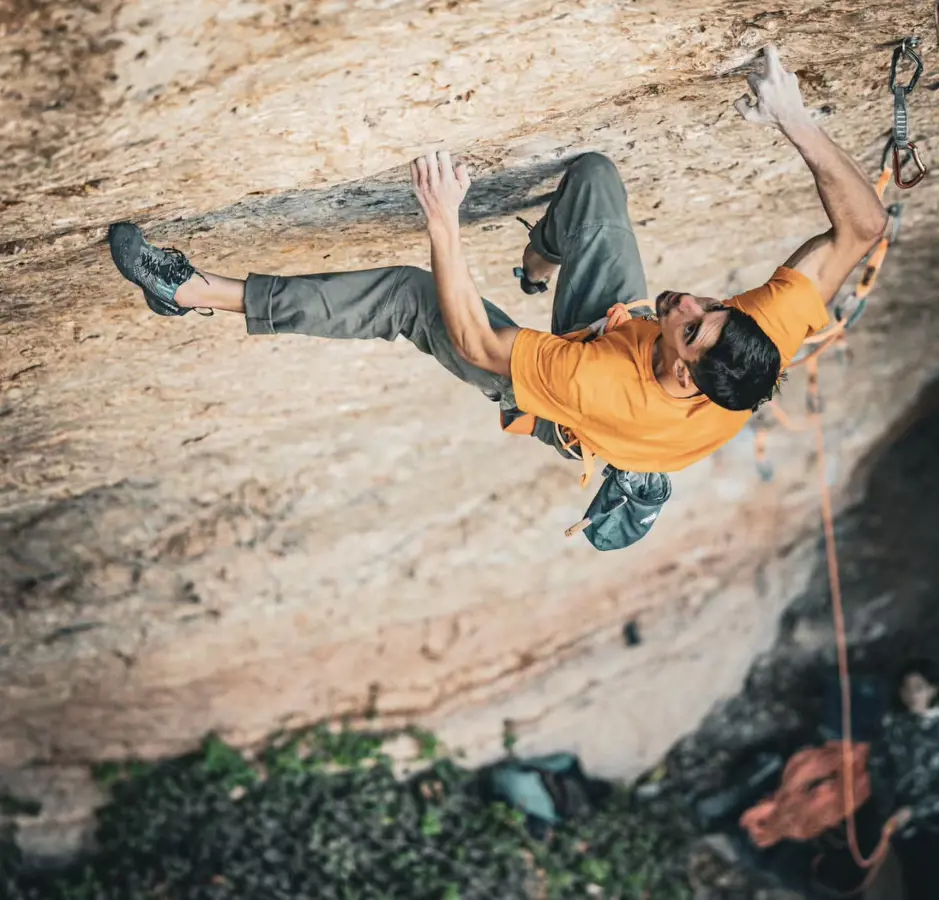
Jorge Diaz-Rullo reports on Instagram that he has made the first ascent of Cafe Colombia in Margalef. At 27, he’s already stacked four 9b+ sends and now he’s ad…
26 January 2026
Sean Bailey FA’s Duality of Man (9c)
Sean Bailey reports on Instagram that he has done the first ascent of Duality of Man (9c) in Dry Canyon. ” After four total years and three seasons of climbing,…
23 March 2026
Jorge Diaz-Rullo proposes 9c for Café Colombia
Jorge Diaz-Rullo elaborates on the reasons for him to suggest 9c for Café Colombia on Instagram, which he took down last week after projecting it for 240 sessio…
Favorites
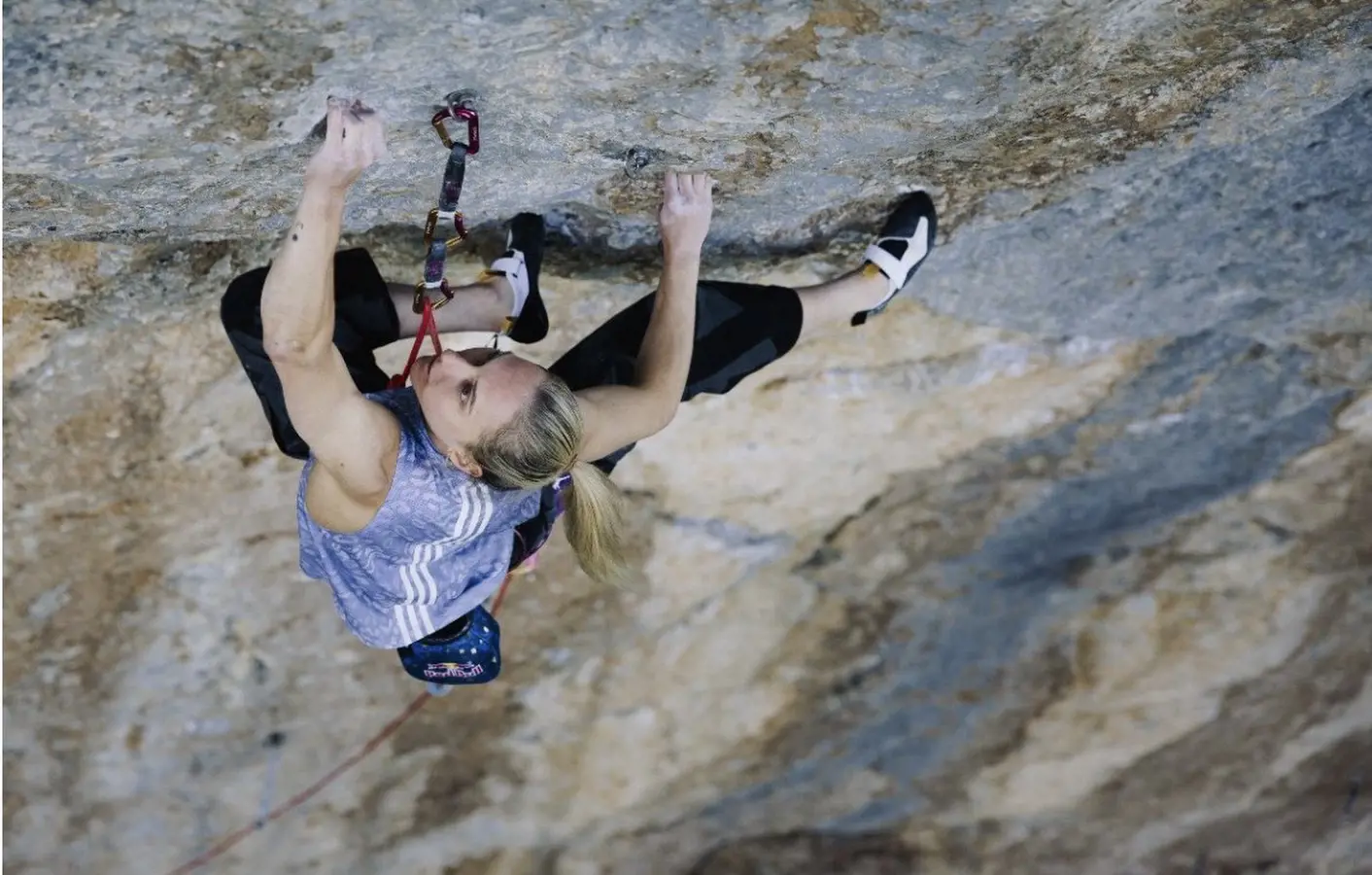
8 June 2026
Janja Garnbret does Bibliographie (9b+)
Janja Garnbret has added another milestone to her remarkable climbing career by becoming the first woman to climb Bibliographie (9b+) in Céüse, one of the harde…
Jorge Diaz-Rullo reports on Instagram that he has made the first ascent of Cafe Colombia in Margalef. At 27, he’s already stacked four 9b+ sends and now he’s ad…
16 March 2026
Ondra flashes 3*8C in two weeks
”I stopped focusing on competition bouldering after last year’s World Cup in Prague, partly because I can already feel it on my body, especially in my shoulders. The modern competition style, with a lot of jumping from one hold to another, is very demanding for the shoulders.
Outdoor bouldering is…
Favorites
8 June 2026
Janja Garnbret does Bibliographie (9b+)
Janja Garnbret has added another milestone to her remarkable climbing career by becoming the first woman to climb Bibliographie (9b+) in Céüse, one of the harde…
Jorge Diaz-Rullo reports on Instagram that he has made the first ascent of Cafe Colombia in Margalef. At 27, he’s already stacked four 9b+ sends and now he’s ad…
16 March 2026
Ondra flashes 3*8C in two weeks
”I stopped focusing on competition bouldering after last year’s World Cup in Prague, partly because I can already feel it on my body, especially in my shoulders. The modern competition style, with a lot of jumping from one hold to another, is very demanding for the shoulders.
Outdoor bouldering is…