
NEWS
10 December 2022
La Proue 8B by Camilla Moroni
Camilla Moroni has done Fred Nicole’s classic from 1998, La Proue (8B) in Cresciano. ”
I managed to send it in 3 sessions between the trainings.”
The 21-year-old has during the last four weeks done six boulders 8A+ and 8B, in spite of having started training for the 2023 comp season. In 2021, she got silver in the World Champion and this year, the Italian, was #9 in the Euro Lead Championship.
Can you tell us about your Olympic goal?
At the beginning of November I moved to Milan with the National Team and it's very close to Ticino, so it's perfect for the "rest days". As I always say my main goal is to participate in the Olympics and I'm training for it. Staying in Milano is a great opportunity, we are training well with the help of Gabri Moroni and the federation. Qualifying during the WCh and the continental event will be difficult but I'll try, even if it will be more plausible to qualify with the combined events in 2024.
The 21-year-old has during the last four weeks done six boulders 8A+ and 8B, in spite of having started training for the 2023 comp season. In 2021, she got silver in the World Champion and this year, the Italian, was #9 in the Euro Lead Championship.
Can you tell us about your Olympic goal?
At the beginning of November I moved to Milan with the National Team and it's very close to Ticino, so it's perfect for the "rest days". As I always say my main goal is to participate in the Olympics and I'm training for it. Staying in Milano is a great opportunity, we are training well with the help of Gabri Moroni and the federation. Qualifying during the WCh and the continental event will be difficult but I'll try, even if it will be more plausible to qualify with the combined events in 2024.
Read more
4
0
9 December 2022
Cinderella is Dead 8A+ (B) by Michaela Kiersch
Michaela Kiersch reports on Insta that she has done in . "Fist crimping and no-pinky pinches on Cinderella is Dead
I love the juxtaposition of bouldering up above the city! You can even see my office from here 😉". Video of the ascent and some more detailed comments.
Other Kiersch news is that Alex Megos just did the first repeat of her Goldilocks in Red River Gorge (KY), from 2017, suggesting it should be upgraded to 8c+.
In April she completed her doctoral degree in hand therapy and immediately went for her first extended trip only focusing on climbing. During three weeks in Magic Wood, she did two 8B+ and another 12 boulders 8A and harder. In total, the 27-year-old has done nine 8c+' and last fall she did her first 9a, Dreamcatcher after just five days of projecting. In other words, Michaela's combined route and boulder tick list is one of the most impressive ever. Here is an 8a interview from this summer.
Other Kiersch news is that Alex Megos just did the first repeat of her Goldilocks in Red River Gorge (KY), from 2017, suggesting it should be upgraded to 8c+.
In April she completed her doctoral degree in hand therapy and immediately went for her first extended trip only focusing on climbing. During three weeks in Magic Wood, she did two 8B+ and another 12 boulders 8A and harder. In total, the 27-year-old has done nine 8c+' and last fall she did her first 9a, Dreamcatcher after just five days of projecting. In other words, Michaela's combined route and boulder tick list is one of the most impressive ever. Here is an 8a interview from this summer.
Read more
3
08 December 2022
Outer ring R2 9a (+) FA by Alex Garriga
Alex Garriga reports on Insta that he has done the FA of Outer ring R2 9a (+) in . It is an extension to an 8c he did in April which shares the top of El subnormal del antihydral r1 (9a), which he did the FA of in March. (c) David Lopez Campe
The 24-year-old has previously done close to 40 routes 9a and harder, including 13 FAs. The Spaniard is known for his hard grading and there are only about ten guys who have done more 9a's in the world.
The 24-year-old has previously done close to 40 routes 9a and harder, including 13 FAs. The Spaniard is known for his hard grading and there are only about ten guys who have done more 9a's in the world.
Read more
9
1William Bosi has had an amazing day in Cresciano where he first flashed The Dagger 8B (+) and later was very close to flash Dreamtime 8B+/C.
The Dagger: "Super happy to flash this classic!! Defiantly would have been my anti style two years ago so really psyched with my training."
Dreamtime: "Sooo good!! Was really close to the flash but slipped off after the crux. Luckily it went down soon after."
Where and how did you fall?
I fell on the flip move before the good holds just missing the hold. Basically, as it had rained so much in the last days it was just a bit humid so I was slipping down the holds I think.
How would you grade Dreamtime?
It’s hard to say, definitely soft end 8C if it is 8C.
How long will you stay in the area and what is next?
Just till Monday then I go to Arco to look at Excalibur 😁 (Ghisolfi's 9b+ project). My main goal was to try flash Off the Wagon (8B+) but it has rained so much up there that I’m not sure I’ll get to try it. br>
Are you going to focus on comps in 2023 and trying to make it to the Olympics?
I am not that keen on the current format so I won’t be trying for the 2024 Olympics. However, I’m definitely still open to comps in the future if things change.
The Dagger: "Super happy to flash this classic!! Defiantly would have been my anti style two years ago so really psyched with my training."
Dreamtime: "Sooo good!! Was really close to the flash but slipped off after the crux. Luckily it went down soon after."
Where and how did you fall?
I fell on the flip move before the good holds just missing the hold. Basically, as it had rained so much in the last days it was just a bit humid so I was slipping down the holds I think.
How would you grade Dreamtime?
It’s hard to say, definitely soft end 8C if it is 8C.
How long will you stay in the area and what is next?
Just till Monday then I go to Arco to look at Excalibur 😁 (Ghisolfi's 9b+ project). My main goal was to try flash Off the Wagon (8B+) but it has rained so much up there that I’m not sure I’ll get to try it. br>
Are you going to focus on comps in 2023 and trying to make it to the Olympics?
I am not that keen on the current format so I won’t be trying for the 2024 Olympics. However, I’m definitely still open to comps in the future if things change.
Read more
17
27 December 2022
Rekabi announced as part of IFSC coaching program
IFSC reports that Elnaz Rekabi, together with three other women are part of a programme aiming to increase the presence of female coaches at the Olympic Games.
"All four participants attended the first online session on November 30th that kickstarted the 21-month leadership programme alongside sportswomen from other Olympic sports. The next step on the blended-learning programme will be a five-day residential session in Great Britain in February 2023. A mixture of online sessions, leadership sessions, and sport-specific mentor sessions will then take place before the programme is brought to a close in July 2024."
In October, Rekabi participated in the Asian Championship without her hijab, which made headlines all over the world. This weekend, the news broke that Rekabi's house had been demolished. International news outlets have yet to independently confirm when the demolition took place.
The non-government affiliated news site, IranWire, who first alerted outlets to the demolition, has also reported that a source previously told them; "The National Olympic Committee and the minister of sports told Elnaz that, “her family’s land would be confiscated if she leaves the country, gives interviews to the media or starts sensitive activities on her social pages.” adding that the family’s property was worth $300,000.
Before heading to Seoul, Rekabi was required to hand over a $35,000 cheque and grant full power of attorney to Iran’s climbing federation to sell her family's property as a guarantee she would come back."
"All four participants attended the first online session on November 30th that kickstarted the 21-month leadership programme alongside sportswomen from other Olympic sports. The next step on the blended-learning programme will be a five-day residential session in Great Britain in February 2023. A mixture of online sessions, leadership sessions, and sport-specific mentor sessions will then take place before the programme is brought to a close in July 2024."
In October, Rekabi participated in the Asian Championship without her hijab, which made headlines all over the world. This weekend, the news broke that Rekabi's house had been demolished. International news outlets have yet to independently confirm when the demolition took place.
The non-government affiliated news site, IranWire, who first alerted outlets to the demolition, has also reported that a source previously told them; "The National Olympic Committee and the minister of sports told Elnaz that, “her family’s land would be confiscated if she leaves the country, gives interviews to the media or starts sensitive activities on her social pages.” adding that the family’s property was worth $300,000.
Before heading to Seoul, Rekabi was required to hand over a $35,000 cheque and grant full power of attorney to Iran’s climbing federation to sell her family's property as a guarantee she would come back."
Read more
1
07 December 2022
Sanjski par extension 9a by Jernej Kruder
Jernej Kruder, who won the Boulder World Cup in 2018, has done Sanjski par extension (9a) in Osp - Banje in Babna. "Countless tries over the years. Big discussion here about using kneepads...When this route was climbed back in 2004, there was no such things as rubbered kneepads. I'm not against it while doing the FA or repeating the route that was first climbed whit it, but using it here definitely changes the route. Anyways I tried it and did it without and I feel like that's one of my hardest routes I've climbed so far. I guess I managed to climb it in 2 parts very quickly, but the last half of the tries was an "easy go" in 2 parts. probably I was not in the wall for more than 2 minutes :)"
The 33-year-old has previously done nine routes 9a to 9a+ and also Es pontas (9b). He has been an active IFSC competition climber for almost 20 years. This year, he was #6 in the European Championship which he won in 2020. The Slovenian is known for not training indoors but instead mainly preparing for the comps outdoors also by doing multi-pitches.
The 33-year-old has previously done nine routes 9a to 9a+ and also Es pontas (9b). He has been an active IFSC competition climber for almost 20 years. This year, he was #6 in the European Championship which he won in 2020. The Slovenian is known for not training indoors but instead mainly preparing for the comps outdoors also by doing multi-pitches.
Read more
14
06 December 2022
La Castagne 9a+ by Alexander Rohr
Alexander Rohr has done the third ascent of La castagne (9a+) in . "Nice route! Hard Boulder in the middle and then resistance climbing on crimps." (c) John Thornton
Adam Ondra did the FA in 2018 and then Alex Megos did the first repeat in 2020. Rohr has previously done 14 9a's and harder.
Can you tell us more about the route and the ascent?
The route is roughly 25 meters long and hard on the first half. The Crux is a hard boulder on maybe 7 moves, leading into a very resistant part on small crimps. The crag of St. Léger is located right underneath Mont Ventoux and hosts a ton of routes from 8a to very hard. Usually, the conditions are very dry, lots of wind and usually the temperatures are perfect. This time it was more or less the opposite. Within the two weeks of the trip we had 4 days of no climbing at all because of a completely wet crag. Several days were too hot or extremely cold. 4 good days was all we had. I knew the route from trying it three days last April after having completed Retour Gagnant, another 9a, plus some brief tries on another trip earlier this year. At the start of this trip, I was pretty sure to do it as I planned in enough time. In the end, the weather made it exciting. I had one day where I was too nervous to climb well. On all the other days, I was able to give it all and I sent on the very last opportunity before the weather changed to the worst. Having learned a thing or two on all my recent projects or failures was my biggest asset on La Castagne and it just all came together this time. There was flow in my mind even tough, it was very hard to give some good tries. Progress was made - that is all that counts and that probably is the reason why this project made me very happy.
Adam Ondra did the FA in 2018 and then Alex Megos did the first repeat in 2020. Rohr has previously done 14 9a's and harder.
Can you tell us more about the route and the ascent?
The route is roughly 25 meters long and hard on the first half. The Crux is a hard boulder on maybe 7 moves, leading into a very resistant part on small crimps. The crag of St. Léger is located right underneath Mont Ventoux and hosts a ton of routes from 8a to very hard. Usually, the conditions are very dry, lots of wind and usually the temperatures are perfect. This time it was more or less the opposite. Within the two weeks of the trip we had 4 days of no climbing at all because of a completely wet crag. Several days were too hot or extremely cold. 4 good days was all we had. I knew the route from trying it three days last April after having completed Retour Gagnant, another 9a, plus some brief tries on another trip earlier this year. At the start of this trip, I was pretty sure to do it as I planned in enough time. In the end, the weather made it exciting. I had one day where I was too nervous to climb well. On all the other days, I was able to give it all and I sent on the very last opportunity before the weather changed to the worst. Having learned a thing or two on all my recent projects or failures was my biggest asset on La Castagne and it just all came together this time. There was flow in my mind even tough, it was very hard to give some good tries. Progress was made - that is all that counts and that probably is the reason why this project made me very happy.
Read more
8
16 December 2022
Bügeleisen sit 8C by Niky Ceria
Niky Ceria reports on Insta that he has repeated Nalle Hukkataival's in Maltatal. (c) Stefan Kürzi
It was Klem Loskot who put up the stand version in 2001 as an 8B+. Then in 2014, Hukkataival added the sit start to it after a long battle saying it was one of his hardest ever. Ceria told 8a that he needed three days to do the stand and then he did the sit directly in his next session.
Ceria: "The sit start is just a different matter; more modern, I think. It forces you to stick with a diverse beta for the upper moves and it makes the stand more fluid. It represents my favorite place to start the climb and, when you sit, the feeling of looking at the line from that perspective gives you a sense of fullness."
It was Klem Loskot who put up the stand version in 2001 as an 8B+. Then in 2014, Hukkataival added the sit start to it after a long battle saying it was one of his hardest ever. Ceria told 8a that he needed three days to do the stand and then he did the sit directly in his next session.
Ceria: "The sit start is just a different matter; more modern, I think. It forces you to stick with a diverse beta for the upper moves and it makes the stand more fluid. It represents my favorite place to start the climb and, when you sit, the feeling of looking at the line from that perspective gives you a sense of fullness."
Read more
15
06 December 2022
Edu Marin doing Wogü 8c MP with his father
Read more
4
05 December 2022
Martina Demmel interview
Martina Demmel onsighted Pata pa mi 8b (a+) in 2019 after having climbed for less than three years. The next year she made it to the semifinal in her debut World Cup. In 2021, she onsighted roughly 160 routes 7c to 8b+ and became the first-ever female climber to win the 8a annual global ranking game. This year she started off in a cast, having broken her foot and in the summer she focused on the World Cup. Also this year the 21-year-old began a sport police schooling program. Her impressive resume also now includes a second 9a, which she carried out last week. (c) Felix Bub
We hear flexibility is one of your strengths?
Regarding flexibility, I'm on the lucky side which means I've always been very flexible and therefore, could do both splits without any training but since I started climbing, I enjoy doing some mobilisation/stretching for about 5mins in total each morning and evening; that's all😉... I also developed a pretty frontal static climbing style where I use a lot of high feet and 🐸 positions where the flexibility definitely helps me find a way to solve sequences with a lower level of power🧩... but that's nothing surprising I guess😜.
Do you think being flexible helps with onsighting?
Maybe, but I guess that's (onsighting) rather because of the different mindset and the fact that you have to move very intuitive what comes after more & more experience; that helps in making the right decisions quicker and more often🦎💭 While onsight climbing, I'm experiencing the purest form of flow as there's no time to think about something else what makes this so special that it feels like unpacking a present: anything can await you at any point🎁🎉😁
Can you tell us more about your police schooling program?
Since the middle of September, I'm on police school to become a Bavarian Police officer after 5 years of education👮♀️. It's a rather unknown program for all kinds of professional sports to allow national team members (criteria to enter the program, should be on WC level) to pursue their sports career but to also have a safe job afterward. Basically, our school time is over the double length (instead of 2,5 it's 5 years) to have enough time for training & comps. School is always from September to the end of January but we've got the luxury to be supported financially the whole time, that's why it's my job now to prepare the best possible for the comps and to move the priority away from rocks😉.
Is the Olympics one of your goals?
Paris isn't my goal as I'm only focusing on Lead the next time (bouldering only to feel more comfortable in unstable positions) & because I've actually never been attracted by the Olympics in general but maybe this changes by LA, who knows😜🙃... I'm definitely psyched to get more consistency into my WC performances and to leave the stage with a hopefully satisfying battle no matter the placement🔥😊.
How often are you able to climb outdoors?
Luckily, there's still a bit of time to head out to the crags around my home where I really need to keep up my mental well-being🦎🌞. And it seems that having school taking over a big part of my daily life now, it plays out surprisingly well in my climbing as I'm appreciating the rare time & simple things much more🦋😁 (expected to be rather stressed by forcing things in these short windows😅). Not to forget here, I'm very glad to have gotten a place at police school after trying to get in there for 2 years🙏😊 (Laser-OP for my eyes delayed everything.)
My plans for winter still have to be discussed with my coach but I'm hoping to join a few friends in Margalef in late February but the trip definitely won't be as long as the previous years😜🙈.
What does a normal week look like for you?
So normally during fall/winter, we've got police school from 7 am to 3 pm (some days start later/end earlier to get more time for training) only within this sports concept. Afterward, there's training with the German team in gyms around Munich. My routine has turned into climbing indoors on 3 afternoons during the week (no specific training yet just trying what feels out of my comfort zone💃) + a lot of stability training for my shoulder as the right one is pretty unstable🦍 and rock climbing on the weekends around home🌞... and a lot of studying in the evenings for school📚. Felt pretty strange in the beginning to have such a structure again after 3 years of mostly intuitive living but I'm enjoying it more than expected (feels amazing to be "productive" except for the lack of sleep😅).
How has the change from an onsight lifestyle to a much more structured life been?
At first, those changes felt pretty overwhelming by getting thrown into a totally new world/surroundings (for comps, police school) but I'm generally keen for new challenges that bring the necessary motivation to adapt to those situations. Most of all, I was looking forward to having something besides climbing to focus on and hopefully put off some self-made pressure on the wall (partly it's working😜💭).
Just to mention it, I still enjoy onsighting on rock probably the most but it simply isn't possible all the time/everywhere because around my home, there are mostly the really challenging routes left but that's a good reason to commit to projecting something finally🙃🦎🚀...
We hear flexibility is one of your strengths?
Regarding flexibility, I'm on the lucky side which means I've always been very flexible and therefore, could do both splits without any training but since I started climbing, I enjoy doing some mobilisation/stretching for about 5mins in total each morning and evening; that's all😉... I also developed a pretty frontal static climbing style where I use a lot of high feet and 🐸 positions where the flexibility definitely helps me find a way to solve sequences with a lower level of power🧩... but that's nothing surprising I guess😜.
Do you think being flexible helps with onsighting?
Maybe, but I guess that's (onsighting) rather because of the different mindset and the fact that you have to move very intuitive what comes after more & more experience; that helps in making the right decisions quicker and more often🦎💭 While onsight climbing, I'm experiencing the purest form of flow as there's no time to think about something else what makes this so special that it feels like unpacking a present: anything can await you at any point🎁🎉😁
Can you tell us more about your police schooling program?
Since the middle of September, I'm on police school to become a Bavarian Police officer after 5 years of education👮♀️. It's a rather unknown program for all kinds of professional sports to allow national team members (criteria to enter the program, should be on WC level) to pursue their sports career but to also have a safe job afterward. Basically, our school time is over the double length (instead of 2,5 it's 5 years) to have enough time for training & comps. School is always from September to the end of January but we've got the luxury to be supported financially the whole time, that's why it's my job now to prepare the best possible for the comps and to move the priority away from rocks😉.
Is the Olympics one of your goals?
Paris isn't my goal as I'm only focusing on Lead the next time (bouldering only to feel more comfortable in unstable positions) & because I've actually never been attracted by the Olympics in general but maybe this changes by LA, who knows😜🙃... I'm definitely psyched to get more consistency into my WC performances and to leave the stage with a hopefully satisfying battle no matter the placement🔥😊.
How often are you able to climb outdoors?
Luckily, there's still a bit of time to head out to the crags around my home where I really need to keep up my mental well-being🦎🌞. And it seems that having school taking over a big part of my daily life now, it plays out surprisingly well in my climbing as I'm appreciating the rare time & simple things much more🦋😁 (expected to be rather stressed by forcing things in these short windows😅). Not to forget here, I'm very glad to have gotten a place at police school after trying to get in there for 2 years🙏😊 (Laser-OP for my eyes delayed everything.)
My plans for winter still have to be discussed with my coach but I'm hoping to join a few friends in Margalef in late February but the trip definitely won't be as long as the previous years😜🙈.
What does a normal week look like for you?
So normally during fall/winter, we've got police school from 7 am to 3 pm (some days start later/end earlier to get more time for training) only within this sports concept. Afterward, there's training with the German team in gyms around Munich. My routine has turned into climbing indoors on 3 afternoons during the week (no specific training yet just trying what feels out of my comfort zone💃) + a lot of stability training for my shoulder as the right one is pretty unstable🦍 and rock climbing on the weekends around home🌞... and a lot of studying in the evenings for school📚. Felt pretty strange in the beginning to have such a structure again after 3 years of mostly intuitive living but I'm enjoying it more than expected (feels amazing to be "productive" except for the lack of sleep😅).
How has the change from an onsight lifestyle to a much more structured life been?
At first, those changes felt pretty overwhelming by getting thrown into a totally new world/surroundings (for comps, police school) but I'm generally keen for new challenges that bring the necessary motivation to adapt to those situations. Most of all, I was looking forward to having something besides climbing to focus on and hopefully put off some self-made pressure on the wall (partly it's working😜💭).
Just to mention it, I still enjoy onsighting on rock probably the most but it simply isn't possible all the time/everywhere because around my home, there are mostly the really challenging routes left but that's a good reason to commit to projecting something finally🙃🦎🚀...
Read more
14
11Favorites
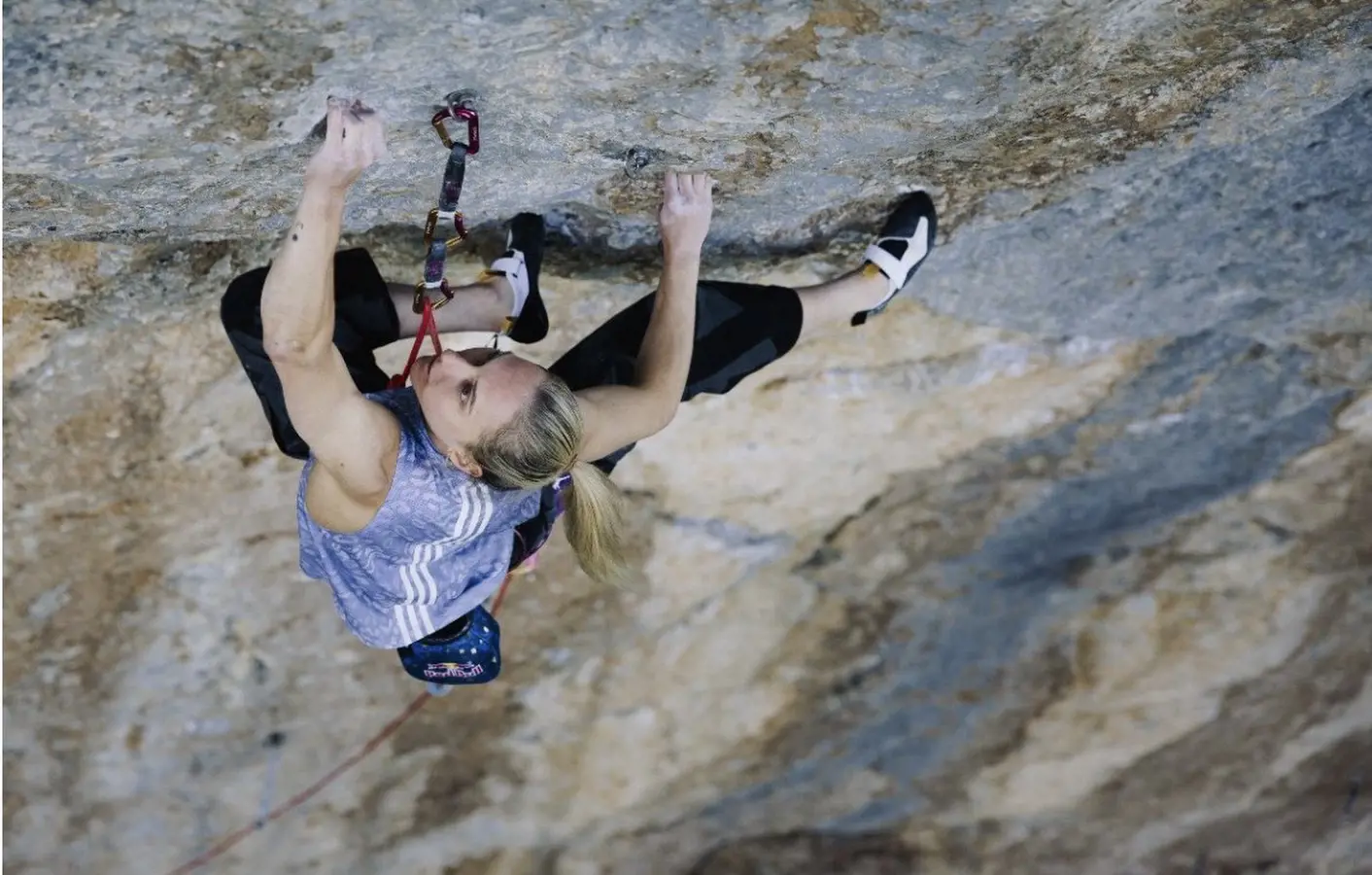
Janja Garnbret has added another milestone to her remarkable climbing career by becoming the first woman to climb Bibliographie (9b+) in Céüse, one of the harde…
368
48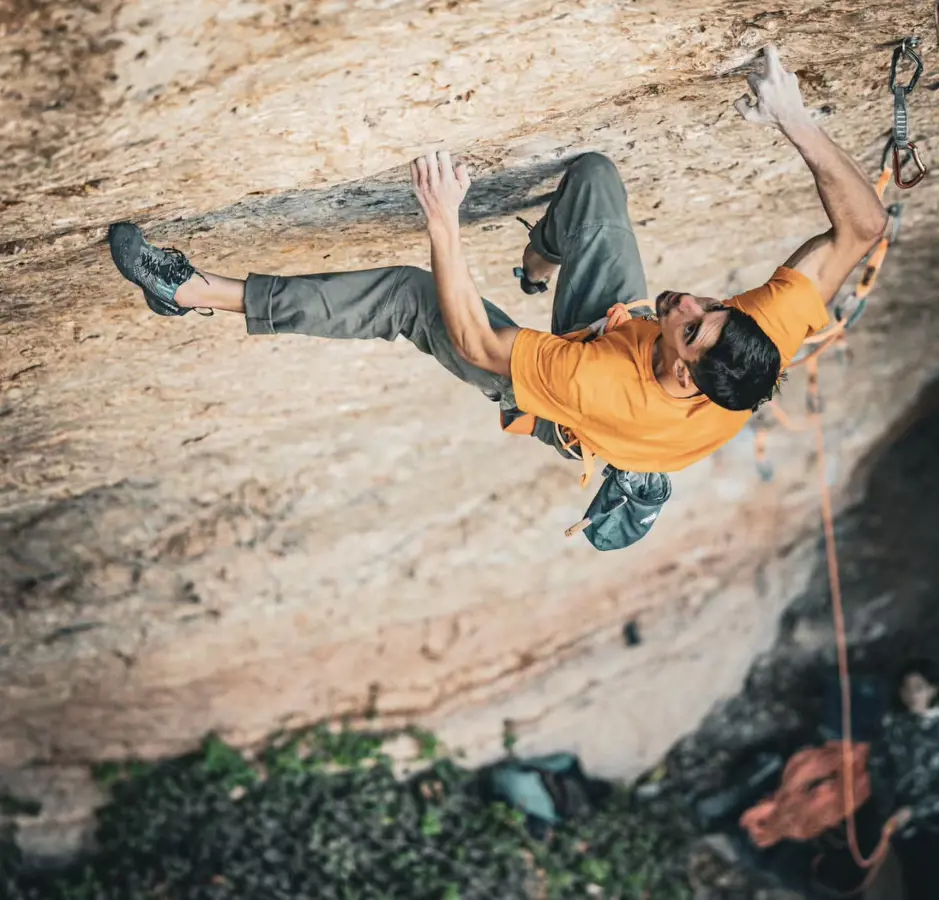
Jorge Diaz-Rullo reports on Instagram that he has made the first ascent of Cafe Colombia in Margalef. At 27, he’s already stacked four 9b+ sends and now he’s ad…
286
81
”I stopped focusing on competition bouldering after last year’s World Cup in Prague, partly because I can already feel it on my body, especially in my shoulders. The modern competition style, with a lot of jumping from one hold to another, is very demanding for the shoulders.
Outdoor bouldering is…
190
13Most commented
Jorge Diaz-Rullo reports on Instagram that he has made the first ascent of Cafe Colombia in Margalef. At 27, he’s already stacked four 9b+ sends and now he’s ad…
286
81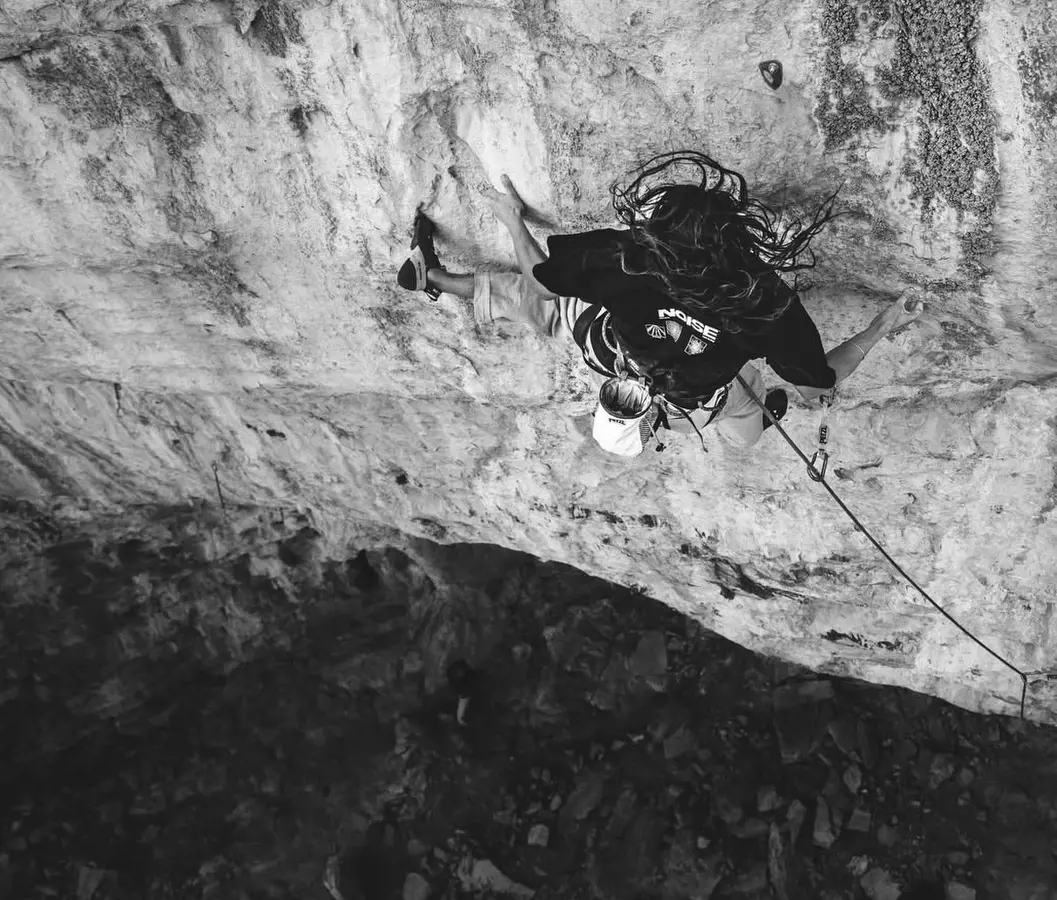
Sean Bailey reports on Instagram that he has done the first ascent of Duality of Man (9c) in Dry Canyon. ” After four total years and three seasons of climbing,…
163
69Jorge Diaz-Rullo elaborates on the reasons for him to suggest 9c for Café Colombia on Instagram, which he took down last week after projecting it for 240 sessio…
120
63