
NEWS
14 May 2026
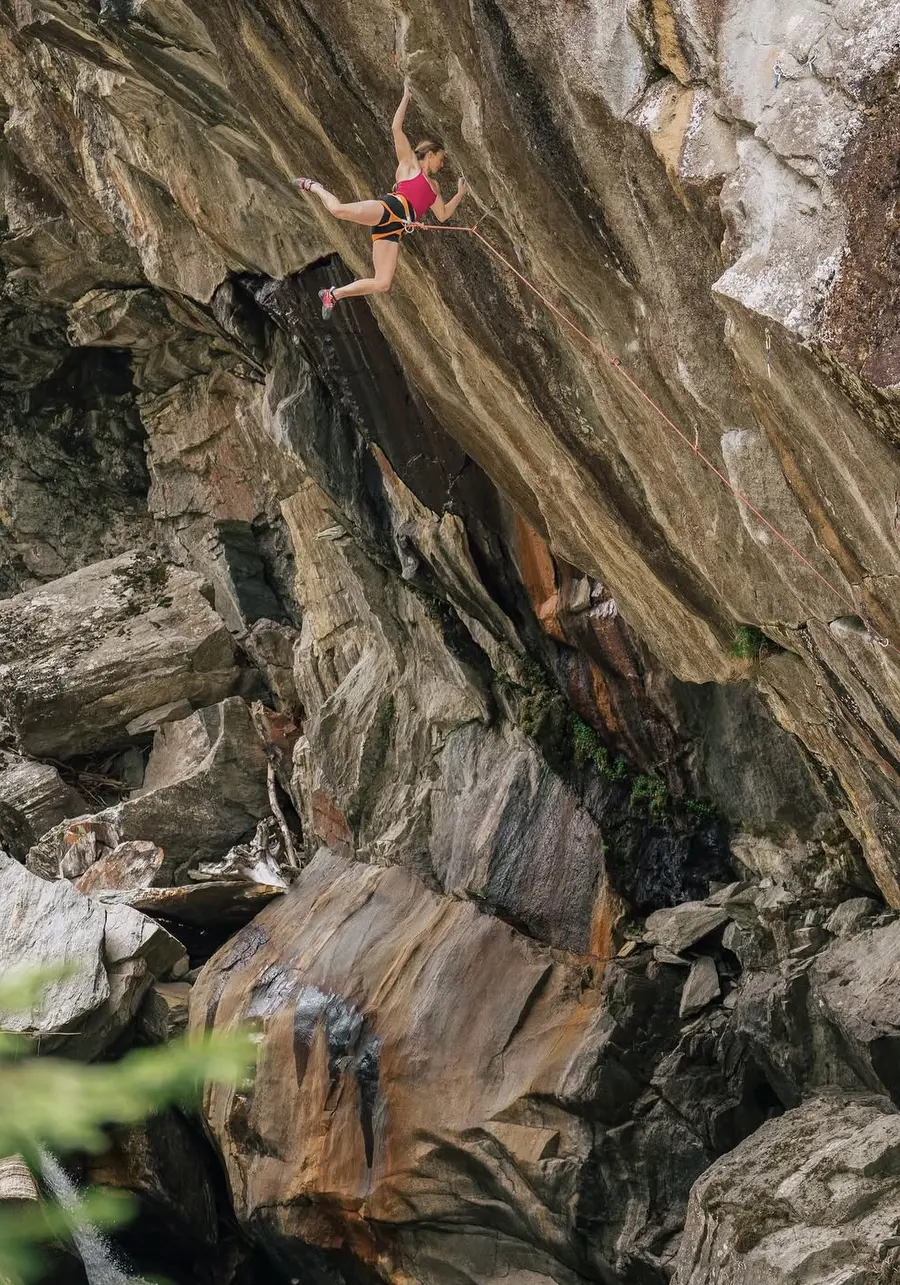
Michaela Kiersch ticks Dolby Surround (9a+)
Michaela Kiersch, with over 20 routes 8c+ to 9a+ under her belt, has completed Dolby Surround (9a+) in Zillertal. It took her 20 sessions to unlock the new crux sequence ending with a jump which has been estimated to an 8B+ boulder. The nearby waterfall inspired first ascensionist Kilian Fischhuber to the name of the climb.
Can you tell us more about the ascent and the process behind?
This route was bolted in 1998 and in the last 30 years has seen ~ less than 10 ascents with Kilian Fischhuber completing the FA in 2008. The route was graded 8c+/9a until recently, when a crucial hold broke adding an even harder sequence immediately following the old crux. After chatting with some others who have tried the route and mostly leaning on my own experience, 9a+/5.15a feels appropriate. But time will tell and hopefully we see a few more ascents in the next decade haha (Will Bosi you’re next!!)
Dolby Surround is one of the most beautiful routes I’ve ever tried. Striped granite/gneiss at a 45 degree overhang with the Zillertal Alps in the background.
Two months + 1 day and 20 sessions until I found myself clipping the chains!! Longest project yet which was an experience in itself. I’m really proud of my perseverance and that I kept “punching the clock.”
Can you tell us more about the ascent and the process behind?
This route was bolted in 1998 and in the last 30 years has seen ~ less than 10 ascents with Kilian Fischhuber completing the FA in 2008. The route was graded 8c+/9a until recently, when a crucial hold broke adding an even harder sequence immediately following the old crux. After chatting with some others who have tried the route and mostly leaning on my own experience, 9a+/5.15a feels appropriate. But time will tell and hopefully we see a few more ascents in the next decade haha (Will Bosi you’re next!!)
Dolby Surround is one of the most beautiful routes I’ve ever tried. Striped granite/gneiss at a 45 degree overhang with the Zillertal Alps in the background.
Two months + 1 day and 20 sessions until I found myself clipping the chains!! Longest project yet which was an experience in itself. I’m really proud of my perseverance and that I kept “punching the clock.”
Read more
102
27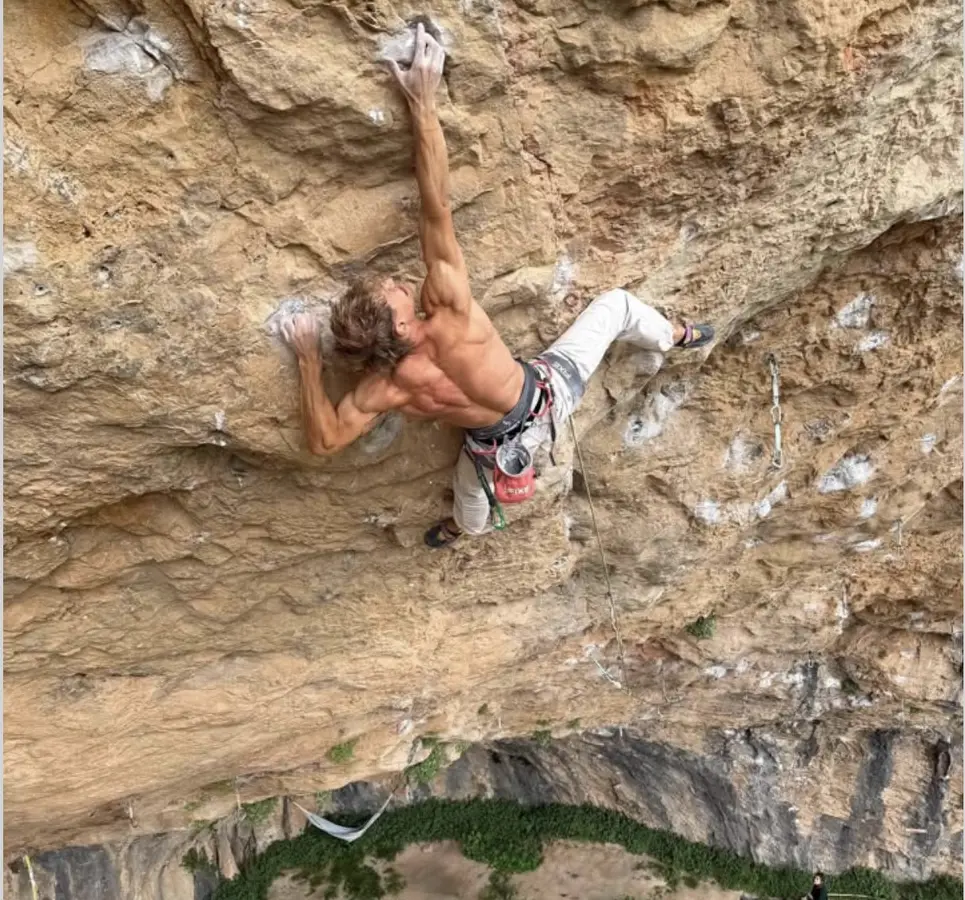
14 May 2026
Mikel Linacisoro onsights 8c and does 9a
Mikel Linacisoro, who earlier this year did his first 9a+, has onsighted Rollito Sharma Ext.1 (8c) and redpointed Ciudad de dios (9a) in Santa Linya. The 25-year-old made his first headlines when, at age 12, he onsighted 8a+’ and sent 8c’s. Three years later, he did his first 9a. During the same period, he won the Spanish Championships in skiing and climbing several times.
Later, he focused almost exclusively on climbing competitions and got a bronze at the Youth World Championships, and his best World Cup finish was 17th. For the past year and a half, he has been back outdoors, having sent five 9a and harder routes, while also winning the Spanish Cup.
Can you tell us more about those ascents?
I’m really happy to have climbed these two incredible lines, especially to have onsighted Rollito Sharma Ext. It had been one of my lifetime goals to onsight an 8c one day! Hahaha. It was amazing. I climbed without pressure, feeling smooth and fully motivated to send — which is the most important thing when climbing onsight.
On top of that, it was the perfect way to finish the weekend by quickly sending another 9th-grade route, Ciudad de Dios, in just a few attempts. Honestly, over the last few months I’ve been enjoying climbing on rock so much with my friends. That’s my motivation to keep training and improving day by day.
What was the reason for just sending a few hard routes per year until 2024?
Hahaha, I’m a doctor now. I have been studiing so hard my last 6 years, and between comps and studies, bad weather usually on the basque country... I didn’t have so much time to enjoy rocks! 🙈😂
Are you working full time as a Doctor now?
Not now! Im studying to make an exam in January. It’s like an opposition. I want to be Traumatologist and try to treat all the injured climbers 💪🏼🤣
What are your summer competition plan?
I’m doing Prague, Innsbruck, Chamonix.. and maybe some more after summer.
Later, he focused almost exclusively on climbing competitions and got a bronze at the Youth World Championships, and his best World Cup finish was 17th. For the past year and a half, he has been back outdoors, having sent five 9a and harder routes, while also winning the Spanish Cup.
Can you tell us more about those ascents?
I’m really happy to have climbed these two incredible lines, especially to have onsighted Rollito Sharma Ext. It had been one of my lifetime goals to onsight an 8c one day! Hahaha. It was amazing. I climbed without pressure, feeling smooth and fully motivated to send — which is the most important thing when climbing onsight.
On top of that, it was the perfect way to finish the weekend by quickly sending another 9th-grade route, Ciudad de Dios, in just a few attempts. Honestly, over the last few months I’ve been enjoying climbing on rock so much with my friends. That’s my motivation to keep training and improving day by day.
What was the reason for just sending a few hard routes per year until 2024?
Hahaha, I’m a doctor now. I have been studiing so hard my last 6 years, and between comps and studies, bad weather usually on the basque country... I didn’t have so much time to enjoy rocks! 🙈😂
Are you working full time as a Doctor now?
Not now! Im studying to make an exam in January. It’s like an opposition. I want to be Traumatologist and try to treat all the injured climbers 💪🏼🤣
What are your summer competition plan?
I’m doing Prague, Innsbruck, Chamonix.. and maybe some more after summer.
Read more
24
013 May 2026
Hyunbin Min FA’s Prime Time (8C+)
Hyunbin Min, who has previously climbed one 8C+ boulder and one 9b route, has made the first ascent of Prime Time (8C+) in Mt. Morak. The 162 cm-tall 37-year-old won a Lead World Cup back in 2012.
Can you tell us more about the process behind the first ascent?
I honestly don’t even know where to begin with this one. Since last year, I’ve been working on around four different projects, and without a doubt, Prime Time was the hardest of them all. Earlier this year, I was focused on another project (around 8C/V15). From the second session, it felt incredibly possible, but as the sessions went on, I became too obsessed with sending it. I got overly sensitive and emotionally attached to the outcome, and at some point I started disliking that version of myself a little bit.
So I stepped away from it and started a new project — The Blueprint (V14/15, FA by me). I tried to approach it with a lighter mindset, telling myself to let go a little more and just enjoy the process. I ended up sending it in about five or six sessions, and after that I really felt like my body shape and overall climbing condition were in a great place. That’s when I started focusing fully on Prime Time again.
Prime Time is an 18-move line starting from a small roof and continuing through a steep 60 degree overhang. It demands strong fingers, precise core tension, and the ability to trust incredibly small footholds. During my last session, I had a really good link and finally saw the possibility of the send, but the tiny footholds near the top kept shutting me down. Today, I changed one specific beta — instead of using a left heel, I switched to a left-foot edging position on that foothold — and that ended up being the key to finally sending the route.
More importantly, I kept trying to stay mentally relaxed on every attempt. I tried not to climb with desperation or obsession. Honestly, if every try had been only about sending, I might still not have done it today. Without question, this is the hardest route I’ve ever climbed. What felt manageable in link attempts became unbelievably difficult when starting from the ground. Grading is always difficult, but I think this line has already been validated to some extent by Sung-su, myself, and several top-level Korean climbers. What’s also kind of surreal is that, by pure coincidence, today marks exactly one year since I climbed my first V16 — United (8C+/V16) in Japan. I’m just incredibly happy right now. It still doesn’t feel real.
What is next on the agenda?
This autumn and winter, I want to go to Europe and gain even more experience climbing abroad.
Can you tell us more about the process behind the first ascent?
I honestly don’t even know where to begin with this one. Since last year, I’ve been working on around four different projects, and without a doubt, Prime Time was the hardest of them all. Earlier this year, I was focused on another project (around 8C/V15). From the second session, it felt incredibly possible, but as the sessions went on, I became too obsessed with sending it. I got overly sensitive and emotionally attached to the outcome, and at some point I started disliking that version of myself a little bit.
So I stepped away from it and started a new project — The Blueprint (V14/15, FA by me). I tried to approach it with a lighter mindset, telling myself to let go a little more and just enjoy the process. I ended up sending it in about five or six sessions, and after that I really felt like my body shape and overall climbing condition were in a great place. That’s when I started focusing fully on Prime Time again.
Prime Time is an 18-move line starting from a small roof and continuing through a steep 60 degree overhang. It demands strong fingers, precise core tension, and the ability to trust incredibly small footholds. During my last session, I had a really good link and finally saw the possibility of the send, but the tiny footholds near the top kept shutting me down. Today, I changed one specific beta — instead of using a left heel, I switched to a left-foot edging position on that foothold — and that ended up being the key to finally sending the route.
More importantly, I kept trying to stay mentally relaxed on every attempt. I tried not to climb with desperation or obsession. Honestly, if every try had been only about sending, I might still not have done it today. Without question, this is the hardest route I’ve ever climbed. What felt manageable in link attempts became unbelievably difficult when starting from the ground. Grading is always difficult, but I think this line has already been validated to some extent by Sung-su, myself, and several top-level Korean climbers. What’s also kind of surreal is that, by pure coincidence, today marks exactly one year since I climbed my first V16 — United (8C+/V16) in Japan. I’m just incredibly happy right now. It still doesn’t feel real.
What is next on the agenda?
This autumn and winter, I want to go to Europe and gain even more experience climbing abroad.
Read more
45
013 May 2026
Lorenzo Bogliacino ticks three 9a’s
Lorenzo Bogliacino, who last year sent three 9a+’, has done Autoengaño (9a), Siempre libres (9a) and Borracho primerizo (9a) in Rodellar.
”So grateful to be back in my happy place! And before the rain came, thanks to the perfect conditions, I was able to start the season in the best possible way, getting back to fighting in my favorite style and climbing some routes I had in my minds since last year...but I hope these are just the beginning of a long journey!”
So what is the next plan for the journey?
Basically all routes in Rodellar🤣 without joking I leave some projects in 9a in El Delfin sector for later and maybe some harder one!
I will be in Rodellar for one week each month or a little more. My girlfriend live and work there so I also have the opportunity to go sometimes for two days!
”So grateful to be back in my happy place! And before the rain came, thanks to the perfect conditions, I was able to start the season in the best possible way, getting back to fighting in my favorite style and climbing some routes I had in my minds since last year...but I hope these are just the beginning of a long journey!”
So what is the next plan for the journey?
Basically all routes in Rodellar🤣 without joking I leave some projects in 9a in El Delfin sector for later and maybe some harder one!
I will be in Rodellar for one week each month or a little more. My girlfriend live and work there so I also have the opportunity to go sometimes for two days!
Read more
19
012 May 2026
Ruth Schluga does Janja (8c)
Ruth Schluga, with six 8b+’ under her belt, has completed Janja (8c) in Falegnameria ”Aesthetic, natural, and incredibly good. This route felt like it was meant for me as my first of the grade.✨” (c) Daniel Rogger
Can you tell us more about the ascent and the process behind?
Climbing in Falegnameria, this line caught me right away — it just inspired me. My boyfriend told me it was one of the most beautiful routes of the grade — technical, aesthetic, and perfectly my style: no crazy stopper move, but a mix of power‑endurance, precision and thoughtful technical movement. I felt ready to try it and immediately made progress. Over three weekends I fell high up several times — once even on the last move. But I knew I could do it. During my send go I told myself: “The route doesn’t know it’s 8c. Just enjoy the climb and don’t be nervous.” That relaxed mindset made all the difference. I climbed calmly, focused — and suddenly I was at the anchor. My first 8c. Yay!
What is your climbing background?
I started climbing in 2016 at 16 and immediately fell in love with it. In 2019 I climbed my first 8a, which I thought would be my lifetime goal. I never did competitions or had a coach; climbing was always personal for me — solving puzzles on the rock, learning from every attempt. What matters most is the connection to the route. When the mental side is right, my body can go further than I ever imagined.
Can you tell us more about the ascent and the process behind?
Climbing in Falegnameria, this line caught me right away — it just inspired me. My boyfriend told me it was one of the most beautiful routes of the grade — technical, aesthetic, and perfectly my style: no crazy stopper move, but a mix of power‑endurance, precision and thoughtful technical movement. I felt ready to try it and immediately made progress. Over three weekends I fell high up several times — once even on the last move. But I knew I could do it. During my send go I told myself: “The route doesn’t know it’s 8c. Just enjoy the climb and don’t be nervous.” That relaxed mindset made all the difference. I climbed calmly, focused — and suddenly I was at the anchor. My first 8c. Yay!
What is your climbing background?
I started climbing in 2016 at 16 and immediately fell in love with it. In 2019 I climbed my first 8a, which I thought would be my lifetime goal. I never did competitions or had a coach; climbing was always personal for me — solving puzzles on the rock, learning from every attempt. What matters most is the connection to the route. When the mental side is right, my body can go further than I ever imagined.
Read more
23
012 May 2026
Zhao Yicheng sets new Speed WR: 4.54
Zhao Yicheng, who last month set a new Speed World Record of 4.58 seconds in his senior debut, claimed the Speed World Cup title in Wujiang. In the semifinal, he blazed up the slightly overhanging 15-meter 6b+ wall in 4.54 seconds, setting yet another world record. Here’s the 16-year-old’s incredible record-breaking run — and once again, no celebration whatsoever.
Read more
12
4Pepa Šindel, with 15 routes 9a and beyond under his belt, has sent Maitre Vauban und der Basilisk (9a) in Höllental. The 18-year-old repeated Chiroptera (9a+) in 2022 which has still not seen a third ascent.
Can you tell us more about the ascent and the process behind?
The first time I tried Maitre Vauban und der Basilisk was last summer. I gave it 3 tries when it was 30°C in the shade, and I hadn’t trained for 2 months, so you can imagine how it went :) But I knew I would return because the line is really beautiful, and I’m surprised it has so few repetitions.
The route is very endurance-based, with 5 boulders and 4 kneebar rests in between. The crux is right below the anchor, after you’ve already climbed 30 meters to get there. It’s a really strange sequence revolving around a small sidepull and getting over the lip with poor high feet, then bumping to 2 small crimps before reaching the final jug.
I did it second go, not remembering any beta from last year, and I also did Versehrtendachl (8c+), but I was too weak and tired to finish the second pitch, which is a 9a.
Can you tell us more about the ascent and the process behind?
The first time I tried Maitre Vauban und der Basilisk was last summer. I gave it 3 tries when it was 30°C in the shade, and I hadn’t trained for 2 months, so you can imagine how it went :) But I knew I would return because the line is really beautiful, and I’m surprised it has so few repetitions.
The route is very endurance-based, with 5 boulders and 4 kneebar rests in between. The crux is right below the anchor, after you’ve already climbed 30 meters to get there. It’s a really strange sequence revolving around a small sidepull and getting over the lip with poor high feet, then bumping to 2 small crimps before reaching the final jug.
I did it second go, not remembering any beta from last year, and I also did Versehrtendachl (8c+), but I was too weak and tired to finish the second pitch, which is a 9a.
Read more
12
511 May 2026
Emil Abrahamsson Biologico (9a) interview
Emil Abrahamsson, who sent The Story Of 2 Worlds (8C) back in 2023, has now added Biologico (9a) in Arco to his list of sends. The Swede began his climbing journey a bit overweight at 158 cm and 75 kg and has since grown to 183 cm and 82 kg, becoming a motivating example for everyday climbers. His YouTube channel now counts 342K subscribers and around 270 videos since launching in 2018.
What is your climbing background?
I began climbing the year I turned 16, which will be 14 years ago this year. My obsessive nature led to decent progress during my first few years of climbing, resulting in our first interview nearly 9 years ago after I climbed one of my first few 8B/V13s after about 5 years of climbing. Over the years I've predominantly been a boulderer, with the occasional sport climbing excursion here and there. Between 2020 and 2024, I juggled competing for the Swedish National Team with rock climbing and my YouTube channel. Spending 40-50 hours editing videos and another 20-25 hours training each week, plus adding YouTube filming sessions, was quite taxing on my body. I realized it was a bit much and decided to cut back on competitions because I was always either overtrained or overworked. Ultimately, that resulted in a long streak of injuries, and I stopped trying to perform at my highest level between 2024 until the beginning of 2026. Don't get me wrong, I've been training hard and have climbed stuff I thought were difficult in that time, but I put performance goals on the back burner in favour of my health and to focus on the YouTube channel.
How have you progressed over the years and what is your progress philosophy?
My progression has been pretty steady, although strictly based on grades I guess not quite as much. I have increased my level a little bit every year, leading me to climb 8C/V15 as my hardest. I try not to use grades as a definitive form of measurement, although I find grades incredibly fun to chase. Grades are the equivalent of leveling up in a video game. It's fun to level up, you can be psyched about it, but they do not tell your full story about how good you are at playing the game. As an example, sometimes people will call me a "9a" climber or "8C boulderer", but truth be told I don't climb harder than 7A/V6. I say that because if you put me on a slab with pebble feet that's probably the grade I max out at. I believe the best way to progress is to stay open to how much there is to learn as a climber, at any difficulty. PS. I projected a V4 when I visited Joshua Tree last year. Didn't do it.
What is most important for being a relatively big climber?
I'm 82kg/180lbs, which I guess constitutes relatively big. That being said, it's easy to fall into the trap that being lighter is important for climbing, because if I added a 20kg weight vest then climbing would be harder, naturally. However, if you take away 10kg from my body I'd struggle with all kinds of health problems and feel fatigued, weak and overall bad. I know this from experience, I should add. So, the most important thing for me is remembering what climbing well and feeling strong is like for my body. I can rarely use other people's beta, and I have to analyse what my body can do well and adapt to that.
Can you tell us more about Biologico and the process behind?
I had quite a rough year 2025 health and injury wise, and in August last year an orthopedic surgeon even told me I should consider retiring from climbing, as he suspected I had arthritis in my shoulder. I waited anxiously for my MRI results for over a month. That turned into quite a soul searching month for me, where I realised more than ever just how much I love the ability to climb. Once the doctor received the results, it turned out his initial thoughts were severely exaggerated; in fact, it just seemed to be that a muscle had checked out, forcing the surrounding tissue to compensate. This injury prevented me from doing as much as a single pull up, so between July - November I focused on just recovering and climbing with a straight arm. I managed my first pull-up in about 5 months in the middle of November, and I was very grateful for that pull-up. Quite quickly after that I could go fully into training mode, and I really wanted to dedicate myself to a new goal in climbing. That ended up being my lead climbing ability.
I moved to Arco in December for a few months to be closer to nature but also for this goal. I had spent some time in Flatanger the previous year and although I ended up mostly working out how to place a kneebar and not really climbing any routes I learned a lot from that experience. After an encounter with the first ascensionist of Biologico (and legend of our sport) Adam Ondra, he recommended the route to me. It was a perfect recommendation, and I did all the moves on the first session and got it in three overlapping links on the second session. However, piecing all of this together took many more sessions in the end. Throughout the process I learnt a lot about effeciency and how to recover on the wall, and I'm very grateful for my time on the route.
Biologico was an interesting process because I had very little experience with what it takes to climb routes close to my limit before this. I'd tried some harder routes before, but never adapted my training specifically for lead climbing for an extended period. Climbing individual parts and climbing a whole route are very different things. Thinking about it now, outdoors I've only done 10 routes between 8a-8b+, and the majority of those were done in 2017 before bouldering completely took over my climbing focus. It took me a while to figure out how to combine my bouldery style of climbing with lead climbing, but once I did, the route came together and felt incredibly satisfying to climb. However, I've never climbed an 8c or 8c+, so I guess that's next!
What is your climbing background?
I began climbing the year I turned 16, which will be 14 years ago this year. My obsessive nature led to decent progress during my first few years of climbing, resulting in our first interview nearly 9 years ago after I climbed one of my first few 8B/V13s after about 5 years of climbing. Over the years I've predominantly been a boulderer, with the occasional sport climbing excursion here and there. Between 2020 and 2024, I juggled competing for the Swedish National Team with rock climbing and my YouTube channel. Spending 40-50 hours editing videos and another 20-25 hours training each week, plus adding YouTube filming sessions, was quite taxing on my body. I realized it was a bit much and decided to cut back on competitions because I was always either overtrained or overworked. Ultimately, that resulted in a long streak of injuries, and I stopped trying to perform at my highest level between 2024 until the beginning of 2026. Don't get me wrong, I've been training hard and have climbed stuff I thought were difficult in that time, but I put performance goals on the back burner in favour of my health and to focus on the YouTube channel.
How have you progressed over the years and what is your progress philosophy?
My progression has been pretty steady, although strictly based on grades I guess not quite as much. I have increased my level a little bit every year, leading me to climb 8C/V15 as my hardest. I try not to use grades as a definitive form of measurement, although I find grades incredibly fun to chase. Grades are the equivalent of leveling up in a video game. It's fun to level up, you can be psyched about it, but they do not tell your full story about how good you are at playing the game. As an example, sometimes people will call me a "9a" climber or "8C boulderer", but truth be told I don't climb harder than 7A/V6. I say that because if you put me on a slab with pebble feet that's probably the grade I max out at. I believe the best way to progress is to stay open to how much there is to learn as a climber, at any difficulty. PS. I projected a V4 when I visited Joshua Tree last year. Didn't do it.
What is most important for being a relatively big climber?
I'm 82kg/180lbs, which I guess constitutes relatively big. That being said, it's easy to fall into the trap that being lighter is important for climbing, because if I added a 20kg weight vest then climbing would be harder, naturally. However, if you take away 10kg from my body I'd struggle with all kinds of health problems and feel fatigued, weak and overall bad. I know this from experience, I should add. So, the most important thing for me is remembering what climbing well and feeling strong is like for my body. I can rarely use other people's beta, and I have to analyse what my body can do well and adapt to that.
Can you tell us more about Biologico and the process behind?
I had quite a rough year 2025 health and injury wise, and in August last year an orthopedic surgeon even told me I should consider retiring from climbing, as he suspected I had arthritis in my shoulder. I waited anxiously for my MRI results for over a month. That turned into quite a soul searching month for me, where I realised more than ever just how much I love the ability to climb. Once the doctor received the results, it turned out his initial thoughts were severely exaggerated; in fact, it just seemed to be that a muscle had checked out, forcing the surrounding tissue to compensate. This injury prevented me from doing as much as a single pull up, so between July - November I focused on just recovering and climbing with a straight arm. I managed my first pull-up in about 5 months in the middle of November, and I was very grateful for that pull-up. Quite quickly after that I could go fully into training mode, and I really wanted to dedicate myself to a new goal in climbing. That ended up being my lead climbing ability.
I moved to Arco in December for a few months to be closer to nature but also for this goal. I had spent some time in Flatanger the previous year and although I ended up mostly working out how to place a kneebar and not really climbing any routes I learned a lot from that experience. After an encounter with the first ascensionist of Biologico (and legend of our sport) Adam Ondra, he recommended the route to me. It was a perfect recommendation, and I did all the moves on the first session and got it in three overlapping links on the second session. However, piecing all of this together took many more sessions in the end. Throughout the process I learnt a lot about effeciency and how to recover on the wall, and I'm very grateful for my time on the route.
Biologico was an interesting process because I had very little experience with what it takes to climb routes close to my limit before this. I'd tried some harder routes before, but never adapted my training specifically for lead climbing for an extended period. Climbing individual parts and climbing a whole route are very different things. Thinking about it now, outdoors I've only done 10 routes between 8a-8b+, and the majority of those were done in 2017 before bouldering completely took over my climbing focus. It took me a while to figure out how to combine my bouldery style of climbing with lead climbing, but once I did, the route came together and felt incredibly satisfying to climb. However, I've never climbed an 8c or 8c+, so I guess that's next!
Read more
44
119 May 2026
Neo Suzuki wins first WC gold
Neo Suzuki qualified for the final based on countback, having won the qualification round. Watching all seven finalists from the golden chair, he did not need to get nervous, as all five scored at least five holds lower. Earlier this year, he won both the Japanese and Asian Championships.
“I’m satisfied with the result, but my performance in the final wasn’t good enough for me. I need to train harder. I want to get three gold medals [in the World Championship], and all podiums at the World Climbing Series this year.”
“I’m satisfied with the result, but my performance in the final wasn’t good enough for me. I need to train harder. I want to get three gold medals [in the World Championship], and all podiums at the World Climbing Series this year.”
Read more
7
09 May 2026
Sanders wins over Garnbret on countback
Janja Garnbret seemed to be in full control when she suddenly fell and then Annie Sanders tied her score with just a couple seconds left, meaning she won as she was the only girl topping out the semi.
“I knew it was pretty close. I kept looking down at the time and waiting it out as I had to try and get back as much back as possible, and I’m glad I did. I wasn’t entirely sure I finished in the time limit, and wasn’t sure if I had won or not, but once I saw the score I realised and got super overwhelmed. It was a slow and static route and honestly, I was a bit nervous, so I was over gripping a lot. But like I said, I got a bit back right at the top and it paid off.”
“I knew it was pretty close. I kept looking down at the time and waiting it out as I had to try and get back as much back as possible, and I’m glad I did. I wasn’t entirely sure I finished in the time limit, and wasn’t sure if I had won or not, but once I saw the score I realised and got super overwhelmed. It was a slow and static route and honestly, I was a bit nervous, so I was over gripping a lot. But like I said, I got a bit back right at the top and it paid off.”
Read more
4
1Favorites
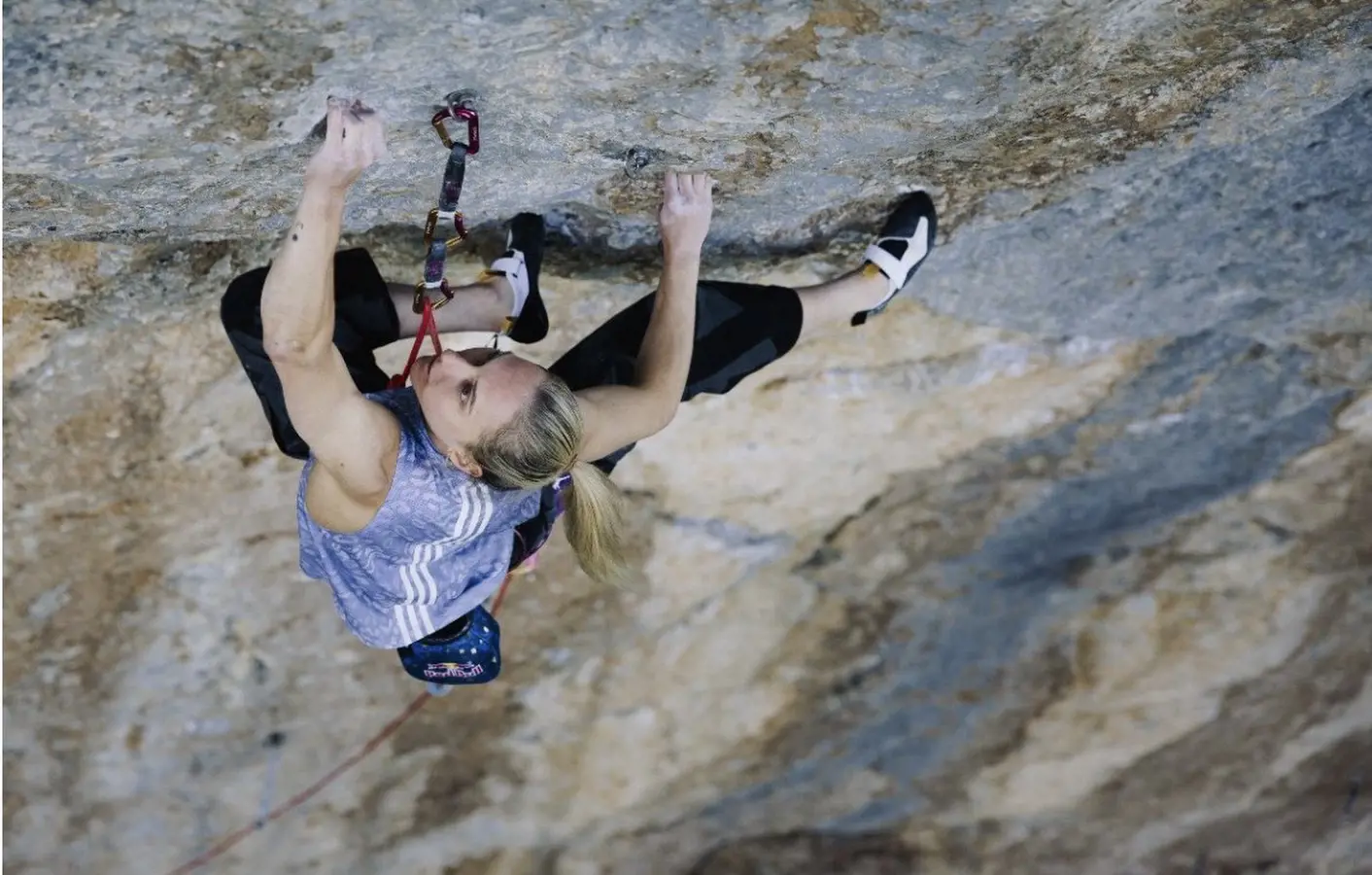
Janja Garnbret has added another milestone to her remarkable climbing career by becoming the first woman to climb Bibliographie (9b+) in Céüse, one of the harde…
366
48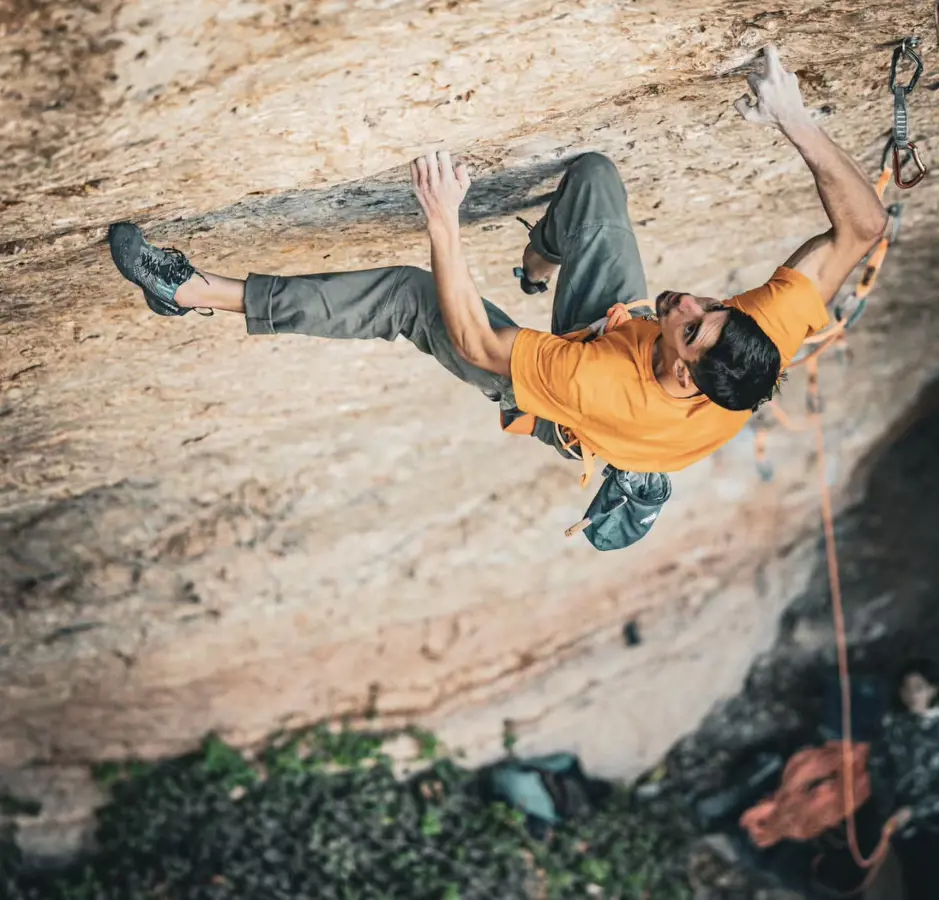
Jorge Diaz-Rullo reports on Instagram that he has made the first ascent of Cafe Colombia in Margalef. At 27, he’s already stacked four 9b+ sends and now he’s ad…
286
81
”I stopped focusing on competition bouldering after last year’s World Cup in Prague, partly because I can already feel it on my body, especially in my shoulders. The modern competition style, with a lot of jumping from one hold to another, is very demanding for the shoulders.
Outdoor bouldering is…
189
13Most commented
Jorge Diaz-Rullo reports on Instagram that he has made the first ascent of Cafe Colombia in Margalef. At 27, he’s already stacked four 9b+ sends and now he’s ad…
286
81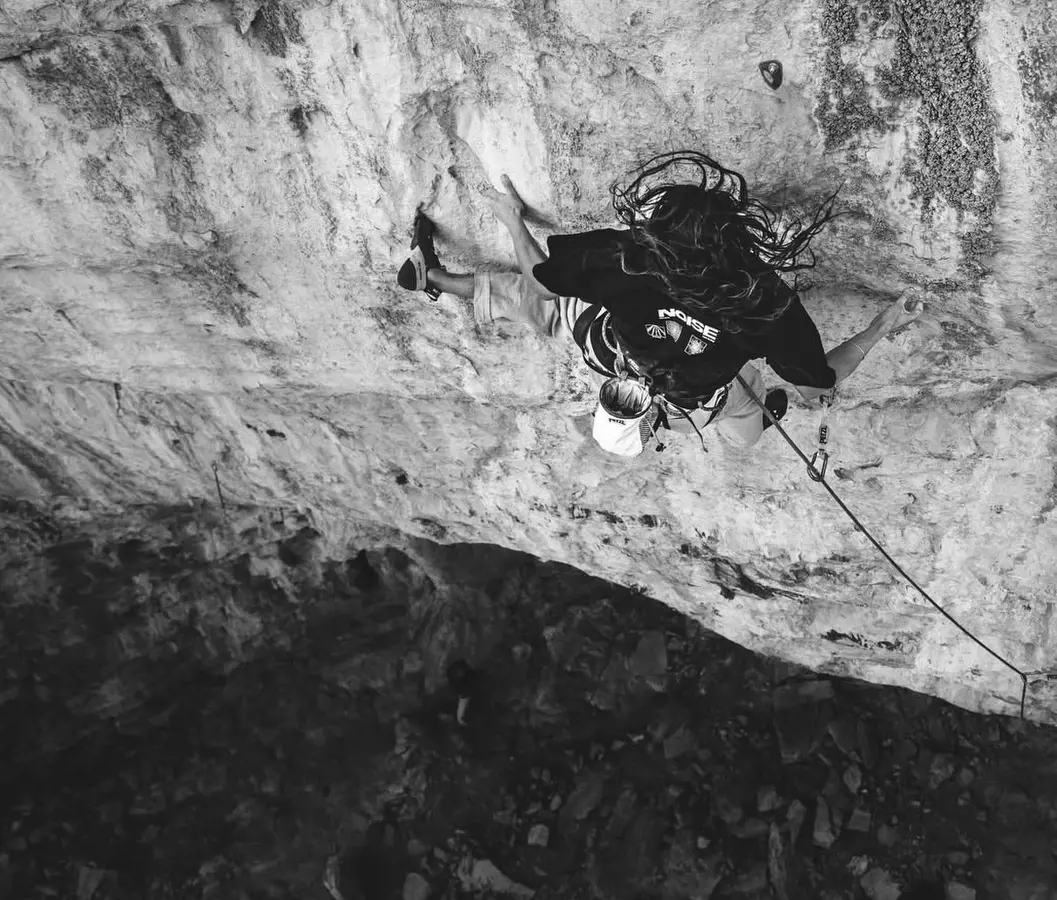
Sean Bailey reports on Instagram that he has done the first ascent of Duality of Man (9c) in Dry Canyon. ” After four total years and three seasons of climbing,…
163
69Jorge Diaz-Rullo elaborates on the reasons for him to suggest 9c for Café Colombia on Instagram, which he took down last week after projecting it for 240 sessio…
120
63