NEWS

The Google trend search diagram, in category Sport, shows the stats during the last ten years. Adam Ondra has on average some 60 % in comparison to Chris Sharma although the last two years, Adam has close to 50 % higher stats. We have excluded Alex Honnold in the list although he has almost as high numbers as Sharma on average. Alex peak, soloing El Capitan, is four times as high as Ondra's peak. The third most popular Google search among the sport climbers is Dave Graham which on average has some 20 % of Sharma's stat. When it comes to female, Alex Puccio is superior similar stats as Graham.

Tomasz Oleksy about boulder setting 2018
Tomasz Oleksy, one of the most experienced IFSC route setter who has won five WCs in Speed and two in Boulder, shares some interesting thoughts in regards the upcoming season. How do you deal with bigger gap in between the athletes and also much higher number of participants? In my opinion it's really the same deal. For us is important to make selection specially in qually round. We try to set problems with the level that athletes on 18th-20th position in the ranking can climb two problems out of five. Sometimes it is harder and sometimes it is easier. It's very important to not have any tie places. The numbers of athletes is not important for me. The only bad thing is that you have less time for setting and to deal with some changes. Any thoughts in regards the new format focusing more on zones? This year zones are much more important then before. This means it should be bit harder to get zones in generally. We will see how it works? More not so strong will possibly suffer with zero zones. In regards volumes and parkour, what do you see in the future? I think parkur is one of modern styles and very attractive for watching and already athletes start to understand. For route setting is very hard to adjust and you spend more time for setting but at the end is cool and for the selection it works very well. For the future I see maybe more bigger shapes, same profile of the wall for two groups for the qually round. It will be good to have new stuff for screwing holds nobody have seen before, bigger team for setting and more testers. That means we need better logistic plane and spend more money at the end hehe :)

There are several ways on how breathing could improve your climbing and here are some examples. You should try it out and even take some Yoga breathing lessons in order to best use your breathing while climbing. 1. Breath before you set of = Increase focus and concentration 2. Less nervous by thinking of how you breath 3. Get more alert/stronger by hyper ventilation (fast breathing) 4. Improved resting by slow, long and deep breathing 5. A focus on breathing will make you more relaxed while climbing 6. Hold your breath while doing the crux Just close your eyes and focus on breathing and notice what happens in your body and soul and you are half way there.

9a by Matteo Menardi (19)
Matteo Menardi has done his fourth 9a, Martin Krpan in Osp/Misja Pec. "The route needs to be climbed in a very physical way. It shares the first part of Strelovod and links it to the upper nerve wrecking part of Missing Drink. I tried the route in 2017 but the weather wasn't always the best. I tried it once before winter 2017 and came back in January 2018. Unfortunately it was wet. March brought better conditions and I tried again the project. Today it was perfect, I felt good and just closed it. I'm so happy to close project that could have been closed before! I'd like to thank everyone who supported me during the process: my family and my friends in particular."

Eddie Fowke - WC Challenges 2018
"Moving into 2018 weโ€™re possibly going to see the most crazy, intense IFSC World Cup season to date. In a year already jam packed with World Champs, Youth World Champs and Youth Olympics, we are also preparing for the run into the 2020 Olympic games. Something that means weโ€™ll be seeing more climbers competing in more than one discipline than ever before. 1: BIG World Cupโ€™s. With Olympics on the horizon we will see an increase in participation with athletes from more nations getting access to funding to send their climbers to international events. From 2014 to 2017 World Cup fields grew approximately 30%. Expect to see this rate of expansion continuing to track upwards. 2: Climber burnout and injuries. Elite level climbing places huge demands on climberโ€™s bodies, on their skin and on their emotional state. With climbers hoping to be in the window for Olympic selection and lacking training expertise we will get more injuries. Some climbers will look to do select events to pace themselves through the season, others will be gung ho, competing through Boulder season and into Lead season without a real break. And while doing double duty at World Cups where there are more than one event in a weekend (Boulder/Speed, Speed/Lead). Along with the injuries expect emotional burnout as climberโ€™s struggle with continued trips overseas, time zone juggling and the pressure of having to perform. 3: Mixed up results. Some top climbers will make intermittent appearances this season, no longer competing for the overall in a single discipline as they aim to spread their season out, or to peak for the Innsbruck World Champs. This could open the door for some unexpected finalists and indeed even winners in some events. 4: Confusion. With new rules there is always confusion. The big rule changes in bouldering will make it difficult to follow until weโ€™re familiar with those changes. Add to that, athletes competing across disciplines and not being as familiar with the rules as the specialists. Another area of confusion will be climbers withdrawing at the last minute in multi event weekends when they find themselves in a position to do well in one event and choose to manage their energy and skin levels. For example, if a climber makes Lead semis, will they still want to compete in Speed qualification, putting themselves through another round of competition? 5: Contention. The stakes are arguably higher than ever before. After a troubled 2017 with some very dubious decisions from judges, officials and routesetters which directly influenced the outcome of major eventsโ€ฆ Well letโ€™s just say that wonโ€™t be good enough going forward. Speed timing systems need to be fixed, routesetters need to set clear finishes on problems, and the definition of + in Lead must be consistent. Expect protests to increase in 2018 and the coachesโ€™ area to be more intense no matter what. Itโ€™s a simple result of there being more at stake.

Bouldering comps are increasing in popularity and so is the level in between the participants. During the last years we have seen that during the qualification, more athletes have not done any boulders. In the last World Championship, 23 male did at most score one zone and also for the Youth World Championship, there are many that travel back home having done at most one zone. As the Olympic preparation have started, it is just natural that more relatively not so strong will try out bouldering. I would be surprised if we not will see a record number of; too many tops, too many ties and too many scoring zero during 2018. One solution that has been discussed within IFSC is adding one more zone hold which have been tried out successfully in USA and Japan. The Innsbruck WCH estimates around 150 male boulderers and it will be a very tough job for the route setters to separate them with just one zone.

"Keep The Circuit running"
Fundraiser by Eddie Fowke: Over the last 5 years I've always allowed the climbers access to photos of themselves, it's my thank you for letting me into their world. However it's not a survivable business model, especially as so many brands reuse the photos and I seldom see a cent. So for 2018 I'm turning to the community. asking you guys if you'd be willing to chip in to keep the dream alive, to keep me on the road documenting the sport we love. I'm very short on funds now, which makes it tough to plan, to book, to eat even sometimes.

Fly, baby fly!
27 March 2018

Fly, baby fly!

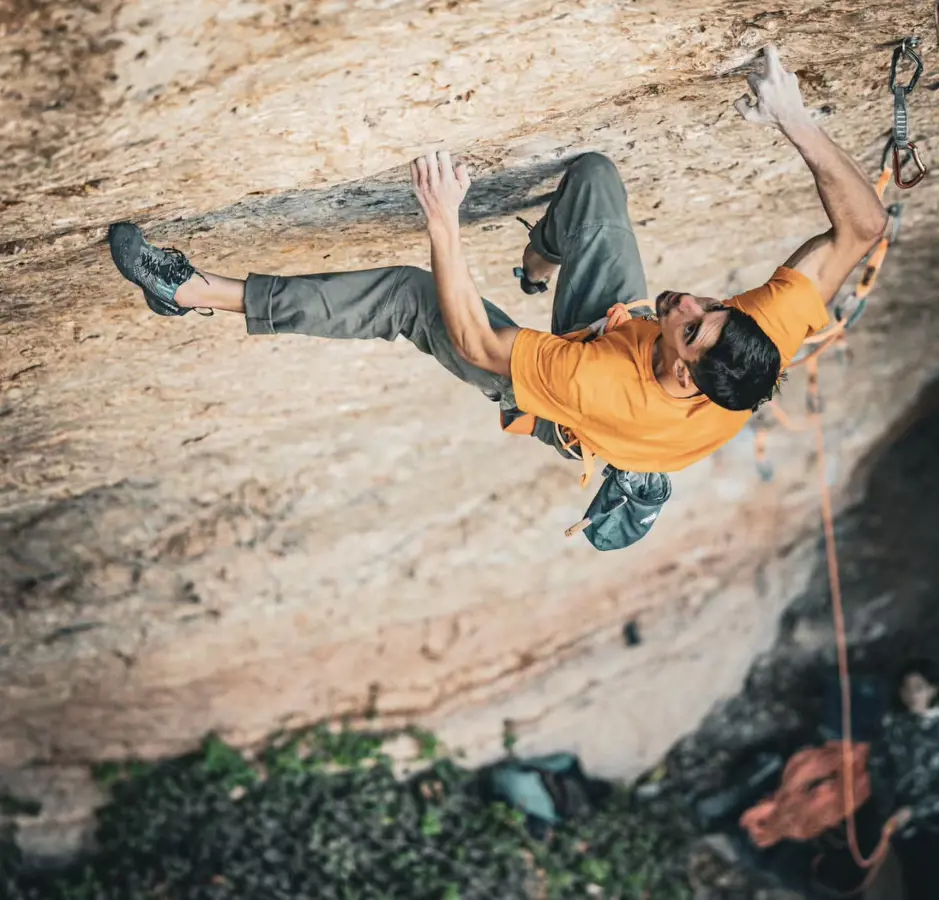
Everyone feels too short when the holds are far away, right? So, what is the clue? What are you to think, that makes it possible to fly and land those crucial centimeters higher up? Naturally, every dyno is, to a certain extent, unique in terms of holds, angles, length etc., but there is also at least one aspect in which all dynos are similar; you have to let go... What decides if you are to succeed are your physical shape, technique, but most of all your mind. Here are 14 pieces of advice and training tips from a 166 cm short man, with negative gorilla index and a 193 cm tall guy with positive gorilla index.

26 March 2018

CWIF Finals sumary