
NEWS

The Leonidio Climbing Festival is something special with great interaction with the locals and the international climbing community. The municipality offers free dinner, T-shirt, climbing and yoga courses, lottery and climbing marathon with great prizes. In total, the municipality spent 40 000 Euro for their 4th festival and some 80% of the close to 600 registered climbers are international visitors.
Yesterday, Alex Honnold’s mother Dierdre Wolownick, put on a very interesting presentation. She tried climbing for the very first time 13 years ago and became hooked. Last year, she turned 70 at the top of El Capitan in Yosemite after having climbed it for the second time. “Go for your dreams by taking baby steps.”
The last days it has been 23 degrees, and almost the same in the sea, so climbers have mainly gathered in the crags with shade. Although most of the roughly 2 600 routes are found in the sun, mainly just above the city, crowds have not been reported.
The second day of the festival started with 40 climbers attending a yoga class at 8.00 and one hour later, the Vertical-Life marathon started. Log your routes in the VL App and you will be part of a prize lottery as well as a competition based on the 8a scoring points.
Yesterday, Alex Honnold’s mother Dierdre Wolownick, put on a very interesting presentation. She tried climbing for the very first time 13 years ago and became hooked. Last year, she turned 70 at the top of El Capitan in Yosemite after having climbed it for the second time. “Go for your dreams by taking baby steps.”
The last days it has been 23 degrees, and almost the same in the sea, so climbers have mainly gathered in the crags with shade. Although most of the roughly 2 600 routes are found in the sun, mainly just above the city, crowds have not been reported.
The second day of the festival started with 40 climbers attending a yoga class at 8.00 and one hour later, the Vertical-Life marathon started. Log your routes in the VL App and you will be part of a prize lottery as well as a competition based on the 8a scoring points.
Read more
1
0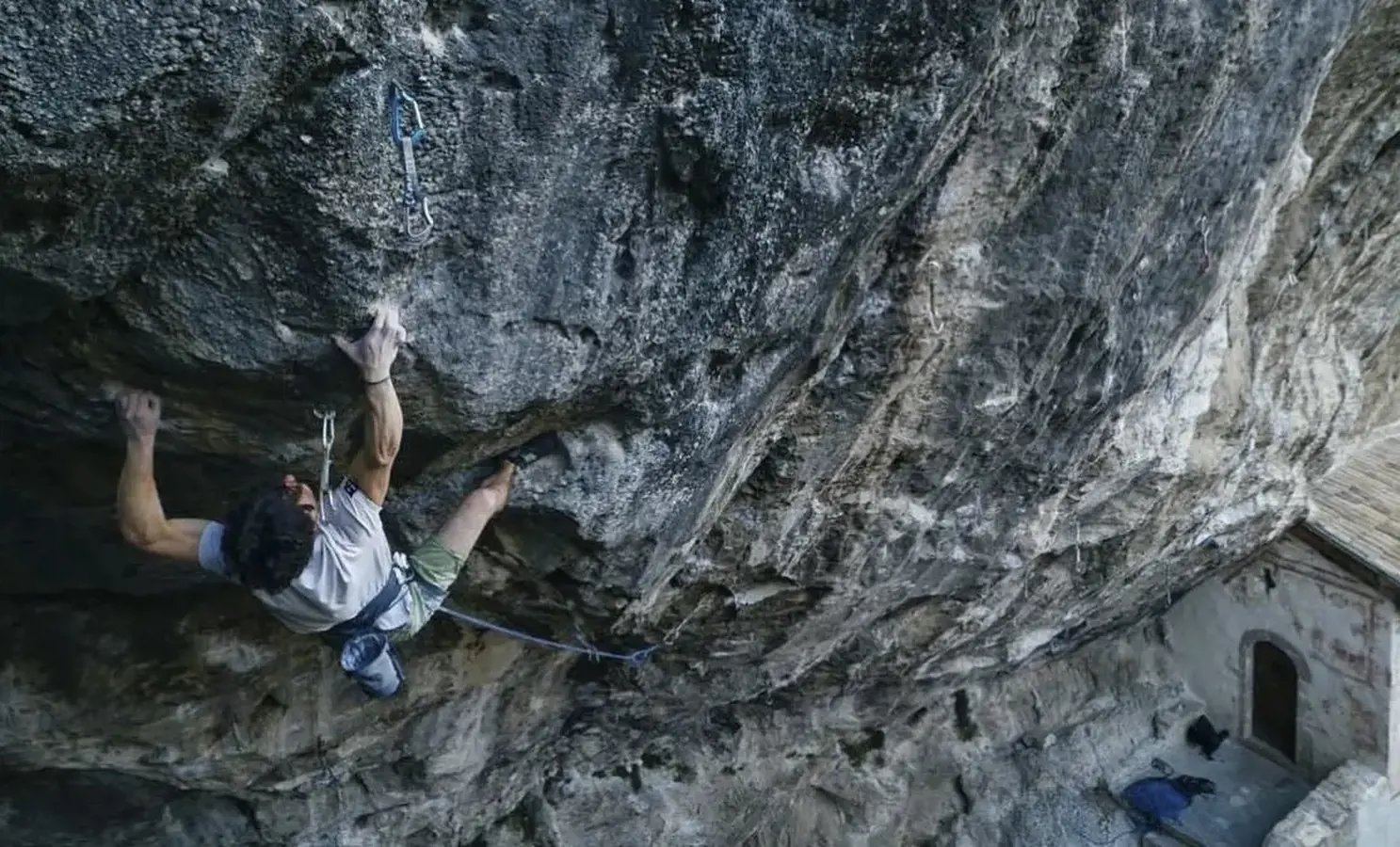
4 November 2022
Beginning 9a+ by Gio Placci
Gio Placci, who was #13 in the Innsbruck World Cup, has done Beginning (9a+) in Eremo di San Paolo.
"Too many tries ...... Amazing route to try. First real project of my life. This year went down in 4 days after I tried it 20 days last year 😅 The knee bar that Adam do it’s hard and too long for me ✌️."
How was it projecting it for so long?
I had no experience with “projecting” hard routes. My approach was completely wrong 😂. Instead of trying the sequence and spending time finding the best betas, I started immediately to try it from the ground, after checking the moves 3-4 tries. This approach le❌me to fail. I changed my betas during that time many times and even after 20 days of tries I did not send it. This winter, after my best comp season so far, my priority was to finish the business, my shape was good and even on the first tries of this year, the feelings were great! I needed just another 3 days of tries to send it 🤯, it felt amazing. I have learned a lot about “the art of projecting “ with this route, and now I’m ready for more!
"Too many tries ...... Amazing route to try. First real project of my life. This year went down in 4 days after I tried it 20 days last year 😅 The knee bar that Adam do it’s hard and too long for me ✌️."
How was it projecting it for so long?
I had no experience with “projecting” hard routes. My approach was completely wrong 😂. Instead of trying the sequence and spending time finding the best betas, I started immediately to try it from the ground, after checking the moves 3-4 tries. This approach le❌me to fail. I changed my betas during that time many times and even after 20 days of tries I did not send it. This winter, after my best comp season so far, my priority was to finish the business, my shape was good and even on the first tries of this year, the feelings were great! I needed just another 3 days of tries to send it 🤯, it felt amazing. I have learned a lot about “the art of projecting “ with this route, and now I’m ready for more!
Read more
4
04 November 2022
Radja 8B (+) by Daniel Woods
"First 8B+ (v14) in the world by Fred Nicole. The crux involves a physical move off of a terrible left-hand undercling to a small right-hand incut crimp. Daniel did it the original way Fred did. There is a new way of starting the line which makes it easier and another way to do the crux which also makes it easier (once you get the right-hand shoulder you cross over with the left hand to match it and grab a right-hand crimp above. This makes getting the left-hand undercling easier). This new way is more 8B (v13). Daniel wanted to do what Fred did. The line is definitely contrived but history is history."
Read more
6
33 November 2022
Suprême Jumbo Love 9b+ by Seb Bouin
Sebastien BOUIN has done the FA of the long-standing project Jumbo Love (9b) direct start, calling it Suprême Jumbo Love 9b+ at Clark Mountain. (c) Clarisse Bompard
”The route is around 70m and the hardest part of this route is to combine everything. The first 9a is quite tricky, and it's easy to fall, even if you have the power. Then you have this Jumbo Love crux, where it's definitely possible to fall even if you have the power (missing the one finger pocket). Then you need this fresh energy to link all the pumpy part to reach the lip of the overhang. The last slab is not that hard, but if you are done, and you don't know it quite well... you can easily fall there too.
The first time I made it through the direct start, it was my third try of the day. I was definitely too spent to have any chance on the main Jumbo Love section. I knew I had to do the direct and the Jumbo Love crux on the first try if I wanted to have a chance on the pumpy Jumbo Love section. Sometime everything just comes together, shape, conditions, vibes, friends, cameraman, luck,... I know it doesn't happen that often, and I am very grateful to live such big moments. More to come about the history of this route, the grade reflection, and our adventures here. But at the moment, let's enjoy the suprême love. Thanks to everyone who contribuated to this ascent: Clarisse Bompard, Steven, Dustyn, Nate, Randy Leavitt, Alex Honnold & BJ.”
”The route is around 70m and the hardest part of this route is to combine everything. The first 9a is quite tricky, and it's easy to fall, even if you have the power. Then you have this Jumbo Love crux, where it's definitely possible to fall even if you have the power (missing the one finger pocket). Then you need this fresh energy to link all the pumpy part to reach the lip of the overhang. The last slab is not that hard, but if you are done, and you don't know it quite well... you can easily fall there too.
The first time I made it through the direct start, it was my third try of the day. I was definitely too spent to have any chance on the main Jumbo Love section. I knew I had to do the direct and the Jumbo Love crux on the first try if I wanted to have a chance on the pumpy Jumbo Love section. Sometime everything just comes together, shape, conditions, vibes, friends, cameraman, luck,... I know it doesn't happen that often, and I am very grateful to live such big moments. More to come about the history of this route, the grade reflection, and our adventures here. But at the moment, let's enjoy the suprême love. Thanks to everyone who contribuated to this ascent: Clarisse Bompard, Steven, Dustyn, Nate, Randy Leavitt, Alex Honnold & BJ.”
Read more
80
123 November 2022
E-Space Challenge 8c+ by Katherine Choong
Katherine Choong has done E-space challenge (8c+) in Précipice de Corbière, bolted by Nicolas Glée. (c) Isabelle Bihr
“It's a battle of endurance, on a very overhanging wall that starts with a first pitch in 8a+ and climbs crescendo to the crux just below the anchor, a dyno followed by some very physical and challenging moves. After falling 3 times on the final dyno, it took me 6 days to reach the top without falling! Climbed without kneepad 😉”
Katherine is a former competition climber who some 30 times has been top-30 in the World Cup. She has previously done two 9a’s and several hard MP’s up to 8b+. In other words, her track record is one of the most impressive out there.
“It's a battle of endurance, on a very overhanging wall that starts with a first pitch in 8a+ and climbs crescendo to the crux just below the anchor, a dyno followed by some very physical and challenging moves. After falling 3 times on the final dyno, it took me 6 days to reach the top without falling! Climbed without kneepad 😉”
Katherine is a former competition climber who some 30 times has been top-30 in the World Cup. She has previously done two 9a’s and several hard MP’s up to 8b+. In other words, her track record is one of the most impressive out there.
Read more
12
02 November 2022
Alphane 9A by Will Bosi
William Bosi has made the second repeat, after Aidan Roberts, of Shawn Raboutou’s Alphane 9A at Chironico. Bosi was reluctant to confirm the grade and says a recent 8C+ FA from him was more challenging. (c) Sam Pratt
From the press release: “Overall, Bosi spent 10 sessions working Alphane and 2 sessions previously last year with Shawn Raboutou where he explored and worked moves on the boulder before the final line and sequence was established.
Commenting on his ascent, Bosi commented,
"A few sessions back I was unsure as to whether Alphane would go on this trip, the temperature has been unseasonably hot, some rainy days had made it really humid and the route was damp in places. However, the crew out here managed to keep the psyche really high and the problem came together quickly. The moves on this line are so good and after a lot of time on the wall, I was really happy to claim the third ascent!"
Commenting on the proposed grade of 9A, Will was reluctant to confirm the grade.
“In terms of a grade, I personally felt that Honey Badger (8C+) was more of a challenge for me and proposing a grade for that at the time was daunting as it was my first 8C+. At the cutting edge of climbing, grading feels so much more difficult as the margins are that much finer and personal strengths and preferences really come into play. Is it 9A? Honestly, I do not know and as I gain more experience of climbing around this grade range I may have a better view, but it is a fantastic line established by Shawn and I look forward to seeing more experienced climbers comment on where the grade sits”.
The ascent of Alphane is another milestone for Bosi since his decision to switch full time to climbing outdoors. This spring, Bosi had a hugely productive trip to the Czech Republic to climb with Adam Ondra and in summer, he established the Peak District's hardest boulder problem, Honey Badger 8C+ at Badger Cove.“
From the press release: “Overall, Bosi spent 10 sessions working Alphane and 2 sessions previously last year with Shawn Raboutou where he explored and worked moves on the boulder before the final line and sequence was established.
Commenting on his ascent, Bosi commented,
"A few sessions back I was unsure as to whether Alphane would go on this trip, the temperature has been unseasonably hot, some rainy days had made it really humid and the route was damp in places. However, the crew out here managed to keep the psyche really high and the problem came together quickly. The moves on this line are so good and after a lot of time on the wall, I was really happy to claim the third ascent!"
Commenting on the proposed grade of 9A, Will was reluctant to confirm the grade.
“In terms of a grade, I personally felt that Honey Badger (8C+) was more of a challenge for me and proposing a grade for that at the time was daunting as it was my first 8C+. At the cutting edge of climbing, grading feels so much more difficult as the margins are that much finer and personal strengths and preferences really come into play. Is it 9A? Honestly, I do not know and as I gain more experience of climbing around this grade range I may have a better view, but it is a fantastic line established by Shawn and I look forward to seeing more experienced climbers comment on where the grade sits”.
The ascent of Alphane is another milestone for Bosi since his decision to switch full time to climbing outdoors. This spring, Bosi had a hugely productive trip to the Czech Republic to climb with Adam Ondra and in summer, he established the Peak District's hardest boulder problem, Honey Badger 8C+ at Badger Cove.“
Read more
25
192 November 2022
Child of Hell 8C "2nd Go" by Aidan Roberts
Aidan Roberts, who two weeks ago did the first repeat of Alphane 9A, has done another Shawn Raboutou FA, Child of Hell 8C in Gottardo / Gotthardpass. Impressively, the previous competition climber did it on his first go after just trying it out on top rope. Just before, he had done Stairway to heaven (8B), in the picture. (c) Sam Pratt
How was it possible to send an 8C so quickly?
Ah yes, so the crux of Child of hell mostly revolves around a small right hand shoulder which of course makes it physical but the puzzle lies in the footholds and they’re very bad and very high! So I used the rope to figure out the best footholds for me. I did the crux section in 2 parts off of the rope but was happy with the method and had to stop as was worried my skin would split! So when I pulled on from the ground it was definitely a surprise for me to top out, I’d expected just to figure out the bottom section really (it’s about 7C+ until the crux). I had a very clear head whilst I climbed though, I think a continuation of the headspace I tried hard to adopt whilst giving attempts from the start on Alphane. It translated well.
Could this quick ascent in any way confirm Alphane being 9A?
Alphane definitely feels to be the hardest climb I have done. Not in terms of hardest moves but this isn’t the difficulty of the climb really. The difficulty lies in links as the transitions between moves are so exhausting and complex. But regarding the grade, I didn’t feel so much as though it was my responsibility to comment. I understand a first ascensionist has the pressure to establish the grade but I think it’s often the least enjoyable part of the process and I don’t believe future ascensionists should so much subject the developers decision to too much scrutiny. Grading has become such a point of pride within climbing. It has been for me lots in the past too you see.
So I’m making attempts to step away from this and any comment I would make on the matter would be in the form of a conversation with Shawn, though no such conversation feels necessary in this example. I believe the collective who graded this climb has so much more experience than I that it would be rather proud for me to think that I have a better idea!
How was it possible to send an 8C so quickly?
Ah yes, so the crux of Child of hell mostly revolves around a small right hand shoulder which of course makes it physical but the puzzle lies in the footholds and they’re very bad and very high! So I used the rope to figure out the best footholds for me. I did the crux section in 2 parts off of the rope but was happy with the method and had to stop as was worried my skin would split! So when I pulled on from the ground it was definitely a surprise for me to top out, I’d expected just to figure out the bottom section really (it’s about 7C+ until the crux). I had a very clear head whilst I climbed though, I think a continuation of the headspace I tried hard to adopt whilst giving attempts from the start on Alphane. It translated well.
Could this quick ascent in any way confirm Alphane being 9A?
Alphane definitely feels to be the hardest climb I have done. Not in terms of hardest moves but this isn’t the difficulty of the climb really. The difficulty lies in links as the transitions between moves are so exhausting and complex. But regarding the grade, I didn’t feel so much as though it was my responsibility to comment. I understand a first ascensionist has the pressure to establish the grade but I think it’s often the least enjoyable part of the process and I don’t believe future ascensionists should so much subject the developers decision to too much scrutiny. Grading has become such a point of pride within climbing. It has been for me lots in the past too you see.
So I’m making attempts to step away from this and any comment I would make on the matter would be in the form of a conversation with Shawn, though no such conversation feels necessary in this example. I believe the collective who graded this climb has so much more experience than I that it would be rather proud for me to think that I have a better idea!
Read more
22
121 November 2022
Creatures of Comfort 8A+ (B) by Emilie Gerhardt
Emilie Gerhardt reports on Insta that she has done Creatures of Comfort (8A+) in Vernayaz. In total, the 23-year-old has done roughly ten boulders 8A and harder in 2022.
Can you tell us more about your ascent?
Some weeks ago I saw Julius (Westphal, who took the picture) sending this boulder and was really psyched to try this one too. Unfortunately our trip was over but now we came back and I could try it too. My shoulders are always a bit weak so the first moves were the hardest for me.
It looks like you're having your best season ever?
We do not have a lot of free time for rock climbing trips due to our work in our climbing gym “Steil”. So we can always head for few trips for just some days. But being every day in your own climbing gym to work also means you can train there a lot too. Julius and I always train together and are pretty motivated, maybe that’s the key :)
Can you tell us more about your ascent?
Some weeks ago I saw Julius (Westphal, who took the picture) sending this boulder and was really psyched to try this one too. Unfortunately our trip was over but now we came back and I could try it too. My shoulders are always a bit weak so the first moves were the hardest for me.
It looks like you're having your best season ever?
We do not have a lot of free time for rock climbing trips due to our work in our climbing gym “Steil”. So we can always head for few trips for just some days. But being every day in your own climbing gym to work also means you can train there a lot too. Julius and I always train together and are pretty motivated, maybe that’s the key :)
Read more
5
131 October 2022
Leonidio Climbing Festival with Anak Verhoeven
Here is the program for the Leonidio Climbing Festival 3-6/11. The schedule includes: yoga classes, The Climbing Marathon and Zlagboard comp with Vertical-Life, workshops and live music. This year's special guests are sport climbing ace Anak Verhoeven and Alex Honnold's mother, Dierdre Wolownick, who happens to also be the oldest woman to climb El Cap and the author of a new book.
Read more
5
031 October 2022
Climbing at 50, 60 and 70+
Last year, Irmgard Braun set a new standard for 69-year-old women by doing Open box (7c+) in Gorges Du Tarn. The German author started climbing in the 80ies and was later part of the German national team. Now she has put together some tips for climbing in your 50s, 60s and 70s+.
I find it great to go climbing at the ripe old age of 70. It is fun to move up vertical rock, and it trains my body without having to endure a dull fitness program. Through climbing, I meet old friends as well as get to know new people. But I gain even more from learning to climb better and to reach seemingly unachievable goals. For other senior citizens with a similar orientation I have put together a few tips.
These suggestions were triggered by Steve McClure’s piece “Old Folk”. Based on my own experiences, some of his rules were slightly changed and commented on. Disclaimer: It is quite possible that my advice doesn’t meet the needs of every senior climber – each body is different, and we old ones should listen to it very carefully. By the way – Steve McClure calls all people over 45 “old folk”. He was 48 years old when he sent “Rainman” 9b, the hardest route in England at that time.
Even if you aren’t a leading climber like McClure, you can profit from the following tips as an old geezer. Without suffering or mutating into a training monster:
1. Don’t injure yourself
2. Train your strong points
3. Stay or become flexible
4. Climb regularly, also at a highly intensive level
5. Don’t be scared of falling where it is safe
6. Have fun!
Before you start to train (no matter in which form), you should set a concrete goal. “To get better” or to “keep one’s standard” isn’t clear enough. In contrast, climbing a specific route or achieving the ability to climb routes of a certain grade are examples of precisely defined goals. This is much more motivating, and success can be verified.
1. Don’t injure yourself
Stay away from training on the campus board, bouldering in the modern style (dynamically between volumes - far too much strain on the shoulders!). Toprope bouldering is a much better alternative. If something hurts or even only slightly twinges, it is better to stop, at least until the following day and to look out for what develops. Really warm up well. This can take a damn long time, especially in cold weather. I need at least 5 warm-up routes on the climbing wall with increasing difficulties. Particularly train your shoulder stability. I only do two exercises twice a week, but more would be better, especially for people with long limbs. Stop climbing before you get pumped. Most injuries happen when you are tired. Treat your limitations with care. For instance, “Egyptians” are dangerous if you suffer from arthritic knees, and people with elbow problems should stay away from locking off. Most often you can substitute risky moves with other techniques.
2. Train your strong points
Most climbing coaches would advise you to improve your weak areas of performance. But I believe that this is valid more for younger climbers who are striving to become high-performing allrounders in every type of climbing, on rock as well as on plastic. At the age of now seventy years, I basically climb following the pleasure principle. So I don’t struggle up a horrible offwidth crack and avoid those revolting slopers. The climbing I most enjoy is on well structured limestone with small crimpy holds. People who prefer granite or sandstone, will naturally be dealing with cracks, that call for good holding power and advanced jamming techniques. People focussing on artificial walls will again have different priorities, like explosive dynamos and learning to work miracles on slopers by the laying on of hands. It is essential to concentrate on what you really enjoy and to choose your goals correspondingly. Then your chances for success will be the best.
3. Stay or become flexible
To train general flexibility and body tension, Yoga (and Pilates) are certainly very suitable. For people who like to practice these methods, they certainly are an excellent complement to climbing. However, they are nothing for me, finding them too time consuming and difficult to keep up. So I train my flexibility specifically for climbing. For instance, to achieve high and precise foot placement, calling for active flexibility - the limberness and power to lift the legs very high. Also, an open pelvis is useful, allowing to keep your body closer to the wall, as well as the ability to perform extended spreads in dihedrals.
4. Climb regularly, also at a highly intensive level
If you want to climb hard routes at your personal limit, it will be necessary to pull really hard at the crux moves. Young people do this without holding back, while senior climbers tend to be more hesitant. But your standard of climbing decreases if, for fear of injury, you limit yourself to the cruising routes. Except for top athletes, it is probably sufficient to try hard crux moves once or twice a week, at 80 or 90 percent of your maximal power. In roped climbing, your projects will provide a perfect opportunity for this. Hereby you can try out new moves and improve your technical abilities. If jumping off isn’t a problem, of course, you also can go bouldering. You should climb hard endurance routes always after and never before the stress of close-to-the-limit maximum-power-moves. To keep your endurance, one session per week is enough for the general customer.
5. Don’t be scared of falling where it is safe
Fear kills the fun of climbing. And it also steals your strength, as you hold on much too hard if you are afraid. On top of that your climbing technique also often evaporates. So to lose your fear of leading can easily mean advancing a whole grade. However, healthy caution also has its place – see tip number one. Check out the situation rationally. Stay away from dangerous routes and don’t hesitate to disarm a hazardous section with a clipstick. But also don’t hesitate to fall if the situation is safe! If this seems difficult, you can take a special course in air traffic control or hire a coach.
6. Have fun!
For many older climbers like myself typical climbing training, maybe on a fingerboard or a pull-up bar, just isn’t fun. So we don’t train long and hard enough - and the results are negligible. People of such persuasion can work towards their goals solely by climbing, if they follow a halfway systematic approach. But this also isn’t everybody’s cup of tea! Then you will have to accept, that the aspired goal is not that important after all and that your top priority is having fun. That’s fine too! If you’re old, you realize how little time you have left and how important it is to enjoy it.
I find it great to go climbing at the ripe old age of 70. It is fun to move up vertical rock, and it trains my body without having to endure a dull fitness program. Through climbing, I meet old friends as well as get to know new people. But I gain even more from learning to climb better and to reach seemingly unachievable goals. For other senior citizens with a similar orientation I have put together a few tips.
These suggestions were triggered by Steve McClure’s piece “Old Folk”. Based on my own experiences, some of his rules were slightly changed and commented on. Disclaimer: It is quite possible that my advice doesn’t meet the needs of every senior climber – each body is different, and we old ones should listen to it very carefully. By the way – Steve McClure calls all people over 45 “old folk”. He was 48 years old when he sent “Rainman” 9b, the hardest route in England at that time.
Even if you aren’t a leading climber like McClure, you can profit from the following tips as an old geezer. Without suffering or mutating into a training monster:
1. Don’t injure yourself
2. Train your strong points
3. Stay or become flexible
4. Climb regularly, also at a highly intensive level
5. Don’t be scared of falling where it is safe
6. Have fun!
Before you start to train (no matter in which form), you should set a concrete goal. “To get better” or to “keep one’s standard” isn’t clear enough. In contrast, climbing a specific route or achieving the ability to climb routes of a certain grade are examples of precisely defined goals. This is much more motivating, and success can be verified.
1. Don’t injure yourself
Stay away from training on the campus board, bouldering in the modern style (dynamically between volumes - far too much strain on the shoulders!). Toprope bouldering is a much better alternative. If something hurts or even only slightly twinges, it is better to stop, at least until the following day and to look out for what develops. Really warm up well. This can take a damn long time, especially in cold weather. I need at least 5 warm-up routes on the climbing wall with increasing difficulties. Particularly train your shoulder stability. I only do two exercises twice a week, but more would be better, especially for people with long limbs. Stop climbing before you get pumped. Most injuries happen when you are tired. Treat your limitations with care. For instance, “Egyptians” are dangerous if you suffer from arthritic knees, and people with elbow problems should stay away from locking off. Most often you can substitute risky moves with other techniques.
2. Train your strong points
Most climbing coaches would advise you to improve your weak areas of performance. But I believe that this is valid more for younger climbers who are striving to become high-performing allrounders in every type of climbing, on rock as well as on plastic. At the age of now seventy years, I basically climb following the pleasure principle. So I don’t struggle up a horrible offwidth crack and avoid those revolting slopers. The climbing I most enjoy is on well structured limestone with small crimpy holds. People who prefer granite or sandstone, will naturally be dealing with cracks, that call for good holding power and advanced jamming techniques. People focussing on artificial walls will again have different priorities, like explosive dynamos and learning to work miracles on slopers by the laying on of hands. It is essential to concentrate on what you really enjoy and to choose your goals correspondingly. Then your chances for success will be the best.
3. Stay or become flexible
To train general flexibility and body tension, Yoga (and Pilates) are certainly very suitable. For people who like to practice these methods, they certainly are an excellent complement to climbing. However, they are nothing for me, finding them too time consuming and difficult to keep up. So I train my flexibility specifically for climbing. For instance, to achieve high and precise foot placement, calling for active flexibility - the limberness and power to lift the legs very high. Also, an open pelvis is useful, allowing to keep your body closer to the wall, as well as the ability to perform extended spreads in dihedrals.
4. Climb regularly, also at a highly intensive level
If you want to climb hard routes at your personal limit, it will be necessary to pull really hard at the crux moves. Young people do this without holding back, while senior climbers tend to be more hesitant. But your standard of climbing decreases if, for fear of injury, you limit yourself to the cruising routes. Except for top athletes, it is probably sufficient to try hard crux moves once or twice a week, at 80 or 90 percent of your maximal power. In roped climbing, your projects will provide a perfect opportunity for this. Hereby you can try out new moves and improve your technical abilities. If jumping off isn’t a problem, of course, you also can go bouldering. You should climb hard endurance routes always after and never before the stress of close-to-the-limit maximum-power-moves. To keep your endurance, one session per week is enough for the general customer.
5. Don’t be scared of falling where it is safe
Fear kills the fun of climbing. And it also steals your strength, as you hold on much too hard if you are afraid. On top of that your climbing technique also often evaporates. So to lose your fear of leading can easily mean advancing a whole grade. However, healthy caution also has its place – see tip number one. Check out the situation rationally. Stay away from dangerous routes and don’t hesitate to disarm a hazardous section with a clipstick. But also don’t hesitate to fall if the situation is safe! If this seems difficult, you can take a special course in air traffic control or hire a coach.
6. Have fun!
For many older climbers like myself typical climbing training, maybe on a fingerboard or a pull-up bar, just isn’t fun. So we don’t train long and hard enough - and the results are negligible. People of such persuasion can work towards their goals solely by climbing, if they follow a halfway systematic approach. But this also isn’t everybody’s cup of tea! Then you will have to accept, that the aspired goal is not that important after all and that your top priority is having fun. That’s fine too! If you’re old, you realize how little time you have left and how important it is to enjoy it.
Read more
23
3Favorites
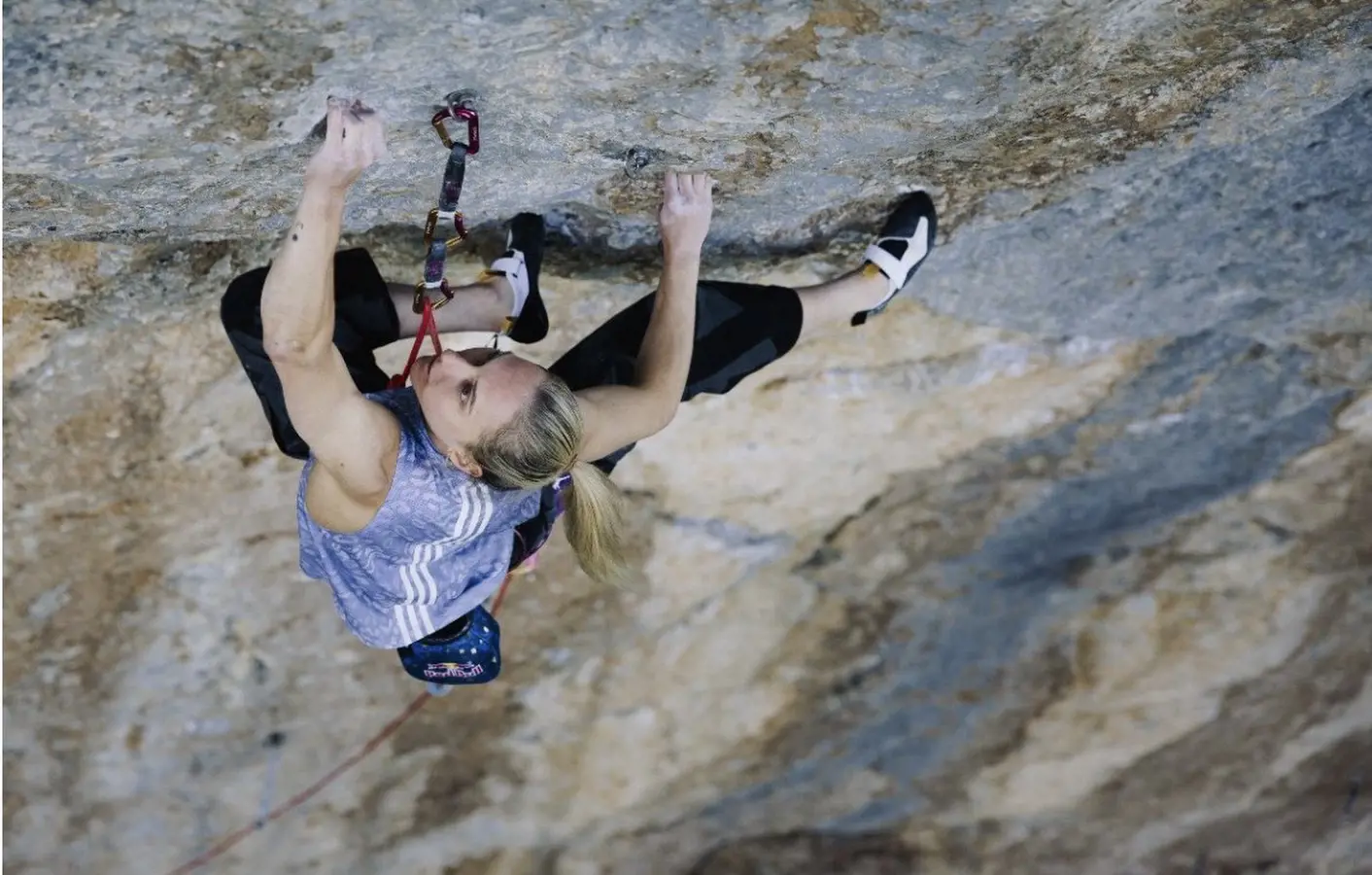
Janja Garnbret has added another milestone to her remarkable climbing career by becoming the first woman to climb Bibliographie (9b+) in Céüse, one of the harde…
362
48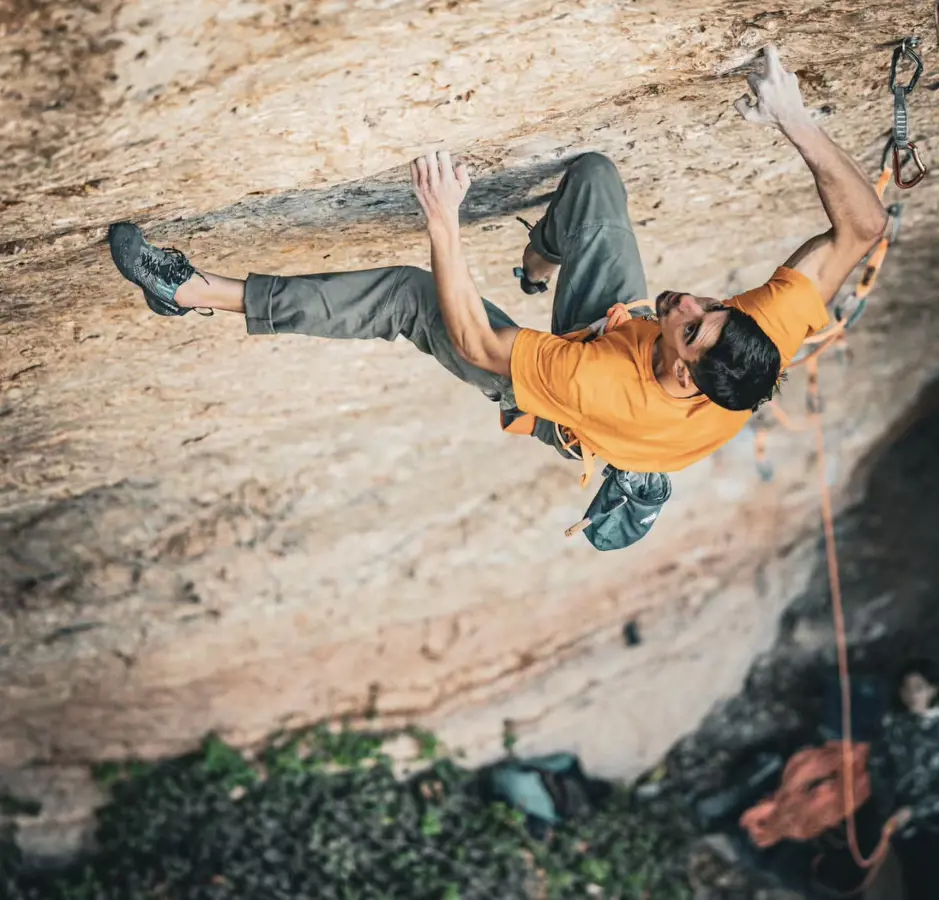
Jorge Diaz-Rullo reports on Instagram that he has made the first ascent of Cafe Colombia in Margalef. At 27, he’s already stacked four 9b+ sends and now he’s ad…
286
81
”I stopped focusing on competition bouldering after last year’s World Cup in Prague, partly because I can already feel it on my body, especially in my shoulders. The modern competition style, with a lot of jumping from one hold to another, is very demanding for the shoulders.
Outdoor bouldering is…
189
13Most commented
Jorge Diaz-Rullo reports on Instagram that he has made the first ascent of Cafe Colombia in Margalef. At 27, he’s already stacked four 9b+ sends and now he’s ad…
286
81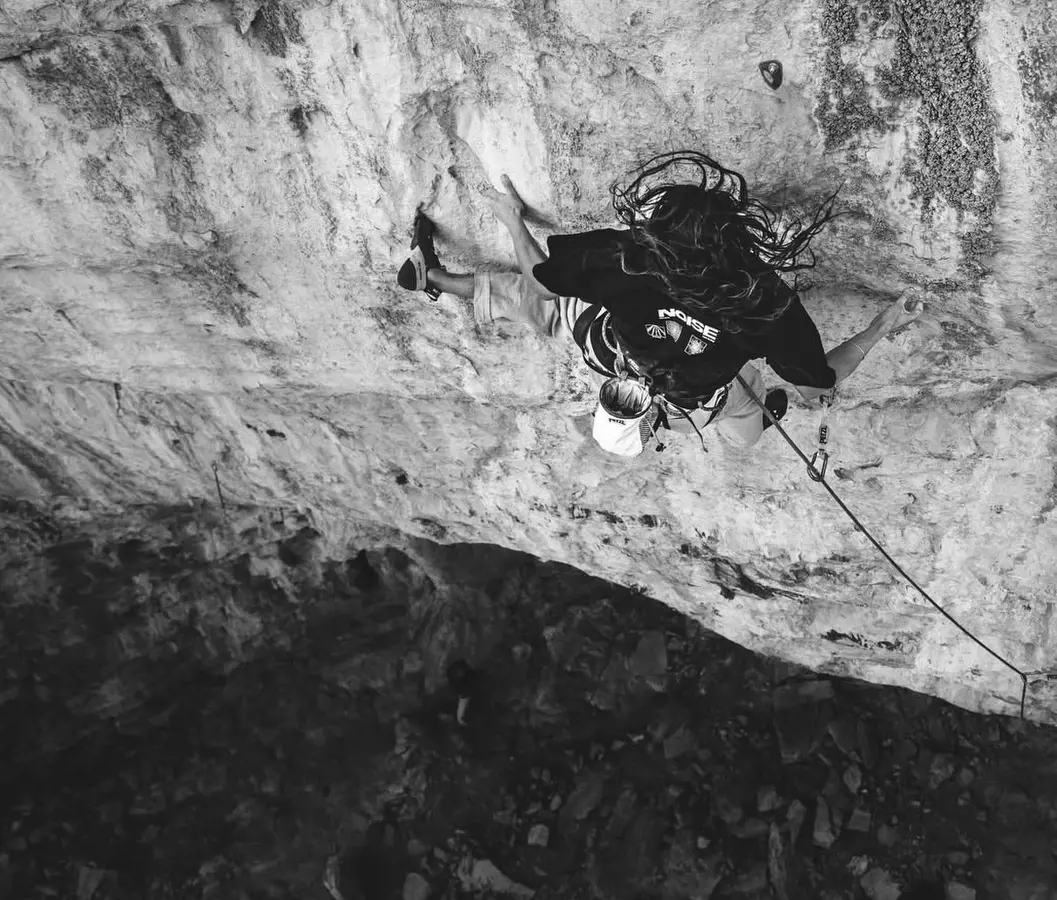
Sean Bailey reports on Instagram that he has done the first ascent of Duality of Man (9c) in Dry Canyon. ” After four total years and three seasons of climbing,…
163
69Jorge Diaz-Rullo elaborates on the reasons for him to suggest 9c for Café Colombia on Instagram, which he took down last week after projecting it for 240 sessio…
119
63