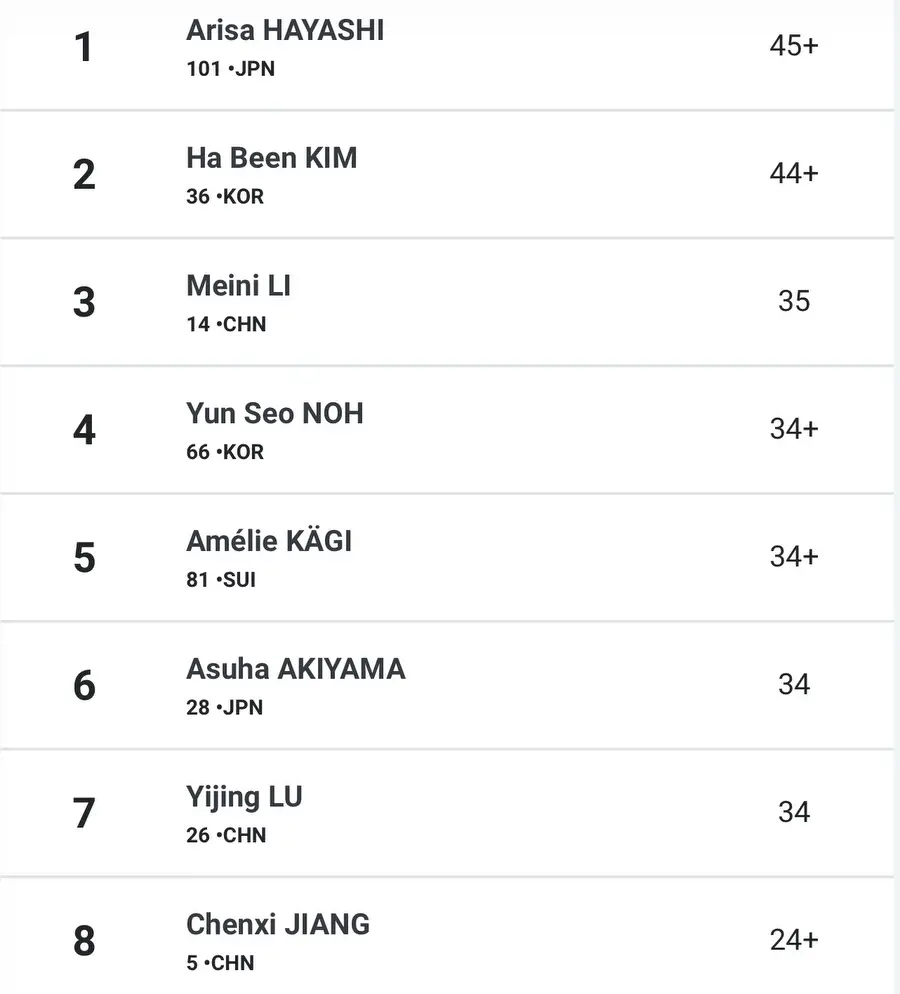
Asia dominated girls U-17 at the YWC
Seven of the eight finalists in the Youth U-17 Lead World Championships in Arco were from Asia. Japan's Arisa Hayashi claimed the gold medal, adding another worโ€ฆ
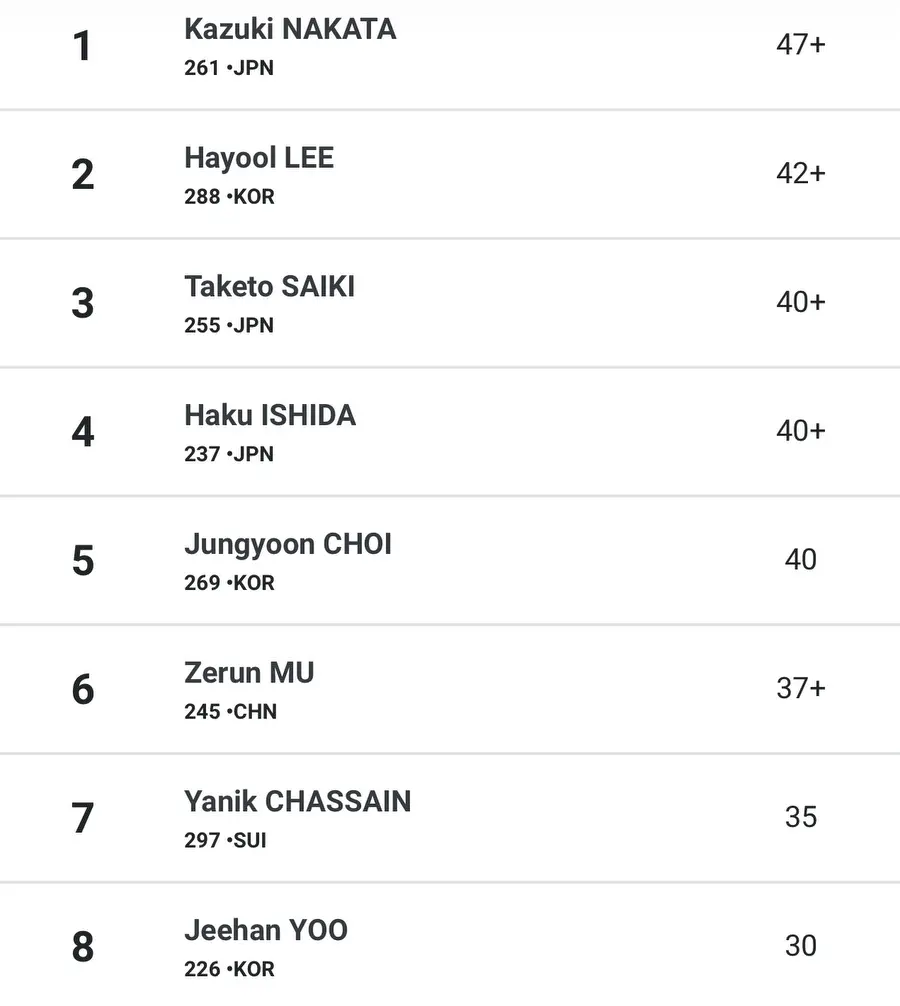
Japan dominated boys U-17 in Arco
Kazuki Nakata of Japan won all three rounds at the U-17 World Championships, while two of his teammates also finished in the top four. Overall, all six of the tโ€ฆ
Mile Heyden jumps from 8A to 8B+
Mile Heyden has done an amazing jump from 8A to do Feuerwalze 8B+ in Schwรคbische Alb. So how many sessions, any specific indoor training and what is next with the 8B+ confidence? "I think about 20 to 25 sessions :) First I just wanted to do the second part which is 8A, but I did it in only one session which was really cool :) I recreated the boulder in our gym and did a specific undercut training (like the beastmaker 7sec program). I also did lots of boulders with many moves for the endurance. Now with 8B+ confidence I think I will dare to try some more harder boulders :) There are some really cool lines in for example Silvretta that I've always wanted to do like Charity Bouldern (8a+). And I think I will try all the open projects, also a 6A jump I never was able to do! Maybe I'm able to now:) But first I have to go rope climbing with my boyfriend because he spotted me all the time (really don`t like rope climbing :))"

IFSC has informed 8a that there will only be six in the Speed finals in the Combined format. What they previously said, which 8a questioned, was wrong. "For the Speed Final the concept of โ€œLucky loserโ€ (7ยฐ and 8ยฐ ranked Athletes in the 1/8th finals) applies, as a quota of 6 does not allow the duel system." IFSC says now that the six finalist will compete in three Duels and that the winners as well as the best time of the losers will qualify to the semifinal.

Steve Townshend, the fastest 8c+ climber in the world, has always used speed to do hard routes and here he explains the importance of breathing. Adam Ondra, known for his Speed, agrees with Steve and have also given some comments in the end. "Generally fast is better as long as you don't sacrifice efficiency. On some hard moves or sequences I have discovered I need to force myself to slow down. I also have practiced a lot of yoga, where you time your breathing with your movement, and I've learned to apply this same concept to climbing and that really helps. I used to fall off at the crux sometimes but other times I wouldn't and I couldn't figure out why? Until I applied this "breath with movement" idea and discovered that if I was breathing in during the crux I would fall. I needed to take air in just before the hardest moves and then either hold it in during the crux or exhale during the crux. This is why Adam Ondra and Chris Sharma scream (and tennis players and Bruce Lee) during the hard moves: it enhances your power. A hard part about this "rest" or with climbing slowly in general, is letting other thoughts enter your mind. You want to stay in the "zone" and not start to over analyze things. Sometimes if my mind starts to wander I just focus on my breath to keep those thought out. Deep breathes seems to be a key to climbing at your max. Just listen to Adam and you'll see he's figured that out too. I'm making a conscious effort to get better at breathing deeper and louder and times with the moves better when I climb at my max and at "full speed"." We asked Adam Ondra if he could comment Steve's interesting article and climbing style. I definitely try to breath as much as possible, because why do you get pumped (ie. get lactic acid)? Because of lack of oxygen. The more you breath, less lactic acid. What I usually do when I get to the jug or any rest - breath a lot at the beginning of the resting period, then slower to let my heart rate go down and just before going for it breath deeply a few more times again to motivate myself and "wake" myself up. Steve's climbing style is very impressive, but I would guess he could try to find a few half-a-second- or 1 second-shakeouts while climbing the first section of the route up to the rest. He has a very good pace with a generally relaxed body, but there is not even one second when he would shake either of the hands completely. He just keeps going. And that is tiring. Or the route is too long to be climbed in this style. Of course for somebody as fit as Ramonet it is not efficient to climb as fast. For Steve or me it could be the most efficient to climb that fast. But if we decide to train like horses, we could be fitter, our ability to shake out while climbing would better and it would be more efficient to climb slower and find more short rests. Other climbers have this fitness naturally, or due to long-life training, ability to rest almost everywhere (weight-dependent and genetic too). For these climbers, it is probably useless to start climbing faster."