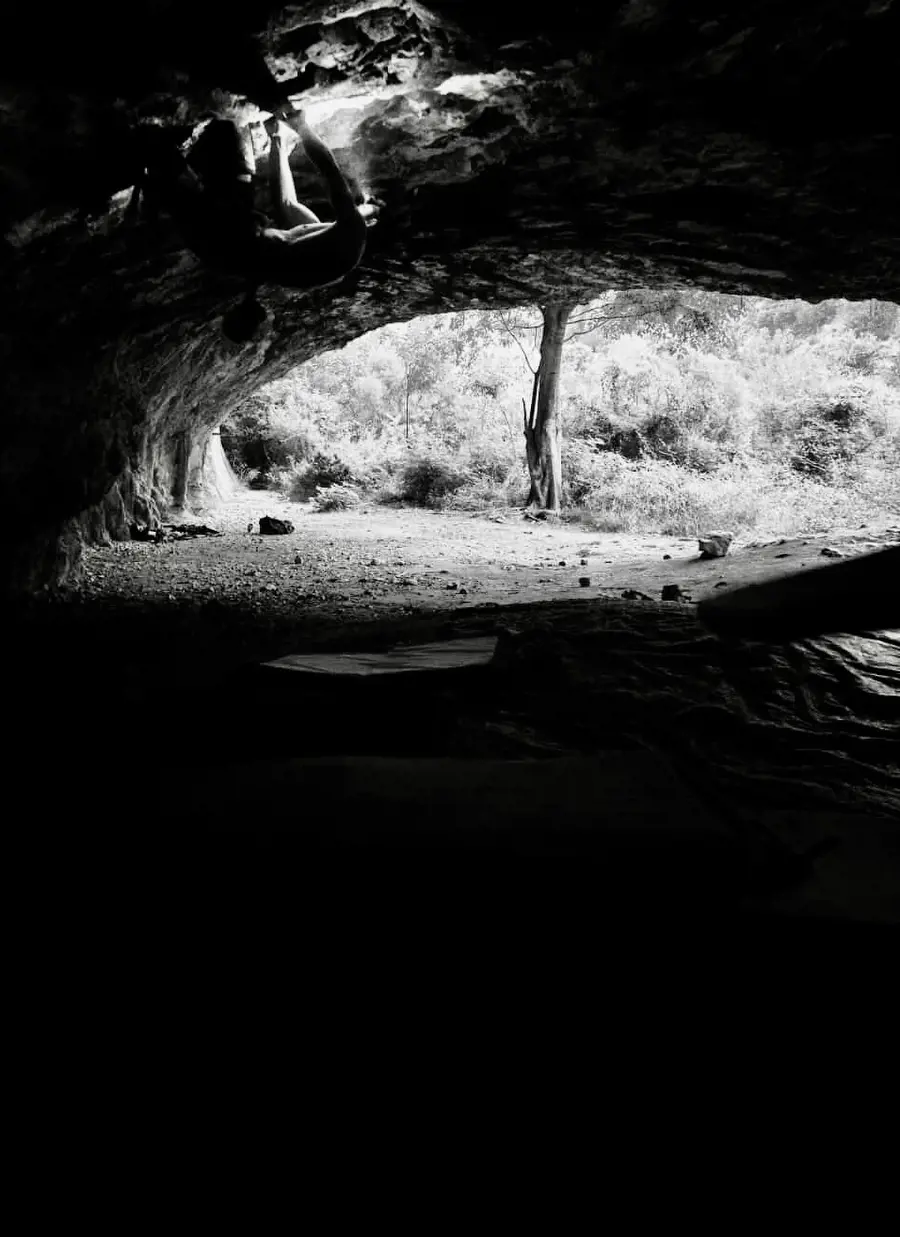
Emil Abrahamsson, who sent
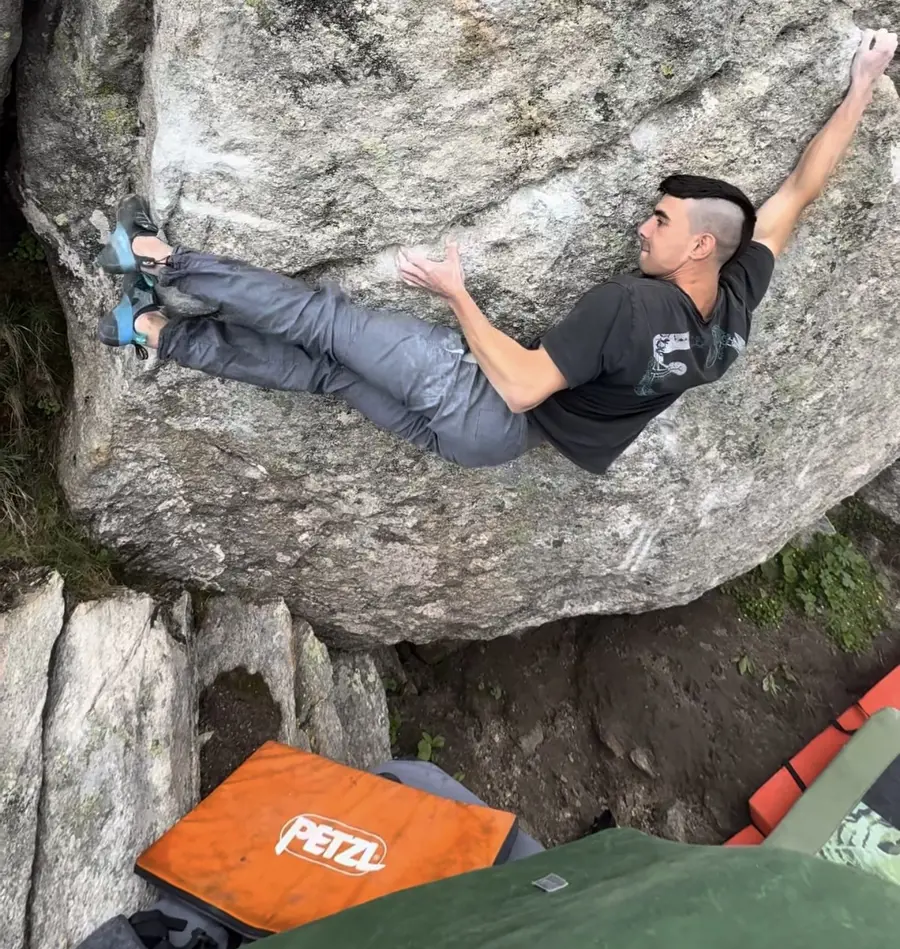
The Story Of 2 Worlds (8C) back in 2023, has now added
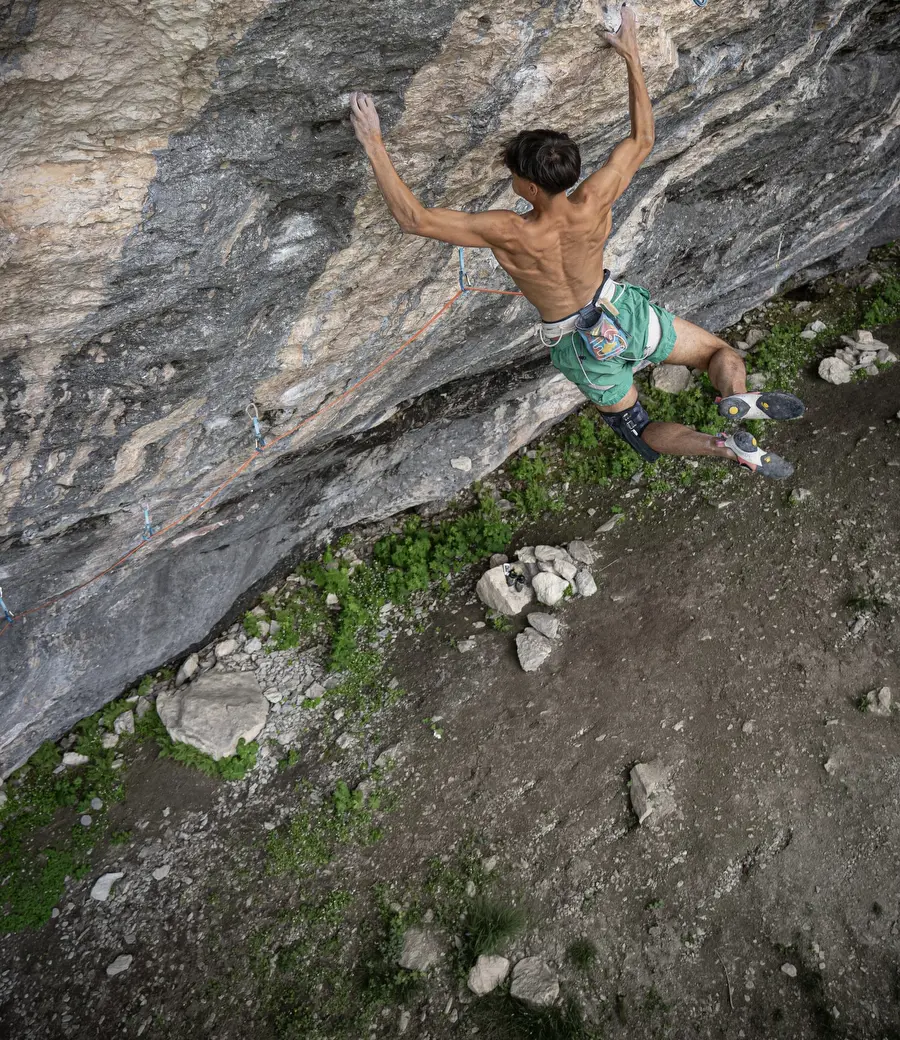
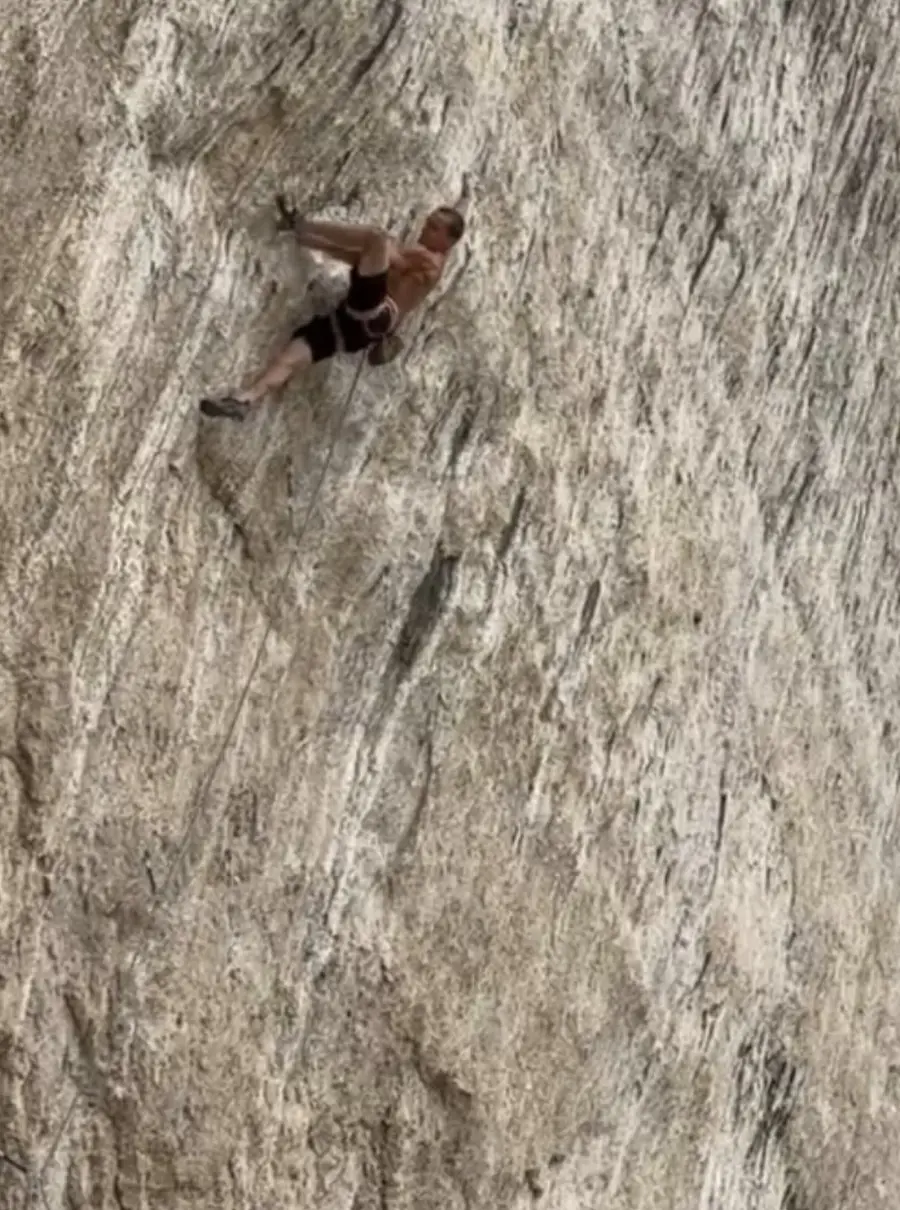
Biologico (9a) in
Arco to his list of sends. The Swede began his climbing journey a bit overweight at 158 cm and 75 kg and has since grown to 183 cm and 82 kg, becoming a motivating example for everyday climbers. His
YouTube channel now counts 342K subscribers and around 270 videos since launching in 2018.
What is your climbing background?
I began climbing the year I turned 16, which will be 14 years ago this year. My obsessive nature led to decent progress during my first few years of climbing, resulting in
our first interview nearly 9 years ago after I climbed one of my first few 8B/V13s after about 5 years of climbing.
Over the years I've predominantly been a boulderer, with the occasional sport climbing excursion here and there. Between 2020 and 2024, I juggled competing for the Swedish National Team with rock climbing and my YouTube channel. Spending 40-50 hours editing videos and another 20-25 hours training each week, plus adding YouTube filming sessions, was quite taxing on my body. I realized it was a bit much and decided to cut back on competitions because I was always either overtrained or overworked. Ultimately, that resulted in a long streak of injuries, and I stopped trying to perform at my highest level between 2024 until the beginning of 2026. Don't get me wrong, I've been training hard and have climbed stuff I thought were difficult in that time, but I put performance goals on the back burner in favour of my health and to focus on the YouTube channel.
How have you progressed over the years and what is your progress philosophy?
My progression has been pretty steady, although strictly based on grades I guess not quite as much. I have increased my level a little bit every year, leading me to climb 8C/V15 as my hardest. I try not to use grades as a definitive form of measurement, although I find grades incredibly fun to chase. Grades are the equivalent of leveling up in a video game. It's fun to level up, you can be psyched about it, but they do not tell your full story about how good you are at playing the game.
As an example, sometimes people will call me a "9a" climber or "8C boulderer", but truth be told I don't climb harder than 7A/V6. I say that because if you put me on a slab with pebble feet that's probably the grade I max out at. I believe the best way to progress is to stay open to how much there is to learn as a climber, at any difficulty.
PS. I projected a V4 when I visited Joshua Tree last year. Didn't do it.
What is most important for being a relatively big climber?
I'm 82kg/180lbs, which I guess constitutes relatively big. That being said, it's easy to fall into the trap that being lighter is important for climbing, because if I added a 20kg weight vest then climbing would be harder, naturally. However, if you take away 10kg from my body I'd struggle with all kinds of health problems and feel fatigued, weak and overall bad. I know this from experience, I should add.
So, the most important thing for me is remembering what climbing well and feeling strong is like for my body. I can rarely use other people's beta, and I have to analyse what my body can do well and adapt to that.
Can you tell us more about Biologico and the process behind?
I had quite a rough year 2025 health and injury wise, and in August last year an orthopedic surgeon even told me I should consider retiring from climbing, as he suspected I had arthritis in my shoulder. I waited anxiously for my MRI results for over a month. That turned into quite a soul searching month for me, where I realised more than ever just how much I love the ability to climb. Once the doctor received the results, it turned out his initial thoughts were severely exaggerated; in fact, it just seemed to be that a muscle had checked out, forcing the surrounding tissue to compensate. This injury prevented me from doing as much as a single pull up, so between July - November I focused on just recovering and climbing with a straight arm. I managed my first pull-up in about 5 months in the middle of November, and I was very grateful for that pull-up. Quite quickly after that I could go fully into training mode, and I really wanted to dedicate myself to a new goal in climbing. That ended up being my lead climbing ability.
I moved to Arco in December for a few months to be closer to nature but also for this goal. I had spent some time in Flatanger the previous year and although I ended up mostly working out how to place a kneebar and not really climbing any routes I learned a lot from that experience. After an encounter with the first ascensionist of Biologico (and legend of our sport) Adam Ondra, he recommended the route to me. It was a perfect recommendation, and I did all the moves on the first session and got it in three overlapping links on the second session. However, piecing all of this together took many more sessions in the end. Throughout the process I learnt a lot about effeciency and how to recover on the wall, and I'm very grateful for my time on the route.
Biologico was an interesting process because I had very little experience with what it takes to climb routes close to my limit before this. I'd tried some harder routes before, but never adapted my training specifically for lead climbing for an extended period. Climbing individual parts and climbing a whole route are very different things.
Thinking about it now, outdoors I've only done 10 routes between 8a-8b+, and the majority of those were done in 2017 before bouldering completely took over my climbing focus. It took me a while to figure out how to combine my bouldery style of climbing with lead climbing, but once I did, the route came together and felt incredibly satisfying to climb.
However, I've never climbed an 8c or 8c+, so I guess that's next!