NEWS

Perhaps almost half of the world's first 8B and harder Boulders have been or are subject to being downgraded. In general, Magic Wood sticks out and in fact, for two former 8B+'s there: Unendliche Geschichte Part 1 and High Spirit, also 8A has been suggested, i.e. three grades lower compared to the FA. Here is the brutal list with some of the classics that have actually been downgraded at least two steps or where such personal gradings have been put forward. 8C+ Anam Cara, Silvretta 8C+ Memento, Silvretta 8C/+ Entlinge, Murgtal 8C Banshousha, Ogawayama 8B+ Mooiste Meisie, Rocklands 8B+ Madiba, Rocklands 8B Super Nova, Magic Wood 8B Massive Attack, Magic Wood 8B Sofa Surfer, Magic Wood It should be noted that in order to try to present correct news 8a started to question some grades especially from Magic Wood some 15 years ago, as we could see that most of people who went there made their personal best. 8a used to be criticized for this but today everyone agrees with the downgradings and in many cases the community has actually been taking it further, as the above list illustrates. These brutal downgrades are also the reason why 8a do not think grades are so accurate and therefore slash grades should be used more often, which already works in Fontainebleau.

Airbag solo - A possible WC and Olympic format?
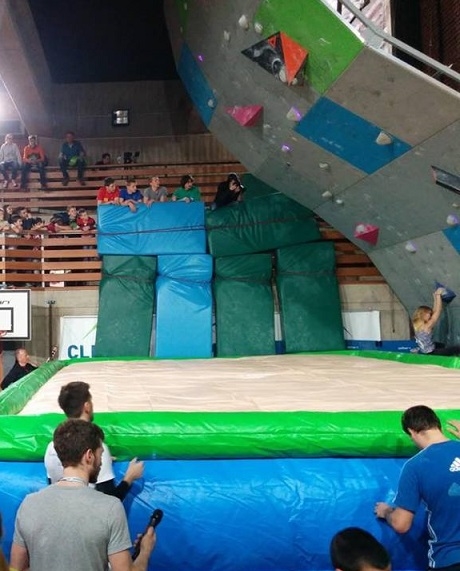
Domen ล kofic reports from the IRCC Air Bag comp in his hometown Radovljica, which he won together with Janja Garnbret by, soloing a 9-meter-long routes faster than the others in the final. They had three attempts on 8b respectively 8a routes which ended by letting go and falling onto a giant airbag. In total, 247 competitors from seven countries competed. The number #4 in the Lead World Cup 2016, says he totally agree with Adam Ondra when it comes to his negative opinion regarding the Combined format in the Olympics. So what about making it a new Olympic or Lead WC format? "I definitely think it could be an Olympic format and it would easily go also for the Lead World Cup. It would be much more fun and the moves could get even harder and more spectacular. For now I see only positive sides. The airbag can be bigger and smoother and we could also climb up to 20 m if necessary but anyway lead should not be higher than 18 m as it gets boring."

Ryuichi Murai has repeated two Dai Koyamada's Boulders in Shinobara. Most impressive was his 30 min ascent of Uma, to which he gave a personal grade of 8B+.

Blockfeld Winterthur wins the amazing Hard Moves DWS show
Last route, last climber, his last try. Baptiste Ometz managed to stick the dyno and secure the overall victory for Blockfeld Winterthur. Then he continued making the first top. What an amazing ending of a superb Deep Water Solo show in Wuppertal. The winning team from Switzerland: Baptiste Ometz, Benjamin Blaser, Jara Spรคte, Kevin Heiniger, Mathias Seiler, Natalie Bรคrtschi, Nils Favre, Noe Wetter, Noemi Langenkamp, Samuel Ometz.

9a+ by Magnus Midtbรธ in Santa Linya
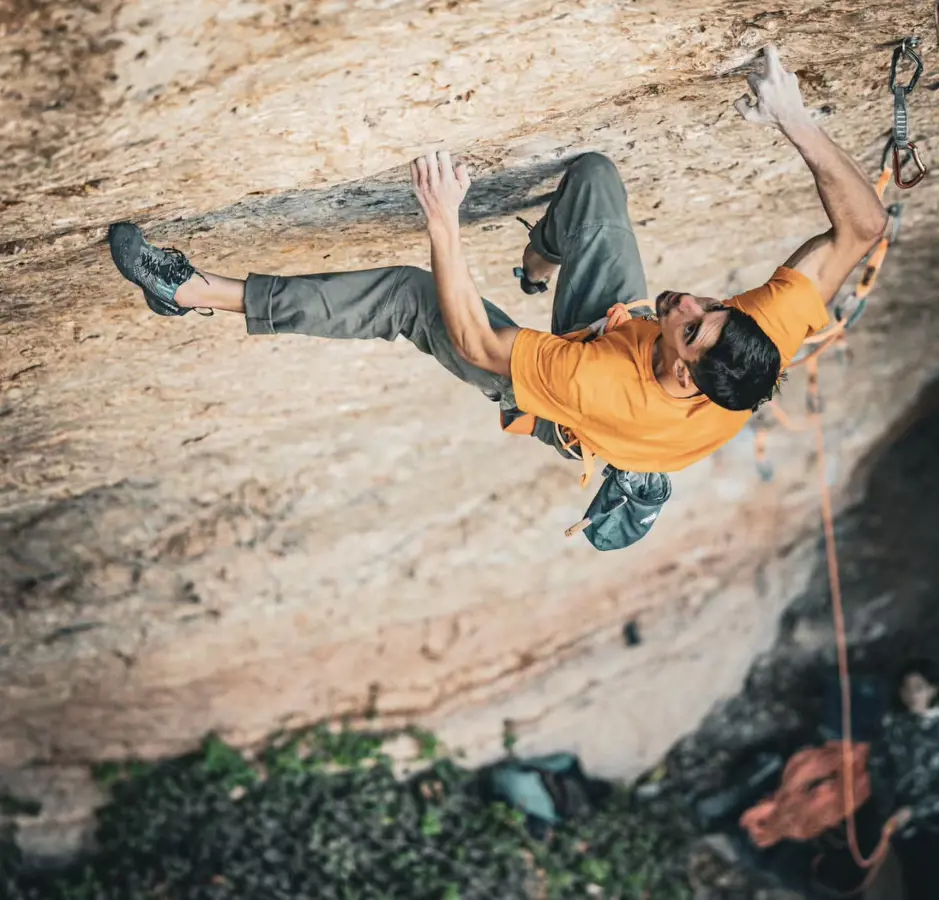
Magnus Midtbรธ, #4 in the World Championship in 2011, has done his fourth 9a+, Seleccion Anal in Santa Linya. (c) Henning Wang "Perfect timing only a couple days before leaving. A crucial hold broke just a few hours before I sent. Makes it a little bit harder with a new sequence down low. Feel like I have lots of energy right now, so I'm trying to put it to good use. My plan is to skip the first comps and climb outside in Norway instead. I will focus more on the World Championship in Paris this year and do one or two World Cups as training for it. This was my second trip working Selecction A. I probably fell 10-15 times on the crux, but luckily never in the last part. My plan now is to go through Stokin the fire (9b) and see if that could be a project for next season. Have watched Edu Marin working it and it looks really good!"

9a+ by Daniel Woods in Oliana and a 9a in Margalef
Daniel Woods, who did the FA of an 8C+ Boulder last year, comes with good news on Facebook that he has done his fourth 9a+. "Sent Papichulo (9a+) last night. This is the most resistant route I have climbed on. 50 meters limited rests, perfect rock, sketchy slab outro... Has everything. Props to Chris Sharma for having the vision and establishing it. Photo Matty Hong" The day before he sent Vรญctimas Pรฉrez 9a in Margalef which is another resistant testpiece. Not bad for the one who has done some 25 boulders 8C or harder.

In 2009, I started saying that it is disadvantageous to start last in the Boulder finals, as the guys who had won the semifinal ended on average 2.8 in the final and that in world champions the results were almost upside-down. One possible explanation for this is that it is harder mentally to sit and wait hearing the others top out and then come out an execute, which was also what some of the top guys told me. Furthermore, you could assume that the biggest mental pressure occurs in the world championship. Here is the full data based on all World Cups and World Champions since 2007. The second column relates just to the ten results during the World Championships, which confirms my initial thoughts. Rank in semi-final -> Average Rank in all Finals/World Champions 1 -> 2.9 / 2.9 2 -> 3.3 / 3.6 3 -> 3.4 / 4.3 4 -> 3.7 / 3.7 5 -> 3.9 / 4.0 6 -> 3.9 / 2.6 During the World Championships, the guys starting first in the final, as they had the worst result in the semifinal, have the best results in the final. If we believe that the ones winning the semi have much higher chances for winning the final, compared to being #6 in the semifinal, we could say that it is unfauvorable to start last in the final. If we say that all the six semifinalists should have equal chances of winning the finals, we can say that in general, not talking about the world championships in particular, it is best to start last in the final. During the World Championships, the guys starting first in the final, as they had the worst result in the semifinal, have the best results in the final. Here are the stats for Anna Stรถhr, the best female boulderer competitor in the history, suggesting that for her it is advantageous to quailify last to the final and therefore to start first. Interesting is also that she won her two world championships when she started first in the final, after being #6 in the semi. #1 or #2 in 25 semifinals = 36% victories #3 or #4 in 13 semifinals = 54% victories #5 or #6 in 12 semifinals = 75% victories What is also interesting to see is that until 2012, Anna Stรถhr won only 17% of competitions where she started last but later, getting more experience to handle the pressure, she won 55%. Also Akiyo Noguchi, the second best female boulderer of the last ten years, shows similar stats. In other words, when they were not so experienced they could almost only win when they started first or second in the final but when they did win the semi and had to start last in the final, they seldom won in the beginning of their careers.

Schubert's 9b: I had the biggest fight of my life
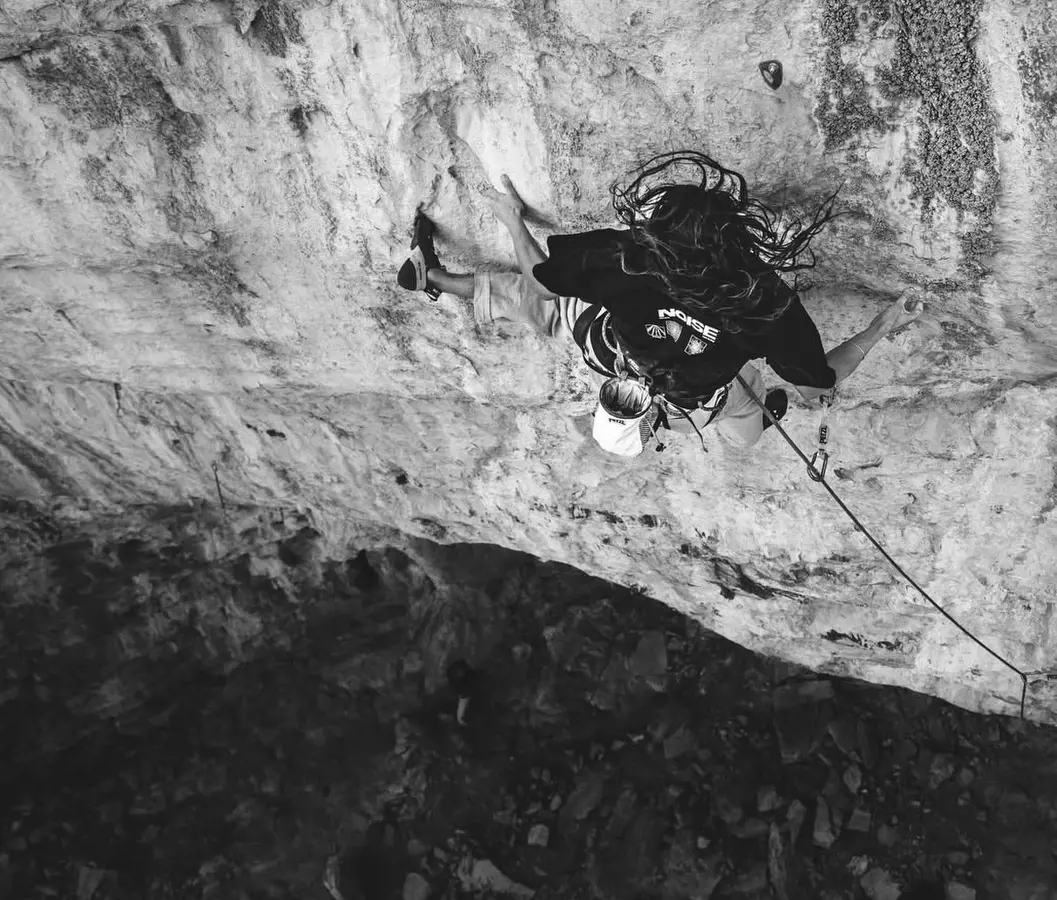
Jakob Schubert has written a blog talking about his ascent of LaPlanta de Shiva 9b. Read the full story at Mammut's webite. (c) Elias Holzknecht - I had the fight of my life and managed to reach the top of "La Planta de Shiva", feeling exhausted but overjoyed - it has been my most difficult route to date! From the first attempt to the actual ascent, once again the whole process was a great learning experience for me. It taught me never to give up and the importance of mental attitude when you push your limits. I am very proud to have completed the second ascent of this awesome line and am now looking forward to the next challenge.

PUC micro periodization training with Adam Ondra
Adam Ondra started to experiment with structured and peak optimization training in 2011. During the last three years he has been working together with Patxi Usobiaga and his PUC training concept. Interestingly, this training concept includes no real periodization but instead it is ongoing mix of power and endurance in combination with micro-preparations before realizing his goals. The reasons for this are that it is more fun and less hard for the head. (c) Javi Pec Please explain your focus in 2016 and the PUC training concept? I definitely do not want to to make the whole World cup circuit. I want to feel more like a rock climber. At the same, I want to test how PUC training works for climbing outdoors. If I will pick a few WC stages, time will tell. PUC training is quite simple. Training hard and smart at the same time, towards my goal. Periods of hard training and switching to the periods of realizing my goals. Periodization might be annoying sometimes, but for getting the shape to realize my dreams it is worth it! I love the feeling when I feel strong, weightless and smooth. How much training and which type are we talking about? Well, I usually train something like six days a week, doing campus board and bouldering every day (doing power-based campus board every even day, power endurance campus every odd day), and adding some specific training on rings and TRX every second day and endurance based climbing every second day. Just before realizing my goals, I train two days in a row and one day rest, sometimes only one climbing day. In these days, I usually do very short campus session in the morning and some super hard routes/circuits, with long rests in between and in between 2 and 4 hard routes, excluding the warm ups. Training might not be as hard it was in the last two years when I worked hard for the competitions. We keep experimenting and always trying to find the new and unconventional ways of training. But it is possibly smarter than in the last two years and more specific towards my outdoor goals which are mostly in Flatanger this summer. Is not periodization more like doing four-six weeks blocks? The length of the training period vary, and it is definitely not for the 18 weeks straight. That might be the efficient in theory, but very hard for the head. It is more fun to make the training periods a bit shorter. I do endurance period only at the very beginning of the season, or for no more than one week during the season, in case I happen to have longer period of training. But even in the endurance period, I boulder a little bit, to keep it more fun and not to go too low with the power. The power period is something most of the time when I train and it is what I explained. But it is not power only. I add power endurance (or endurance, the border is sometimes unclear). From my experience, if I do not get pumped for a long time, my ability to climb power endurance or endurance route deteriorates a lot. And then power endurance period (just before realization of my goals) is about doing hard routes, but I still put a little bit of campus to increase my power at the same time.