NEWS

Adam Ondra wins in possibly the best show ever
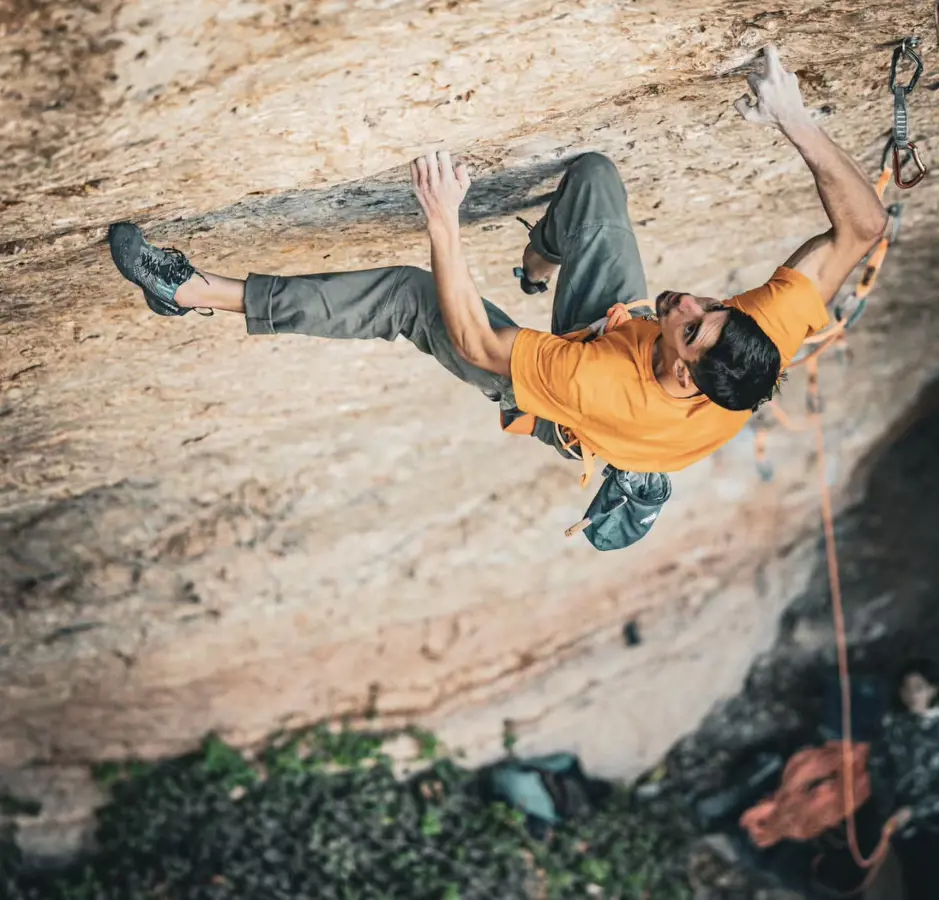
Adam Ondra was last out on the super spectacular final route and the excitement in the arena was full on. In the end everyone was standing up and once the 23-year-old sticked the last double dyno, he turned to the spectators full of adrenaline and continued to the top. Many of the guys in the live-streaming said it was the best show they had seen. Sport climbing is ready for the Olympic Games. (c) Eddie Fowke - The Circuit

Based on the constraints IFSC has put forward in regards to IOC demands, here is a simple Olympic format solution. All 20 participants will first do one round of Speed, Boulder and Lead. The Top-8 qualify to the final, which is dependent on the ranking sum. In the final round, all 8 finalists will do all disciplines again and the ranking will determine the medalists. Alternatively, only 6 qualify to the Lead superfinal based on ranking sum of Speed and Boulder. Day 1: Speed and Boulder qualification format Day 2: Lead semi format and appointing who is in the Top-8 Day 2: Speed Final Day 3: Boulder Final and Lead Final/Superfinal The advantage of this simple solution is that all competitors will compete in all three disciplines, which is not possible in the IFSC suggestion. Only minimal additions would be made to the World Championships and Continental Championships, which will count as the Olympic qualifications.

Adam Ondra's fairytale story from Paris
Adam Ondra, the double World Champion from 2014, shares his thoughts on the World Championship in Paris, where he was #1 in Lead and #2 in Boulder. "Additionally, there is finally one Instagram account which is official and truly mine." - My overall feeling from Paris is for sure like a dream. I think the whole 2016 season just worked out perfectly in order to be 100% prepared for Paris. Even though I have been focusing on my outdoor projects, I have been in the strict training regime in between the trips and thus trained indoors a lot anyways, especially in the spring season when I was finishing university. And just those few weeks before Paris, I could transform all the training into the plastic - like being used to the PU holds and style of WC routes and boulders. Every day before Paris my confidence was growing and the last training in Innsbruck was extremely satisfying. Being in Paris, I felt strong and confident every single round and that is obviously incredibly important in order to stay calm relaxed, yet motivated. In bouldering finals, I was slightly disappointed also because I felt so good in the previous rounds and I knew I did not make my best, but of course 2nd place itself is great. So disappointment was mainly about my own performance. It is completely possible that if more big names had made to the finals, I would not have been 2nd. But that is the game. I just think that for semifinals and finals of World Championships, the style of setting could have been more diverse. The boulders were mainly technical and feet were smears. It was not necessarily bad for me, I actually like technical problems, but in my opinion, the World Champion should be decided on wider range of problems. But it was bit of a problem of the bouldering wall, which was bit too much vertical/slabby, so the routesetter must have had hard time to set more diverse problems. Lead was just a fairy-tale story. I was a little afraid that I would be a little tired, climbing 5 days in a row, but it did not really affect that much. I think I just got so fit due to the PUC training. I felt a little tired on the warm up, but as soon as I started climbing in the final route, I just felt great. The route was very nice to climb, with different sections and making that final dyno and enjoying the crowd going crazy just before making the easy topout - it was a lifetime experience... Unforgettable... (c) Eddie Fowke catching the moment once again.

IFSC has an athlete commission including eleven of the very best World Cup climbers. "The commission provides a channel for communication between athletes and the IFSC Board." Now it turns out that the representatives were just informed about the IFSC Olympic suggestions one week before the World Championship without any possibility to communicate their opinions. If the best athlete does not agree to the format and boycott the Olympic, climbing will surely be kicked out in 2024. Why do IFSC run an athlete commission if they do not bother to listen to their elected representatives?

In Bouldering finals, the starting order is reversed in comparison to the semifinal Top-6 results, i.e. the first guy out in the final was the last guy to qualify. However, the competitor with the worst semi result is normally the best in the final. In the 12 events since 2007, the athlete starting on fresh holds has won five golds and three silver. Beside fighting with worse friction, the last person out has to deal with much more pressure. In Paris, Akiyo Noguchi was #1 before the last Boulder but she had to listen to the arena exploding when Petra Klinger did it. Later Miho Nonaka finished it as well and by then Akiyo did very well know that she was no longer going to be #1. Instead, she did know that she had to top to get the gold. Suddenly, the winner of the qualification and semifinal, who had also performed best on the three first Boulders, could not handle the pressure. In reality, only one of the girls had worse results on the last Boulder problem. Already in 2007, I started to talk about this "upside-down" result since I witnessed it live in Aviles and spoke to Daniel Dulac. He had won the qualification and in the semi he was the only person onsighting all four problems. In the final, he was dead last with no tops. Daniel said it was just awful to sit and listen to the others top out making the spectators go wild and as a matter of a fact, this was his last competition. What I am putting emphasis on sre five golds and three silvers out of twelve sets of medals. IFSC has to deal with this and find a solution.

Narasaki wins in the amazing show
Tomoa Narasaki, the overall World Cup 2016 winner, has won the gold in a spectacular show in the World Championship in Paris. Last year, the 20-year-old was #30 in the Boulder World Cup and #4 in the Youth Worlds. The Japanese started the 2016 season being #18 and #15 and then something clicked as his worst result in the last five WCs was #2. During the final in Paris he made quick work on the three Boulders. He only failed on the second Boulder, where it seemed he was hindered by his height. Adam Ondra, the double World Champion from 2014, was second, putting up a great show. The World Championship was actually his first Bouldering competition in 2016 and last year he was #6 on average, counting the last three WCs. Manual Cornu, who is currently second in the Combined after winning Speed at 7.83, did get the bronze. The French was actually leading after two problems and had one hand on the top of the third problem. On the fourth he fought so hard that he got a standing ovation. Noteworthy is that the winner, Narasaki, was last into the final and started first out. Since 2007, the guys starting first have gotten five golds and three silvers during eleven events.

Marcin Dzieล„ski, who did win the three last Speed WCs and who was interviewed by 8a last week, is the new Speed World Champion. Actually, he was superior in all four rounds and amazingly, he was the fastest in the Final, 5.83, which was his fourth run in just about 40 minutes.

Petra Klingler gets the gold - epic moments
Petra Klingler found the key toe-hook on the fourth problem unintentionally and the emotions were just overwhelming. She gets her acts together and does a dynamic catch to the right stopping the pendulum by ending in the big cross. On topping out, she starts crying. - Mind blow! It is nothing in your head anymore. It is just like happiness going through your whole body... it does not matter what the ranking would be. It was just so much fun to climb this final. (Picture and comments from the very nice live-streaming). Last out was Akiyo Noguchi, who had onsighted two Boulders and had both hands on one problem, but she could not handle the pressure and she was #3. The silver was taken by Miho Nonaka, who was also #2 in the Boulder World Cup 2016. Complete results. It is noteworthy that Petra did not even make it to the semifinal in the last World Cup and she has just made it into the final once in 2016. The 24-year-old is like a late bloomer as she was not so successful in the Euro Youth Cups and it took her eight World Cup events to make it to the semifinal.