NEWS

La cรจne du roi lรฉzard 9a+ by Cedric Lachat
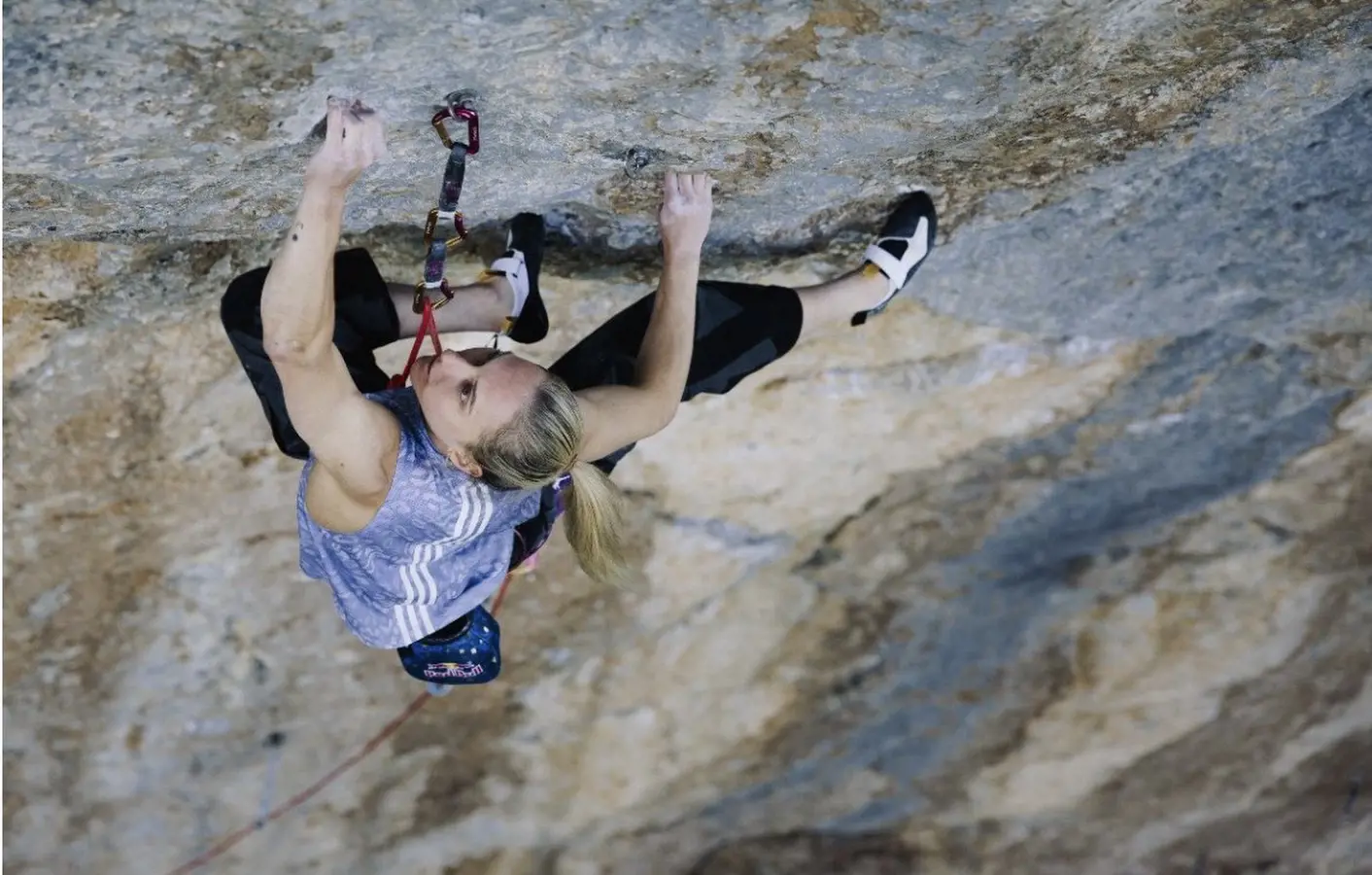
Fanatic Climbing reports that Cedric Lachat has done the first repeat of Pirmin Bertle's La cรจne du roi lรฉzard 9a+ in Jansegg. Watching Cedric go more to the left, during his first sessions out of ten, avoiding the original elimination dyno, Pirmin thought Cedric solution was more logical and had already down graded it to 9a+ which Cedric confirms. Cedric, who previously have done 22 routes 9a and 9a+, has never worked so long for a 9 graded route. He also tried Pirmin's La barriรจre 9b, which is the same route but instead of the 8b start it begins with a 9a variation, but he could not do all moves. (c) Adeline Helg

Thunder Ribes 9a by Rocco Micheletto
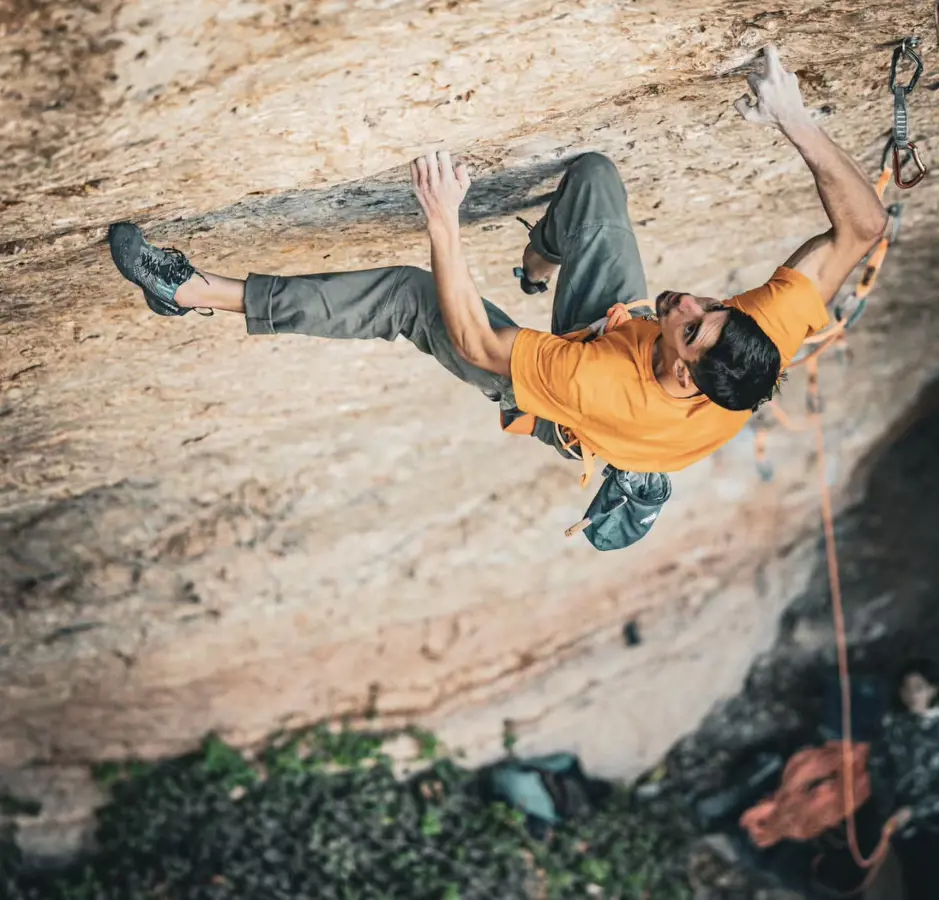
Rocco Micheletto, who works full time belaying kids in an adventure park, has done his first 9a, Thunder Ribes in Arco. (c) Marco Ceramella "Climbing a 9a has been a dream for a while, I got close to sending one in my home crag (Covolo) a couple of years back, then I broke my meniscus and ACL on the key heel hook of this route and therefore I could not send it or continue to try it. Since the beginning of 2018 I started climbing in Arco with my friends even though it is almost 2 hours away from where I live. In the spring I climbed a couple of routes and immediately started working Thunder Ribes. In May I fell on the final slab of the route. I started a training circles for the summer to get ready and luckily I got the send it.

Male Olympic Finals
12 October 2018

Male Olympic Finals

The Top-6 male final will be live-streamed today. Presentation of the finalists: Keita Dohi, Sam Avezou, Shuta Tanaka, Peter Ivanov, Filip Schenk and Yufei Pan. (c) Eddie Fowke 09.00 Speed GMT-3 Euro 14.00 11.45 Boulder 15.50 Lead

In the very first Speed race, the favorite Sam Avezou made a big slip and finished second at around 8.23. Later Shuta Tanaka fell and Peter Ivanov also made a slip so Sam was the fastest "lucky looser". In the semi Sam once again faced Pan Yufei and beat him with some split seconds. Later Pan beat Filip Schenk in the small final. In the final, Sam had a clean race and made a personal best with 6.96 seconds against Keita Dohi 7.00. Complete results It should be noted that only Tomoa Narasaki and Mickel Mamew, among the non-Speed specialists, have had a faster time at 6.70 respectively 6.77.

Dohi and Tanaka make a Japanese double
In the end Keita Dohi was rather superior, performing at the highest standard in all three disciplines. Interestingly, Lead once again turned into a Speed challenge. As two out of the first three topped out, the remaining had to sprint but all fell in the last four moves having used just around three minutes. 1. Keita Dohi JPN 2 - 1 - 3 = 6 2. Shuta Tanaka JPN 6 - 3 - 1 = 18 3. Sam Avezou FRA 1 - 5 - 6 = 30 4. Filip Schenk ITA 4 - 2 - 4 = 32 5. Yufei Pan CHN 3 - 6 - 2 = 32 6. Peter Ivanov BUL 5 - 4 - 5 = 100 Complete results (c) Eddie Fowke

The Youth Olympic Games in Buenos Aires was a great show although different when it comes to topping frequency in comparison to WCH in Innsbruck. This certainly made it more fun to watch for the general public but some climbers think Lead should be about difficulty and not Speed. In general, I think the Speed element in Lead could be nice for the semifinal which otherwise sometimes can be more boring. However, in any case split times are crucial to increase excitement to understand who is climbing faster 3/4 up the route. Further more, having more than two guys topping out the final must be considered a route setting mistake. IFSC should make a statement how they want the route setting in order to inform if the Olympic candidates should also start training sprint up Lead routes below three minutes. When it comes to bouldering, more tops are great like in Buenos Aires. On the other hand, the boulders seemed to involve less moves. Was the walls lower and less steep than normal? Possibly the route setter could lower the starting position with half a meter so there can be more action upwards to the top. And once again, two zones will force the route setters to make the boulders more interesting which both the climbers and the spectators will benefit from.

4 Tops and Lettner wins overall with 6 seconds
Hannah Meul started first out, as she had the worst results in qualification, and set the standard by topping out with ease. She took two long rest further down but as she understood the route was way to easy she speed up, although chalked up before getting to another jug at the top. All the five remaining did probably know Hannah had topped but even so, nobody could beat her time. The last one out was the overall leader Laura Lammer who only needed to be fourth to win overall. Nevertheless, the young Austrian climbed faster than the rest taking almost no rest and fell on the second last hold. (c) Eddie Fowke 1. Sandra Lettner 3 - 3 - 2 = 18 2. Vita Lukan 6 - 1 - 3 = 18 3. Laura Lammer 1 - 4 - 5 = 20 4. Hannah Meul 4 - 5 - 1 = 20 5. Elena Krasovskaia 2 - 6 - 4 = 48 6. Mao Nakamura 5 - 2 - 6 = 60 Complete results Interestingly, if Lammer had topped and finished #2 in Lead, she would have won (at 8 points), Meul would have been second (20), Vita Lukan third (24) and Lettner fourth (27).

In 2015, 8a asked some Speed specialist how difficult it would be for the non-Speed specialist to reach a very good standard. Based on the times of Tomoa Narasaki and Sam Avezou etc, they were actually dead wrong. At the same time, it seems that the younger ones much quicker adapt to going super fast in time. 2015: "In order to go below eight seconds, you probably need to do specific physical training for a year and also do many competitions, which would get you to understanding how to deal with the mental pressure. To get below 7 seconds in Tokyo 2020 you need to focus half of your training on Speed as well as gaining some weight in the whole body. Thus you will also have to deal with the mental pressure that your standard in Lead and Boulder will deteriorate and you will have to climb outdoors less." Narasaki did below 7 seconds after just three sessions and clearly he has sub 6.5 seconds capacity. Most probably we will see multiple non-Speed specialist doing sub 7 seconds in 2019 and during the Olympics, we just might see several doing around 6.5 seconds.

Two 9a's by Jakub Koneฤnรฝ (19)
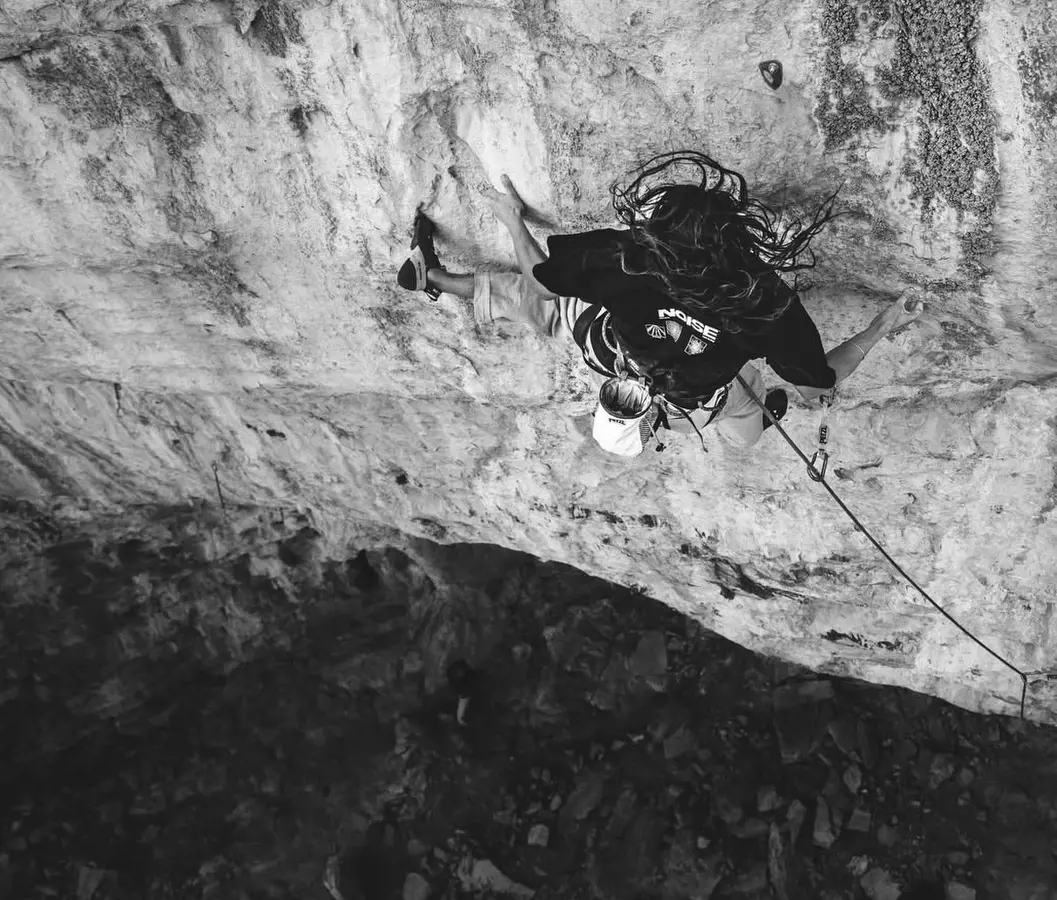
Jakub Konecny, #6 in the WCH in Innsbruck, has done two 9a's in Misja Pec; Sanjski par extension and Martin Krpan. The 19 yer old Czech did his first 9a this summer and now he has done seven. "Both routes felt like itโ€™s pretty much my style. So maybe the real projects are still waiting.. I hope. Since I started to think about the training differently this year, a lot changed and I feel much more comfortably. Simply I changed the attitude to training, definitely train harder, on hundred percent, but also with the time to relax. Every time to focus, focus only on this thing:) I went to the WCH in Innsbruck without any expectations. It was one of the lasts comps this season and my goal was only to be satisfied with my climbing and to enjoy the atmosphere. I competed only in Lead and definitely I couldnโ€™t wish any better result. Also continuing in the rounds alongside with Adam was super cool."

The clock did not work during the first race during the Speed final and it took over 20 min until they re-run the first race. Then everything went smooth until the final race when favorite, Elena Krasovskaia, slipped and Laura Lammer won. Third was Sandra Lettner followed by Hannah Meul, Mao Nakamura and Vita Lukan. In the qualification, Lammer was #6 but as she won and defends her results from the qualification in Lead and Boulder, she has good chances for a medal actually. Favorite for the gold is Sara Lettner, also from Austria, who was rather superior in the qually.