
NEWS
14 June 2025
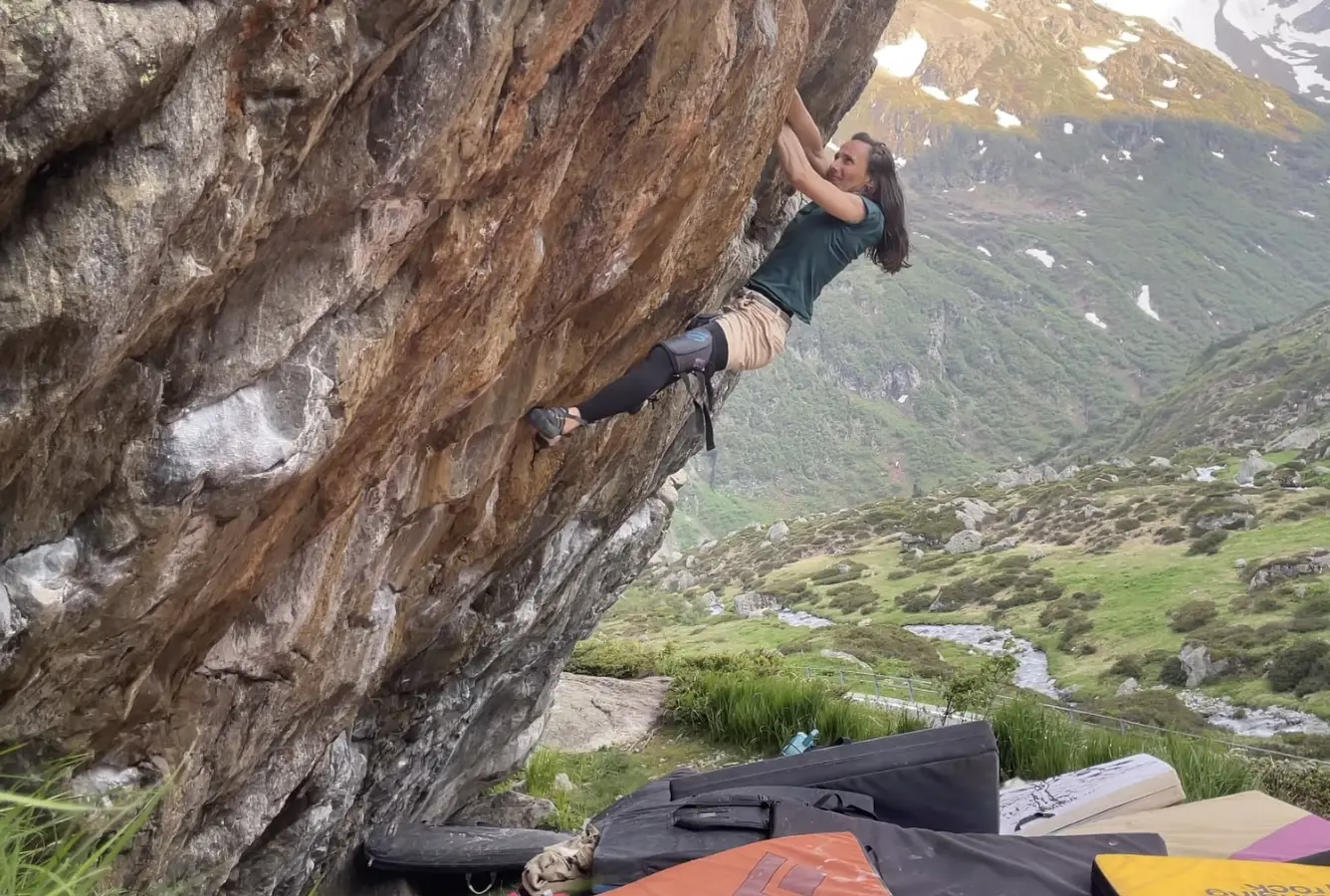
Alizee Dufraisse completes Highlander (8B+)
Alizee Dufraisse, with nine 8B’s to her name, has sent Martin Keller’s Highlander (8B+) at Sustenpass. The 37-year-old, who won bronze at the European Lead Championship and climbed her first 9a 15 years ago, completed the 8B stand start last summer and has been projecting it intensively throughout last autumn and this spring, mainly alone. In the meantime, she also completed her PhD in Sport Science.
Can you tell us more about the ascent and which was harder, Highlander or the PhD?
I first tried it in 2018 and then did the higher start last year. It’s a very long boulder where the crux comes after about 20 moves. But the PhD was harder :) You know, you work hard for six hours every day. When you go climbing, you have projects, but you don’t usually invest that much time. I'm glad the hard work paid off for the boulder as well.
The PhD thesis was a Sociological analysis investigating how climbers incorporate sport and work practices in the changing context of their sport and profession, as well as the impact of gender in these processes.
"In conclusion, we assert that the professionalization of male and female climbers in the neoliberal era is based on diverse practices, embedded with divergent values stemming from two distinct social worlds, within a context that generates multiple tensions for the athletes. Moreover, despite public policies and the initiatives undertaken by sportswomen who adopt practices aimed at promoting greater gender equality, the resistance of social actors to the destabilization of male dominance—combined with conflicting ethical perspectives on the very concept of equality—limits the possibilities for a reconfiguration of gender relations, which continue to struggle to mitigate the differential valuation of the sexes.";
"I call for the development of policies and/or initiatives, based on scientific research, aimed at promoting the inclusion and advancement of women in climbing"; "As well as initiatives, also based on research, aimed at reflecting on the development of climbing and multiple tensions and power struggles that it brings in the climbing community overall.”
Can you tell us more about the ascent and which was harder, Highlander or the PhD?
I first tried it in 2018 and then did the higher start last year. It’s a very long boulder where the crux comes after about 20 moves. But the PhD was harder :) You know, you work hard for six hours every day. When you go climbing, you have projects, but you don’t usually invest that much time. I'm glad the hard work paid off for the boulder as well.
The PhD thesis was a Sociological analysis investigating how climbers incorporate sport and work practices in the changing context of their sport and profession, as well as the impact of gender in these processes.
"In conclusion, we assert that the professionalization of male and female climbers in the neoliberal era is based on diverse practices, embedded with divergent values stemming from two distinct social worlds, within a context that generates multiple tensions for the athletes. Moreover, despite public policies and the initiatives undertaken by sportswomen who adopt practices aimed at promoting greater gender equality, the resistance of social actors to the destabilization of male dominance—combined with conflicting ethical perspectives on the very concept of equality—limits the possibilities for a reconfiguration of gender relations, which continue to struggle to mitigate the differential valuation of the sexes.";
"I call for the development of policies and/or initiatives, based on scientific research, aimed at promoting the inclusion and advancement of women in climbing"; "As well as initiatives, also based on research, aimed at reflecting on the development of climbing and multiple tensions and power struggles that it brings in the climbing community overall.”
Read more
24
28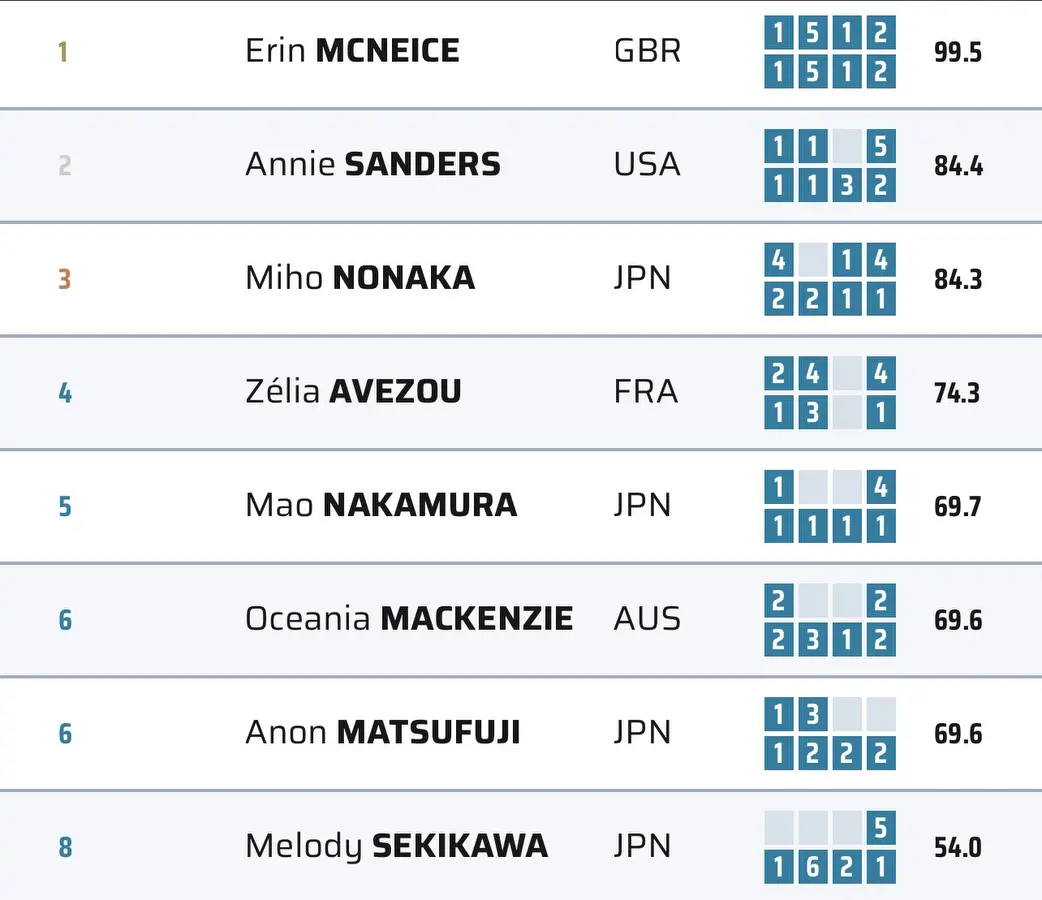
14 June 2025
McNeice wins Boulder WC in Bern
Erin McNeice, who has won both the two first Lead World Cups in 2025, got another victory in the Boulder WC in Bern.
”I feel so happy, elated, and quite shocked! I want to do all the European World Cups and there are quite a lot of them, I decided to skip the American competitions so that I could have a chance to train between the Asian and the European tours.”
“It feels pretty good to win gold in both disciplines, it’s been a massive long-term goals for me and it’s good to tick it off.”
”I feel so happy, elated, and quite shocked! I want to do all the European World Cups and there are quite a lot of them, I decided to skip the American competitions so that I could have a chance to train between the Asian and the European tours.”
“It feels pretty good to win gold in both disciplines, it’s been a massive long-term goals for me and it’s good to tick it off.”
Read more
9
013 June 2025
Doug McConnell, 43, climbs La Gionconda (9a)
Doug McConnell, who sent his first two 9a’s last year at age 42, has completed the 9a extension of La gioconda (8c) in Rodellar. ”Amazing! It doesn’t get any better than this. Gracias Primo. He said it well “40 meters of pure style”. I tried the parts of this across 4 years - each year a bit better in some weird, intangible way…this year was a surprise to feel good on it almost immediately and get it done on my 8th day this year. To have the opportunity, with decent conditions in June after I’d given it away for the season, was a treat.”
Can you tell us more about the route and how much work is behind the ascent?
La Gioconda is an amazing 40m roof bolted by “Primo” Palao in 2019. It’s an unusual style as it’s both very technical and very physical, the last 4 bolts of climbing are steeper than horizontal - you’re climbing down to the lip of the cave! The final crux involves a lot of core tension after you’ve already spent 30 minutes in the roof. The route is comprised of 2x 8c-ish pitches separated by an awkward rest. I found the second pitch much more difficult than the first, and linking it from an alternative start last year (Codigo de la Gioconda) was really taxing for me. Initially it was hard for me to even get between the bolts. The difficulty and complexity of the route was inspiring.
I spent something like 25 days on La Gioconda between 2022 and 2024 doing two parts, mostly with my friend Amos, whose help was invaluable as the route is so beta intensive. It was pleasing to only need another 8 days this year to put it all together. I was meticulous about keeping notes and videos of my beta so that each year I could add to my knowledge from the previous.
This spring being so wet in Catalunya gave me a good opportunity to train to address the physicality required in that roof. I’m not sure if that was the difference or whether just another year of steep cave climbing behind me would have been enough regardless. I was also more focussed this year, just on La Gioconda, and allowed myself shorter sessions being fresher for each.
I can’t express enough how good this route is. In fact, the climbing in el Museo sector is some of the best I’ve done anywhere, and it has a high concentration of really high quality, hard routes. I don’t really understand why it’s never busy.
Can you tell us more about the route and how much work is behind the ascent?
La Gioconda is an amazing 40m roof bolted by “Primo” Palao in 2019. It’s an unusual style as it’s both very technical and very physical, the last 4 bolts of climbing are steeper than horizontal - you’re climbing down to the lip of the cave! The final crux involves a lot of core tension after you’ve already spent 30 minutes in the roof. The route is comprised of 2x 8c-ish pitches separated by an awkward rest. I found the second pitch much more difficult than the first, and linking it from an alternative start last year (Codigo de la Gioconda) was really taxing for me. Initially it was hard for me to even get between the bolts. The difficulty and complexity of the route was inspiring.
I spent something like 25 days on La Gioconda between 2022 and 2024 doing two parts, mostly with my friend Amos, whose help was invaluable as the route is so beta intensive. It was pleasing to only need another 8 days this year to put it all together. I was meticulous about keeping notes and videos of my beta so that each year I could add to my knowledge from the previous.
This spring being so wet in Catalunya gave me a good opportunity to train to address the physicality required in that roof. I’m not sure if that was the difference or whether just another year of steep cave climbing behind me would have been enough regardless. I was also more focussed this year, just on La Gioconda, and allowed myself shorter sessions being fresher for each.
I can’t express enough how good this route is. In fact, the climbing in el Museo sector is some of the best I’ve done anywhere, and it has a high concentration of really high quality, hard routes. I don’t really understand why it’s never busy.
Read more
31
013 June 2025
Tamas Zupan does Brain rot (8C+)
Tamas Zupan, who sent his fourth 8C in March, has done the first repeat of Brain rot (8C+) in Magic Wood. ”An amazingly good boulder. Three really hard moves on crimps. One of the best crimpy, tensiony and compact boulders in the forest. Thanks to Barna Kerényi for the information and motivation for this boulder.”
Can you tell us more about the ascent?
I had five sessions. I could try in the morning and evening because of the temperature. Three very difficult mooves on crimps. Keeping the big swing was the crux for me. After Will Bosi climbed it, Barna told me that I would be interested. I am very happy that I managed to climb it. One of the best boulder in the forest.
Why do you think you are peaking now at 37?
I did a workout in the first half of the year. 500 pull-ups every day for 1 month on a 12mm crimp. And for the next two months just campus, and campus bouldering in 60 degree overhang. I am not a very technical climber, but I like to train my finger strength. And I'm looking for crimpy bouldering. :)
Can you tell us more about the ascent?
I had five sessions. I could try in the morning and evening because of the temperature. Three very difficult mooves on crimps. Keeping the big swing was the crux for me. After Will Bosi climbed it, Barna told me that I would be interested. I am very happy that I managed to climb it. One of the best boulder in the forest.
Why do you think you are peaking now at 37?
I did a workout in the first half of the year. 500 pull-ups every day for 1 month on a 12mm crimp. And for the next two months just campus, and campus bouldering in 60 degree overhang. I am not a very technical climber, but I like to train my finger strength. And I'm looking for crimpy bouldering. :)
Read more
40
713 June 2025
Caroline Sinno, 40, does her first two 8c’s
Caroline Sinno, who the last 12 months has set a personal best with 31 boulders 8A to 8B, has sent Super Samson (8c) in Claret and Intercooler (8c) in Frankenjura. This was actually the 40-year-old’s first two 8c’s.
Can you tell us more about the ascents and your new focus on routes?
I really like sport climbing now! I’d like to do more of it — it’s what motivates me. I’ve spent so much time in Font, but for the first time in my life, I felt unmotivated there.
I’ve done many climbs in Font, and since I’m very small, I can’t climb all the boulders. I still have a couple of hard ones I’d like to finish, but I’m more psyched about exploring new things now.
I’m super proud of the FFA of Super Samson! It’s in Claret, an old-school cliff. The route was bouldery but also long — there’s a 7C+ boulder problem in it, and a real one at that!
I also really like Frankenjura — strength endurance is my favorite style. I’ve done Intercooler, and I almost sent another route too (I fell because my fingers were frozen!). There’s another route there I want to finish: The Sound of Silence (8c). I’m training for sport climbing this summer, probably in Frankenjura!
Can you tell us more about the ascents and your new focus on routes?
I really like sport climbing now! I’d like to do more of it — it’s what motivates me. I’ve spent so much time in Font, but for the first time in my life, I felt unmotivated there.
I’ve done many climbs in Font, and since I’m very small, I can’t climb all the boulders. I still have a couple of hard ones I’d like to finish, but I’m more psyched about exploring new things now.
I’m super proud of the FFA of Super Samson! It’s in Claret, an old-school cliff. The route was bouldery but also long — there’s a 7C+ boulder problem in it, and a real one at that!
I also really like Frankenjura — strength endurance is my favorite style. I’ve done Intercooler, and I almost sent another route too (I fell because my fingers were frozen!). There’s another route there I want to finish: The Sound of Silence (8c). I’m training for sport climbing this summer, probably in Frankenjura!
Read more
29
012 June 2025
Will Bosi FA’s Remote Working (8C)
William Bosi, now with five 9A boulders to his name, has made the first ascent of Remote Working (8C) at Sean's Roof. At 26, and fresh off his second 9b+ route earlier this spring, Bosi continues to build on possibly the most impressive bouldering tick lists out there.
”The left line of Sean's roof, start from sitting so you climb almost all of Hard times (8B), then go straight through the roof and finally join Sean's on the lip jugs. Felt harder than Pretence, so I think 8C is right?”
”The left line of Sean's roof, start from sitting so you climb almost all of Hard times (8B), then go straight through the roof and finally join Sean's on the lip jugs. Felt harder than Pretence, so I think 8C is right?”
Read more
14
912 June 2025
Stefano Carnati does Hazel Grace Sit (8C/+)
Stefano Carnati has done the sit start of Hazel Grace (8B+) in Gotthardpass. ”The wildly variable conditions up there made the boulder feel like a different climb every session. But with a cold north wind, everything finally aligned! A complex and stellar line demanding precision, power, and patience. I can't really tell the difference between 8C and 8C+, but I acknowledge that the sit makes the crux of the stand consistently harder. 8C/+ seems therefore to be the consensus.” (c) Nicole Belletti
Can you tell us more about the ascent and the process behind?
I first climbed the stand start of this stunning pocketed granite boulder back in the summer of 2022. Over the following months—and across a few sporadic sessions spread far apart—I began working the sit start. Unlocking the moves from the sit proved way more challenging than the stand, with tricky, complex sequences that took some effort to decipher. In September 2024, I came agonizingly close, falling on the final moves. Then the season was over. Last Saturday, I took advantage of a cold, dry north wind and finally managed to link it all together.
What is next?
I'm heading to Rocklands next month, but in the meantime, I’ll try to chase some granite up in the Alps—hopefully in shady, high-altitude spots.
Can you tell us more about the ascent and the process behind?
I first climbed the stand start of this stunning pocketed granite boulder back in the summer of 2022. Over the following months—and across a few sporadic sessions spread far apart—I began working the sit start. Unlocking the moves from the sit proved way more challenging than the stand, with tricky, complex sequences that took some effort to decipher. In September 2024, I came agonizingly close, falling on the final moves. Then the season was over. Last Saturday, I took advantage of a cold, dry north wind and finally managed to link it all together.
What is next?
I'm heading to Rocklands next month, but in the meantime, I’ll try to chase some granite up in the Alps—hopefully in shady, high-altitude spots.
Read more
22
012 June 2025
Simone Tentori ticks Big Nose (8C)
Simone Tentori, who two months ago sent Ephyra (8C+), has completed Big nose (8C) in Fionnay. ”The new Fionnay classic! Amazing power endurance bloc with crazy features and moves. Regarding the difficulty, not easier than Foundation imo.” (c) Siara Fabbri
Can you tell us more about the ascent?
Big Nose is a new problem on the Permanent Midnight boulder. It has been cleaned and climbed by Dylan [Chuat] and Clem [Lechaptois] last year. This year, as soon as the road opened, I started trying it, and I was immediately hooked by the quality of the movement and rock shapes and colors. I could solve the moves pretty soon but I had to spend more sessions and time to find my flow and make the first part very efficient in order to arrive at the upper (main) crux with good power. I sent it during a hot evening session with a good fight at the top. So cool! I'm sure it is going to be the new classic of the area!
Any summer plans?
I will spend the whole summer in South Africa with my partner Siara, exploring the Cape Town area first and then Rocklands. We are so excited!
Can you tell us more about the ascent?
Big Nose is a new problem on the Permanent Midnight boulder. It has been cleaned and climbed by Dylan [Chuat] and Clem [Lechaptois] last year. This year, as soon as the road opened, I started trying it, and I was immediately hooked by the quality of the movement and rock shapes and colors. I could solve the moves pretty soon but I had to spend more sessions and time to find my flow and make the first part very efficient in order to arrive at the upper (main) crux with good power. I sent it during a hot evening session with a good fight at the top. So cool! I'm sure it is going to be the new classic of the area!
Any summer plans?
I will spend the whole summer in South Africa with my partner Siara, exploring the Cape Town area first and then Rocklands. We are so excited!
Read more
12
0On June 8, 2025, Kate Kelleghan and Laura Pineau etched their names into Yosemite history as the first all‑women duo to complete the legendary Yosemite Triple Crown in a single push—climbing Mount Watkins, El Capitan, and Half Dome via their classic big‑wall routes. Starting in the late afternoon, they moved with relentless efficiency, linking 77 pitches of vertical climbing and covering over 11 miles (≈ 18 km) of high‑elevation hiking. In a stunning display of endurance and teamwork, they summited all three giants in 23 hours and 36 minutes, shattering longstanding gender barriers in the big‑wall climbing arena. (c) Thibaut Marot
How and why did you get into this adventure?
[Pineau:] One of the reasons (maybe the reason) I got into this adventure is my unconditional love for Yosemite. From the very first time I set foot in the Valley, I knew this place was going to be a turning point in my climbing life. Yosemite is the kind of place where your ego politely waits at the door while you go back to square one. You learn patience, you repeat your drills, you fall, and start over. Again. And again. Until the glacier-polished cracks finally let you in. Very quickly, I noticed that every climber in the Valley had the same word on their lips: the NIAD – The Nose In A Day. That’s when I discovered speed climbing in cracks, and just how much speed is woven into the Valley’s climbing history. It’s also when I heard about the ultimate test: The Triple Crown — climbing Mt. Watkins, El Capitan, and Half Dome in under 24 hours. Nine men’s teams had done it. Women? Zero. Then one day in April 2024, while chatting with friends, I heard that Kate Kelleghan from YOSAR was looking for a partner to give the Triple a shot. Cue internal panic… followed by a flash of madness: why not me? I messaged her right away, told her I had never done any speed climbing, but that I was about to try my first NIAD the following week. If that went well, I’d be in—the result? 12 hours and 36 minutes. I was tired, but convinced. It was a big YES.
Can you describe the Triple Crown? The routes, the faces, the order, the start, the finish?
The “classic” Triple Crown order is: start with Watkins, move on to El Cap, and finish (with maximum sweat and style) on Half Dome. But climbing isn't just climbing — it’s also a lot of hiking. We kicked things off on June 7 at 11 a.m. with a 3.5-hour approach hike to the base of Mt. Watkins. Then 4 hours and 10 minutes of climbing, 1 hour of hiking down, and back to the car. During the one-hour drive to the Nose, it was multitasking madness: eating, icing our feet in a cooler, and playing harness-Tetris to reorganize everything before round two. At 10:40 p.m., we launched onto the Nose. Seven hours and twenty-five minutes later, we topped out. It was 6 a.m., and it already felt like we’d lived three days in one. No naps, no summit brunch — we ran the 1,000-meter descent straight to the car, then drove 20 minutes to the base of Half Dome. From there, we powered through a 1,000-meter uphill hike in 1 hour and 45 minutes (robot legs, engage) to buy ourselves a bit of margin. We started the final climb at 9:40 a.m. and topped out at 3:36 p.m., in the middle of a dramatic thunderstorm. Lightning was close enough to keep us moving… and praying.
How did the practice runs go? Times? Was the goal to get under 24 hours?
We arrived in the Valley on April 12 and spent six weeks eating, sleeping, and sweating Big Wall. Our goal was to get faster and survive the process. Thanks to our Coros watches, we tracked all our climbs and monitored for overtraining (yes, it’s a thing). Here’s our progression:
The Nose: 12h53 → 8h49 → 7h39 → 7h05
Watkins: 9h03 → 5h57 → 5h15 → 4h47
Half Dome: 9h05 → 6h05
The mission was clear: link all three walls in one single push, no sleep, under 24 hours. All previous teams had done it under 24h, so we knew the bar was high. No breaks, just a machine fueled by electrolytes and stubborn determination.
What’s the point of speed records in big wall climbing?
Climbing El Capitan — 1,000 meters of vertical granite — in just a few hours is… addictive. But it’s not a risk-free addiction. Speed climbing means strategic choices, higher-than-usual risks, and nonstop awareness. For most of the Triple, I had a free solo mindset: no falling allowed. Every move had to be controlled. There was no room for error, except that you can’t always predict when your foot slips or a rock breaks loose. That’s why I don’t encourage anyone to get into this style lightly. It’s a very mental balancing act, where you spend 24 hours at 100% focus, no safety net. At the end, I was proud — of course. But mostly relieved to have made it through.
How and why did you get into this adventure?
[Pineau:] One of the reasons (maybe the reason) I got into this adventure is my unconditional love for Yosemite. From the very first time I set foot in the Valley, I knew this place was going to be a turning point in my climbing life. Yosemite is the kind of place where your ego politely waits at the door while you go back to square one. You learn patience, you repeat your drills, you fall, and start over. Again. And again. Until the glacier-polished cracks finally let you in. Very quickly, I noticed that every climber in the Valley had the same word on their lips: the NIAD – The Nose In A Day. That’s when I discovered speed climbing in cracks, and just how much speed is woven into the Valley’s climbing history. It’s also when I heard about the ultimate test: The Triple Crown — climbing Mt. Watkins, El Capitan, and Half Dome in under 24 hours. Nine men’s teams had done it. Women? Zero. Then one day in April 2024, while chatting with friends, I heard that Kate Kelleghan from YOSAR was looking for a partner to give the Triple a shot. Cue internal panic… followed by a flash of madness: why not me? I messaged her right away, told her I had never done any speed climbing, but that I was about to try my first NIAD the following week. If that went well, I’d be in—the result? 12 hours and 36 minutes. I was tired, but convinced. It was a big YES.
Can you describe the Triple Crown? The routes, the faces, the order, the start, the finish?
The “classic” Triple Crown order is: start with Watkins, move on to El Cap, and finish (with maximum sweat and style) on Half Dome. But climbing isn't just climbing — it’s also a lot of hiking. We kicked things off on June 7 at 11 a.m. with a 3.5-hour approach hike to the base of Mt. Watkins. Then 4 hours and 10 minutes of climbing, 1 hour of hiking down, and back to the car. During the one-hour drive to the Nose, it was multitasking madness: eating, icing our feet in a cooler, and playing harness-Tetris to reorganize everything before round two. At 10:40 p.m., we launched onto the Nose. Seven hours and twenty-five minutes later, we topped out. It was 6 a.m., and it already felt like we’d lived three days in one. No naps, no summit brunch — we ran the 1,000-meter descent straight to the car, then drove 20 minutes to the base of Half Dome. From there, we powered through a 1,000-meter uphill hike in 1 hour and 45 minutes (robot legs, engage) to buy ourselves a bit of margin. We started the final climb at 9:40 a.m. and topped out at 3:36 p.m., in the middle of a dramatic thunderstorm. Lightning was close enough to keep us moving… and praying.
How did the practice runs go? Times? Was the goal to get under 24 hours?
We arrived in the Valley on April 12 and spent six weeks eating, sleeping, and sweating Big Wall. Our goal was to get faster and survive the process. Thanks to our Coros watches, we tracked all our climbs and monitored for overtraining (yes, it’s a thing). Here’s our progression:
The Nose: 12h53 → 8h49 → 7h39 → 7h05
Watkins: 9h03 → 5h57 → 5h15 → 4h47
Half Dome: 9h05 → 6h05
The mission was clear: link all three walls in one single push, no sleep, under 24 hours. All previous teams had done it under 24h, so we knew the bar was high. No breaks, just a machine fueled by electrolytes and stubborn determination.
What’s the point of speed records in big wall climbing?
Climbing El Capitan — 1,000 meters of vertical granite — in just a few hours is… addictive. But it’s not a risk-free addiction. Speed climbing means strategic choices, higher-than-usual risks, and nonstop awareness. For most of the Triple, I had a free solo mindset: no falling allowed. Every move had to be controlled. There was no room for error, except that you can’t always predict when your foot slips or a rock breaks loose. That’s why I don’t encourage anyone to get into this style lightly. It’s a very mental balancing act, where you spend 24 hours at 100% focus, no safety net. At the end, I was proud — of course. But mostly relieved to have made it through.
Read more
58
011 June 2025
Jonathan Siegrist climbs Hard Twisted (9a+)
Jonathan Siegrist, who completed his seventh 9b this past April, has now sent Hard Twisted (9a+) and Lion's Share (9a) in Wolf Point. At 39, he's now ticked off 87 routes graded 9a or harder, with the past year standing out as one of the most successful of his career. (c) Nate Liles
Hard Twisted: ”A big and involved journey from Tilden up the gut of the cave. Got lucky and had one of those rare tries where everything just clicks. Awesome feeling sticking the Dire Wolf crux way up there! Grateful to be back in Wyoming, trying hard.”
Lion’s share: ”My skin was screaming through the white panel but I somehow kept it together. Super psyched!”
Hard Twisted: ”A big and involved journey from Tilden up the gut of the cave. Got lucky and had one of those rare tries where everything just clicks. Awesome feeling sticking the Dire Wolf crux way up there! Grateful to be back in Wyoming, trying hard.”
Lion’s share: ”My skin was screaming through the white panel but I somehow kept it together. Super psyched!”
Read more
27
0 Favorites
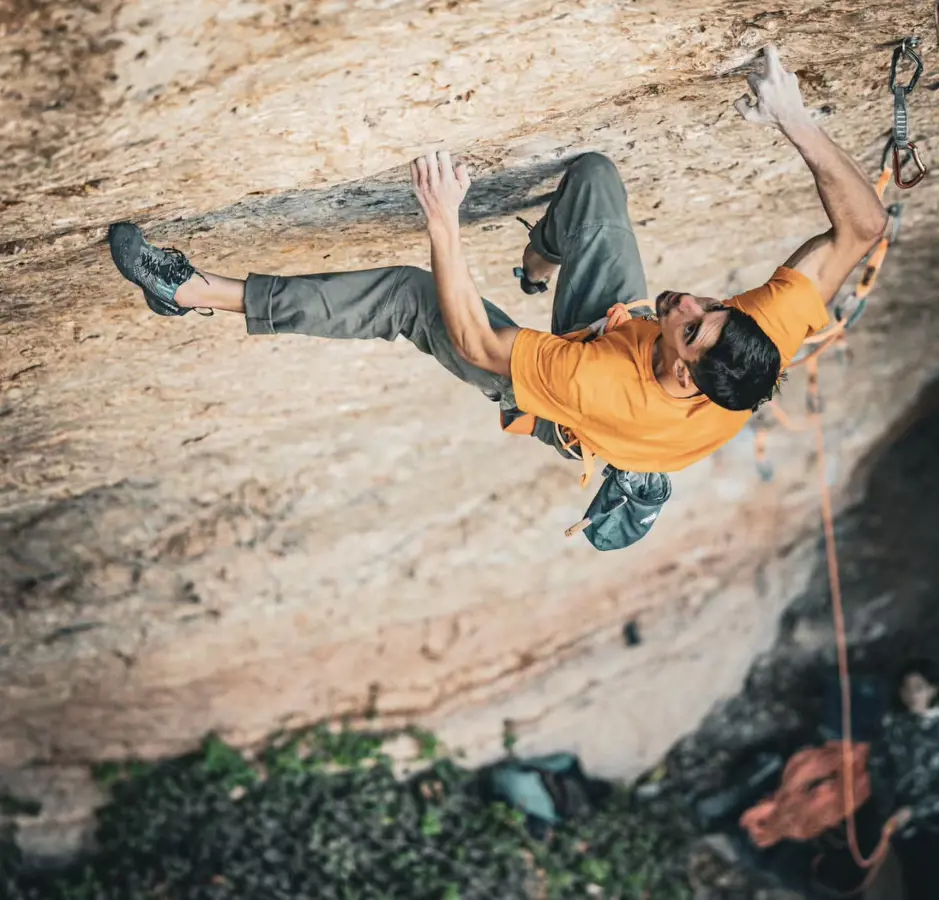
Jorge Diaz-Rullo reports on Instagram that he has made the first ascent of Cafe Colombia in Margalef. At 27, he’s already stacked four 9b+ sends and now he’s ad…
285
81
”I stopped focusing on competition bouldering after last year’s World Cup in Prague, partly because I can already feel it on my body, especially in my shoulders. The modern competition style, with a lot of jumping from one hold to another, is very demanding for the shoulders.
Outdoor bouldering is…
189
13Sean Bailey reports on Instagram that he has done the first ascent of Duality of Man (9c) in Dry Canyon. ” After four total years and three seasons of climbing,…
163
69 Most commented
Jorge Diaz-Rullo reports on Instagram that he has made the first ascent of Cafe Colombia in Margalef. At 27, he’s already stacked four 9b+ sends and now he’s ad…
285
81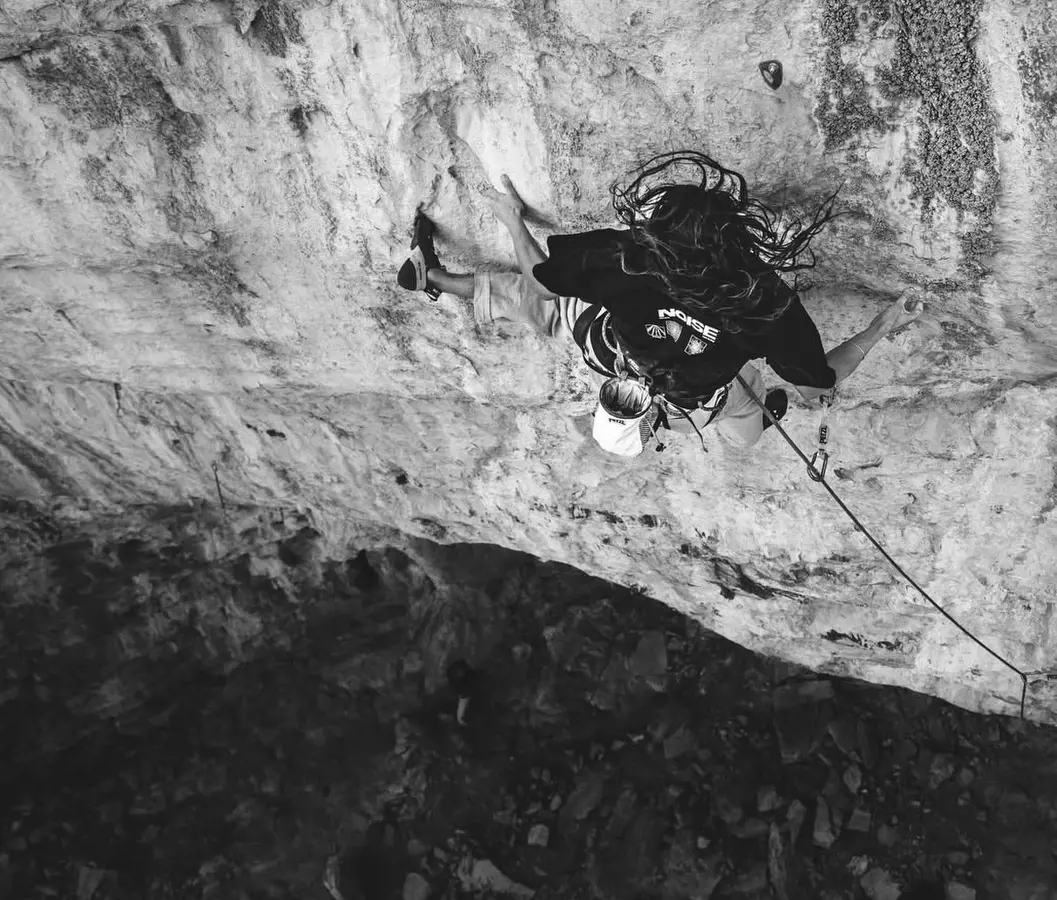
Sean Bailey reports on Instagram that he has done the first ascent of Duality of Man (9c) in Dry Canyon. ” After four total years and three seasons of climbing,…
163
69Jorge Diaz-Rullo elaborates on the reasons for him to suggest 9c for Café Colombia on Instagram, which he took down last week after projecting it for 240 sessio…
119
63