NEWS

Is Jacopo Larcher the best trad climber in the world?
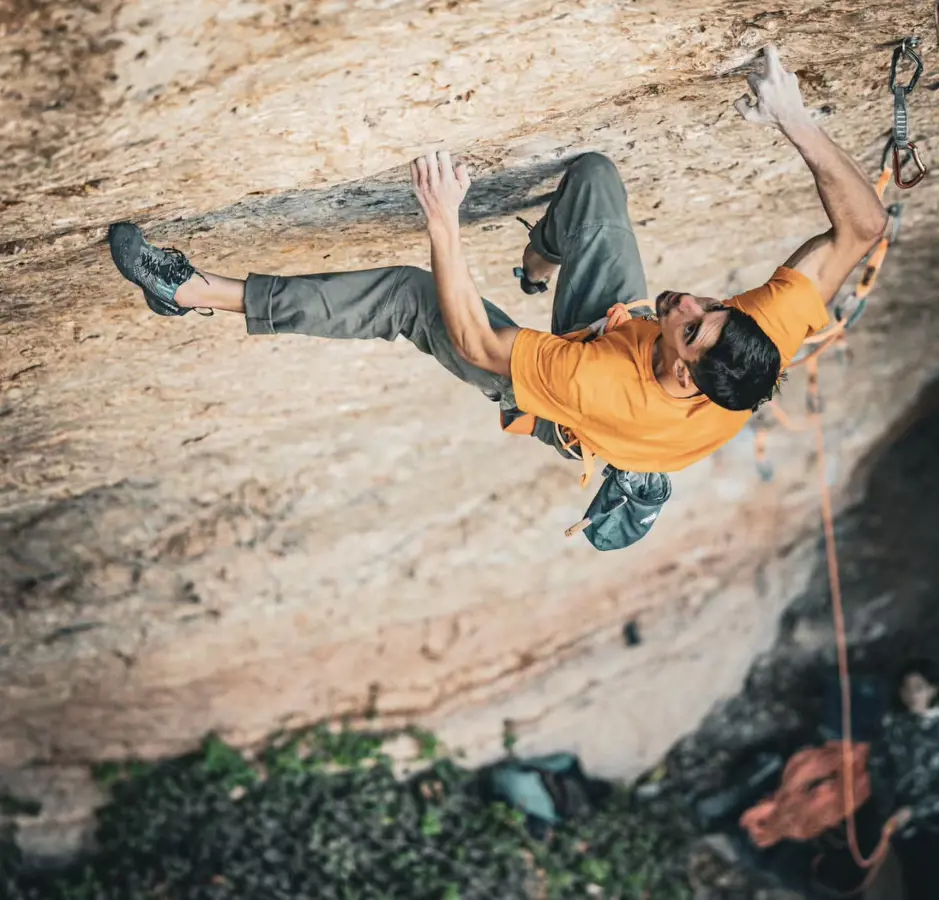
99boulders has via Willis Kuelthau published a comprehensive list of all the 8b+ trad routes in the world. Jacopo Larcher is listed with seven so possibly he is #1 in the world? Also considering his FA of Tribe which he said was his hardest but did not grade. Interestingly, his partner Babsi Zangerl has done three meaning she is tied as #7. In total, five 8c+ are listed including Beth Rodden's Meltdown from 2008 which could be considered the first if we exclude Dave MacLeod's Rhapsody from 2006. Downgrades have been suggested and it has also been said to be an eliminate. Furthermore, MacLeod climbed 25m of it on top rope as he previously once had down climbed from that point. He did not place any gear on the actual ascent.

Magic Line 8c+ trad by Hazel Findlay
Hazel Findlay reports on Insta that she has done Ron Kauk's Magic Line Yosemite. The first trad redpoint, placing all gear on lead, was done by his son Lonnie in 2018, upgrading it to 8c+. Hazel tried it briefly last year and this fall for a month sending it on her fourth try on her last day. The Brit has previously done up to 8b+ trad and also several hard Big Walls up to 8b. Jacopo Larcher and belaying was Babsi Zangerl. "It was stressful getting heartbreakingly close twice but in reality doing it on the last day of the trip meant that this route was the perfect challenge for me, testing me right to the end."

Speed solutions - running lanes, campus rungs on a steeper wall
We all know the anti-climax problem when the gold and silver in a Speed final being decided by a false start or an early slip. Imagine instead having four climbers fighting for the medals in four narrow lanes running up on five-meter wide wall with identical campus board rungs. This would mean more excitement, more finalists, much easier to set up in gyms and more understandable for both climbers and non-climbers. The rungs could also come in two different sizes, so Speed could be interesting also in the local gyms as well as for the (female) youth in the comps. On the bigger rungs, a "no feet" discipline could be added in the World cups etc, although this would mean we have to make the wall a bit steeper. A third and fourth discipline could be standing or running high jump on the bigger rungs. In any case, any final will be finished with a measurable spectacular dyno. The two different rungs should be as identical to what most gyms have on their campus board. The rungs can also be shown whenever clubs and federations run competitions or shows so everyone can feel the size of it. Furthermore, it would be interesting for hang board producer to include the standard Speed climbing rungs. Imagine how much more interesting it would be to exactly know the sizes of the rungs also for the millions of non-climbers watching the Olympic. Today a Speed climbing wall is normally 7 meters wide. By using the standard 1.22 meters width in running, four lanes take just five meters. In gyms, you can either have two lanes with the smaller rungs and two lanes with the bigger one's side by side. Alternatively, the differently sized rungs can be put on the same lanes, also creating a third easier Speed lane combining the rungs.

Zangerl & Larcher do The Nose 8b+
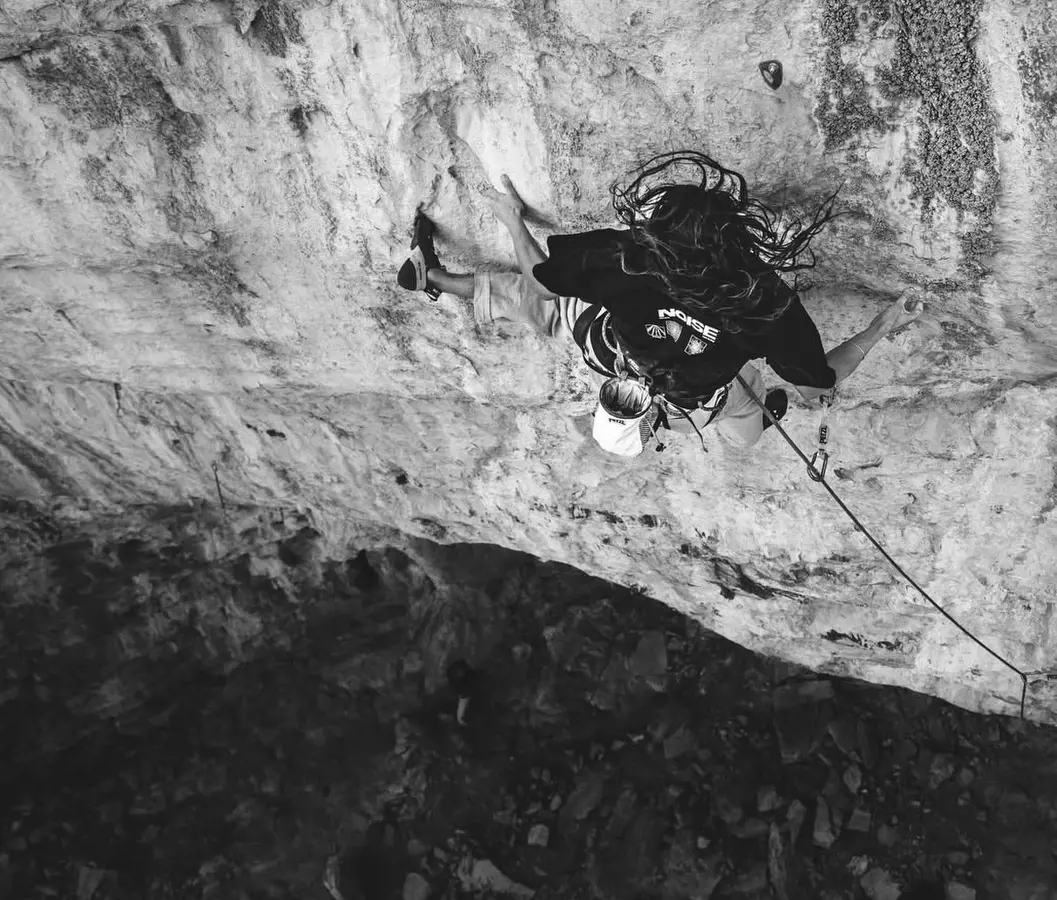
Barbara Zangerl and Jacopo Larcher have done the 950m The Nose 8b+ in Yosemite. The 31 pitches straight up in the middle of El Capitan was first free climbed in 1993 by Lynn Hill, video as an 8a. Later it has been upgraded to 8b+. " It is totally crazy...for me she is a real inspiration... I couldn't climb it how she did it..." This was Zangerl's fifth and Larcher's fourth big wall on El Capitan. More info at her Insta. Babsi has pretty much done most of the hardest long multi-pitches in the world and she is well beyond the Top-10 in this category also including the male. Adding also sport climbing up to 9a, trad up to 8c and bouldering up to 8B, the Austrian is the best female overall rock climber in the the world. Noteworthy is that the 8B she did more than ten years ago being one of the very best in that discipline. Later, in 2009, she got an herniated vertebral disc which made her stop bouldering. "It took us 6 days... we had heavy haulbags to haul. That made us so tired the first two days where we climbed and hauled a lot of pitches. So we climbed up to the Doll tower the first day. Second day we climbed to Great roof. Thrid day we both did the great roof. That is a really hard pitch. Very techy and pumpy on super bad footholds. Day four, we climbed up to changing corners...there we rested for a day! Changing corners are the Crux of the Nose!! It is very hard for the grade, I think. We both laybacked all the crux. It was hard to remember the body positions and footholds. Because there are not really footholds...it is just smearing on nothing most of the time. Super powerful! That was the biggest challenge!!

The starting order in Speed is by random. The Top-8 go to the final where the fastest will race against #8. This means that the last guys out in the qualification could possibly choose to go slow if they already are among the Top-8 and think they have a good opponent. In other words, there might be some strategical slow races at the end of the Speed qualification based on the prior results. Let us say, as an example, For some reason one of the two male Speed specialists got ranked #1 and #3 before the very last race in the qualification. This means that being ranked #7 is much better than being ranked #6 as the latter will race against a guy with at least a PB of 5.67. So if the #7 guy will compete against any higher-ranked male or any of the slowest, it is strategical to go slow and remain #7.

The big sensation in the World Cup 2019 is 16-year-old YueTong Zhang from China. Last year, her best result was bronze in Lead in both the Asian and in the World Youth B Championship. In 2019, she was #2 in the Chamonix Lead WC and #11 in the Bouldering WCH. On Thursday, she will do the Olympic qualification in Toulouse and she might just be the big sensation also there but then she needs to set a good PB in Speed as her current one is just 9.86.

Mangarbo 9a/+ by Marwin Winkler
Marwin Winkler, who is doing a PhD in performance analysis in competition climbing, has done Mangarbo 9a/+ in Villanueva del Rosario. "The first time I got into contact with it, was making a video of Seb Bouin doing the FA some years ago and Edu Marรญn repeating it shortly after. At this time I was so intimidated by tininess of the holds that I never really dared to try. During the last years, I always remembered a friend of mine saying that I might do it - something I didn't believe at this time. After doing Mandanga total, my first 9a last spring I convinced my self to give it a try... It's a huge lesson that I learned from it: Not to keeping myself within limits, daring to try something that first seems impossible. The goal of my PhD is the analysis of the performance structure of the single individual disciplines Speed, Bouldering and Lead as well as for the Olympic combined climbing format and to construct and validate profiles of requirements."