NEWS

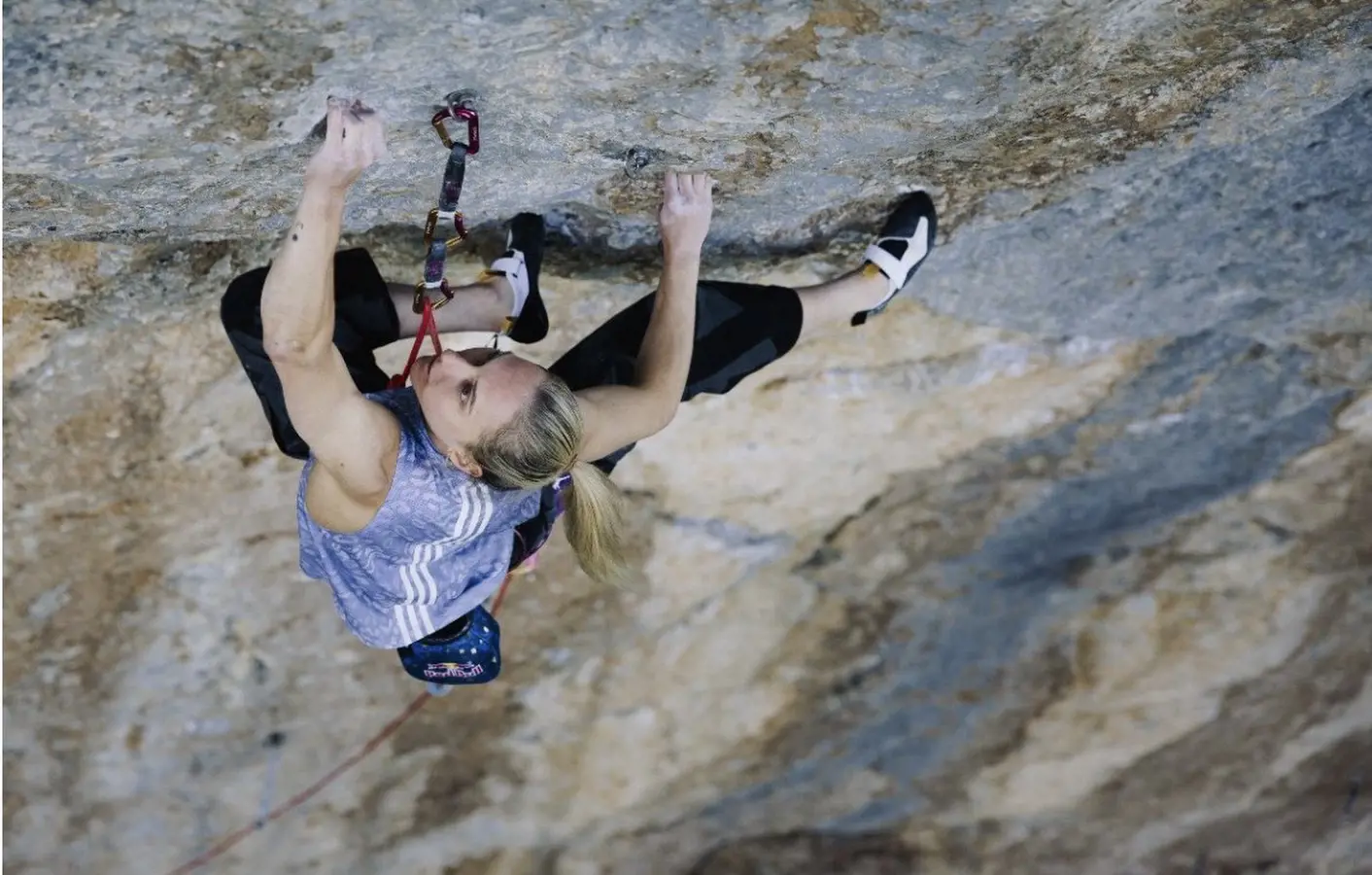
Tunnelblick 8c+ by Eva Hammelmรผller
Eva Hammelmรผller, who previously in 2020 has done eight 8c's, has done her first 8c+, Tunnelblick in Achleiten. The 20-year-old is #3 in the 8a ranking game.

โ€œTunnelblick is a 30m long route on pockets with a crimpy crux at the top. It took me 10 tries to send it and I loved the progress of getting closer with each attempt!โ€

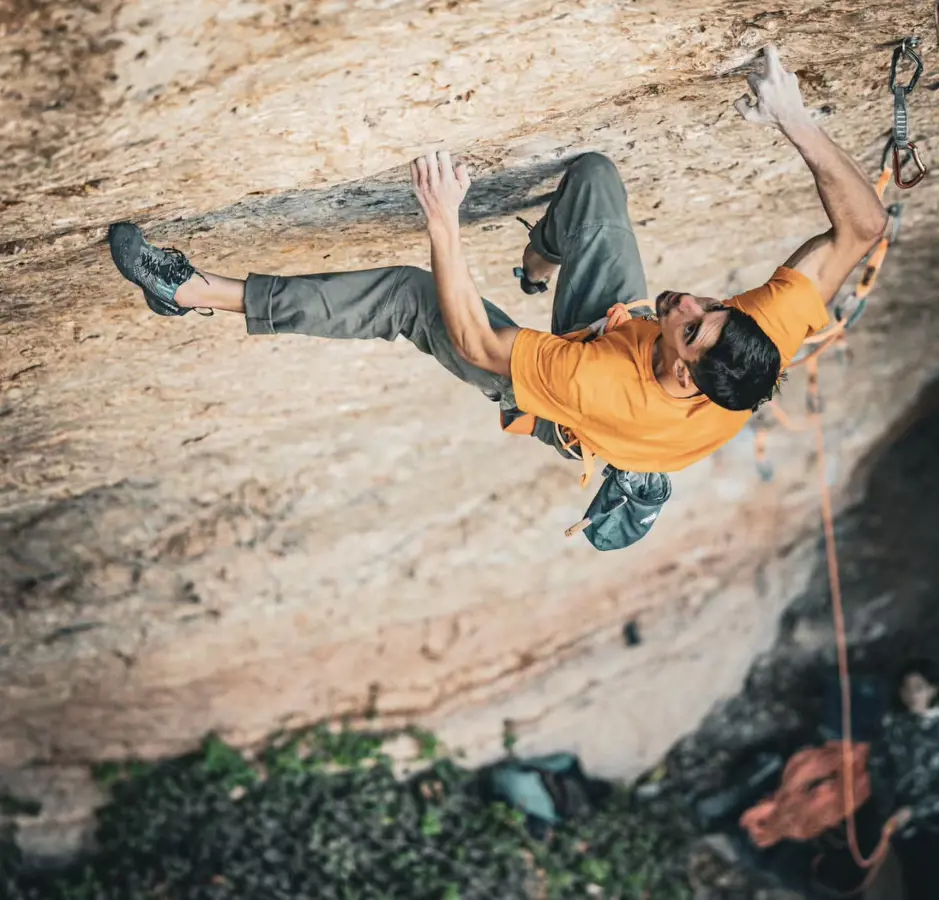
Jonathan Siegrist, who has done 51 routes 9a to 9b, has done his third 9a+ FA in 2020, Full Metal Brisket in Summersville Lake. It was bolted some 15 years ago and it took him eight sessions to take it down. Jonathan's next plan is probably to do some trad climbing. More comments on Insta.

Full Metal Brisket (5.15a/9a+) -- First Ascent! from PhysiVฤntage on Vimeo.

Meshkova comments her three golds and her Olympic ticket
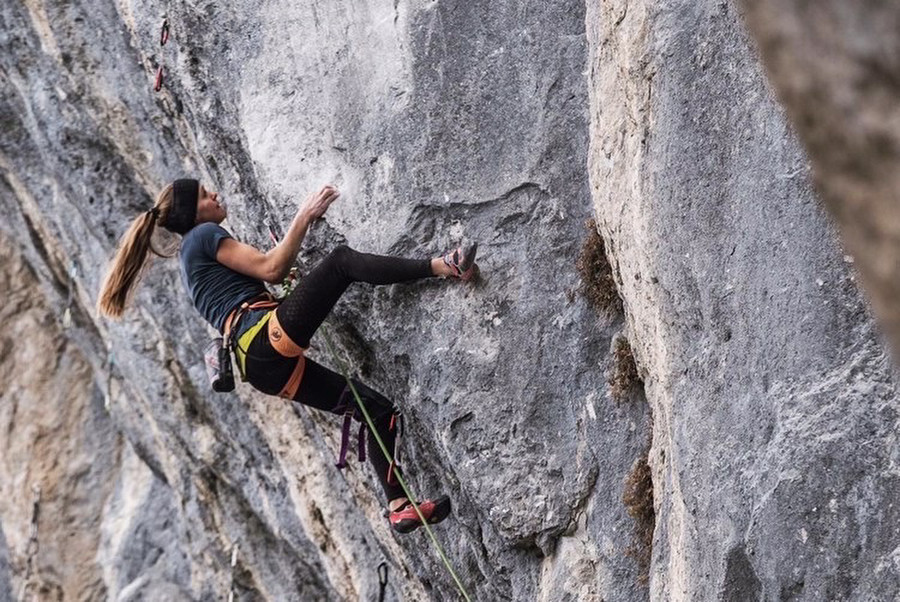
Anna Piunova, a professional climbing photographer and the editor-in-chief on Mountain.ru, has helped out getting some comments and pics from Victoria Meshkova after she won three gold and an Olympic ticket in the European Combined Championship. Last year, the 20-year-old did eleven Boulder and Lead WCs and her best results was #11. Five weeks ago, she tested positive for Covid-19 and could just do five indoor sessions as a preparation for the competition.

"I donโ€™t believe that Iโ€™ve got three golds. My overall goal was to get an Olympic ticket and these three medals seem in the background. I thought bouldering was my strongest discipline but surprisingly won the Combination because of Speed and Lead. Bouldering is an unpredictable discipline for me. It depends a lot on the route setters team and what kind of boulders they set. It might happen that routes just didnโ€™t work for you, for your style. I was more certain in Lead. When I saw the route I understood itโ€™s my style and I just have to find a rhythm and keep moving. I forgot about emotions and just enjoyed climbing.

I climbed a lot outside in Bakhchisaray in the Crimea area in the springโ€™s lockdown and after climbing I did a lot of physical training following Dmitry Sharafutdinovโ€™s programme. It was not hard for me to find motivation as I like doing physical and fingerboard staff. I climbed and walked a lot, getting some fresh air, monitored my diet, and didnโ€™t worried. After coming back home from Crimea I was much stronger. Later in July, I felt big progress in Alushta where we came for the national team training sessions. Iโ€™ve got the nerve to climb, my legโ€™s technique changed and the mobility in the hip joints improved."

Three 9a's by Adam Ondra
Adam Ondra is waiting for good conditions in Margalef needed for doing Perfecto Mundo 9b+. Meanwhile, he has sent three 9a's bringing it up to 182 which can be compared to the runner-up Alex Megos having done some 80 routes 9a and harder.

Victimas Perez: My nightmare, tried a few days back in 2015, a few days this trip, usually tired and when conditions were too bad for Perfecto. Today sent with severe humidity.
Direcya Bongada: Start like Directa Rodellar, finish in Bongada. It is link-up, but honestly, as a line it is the most direct and logical one. You do all the hard part from Directa Rodillar 8c+/9a, good kneebar and all the upper part of Bongada. Unfortunately the kneebar is too good to make any harder than hard 9a, maybe 9a/+, but definitely not 9a+. 1st real try after both Directa Rodillar and Bongada, in the very last minutes of the day.
El Potro: Start like Bumaye, then go straight up. Really good short power endurance. More info on Ondra's Insta (c) Petr Chodura

The route setting in Moscow was in general great, but unfortunately, the Lead Combined finals were way too easy. Jan Zbranek, who is also doing the job in Tokyo, was kind enough to answer some questions.

Did you get instructions to make the Combined routes easier?
We don't really get updated instructions for every comp. The guidelines never change: One top is perfect. I think we just didn't realize how tired we were after 14 days of setting. I think this was last of this crazy marathon competitions. And no matters what format we use in the future, or if we get some help of the testers, after 7 days of setting we need a rest day. This would help us to maximize the chance of hitting the right level.

What about letting one or two of the guys not making it to the final testing the final route?
As a chief route setter you have to know your tester very well. It is like you ask someone to taste a wine for you. There must be a strong connection between you and the tester. So it is harder, then you may think, to find a good person. Each experienced route setter is usually aware of his strengths and weaknesses. It is very special gift, when competition climber is also able to do this. And I don't even want to start the discussion about the conflict of interest, that we may create by picking let say Russian athlete in Moscow... So right now, I want to use this Russian experience as a motivation to get in better shape for the upcoming season and do a better job. ๐Ÿ™‚

Do you have any other alternative to increase the chances for making the route perfect?
For Tokyo, we have strong setters on the team. Also, we have to set "only" 4 routes. This could help to increase the chance to set a perfect route. But it is a complicated question. The athletes going for the Olympics are younger, stronger, more talented and they get from their federations definitely better conditions for training than the route setters. So yes, sometimes it can be a little stressful, trying to imagine how much better will they be at the Olympics. But right now I feel like we are pioneers of our job and if we do it well, maybe in the future, there will be an opportunity for the competition route setters to work directly for IFSC. This could mean a stable job throughout the whole year and maybe also some time for training. This could also attract the top climbers to join the route setting team and help us to keep the gap between the climbers and the setters small.

Tokyo route setting team:
Lead: Adam Pustelnik POL - Chief, Hiroshi Okano JPN and Jan Zbranek CZE.
Bouldering: Percy Bishton GBR (Chief), Manuel Hassler SUI, Katja Vidmar SLO and Romain Cabessut FRA

Sanctum 8C/+ by Ryohei Kameyama
Ryohei Kameyama reports on Insta that he has done the first repeat of Dai Koyamada's Sanctum 8C/+ in Shirakawa. It just took him five sessions to do the super steep problem. The 23-year-old has in total done some ten 8C and harder. "Paradigm 8B+ is my next project. This boulder has not been repeated yet."

La Rustica 8C by Niky Ceria
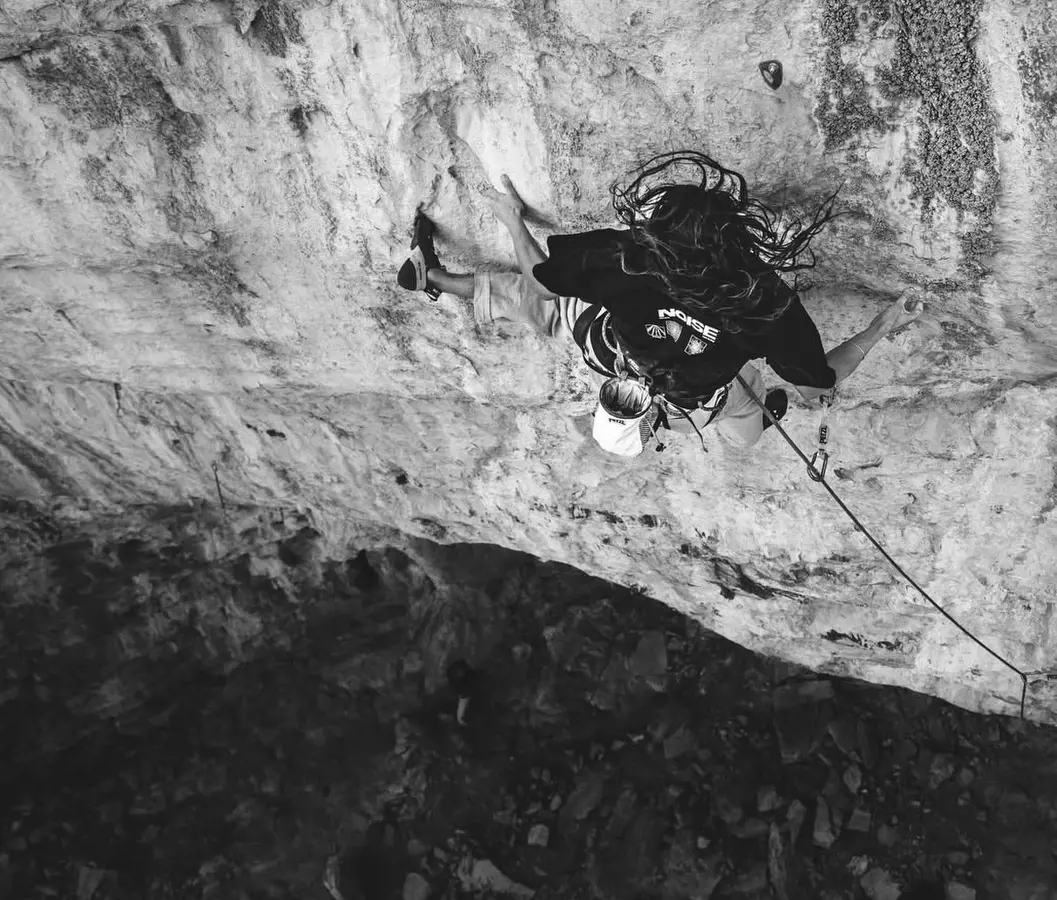
Niky Ceria reports on Insta that he has done Jimmy Webb's La Rustica 8C in Valle Bavona. In total, the 27-year-old Italian, who is somewhat under the radar as he never gives his FAs a grade, needed seven sessions to take the masterpiece down. (c) Selfie

"One of the nicest Ticino's additions of the past decade. Something I have always dreamt to try, but somehow I have never come back to this place from 2014 until last March. During this fall trip my hand was more flexible and I could feel different body positions on the super technical third move.

It rarely happens to be attracted and feel deeply connected to something that has already been developed like in this case. At least to me. Certainly not because the boulders I found are better, but different because the whole process includes many enjoyable moments which make the entire experience a different thing. La Rustica is the proper example of the exception."

29 November 2020

Combined Leadspead?

With the new Combined Lead format, with no countback to previous rounds, it is about to climb as fast as possible as all ties both in the qualification and the final are separated by time only. Back in the old days, climbers were hanging around in up to 12 minutes which can be compared with Yuval Shelma doing the 36 holds final route in Moscow in just 2.20 minutes. Some years ago, both climbers and followers were complaining when first the super final was taken away and later when the max time was reduced from 8 to 6 minutes.

I have always been in favour of getting also the Speed element into Lead and it is natural when we have made it into the Olympics. However, I do think the athletes will need to know what the plan is for Tokyo. If it will continue like Leadspeed in Moscow, I am sure Adam Ondra and others like to know as this will change the way they prepare and approach the routes? The dilemma is of course that even if the routes are done more difficult, the risk of having many ties further down is big and in the end, a Leadspeed approach is the most logical one.

This will make it more fun to watch for the general public but at the same time, this demands that times are presented like in a slalom race next to the climber's name. In fact, in order to fully understand who is climbing faster, split times are needed to be presented along the route. We can not have it like in Moscow that only the guys following the event with personal stopwatches and writing split times on a paper are the only guys fully understanding who is fastest in real-time. Imagine that in reality, two climbers are neck and neck during the last ten holds deciding all three medals in Tokyo but even so, the audience and the commentators do not fully understand this and then have to wait, together with the athletes, some 30 seconds before we know the results.

It should be mentioned that one way of making time less important is to go back to + and - hold scoring. As you know, today two climbers performing differently could get the same score, meaning time is needed to separate them. Another solution could be to skip observation as this means that most climbers will use the same beta, increasing the risk for ties.

It should be mentioned that the Lead route setter in Moscow, Jan Zbranek, told 8a that the reason for why the final routes were too easy was just because they were too tired after 14 days of setting. IFSC has not given them any instructions in terms of making the Combined routes easier. "The guidelines never change: one top is perfect. We don't really get updated instructions for every comp."

Fan also in Moscow Boulder comp
Fans have been more popular outdoors lately, creating better conditions for the boulderers. During the European Championship in Moscow, Chloe Caulier was the first competitor bringing on "Makita" on stage. The Belgian just placed it like two meters behind the boulder and started to climb. It should be mentioned that previously climbers have brought a fan into the isolation in order to cool down the fingers before and in between rotations.

Route Setter Magazine #3 is here!
Thanks to the contribution of many industry experts and partners, the magazine once again presents central topics that are of concern to the indoor climbing industry: how to efficiently get out of a crisis and how representatives of the indoor climbing industry assess the future; insights into the profession of route setters worldwide; how values can define the success of a business concept, with Sharma Climbing, Memphis Rox, and Womxn Up. As always, an integrated catalogue provides an overview of the top products from the brands and suppliers of the gym industry. Get your printed copy here More info and a preview here.