NEWS

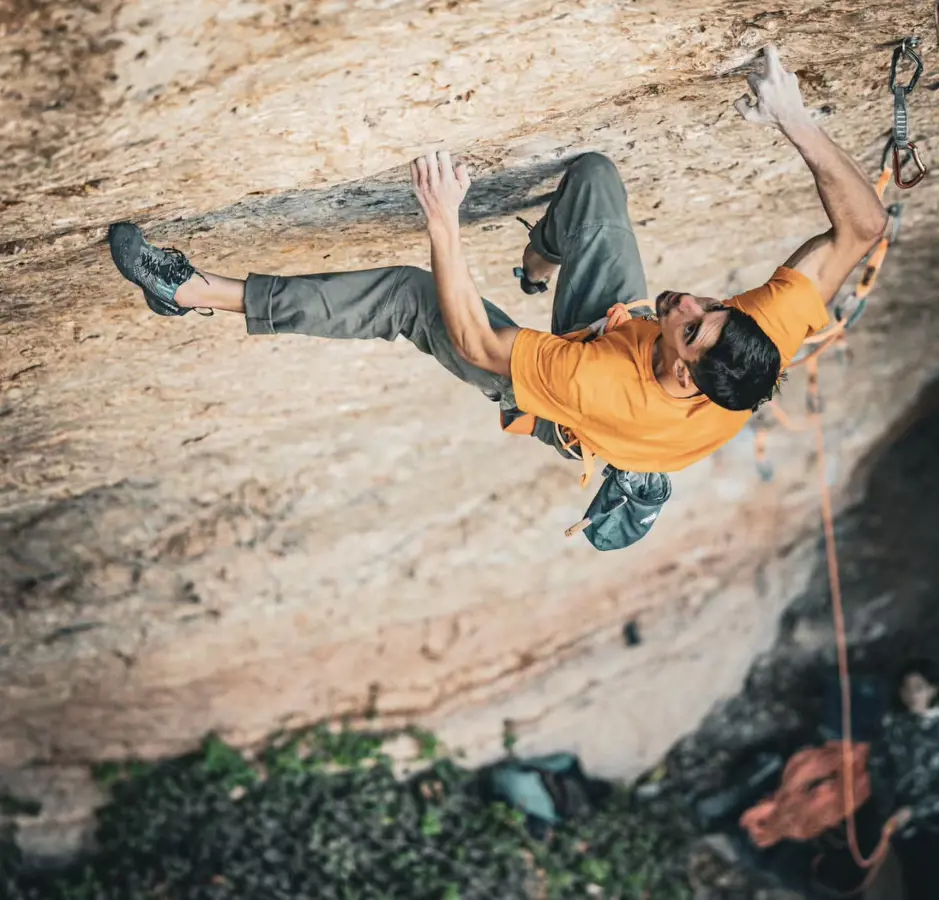
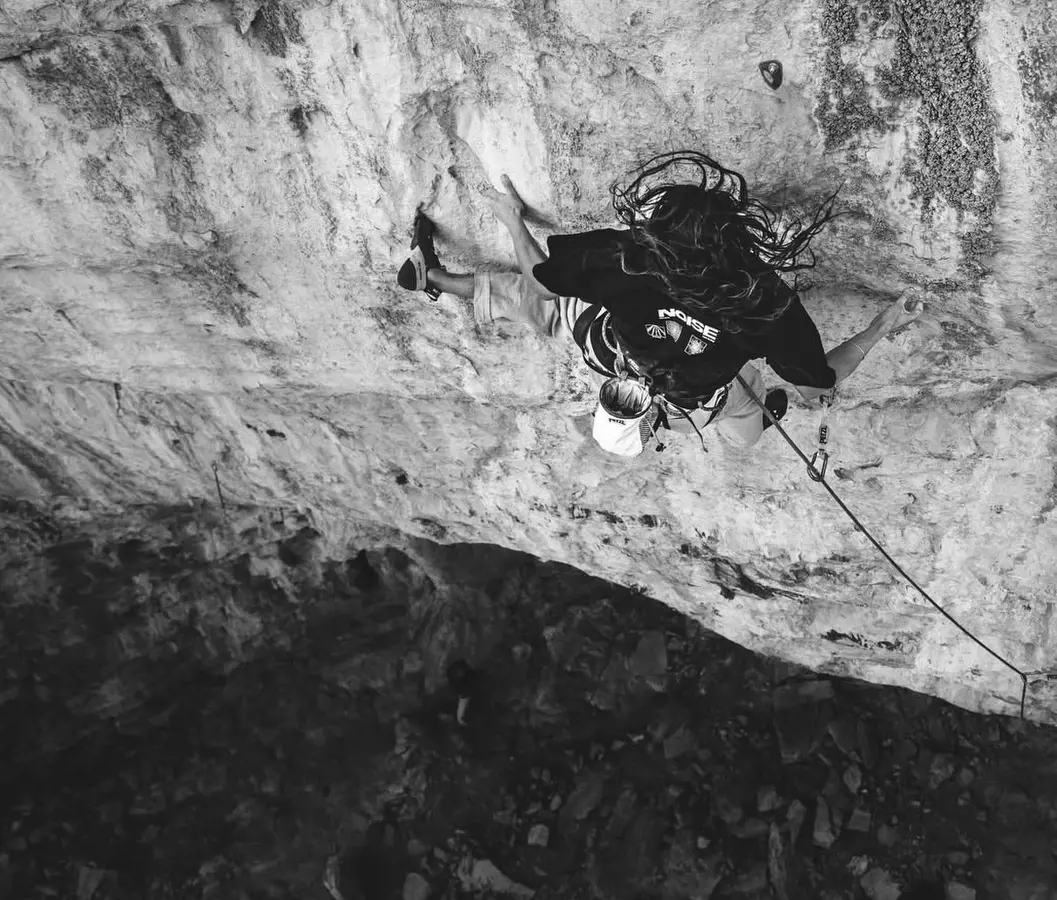
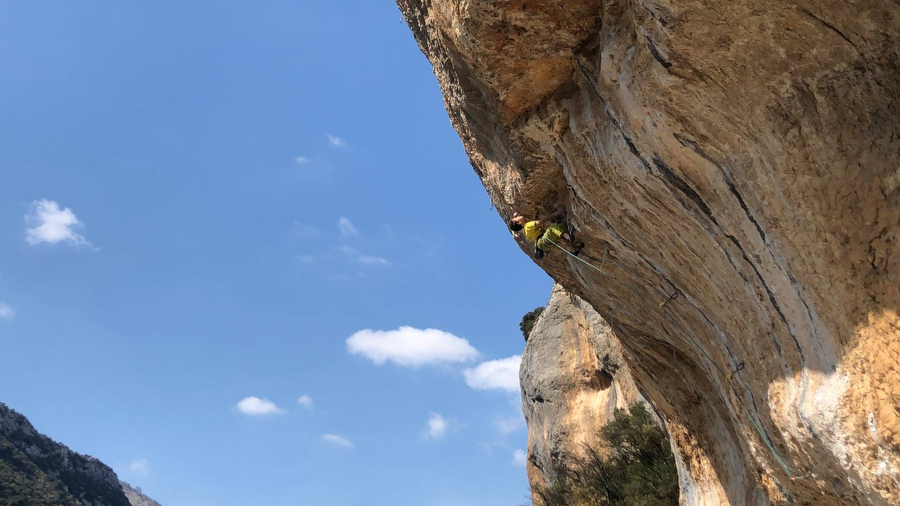
8c RP and 8a+ OS by Max Bertone (14)
Max Bertone went to St Legรฉr with his father Stefano while his sister Oriane got the silver in Meiringen. First he onsighted his first 8a+, Mรฉlodie pour un ami ardรฉchois, and later he did La thรฉorie des cordes 8c in his second session. "Special beta for short climbers :-). It felt easier than the 8c I climbed in Reunion Island but very interesting to climb !"

Stefano: I went 3 days in St Lรฉger with Max during the WC because The French Minister of Foreign Affairs decided not to send the Youth B to the European Championship in Perm. Max was qualified in both Lead and Boulder and we had to find another challenge for him as he was so disappointed.

SINGING ROCK ROCKET
20 April 2021

SINGING ROCK ROCKET

Advertorial: If you are looking for a high-end ultralight sport climbing harness for your best climbing achievements, then SINGING ROCK ROCKET is a perfect choice. Even though it is superlight (245 g / 8.6 oz only), it still provides maximum comfort. It is designed for sport climbing or wherever you want to climb light.

Available in sizes XS โ€“ XL, in purple colour for all, and the recommended end user price is 89 EUR. So, if you really want to try a cool harness, ROCKET is a great choice! And remember, when you finish your climbing day, take off the harness. It is so light and comfortable that you might forget it.

Comments for Oriane Bertone's (16) WC silver
Oriane Bertone, who has dominated the youth competition scene for several years at the same time being one of the best female boulderers, got the silver in her WC debut in Meiringen. The 16-year-old is from Reunion, a small island near Mauritius, east of Africa. Her father Stefano comments;

"We stay in France for the moment and travel for comps, training camps and outdoor projects. School for them and work for me are impacted by Covid anyway. Their lessons are given remotely, by computer. There is no real difference between doing these lessons by computer in Reunion Island or in France due to the lockdown situation. So we prefer to stay in France in order to avoid travels and to have better conditions for training."

Stefano: How did Oriane prepare for her first World Cup?
Oriane prepared for this WC by participating in selective competitions in France and in training camps with the french senior team in Paris and Voiron. It was hard for her being close to Fontainebleau and not have time to spend on boulders outdoors. The last days before Meiringen she trained at the "Pรดle France" in Voiron. There, specific boulder circuits had been created for her. For the rest, she has not changed her training habits. In the end, she wasn't completely ready to endure so much waiting in the isolation zone. She struggled to start her competition in qualifying and to finish it in the final. Her best streak was in the semi-final, where she was not forced to wait for too long. She has to do further progress in her volume of climbing which will allow her to withstand three such intense stages of competition. We will see during the next WC how it progresses.

Oriane: How was it competing with the seniors for the first time?
I had already experienced the atmosphere of a senior competition two years ago in Stuttgart, but I was really young and I didn't have the same interaction with the other competitors. Meiringen was really different. I stayed in the isolation zone for a very long time since I was the last climber to start and I had the opportunity to talk with the other athletes and the ambience was much cooler than I thought :) I didn't see things the same way, and I'm glad I got to experience of the final stages (semis and finals) of a World Cup. The outcome of the competition was incredible, it was hard to tell myself that I belong here, and for almost two days I didn't seem to realize what was happening. Thanks a lot to IFSC, the organisation and the route setters who made that event possible and set these incredible boulders, and evidently the french national team for the incredible support that I had along with the comp. I heard my friends and coaches behind me screaming and supporting me and it gave me wings! More comments on her Insta.

Zangerl publishes 'Bouldering Bible'
Bouldering: 'Climbing, No Ropes Attached' is the title of the 240-page hardcover by Bernd Zangerl, one of the pioneers, who by the way still pushes up to 8C. Another name of the book could simply be 'Zangerl's Bouldering Bible' as it pretty much covers everything with a focus on Why, How and the development of the sport, including portraits of the best out there. Of course, there are great pictures but the unique thing is all outstanding stories. This is a new level of a bouldering coffee table book that will take weeks to read through. The only thing that is almost missing is more of the female perspective. Buy it on Amazon.

Lรญder negra 9a+ FA by Alex Garriga
Alex Garriga has done his fifth 9a+ in Cuenca the last year by the FA of Lรญder negra, which is a link-up in between Following the Leader 9a+ and La Setra Negra 8c+. In the 8a ranking game, the 22-year-old is #4.

So what is next?
Try to make the lines that are close to my home and train for when I can go outside Cuenca. Now I am working on the hard link, between Following the leader and Circo Iberco and other FAs. I am trying some hard boulders too and a traverse around 9a+ route.

L'espiadimonis 8c by Lukas Sager (15)
Lukas Sager, who has been in Margalef for four months, out of which the last two months without his parents, has done his third 8c, L'espiadimonis, during the last five weeks. (c) Eduardo Ruano Lin

Could you please describe your normal weekly routine with schooling and climbing?
Wake up at ten, having breakfast, e-learning with the French system CNED. Climbing in the afternoon under great conditions. Projecting, onsighting or just spooling. Depending on how I feel, I go ice bathing and stretching. 2 times a week. The last few weeks have been great, I had a lot of fun without my parents.

It was easier to stay motivated to climb than to do some e-schooling. I really progress in English, as I met so many people from all over the world. I will do an exam in May, so yet I will crush some 8b+ school stuff. Working harder than ever.

Kantenphysik 8c by Eva Hammelmรผller
Eva Hammelmรผller, who just onsighted her first 8a+ Reine Mรคnnersache, has done her eleventh 8c, Kantenphysik in Achleiten." A powerful and at the same time very technical route, as it requires precise heel hooks and also some tricky slab climbing. After trying it several times last year, I am very happy that it went down so fast this time!" (c) Tobias Lanzanasto

The 20-year-old, who is #3 in the female 8a ranking game, is also an active competition climber but missed Meiringen due to a knee injury. The Austrian has started to work on her first 9a, Kraftplatz put up my David Lama. "I am pretty excited that I could even make some good links. Canโ€™t wait to get back on it!" More info and pics on her Insta.

Janja Garnbret superior again
Janja Garnbret topped all four boulders in just seven tries in the final, after having topped her first nine boulders in the two first rounds in just ten attempts. Overall, this was the Slovenians eighth straight Boulder World Cup victory. Runner-up was Oriane Bertone (16) in her WC debut, looking like she had been on the circuit for many years. Natalia Grossman (19), who previously had #7 as her best result, got the bronze. Noteworthy is that Slovenia had six girls Top-15.

"I really enjoyed it. We haven't had any competitions [in 2021] so far so it's good to be back," Garnbret commented. "I was training hard last year and this year, so I'm feeling confident going into the season with the biggest goal being in August. Back to training!"

1. Janja Garnbret SLO 44 (c) Vladek Zumr
2. Oriane Bertone FRA 24 (8)
3. Natalia Grossman USA 24 (10) Complete results

Adam Ondra wins in style
Adam Ondra won first the qualification and later the semi but then he could not get the first zone in the final. Then it took him five attempts to get the zone on the second boulder and in few seconds he topped it. Topping out the last two, showing a great technical repertoire, he secured another great victory and also creating a great show, saving the route setter from yet a round with too hard boulders. However, all 18 boulders in the three rounds were topped. It should also be mentioned that Japan had four Top-6.

Ondra comments; "I prepared a lot for this competition. In fact, last year and this spring, I was trying to eliminate all my weaknesses in bouldering.

Even though the spectators were not allowed to be here, the competitors and couches themselves created an atmosphere that is definitely worthy of the World Cup. The feeling when I topped the last boulder and the hall basically โ€œthunderedโ€ was absolutely amazing and I will definitely remember this moment for a long time."


1. Adam Ondra 33 CZE (c) Petr Chodura
2. Yushiyuki Ogata 24 JPN
3. Tomoaki Takata 14 JPN
Complete results

It was great to see the first Bouldering World Cup in 20 months but the problems for the qualifications remain the same. As there were 101 participants, these were divided into two groups, meaning that the ten boulders had to go almost straight up. There was no room for parkour running or big sideway dynos etc. For some reason, it seemed to be very few coordination moves also, meaning that it was quite an old school route setting with modern holds.

If IFSC would limit the number of participants or reduce the maximum time to four minutes, like in the European Cup last weekend, just one group would be needed. Reino Horak, head coach of the Norweigan team, has suggested several options to IFSC based on a max quota of two per country plus the ones who have ranking points etc. From one perspective it seems disadvantageous for the World Cup to allow four participants from one country where are all among the last in the results. The competition, including the route setters, would benefit if just 80 would compete in the qualification. One option is of course that more climbers could participate, but then there should be one more round where the best are allowed to compete in the qualification.

Another problem with two starting groups is that they can be quite uneven and also that the route setting can differ as it did for the females in Meiringen.

Furthermore, it is impossible to know how close Jakob Schubert and others were to get into the Top-20 semi. Did he touch any of the three top holds of the problems he did not make? If the scoring were based on points and there could be two zones or possibly three, with the last being awarded based on touching the top, more drama would have been created.