
NEWS
24 November 2025
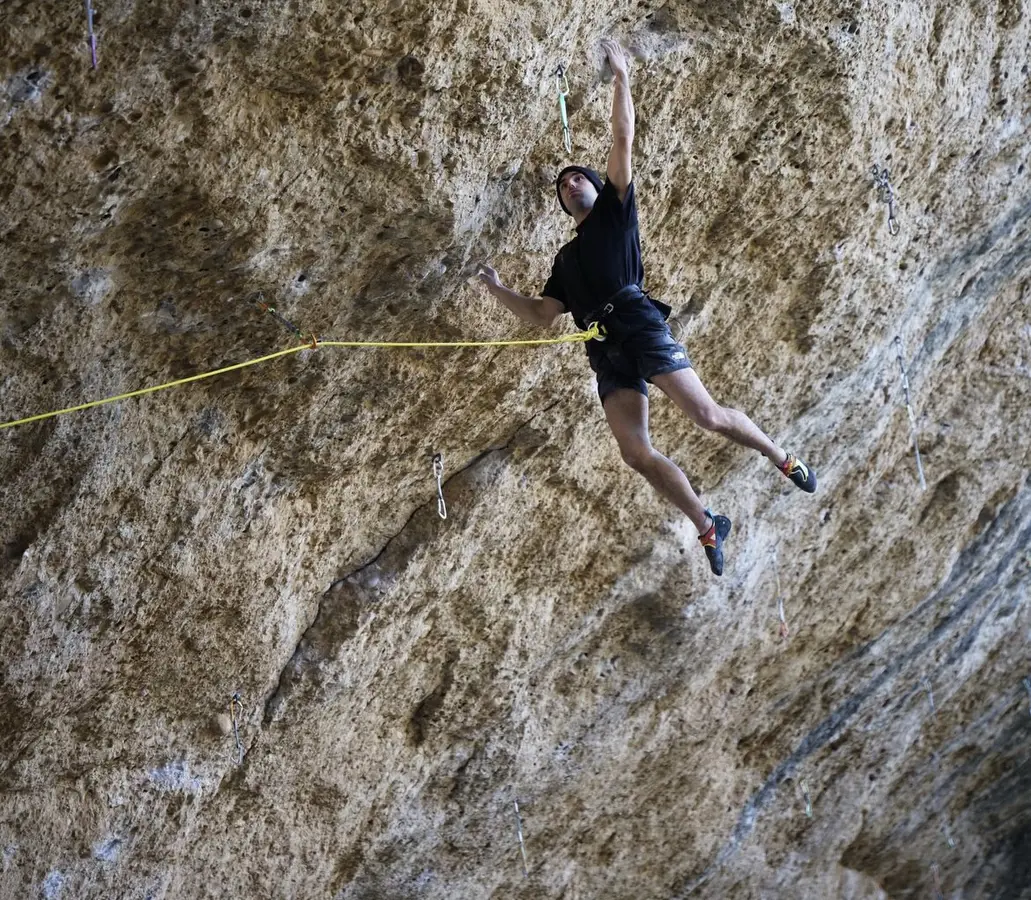
Enrique Beltrán Blasco does Gancho Perfecto 9a/+
Enrique Beltrán Blasco, with eight 9a’s under his belt, has completed Gancho Perfecto (9a/+) in Margalef.
Can you tell us more about your ascent?
Without a doubt, for me it has been the greatest battle I’ve ever won. The hardest route I’ve ever climbed. I started trying it in February, but in April the heat arrived and I couldn’t do it. I focused on [and sent] Patanics (9a+) and training to be ready for winter. The energy in the crag was incredible; we were good friends, motivated and giving it our all. The day I finally sent it, everything just fell into place: good skin, good temperature, and my body was rested. Everything flowed, and I was on top.
Can you tell us more about your ascent?
Without a doubt, for me it has been the greatest battle I’ve ever won. The hardest route I’ve ever climbed. I started trying it in February, but in April the heat arrived and I couldn’t do it. I focused on [and sent] Patanics (9a+) and training to be ready for winter. The energy in the crag was incredible; we were good friends, motivated and giving it our all. The day I finally sent it, everything just fell into place: good skin, good temperature, and my body was rested. Everything flowed, and I was on top.
Read more
10
0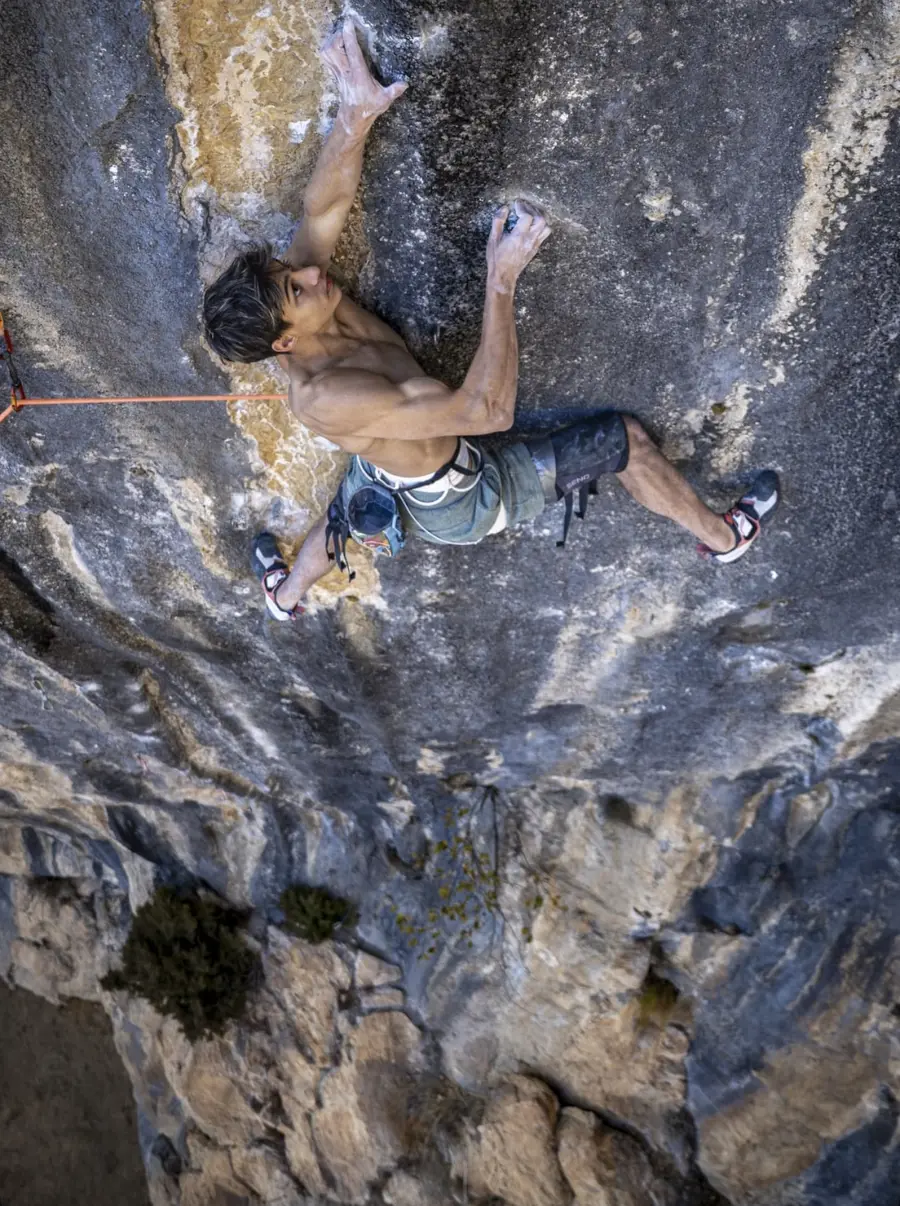
24 November 2025
Gianluca Vighetti climbs Lapsus (9a+)
Gianluca Vighetti, who sent his first 9a at age 12, has done Lapsus (9a+) in Andonno. The 17-year-old has been competing actively since 2022, and this season has been his best, winning the Euro Youth Cup U-19 overall and taking gold in Toulouse three weeks ago.
Can you tell us more about the ascent?
After the competion season, I wanted a challenging project outdoor. Lapsus was a great option because it's the only 9a+ in the part of Italy where I live, and I already knew the first part Noia (8c+). Lapsus connects Noia with the two cruxes of Cobra Reale (9a) which I tried two years ago but I wasn't even able to do the single moves. After all the training in these years I improved my finger strenght a lot and I decided to come back. I was expecting to struggle a lot more with this route, but, in the end, It came down quicker than I expected, in 8 sessions. The day after I was also able to climb Cobra Reale that shares almost all the moves with Lapsus. I really loved trying these wonderful routes💎
Can you tell us more about the ascent?
After the competion season, I wanted a challenging project outdoor. Lapsus was a great option because it's the only 9a+ in the part of Italy where I live, and I already knew the first part Noia (8c+). Lapsus connects Noia with the two cruxes of Cobra Reale (9a) which I tried two years ago but I wasn't even able to do the single moves. After all the training in these years I improved my finger strenght a lot and I decided to come back. I was expecting to struggle a lot more with this route, but, in the end, It came down quicker than I expected, in 8 sessions. The day after I was also able to climb Cobra Reale that shares almost all the moves with Lapsus. I really loved trying these wonderful routes💎
Read more
11
024 November 2025
Chaehyun Seo ticks Joe-Cita (9a)
Chaehyun Seo, who two weeks ago did her second 9a+, has repeated Adam Ondra’s Joe-cita (9a) in Oliana. The 22-year-old has been a very successful competition climber since she got the silver in her first World Cup in 2019, at age 15. This year the Korean was runner up overall.
Can you tell us more about the ascent?
I’m now trying Pachamama (9a+) but my skin was too bad today, so I decided to try Joe-Cita. During my first try I just fell in the Joe Blau (8c+) part because I forgot some moves, and I tried not to use second finger because the skin torn. I tried again, I’m not quite sure because of the conditions, but somehow I made all the moves!
Did you climb with tape on the finger?
Yes, on my left index and pinky, and also on my right pinky.
How much have you tried the 9a+ and what is the status?
I’ve tried the whole route five times and the crux part eight times. I think the lower crux is the hardest for me, and the rest of it is feeling quite promising!
What is your winter plan and what is the goal next year?
Training for next season. Just sleep, eat, exercise, recover 😂. Send harder routes than 9a+ and have consistent performance in the World Cups.
Can you tell us more about the ascent?
I’m now trying Pachamama (9a+) but my skin was too bad today, so I decided to try Joe-Cita. During my first try I just fell in the Joe Blau (8c+) part because I forgot some moves, and I tried not to use second finger because the skin torn. I tried again, I’m not quite sure because of the conditions, but somehow I made all the moves!
Did you climb with tape on the finger?
Yes, on my left index and pinky, and also on my right pinky.
How much have you tried the 9a+ and what is the status?
I’ve tried the whole route five times and the crux part eight times. I think the lower crux is the hardest for me, and the rest of it is feeling quite promising!
What is your winter plan and what is the goal next year?
Training for next season. Just sleep, eat, exercise, recover 😂. Send harder routes than 9a+ and have consistent performance in the World Cups.
Read more
26
023 November 2025
Elias 9A+ interview and Font 9A plans
Elias Iagnemma did the FA of Exodia (9A+) last week after projecting it for 211 sessions. Exodia is a Yu-Gi-Oh! card game where players win instantly by collecting five specific cards: one head and four limbs (two arms and two legs). It’s a game of strategy, planning, and a bit of luck. Here is Elias full story.
”The year was 2021, and I had climbed most of the hard boulders in the RifugioBarbara area. One day my wife Stefania told me: “You know, along the road there’s an old project by Christian Core that he left unfinished.” I immediately called Christian to get some information about the boulder, and he told me that yes, it was one of his projects that he had tried but eventually given up on because it was too difficult. From that moment something switched inside me—I can’t really explain it—but just knowing that a legend of world bouldering had abandoned a project because of its extreme difficulty pushed me to work even harder to overcome my limits. If I remember correctly, my first session on Exodia was on June 11th, 2021.
During my first approach to the boulder, I thought: this is impossible. The line is truly intricate and complex; it took me a very long time to find the correct beta. In the lower section you have several options to get through, none of which really change the difficulty—it’s just a matter of adapting to the most efficient solution. I spent countless sessions figuring out and absorbing those movements. Then comes the second part of the puzzle, the one that demanded the most from me. All my focus was there. After around two years of attempts, I finally found the optimal beta and managed to solve that upper section. To help myself mentally, I tried dividing the climb into two halves: the first being a hard 8B+, and the second an 8C+. These two sections are “split” by an upside-down rest under the roof with a double knee-bar. Unfortunately, this rest is good for recovering the arms, but it really tires out the legs and core, which are essential for getting through the most extreme part of the boulder.”
How much focus have you given Exodia since 2021?
Exodia has been the primary focus of these years of my life. Every training session and every thought revolved around it. Climbing and trying other lines faded into the background. I don’t know how to explain it well, but whenever I climbed something else, I felt “held back” by the thought that even the slightest injury would destabilize me completely because it meant I couldn’t climb Exodia. I avoided anything that could compromise the process—even if that meant sacrificing the pure joy of climbing. But for me, Exodia represented the greatest effort of my climbing life, and I wanted to honor that completely, even at the cost of pleasure. The boulder sits at roughly 1500 meters, and I could try it about six months per year—three from mid-spring to mid-summer, and three from late September to late November.
How did progress vary across the different parts of the boulder?
In the early years I started the first section crouched on two underclings, because starting from a sit felt impossible. Valuing that undercling from the sit was beyond me… at the time. With that start, I climbed the first section after about a year, once I found the optimal beta. Then this season, either because of a moment of clarity or exceptional shape, I unlocked the sit start and turned the line into what I consider the perfect version. The first half is total compression on slippery holds. The first crux is valuing the undercling from the sit; the second is using a flat hold to move your feet before the big throw into the more extreme section. After countless sessions refining the beta and perfecting the execution, I think this first half is around 8B+—maybe more, since I’ve climbed several 8C boulders in fewer sessions.
The second half is what required the most time—not for the beta, since there’s really only one option, but for the sheer difficulty. First, a very hard move off a slippery, flat hold into a tiny 1.5 cm edge under the roof, then a jump to a perfect pinch. Then comes the most extreme part: two heel hooks on smooth serpentinite with extremely low friction, moving left hand to a pinch under the roof and matching on another. All while maintaining perfect heel tension that constantly wants to slip. After that is a final compression on an undercling. Once you hold that, the hard part is over, but you can still fall if you’re not clear-headed. In my mind, this second section weighs in around 8C+.
Can you tell us more about the no-hands rest?
It’s true there’s a no-hands rest, but the kneebar is on smooth serpentinite. Your arms recover, yes, but maintaining the rest burns a huge amount of core and hamstring strength—which is exactly what you need for the cruxes of the second half. Another issue is that reaching the rest from the ground means your heart rate is high, and you often feel a strong rush of blood to the head while hanging upside down. Starting the second half with clarity becomes very complicated.
Can you tell us more about the holds and style of the Boulder?
The primary element is the almost complete lack of grip on the serpentinite—it’s unique. The style is incredibly varied, containing nearly every type of movement in outdoor climbing: compressions, crimps, slopers, pinches, toe hooks, heel hooks… I could go on forever. Exodia brings together the best movements of outdoor climbing in a single boulder. That beauty is one of the reasons I endured all these years—every move is special and incredibly satisfying to execute.
Can you tell us more about your 9a+ proposal?
It was a slow—very slow—realization. The proposal came in the final weeks, when I was once again close to giving up and the fifth year of attempts was approaching. After climbing Burden, I thought Exodia might be harder—but I wanted a real test. I felt in incredible shape and thought I’d climb Exodia quickly. The opposite happened. I returned and couldn’t repeat the final singles or the end section. I spent several days re-solving that part. This made me realize that Exodia didn’t just require pulling hard or being in shape—it needed everything at 100%. That contributed to my grade proposal.
What are your winter plans?
I am going to Fontainebleau to climb the classics and to try Soudain seul (9A).
How much do you train indoors during the winter and how is it organized?
I am training only three months per year. The basics of my training are the MoonBoard, hangboard, and some sessions on the Kilter Board and Tension Board. During the training months I also do a little bit of weight training.
”The year was 2021, and I had climbed most of the hard boulders in the RifugioBarbara area. One day my wife Stefania told me: “You know, along the road there’s an old project by Christian Core that he left unfinished.” I immediately called Christian to get some information about the boulder, and he told me that yes, it was one of his projects that he had tried but eventually given up on because it was too difficult. From that moment something switched inside me—I can’t really explain it—but just knowing that a legend of world bouldering had abandoned a project because of its extreme difficulty pushed me to work even harder to overcome my limits. If I remember correctly, my first session on Exodia was on June 11th, 2021.
During my first approach to the boulder, I thought: this is impossible. The line is truly intricate and complex; it took me a very long time to find the correct beta. In the lower section you have several options to get through, none of which really change the difficulty—it’s just a matter of adapting to the most efficient solution. I spent countless sessions figuring out and absorbing those movements. Then comes the second part of the puzzle, the one that demanded the most from me. All my focus was there. After around two years of attempts, I finally found the optimal beta and managed to solve that upper section. To help myself mentally, I tried dividing the climb into two halves: the first being a hard 8B+, and the second an 8C+. These two sections are “split” by an upside-down rest under the roof with a double knee-bar. Unfortunately, this rest is good for recovering the arms, but it really tires out the legs and core, which are essential for getting through the most extreme part of the boulder.”
How much focus have you given Exodia since 2021?
Exodia has been the primary focus of these years of my life. Every training session and every thought revolved around it. Climbing and trying other lines faded into the background. I don’t know how to explain it well, but whenever I climbed something else, I felt “held back” by the thought that even the slightest injury would destabilize me completely because it meant I couldn’t climb Exodia. I avoided anything that could compromise the process—even if that meant sacrificing the pure joy of climbing. But for me, Exodia represented the greatest effort of my climbing life, and I wanted to honor that completely, even at the cost of pleasure. The boulder sits at roughly 1500 meters, and I could try it about six months per year—three from mid-spring to mid-summer, and three from late September to late November.
How did progress vary across the different parts of the boulder?
In the early years I started the first section crouched on two underclings, because starting from a sit felt impossible. Valuing that undercling from the sit was beyond me… at the time. With that start, I climbed the first section after about a year, once I found the optimal beta. Then this season, either because of a moment of clarity or exceptional shape, I unlocked the sit start and turned the line into what I consider the perfect version. The first half is total compression on slippery holds. The first crux is valuing the undercling from the sit; the second is using a flat hold to move your feet before the big throw into the more extreme section. After countless sessions refining the beta and perfecting the execution, I think this first half is around 8B+—maybe more, since I’ve climbed several 8C boulders in fewer sessions.
The second half is what required the most time—not for the beta, since there’s really only one option, but for the sheer difficulty. First, a very hard move off a slippery, flat hold into a tiny 1.5 cm edge under the roof, then a jump to a perfect pinch. Then comes the most extreme part: two heel hooks on smooth serpentinite with extremely low friction, moving left hand to a pinch under the roof and matching on another. All while maintaining perfect heel tension that constantly wants to slip. After that is a final compression on an undercling. Once you hold that, the hard part is over, but you can still fall if you’re not clear-headed. In my mind, this second section weighs in around 8C+.
Can you tell us more about the no-hands rest?
It’s true there’s a no-hands rest, but the kneebar is on smooth serpentinite. Your arms recover, yes, but maintaining the rest burns a huge amount of core and hamstring strength—which is exactly what you need for the cruxes of the second half. Another issue is that reaching the rest from the ground means your heart rate is high, and you often feel a strong rush of blood to the head while hanging upside down. Starting the second half with clarity becomes very complicated.
Can you tell us more about the holds and style of the Boulder?
The primary element is the almost complete lack of grip on the serpentinite—it’s unique. The style is incredibly varied, containing nearly every type of movement in outdoor climbing: compressions, crimps, slopers, pinches, toe hooks, heel hooks… I could go on forever. Exodia brings together the best movements of outdoor climbing in a single boulder. That beauty is one of the reasons I endured all these years—every move is special and incredibly satisfying to execute.
Can you tell us more about your 9a+ proposal?
It was a slow—very slow—realization. The proposal came in the final weeks, when I was once again close to giving up and the fifth year of attempts was approaching. After climbing Burden, I thought Exodia might be harder—but I wanted a real test. I felt in incredible shape and thought I’d climb Exodia quickly. The opposite happened. I returned and couldn’t repeat the final singles or the end section. I spent several days re-solving that part. This made me realize that Exodia didn’t just require pulling hard or being in shape—it needed everything at 100%. That contributed to my grade proposal.
What are your winter plans?
I am going to Fontainebleau to climb the classics and to try Soudain seul (9A).
How much do you train indoors during the winter and how is it organized?
I am training only three months per year. The basics of my training are the MoonBoard, hangboard, and some sessions on the Kilter Board and Tension Board. During the training months I also do a little bit of weight training.
Read more
80
821 November 2025
Filip Schenk ticks Erebor (9b)
Filip Schenk, who last week sent Tre Mou Polacche (9a), has completed Erebor (9b) in Arco. The 9a took just two days and the Italian says it is the best of it’s grade in the area and here are his comments for the 9b. (c) Crimp Films
”Erebor has always been a route that struck me deeply: rom the beauty of its movements to the variety of climbing styles it demands. This king line, first ascended by Ste [Ghisolfi] in 2021, features very small holds that require significant physical strength, but at the same time includes technical, body-positioning moves where you need to move well and climb with sensitivity.
The route starts right away with a section of 25 extremely intense moves that never give you a moment to breathe. Then you reach the final boulder, preceded by a good rest: that’s where you need strong mental focus, because while you relax, you also have time to think about the possibility of failing. And that’s exactly what has always motivated me to try it: you need to be a truly complete climber to send it.
I had my first attempts in autumn 2024, and I immediately realized it suited me well. The only part that gave me trouble was the first boulder: I couldn’t do it with the original beta, so I had to come up with my own sequence to get through it. Throughout last competition season, I kept thinking about when I’d finally return to try it again, and once November arrived, I decided to dedicate myself entirely to Erebor.
Since I already knew the moves from the two sessions last year and had trained specifically for the first boulder before November, I found myself clipping the anchor much sooner than expected, finally settling the score with Erebor this year after just four days on the route. It was an unforgettable feeling!"
How did you train specifically for the first Boulder?
I set the same boulder on my home gym with the most similar holds possible and trained on it.
”Erebor has always been a route that struck me deeply: rom the beauty of its movements to the variety of climbing styles it demands. This king line, first ascended by Ste [Ghisolfi] in 2021, features very small holds that require significant physical strength, but at the same time includes technical, body-positioning moves where you need to move well and climb with sensitivity.
The route starts right away with a section of 25 extremely intense moves that never give you a moment to breathe. Then you reach the final boulder, preceded by a good rest: that’s where you need strong mental focus, because while you relax, you also have time to think about the possibility of failing. And that’s exactly what has always motivated me to try it: you need to be a truly complete climber to send it.
I had my first attempts in autumn 2024, and I immediately realized it suited me well. The only part that gave me trouble was the first boulder: I couldn’t do it with the original beta, so I had to come up with my own sequence to get through it. Throughout last competition season, I kept thinking about when I’d finally return to try it again, and once November arrived, I decided to dedicate myself entirely to Erebor.
Since I already knew the moves from the two sessions last year and had trained specifically for the first boulder before November, I found myself clipping the anchor much sooner than expected, finally settling the score with Erebor this year after just four days on the route. It was an unforgettable feeling!"
How did you train specifically for the first Boulder?
I set the same boulder on my home gym with the most similar holds possible and trained on it.
Read more
49
020 November 2025
Sam Weir does Poison the Well (8C+)
Sam Weir, with three 8C+ ascents to his name, has repeated Giuliano Cameroni’s Poison the Well (8C+) in Brione after about 25 sessions. The 34-year-old did his first 8C in 2017 and then sent one every year, more or less, until the last two years, when he has done ten problems graded 8C and harder. He works full-time as a proposal/contract manager in the nuclear field.
”9A personal feeling. 7C+ intro leads to a one move 8B/8B+ to an 8B/+ section similar but harder than Hazel Grace stand style & difficulty. Really height and reach dépendant and it was at my full limit reach. 3 cm margin on the reach… zero margin for error on the move. Insane. Thanks Giul again for this masterpiece!”
Can you tell us more about the process behind the ascent and your thoughts about your peak?
I’m feeling good. Fingers are firing on all cylinders and been having a blast! I started trying this line over a year ago. The crux is this crazy double bump which was at my absolute limit of reach. After 8 sessions I did the move once. I thought if I could do this from the bottom once I could get it done but no!
After a big summer of training and antistyle climbing I came back stronger. This fall the crux went from having done it 3 times ever to doing it from the bottom 3 times in a row. I fell about 15 times even after doing the crux.. what a wild and special one. Personally it felt like I achieved a 9A effort so really curious to see how I get on now that I finished the last 8C+ I really wanted to do.
How did you train this summer and how have you maintained the power during the outdoor season?
Over the summer. I just did a lot of board climbing with my friends on our wall and basic weights. Plus I tried really hard on Clement’s [Lechaptois] boulders at Fionnay which I did not do which are really antistyle for me!
I work full time so I climb outside once a week plus one or two days I took off when the conditions were good! To stay in shape I just keep the hard board climbing. Watch my diet since volume drops a lot and some max effort work.
”9A personal feeling. 7C+ intro leads to a one move 8B/8B+ to an 8B/+ section similar but harder than Hazel Grace stand style & difficulty. Really height and reach dépendant and it was at my full limit reach. 3 cm margin on the reach… zero margin for error on the move. Insane. Thanks Giul again for this masterpiece!”
Can you tell us more about the process behind the ascent and your thoughts about your peak?
I’m feeling good. Fingers are firing on all cylinders and been having a blast! I started trying this line over a year ago. The crux is this crazy double bump which was at my absolute limit of reach. After 8 sessions I did the move once. I thought if I could do this from the bottom once I could get it done but no!
After a big summer of training and antistyle climbing I came back stronger. This fall the crux went from having done it 3 times ever to doing it from the bottom 3 times in a row. I fell about 15 times even after doing the crux.. what a wild and special one. Personally it felt like I achieved a 9A effort so really curious to see how I get on now that I finished the last 8C+ I really wanted to do.
How did you train this summer and how have you maintained the power during the outdoor season?
Over the summer. I just did a lot of board climbing with my friends on our wall and basic weights. Plus I tried really hard on Clement’s [Lechaptois] boulders at Fionnay which I did not do which are really antistyle for me!
I work full time so I climb outside once a week plus one or two days I took off when the conditions were good! To stay in shape I just keep the hard board climbing. Watch my diet since volume drops a lot and some max effort work.
Read more
42
1220 November 2025
Austin Purdy FA’s two 8C’s in the same session
Austin Purdy, with four 8C+’ under his belt, has during one session made the first ascents Don't Fear The Reaper (8C) and Gojira (8C) in
Wild Basin.
Can you tell us more about that double FA special day?
Both Don't Fear The Reaper and Gojira are sit starts to the existing boulders Two Sizes Two Big (8A) and XXL (8A+) in Wild Basin, with both start on the same hold which is well above head height and you nearly have to stack pads to reach it. I did the stand starts for the first time in October and was instantly captivated by the obvious sit start project. I decided to focus on doing Don't Fear the Reaper, which links into Two Sizes Too Big first, since to me it is the king line of the boulder. I made quick progress on the sit, but linking the whole thing turned out to be quite difficult. The sit start revolves around a crimpy and shouldery crux section that is in a very similar style to the crux on Two Sizes Too Big, which tired you out for the stand. That combined with the low percentage nature of the two move crux on Two Sizes made the link very hard to put together and I kept falling on the final low percentage crux bump to a small slot. I also ended up breaking a key hold on the sit start during the process which made the intro boulder feel significantly harder and less consistent and pushed the process on even longer.
Gojira on the other hand is much different. Even though the stand start, XXL, is the same grade as Two Sizes Too Big, it revolves around doing a powerful but consistently difficult crux section and then keeping it together for a 10m 7A+ highball finish. This type of climbing fits my style better and I though would be easier to execute so I would always run a lap or two on XXL at the end of my session so that I was ready to do Gojira once I sent Don't Fear the Reaper.
When the day came and I finally sent Don't Fear the Reaper, I was still feeling quite good and new I had a chance to send both lines in the same session. I took a long rest and gave an attempt, but I ended up missing the hold on the last difficult move of the boulder and fell. This gassed me out quite a bit and I also got a small hole on my finger this go and I thought I had missed my chance, but my partner convinced me to tape my finger and give one more good try. Without her encouragement I may have just given up and come back another day. To my surprise I was able to make through the beginning crux even with my finger taped and after a hard fight found myself carefully working my way up the highball finish with numb fingers to finish the climb!
Can you tell us more about that double FA special day?
Both Don't Fear The Reaper and Gojira are sit starts to the existing boulders Two Sizes Two Big (8A) and XXL (8A+) in Wild Basin, with both start on the same hold which is well above head height and you nearly have to stack pads to reach it. I did the stand starts for the first time in October and was instantly captivated by the obvious sit start project. I decided to focus on doing Don't Fear the Reaper, which links into Two Sizes Too Big first, since to me it is the king line of the boulder. I made quick progress on the sit, but linking the whole thing turned out to be quite difficult. The sit start revolves around a crimpy and shouldery crux section that is in a very similar style to the crux on Two Sizes Too Big, which tired you out for the stand. That combined with the low percentage nature of the two move crux on Two Sizes made the link very hard to put together and I kept falling on the final low percentage crux bump to a small slot. I also ended up breaking a key hold on the sit start during the process which made the intro boulder feel significantly harder and less consistent and pushed the process on even longer.
Gojira on the other hand is much different. Even though the stand start, XXL, is the same grade as Two Sizes Too Big, it revolves around doing a powerful but consistently difficult crux section and then keeping it together for a 10m 7A+ highball finish. This type of climbing fits my style better and I though would be easier to execute so I would always run a lap or two on XXL at the end of my session so that I was ready to do Gojira once I sent Don't Fear the Reaper.
When the day came and I finally sent Don't Fear the Reaper, I was still feeling quite good and new I had a chance to send both lines in the same session. I took a long rest and gave an attempt, but I ended up missing the hold on the last difficult move of the boulder and fell. This gassed me out quite a bit and I also got a small hole on my finger this go and I thought I had missed my chance, but my partner convinced me to tape my finger and give one more good try. Without her encouragement I may have just given up and come back another day. To my surprise I was able to make through the beginning crux even with my finger taped and after a hard fight found myself carefully working my way up the highball finish with numb fingers to finish the climb!
Read more
21
220 November 2025
Allison Vest ticks Mad Circle (8A+)
Allison Vest, with 16 boulders 8B and harder to her name, has completed Mad Circle (8A+) in Price Canyon.
”What an amazing boulder, I have tried this thing off and on since Nov 22 and went from thinking I wouldn't be able to span the normal beta and cooking up my own method to just believing it would go and making it happen. Stoked. What a mega boulder.”
Read more
11
019 November 2025
Miles Perry ticks Grand Illusion (8C+)
Miles Perry, who last year did the FA of a 9a, has completed Grand Illusion (8C+) in Little Cottonwood.
Can you tell us more about the ascent?
This one has always been on my mind but for a long time it felt like it was still out of reach. Then last spring my brother Eli Perry was able to put it down. This got me stoked watching his process on it and the fact that he said I definitely had a shot at doing the climb pushed me to start trying from the ground this season and after about 20 days up there I found myself on top definitely one of the most enjoyable climbs of my life.
Can you tell us more about the ascent?
This one has always been on my mind but for a long time it felt like it was still out of reach. Then last spring my brother Eli Perry was able to put it down. This got me stoked watching his process on it and the fact that he said I definitely had a shot at doing the climb pushed me to start trying from the ground this season and after about 20 days up there I found myself on top definitely one of the most enjoyable climbs of my life.
Read more
19
418 November 2025
Irmgard Braun, 73, going for 8a
In 2021, Irmgard Braun completed her first 7c+, Open Box at age 69. Last year she sent Le string à Fredo (7c) and in 2025 she did Junge (7c). The German author started climbing in the 80'ies and was later part of the German national team. A new profile video of the 73-year-old has just been released, see below.
How is your training organized?
In climbing holidays and in the summer season on rock I only climb and train my flexibility on rest days. But I try (for me) hard routes with difficult moves at my limit, sort of bouldering with a rope, what is a lot of fun.
Real Training I do in winter. For about 10 weeks for about two times per week I do relieved pullups, (I can do only a few without) with 3-4 sets with 8-10 reps. And 2 times per week pushups and some antagonist and core training. I find that quite exhausting. For the fun I go to the climbing hall and do quite easy routes ( rarely more than 6c) about 2 times a week. And for 6-7 weeks before the rock season starts I hang on small crimps and pockets, about 2 times a week. And I forgot: 2 times a week I use a crosstrainer for cardio (40 minutes).
How much do you climb outdoor during a year?
My outdoor-season is from middle of march until middle of november; considering there a times of rain and - what is necessary in my age – a lot of restdays, it might be around 80 days.
What is your status on your 8a project and how many sessions have you put in?
I do not really remember. More than 10 sessions (all toprope), I reckon. I did all the moves except two, which I could only do with a little help with the rope.
What are your strength and weaknesses?
Fingerpower with small crimps. And I am really bad with biceps power and dynamic climbing.
What is your driving force?
Joy in the movement when I am climbing. And the tension and curiosity if I succeed trying hard, especially when I am going for a onsight.
What are your onsight level the last years?
On rock: quite a lot graded 7a+. This and last year I failed very close at 7b. In the climbing gym I onsighted sometimes 7b.
What about start logging your routes?
I will think about it - considering my memory will get worse getting older. And I really like the website!
How is your training organized?
In climbing holidays and in the summer season on rock I only climb and train my flexibility on rest days. But I try (for me) hard routes with difficult moves at my limit, sort of bouldering with a rope, what is a lot of fun.
Real Training I do in winter. For about 10 weeks for about two times per week I do relieved pullups, (I can do only a few without) with 3-4 sets with 8-10 reps. And 2 times per week pushups and some antagonist and core training. I find that quite exhausting. For the fun I go to the climbing hall and do quite easy routes ( rarely more than 6c) about 2 times a week. And for 6-7 weeks before the rock season starts I hang on small crimps and pockets, about 2 times a week. And I forgot: 2 times a week I use a crosstrainer for cardio (40 minutes).
How much do you climb outdoor during a year?
My outdoor-season is from middle of march until middle of november; considering there a times of rain and - what is necessary in my age – a lot of restdays, it might be around 80 days.
What is your status on your 8a project and how many sessions have you put in?
I do not really remember. More than 10 sessions (all toprope), I reckon. I did all the moves except two, which I could only do with a little help with the rope.
What are your strength and weaknesses?
Fingerpower with small crimps. And I am really bad with biceps power and dynamic climbing.
What is your driving force?
Joy in the movement when I am climbing. And the tension and curiosity if I succeed trying hard, especially when I am going for a onsight.
What are your onsight level the last years?
On rock: quite a lot graded 7a+. This and last year I failed very close at 7b. In the climbing gym I onsighted sometimes 7b.
What about start logging your routes?
I will think about it - considering my memory will get worse getting older. And I really like the website!
Read more
54
3 Favorites
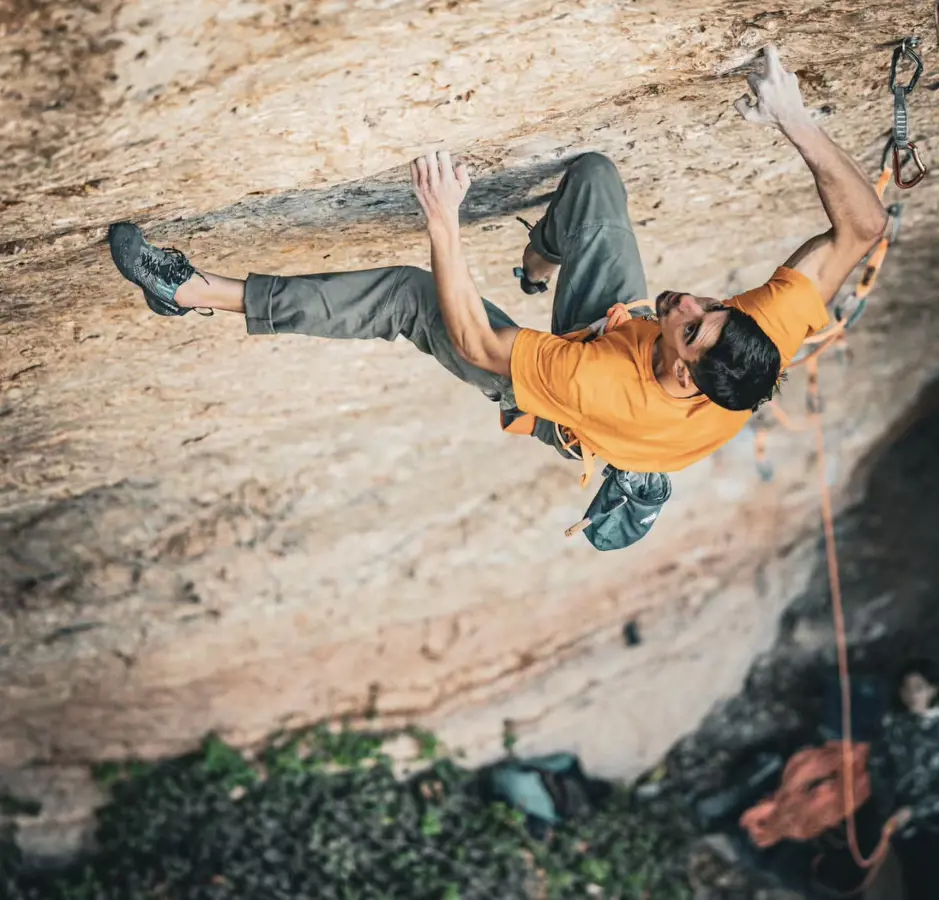
Jorge Diaz-Rullo reports on Instagram that he has made the first ascent of Cafe Colombia in Margalef. At 27, he’s already stacked four 9b+ sends and now he’s ad…
285
81
”I stopped focusing on competition bouldering after last year’s World Cup in Prague, partly because I can already feel it on my body, especially in my shoulders. The modern competition style, with a lot of jumping from one hold to another, is very demanding for the shoulders.
Outdoor bouldering is…
189
13Sean Bailey reports on Instagram that he has done the first ascent of Duality of Man (9c) in Dry Canyon. ” After four total years and three seasons of climbing,…
163
69 Most commented
Jorge Diaz-Rullo reports on Instagram that he has made the first ascent of Cafe Colombia in Margalef. At 27, he’s already stacked four 9b+ sends and now he’s ad…
285
81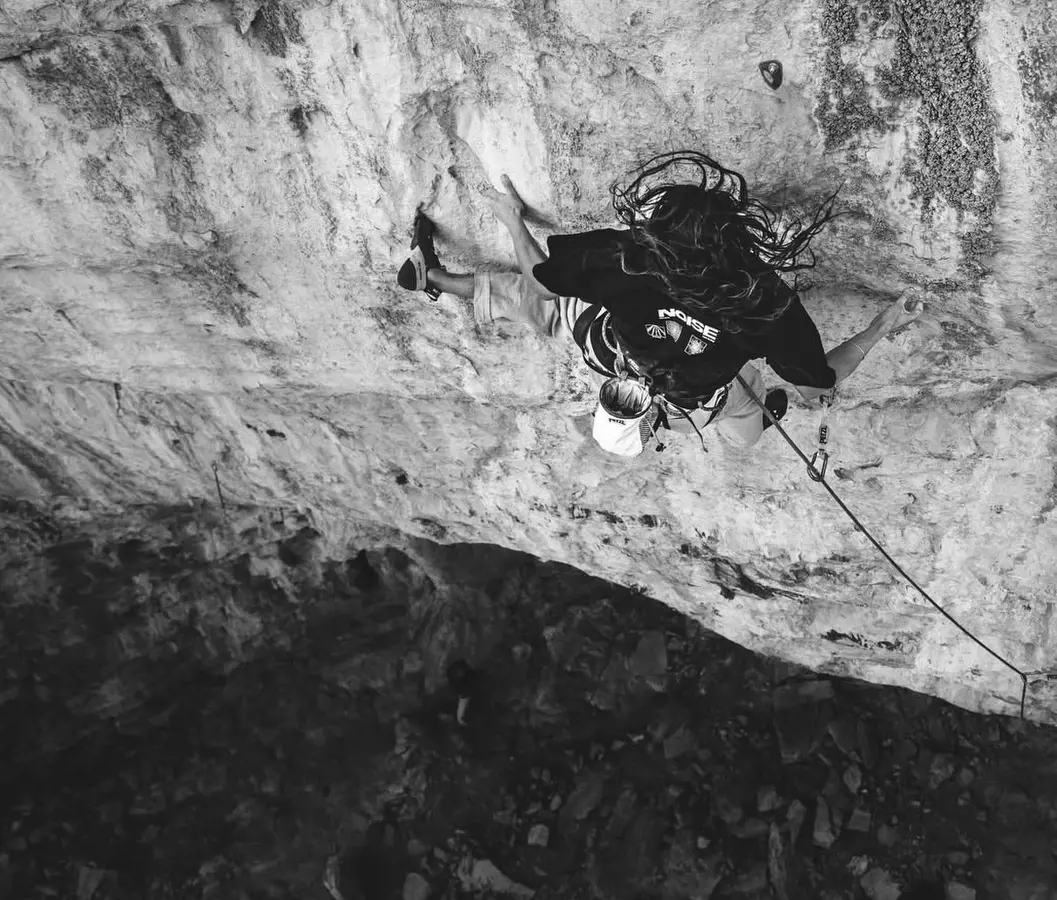
Sean Bailey reports on Instagram that he has done the first ascent of Duality of Man (9c) in Dry Canyon. ” After four total years and three seasons of climbing,…
163
69Jorge Diaz-Rullo elaborates on the reasons for him to suggest 9c for Café Colombia on Instagram, which he took down last week after projecting it for 240 sessio…
119
63