
NEWS

1 October 2024
Pearson explains E-grades by an E-9/10 (8a R/X) ascent
James Pearson, one of the most acomplished trad climbers in the world, has made the first repeat of Jacopo Larcher’s Shikantaza in Valle dell'Orco. Non of the climbers initially suggested a grade but Pearson was kind enough to elaborate a bit why it could be considered E-9/10 (8a R/X). E-10 means that it is one of the hardest graded trad climb in the world using the British system which adds difficulty and danger into one E-grade. At the same time an 8a R/X suggests it is not that hard but there is a big risk for for a serious injury.
”I must admit that Grades are not my favourite subject, but on this occasion I believe you might be right in thinking there are some interesting information to be shared.
Shikantaza is a relatively short route, less than 15 m in height, and the difficult section is only a small fraction of this, perhaps 7 or 8 moves where you might actually fall off. Bouldry routes are always harder to grade in my opinion, because they are much more more likely to feel different based on the conditions on the day, and a climbers own experience. Longer routes tend to average out over their length, whereas shorter, routes can be all or nothing.
When it comes to trad climbing, ironically, shorter routes can also be more dangerous than longer ones, as once you pass 7 or 8 m, the consequence of a ground fall will be extremely serious regardless of the height, and a short route means that you always have less margin for error before you are in that groundfall territory. Take Rhapsody for example, the overall fall from the final move must be approaching 25 or 30 m (with rope stretch), but since you are very high, and the route is steep, its a safe fall into air. Shikantaza is much shorter, and though the length of the fall is probably less than 10m from the final hard move of the crux, you’ll likely hit the floor.
Since a large part of the overall e-grade is made up of the danger, how you protect the route plays a big role in how dangerous you perceive it to be. Protecting a trad route might seem simple in theory, and if it was a well protected crack climb, with easy to understand gear, then that would be the case, but on Shikantaza, there are lots of things you can do to alter this perceived level of danger, and how much each one of those would actually make a difference in the case of a fall remains to be seen.
For an example, the route is protected by a sky hook that is next to your feet, as you are finishing the crux section. If this skyhook holds a fall, then the route is technically quite safe, but we are talking about Skyhooks here! They are far from the most reliable protection that exists, and in the case of Shikantaza, it is the rock on which you place the sky hook which causes me the most doubt, not the skyhook itself. This piece of rock is very fragile. It is hollow when you tap on it, and you can actually see the hold flexing when you pull on it. It wouldn't surprise me if one day it breaks under somebody's fingers, let alone if somebody were to fall onto it. To be completely honest, I rated the chance of this protection holding a fall very low, and almost decided not to place it, so that I would at least know for certain the danger level I had to contend with, instead of crossing my fingers and hoping for a miracle. However, in the end I placed it, for the small chance that it would actually hold, or more realistically, slow down my fall and give my bilayers a little more chance to pull in the necessary amount of rope to keep me off the floor on the good Friend down below.
Speaking about the good friends down below. With a very good belayer I believe they would keep you safe for most of the crux, but falling onto them from the three or 4 final moves would almost certainly result in a ground fall. To give me the best chance possible, I decided to use two belayers on two separate ropes. The first rope running directly through these Friends, and the second rope running through the skyhook. One belayer would lock the rope, and even jump off a boulder, in order to take in as much slack as they could. The other belayer would allow the rope to slip through their plate, and give me a very dynamic belay, giving more chance that the skyhook might hold, and slowing down my fall so that belayer number 1 could take in even more slack. These belay tactics are obviously more complex than your average day at the crag, but can make the difference between possibly walking away from a fall, and not. Unfortunately, it brings another set of questions into the grade, and depending on how "Good" the belayers are at their job, the route, or more precisely your experience on the route, will be more or less dangerous.
Finally, I chose to place several crash pads at the base of the route to protect things even further. Crash pads are wonderful for protecting short, dangerous climbs, but they are a nightmare for grading them. It's really difficult to quantify how much a “set" of crash pads will affect the danger of a Climb, simply because the quantity of protection they provide is potentially infinite. Bring enough crash, pads and you can make almost any solo safe.
Obviously in the real world, the difference between zero pads, one crash pad, and five crash pads is less black and white, but there is a significant difference. How old are the crash pads? How big are the crash pads? All these things are really hard to quantify, but make a big difference to how dangerous a route will actually be. This is actually one of the reasons why some of my early first ascents on the gritstone were “downgraded", because I had graded them for using zero crash pads. Not as an obligation to future climbers to also climb without pads, but as a sort of theoretical base level, allowing future ascentionists to better understand the “raw" nature of the route, before climbing it in whatever style they preferred.
At eGrader we take a similar approach, giving the route a "danger grade” (D-points) without pads, and then using a "pad filter" to later remove some of that danger. If you prefer, you could also take into account the pads you used from the very beginning of the calculation process, which would simply mean the initial D Point is lower, but since this would end up with every climber having a slightly different opinion on the danger, it doesn’t seem that helpful to me when the grade is supposed to allow us to compare experiences… if not then why do we grade at all.
You can play with some numbers on eGrader, but my experience on Shinkantaza would be something like this
Difficulty - 8a
Danger - 3 = Dangerous - Ground fall likely from the crux. Injury is likely even if advanced and specialist ropework / belay techniques are used.
Pad filter - Medium Padded (4 to 6 pads)
E Grade = Easy E9
Without Pads it would be an Easy E10”
”I must admit that Grades are not my favourite subject, but on this occasion I believe you might be right in thinking there are some interesting information to be shared.
Shikantaza is a relatively short route, less than 15 m in height, and the difficult section is only a small fraction of this, perhaps 7 or 8 moves where you might actually fall off. Bouldry routes are always harder to grade in my opinion, because they are much more more likely to feel different based on the conditions on the day, and a climbers own experience. Longer routes tend to average out over their length, whereas shorter, routes can be all or nothing.
When it comes to trad climbing, ironically, shorter routes can also be more dangerous than longer ones, as once you pass 7 or 8 m, the consequence of a ground fall will be extremely serious regardless of the height, and a short route means that you always have less margin for error before you are in that groundfall territory. Take Rhapsody for example, the overall fall from the final move must be approaching 25 or 30 m (with rope stretch), but since you are very high, and the route is steep, its a safe fall into air. Shikantaza is much shorter, and though the length of the fall is probably less than 10m from the final hard move of the crux, you’ll likely hit the floor.
Since a large part of the overall e-grade is made up of the danger, how you protect the route plays a big role in how dangerous you perceive it to be. Protecting a trad route might seem simple in theory, and if it was a well protected crack climb, with easy to understand gear, then that would be the case, but on Shikantaza, there are lots of things you can do to alter this perceived level of danger, and how much each one of those would actually make a difference in the case of a fall remains to be seen.
For an example, the route is protected by a sky hook that is next to your feet, as you are finishing the crux section. If this skyhook holds a fall, then the route is technically quite safe, but we are talking about Skyhooks here! They are far from the most reliable protection that exists, and in the case of Shikantaza, it is the rock on which you place the sky hook which causes me the most doubt, not the skyhook itself. This piece of rock is very fragile. It is hollow when you tap on it, and you can actually see the hold flexing when you pull on it. It wouldn't surprise me if one day it breaks under somebody's fingers, let alone if somebody were to fall onto it. To be completely honest, I rated the chance of this protection holding a fall very low, and almost decided not to place it, so that I would at least know for certain the danger level I had to contend with, instead of crossing my fingers and hoping for a miracle. However, in the end I placed it, for the small chance that it would actually hold, or more realistically, slow down my fall and give my bilayers a little more chance to pull in the necessary amount of rope to keep me off the floor on the good Friend down below.
Speaking about the good friends down below. With a very good belayer I believe they would keep you safe for most of the crux, but falling onto them from the three or 4 final moves would almost certainly result in a ground fall. To give me the best chance possible, I decided to use two belayers on two separate ropes. The first rope running directly through these Friends, and the second rope running through the skyhook. One belayer would lock the rope, and even jump off a boulder, in order to take in as much slack as they could. The other belayer would allow the rope to slip through their plate, and give me a very dynamic belay, giving more chance that the skyhook might hold, and slowing down my fall so that belayer number 1 could take in even more slack. These belay tactics are obviously more complex than your average day at the crag, but can make the difference between possibly walking away from a fall, and not. Unfortunately, it brings another set of questions into the grade, and depending on how "Good" the belayers are at their job, the route, or more precisely your experience on the route, will be more or less dangerous.
Finally, I chose to place several crash pads at the base of the route to protect things even further. Crash pads are wonderful for protecting short, dangerous climbs, but they are a nightmare for grading them. It's really difficult to quantify how much a “set" of crash pads will affect the danger of a Climb, simply because the quantity of protection they provide is potentially infinite. Bring enough crash, pads and you can make almost any solo safe.
Obviously in the real world, the difference between zero pads, one crash pad, and five crash pads is less black and white, but there is a significant difference. How old are the crash pads? How big are the crash pads? All these things are really hard to quantify, but make a big difference to how dangerous a route will actually be. This is actually one of the reasons why some of my early first ascents on the gritstone were “downgraded", because I had graded them for using zero crash pads. Not as an obligation to future climbers to also climb without pads, but as a sort of theoretical base level, allowing future ascentionists to better understand the “raw" nature of the route, before climbing it in whatever style they preferred.
At eGrader we take a similar approach, giving the route a "danger grade” (D-points) without pads, and then using a "pad filter" to later remove some of that danger. If you prefer, you could also take into account the pads you used from the very beginning of the calculation process, which would simply mean the initial D Point is lower, but since this would end up with every climber having a slightly different opinion on the danger, it doesn’t seem that helpful to me when the grade is supposed to allow us to compare experiences… if not then why do we grade at all.
You can play with some numbers on eGrader, but my experience on Shinkantaza would be something like this
Difficulty - 8a
Danger - 3 = Dangerous - Ground fall likely from the crux. Injury is likely even if advanced and specialist ropework / belay techniques are used.
Pad filter - Medium Padded (4 to 6 pads)
E Grade = Easy E9
Without Pads it would be an Easy E10”
Read more
9
6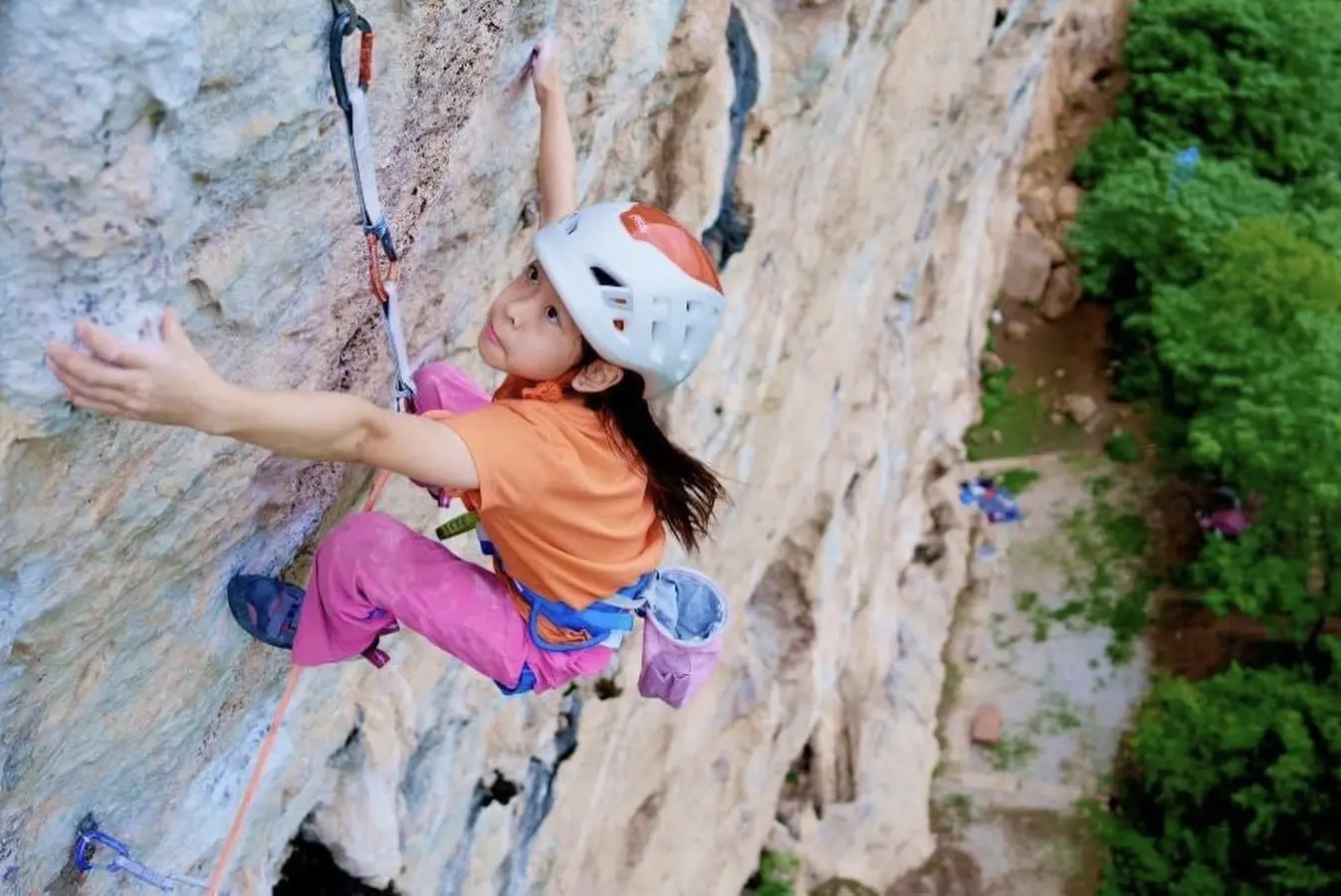
1 October 2024
Veronica Chik, 9, completes China Climb (8b+)
Veronica Chik began climbing at the age of five and normally she trains five times a week. In March, she ventured into outdoor climbing for the first time. Following three months of intense training, she encountered a fear of falling from heights, prompting her to take a temporary break. After approximately ten weeks of mental adjustment, Veronica resumed her training in September with renewed determination to conquer her fears. Just a few weeks later, the 135 cm tall climber successfully completed China Climb (8b+) in Yangshuo.
Her mother Vivian shares their story. ”The emotional rollercoaster of the past few months has been indescribable. From the moment we decided to accept this challenge, we knew it would be a difficult journey. Every weekend, we traveled from Hong Kong to Yangshuo for training by high speed train for 5 hours each way, experiencing a whirlwind of emotions—anticipation, excitement, disappointment, doubt, fear, and ultimately courage and perseverance.
We felt heartbroken seeing Veronica's hands covered in calluses, her skin torn and bleeding from climbing. There were times we wanted to convince her to give up, yet she gritted her teeth and insisted she would complete the challenge. Throughout this journey, we reevaluated our roles as parents, contemplating how best to nurture, encourage, and appreciate our child.
This experience has been filled with challenges and inspiration, teaching us the values of courage, persistence, and the spirit of never giving up as our child relentlessly pursues her dreams.
Veronica's success is not only a personal breakthrough but also a recognition of the courage and dreams of the younger generation, inspiring more children to bravely pursue their paths. Although the journey to realizing dreams is fraught with challenges, as long as one is courageous and persistent, dreams can indeed come true. With climbing now included in the Olympics, the popularity of the sport is gradually increasing in Hong Kong, and we look forward to seeing more young climbers courageously chase their dreams, writing their own remarkable stories.”
Her mother Vivian shares their story. ”The emotional rollercoaster of the past few months has been indescribable. From the moment we decided to accept this challenge, we knew it would be a difficult journey. Every weekend, we traveled from Hong Kong to Yangshuo for training by high speed train for 5 hours each way, experiencing a whirlwind of emotions—anticipation, excitement, disappointment, doubt, fear, and ultimately courage and perseverance.
We felt heartbroken seeing Veronica's hands covered in calluses, her skin torn and bleeding from climbing. There were times we wanted to convince her to give up, yet she gritted her teeth and insisted she would complete the challenge. Throughout this journey, we reevaluated our roles as parents, contemplating how best to nurture, encourage, and appreciate our child.
This experience has been filled with challenges and inspiration, teaching us the values of courage, persistence, and the spirit of never giving up as our child relentlessly pursues her dreams.
Veronica's success is not only a personal breakthrough but also a recognition of the courage and dreams of the younger generation, inspiring more children to bravely pursue their paths. Although the journey to realizing dreams is fraught with challenges, as long as one is courageous and persistent, dreams can indeed come true. With climbing now included in the Olympics, the popularity of the sport is gradually increasing in Hong Kong, and we look forward to seeing more young climbers courageously chase their dreams, writing their own remarkable stories.”
Read more
12
030 September 2024
Lana Skušek does Strelovod (8c)
Lana Skušek, who was #8 in the European Championship last month, has sent Strelovod (8c) in Mišja Peč. (c) SAC/Romy Streit
Can you tell us more about the ascent?
When I climbed Marjetica (8b), two friends were climbing Strelovod, and right away I felt the urge to try it myself. I made the moves in the lower part quite quickly, and I already knew the moves in the upper part from Marjetica. It felt good and doable. I linked everything together quite quickly; it took 2 sessions. I’m very happy since this was my first 8c.
What are your autumn plans?
Oh, I don’t have one 😅 I’m really enjoying rock climbing at the moment. I’d like to try a few more hard things, and I hopefully send some. In about a month, I’ll take a break from climbing, and then I’ll start training again for the upcoming competitions.
Can you tell us more about the ascent?
When I climbed Marjetica (8b), two friends were climbing Strelovod, and right away I felt the urge to try it myself. I made the moves in the lower part quite quickly, and I already knew the moves in the upper part from Marjetica. It felt good and doable. I linked everything together quite quickly; it took 2 sessions. I’m very happy since this was my first 8c.
What are your autumn plans?
Oh, I don’t have one 😅 I’m really enjoying rock climbing at the moment. I’d like to try a few more hard things, and I hopefully send some. In about a month, I’ll take a break from climbing, and then I’ll start training again for the upcoming competitions.
Read more
10
130 September 2024
Male Boulder Ranking before last event in Seoul
Sorato Anraku, last year's World Cup winner in both Lead and Boulder, will clinch the 2024 Boulder title if he finishes at least 13th in Seoul. Overall, six climbers from Team Japan are in the top ten, and the Narasaki brothers, along with Toby Roberts, still have a chance to win.
Read more
0
030 September 2024
Women Boulder Ranking before Seoul
Natalia Grossman and Janja Garnbret have each won the two Boulder World Cups they have competed in during 2024. Since Garnbret will not be participating in Seoul, the highest-ranked athlete among Grossman, Oceania Mackenzie, and Nao Nakamura, provided they reach the podium, will secure the overall title. Anon Matsufuji still has a theoretical chance, but Naile Meignan and Oriane Bertone are out of contention as they are skipping the Korean World Cup.
Read more
0
030 September 2024
Anna Wild ticks Bat Route (8c)
Anna Wild has sent Bat Route (8c) in Malham which has been rated five stars by all 14 that have star rated it.
Can you tell us more about the ascent and the number of sessions neeeded?
I tried it a few times in spring but it got too hot and had a birds nest in it, so I had to wait until recently to try it again, I think 8 sessions overall. I really enjoyed trying this route, had been wanting to try it for a while as it is one of the best routes in the country. I’m excited to try the harder link ups of it next!
What harder link-ups could that be?
I’d like to try Raining Bats and Dogs (8c) and Batshadow (8c+) next.
Can you tell us more about the ascent and the number of sessions neeeded?
I tried it a few times in spring but it got too hot and had a birds nest in it, so I had to wait until recently to try it again, I think 8 sessions overall. I really enjoyed trying this route, had been wanting to try it for a while as it is one of the best routes in the country. I’m excited to try the harder link ups of it next!
What harder link-ups could that be?
I’d like to try Raining Bats and Dogs (8c) and Batshadow (8c+) next.
Read more
5
030 September 2024
Stefano Carnati ticks Flow State 8C (+)
Stefano Carnati has sent Flow State (8C) in Val daone. The 26-year-old is one of the very few climbers who both have done a 9b route as well as an 8C+ boulder.
Can you tell us more about the ascent?
Although it’s not that far from my home, I only visited this area for the first time last year. This spring, when I found out that Pietro Vidi had climbed this line, I was psyched to come back and put some effort into it. The boulder follows a great roof, combining the first and hardest part of “Grizzly” with “Flow” (both in the 8B range) for a total of 15 moves. The crux is holding the final sloper.
After completing both individual lines a few weeks ago, I immediately started trying to link them, and during my third session, I was able to climb it! Overall Daone is a nice area that offers some good quality problems. Big Illusion (8C) is another hard one by Stefano Scarperi, which still awaits a second ascent. I hope to find the time to return before the snow comes and make some tries on this as well!
Can you tell us more about the ascent?
Although it’s not that far from my home, I only visited this area for the first time last year. This spring, when I found out that Pietro Vidi had climbed this line, I was psyched to come back and put some effort into it. The boulder follows a great roof, combining the first and hardest part of “Grizzly” with “Flow” (both in the 8B range) for a total of 15 moves. The crux is holding the final sloper.
After completing both individual lines a few weeks ago, I immediately started trying to link them, and during my third session, I was able to climb it! Overall Daone is a nice area that offers some good quality problems. Big Illusion (8C) is another hard one by Stefano Scarperi, which still awaits a second ascent. I hope to find the time to return before the snow comes and make some tries on this as well!
Read more
16
029 September 2024
Stefano Ghisolfi ticks Little Badder (9a)
Stefano Ghisolfi, with over 50 routes 9a to 9b+ under his belt, has done Little Badder (9a) in Flatanger. The 31-year-old Italian has been in Norway since the beginning of August focusing on Silence (9c).
What is the status on your big project and how was your latest 9a ascent?
The season is almost over unfortunately, no Silence this year 🙃😭. But I had fun climbing four 9as in this trip, I'll be back stronger next season.
I started trying Little Badder because it shares the first part of Move so I worked on the first 2 cruxes while also trying Move. Then when I knew I could do it I tried it from the ground, fell once in the first crux and then sent it later.
What is the status on your big project and how was your latest 9a ascent?
The season is almost over unfortunately, no Silence this year 🙃😭. But I had fun climbing four 9as in this trip, I'll be back stronger next season.
I started trying Little Badder because it shares the first part of Move so I worked on the first 2 cruxes while also trying Move. Then when I knew I could do it I tried it from the ground, fell once in the first crux and then sent it later.
Read more
24
128 September 2024
Andrine Skilbrei climbs Brunhilde L2 (8c)
Andrine Skilbrei, who started climbing at age 19 and last year sent La Rubia (8c+), has completed Brunhilde L2 (8c) in Flatanger.
Can you tell us more about the ascent?
When first arriving in Flatanger this season I was looking for a nice project to get back in shape on after a somewhat slow year without much climbing. Brunhilde was recommended to me and it seemed to be a good choice considering it didn’t have a line of people on it. This was in the middle of august, and there were still a lot of people here at that time.
The route, at least for me, breaks down to 3 quite hard dynamic coordination moves separated by a lot of steep resistance climbing on mostly good holds. The final big move especially caused me a lot of trouble as it was at the very limit of my reach (I`m 1.60) as well as being at the very end of all the hard climbing, making it not just difficult physically, but also mentally.
In the end I spent about a month trying the route, with the last two and a half weeks consisting of falling on this one move over and over again before I finally stuck it and was able to carry on to the top. All in all I am really happy about how it all turned out, and I am now looking forward to returning to new projects in Flatanger next year.
Can you tell us more about the ascent?
When first arriving in Flatanger this season I was looking for a nice project to get back in shape on after a somewhat slow year without much climbing. Brunhilde was recommended to me and it seemed to be a good choice considering it didn’t have a line of people on it. This was in the middle of august, and there were still a lot of people here at that time.
The route, at least for me, breaks down to 3 quite hard dynamic coordination moves separated by a lot of steep resistance climbing on mostly good holds. The final big move especially caused me a lot of trouble as it was at the very limit of my reach (I`m 1.60) as well as being at the very end of all the hard climbing, making it not just difficult physically, but also mentally.
In the end I spent about a month trying the route, with the last two and a half weeks consisting of falling on this one move over and over again before I finally stuck it and was able to carry on to the top. All in all I am really happy about how it all turned out, and I am now looking forward to returning to new projects in Flatanger next year.
Read more
20
027 September 2024
France and Great Britain win two golds in ECH
At the European Youth Boulder Championships in Troyes, France dominated in the boys' categories, while Great Britain excelled among the girls. Overall, France emerged as the top nation, with 13 climbers reaching the finals. Samuel Richard was the only competitor to win both the semifinal and the final, having also led in the qualification round. Notably, Israel achieved an impressive feat by securing all three podium spots in the boys' Youth B category.
Juniors: Kito Martini FRA - Emma Edwards GBR
Youth A: Samuel Richard FRA - Lucy Garlick GBR
Youth B: Itamar Harel ISR - Olivia Kistmacher GER
Complete results
Juniors: Kito Martini FRA - Emma Edwards GBR
Youth A: Samuel Richard FRA - Lucy Garlick GBR
Youth B: Itamar Harel ISR - Olivia Kistmacher GER
Complete results
Read more
3
0 Favorites
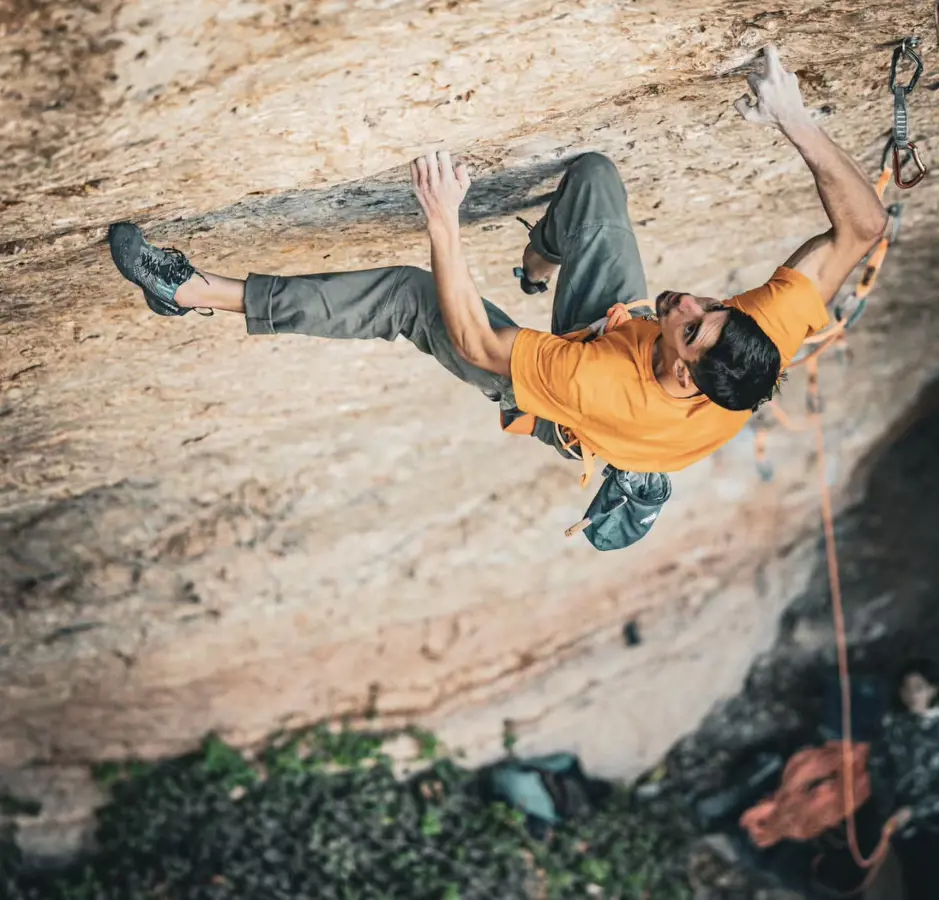
Jorge Diaz-Rullo reports on Instagram that he has made the first ascent of Cafe Colombia in Margalef. At 27, he’s already stacked four 9b+ sends and now he’s ad…
285
81
”I stopped focusing on competition bouldering after last year’s World Cup in Prague, partly because I can already feel it on my body, especially in my shoulders. The modern competition style, with a lot of jumping from one hold to another, is very demanding for the shoulders.
Outdoor bouldering is…
189
13Sean Bailey reports on Instagram that he has done the first ascent of Duality of Man (9c) in Dry Canyon. ” After four total years and three seasons of climbing,…
163
69 Most commented
Jorge Diaz-Rullo reports on Instagram that he has made the first ascent of Cafe Colombia in Margalef. At 27, he’s already stacked four 9b+ sends and now he’s ad…
285
81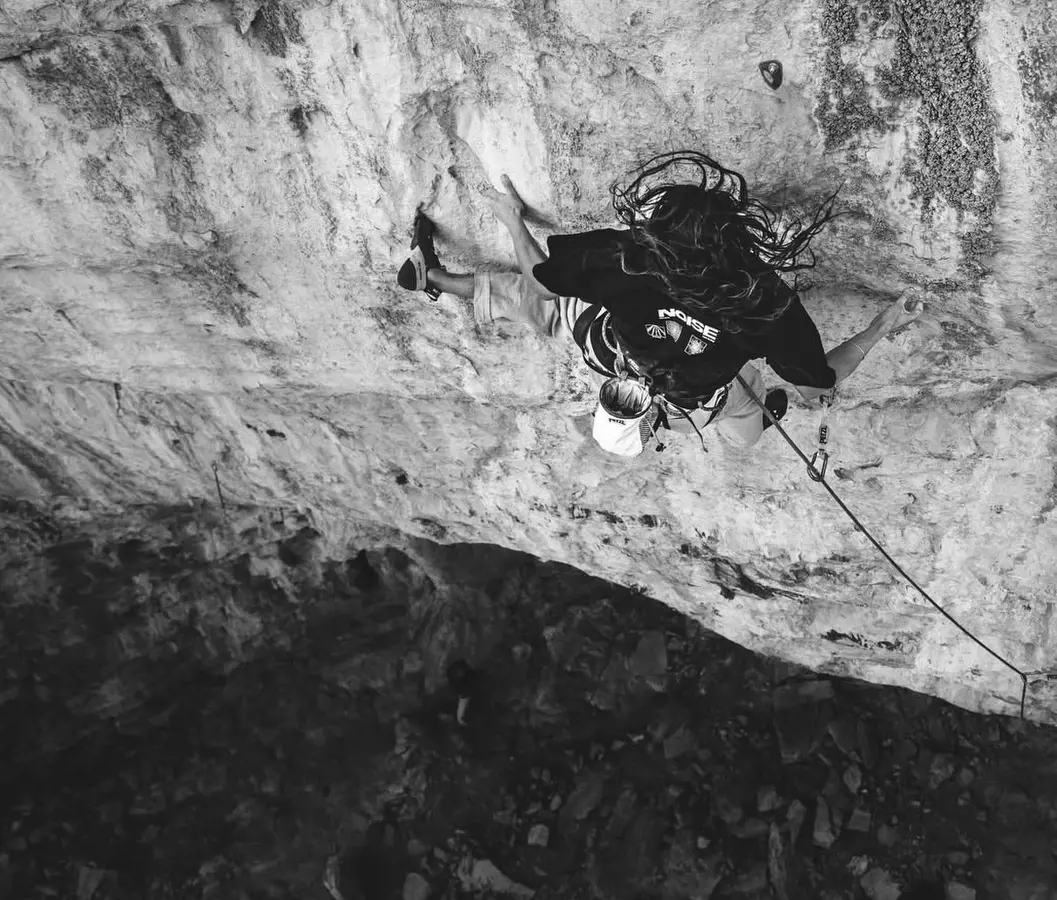
Sean Bailey reports on Instagram that he has done the first ascent of Duality of Man (9c) in Dry Canyon. ” After four total years and three seasons of climbing,…
163
69Jorge Diaz-Rullo elaborates on the reasons for him to suggest 9c for Café Colombia on Instagram, which he took down last week after projecting it for 240 sessio…
119
63