
14 July 2025
Jenya Kazbekova’s disordered eating story
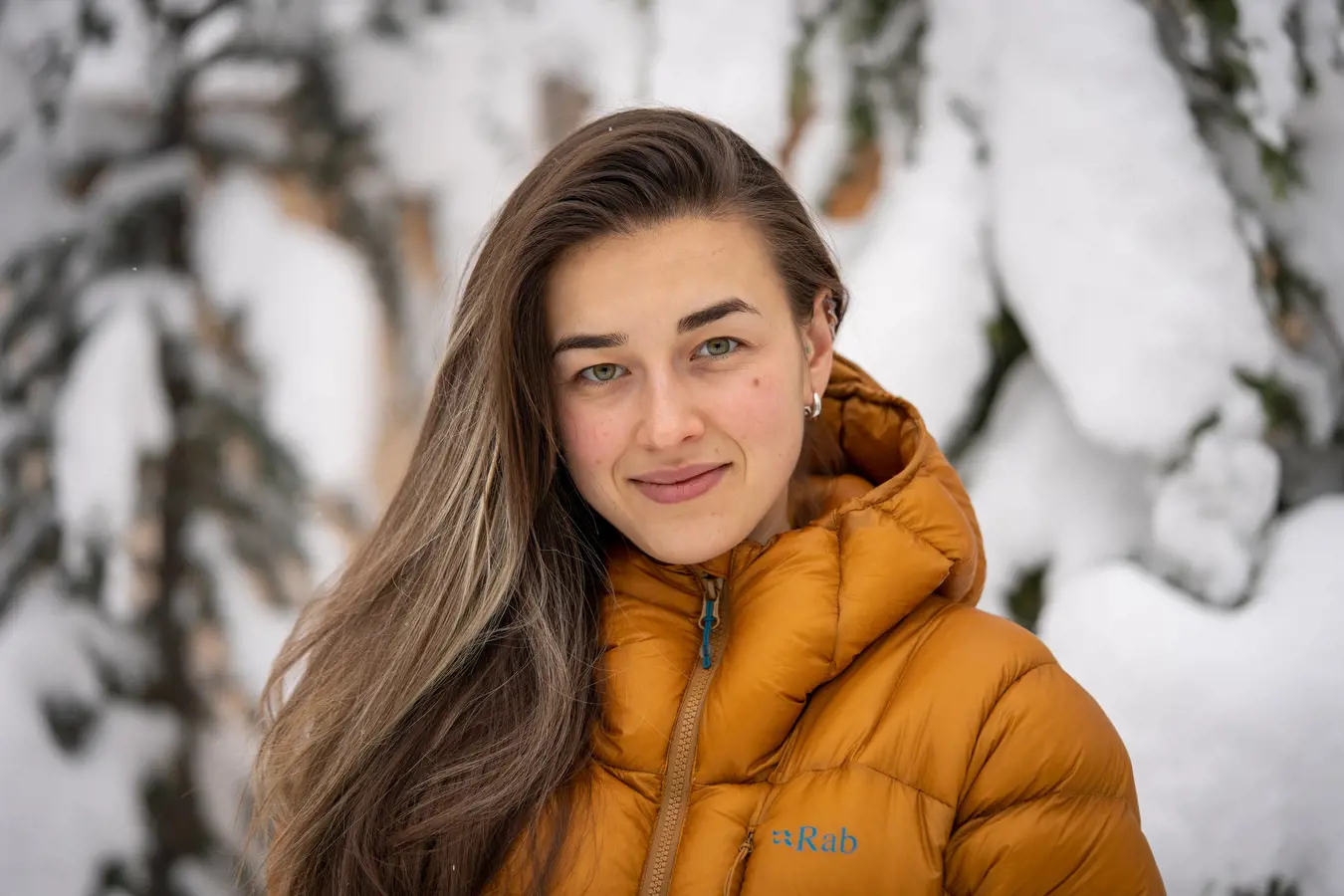
Jenya Kazbekova, an Olympian who placed 2nd in Lead and 4th in Boulder at last year’s European Championships, has shared an open letter discussing her struggles with disordered eating throughout her competition career. This year, the Ukrainian climber is stepping away from the circuit as she prepares to welcome a baby in just a few weeks.
”I’ve been meaning to write this post for a long time. It means a lot to me to finally talk about it, though somehow it still took a while to find the right words. I care deeply about our climbing community, and seeing younger climbers struggle makes me want to share my story in the hope that it will resonate with someone or help them feel safe to reach out for support. The worst part of any struggle is feeling completely isolated and alone.
In recent years, there’s been more conversation in the climbing community about malnutrition, disordered eating and Relative Energy Deficiency in Sport (RED-S). While I was lucky never to develop a full-blown eating disorder, I’ve been very familiar with disordered eating. When I was younger, I didn’t know any better. I thought I was being smart, analysing elite climbers of the 2000s and 2010s and assuming losing weight was the way to success. Being stubborn and persistent, I fell into constant dieting, malnutrition, and a skewed body image.
In 2016 in Paris, I vividly remember standing on a scale and feeling crushed. I’d gained weight. Despite looking really thin in the photo, I still believed I needed to lose more. The moment I saw that number, some part of me gave up before the competition had even begun. A lot of fears made it hard to focus on what really mattered, as all the “what ifs” started playing in my head: fear of failing, fear of judgement, fear of disappointment, fear of not being good enough. What I didn’t understand then was that constant malnutrition wasn’t just messing with my head. It was destroying my body’s ability to heal. I stayed injured far more often, took much longer to recover from hard sessions, and was basically living in survival mode. It didn’t even allow me to train to my full potential. In the end, all those food restrictions didn’t make me a better athlete; they actually harmed my physical and mental health.
Having fears is a very human thing, but what you do with them is the crucial part of the process. Years later, finding the courage to face my fears and work through them is what helped me the most. It took me years to find my balance, to learn from my mistakes, and to reach a place where I could truly be proud of what my body can do. It wasn’t a straight path. There were setbacks, moments I felt lost, and times I questioned if I was doing the right thing by refusing to play the “who is lighter” game. It took years of rewiring my brain, hard work in therapy, and learning about nutrition. I was lucky to have people who talked me out of dark places and showed me a better way.
A year ago, back in Paris [Olympics], I felt strong in my body. Maybe not as strong in my head, but I was confident in what my body could do. Was I comfortable? Actually, no. When you’re vulnerable, the comparison game plays cruel tricks on you, and standing on that stage in Paris uncovered every vulnerable part of me. But here’s what I know now. We come in different shapes, forms, and bodies. There is no one-size-fits-all. There is no perfect body. The way you look has so little to do with what you’re actually capable of. Don’t play the comparison game. It will bring you nothing but hurt.
The reality is, you either concentrate on being light or being strong. At the end of the day it is your strength that gets you up the wall in the form of grit, determination, mental and physical ability, experience, focus, timing, luck, the quality of your preparation and recovery, the joy that keeps you coming back, and your support team. I hope you find role models, and maybe even see a glimpse of that in my story, to remind you that chasing your dreams never has to cost you your health. I refused to give up on my dreams, and I refused to lose weight to get there. Becoming an Olympian wasn’t about being light enough. It was about years of rebuilding my relationship with my body and mind. That’s what I’m most proud of.
I’m sharing this not because I know the only way, but to help keep challenging harmful patterns in our sport, and to remind all people, from elite athletes to beginner climbers, that your worth has nothing to do with your weight or your results. It breaks my heart to see young athletes and everyday climbers alike fall into the same traps. Now more than ever, I want a better future for climbing and beyond. You matter. Your health matters. Climbing is supposed to bring you joy. Results are never worth your well-being. Cherish yourself, even if the world tells you otherwise. Let this be another call for change. Let’s create more support and education so climbers never have to feel alone in these struggles.”
”I’ve been meaning to write this post for a long time. It means a lot to me to finally talk about it, though somehow it still took a while to find the right words. I care deeply about our climbing community, and seeing younger climbers struggle makes me want to share my story in the hope that it will resonate with someone or help them feel safe to reach out for support. The worst part of any struggle is feeling completely isolated and alone.
In recent years, there’s been more conversation in the climbing community about malnutrition, disordered eating and Relative Energy Deficiency in Sport (RED-S). While I was lucky never to develop a full-blown eating disorder, I’ve been very familiar with disordered eating. When I was younger, I didn’t know any better. I thought I was being smart, analysing elite climbers of the 2000s and 2010s and assuming losing weight was the way to success. Being stubborn and persistent, I fell into constant dieting, malnutrition, and a skewed body image.
In 2016 in Paris, I vividly remember standing on a scale and feeling crushed. I’d gained weight. Despite looking really thin in the photo, I still believed I needed to lose more. The moment I saw that number, some part of me gave up before the competition had even begun. A lot of fears made it hard to focus on what really mattered, as all the “what ifs” started playing in my head: fear of failing, fear of judgement, fear of disappointment, fear of not being good enough. What I didn’t understand then was that constant malnutrition wasn’t just messing with my head. It was destroying my body’s ability to heal. I stayed injured far more often, took much longer to recover from hard sessions, and was basically living in survival mode. It didn’t even allow me to train to my full potential. In the end, all those food restrictions didn’t make me a better athlete; they actually harmed my physical and mental health.
Having fears is a very human thing, but what you do with them is the crucial part of the process. Years later, finding the courage to face my fears and work through them is what helped me the most. It took me years to find my balance, to learn from my mistakes, and to reach a place where I could truly be proud of what my body can do. It wasn’t a straight path. There were setbacks, moments I felt lost, and times I questioned if I was doing the right thing by refusing to play the “who is lighter” game. It took years of rewiring my brain, hard work in therapy, and learning about nutrition. I was lucky to have people who talked me out of dark places and showed me a better way.
A year ago, back in Paris [Olympics], I felt strong in my body. Maybe not as strong in my head, but I was confident in what my body could do. Was I comfortable? Actually, no. When you’re vulnerable, the comparison game plays cruel tricks on you, and standing on that stage in Paris uncovered every vulnerable part of me. But here’s what I know now. We come in different shapes, forms, and bodies. There is no one-size-fits-all. There is no perfect body. The way you look has so little to do with what you’re actually capable of. Don’t play the comparison game. It will bring you nothing but hurt.
The reality is, you either concentrate on being light or being strong. At the end of the day it is your strength that gets you up the wall in the form of grit, determination, mental and physical ability, experience, focus, timing, luck, the quality of your preparation and recovery, the joy that keeps you coming back, and your support team. I hope you find role models, and maybe even see a glimpse of that in my story, to remind you that chasing your dreams never has to cost you your health. I refused to give up on my dreams, and I refused to lose weight to get there. Becoming an Olympian wasn’t about being light enough. It was about years of rebuilding my relationship with my body and mind. That’s what I’m most proud of.
I’m sharing this not because I know the only way, but to help keep challenging harmful patterns in our sport, and to remind all people, from elite athletes to beginner climbers, that your worth has nothing to do with your weight or your results. It breaks my heart to see young athletes and everyday climbers alike fall into the same traps. Now more than ever, I want a better future for climbing and beyond. You matter. Your health matters. Climbing is supposed to bring you joy. Results are never worth your well-being. Cherish yourself, even if the world tells you otherwise. Let this be another call for change. Let’s create more support and education so climbers never have to feel alone in these struggles.”
7 comments
Sort by:
Date
Reply
Most commented
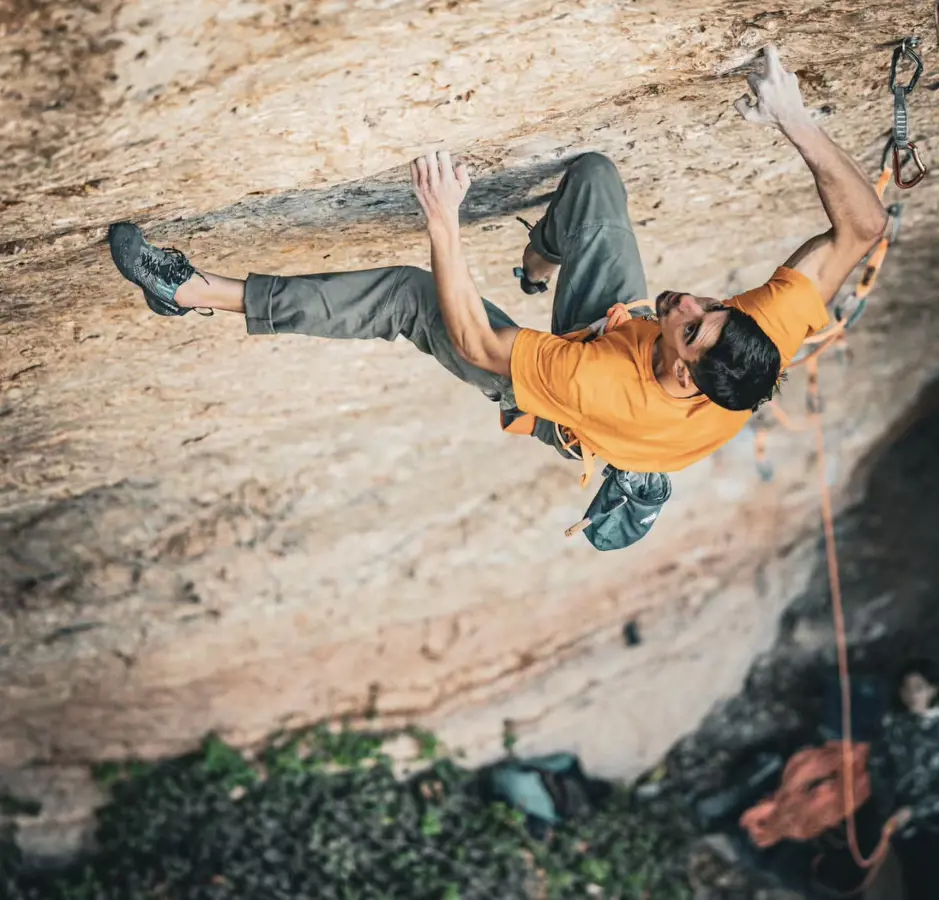
Jorge Diaz-Rullo reports on Instagram that he has made the first ascent of Cafe Colombia in Margalef. At 27, he’s already stacked four 9b+ sends and now he’s ad…
26 January 2026
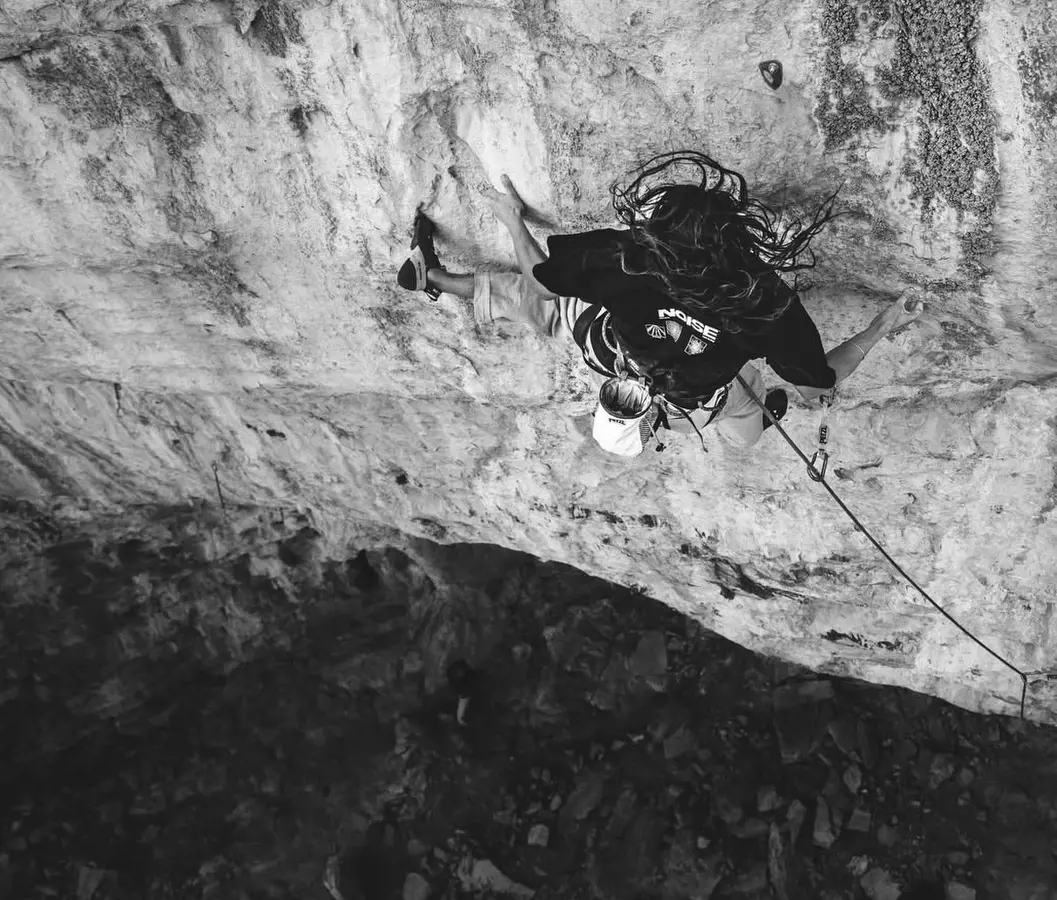
Sean Bailey FA’s Duality of Man (9c)
Sean Bailey reports on Instagram that he has done the first ascent of Duality of Man (9c) in Dry Canyon. ” After four total years and three seasons of climbing,…
23 March 2026
Jorge Diaz-Rullo proposes 9c for Café Colombia
Jorge Diaz-Rullo elaborates on the reasons for him to suggest 9c for Café Colombia on Instagram, which he took down last week after projecting it for 240 sessio…
Related

Jenya Kazbekova was #4 in the Brixen EC. She started off with three straight flashes and then she needed seven tries to make the first move and top out also the…

10 June 2022
Full support to Team Ukraine
Team Ukraine has five boys and three girls doing the Brixen World Cup. Jenya Kazbekova is missing out, party, due to the injury she got in Salt Lake City but he…
16 November 2011
The great Kazbekovs
Ievgeniia Kazbekova (15) from Ukraine recently onsighted an 8a+ and an 8a at Kalymnos. In 2010, she won the Youth worlds and she did her first 8b+ being 13 year…
Related news
Jenya Kazbekova was #4 in the Brixen EC. She started off with three straight flashes and then she needed seven tries to make the first move and top out also the…
10 June 2022
Full support to Team Ukraine
Team Ukraine has five boys and three girls doing the Brixen World Cup. Jenya Kazbekova is missing out, party, due to the injury she got in Salt Lake City but he…
16 November 2011
The great Kazbekovs
Ievgeniia Kazbekova (15) from Ukraine recently onsighted an 8a+ and an 8a at Kalymnos. In 2010, she won the Youth worlds and she did her first 8b+ being 13 year…
Favorites
8 June 2026
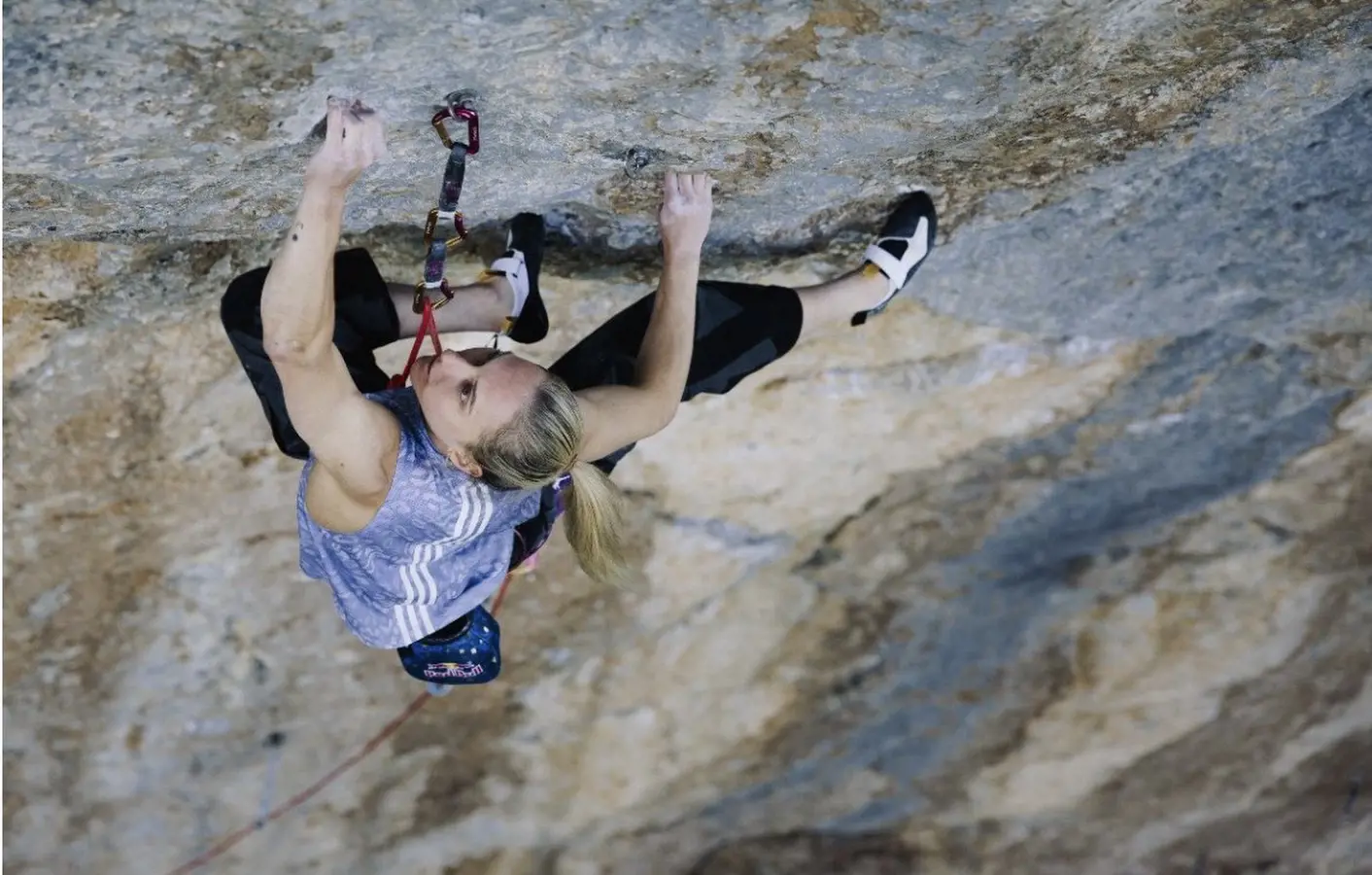
Janja Garnbret does Bibliographie (9b+)
Janja Garnbret has added another milestone to her remarkable climbing career by becoming the first woman to climb Bibliographie (9b+) in Céüse, one of the harde…
Jorge Diaz-Rullo reports on Instagram that he has made the first ascent of Cafe Colombia in Margalef. At 27, he’s already stacked four 9b+ sends and now he’s ad…
16 March 2026
Ondra flashes 3*8C in two weeks
”I stopped focusing on competition bouldering after last year’s World Cup in Prague, partly because I can already feel it on my body, especially in my shoulders. The modern competition style, with a lot of jumping from one hold to another, is very demanding for the shoulders.
Outdoor bouldering is…