NEWS

8c by Matilda Sรถderlund
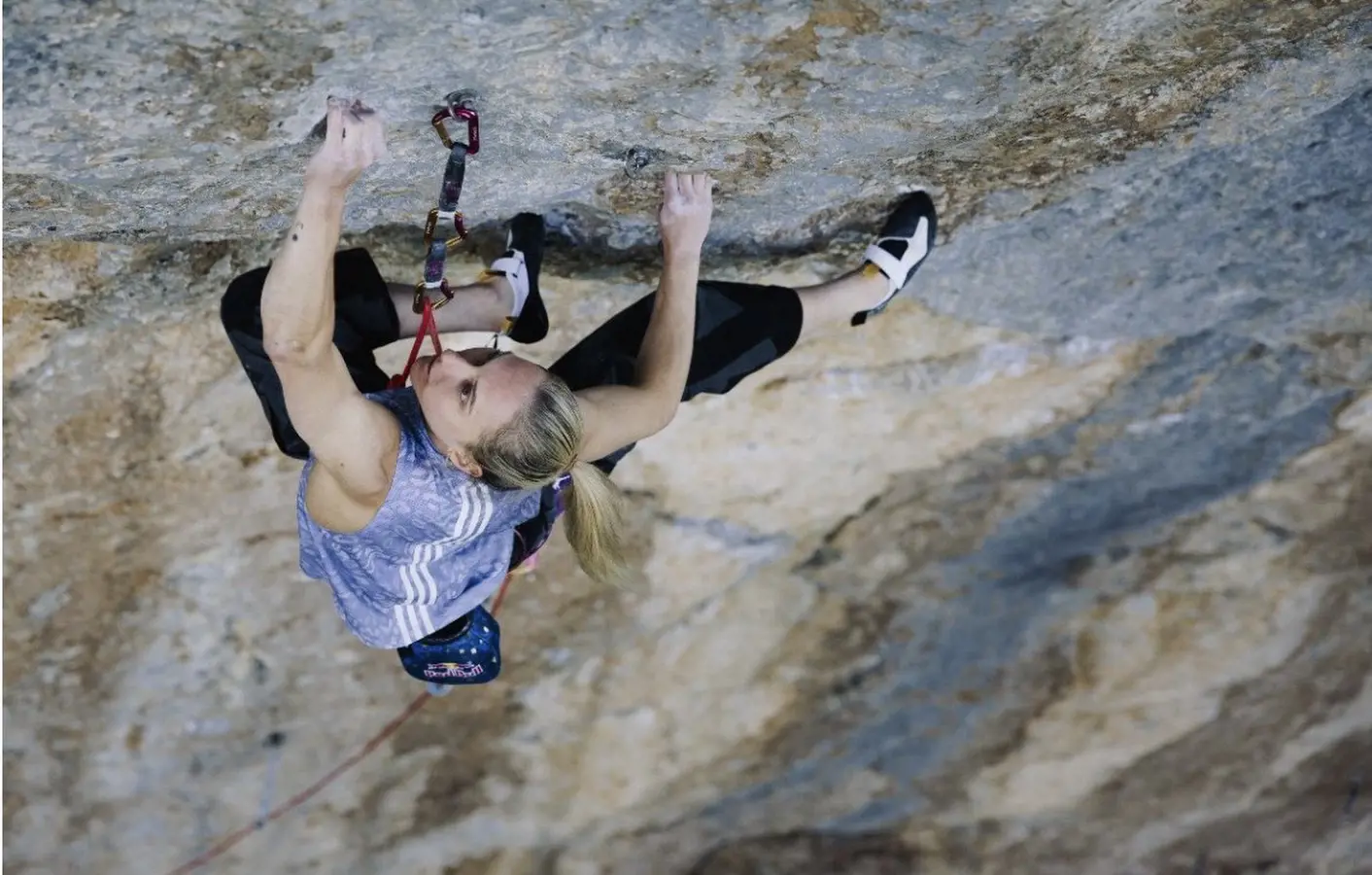
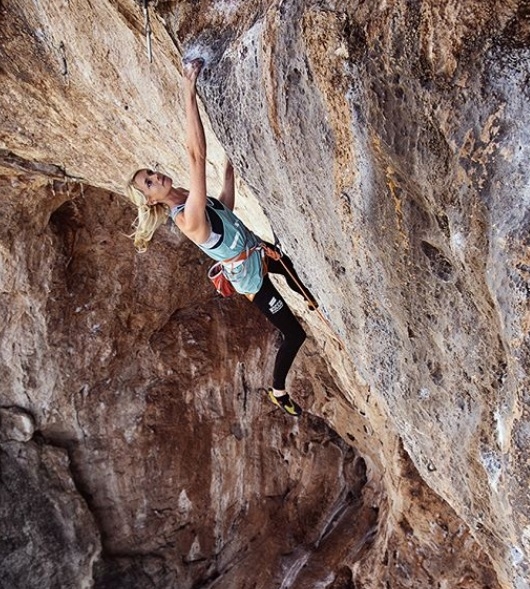
Matilda Sรถderlund, one of the leading female climbers in 2012, before she begun her University studies, is back in the game with the FFA of Golden for a moment 8c in Welcome Springs. With her MBA degree her plan is actually to work with climbing in the future. (c) Sophie Odelberg "Golden was my big goal for the spring. This was actually my first experience of projecting a route and the first trip I have done with the aim and focus of just climbing one specific route. Definitely an awesome and developing experience - and an emotional rollercoaster. Sent the route on the very last day of my trip, epic! So happy! One of the best routes I have ever done." Instagram

Era Vella should officially be called 8c+
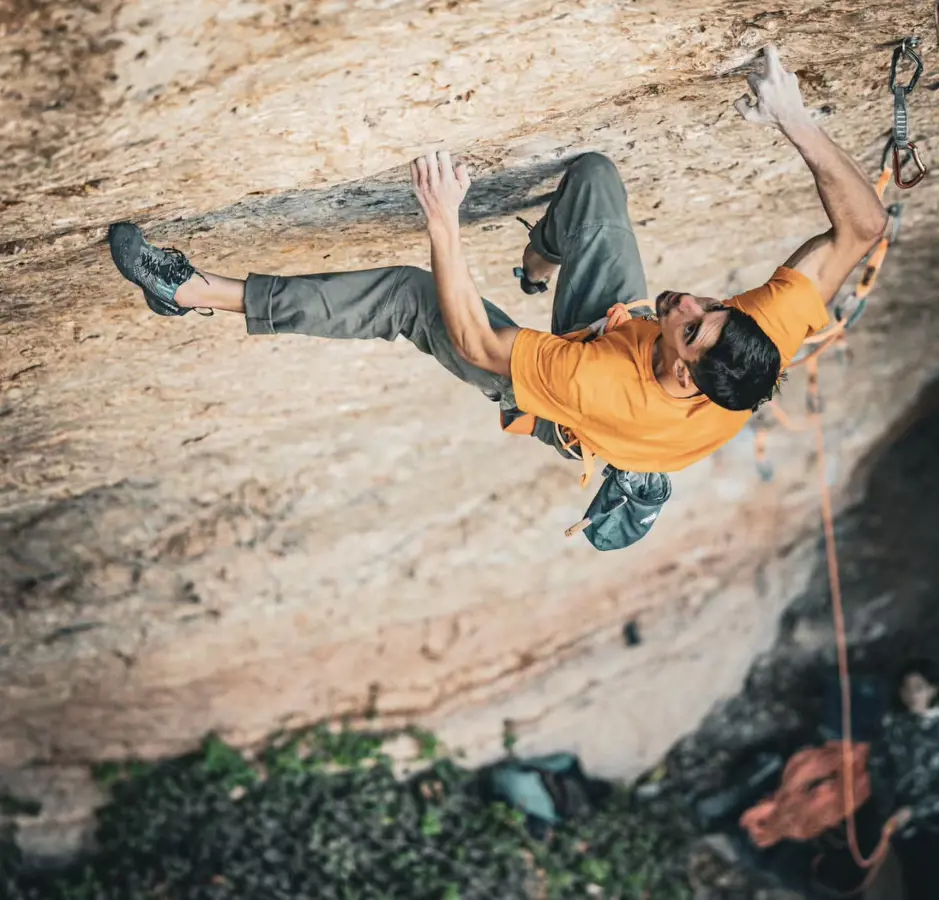
Era Vella is a stunning 45 m line in Margalef that was put up by Chris Sharma in 2010. He called it a soft 9a and the FA was actually done during a warming-up try. Quickly it become the most repeated 9a in the world and based on several comments and personal best, 8a started saying it might be 8c+. In 2015, Jonathan Siegrist did it and said was like an 8c and 8a started to report it as 9a (8c+). Later also Magnus Midtbรถ and Seb Bouin reported it as 8c+. Interesting is that since Midtbรถ's ascent in 2015 (c) Joรฃo Giacchin , only four more guys have done it included Alex Megos last week. Previously, it had been done five times every year. In the big databases it is in fact not considered 9a any longer and that goes also for the Vertical-Life app based and published in cooperation on Dani Andrada guidebook. During the last few years, we have seen some popular hard core routes in the Lleida area beeing down graded in order to fit with the international level. Probably, we will see more down gradings in the area, as a chain reaction, as others that are already contenders of being down graded, now need to be compared with Era Vella being 8c+, although hard for it's grade. Grades are the number one criteria for the media selecting and reporting ascents. Since 2002, 8a has in order to present the most accurate, sometimes commented the grade. In practice, it is not average consensus that change gradings. Instead, it is more like in the Emperor's clothing, somebody speaks out and then later repeaters follow. It should me mentioned that 8a thinks it is just natural that most climbers do not bother giving personal grades and instead focus on just the beauty of the route. On the other hand, the climbing community should be thankful towards the guys sharing their personal view as otherwise we would all climb 9a and we would not understand how hard and give appropriate credit for the first guys doing 9a's more than 25 years ago.

IFSC has published some 2018 rule changes with the most important is how to start in Bouldering. "The competitor must pass through a stable position before moving. In practice this means you can not just tap your foot against a starting hold before moving. Instead you need to place the foot there and remain in a "stable position" which might be 0.5 seconds or so. If you just tap the hold, the referee should stop the climber.

Ingo Filzwieser - Volumes and brain instead of crimpers
Ingo Filzwieser, the previous national coach of Austria who still is the personal trainer of Sandra Lettner (16) #4 in Meiringen, has a saying. "My motto is that you can not train like the last winner... you have to train like the next winner." When he became an Austria coach seven years ago he analysed the types of holds used and it was like 65 % crimps. This can be compared with 2017, with some 5 % crimps and like 80 % volumes. "Part of the reason for this might be that it was getting more difficult for the route setters to check the right level for the male. I saw Sharafutdinov (superior #1 in 2013) doing a pull up with 65 kilo extra weight. Today, there is very little benefit of such strength, instead bouldering has become a coordination sport, giving chances for the route setters to actually do the problems. You need to be very smart and also tactically skillful. Most boulderer have different shoes they choice from, in order to adapt to different steepness and types of holds. Coming into the boulder, you need to immediately get a plan and then start executing within seconds to not loose time. You can not just start trying hard. Sometimes I see competitors start brushing the holds before they start which actually will make them just loose time. Doing and filming simulation is very important. Later you as a coach can actually give feedback on why they rested so many seconds and how many attempts they did etc. It will become more of a mind game in the future and this was one part how Kilian (Fischhuber) won 22 World Cups. He was also, and still is, physically really strong but he always solved the problem first in his head. In general I like this as it also becomes a better and more injury free sport for the youngsters. It is also good that it becomes more of a team sport as it is a constant process of learning technical and tactical skill from each other. I was quite amazed seeing Narasaki and Noguchi closely following what the others did, in a training camp in Innsbruck, even on yoga classes. You could feel that they really cared about each other. It is also important for the kids to finish school, have other interests and reducing the time they spend on social media. I agree on what recently have been pointed out on 8a that the trainers should have an holistic approach.

Estado Critico 9a (8c+) by Piotr Schab
Piotr Schab has done a very quick ascent of Estado critico 9a (8c+) in Siurana. "3rd go. Cool moves in the crux and then some technical pumpy climbing to the top. 9a in a day feels damn. I assume itโ€™s low end, but I had to fight very hard for it." In the 8a ranking game, the Pole is #2 after Adam Ondra. (c) Wojtek Kozakiewicz

8th 8c+ by Michaela Kiersch
Michaela Kiersch has done an impressive second go ascent of American Hastle in as well as her eight 8c+, Joe Blau, both in Oliana. "Yay!!! Epic battle after breaking a hold at the top." The 152 cm american, who took the silver in the USA Lead nationals recently, is the superior 8a Combined ranking game leader. (c) Matty Hong Michaela has just graduated from University and this is her second trip to Spain. Unfortunately it has been raining a lot and she has only two weeks left and now a heat wave is coming in. Next up to try is Papier Moyat.

Caro Ciavaldini climbs The Quarrymen E8 7a (~8a trad)
Caroline Ciavaldini reports on Instagram that she has climbed the FFA of The Quarrymen E8 7a in Twll Mawr, Wales. This 4 pitches route was put up by legend Johnny Dawes in 1986, and it is one of the most iconic routes in the world with the extraordinary Groove Pitch (on the picture). ยฉ Neil Hart "โ€œTHAT IS NUTS" What on earth made me come up with: โ€œI want to do The Quarrymanโ€? Wellโ€ฆ It seemed impossible soโ€ฆ"

19 April 2018

Moscow prediction

The easiest way to predict the Bouldering WC in Moscow, which starts on Saturday, would of course be to just copy the Meiringen results. Another possibility is to calculate the finalist based on the total result from the qually and the semifinal, from the two groups respectively. Beside that, we should look out for the Japaneses and especially Kokoro Fujii. Bear in mind also that the Japaneses are the only team that go all in also in Speed where the qualification is just right before the Bouldering final. 1. Yuji Fuyiwaki JPN 78 (7 Tops and 8 zones) 2. Aleksei Rubtsov RUS/Tomoa Narasaki JPN 67 1. Jakob Schubert AUT 89 2. Tomoaki Nakati JPN 79 3. Jongwon Chon KOR 78 1. Akiyo Noguchi JPN 79 2. Janja Garnbret SLO 78 3. Stasa Gejo STB 58 1. Miho Nonaka JPN/Sandra Lettner AUT 69 3. Fanny Gibert FRA/Jessica Pilz AUT 58