NEWS

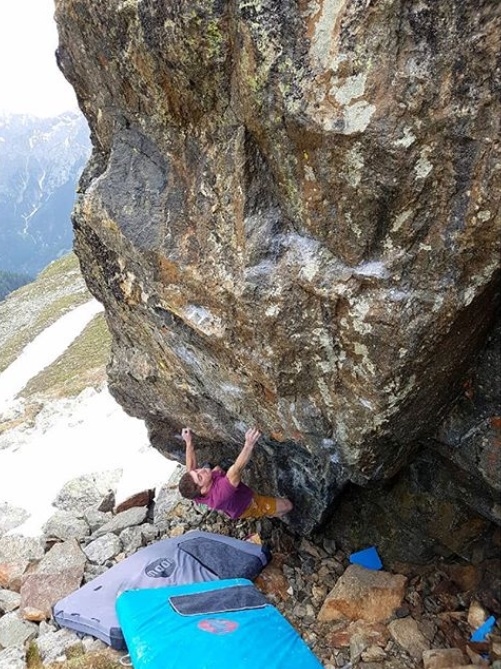
8B+ (C) by Christof Rauch
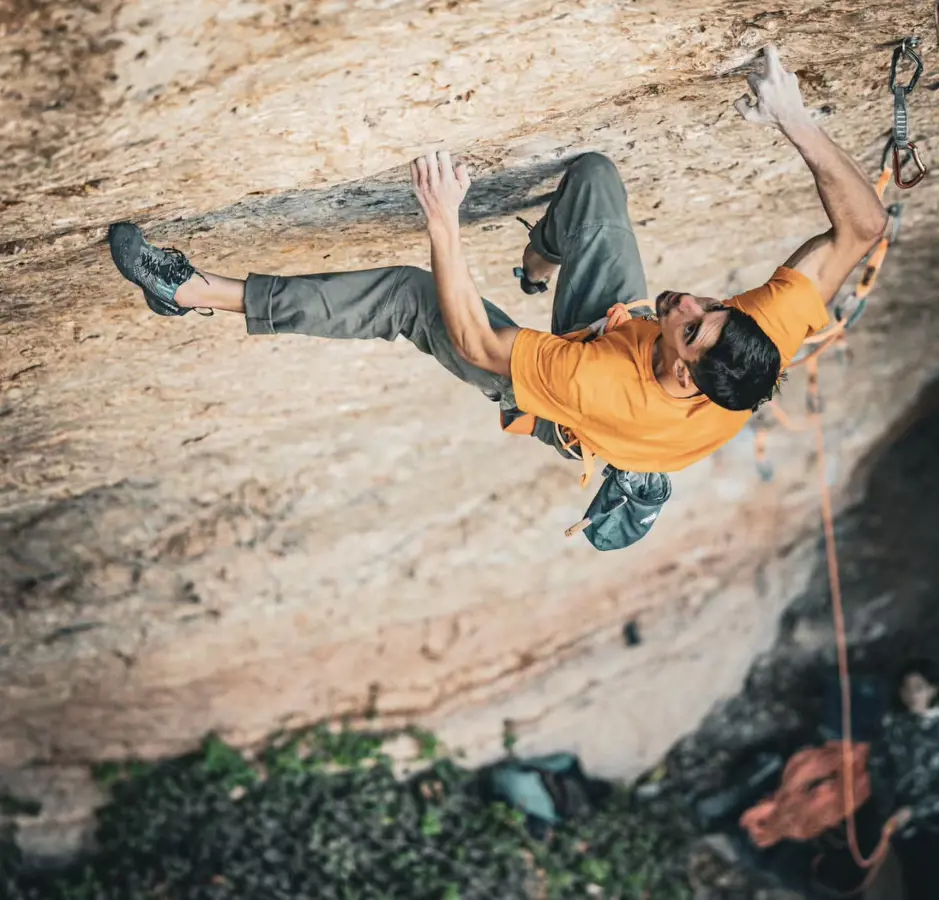
Christof Rauch, the full time worker who has done 118 boulders 8A and harder the last year, has done Viva La Evolution in Flirsch giving it a personal grade of 8B+. (c) Toby Saxton โ€Second ascent of this mystical Bernd Zangerl problem from 2002. Awesome boulder with some small and pretty sharp crimps. Getting to the boulder is quite a mission but the line, the amazing location and the view makes it worth it. Already came really close last year but afterwards I found out that I tried it from a wrong start, the real start is more on the left. Originally it was graded 8C but I think 8B+ fits better.

Great start in Japan
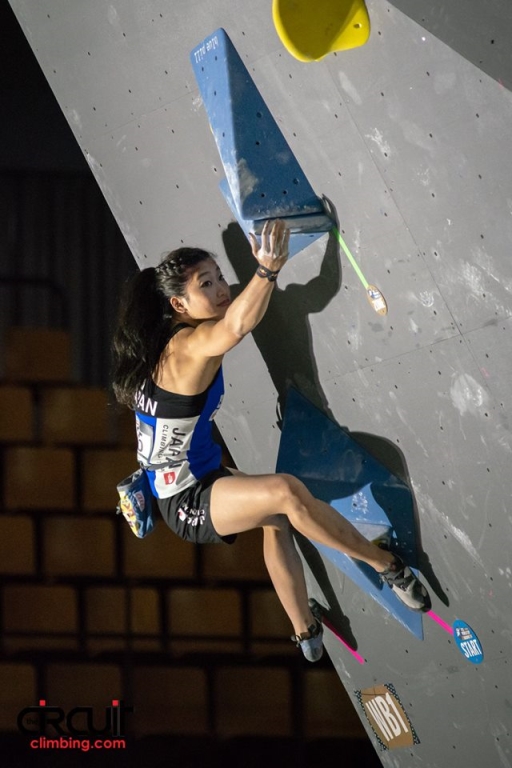
The Hachioji Bouldering World Cup started with almost perfect route setting for the female who put up a great show. No big sensations beside Oceania Mackenzie (15) from Australia, #15 in Youth World's last year, made it through. Also four Japanese and three from USA made it to the Top-20 semi. Interesting is that Speed specialist Anna Tsyganova was #25 and that the fastest non-Speed specialist, Claire Buhrfeind was #15. Complete results (c) Eddie Fowke - The Circuit Climbing, with 80 female pics in his gallery.

Two 8A's in a day by Karo Sinnhuber
Karo Sinnhuber did yesterday two 8A's in a day in Silvretta, Sucker Pain and Maribou. "Felt amazing, getting ready for Rocklands in 2 weeks!". The day before she sent another 8A, Diamonds Nuts. In 2017 had several injuries and she could not compete in the Bouldering WC. Karo has in her scorecard 60 problems from 8A to 8B. ยฉManuel Schof

8C by Alfons Dornauer
Alfons Dornauer, who has been #27 in one Boulder WC this year, has done the second ascent of Sierra Madre 8C in Zillertal. (c) Matthias Schiestl "Definitely the best and hardest line so far in Zillertal. Also my hardest ascent yet. I haven`t done many really hard problems so it`s hard to compare but I think it`s either hard 8b+ or soft 8c. Amazing work by Flo Schmalzl for cleaning and making the first ascent of such a line! Also big thanks to Matthias Schiestl for the support! It seems like Zillertal 2.0 is on!!! Feeling definitely in really good shape at the moment so it's good to see that the training pays of when it doesn't really work out in competitions."

Bolts on loose rock
Sometimes there's good crags to climb but you don't know wich is the limit of the bolts when the rock is as soft as in Cueva del Arenal, Spain. The routes' equippers noticed in their blog (in spanish) that some of the bolts meticulously placed went out due a very bad sandstone quality, luckily it happened on the very last ones meaning no ground-fall potential danger. Sandstone normaly has a compact layer outside and becomes softer inside. The glue bolts won't work if the rock is too loose. If you're bolting a route in sandstone and the bolt hole is always sandy better if you stop. Even if it is a 12mm rod with glue it won't work in the future.

Honnold and Caldwell set new Speed record of The Nose
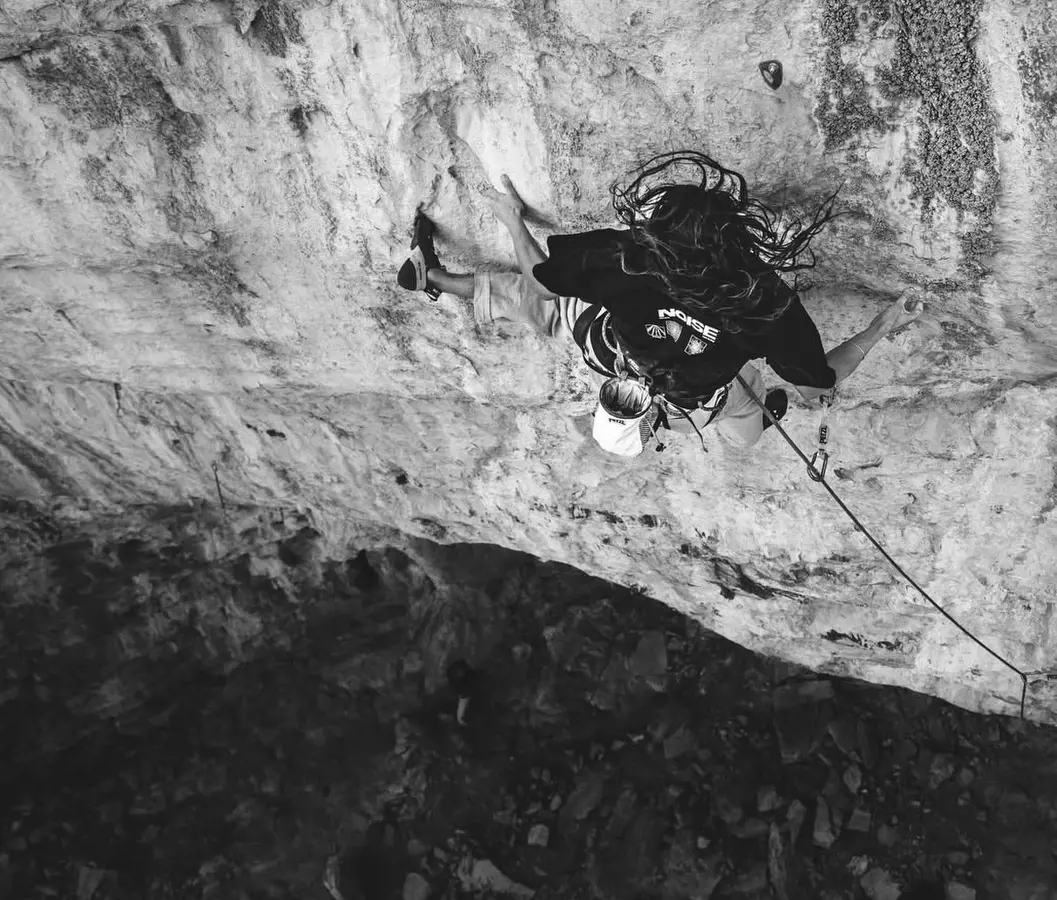
In 1958, Warren Harding, Wayne Merry and George Whitmore made the FA of the Nose after having spent 58 days on the close to 1 000 meter vertical wall. In 1975 it was repeated in a day. Yesterday, Tommy Caldwell and Alex Honnold set a new speed record by 2 hours and 10 minutes and 15 seconds. In practice, this means they simu-climbed most of it. This was Alex second speed record, the first done with Hand Florine who has set seven records.

8A by almost blind Justin Salas going for 9a
Justin Salas has about 10% of his central vision left, after his optic nerves began to atrophy at age 14. With his peripheral vision, mainly intact, he can see the overall shape, contrast and shadows. Three years ago, being 22 year old, a friend took him to the local gym and he got hooked climbing every day and after six months he started to work as a route setter. (c) William Bazargani - Salas doing Worm Turns 8A and (c) Andrew Edwards "One of the employees at the gym put a wrench in my hand and showed me the basics. I was hooked ever since. Setting is a pretty interesting process for me. Most of the time, I'll start by setting a position then figuring out how best to move into the next position. I do this mostly out of feeling and then by using what vision I have left to dial the rest in. I think I'm unique in this way because I rely so heavily on the way the climb feels and not so much on how it looks. " How do you deal with fear of not finding the last holds on a boulder? I've always felt like if I'm not scaring myself and getting out of my comfort zone, then I'm not truly progressing. That being said, I'm definitely not a reckless person. Usually, every move is carefully rehearsed and I have all of the micro-beta dialed in. Although when I'm working a highball rig and I don't have the option of feeling out the boulder on a rope, this is when I have to solely rely on my sight-guide to call holds for me. The most mentally taxing part is often the time waiting for my caller to direct me to my next position. In these moments my mind wanders and I find myself having doubts, whether it be the pain in my fingers, the height of the boulder, or how run out I am. The challenge is shutting these thoughts off and quickly refocusing to continue moving up. What is your long-term goal? I want to help usher in a new wave of elite-level adaptive climbers alongside me, who are respected just as much as the able-bodied athletes in the community. Yes, I do have grade goals, and life list lines I want to climb, but I seek to be a master of stone. I always push myself to climb routes that highlight my weaknesses, not just the ones that play to my strengths. In doing this, I feel I'm better preparing myself for the big objectives. Some of these objectives include being the first adaptive climber to send 8b+ boulder or harder, and 9a routes. Alpinism and big wall climbing are also on my list of future pursuits. I plan to continue competing; I enjoy the process of testing myself against the world's best, and aiming for the title of world champion. P.S. Would it be possible to say "special thanks to Ellie Priester? She helped me dictate this write up, while my computer was having trouble.

Ignacio Mulero repeats The Meltdown 9a in Wales
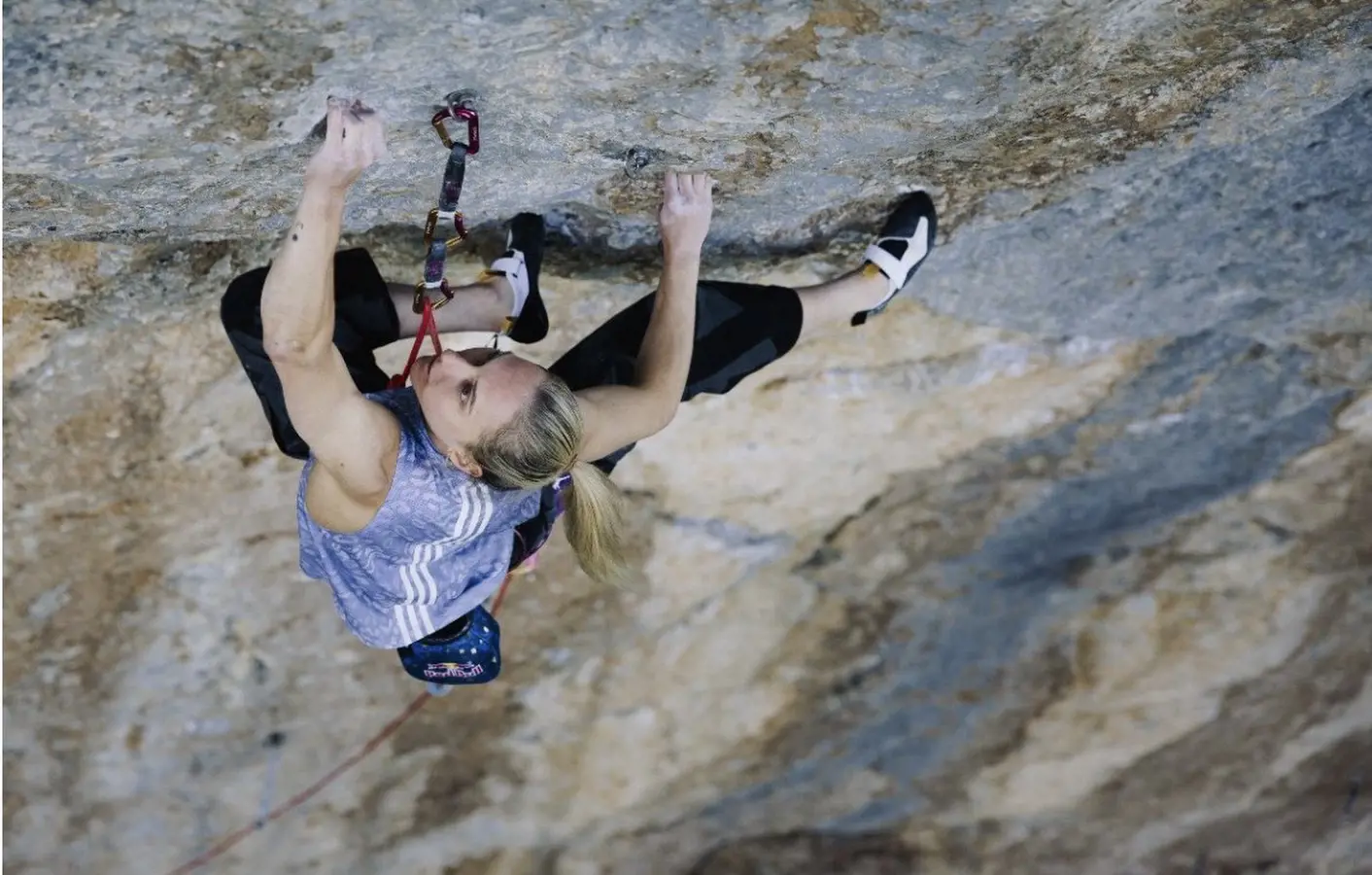
Spanish climber Ignacio Mulero has repeated the legendary The Meltdown 9a in Twll Mawr, the slate quarries in Wales. The route was bolted in 1986 by Johnny Dawes and FA'd by James McHaffie in 2012. As he tells us, he tried the route one day in 2017 and this year took him around 20 tries. Ignacio did Territorio Comanche 8c+ FA slab in La Pedriza 2 years ago and this winter he freed on gear many routes from 8b+ to 8c. ยฉTalo Martรญn

It is quite obvious that Bouldering is way ahead when it comes to interest from the climbers, media, organizers and the participants. This goes from the World Cups to the local gym comps. Basically a Lead comp takes longer time to prepare and run, have much fewer exciting moments for the spectators and put more pressure on the participants although they climb very little. Climbers want to climb and the organizers want to simplify it. What if we copy the boulderer competition concept and skip judges /and belayers) in qualifications and let the climbers run it and add the routes in Apps. You score your Top-5 routes based on 8a scoring points and all the routes in the gym are available to try. An 8a = 1 000 points and a 7a onsight = 845 points etc. To spicy it up, at least in the small gyms, you could also score by measuring the number of clips done. Nine clips on a 7a redpoint means 0.9 * 700 = 630 points. For the final, there can be new onsight routes as normal. It should be mentioned that the format has been tested out successfully in a Swedish Cup and in the near future, there will be both holds and also quick draws available on the market, which could mark the results automatically.