NEWS

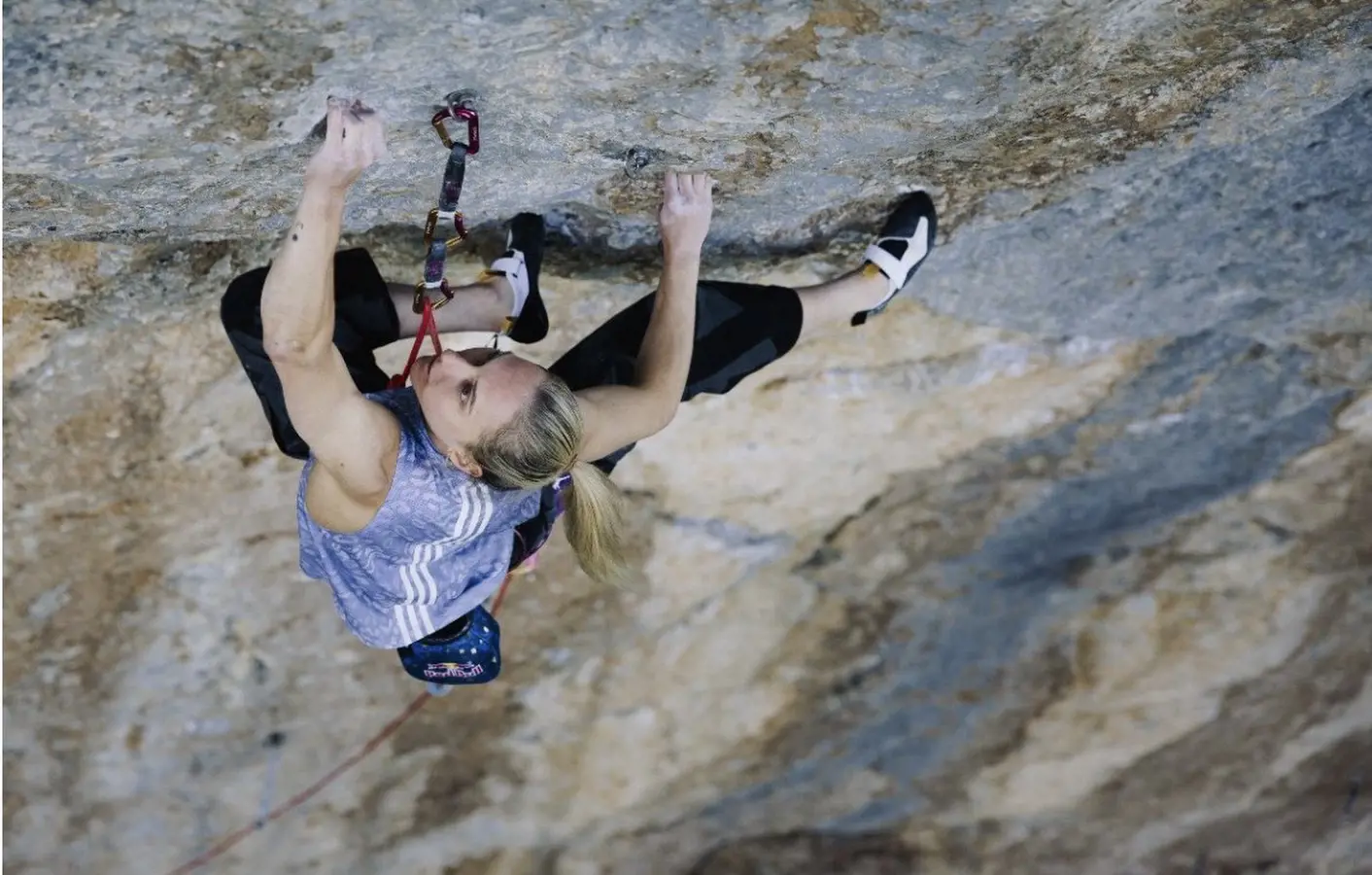
Adam Ondra still trains at least 5 hours a day
What kind of restrictions do you have in Czechia? Restrictions are relatively strict, even though the situation is less serious than some of the other countries. That means all the shops and services are closed except for groceries and gas stations. In the past weeks, it has been legal to go out for a walk in the vicinity of your home, but going climbing was a grey area. Some people stayed at home, some people kept on climbing outdoors for sure. Now life is slowly getting less restricted and most people feel like rock climbing is OK at the moment. How has this affected your life and how does a normal day look like? I am very lucky to have pretty good training conditions right at home, so the training has not been compromised too much. So the training pretty much keeps on going like normal, still training at least 5 hours a day. Otherwise it feels nice to be at home with my partner Iva, have more free time and less โ€œwork dutiesโ€ than usual. What are you missing the most? Definitely rock climbing, I will go out soon. The fact that the Olympics were postponed actually makes me get to the rock earlier. Unfortunately, it does not seem we will be allowed to travel very soon, so it will be mostly my home crag that fortunately still holds some potential. Is there anything positive that could come out of the crises for you personally and for the whole world? For those who are lucky to stay healthy and at home, I think it gave us time to stop and reflect. Climbing-wise, it might make us appreciate the climbing more no matter if we send or not that day. How has Covid-19 and the postponement of the Olympics to 2021 changed your preparation plans? For sure I will not spend the next 16 months just pulling on plastic holds and training speed. I will train smartly, working on my weaknesses including speed climbing, while setting some goals outdoors as well. The best news of the last few months is that I know how to combine all of it. I have been super motivated recently. What are your training advice to climbers stuck at home? Do the exercise, but do not overtrain yourself. If you are used to climbing a few hours every day, making deadhangs for a few hours every day is the best way to get injured. Stay healthy, exercise moderately and wait for the lockdown to get over. How do you think the crises will change the climbing scene in both the short and the long run? I think it is too early to see the real impact. There are so many factors to consider like traveling and flying around the world. There might be more โ€œlocalโ€ outdoor climbing, which is good for the environment as well. You do not have to fly across half of the world to enjoy a great climbing day. (c) Pavel Klement

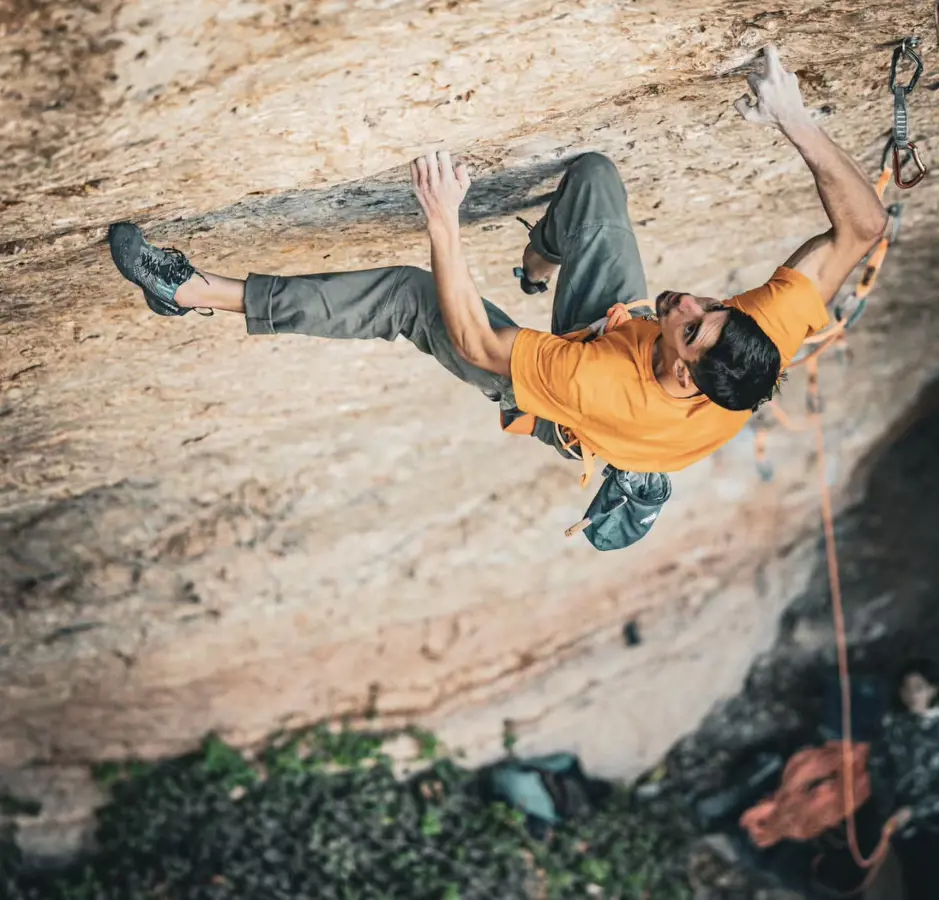
Martin Strรกnรญk has been one of the best boulderer in the world since he got the silver in the World Champion in Aviles in 2007, being 17-years-old. Outdoors, the Czech has done ten 8C's and he is #4 in the 8a ranking game. So please explain how you started climbing and what attracted you from the beginning and how this has changed over the years? My father was climber so he took me to climb since I was 5 years old. Soon I started with serious training with my brother. We trained a lot and we were successful. I would say I did not love climbing when I was a child, I just did what father said. Then, when I was 13 years old, I moved to Brno to study sports gymnasium. There I developed my talent thanks to greater training facilities and more important - climbing partners such as Tomรกลก Mrรกzek and Adam Ondra. Please explain Aviles and how that silver changed your life? Aviles was a huge surprise to me. I was lead specialist, but when I travelled to compete to, I thought, why not to start also in bouldering. I climbed without pressure. The problems fit me very well and I was also very lucky (made it to semis from 19th position, then to final from 6th place). In finals, I realized that I am on the same level with others which gave me some confidence and I was very close to win the comp in the end. Aviles changed my climbing live a lot, I understood that my body is naturally more talented for bouldering, so I changed my focus on from lead to bouldering. With my brother, we were also developing bouldering in CZ especially in an area called Bor and we totally fell in love with bouldering. How was it focusing on the Olympics? I tried, I couldnยดt give it 100%, I was ready to quit my job but financial support was not strong enough. At least I shorten my work time to 4 days, and that one day I drove to Brno to train with Adam, where we train all disciplines and where it was my only chance to train speed. I was injured my leg so training especially speed did not go as I wish. Maybe one day Parisโ€ฆ What was your plan 2020 and how did Covid change that? My plan was to focus on lead World Cups and I still hope and I am looking forward to comps late this year. I keep on training for that and now also spend some time on rocks as the situation allows. What are the restrictions in your country and how do you adapt to that? All climbing centers are closed now, so I train at home especially doing a lot of pull-ups and handboarding, I really love to train for 1 hour and every minute do some exercise, I train every day. It is hard to stay motivated but I found it fun. I try to stay positive and take this situation as the opportunity to be stronger. As I said I also spend some time bouldering on rocks, in CZ it is even recommended to be in nature, but be sure you are alone. (The last weeks he has made the FA of one 8B+ and two 8B's).

The start and development of sport climbing
1978 - Drilling bolts on rappell Jacques Nosley drilled bolts manually on Dingomaniaque, 6c+ in Verdon, as he was rappelling down in 1978. Some define this as the very start of the sport climbing era. Previously, hand-drilled bolts had been placed but only on lead. The rappelling created a big controversy in the community but nevertheless the sport climbing ethics were quickly spread in Europe and came to USA in 1983. Picture from the French magazine, Alpinisme in 1979, the Dingomaniaque! Other important development which had impact of the start of sportclimbing 1910 The first Climbing Carabiner 1927 The first rock drill and expansion bolts 1955 John Gill Introduces Chalk 1974 First indoor gym in Bolzano 1970s Kurt Albert introduced red point 1975 First sticky shoe on the market, (EB and Asolo etc) 1985 1st official competition, Bardonecchia 1980s Chak is getting popular 1991 The belay device GriGri 1990s The Crash Pad commercialized 2021 Olympic Sport in Tokyo

Climbing gyms in South Korea open up with masks
Jongkuk Seo, father of Chaehyeon (15) who won the Lead World Cup last year, reports that his climbing gym, as well as most gyms in South Korea, have opened up and there is no restriction how many can enter. "Official restriction is if we open gyms; we have to wear mask, use hand sanitizer when visiting gyms and write down a visitor book. In Korea, thereโ€™s no restriction for going rockclimbing so we boulder also outdoors nowadays! Whenever we have to close the gym, we go out to the mountain."

IFSC has presented their 2019 annual report and all the figures show a great increase since 2018.

Silver Lining 8C FA by Andy Gullsten
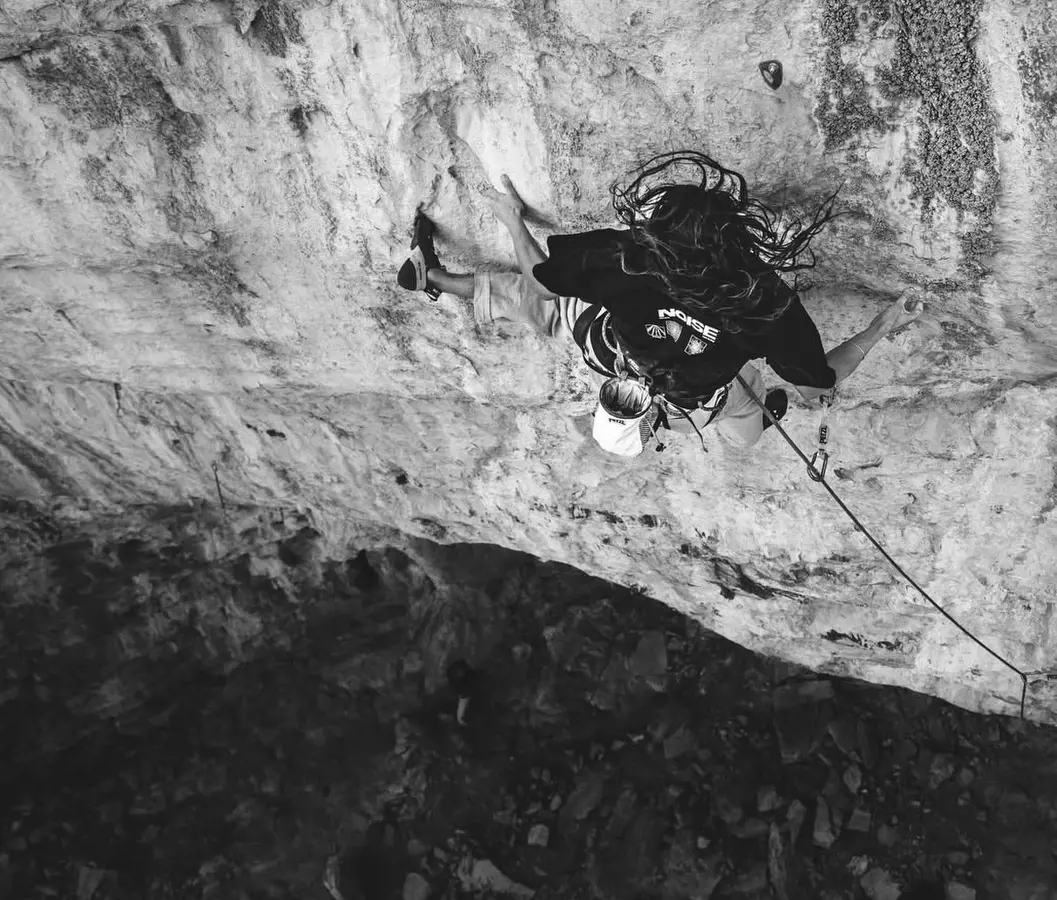
Andy Gullsten, who previously has done some 25 boulders 8B+ and 8C, reports on Insta that he has done the FA of Silver Lining 8C in Hyvinkรครค some 45 min from Helsinki in Finland. (c) Joonas Sailaranta Andy says it took him six proper sessions to do the projects since some 20 years and that it is his proudest FA. All gyms are closed in Finland but there are no real outdoor restrictions. "People have been advised to keep distance and to avoid crowded areas. There are still few projects around and I am sure more to be found."

For 16 years in a row we have made a poll asking, Best climbing shoes? Based on 1 600+ unique votes we can see that it is the Italian shoe makers who totally dominate. In comparison to last year, Scarpa has strengthen their role as runner up after La Sportiva. 42 % La Sportiva (43 % in 2019) 32 % Scarpa (28 %) 08 % Tenaya (8 %) 08 % Five Ten (10 %) 10 % Other brands (12 %) Most mentioned are Ocun, Boreal