NEWS

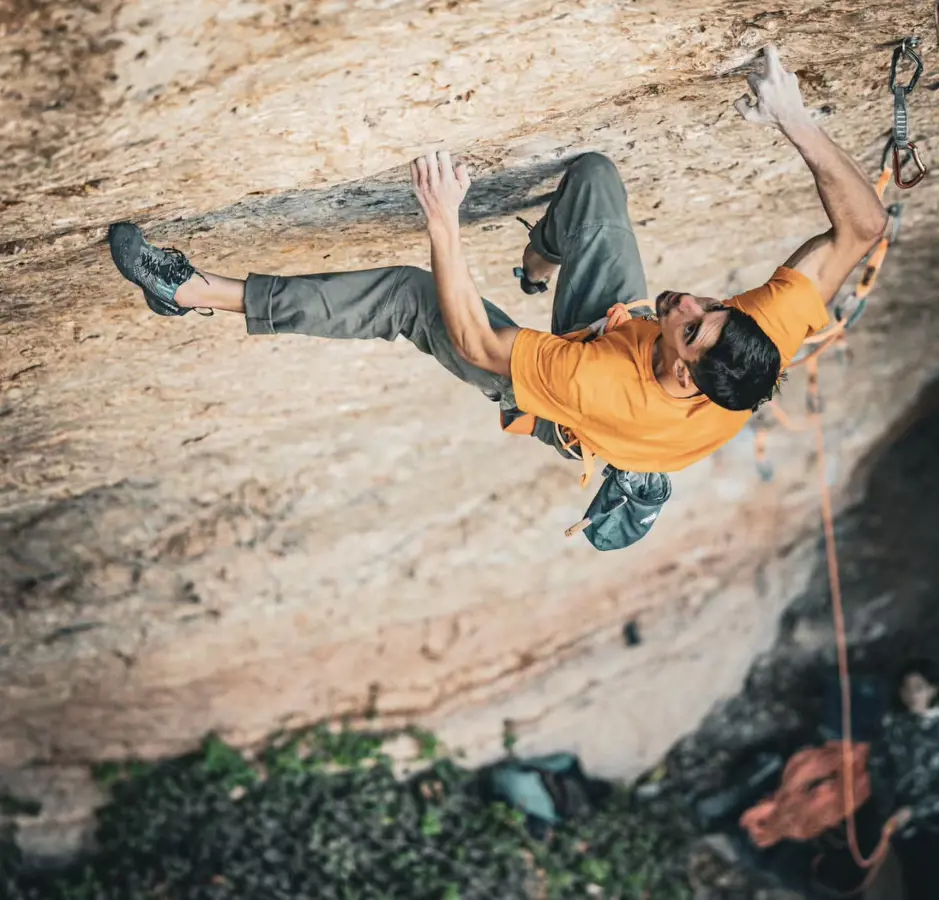
La Sportiva Nebula Shirt
14 December 2020

La Sportiva Nebula Shirt

Advertorial: The new winter climbing jacket has been realised in the form of a padded shirt. The insulation is out of recycled polyester, the jacket is built with our VAPOVENTTM construction for more breathability. More info at Lasportiva

+ CF button closure
+ Two chest pockets
+ Reinforced shoulders and elbows
+ Recycled insulation

Tech Info
Fit: Comfort
Main: (WSM01) 98% Polyester, 2% Elastane Insert: (DW10) 87% Polyamide, 13% Elastane lining: (MSH28) 75% Polyester Recycled, 25% Polyester Sizes: S/XXL (EU) - XS/XL (USA)
Weight: 615g (L)

As the Asia Combined Championship was cancelled last weekend, Jongwon Chon and Chaehyon Seo have qualified to the Tokyo Olympics 2021 based on their results in the World Championships last year. The coming weekend, it will be decided who will qualify from Africa as well as from Oceania. If these two events also will be cancelled, Harrison Campbell, Oceania Mackenzie, Curtis Calrin and Rachelle De Charmoy will make it Tokyo.

14 December 2020

Gioia 8C? by Niky Ceria

Niky Ceria reports on Insta that he has done the fourth ascent of Gioia 8C? in Varazze. "Since kneebar didn't suit my interest and the original beta didnโ€™t fit my skills, I took more time and I finally figured out a different method which came out being less skin dependent and slightly more powerful."

Here is how the boulder was presented in 2015 on 8a. "It was set up by Christian Core, the former World and European Boulder Champion who twice has won the World Cup, as an 8C in 2008. Later, Adam Ondra and Nalle Hukkataival repeated Gioia and gave it the personal grades of 8C+ and 8C/+, respectively. These ascents established Gioia as one of the first upgraded hardcore boulders in the world. During the years, many more have tried to repeat it with no success and many believe that Gioia is the first 8C+ in the world. What is not well known is that there are five glued holds on Gioia. A week ago, Dave Graham and Daniel Woods started to work on it and Dave actually found a new kneebar making the crux possible easier and later, a foothold broke, making the crux on the 8A+ stand version significantly easier. The next day, Christian glued it back trying to make the foothold as in the original shape and size. This made the Burrow Files publish a critical article and the controversy was out. Christian is very sorry for this as he just wanted to preserve Gioia in its original shape as the boulder and it's difficulty is important in the history of bouldering. Picture is from Core's FA."

Small holds on colourful volumes is the future
During the last years, we have seen a development where the route setters use more colourful volumes, meaning that the line is better shown for the spectators. On the other hand, such volume routes are more condition and friction dependent, which can suddenly make a route more or less difficult. Furthermore, judging gets more difficult as there are so many more ways to use the volumes at the same time as it might slow up the climbers not knowing where to exactly grab the macros.

The solution for this is what we often saw in Moscow, smaller contrast holds on the colourful volumes. Jan Zbranek, route setters in Moscow as well as in Tokyo 2021, explain the possible future.

"I don't think this is an innovation. Many setters do that. I believe the contrast colours could help the judges and also the spectators to understand the exact position and size of the holds. Also for climbers, it can be helpful. In Moscow, we decided to use this a lot, because we didn't have too many bigger holds to play with, so the volumes and little holds were helping us to create them. A few years ago I was asked by broadcast producers to not set only one colour routes. They said the change of colour helps people watching the TV at home, to get a better understanding of whats going on. And since then I try to make every comp little more colourful.

To make Lead climbing more attractive for the public and also for the climbers, route setters are often forced to use big holds and volumes. Many of these holds were designed for bouldering, where the level of risk using them, is much lower due to multiple tries, constant cleaning and general natural of the sport. When using more friction dependent holds on Lead, route setters are taking a huge risk, that the level in these parts of the route can dramatically change, when the condition for climbers change. Variable humidity and temperature can effect most of the outdoor competition, and also some indoor ones, where air conditioning is used (during setting is usually off). Saying that using more holds less dependent on friction weather and more about climbers power, can bring sport climbing closer to outdoor climbing again. The downside is, minimizing risk has to bring the intensity of the route up. Something I forgot to adapt in Moscow combined finals.

Don't get me wrong, I don't want to get back to crimp climbing. This has so many disadvantages regarding the health of the athletes. I think the key is to search for balance between tricky volume and macro holds climbing and add some moves on holds you can fight on the same way as you do on the rock. Different solutions of some sequences can be fun for spectators, but it is a little tricky to do a fair topo. So we have to be very careful about that. Competition route setters are using this "hold reading technique" on the big competition, where achieving the exact movement of grade is essential. To attach little holds onto the big ones we use screws. Many times our creativity causes damage on those PU holds and fibreglass volumes. So for me, I would not recommend this style of setting for commercial gyms. Here we generally try to screw little holds only onto the ply-wood walls and volumes. It is always about finding a compromise, between forcing our route setting idea and keeping the gym look nice for the future."


One problem with screw-on holds is that this technique can only be done limited times. One possible solution is to make the volumes in a non-friction colour and then attach a small hold, in a contrast colour, with a bolt. Jan Zbranek agrees on that idea so hopefully, we could see that both in the Olympics and in the gums on a larger scale.

Polaris 8C FA by Matt Fultz: New #1
Matt Fultz has done the FA of Polaris 8C in Reynold's Creek. Video on his Insta. The 29-year-old is defining the concept of being a late bloomer. For over ten years, he has had a steady slow progress which has speeded up the last 18 months when he did his first 8C. Just in 2020, Matt has done ten 8C and 8C+ and he is the new 8a ranking game #1. (c) Mike McClure More info to come.

As it stands, the Boulder qualification and semi, with 5 min max, put a great focus on who is the best doing a quick onsight of the problems. During some 45 seconds, the athletes are supposed to run from the isolation, find their Boulder, identify the starting holds and find out beta sequences as well the zone and top out strategy. In the end, it is about doing fast onsights, although called flashes, which has nothing in common with flashing boulders outside.

In the final, with 4 min max, the athletes have already seen the boulders together and have also shared ideas, meaning they can start climbing quicker.

The easiest solution for having the same format in all rounds, and to save time, is to simply show the boulders with topo/pictures in the isolation. This will also more promote the best and strongest boulderers and not the ones who quickest can find the sequences. Using the same format in all three rounds will also mean that the athletes interact more creating a more friendly isolation where the last guys in will spend up to one hour less time.

In practice, topos/pictures in the isolation will also mean that the setters can make the boulders harder and that we will see more interaction among the athletes in the รญsolation.

Ibbertsons comments first 9a (16) and first 8c (45)
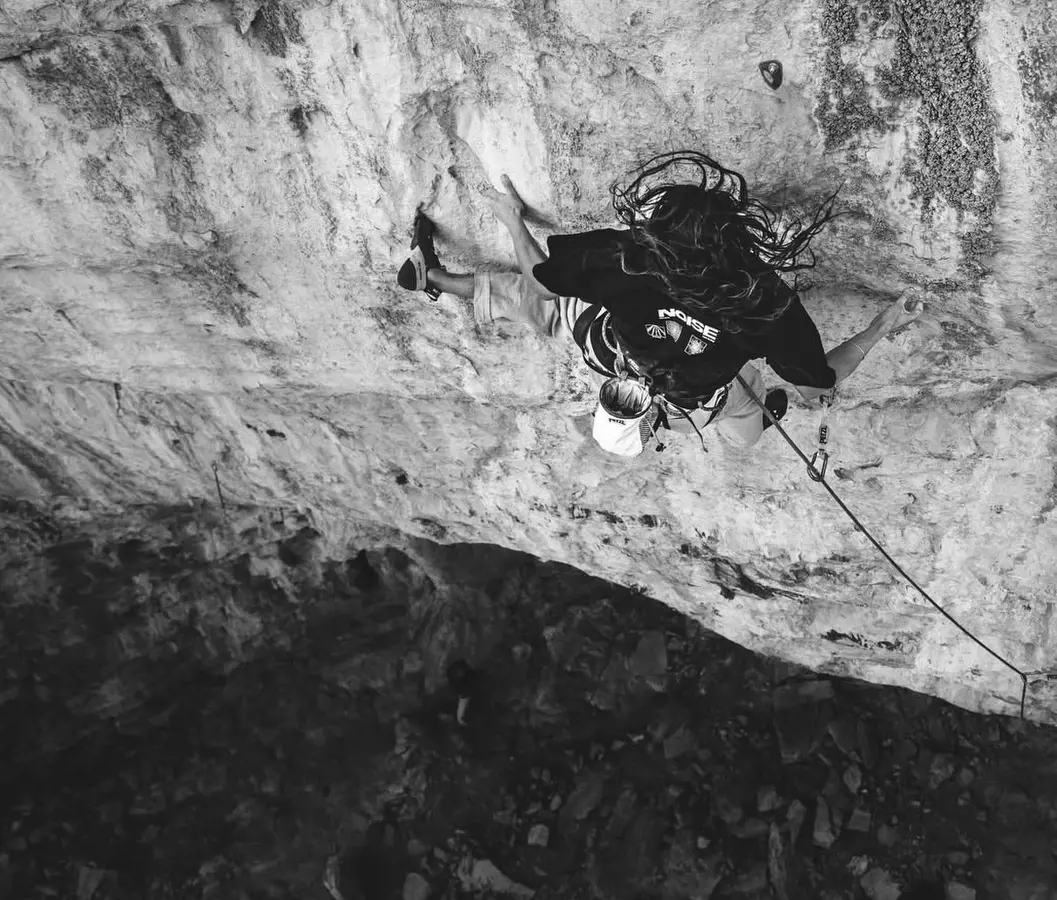
Josh Ibbertson has just done Rainshadow 9a at Malham Cave where also his father James did his first 8c Bat route. "The whole process of climbing Rainshadow has been challenging but great. I've really enjoyed heading out climbing with my Dad, even on cold damp days, and working on the route with Toby, sharing beta and encouragement. Iโ€™m really looking forward to getting back into training and grit bouldering over the winter with an eye to get on some of Steveโ€™s other test pieces at Malham and Kilnsey in the spring."

"When my kids were younger I had much less time to climb for myself: much of my time was taken up coaching juniors and belaying! Now my sons are older they can belay me and we train and climb together which is great. So over the last couple of years, I've climbed and trained much more and am making real gains." (c) Henry Giles