
NEWS
9 December 2021
Google Trends: Sharma and Ondra on top
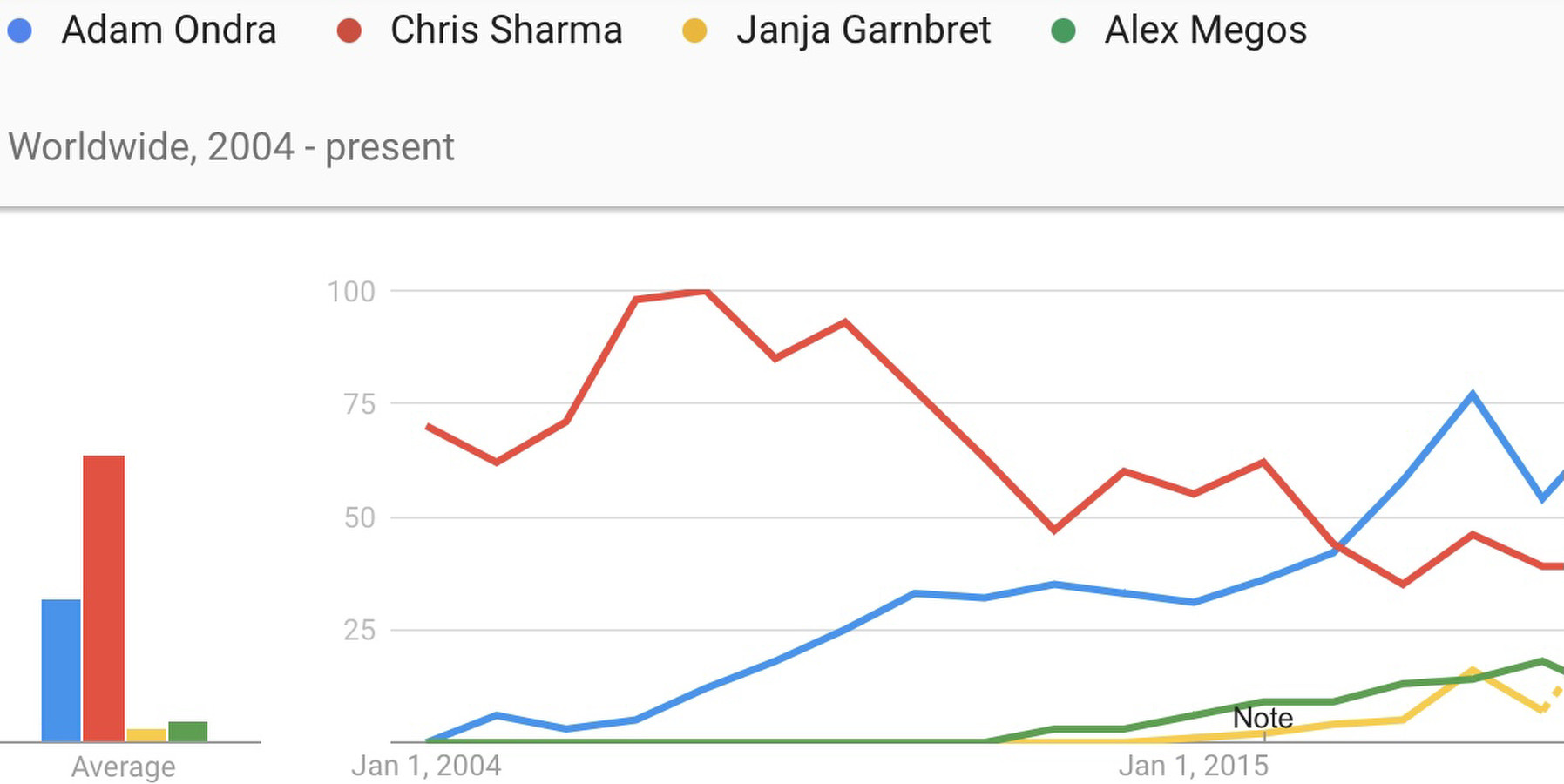
Google Trends is a simple tool where you can compare Google searches. This diagram compares the searches since 2004 for the names Chris Sharma, Adam Ondra, Janja Garnbret and Alex Megos. Surprisingly, the old numbers for Chris Sharma were higher than for the Olympians and also looking at the last three months, only the search for the name Adam Ondra is more popular.
It should be mentioned that if Alex Honnold's number would have been included in the diagram, all the other percentages, including the Olympics, would have been below 17 %. If we would have made a comparison based on the last 90 days and would have compared everyone to Honnold's 100 %, Ondra had been runner up with some 33 %, followed by Sharma 25 %, Garnbret 15 % and Megos 5 %. Note that these numbers as well as the presented diagrams estimations on the athletes' popularity on Google. The diagrams actually differ a bit based on working on a mobile or a computer.
It should be mentioned that if Alex Honnold's number would have been included in the diagram, all the other percentages, including the Olympics, would have been below 17 %. If we would have made a comparison based on the last 90 days and would have compared everyone to Honnold's 100 %, Ondra had been runner up with some 33 %, followed by Sharma 25 %, Garnbret 15 % and Megos 5 %. Note that these numbers as well as the presented diagrams estimations on the athletes' popularity on Google. The diagrams actually differ a bit based on working on a mobile or a computer.
Read more
2
09 December 2021
The big risks with Combined points in the Olympics
A working group in IFSC has suggested that the one getting the highest point sum in Bouldering and Lead will be rewarded the Combined gold in Paris 2024. The maximum score will be 200 points, based on getting 25 for a Top in Bouldering and 100 points for topping the Lead route. This sounds good in theory but there are big risks for unfairness, due to the lack of consistency in the route setting, as well as no drama on the Lead route.
One good (bad) example of this is the Olympic male final where the seven finalists only made a total of seven tops. If combined points would have been given out in Tokyo, the bouldering results would have had very little impact overall and the medal ranking would have been the same as the ranking in Lead; Schubert, Ondra and Duffy.
If we look at the four Boulder World Cups in 2021, we see the opposite problem. The difference average point-scoring in between #1 and #6 is too big, i.e. around 80 respectively 20 points. History shows that routes and boulders often are too hard or too easy. This could mean that we would have unfair Combined results in Paris. Another problem could be that there could be little drama and excitement in the Lead final as the medals more or less could already have been set after the Boulder event. Below is the female results in Meiringen in 2021 converted to an estimation of points.
1. Janja Garnbret 99.7 points
2. Oriane Bertone 59.78 points
3. Natalia Grossman 59.67 points
4. Akiyo Noguchi 14.79 points
In theory, Noguchi could still get a medal and Janja could lose the gold. However, by looking at the statistics, we can that in practice, the only excitement in the Lead event would have been to see who would get the silver. Remember that the very much criticised, and totally opposite ranking method in Tokyo, at least created extreme drama to the very last climber out.
One good (bad) example of this is the Olympic male final where the seven finalists only made a total of seven tops. If combined points would have been given out in Tokyo, the bouldering results would have had very little impact overall and the medal ranking would have been the same as the ranking in Lead; Schubert, Ondra and Duffy.
If we look at the four Boulder World Cups in 2021, we see the opposite problem. The difference average point-scoring in between #1 and #6 is too big, i.e. around 80 respectively 20 points. History shows that routes and boulders often are too hard or too easy. This could mean that we would have unfair Combined results in Paris. Another problem could be that there could be little drama and excitement in the Lead final as the medals more or less could already have been set after the Boulder event. Below is the female results in Meiringen in 2021 converted to an estimation of points.
1. Janja Garnbret 99.7 points
2. Oriane Bertone 59.78 points
3. Natalia Grossman 59.67 points
4. Akiyo Noguchi 14.79 points
In theory, Noguchi could still get a medal and Janja could lose the gold. However, by looking at the statistics, we can that in practice, the only excitement in the Lead event would have been to see who would get the silver. Remember that the very much criticised, and totally opposite ranking method in Tokyo, at least created extreme drama to the very last climber out.
Read more
0
39 December 2021
Ondra - Olympic preparation #2: Speed
Adam Ondra Beyond Focus 2/4 and his Olympic preparation. In the great video, Ondra says that Speed training is better than expected. Then after the Olympics he said this was not really the truth but something he had to tell himself to keep the psyche high.
Read more
4
08 December 2021
Elias Iagnemma does Power of Now 8B+ (C)
Read more
3
08 December 2021
Vantablack 8B by Alex Johnson
Alex Johnson, who won two World Cups in 2008 and 2010, has done Vantablack (8B) in Red Rock (NV). "2 sessions, amazing rock. Tenuous moves down low on a rail to a sick big move to a crimp off a heel, desperado grovel topout. Really nice addition to the zone. Rail trav was def crux for me haha. HYPE!"Bree Robles
How was that super quick process?
I feel like it’s already been a super great season, and I haven’t even done much yet… I’ve been getting out a bunch with Allison Vest and we climb and project amazingly well together. She tries super fucking hard and it’s so inspiring and has encouraged me to dig deeper and activate that try-hard grit.
That’s what I had to do with Vanta. My first session on it was solo and I worked it for hours refining beta but it was still too hot during the day. By the time the sun went down and temps got better, I was wrecked. In my next session on it, I had the top dialed, but the bottom moves still felt so hard. The bottom is super tenuous and finicky. I gave several failed redpoint attempts from the bottom. Then one time I was able to make it through the bottom, stuck the big move outright, and clawed my way through the topout. It was a moment of blackout focus and maximum effort.
Is it not about time to go for your first 8B+?
I’d love to try some 8B+’s! Allison and I have got our eyes on a few, and seeing Brooke just take down Trieste is super inspiring, too.
In 2019, Alex did a comeback on the competition circuit trying to make it to the Olympics and started off by being #7 in Meiringen. Interesting is that 2021 is her best year outdoors having done two out of three 8B's.
How was that super quick process?
I feel like it’s already been a super great season, and I haven’t even done much yet… I’ve been getting out a bunch with Allison Vest and we climb and project amazingly well together. She tries super fucking hard and it’s so inspiring and has encouraged me to dig deeper and activate that try-hard grit.
That’s what I had to do with Vanta. My first session on it was solo and I worked it for hours refining beta but it was still too hot during the day. By the time the sun went down and temps got better, I was wrecked. In my next session on it, I had the top dialed, but the bottom moves still felt so hard. The bottom is super tenuous and finicky. I gave several failed redpoint attempts from the bottom. Then one time I was able to make it through the bottom, stuck the big move outright, and clawed my way through the topout. It was a moment of blackout focus and maximum effort.
Is it not about time to go for your first 8B+?
I’d love to try some 8B+’s! Allison and I have got our eyes on a few, and seeing Brooke just take down Trieste is super inspiring, too.
In 2019, Alex did a comeback on the competition circuit trying to make it to the Olympics and started off by being #7 in Meiringen. Interesting is that 2021 is her best year outdoors having done two out of three 8B's.
Read more
2
07 December 2021
New feature: Log your repeats
We all have a home crag where we re-climb the same routes to warm up, cool down or for a quick fitness-check. Many of you have approached us with the request to also be able to log these „repeats”, ideally without cluttering your logbook. We have deployed a first version of this feature.
This is how you log a repeat:
- When you choose „Redpoint”, „Go” or „Toprope” as style, the repeat option appears just below.
- Check the checkbox down and left („Repeat”).
- Go to „Ascents” and hit the checkbox „Show repeat ascents” to show all ascents, regardless of whether it is a repeat or not .
This is good to know:
Repeats do not enter your score in the ranking game. Currently, that means that they are not part of your statistics. When the stats section gets its facelift, repeats will also get their place there.
This is how you log a repeat:
- When you choose „Redpoint”, „Go” or „Toprope” as style, the repeat option appears just below.
- Check the checkbox down and left („Repeat”).
- Go to „Ascents” and hit the checkbox „Show repeat ascents” to show all ascents, regardless of whether it is a repeat or not .
This is good to know:
Repeats do not enter your score in the ranking game. Currently, that means that they are not part of your statistics. When the stats section gets its facelift, repeats will also get their place there.
Read more
6
07 December 2021
Caprez and Lachat present WoGü
Read more
5
07 December 2021
Red Letter Day 7C+ by Eric Zschiesche (61)
Eric Zschiesche has done Red Letter Day (7C+) in Little Cottonwood. Spread over a 2 month period, comprised of 9 different sessions, Zschiesche doggedly kept after it and in practice he actually sent it twice.
The 61-year-old has been actively bouldering since 1977, and his love and passion for the activity is as strong today as at any point in the past. Though the periods of rest between challenging bouldering sessions has increased with time, his overall strength as a boulderer has (thus far) remained largely constant through the decades. Back in 2017, he did his hardest grade-wise, Tiny 8A. This is not considering numerous highballs before and after the invention of bouldering pads. As far as training Zschiesche principally boulderers outdoors, though he doesn't consider it training. : ) He also has a home bouldering cave and a great bouldering gym The Front in Ogden, Utah that he occasions for some plastic homework.
The 61-year-old has been actively bouldering since 1977, and his love and passion for the activity is as strong today as at any point in the past. Though the periods of rest between challenging bouldering sessions has increased with time, his overall strength as a boulderer has (thus far) remained largely constant through the decades. Back in 2017, he did his hardest grade-wise, Tiny 8A. This is not considering numerous highballs before and after the invention of bouldering pads. As far as training Zschiesche principally boulderers outdoors, though he doesn't consider it training. : ) He also has a home bouldering cave and a great bouldering gym The Front in Ogden, Utah that he occasions for some plastic homework.
Read more
33
157 December 2021
Brooke Raboutou does Trieste 8B+
Brooke Raboutou has done her third 8B+, Trieste in Red Rock (NV). It was put up by Paul Robinson and Daniel Woods has later added a sitstart that others have called 8C. Interesting is that Brooke has only needed max three sessions for all her three 8B+. Her Insta starts with, "Damn, it feels good to stand on top of a boulder that pushed my physical and mental limits a year ago. Coming back, I felt much stronger and was able to let go of expectations and lighten the pressure I put on myself the previous trip. "
Read more
6
06 December 2021
Bertle: There will be no climbing on a dead planet
Pirmin Bertle, one of the best rock climbers in the world, has for many years adapted his families to be more environmentally friendly. Five years ago, his family took the boat to South America where they spent two years. In the picture, he is doing Latin Americas first 9a+, Le vent nous porteraat Socaire, Northern Chile on 3600m altitude. We asked him for some comments in regards to the environment and what climbers can do to follow up Alex Megos comments. Here are Pirmin's somewhat radical comments.
"Thank you, Alex! I was profoundly happy to read about the pro-environmental efforts of one of the leading athletes of our sport here on 8a.nu. This is a good sign – on a road that currently still leads straight into the desert.
Some years ago, statements like his would have been ripped into pieces by people sitting in the economy class, pushing the uneaten half of their beef steak aside, swallowing their last mouthful with a tasty drink, wearing brand new special rock fashion with their brand-new gear in the belly of the plane, looking forward to a week in a nice wellness-apartment in some far-off oversea place, targeting their first 8a and posting all this with a big and proud selfie-smile on Insta. They would have ripped the pro-environmental efforts into pieces because they would have felt on the winning side of history. Because they were acting all human, all normal, all reasonable, arguing in some of the following ways:
“Beef is important for my amino acids of animal origin, not to eat too much is crucial for my weight, economy class is essential for my bank account. Flying is the only way to cross an ocean for my restricted spare time and alcohol makes it a lot easier to relax (and is fun). Special functional climbing clothes both enhance my performance and the number of hearts on Insta. Alpine club functionaries told me that brand-new gear is without alternatives to my security. The nice apartment is the best way to regenerate between hard climbing days. Sending 8a is one of my main goals in life and the Insta post along with the shit storm comment below the “crazy-Greta-vegan-guy” feels suitable to hide the deep inner feeling of being locked and lost in a tiny capsule of total artificiality, coated in strange, conditioned air, together with obese and fearsome people, miles above the sea – for endless hours.
A situation like this – as exaggerated as I chose it to be – is only bearable with bone-hard rationality and a strong ego (otherwise we would get immediately drowned in the intuitive reality of the highly desperate ecocide society we created and are trying to live in). And this is the main problem about it all: We get told and thus tell ourselves repeatedly that it is all about us. Our health, our wealth, our wellness and our happiness, our performance, and our security. But it isn’t. We’ll never emancipate from the ecosystem.
Life on earth is one. One organism. We are the ecosystem. An organ of it. It's perhaps the most sophisticated flower (and definitely the most poisonous one.) An incredible miracle. Incapable to ever fully understand ourselves. And we can’t commit ecocide without committing suicide. (And by the way: total genocide.) There’ll be nothing of our regards on a dead planet. Neither will there be climbing. Thus, it is time to act. Or rather: Not to act that much anymore. To be precise: Act about ten times less.
Ten times less mobility. Ten times less food consumption of animal origin. Ten times fewer square meters per person. Ten times less web traffic. Ten times fewer things. Ten times less clinging to the material dimensions.
And that is, where the potential of climbing enters the game. Not as an essential part of the solution – but as a part of the great transformation we face. Because we climbers have more of something that many others around us are lacking: Psychological strength, mental health, physical fitness, relative consciousness for what nature is, a cosmopolitan touch, fewer economic dependencies and imperatives, high self-organization, and lifestyle-creativity. And last but not least: we have a playground to protect.
And all of the above are crucial to live and fulfil the change everyone is talking about, but no one really starts with – mostly out of weakness, fear and inner poverty. We can’t leash hold on the materialistic level without enriching the psychological, physical, social, cultural, religious, or spiritual one. Climbing offers a lot on these levels – wouldn’t there be a problem with mobility. But it can be solved and even individual performance – a rather useless concept to collective change – gets enhanced when you alleviate and lighten your life and your ecological footprint. That’s what I have been trying for years now – but don’t get me wrong: it isn’t my story. It is the story that chose me as a part-time protagonist. As I will continue to quit high-end climbing, as many of you as possible will have to carry on with this!
So, I’ll keep it short: I grew up in quite a close contact with nature but really began to intensify this bond in my early twenties when extended low budget climbing trips around Europe meant for us sleeping up to 100 nights per year under the stars, cooking on the fire, taking baths only in winter cold Spanish rivers, moving few and hitchhiking the rest, flying three times in fifteen years, carrying our water sometimes over kilometres, eating only vegetarian (as we couldn’t fridge anything). We thought we were chasing hard routes and a good and easy time, but what actually happened was, that we got profoundly melted into nature and deeply soaked our souls with it.
True ecologic motivation thus emerged increasingly – simply because it could without getting in conflict with our egos. As our ecologic footprint during traveling was already close to “one planet”, we now only had to transfer this knowledge to the all-day life. And found the yurt living, video. It was one of the best and most intense times of our lives, not only because our second child was born there. I lost 10kg, worked more physically, got more resilient and thus much stronger in climbing.
The oncoming 2 years overseas travelling period was ecologically more intense but still decelerated and eased my urge to see the world , video. Especially for sport climbing, there is no better place than Europe.
(And it was by then – up from 2015 – that I understood: the most interesting voyages are those to the inside of you. They don’t cause any environmental damage, take only hours and leave much deeper traces and offer greater revelations than any holiday ever could.) We moved to Germany and 2019 finally found a possibility to live in yurts again ( or jurte.de). Compared to the average German four-headed household we needed only 1/5 of heating, 1/10 of electricity and 1/25 of water. And I freed my own climbing almost entirely from carbon emissions, choosing close by crags as the Schneiderloch in Frankenjura (13km by e-bike). The rest went similar as before but even more intense: one year without cow products, circular economy around our yurts with chicken, sheep, goats and a veggie garden. For me, nothing of this was hard or carrying a taste of denial. Beauty, calmness of the mind, the sound of raindrops on the tent surface and the stars in the dome light were leading our way.
For me it would have been okay to stop here and always live like this, but life had already decided to lead us further. Into the house, the community, and the yurt enterprise we are about to enter in. Fully. () So deeply that despite my climbing shape even without climbing still feels great, I don’t really need it on an elite level anymore. My ego hopefully steps back for longer or ever, permaculture and yurt construction not only keep my sane, but don’t really allow an extra waste of energy and time. High end climbing has done its job to my path in life. I will never quit the sport itself, as I can see the first sectors from our house, and as I will always love it. But once humans will have realized that we are about to end the 200-years-fossil-energy-wave (or decide that it may set an end to our existence) we will again need most of our energy for life, work and survival.
Climbing and climbers will have offered their skills and strengths to this great transformation and participated in preserving a living planet – which will logically result in less (importance of) climbing. Or they will not, helping to pave the road into the desert. There’ll be no climbing on a dead planet. Be aware of that in every moment of your life – not only when you plan your next short-term overseas climbing trip."
"Thank you, Alex! I was profoundly happy to read about the pro-environmental efforts of one of the leading athletes of our sport here on 8a.nu. This is a good sign – on a road that currently still leads straight into the desert.
Some years ago, statements like his would have been ripped into pieces by people sitting in the economy class, pushing the uneaten half of their beef steak aside, swallowing their last mouthful with a tasty drink, wearing brand new special rock fashion with their brand-new gear in the belly of the plane, looking forward to a week in a nice wellness-apartment in some far-off oversea place, targeting their first 8a and posting all this with a big and proud selfie-smile on Insta. They would have ripped the pro-environmental efforts into pieces because they would have felt on the winning side of history. Because they were acting all human, all normal, all reasonable, arguing in some of the following ways:
“Beef is important for my amino acids of animal origin, not to eat too much is crucial for my weight, economy class is essential for my bank account. Flying is the only way to cross an ocean for my restricted spare time and alcohol makes it a lot easier to relax (and is fun). Special functional climbing clothes both enhance my performance and the number of hearts on Insta. Alpine club functionaries told me that brand-new gear is without alternatives to my security. The nice apartment is the best way to regenerate between hard climbing days. Sending 8a is one of my main goals in life and the Insta post along with the shit storm comment below the “crazy-Greta-vegan-guy” feels suitable to hide the deep inner feeling of being locked and lost in a tiny capsule of total artificiality, coated in strange, conditioned air, together with obese and fearsome people, miles above the sea – for endless hours.
A situation like this – as exaggerated as I chose it to be – is only bearable with bone-hard rationality and a strong ego (otherwise we would get immediately drowned in the intuitive reality of the highly desperate ecocide society we created and are trying to live in). And this is the main problem about it all: We get told and thus tell ourselves repeatedly that it is all about us. Our health, our wealth, our wellness and our happiness, our performance, and our security. But it isn’t. We’ll never emancipate from the ecosystem.
Life on earth is one. One organism. We are the ecosystem. An organ of it. It's perhaps the most sophisticated flower (and definitely the most poisonous one.) An incredible miracle. Incapable to ever fully understand ourselves. And we can’t commit ecocide without committing suicide. (And by the way: total genocide.) There’ll be nothing of our regards on a dead planet. Neither will there be climbing. Thus, it is time to act. Or rather: Not to act that much anymore. To be precise: Act about ten times less.
Ten times less mobility. Ten times less food consumption of animal origin. Ten times fewer square meters per person. Ten times less web traffic. Ten times fewer things. Ten times less clinging to the material dimensions.
And that is, where the potential of climbing enters the game. Not as an essential part of the solution – but as a part of the great transformation we face. Because we climbers have more of something that many others around us are lacking: Psychological strength, mental health, physical fitness, relative consciousness for what nature is, a cosmopolitan touch, fewer economic dependencies and imperatives, high self-organization, and lifestyle-creativity. And last but not least: we have a playground to protect.
And all of the above are crucial to live and fulfil the change everyone is talking about, but no one really starts with – mostly out of weakness, fear and inner poverty. We can’t leash hold on the materialistic level without enriching the psychological, physical, social, cultural, religious, or spiritual one. Climbing offers a lot on these levels – wouldn’t there be a problem with mobility. But it can be solved and even individual performance – a rather useless concept to collective change – gets enhanced when you alleviate and lighten your life and your ecological footprint. That’s what I have been trying for years now – but don’t get me wrong: it isn’t my story. It is the story that chose me as a part-time protagonist. As I will continue to quit high-end climbing, as many of you as possible will have to carry on with this!
So, I’ll keep it short: I grew up in quite a close contact with nature but really began to intensify this bond in my early twenties when extended low budget climbing trips around Europe meant for us sleeping up to 100 nights per year under the stars, cooking on the fire, taking baths only in winter cold Spanish rivers, moving few and hitchhiking the rest, flying three times in fifteen years, carrying our water sometimes over kilometres, eating only vegetarian (as we couldn’t fridge anything). We thought we were chasing hard routes and a good and easy time, but what actually happened was, that we got profoundly melted into nature and deeply soaked our souls with it.
True ecologic motivation thus emerged increasingly – simply because it could without getting in conflict with our egos. As our ecologic footprint during traveling was already close to “one planet”, we now only had to transfer this knowledge to the all-day life. And found the yurt living, video. It was one of the best and most intense times of our lives, not only because our second child was born there. I lost 10kg, worked more physically, got more resilient and thus much stronger in climbing.
The oncoming 2 years overseas travelling period was ecologically more intense but still decelerated and eased my urge to see the world , video. Especially for sport climbing, there is no better place than Europe.
(And it was by then – up from 2015 – that I understood: the most interesting voyages are those to the inside of you. They don’t cause any environmental damage, take only hours and leave much deeper traces and offer greater revelations than any holiday ever could.) We moved to Germany and 2019 finally found a possibility to live in yurts again ( or jurte.de). Compared to the average German four-headed household we needed only 1/5 of heating, 1/10 of electricity and 1/25 of water. And I freed my own climbing almost entirely from carbon emissions, choosing close by crags as the Schneiderloch in Frankenjura (13km by e-bike). The rest went similar as before but even more intense: one year without cow products, circular economy around our yurts with chicken, sheep, goats and a veggie garden. For me, nothing of this was hard or carrying a taste of denial. Beauty, calmness of the mind, the sound of raindrops on the tent surface and the stars in the dome light were leading our way.
For me it would have been okay to stop here and always live like this, but life had already decided to lead us further. Into the house, the community, and the yurt enterprise we are about to enter in. Fully. () So deeply that despite my climbing shape even without climbing still feels great, I don’t really need it on an elite level anymore. My ego hopefully steps back for longer or ever, permaculture and yurt construction not only keep my sane, but don’t really allow an extra waste of energy and time. High end climbing has done its job to my path in life. I will never quit the sport itself, as I can see the first sectors from our house, and as I will always love it. But once humans will have realized that we are about to end the 200-years-fossil-energy-wave (or decide that it may set an end to our existence) we will again need most of our energy for life, work and survival.
Climbing and climbers will have offered their skills and strengths to this great transformation and participated in preserving a living planet – which will logically result in less (importance of) climbing. Or they will not, helping to pave the road into the desert. There’ll be no climbing on a dead planet. Be aware of that in every moment of your life – not only when you plan your next short-term overseas climbing trip."
Read more
15
11Favorites
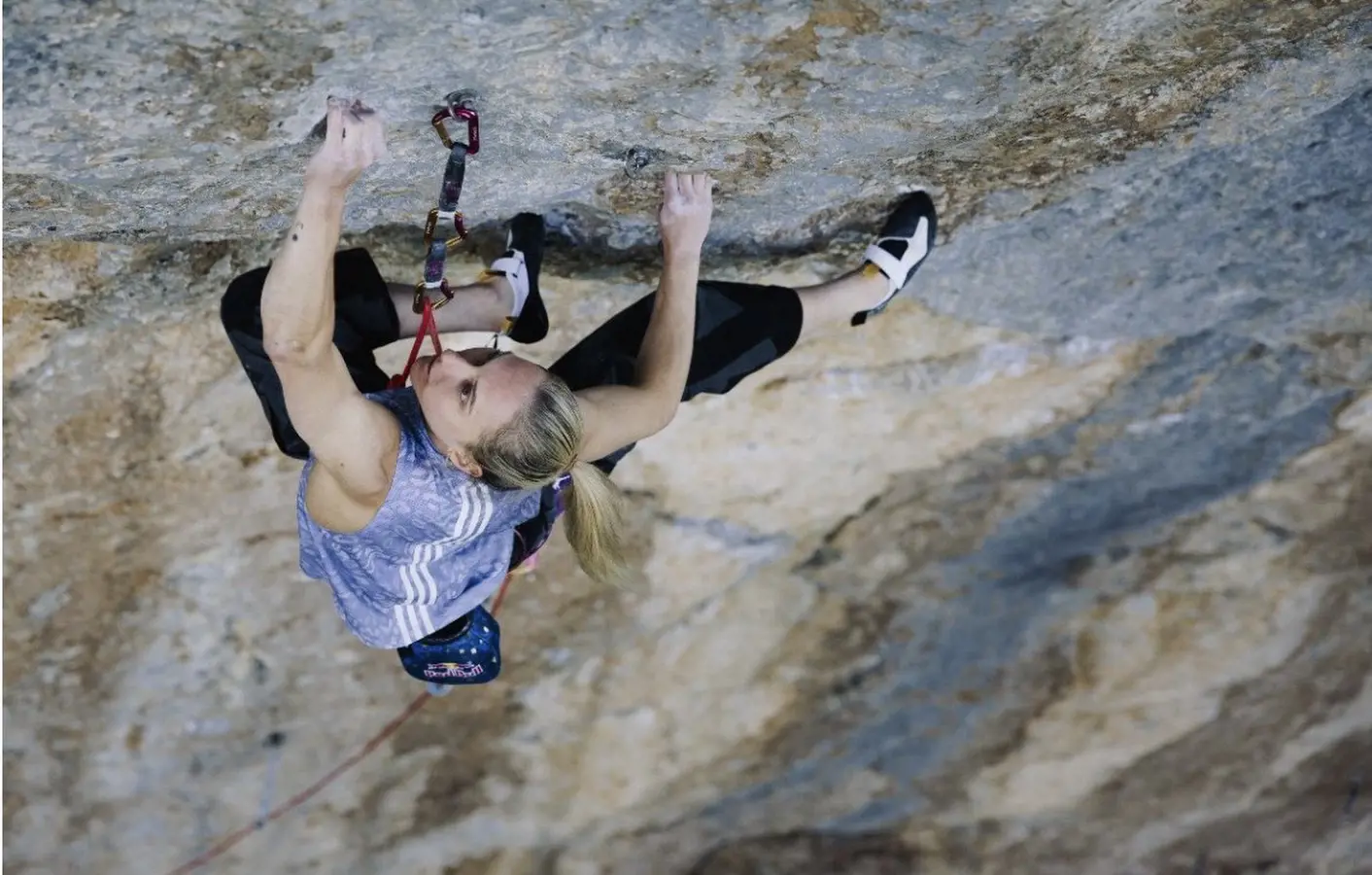
Janja Garnbret has added another milestone to her remarkable climbing career by becoming the first woman to climb Bibliographie (9b+) in Céüse, one of the harde…
361
48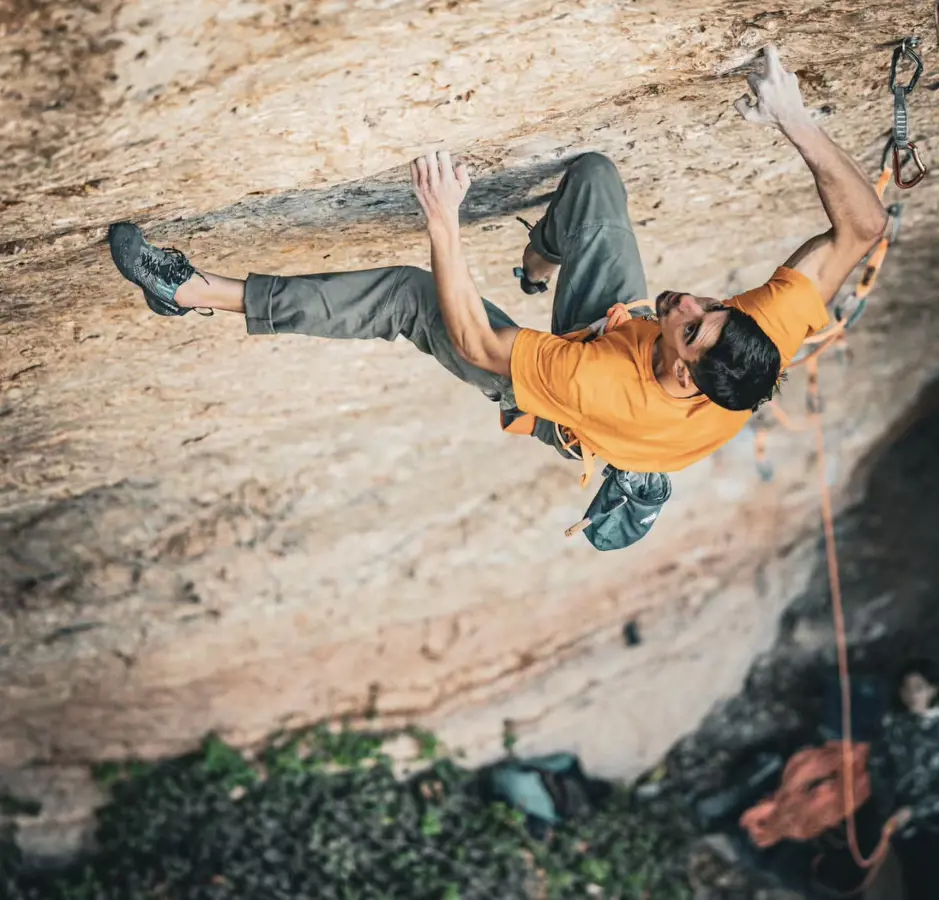
Jorge Diaz-Rullo reports on Instagram that he has made the first ascent of Cafe Colombia in Margalef. At 27, he’s already stacked four 9b+ sends and now he’s ad…
285
81
”I stopped focusing on competition bouldering after last year’s World Cup in Prague, partly because I can already feel it on my body, especially in my shoulders. The modern competition style, with a lot of jumping from one hold to another, is very demanding for the shoulders.
Outdoor bouldering is…
189
13Most commented
Jorge Diaz-Rullo reports on Instagram that he has made the first ascent of Cafe Colombia in Margalef. At 27, he’s already stacked four 9b+ sends and now he’s ad…
285
81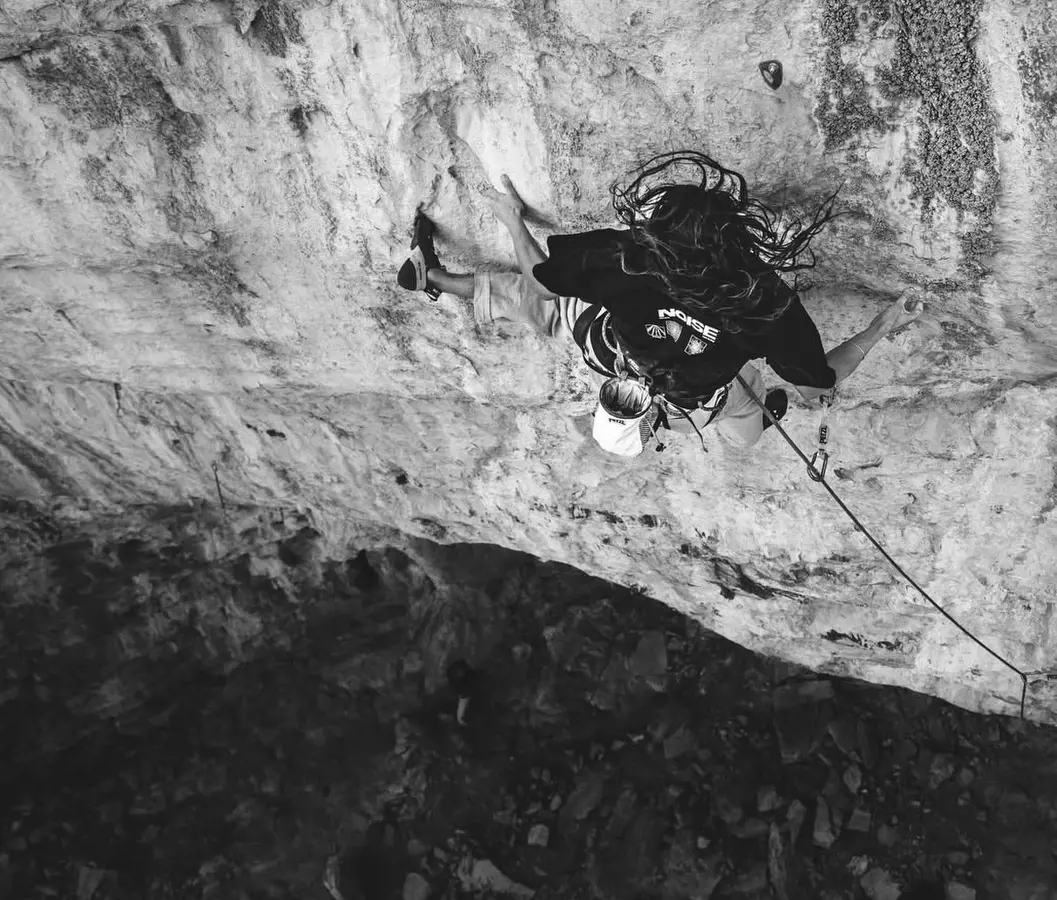
Sean Bailey reports on Instagram that he has done the first ascent of Duality of Man (9c) in Dry Canyon. ” After four total years and three seasons of climbing,…
163
69Jorge Diaz-Rullo elaborates on the reasons for him to suggest 9c for Café Colombia on Instagram, which he took down last week after projecting it for 240 sessio…
119
63