
NEWS
20 May 2025
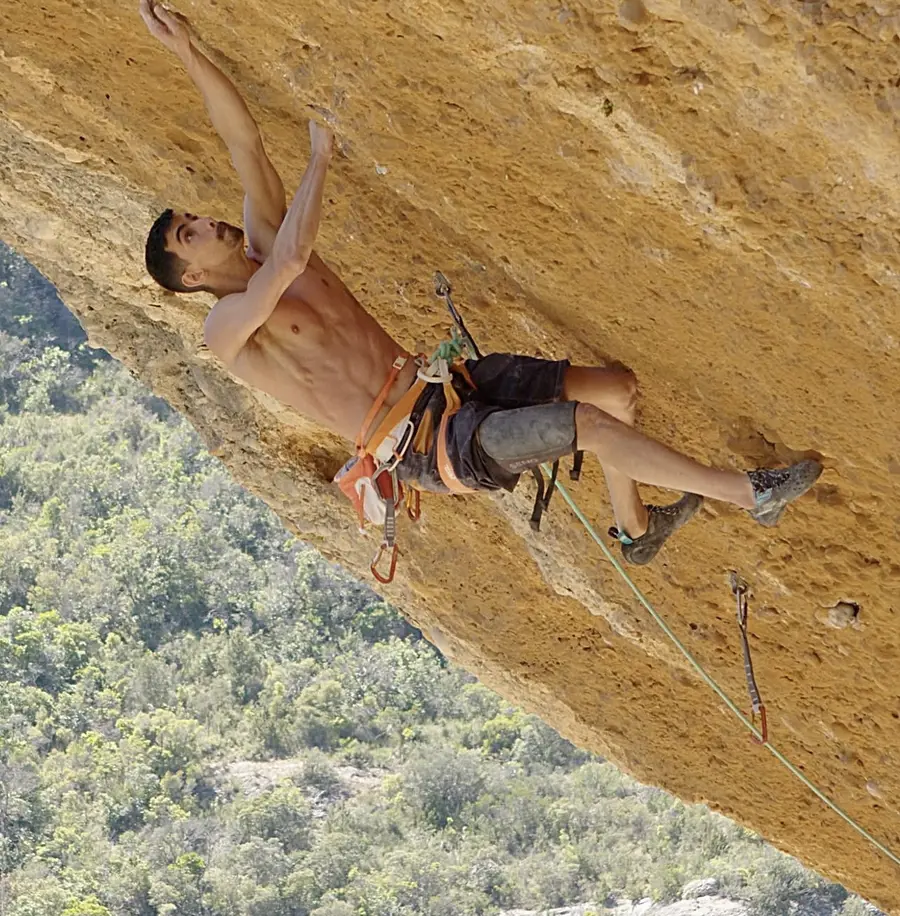
Jorge Diaz-Rullo flashes Pelotari (8c+)
Jorge Diaz-Rullo has flashed Pelotari (8c+) in Margalef. ”One of the best route in this grade in Margalef, power-endurance style. My hardest flash ever.” (c) Jaume Cebolla Vincent
The Spaniard, with four 9b+’ under his belt, has also done the FA of Larga vida al rey (8c+). ”So happy to have the honor to do the first ascent of this awesome project, I think could be around 8c+/9a in comparison with the other routes in the same wall. Name dedicated to the king Iker Pou who bolted the route.”
These ascents were his first difficult routes since sending a 9b in December, as he had been focused on his major project, Café Colombia. Altogether, he has now invested over 200 sessions in the climb over several years, achieving some promising high points last month.
The Spaniard, with four 9b+’ under his belt, has also done the FA of Larga vida al rey (8c+). ”So happy to have the honor to do the first ascent of this awesome project, I think could be around 8c+/9a in comparison with the other routes in the same wall. Name dedicated to the king Iker Pou who bolted the route.”
These ascents were his first difficult routes since sending a 9b in December, as he had been focused on his major project, Café Colombia. Altogether, he has now invested over 200 sessions in the climb over several years, achieving some promising high points last month.
Read more
31
0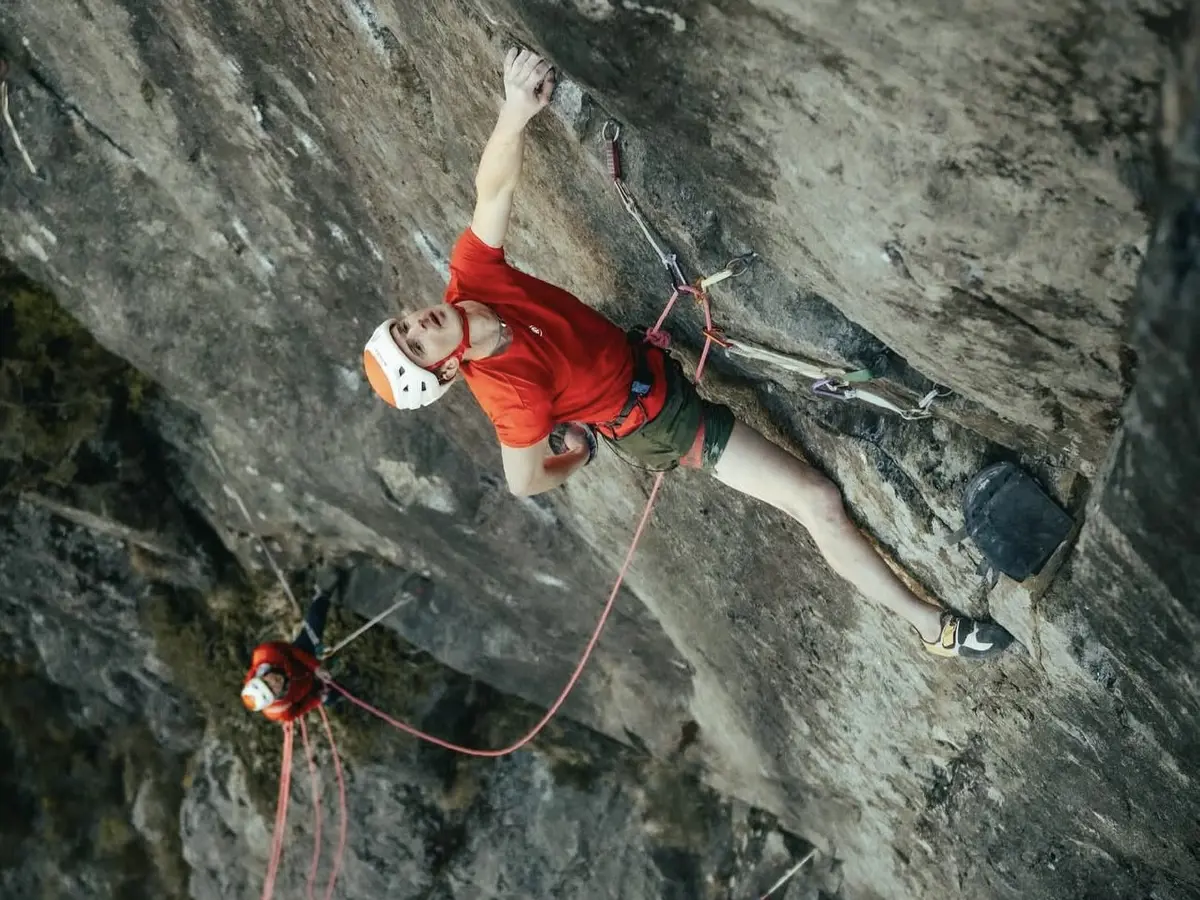
19 May 2025
Adam Ondra flashes Lexicon E11 (8b+ R)
Adam Ondra reports on Instagram that he has flashed Neil Gresham’s trad route Lexicon E11 (8b+ R) at Pavey Ark. The British E-grade is designed to assess the difficulty and the danger of onsighting a traditional climbing route. There exist one E12 and a handful E11’s. At the higher end of the scale, accurately evaluating these factors becomes challenging, so a French sport grade is often included for additional clarity. When an "R" is added, it indicates a significant Risk of injury. For example, falling at the final 7C boulder crux near the top of Lexicon could result in a 25-meter fall, with the potential to hit the wall hard. (c) Petr Chodura.
Read more
71
1319 May 2025
Jonathan Siegrist ticks The Big Wish (9a)
Jonathan Siegrist, who last month sent his seventh 9b, has done The Big Wish (9a) in Utah Hills. ”Had a blast climbing this thing! Felt a tad bit harder and more involved than either Big Claw or Big Head. The 'Big' extension really delivers.. the pump.”
Can you tell us more about the ascent?
Since getting back from Italy I was keen to keep some of my shape from that trip - ideally holding on to as much as I could until I leave for Wyoming at the end of May! I knew that the various routes in the Fynn cave would be great training for this summer so I went out there this past week for 2 days and had a blast on the resistant style in there. I am a huge fan of 'training' on sub-limit routes outside. On Thursday I climbed the second ascent of 'Big Wish' 9a and also Big Head (8c+). Next I will try to get some of my many lingering projects up at 5G cleaned up and see if I can climb something more before I leave.
Can you tell us more about the ascent?
Since getting back from Italy I was keen to keep some of my shape from that trip - ideally holding on to as much as I could until I leave for Wyoming at the end of May! I knew that the various routes in the Fynn cave would be great training for this summer so I went out there this past week for 2 days and had a blast on the resistant style in there. I am a huge fan of 'training' on sub-limit routes outside. On Thursday I climbed the second ascent of 'Big Wish' 9a and also Big Head (8c+). Next I will try to get some of my many lingering projects up at 5G cleaned up and see if I can climb something more before I leave.
Read more
19
019 May 2025
Naile Meignan wins first World Cup
Naile Meignan, European Champion last year, won the Boulder World Cup in Curitiba just 0.1 points ahead of Oriane Bertone. “It feels amazing to win in my first competition of the year. I wasn’t expecting to be this good, but for sure it feels great. I was a bit tense on the first boulder, but then I felt more confident and was able to flash the following three problems. I will compete in Salt Lake City now, and it would be great to win another medal there!”
The 21-year-old made her first headline at age 9, when she sent her first 8a. Progressing one grade per year, she sent her first 8b+ being 12 years old.
The 21-year-old made her first headline at age 9, when she sent her first 8a. Progressing one grade per year, she sent her first 8b+ being 12 years old.
Read more
16
118 May 2025
Bill Ramsey, 64, does Wrongdoer (8b+)
Bill Ramsey, who sent his sixth 8c at age 54, has done Wrongdoer (8b+) in Mt. Charleston. The 64-year-old began climbing in the mid-1970s with Alan Watts at Smith Rock. He later shifted his focus to academics, earning a PhD in philosophy, before returning to climbing in the early 1990s. (c) Rachelle Melville
Can you tell us more about the ascent?
This is a route at Mt. Charleston called “Wrongdoer”. It is a 120 feet long and is an extension of an extension – and each anchor kicks it up a number grade, so the first anchor is 12a, the second is 13a, and the top is 14a. I'd started working on it about a year ago, came close last fall (falling at the very top 3 times), and got back on it in early April this Spring. The day I did it I wasn’t feeling all that great the day I did it, but I kept surprising myself, just barely making it through each subsequent crux. It was an all-out battle, really, pretty much in doubt until I clipped the anchors. After 50 years of climbing, those sorts of sends are still the very best!
Can you tell us more about the process and how you prepared physically for sending it?
I normally climb on steeper things, so I had to completely revise my training to get used to tiny holds and standing on my feet more. I trained pretty hard over the winter, and incorporated hangs off an 8 mm edge in my training. I replicated a couple of the cruxes in my garage on a sheet of plywood that I hung from the ceiling so I could change the angle to simulate the climb. I worked those with a weight belt. One problem with projecting is you often lose some finger strength over time. To deal with that I would get up early and do some finger training (max hangs) before going climbing. That would probably diminish me slightly, but I would still make progress on the route, and you have to be thinking ahead about maximizing finger strength when you start getting really close.
At my age, I need more rest days, so on my training days I would go big, training most of the day, and then take 2 or 3 days off. For each redpoint attempt I would have a main goal, and then various sub-goals depending on where I fell. Honestly, innovating different tactics and strategies is, for me, what makes projecting pure fun.
Can you tell us more about the ascent?
This is a route at Mt. Charleston called “Wrongdoer”. It is a 120 feet long and is an extension of an extension – and each anchor kicks it up a number grade, so the first anchor is 12a, the second is 13a, and the top is 14a. I'd started working on it about a year ago, came close last fall (falling at the very top 3 times), and got back on it in early April this Spring. The day I did it I wasn’t feeling all that great the day I did it, but I kept surprising myself, just barely making it through each subsequent crux. It was an all-out battle, really, pretty much in doubt until I clipped the anchors. After 50 years of climbing, those sorts of sends are still the very best!
Can you tell us more about the process and how you prepared physically for sending it?
I normally climb on steeper things, so I had to completely revise my training to get used to tiny holds and standing on my feet more. I trained pretty hard over the winter, and incorporated hangs off an 8 mm edge in my training. I replicated a couple of the cruxes in my garage on a sheet of plywood that I hung from the ceiling so I could change the angle to simulate the climb. I worked those with a weight belt. One problem with projecting is you often lose some finger strength over time. To deal with that I would get up early and do some finger training (max hangs) before going climbing. That would probably diminish me slightly, but I would still make progress on the route, and you have to be thinking ahead about maximizing finger strength when you start getting really close.
At my age, I need more rest days, so on my training days I would go big, training most of the day, and then take 2 or 3 days off. For each redpoint attempt I would have a main goal, and then various sub-goals depending on where I fell. Honestly, innovating different tactics and strategies is, for me, what makes projecting pure fun.
Read more
78
418 May 2025
Sorato Anraku wins again
Sorato Anraku, who claimed victories in both Lead and Boulder earlier this spring, secured another win at the Curitiba Boulder World Cup by dominating all three rounds. The 18-year-old won the World Cup overall in 2023 in both disciplines.
"I'm very happy for my second World Cup gold in a row, but I wanted to send boulder number four. I rested a lot on my attempts because I had no power left, but I felt confident. I'm not thinking about winning the Series, I will focus on one event at a time, so now it's time to focus on Salt Lake City."
"I'm very happy for my second World Cup gold in a row, but I wanted to send boulder number four. I rested a lot on my attempts because I had no power left, but I felt confident. I'm not thinking about winning the Series, I will focus on one event at a time, so now it's time to focus on Salt Lake City."
Read more
9
017 May 2025
Hyunbin Min does United (8C+)
Hyunbin Min has repeated Ryuichi Murai’s United (8C+) in Mizugaki, which is a five moves sit start into Decided (8B+).
The 36-year-old Korean climber, who stands 162 cm tall, was a prominent figure in competition climbing, winning a Lead World Cup in 2012. He made a successful comeback in 2018, reaching the podium in his last two events. He returned again last year, with his top finish being 25th place.
Can you tell us more about the ascent?
My goal for this 9-day trip to Japan was to experience a lot and try “Decided (8B+/V14).” I arrived at my accommodation late the day before, so I was tired—but still so psyched for the boulder. After a tough one-hour approach (it was quite hard🥲), I arrived at the boulder! I did a light warm-up and sent “Decided (8B+/V14)” in four attempts. It was such a great rock and a beautiful line—it was just as fun as I expected.
After a 30-minute break, I tried “United (8C+/V16)” for real, but I fell off the shouldery move of “Decided” after passing the difficult section at the bottom on my first attempt. I saw a high possibility of success, and I was really nervous before my second attempt. I wanted to climb it calmly, but I couldn’t settle down in front of something so big. I took a nap for about an hour and a half after falling in a similar spot on my second try.
When I woke up, my mind was much calmer, and after two slips in the starting section, I finally sent it on my fifth attempt..! In the few moves before the mantling, I felt a distinctly different intensity compared to when I sent “Decided,” and I gave it everything I had. It was a truly valuable experience—I don’t think I’ll ever forget that day. Special thanks to my wife and two friends who were there with me. It still feels like a dream, even though it’s been three days.
What are the hardest boulders you have done before?
Two 8B+’, two 8B’s and multiple 8A+ in Korea. This is the first time for me bouldering outside Korea.
The 36-year-old Korean climber, who stands 162 cm tall, was a prominent figure in competition climbing, winning a Lead World Cup in 2012. He made a successful comeback in 2018, reaching the podium in his last two events. He returned again last year, with his top finish being 25th place.
Can you tell us more about the ascent?
My goal for this 9-day trip to Japan was to experience a lot and try “Decided (8B+/V14).” I arrived at my accommodation late the day before, so I was tired—but still so psyched for the boulder. After a tough one-hour approach (it was quite hard🥲), I arrived at the boulder! I did a light warm-up and sent “Decided (8B+/V14)” in four attempts. It was such a great rock and a beautiful line—it was just as fun as I expected.
After a 30-minute break, I tried “United (8C+/V16)” for real, but I fell off the shouldery move of “Decided” after passing the difficult section at the bottom on my first attempt. I saw a high possibility of success, and I was really nervous before my second attempt. I wanted to climb it calmly, but I couldn’t settle down in front of something so big. I took a nap for about an hour and a half after falling in a similar spot on my second try.
When I woke up, my mind was much calmer, and after two slips in the starting section, I finally sent it on my fifth attempt..! In the few moves before the mantling, I felt a distinctly different intensity compared to when I sent “Decided,” and I gave it everything I had. It was a truly valuable experience—I don’t think I’ll ever forget that day. Special thanks to my wife and two friends who were there with me. It still feels like a dream, even though it’s been three days.
What are the hardest boulders you have done before?
Two 8B+’, two 8B’s and multiple 8A+ in Korea. This is the first time for me bouldering outside Korea.
Read more
30
417 May 2025
Camille Coudert does Deep Fake (8C+)
Camille Coudert has logged 53 boulders 8A and beyond including
Deep Fake (8C+) in Brione. ”Personally, it feels lika a hard 8C, but taking into account the opinions of other climbers who have tried the boulder and with the perspective that this problem suits my style very well, I think it’s probably a soft 8C+. However, it’s possible that the boulder is significantly easier for very tall climbers…”
Coudert is 178 cm and he is together with Adam Ondra, the hard core climber adding most personal grades. The 29-year-old, who started climbing at age 18, has logged more than a dozen 8C and beyond including Soudain seul (9A).
Can you tell us more about the ascent and in which time span did you send them all?
All the boulders I climbed were done during three short trips to Brione in between April 1st and May 15th. During that same period, I also climbed in Fontainebleau, where I did Mammunk and Mammunk (assis) (8C), as well as Partage (sit start), along with some 8A and 8A+ problems.
As for the details of the Brione trips: The first one lasted 7 days and was mainly to discover the area. During the first three days, I climbed some of the sector’s classics. Toward the end of the trip, I tried Deep Fake, and already felt close to sending it after the first session.
I went back for a second trip a few weeks later, just 4 days, focused entirely on Deep Fake. Unfortunately, the weather wasn’t on my side, and I missed the send during the last session, falling five times on the final 8A section.
Finally, I returned this week for a 5-day trip to finish Deep Fake, which I sent on the first day. I then used the rest of the trip to climb a bunch of other problems and attempted to flash my first 8B.
What is next?
For the summer, it's training, and I'm staying focused on my goal of making the first ascent of Imhotep (sit start).
How many sessions have you put in now?
I think the first year, I went about once a week on average for two and a half months (around 15 sessions). The second year, I must have gone a maximum of 5 times, and this year I went twice a week for about two and a half months on average (I’d say around 30 sessions). And before that, I had done 3 or 4 prep sessions just after doing Soudain seul. So I’d say I must be at over 50 sessions.
The block is extremely traumatic for the elbows, and more than 2 sessions per week is not very productive.
Following up on our last conversation about it. I finally unlocked the move I was missing and put in a lot of attempts on a section estimated at a hard 8C+. I fell on the last move of that section about fifteen times, but I felt I was making progress and getting really close to sending it. Unfortunately, the temperatures rose too quickly, and I had to put it on hold until this winter.
I hope to send that section quickly next winter — and then I’ll need to link in two more moves graded around 8B+, which I finally managed to do! So the real battle for the full send should begin this coming winter.[Coudert has previously said that it might be 9A+.]
Coudert is 178 cm and he is together with Adam Ondra, the hard core climber adding most personal grades. The 29-year-old, who started climbing at age 18, has logged more than a dozen 8C and beyond including Soudain seul (9A).
Can you tell us more about the ascent and in which time span did you send them all?
All the boulders I climbed were done during three short trips to Brione in between April 1st and May 15th. During that same period, I also climbed in Fontainebleau, where I did Mammunk and Mammunk (assis) (8C), as well as Partage (sit start), along with some 8A and 8A+ problems.
As for the details of the Brione trips: The first one lasted 7 days and was mainly to discover the area. During the first three days, I climbed some of the sector’s classics. Toward the end of the trip, I tried Deep Fake, and already felt close to sending it after the first session.
I went back for a second trip a few weeks later, just 4 days, focused entirely on Deep Fake. Unfortunately, the weather wasn’t on my side, and I missed the send during the last session, falling five times on the final 8A section.
Finally, I returned this week for a 5-day trip to finish Deep Fake, which I sent on the first day. I then used the rest of the trip to climb a bunch of other problems and attempted to flash my first 8B.
What is next?
For the summer, it's training, and I'm staying focused on my goal of making the first ascent of Imhotep (sit start).
How many sessions have you put in now?
I think the first year, I went about once a week on average for two and a half months (around 15 sessions). The second year, I must have gone a maximum of 5 times, and this year I went twice a week for about two and a half months on average (I’d say around 30 sessions). And before that, I had done 3 or 4 prep sessions just after doing Soudain seul. So I’d say I must be at over 50 sessions.
The block is extremely traumatic for the elbows, and more than 2 sessions per week is not very productive.
Following up on our last conversation about it. I finally unlocked the move I was missing and put in a lot of attempts on a section estimated at a hard 8C+. I fell on the last move of that section about fifteen times, but I felt I was making progress and getting really close to sending it. Unfortunately, the temperatures rose too quickly, and I had to put it on hold until this winter.
I hope to send that section quickly next winter — and then I’ll need to link in two more moves graded around 8B+, which I finally managed to do! So the real battle for the full send should begin this coming winter.[Coudert has previously said that it might be 9A+.]
Read more
15
1616 May 2025
Will Bosi FA’s Kyanite (8C)
William Bosi has done the first ascent of Kyanite (8C) in Valle Bavona. The 26-year-old sent the Dave Graham project in only two sessions during a film project that also involved Giuliano Cameroni. In total, Bosi did six boulders 8B+ to 8C+ during the two weeks trip and he is #1 in the VL ranking game. (c) Robbie Meade
”Kyanite is a left-hand version of Axinite (8B+). You start in the same place and climb the initial moves of Axinite before breaking out left through a very steep roof. It is about double the moves of Axinite before returning you to the top-out of the original line, but not before a desperate Gaston deadpoint move to rejoin the original line.”
”Kyanite is a left-hand version of Axinite (8B+). You start in the same place and climb the initial moves of Axinite before breaking out left through a very steep roof. It is about double the moves of Axinite before returning you to the top-out of the original line, but not before a desperate Gaston deadpoint move to rejoin the original line.”
Read more
21
115 May 2025
Dylan Chuat ticks Masala Tea (9a)
Dylan Chuat has done Masala Tea (9a) in Rawyl. ”I had more or less made the route on the first session (3rd climb), but the end was wet and unfortunately I couldn't send it... A month later, I went back to unwind it, but the slab in 3+ called me to order: a big block broke in my hands and exploded my knee. I had to grit my teeth to chain that day, but it did! Thank you Bertrand for this way! I advise the next climber to skip the starting slab: it is really dangerous and makes no sense...” (c) Remi Degenne
Can you tell us more about the loose block incident and your injury?
A huge block broke off in my hands on the starting slab. Luckily, Lisa wasn’t hurt 🙏🏼, but I smashed my knee pretty badly. No idea how I managed to climb — the pain was there from start to finish. I could barely weight my left leg, and the walk back took way longer than expected 😂. My knee isn’t broken, but I had trouble using my leg that day, so I came down, put on a tape, and then I did the route. No idea how I managed to climb — the pain was there from start to finish. I could barely weight my left leg, and the walk back took way longer than expected 😂. Today, it still hurts a lot. But after a visit to the ER, a good clean-up, and a few stitches to get the junk out of my knee, it should heal up fine (hopefully… 😅). Thankfully, nothing’s broken!
How to avoid the slab as you suggested in the comment?
Either go around to the right, through the slab of the other route, or get motivated to break everything that needs to break — which I’ll probably do myself before leaving on my trip, if I have time.
Can you tell us more about the loose block incident and your injury?
A huge block broke off in my hands on the starting slab. Luckily, Lisa wasn’t hurt 🙏🏼, but I smashed my knee pretty badly. No idea how I managed to climb — the pain was there from start to finish. I could barely weight my left leg, and the walk back took way longer than expected 😂. My knee isn’t broken, but I had trouble using my leg that day, so I came down, put on a tape, and then I did the route. No idea how I managed to climb — the pain was there from start to finish. I could barely weight my left leg, and the walk back took way longer than expected 😂. Today, it still hurts a lot. But after a visit to the ER, a good clean-up, and a few stitches to get the junk out of my knee, it should heal up fine (hopefully… 😅). Thankfully, nothing’s broken!
How to avoid the slab as you suggested in the comment?
Either go around to the right, through the slab of the other route, or get motivated to break everything that needs to break — which I’ll probably do myself before leaving on my trip, if I have time.
Read more
11
0Favorites
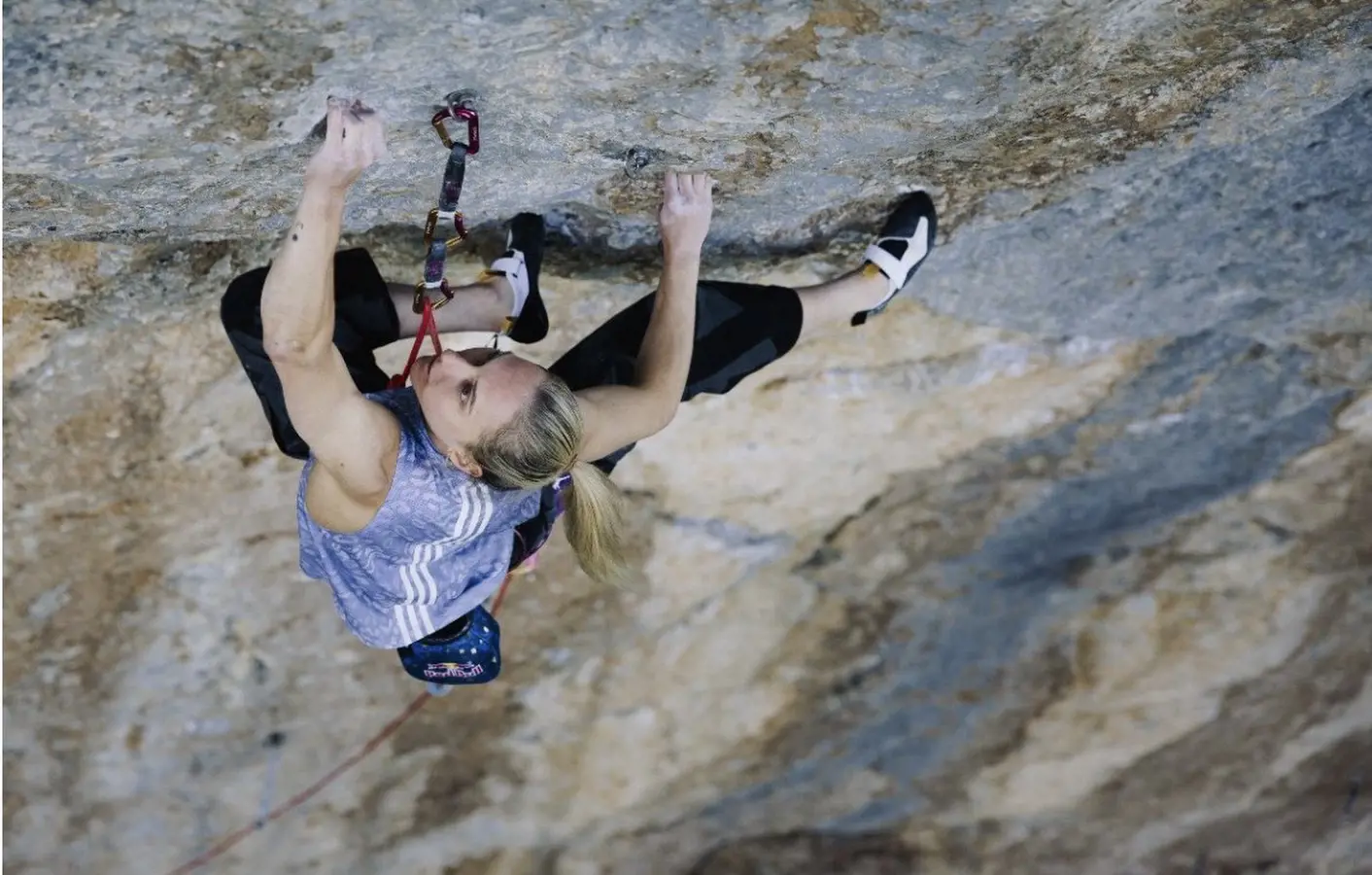
Janja Garnbret has added another milestone to her remarkable climbing career by becoming the first woman to climb Bibliographie (9b+) in Céüse, one of the harde…
368
48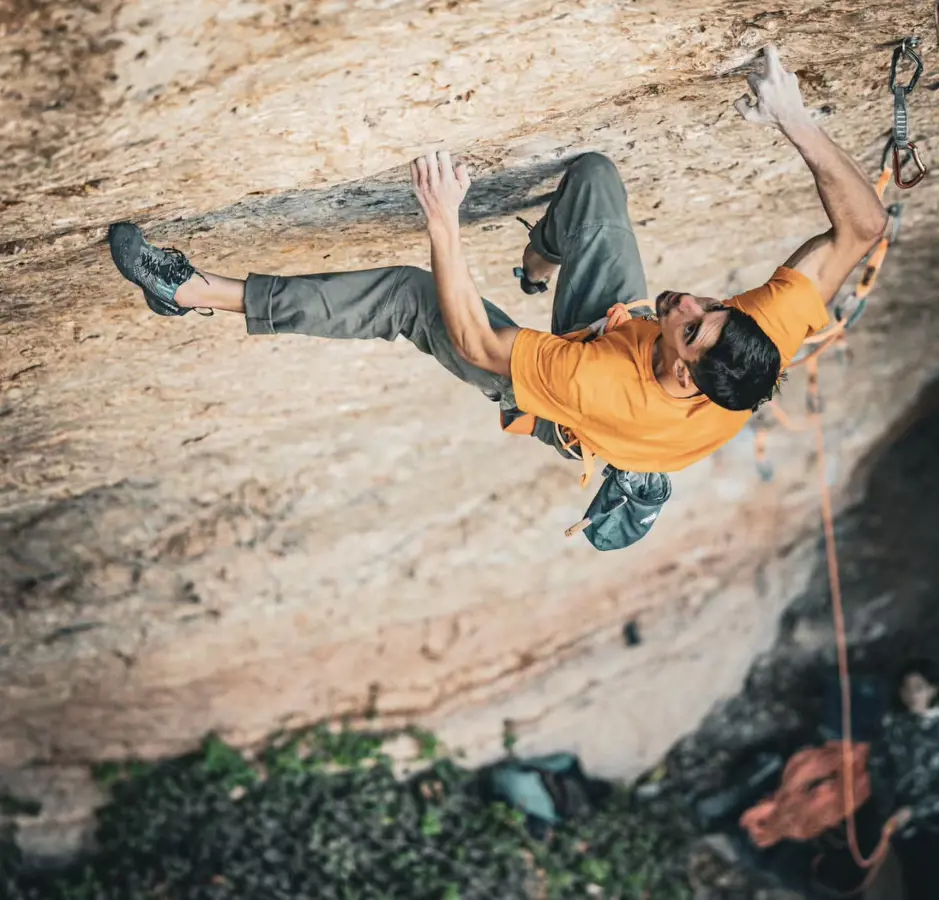
Jorge Diaz-Rullo reports on Instagram that he has made the first ascent of Cafe Colombia in Margalef. At 27, he’s already stacked four 9b+ sends and now he’s ad…
286
81
”I stopped focusing on competition bouldering after last year’s World Cup in Prague, partly because I can already feel it on my body, especially in my shoulders. The modern competition style, with a lot of jumping from one hold to another, is very demanding for the shoulders.
Outdoor bouldering is…
190
13Most commented
Jorge Diaz-Rullo reports on Instagram that he has made the first ascent of Cafe Colombia in Margalef. At 27, he’s already stacked four 9b+ sends and now he’s ad…
286
81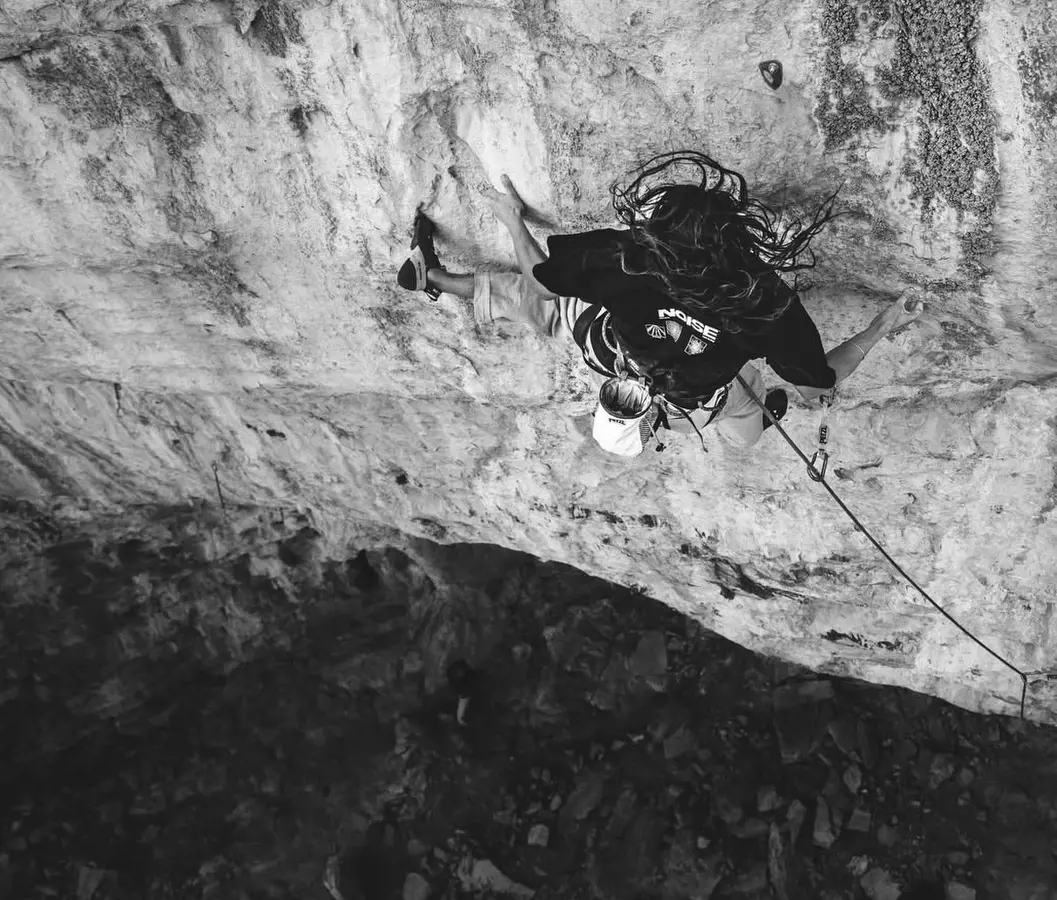
Sean Bailey reports on Instagram that he has done the first ascent of Duality of Man (9c) in Dry Canyon. ” After four total years and three seasons of climbing,…
163
69Jorge Diaz-Rullo elaborates on the reasons for him to suggest 9c for Café Colombia on Instagram, which he took down last week after projecting it for 240 sessio…
120
63