NEWS

As there is no count back to previous round in the Olympics, Lead will be much more about Speed. In the male qualifation in Buenos Aires, we did see three tops separated by time and another seven further down the list. Among the female, nine out of the 21 had to be separated by time as they had the same hold score. In general, many climbers will take chances and climb faster including going for the "+" instead of taking every rest. It just might be that there is a crux midways, where several falls and then it is about to be fastest to that position if you are not one of the top climbers. In the same way, if the route setters have made it too easy, it is about sprinting to the top. The guys starting late will have the advantage listening to the crowd going crazy for the first top. The problem is that without digital split results like in slalom etc, it is very hard to know who is relatively fast etc. One solution is to measure split time 3-4 times to be used once the athletes score the hold.

9a FA by Luis Rodrรญguez Martรญn
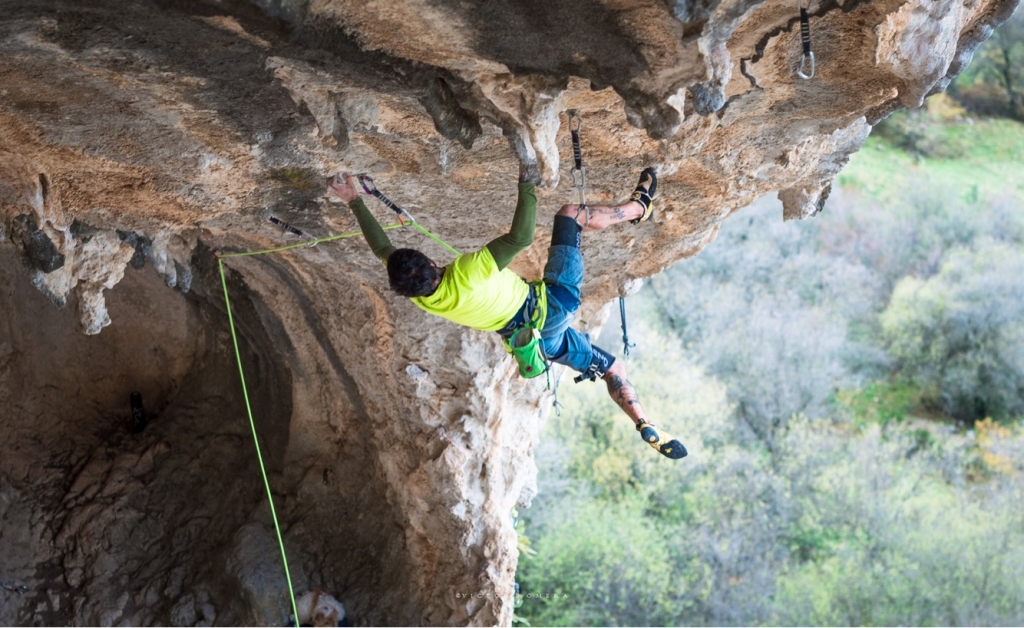
Luis Rodrรญguez has sent his 4th 9a, Chilam-Salsa in Villanueva del Rosario, Spain. With almost 80m of climbing the route starts on Chilam-Balam 1 8c+ and ends on Salsa Desnivel 8c, a route bolted by Bernabรฉ Fernรกndez and finished by Rafa Fanega. ยฉ Vรญctor Romera "Another king line. Connection between the first pitch of Chilam-balam (8c+) and Maldita envidia (8c). 80 metres of joy!" Luis has recorded 14 routes between 8c+ and 9a and in the 12 months global ranking game he is #8.

Although only a couple male Speed specialists competing in the Youth Olympic Games qualifying, half of the youngster did go sub 7.47. Sam Avezou 7.05 sticks out and in fact only Tomoa Narasaki was faster among the non-Speed specialist in the WCH in Innsbruck. In general, the youngsters werr considerably faster than most of the seniors competing in Combined in Innsbruck. As an example, Combined winner Jakob Schubert had 7.55 and #2 Adam Ondra did 9.32. Complete results It should be mentioned that also many of the girls did climb faster in comparison to the female in Innsbruck but not to that extent as for the male.

Although the commentator did a very good job trying to deliver Combined results live including conditions based on reached hold and ranking in Lead, digital results are vital. Further more, as have been said before, at least every fifth hold must be marked with a number in order to fully get all the excitement. As we saw three tops, they were ranked by who climbed faster. This also mean that it would be great with split times in order to actually understand who is in the lead.

7th Kalymnos topo with 3 400 routes
Climb Kalymnos has presented a great retrospective of the seven guidebooks that has been published since the first in 2000 with just 200 routes. The 7th edition includes 3 400 routes which is 700 more than the in the 6th edition. Buy it for Euro 45 including a free digital code. "A big part of the proceeds goes back into maintenance and new routing. Since 2015, the topo is also available through the Vertical-Life App. "If you donโ€™t want the print version of the guidebook, the app is also available as a separate purchase. If you are a first-time app buyer it costs โ‚ฌ18; if you have already bought the 2015/16 print edition and downloaded that app version, you can download just the updates for โ‚ฌ9." โ€œItโ€™s funny to say, but it [the Kalymnos guidebook] may seriously be the best guidebook in the world. Thank you for all the hard work in new routing and maintenance!โ€ โ€“ Alex Honnold

USA Climbing explains that the reason for no USA climbers are competing in the Youth Olympic Games in Buenos Aires is that they had failed to, in time, be a recognized member of their USOC. In the Combined Youth World Championship 2017, the qualifying event, Ashima Shiraishi and Brooke Raboutou were #2 and #3. From Italy, Giorgia Tesia qualified by winning the Combined European Championship (CEC) and Pietro Biagini qualified twice including being #2 in the CEC. Bagni might not be so famous yet but with a personal Speed record of 7.36 and #45 in the Lead WCH in Innsbruck, he would have had chances to actually make podium and this also goes for Georgia. From the Youth World Championship, were the Top-15 qualified, the lowest ranked male who made it to Buenos Aires was #24 and the lowest ranked female was #64.

XXL 8c+ by Laurent Vigouroux (40)
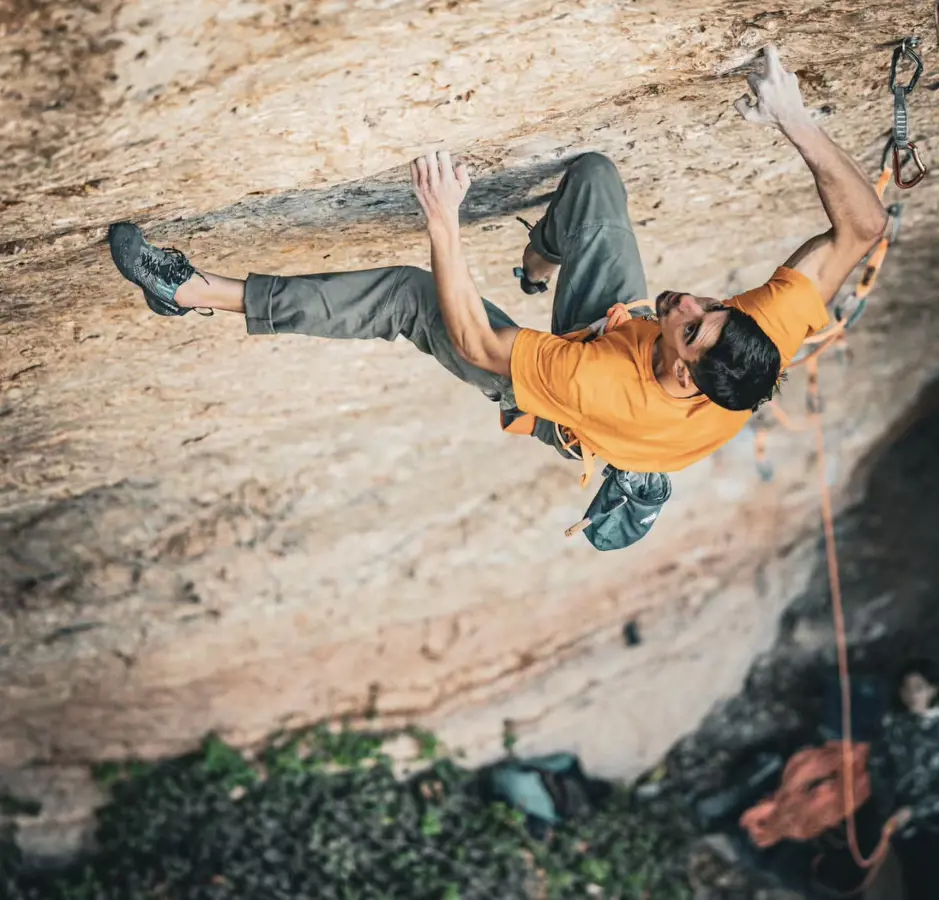
Laurent Vigouroux has done his eight 8c+, XXL in Calanques meaning he has reached a new All time High. One more 8c and he is #2 in the 40+ ranking game. "I have spent 12 winter seasons on it (probably more than 120 days and more than 450 tries) to complete it! I have fallen at the very last section around 18 times. In fact, there is a mantle which is not so hard (7b route) after the crux section but there is no rest and it asks a good resistance. I had to train differently and change my climbing style to be able to send it. For me, it was more a mental battle for not giving up and stay motivated, for staying strong enough all along these years. Happy to do it 7 days before my 40th birthday. In twelve years my "climbing" has evolved a lot. I have more experience, more technics and more mental resources. I'm also better understanding the climbing sport in its scientific components. I'm researcher in Faculty of Sport Sciences in Marseille and part of my work addresses to climbing sciences. Surprisingly, I'm also feeling in better physical shape than 12 years ago. I have more power, more resistance even if I expected the contrary! The key point for succeeding in this route was to re-began to climb indoor. In fact since I'm twenty, I climb 90% outdoor. But 3 years ago with the opening of the indoor gym "mur de Luminy" just next to my office, I re-began to climb indoor on more modern routes. That gave me first a push for physical training but it learned me to fight more when your are completely pumped. This way, I understood how to manage this final section in spite of muscle fatigue."

Great start in Buenos Aires
Almost perfect route setting in the female qualification and no false starts created a great first day in Buenos Aires. Surprisingly, favorite Laura Rogora who was #10 in Lead in the WCH in Innsbruck and who won the Boulder Youth WCH is out. Complete results (c) Eddie Fowke - Vita Lukan from Slovenia was runner up behind Sandra Lettner from Austria.

Slovenia should be in the sports book of record
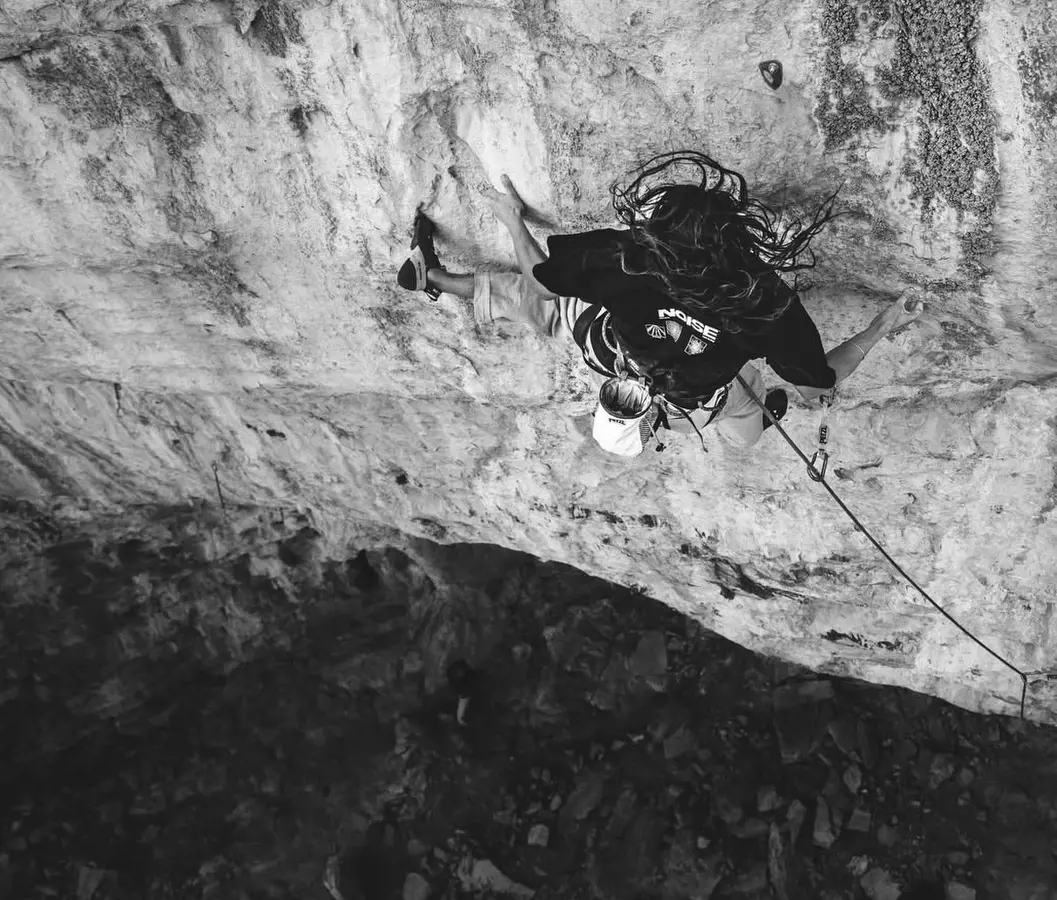
Slovenia has for many years been one of the leading competition climbing nations in the world. This is nothing but remarkable as they only have 2 million inhabitants and also that they have few big climbing gyms. At the same time as the indoor scene is booming, Slovenia has not been so much part of it and instead their success comes based on many small rather old-school gyms. Martina Cufar won the Lead World Championship in 2001 and since, their Lead female team has been more or less #1 in the world for 17 years straight. During the latest years also, especially their male Boulderers, have showed amazing progress. In the National Team ranking 2018, Slovenia was #2 in Boulder and they are also currently #2 in Lead. Is there anybody who could come up with an explanation who a relatively, to western Europe, poor country with 2 million inhabitants with few no big modern indoor climbing facilities could be so successful? Is old-school gyms peppered with holds better in comparison to less (colorful) holds in the modern gyms? We know that some train extremely structured mainly doing endurance circles on super small walls. At the same time, they have Jernej Kruder, who won the Boulder WC 2018 but mainly climbs long routes outdoors. Instead, the most striking thing talking to several athletes and coaches during the last 15 years, is how young they start and the number of climbing hours they put in. Most schools actually have a small wall and most of the best did actually start before they were eight years old. Already being 13 years old, it is quite normal for the best to do several competitions and climb 15-20 hours a week out of which a big portion outdoors. Slovenia is also known for having a great team spirit. Finally, climbing has a very high sport status in Slovenia. (c) Luka Fonda