
NEWS
"Jp stay in K2 forever now, in the mountains, where he was the happiest man... Hope we can continue the legacy and honor this warrior of the mountain!"
Read more
0
0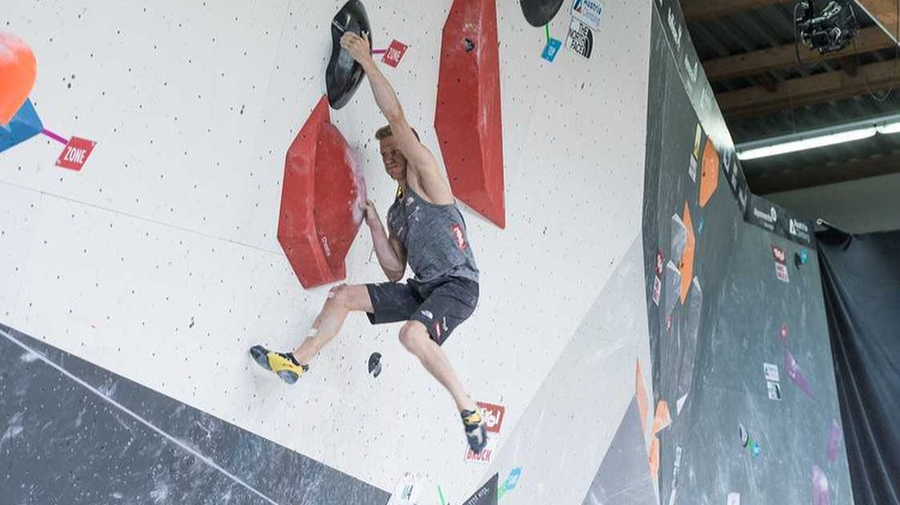
10 March 2021
Jakob Schubert Olympic preparation interview
Jakob Schubert has, overall during the last twelve years, been the best male competition climber in the world. In total, he has made the podium 57 times out of which 48 in Lead. In 2011, he won seven straight WCs, and in total he has won 21 times. The Austrian qualified to the Olympics by getting the Combined silver in the 2019 World Championship, where he also got the silver in Bouldering and the bronze in Lead. (c) KVÖ/Heiko Wilhelm
How do you plan your season before the Olympics?
Regarding comps I plan to do quite a few Bouldering Worldcups before the Olympics since I still feel like the comp experience helps a ton in that discipline. So probably I‘ll do all except the two in the US. Then Lead in Innsbruck and Villars and maybe Chamonix. Training is focused on Bouldering right now and probably around the end of May I‘ll switch my focus on Lead although I‘ll still try to keep my bouldering game especially trying to keep doing some comp style things closer to the Olympics. Speed I keep doing two short sessions a week all the time.
What is your PB in Speed and how do you train for this discipline?
My personal best in speed is from last year july 6,82. and I hope I can get to 6,5 until the Olympics. Focus is mainly on doing rund now and sometimes on some sequences where I feel like I can still improve my technique 😉
What is your goal for Tokyo and who are the main contenders for the medals?
My goal is of course to win a medal, preferably gold 😜 The combined format is very unpredictable even more so with today’s boulder- and routesetting, but I would say the huge favorite is Tomoa and obviously Adam is a big contender as well followed by myself 🤔 But probably almost every athlete has a chance to be on the podium especially since the bouldering wall, I think, there is only one overhang, one slab and a big vertical part, so very slabby design.
Will you do any special training for the expected heat in Tokyo?
Since our competition will be in the afternoon I think it will be bearable. But I will try to train in similar conditions sometimes and be prepared with some cooling utilities. Luckily I prefer to climb in warmer conditions anyways 😉
How do you plan your season before the Olympics?
Regarding comps I plan to do quite a few Bouldering Worldcups before the Olympics since I still feel like the comp experience helps a ton in that discipline. So probably I‘ll do all except the two in the US. Then Lead in Innsbruck and Villars and maybe Chamonix. Training is focused on Bouldering right now and probably around the end of May I‘ll switch my focus on Lead although I‘ll still try to keep my bouldering game especially trying to keep doing some comp style things closer to the Olympics. Speed I keep doing two short sessions a week all the time.
What is your PB in Speed and how do you train for this discipline?
My personal best in speed is from last year july 6,82. and I hope I can get to 6,5 until the Olympics. Focus is mainly on doing rund now and sometimes on some sequences where I feel like I can still improve my technique 😉
What is your goal for Tokyo and who are the main contenders for the medals?
My goal is of course to win a medal, preferably gold 😜 The combined format is very unpredictable even more so with today’s boulder- and routesetting, but I would say the huge favorite is Tomoa and obviously Adam is a big contender as well followed by myself 🤔 But probably almost every athlete has a chance to be on the podium especially since the bouldering wall, I think, there is only one overhang, one slab and a big vertical part, so very slabby design.
Will you do any special training for the expected heat in Tokyo?
Since our competition will be in the afternoon I think it will be bearable. But I will try to train in similar conditions sometimes and be prepared with some cooling utilities. Luckily I prefer to climb in warmer conditions anyways 😉
Read more
2
110 March 2021
Two 8A's by Stasa Gejo
Staša Gejo, a close runner-up in the Moscow Euro Champ Olympic qualification, has done two 8A's in Frankenjura in just one session each: Fontain Head and Mr. Bombastic.
What are your next plans including the comp scene?
Because all projects went down too quickly. I am going to try some 8A+. Currently aiming for Backgammon in Frankenjura, but also planning to get back to my rope projects from last year, when temperatures rise.
I feel good now, mostly training for Meiringen. Hoping that other comps in spring don't get cancelled. The biggest even is the WCH in Russia in September. Trying to get outside as much as trainings and weather allow it.
What are your next plans including the comp scene?
Because all projects went down too quickly. I am going to try some 8A+. Currently aiming for Backgammon in Frankenjura, but also planning to get back to my rope projects from last year, when temperatures rise.
I feel good now, mostly training for Meiringen. Hoping that other comps in spring don't get cancelled. The biggest even is the WCH in Russia in September. Trying to get outside as much as trainings and weather allow it.
Read more
6
0Joshua Fourteau has done Akira which was put up by Fred Rouhling in 1995. The 18-year-old needed only five sessions and he confirms the 9a grade by Seb Bouin and Lucien Martinez who did the first repeats last November. "he first part is the most physical in 8b (a long 7C+ boulder) I would say until a bad rest in full roof, and the continuation is less intense in 8a (a long 7B+ boulder) until the end. " It should be noted that Joshua did follow Seb and Lucien's example to not use knee pads and, in fact, he did not even use any kneebars and few toe- or heelhooks. More info on Fanatic Climbing.
Read more
8
19 March 2021
El Potro 9a by Marco Zanone
Marco Zanone has done Adam Ondra's El Potro 9a in Margalef in less than ten tries. The Italian has previously done 14 8c+'s and two 9a's. We asked Marco if he could share his story and how Covid-19 affected the trip.
"At the beginning of February, I planned a ten days trip to Spain with a couple of friends and we knew we had to take all the precautions due to covid restriction. Two days before to leave we took the covid test and once we were sure to be all negative, on the 27th of February we left for Spain. The plan was to climb at the Laboratori sector with the goal to climb First Ley (9a), a route I started trying at the end of December 2019. I felt ready to climb it but for the first time, the conditions were bad. I was trying my best but I was not able to succeed. One day the conditions felt even worse for me, so I decided to try something else. I didn't go too far and I chose to try "El Potro".
Since the first try, I felt good on the moves because the style suited me very well. Big moves and big pinches on a power resistant route. I tried for two other days, on and off with "First Ley", which was still my main project, and I eventually sent it on the last day of the trip. It felt like a soft 9a to me, but I also know that when I climbed Bumaye (8c+) in 2017, I'm quite sure I would not have been able to do the crux boulder of El Potro, so maybe it makes sense to call it 9a. Hopefully, it will get more attention in the near future, the route is rad!"
"At the beginning of February, I planned a ten days trip to Spain with a couple of friends and we knew we had to take all the precautions due to covid restriction. Two days before to leave we took the covid test and once we were sure to be all negative, on the 27th of February we left for Spain. The plan was to climb at the Laboratori sector with the goal to climb First Ley (9a), a route I started trying at the end of December 2019. I felt ready to climb it but for the first time, the conditions were bad. I was trying my best but I was not able to succeed. One day the conditions felt even worse for me, so I decided to try something else. I didn't go too far and I chose to try "El Potro".
Since the first try, I felt good on the moves because the style suited me very well. Big moves and big pinches on a power resistant route. I tried for two other days, on and off with "First Ley", which was still my main project, and I eventually sent it on the last day of the trip. It felt like a soft 9a to me, but I also know that when I climbed Bumaye (8c+) in 2017, I'm quite sure I would not have been able to do the crux boulder of El Potro, so maybe it makes sense to call it 9a. Hopefully, it will get more attention in the near future, the route is rad!"
Read more
5
09 March 2021
New King Lines in Cresciano
Featuring Giuliano Cameroni, Daisuke Ichimiya, Clément Lechaptois, Marine Thevenet and Diego Cameroni doing "New King Lines" in Cresciano up to 8C.
Read more
3
08 March 2021
Mr Big 9a FA by Tom Bolger
Tom Bolger reports on Insta that he has done the FA of Mr Big 9a in Margalef, saying it is "probably the best route I’ve ever bolted." (c) Esteban Lahoz
Please describe the route and why it is so good?
It is an independent route, over 25m long and probably 35 degrees in the steepest section. The route has a great flow! It is very continuous with two distinct jump moves, and with only one rest on the whole route forcing the climber to move efficiently and quickly, so the climbing flows beautifully :)
Earlier this year, Tom has done two 9a/+ FAs also in Margalef where he lives since a couple of years. Previously he has told 8a that the reason for him sending more projects is that due to Covid-19, he has travelled less back to the U.K. where he works with rope access. Currently, he is studying to become a climbing guide in Spain.
Please describe the route and why it is so good?
It is an independent route, over 25m long and probably 35 degrees in the steepest section. The route has a great flow! It is very continuous with two distinct jump moves, and with only one rest on the whole route forcing the climber to move efficiently and quickly, so the climbing flows beautifully :)
Earlier this year, Tom has done two 9a/+ FAs also in Margalef where he lives since a couple of years. Previously he has told 8a that the reason for him sending more projects is that due to Covid-19, he has travelled less back to the U.K. where he works with rope access. Currently, he is studying to become a climbing guide in Spain.
Read more
4
07 March 2021
9b to 9a logic for Akira (or even 8c+)
It is a well-known fact that vertical old-school climbs are often considered sandbagged by the modern generation, while the opposite is true for old steep climbs. As a matter of fact, most of the steep hardcore boulders from the early '00s have been, or are discussed to be, downgraded.
When Fred Rouhling put up the almost 15 meters roof Akira in 1995, he thought it was way harder than anything he had tried, so he graded it 9b. Several of the best at the time tried it but could not repeat it and some actually thought Rouhling had lied. Last November, Lucien Martinez and Seb Bouin made the first repeats quickly and, although not using a knee pad, suggest 9a for it. 8a have talked to all three involved and they agree on this explanation of why Akira went from 9b to 9a, and could possibly be even 8c+ with knee pads.
1. Less roof and core training
Back in 1995, Fred had little possibilities to train roofs and his core as such challenges almost did not exist. Today, the new generation trains on roofs and their core almost every session. Lifting up your feet in roofs and climbing feet first is a natural part of the game for many years now.
2. Scary due to stones, no crash pad or spotters
When Fred trained and later did Akira, the cave was full of stones on the ground, he had no crash pads and no spotters. Climbing with toe and heel hooking was dangerous, and in a video recorded in 2006 we can see that Fred climbs mainly footless, swinging around in a monkey style. In the Seb Bouin training video, we can see that the ground is flat, and that he has a tentative spotter and several crash pads.
3. Old shoes performing worse on toe- and heel hooking
Fred was climbing in some old EB's, which compared to modern shoes had less rubber on the toes and a less-developed heel hook box.
In sum, the modern style creates many different and better sequences and resting positions. Where Seb and Lucien are resting or going feet first, Fred was often desperate hanging around. Sure, Seb and Lucien did also have to use some moves monkey style without using their feet but immediately after they put up his shoes and started to rest. Another possible explanation could be that holds have broken and gotten bigger, which Fred originally suggested. Note also that none of the repeaters used knee pads and that the route could possibly be 8c+ with them. In any case, history shows that Fred was ahead of his time and his other hard FAs of the time have all been confirmed. It seems logical that he graded his hardest, by far, as a 9b in 1995 and that it became 9a in 2020. See also the 8a grading theory from 2005, that confirms this logic:
"Many years ago, climbing activities took place on vertical trad routes giving climbers certain abilities to succeed and grade these routes. Today, on the opposite, most training occurs in steep indoor gyms giving other prevailing skills for climbers. This has changed the community's time/success ratio on a different type of route/boulders, and grades have to be changed. In practice, this means that some steep old routes should be in the risk-zone of being downgraded."
When Fred Rouhling put up the almost 15 meters roof Akira in 1995, he thought it was way harder than anything he had tried, so he graded it 9b. Several of the best at the time tried it but could not repeat it and some actually thought Rouhling had lied. Last November, Lucien Martinez and Seb Bouin made the first repeats quickly and, although not using a knee pad, suggest 9a for it. 8a have talked to all three involved and they agree on this explanation of why Akira went from 9b to 9a, and could possibly be even 8c+ with knee pads.
1. Less roof and core training
Back in 1995, Fred had little possibilities to train roofs and his core as such challenges almost did not exist. Today, the new generation trains on roofs and their core almost every session. Lifting up your feet in roofs and climbing feet first is a natural part of the game for many years now.
2. Scary due to stones, no crash pad or spotters
When Fred trained and later did Akira, the cave was full of stones on the ground, he had no crash pads and no spotters. Climbing with toe and heel hooking was dangerous, and in a video recorded in 2006 we can see that Fred climbs mainly footless, swinging around in a monkey style. In the Seb Bouin training video, we can see that the ground is flat, and that he has a tentative spotter and several crash pads.
3. Old shoes performing worse on toe- and heel hooking
Fred was climbing in some old EB's, which compared to modern shoes had less rubber on the toes and a less-developed heel hook box.
In sum, the modern style creates many different and better sequences and resting positions. Where Seb and Lucien are resting or going feet first, Fred was often desperate hanging around. Sure, Seb and Lucien did also have to use some moves monkey style without using their feet but immediately after they put up his shoes and started to rest. Another possible explanation could be that holds have broken and gotten bigger, which Fred originally suggested. Note also that none of the repeaters used knee pads and that the route could possibly be 8c+ with them. In any case, history shows that Fred was ahead of his time and his other hard FAs of the time have all been confirmed. It seems logical that he graded his hardest, by far, as a 9b in 1995 and that it became 9a in 2020. See also the 8a grading theory from 2005, that confirms this logic:
"Many years ago, climbing activities took place on vertical trad routes giving climbers certain abilities to succeed and grade these routes. Today, on the opposite, most training occurs in steep indoor gyms giving other prevailing skills for climbers. This has changed the community's time/success ratio on a different type of route/boulders, and grades have to be changed. In practice, this means that some steep old routes should be in the risk-zone of being downgraded."
Read more
9
07 March 2021
5.73 by Narasaki in Speed
Tomoa Narasaki reports on Insta that he has set a new PB in Speed with 5.73 (video) and that his goal for the Olympics is 5.5. This is just totally remarkable and strengthens Narasaki's chances of getting the gold in Tokyo. Bassa Mawem, with 5.58, is the only Olympian that has a better PB and Tomoa is now more than 10% faster than all the non "Speed-specialist". If he wins the Speed qualification, most probably none of the specialists will make it to the Top-8 final. Then, the Japanese will most likely win Speed in the final, meaning that it is probably good enough for him to be at least #2 in either Lead or Boulder to win the gold.
The 5.73 also confirms this article from 2018: The Speed experts were dead wrong. In different articles from 2015, three Speed medalists have claimed that it would be very hard to get below seven seconds. "To get below 7 seconds in Tokyo 2020 you need to focus half of your training on Speed as well as gaining some weight in the whole body." The first time Narasaki got below 7 seconds was after having trained it for three sessions.
As a side note, the 5.73 also put questions marks on the Speed scene. OK, Reza Alipourshenazandifar has the world record with 5.48 and unofficially, Qixin Zhong has done 5.35 when he won the China Nationals. However, getting below 6 seconds often means you will get a medal and these guys train Speed 24/7. At the same time, there might be just 30 males who train Speed as a full-time sport, and possibly only ten who have done this during the full last five years.
It just might be that if the best competition climbers took a break and only focused on Speed, as the speciality, they would have taken over the scene pushing the world record close to five seconds in a couple of years.
The 5.73 also confirms this article from 2018: The Speed experts were dead wrong. In different articles from 2015, three Speed medalists have claimed that it would be very hard to get below seven seconds. "To get below 7 seconds in Tokyo 2020 you need to focus half of your training on Speed as well as gaining some weight in the whole body." The first time Narasaki got below 7 seconds was after having trained it for three sessions.
As a side note, the 5.73 also put questions marks on the Speed scene. OK, Reza Alipourshenazandifar has the world record with 5.48 and unofficially, Qixin Zhong has done 5.35 when he won the China Nationals. However, getting below 6 seconds often means you will get a medal and these guys train Speed 24/7. At the same time, there might be just 30 males who train Speed as a full-time sport, and possibly only ten who have done this during the full last five years.
It just might be that if the best competition climbers took a break and only focused on Speed, as the speciality, they would have taken over the scene pushing the world record close to five seconds in a couple of years.
Read more
3
07 March 2021
Adam Ondra Olympic training interview
The Olympic male Combined qualification is scheduled for August 3rd and the Top-8 final for August 5th. Adam Ondra has had the Olympics as his big goal since 2019, when he for the first time since 2015 completed most of the World Cup. In 2019 and 2020 he won all four Lead WCs he participated in and in Bouldering he was #2 overall in 2019. (c) Lukas Biba
How do you plan to train, travel and compete in the last six months before the Olympics and how does Covid-19 impact your training?
I am mostly just planning to stay at home, training and going for a few World Cups before the Olympics. (if they won't be cancelled). As I am a professional, fortunately, I have access to the gyms, so apart from travel restrictions, I cannot complain.
Have you considered just skipping Speed training due to the multiplication format?
Skipping speed could have been an option for me, but improvement of speed might be beneficial in certain styles of bouldering and that is why I do train speed.
Who do you train together with and what does a training partner mean to you?
Rishat Khaibulin lives in Brno, so we train together quite often and besides, there are a few other climbers from the Czech team that I occasionally train together, mostly bouldering on a spraywall. Still, I do most of my training sessions without a training partner. Proper training partner would be great, not only to boost motivation when you feel tired, but also for learning from each other, most importantly in modern bouldering. Unfortunately, Martin Stranik who would be the perfect training partner lives quite far away and we get to train together rarely.
Who are your three favourites for getting a medal?
Really hard to predict in this format.
The format is based on multiplication of the results in the three disciplines. In other words, even if you get a good result in all disciplines, 4 * 4 * 4 = 64 points, you will probably not get a medal. With the multiplication, it is better to be 1 * 7 * 8 = 56 points. Overall, out of the 8 male finalist, probably at least six of them have good chances of winning one discipline, i.e. getting a medal.
How do you plan to train, travel and compete in the last six months before the Olympics and how does Covid-19 impact your training?
I am mostly just planning to stay at home, training and going for a few World Cups before the Olympics. (if they won't be cancelled). As I am a professional, fortunately, I have access to the gyms, so apart from travel restrictions, I cannot complain.
Have you considered just skipping Speed training due to the multiplication format?
Skipping speed could have been an option for me, but improvement of speed might be beneficial in certain styles of bouldering and that is why I do train speed.
Who do you train together with and what does a training partner mean to you?
Rishat Khaibulin lives in Brno, so we train together quite often and besides, there are a few other climbers from the Czech team that I occasionally train together, mostly bouldering on a spraywall. Still, I do most of my training sessions without a training partner. Proper training partner would be great, not only to boost motivation when you feel tired, but also for learning from each other, most importantly in modern bouldering. Unfortunately, Martin Stranik who would be the perfect training partner lives quite far away and we get to train together rarely.
Who are your three favourites for getting a medal?
Really hard to predict in this format.
The format is based on multiplication of the results in the three disciplines. In other words, even if you get a good result in all disciplines, 4 * 4 * 4 = 64 points, you will probably not get a medal. With the multiplication, it is better to be 1 * 7 * 8 = 56 points. Overall, out of the 8 male finalist, probably at least six of them have good chances of winning one discipline, i.e. getting a medal.
Read more
5
0 Favorites
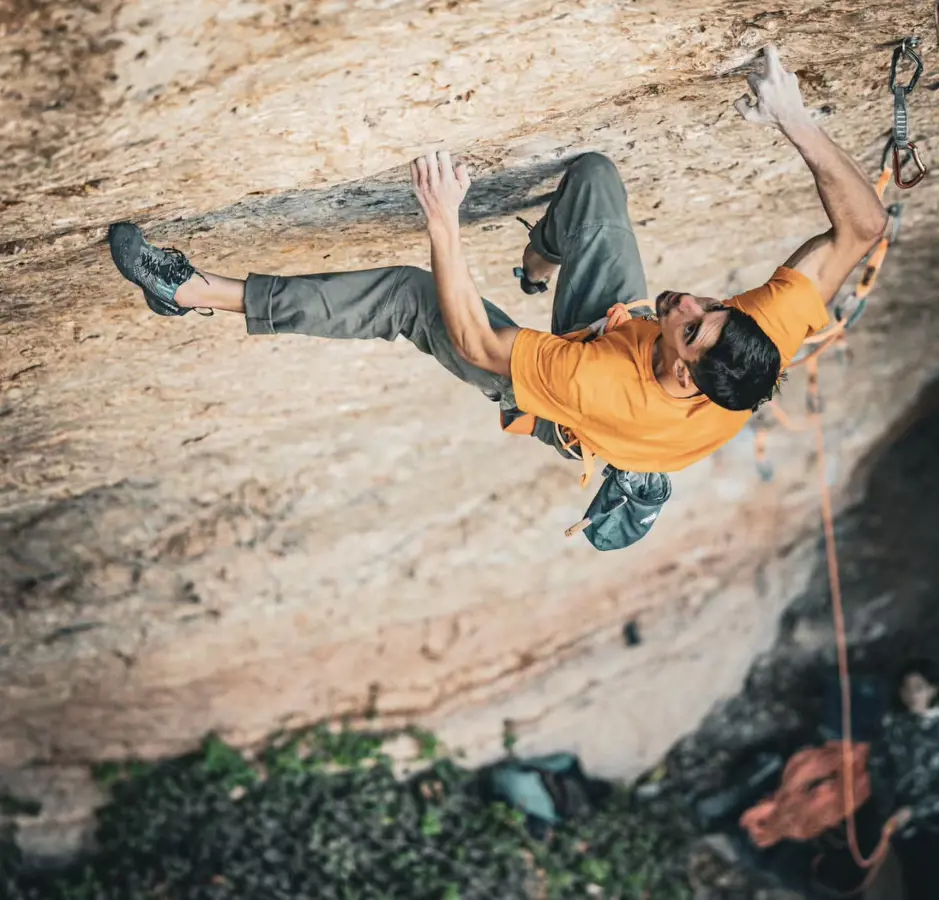
Jorge Diaz-Rullo reports on Instagram that he has made the first ascent of Cafe Colombia in Margalef. At 27, he’s already stacked four 9b+ sends and now he’s ad…
285
81
”I stopped focusing on competition bouldering after last year’s World Cup in Prague, partly because I can already feel it on my body, especially in my shoulders. The modern competition style, with a lot of jumping from one hold to another, is very demanding for the shoulders.
Outdoor bouldering is…
189
13Sean Bailey reports on Instagram that he has done the first ascent of Duality of Man (9c) in Dry Canyon. ” After four total years and three seasons of climbing,…
163
69 Most commented
Jorge Diaz-Rullo reports on Instagram that he has made the first ascent of Cafe Colombia in Margalef. At 27, he’s already stacked four 9b+ sends and now he’s ad…
285
81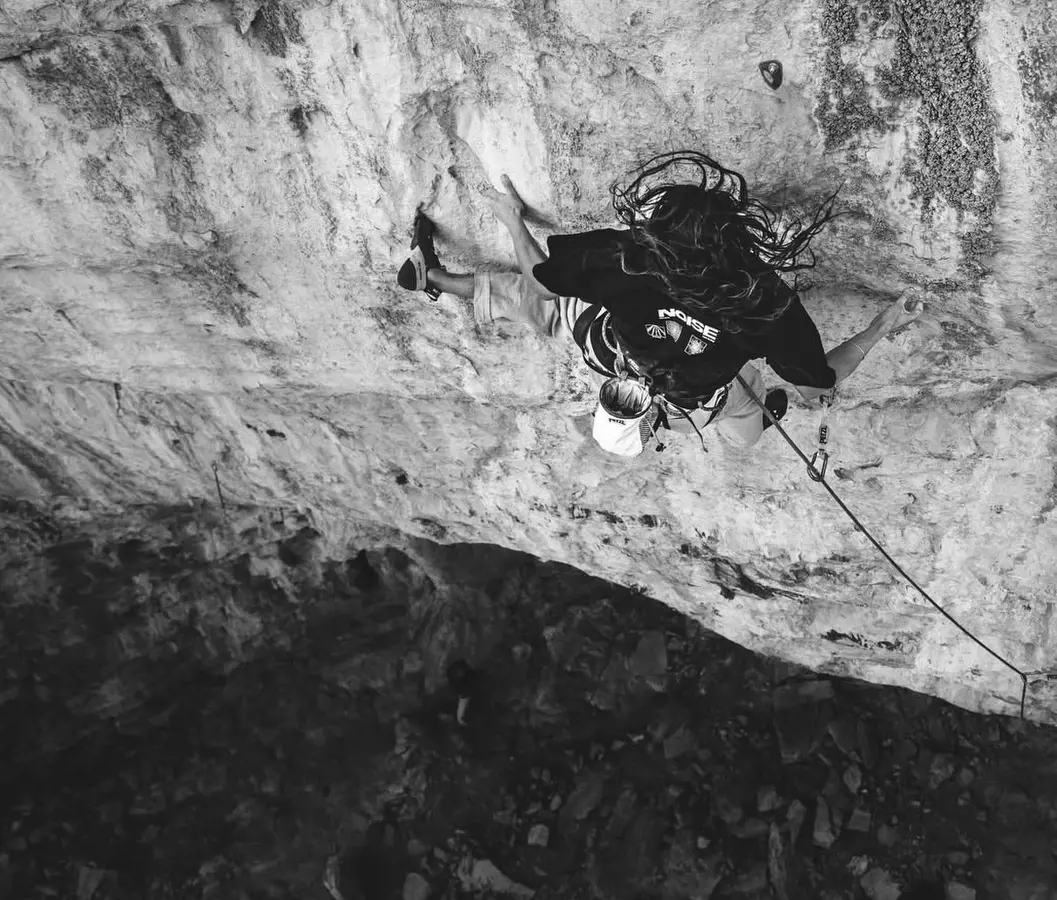
Sean Bailey reports on Instagram that he has done the first ascent of Duality of Man (9c) in Dry Canyon. ” After four total years and three seasons of climbing,…
163
69Jorge Diaz-Rullo elaborates on the reasons for him to suggest 9c for Café Colombia on Instagram, which he took down last week after projecting it for 240 sessio…
119
63