NEWS

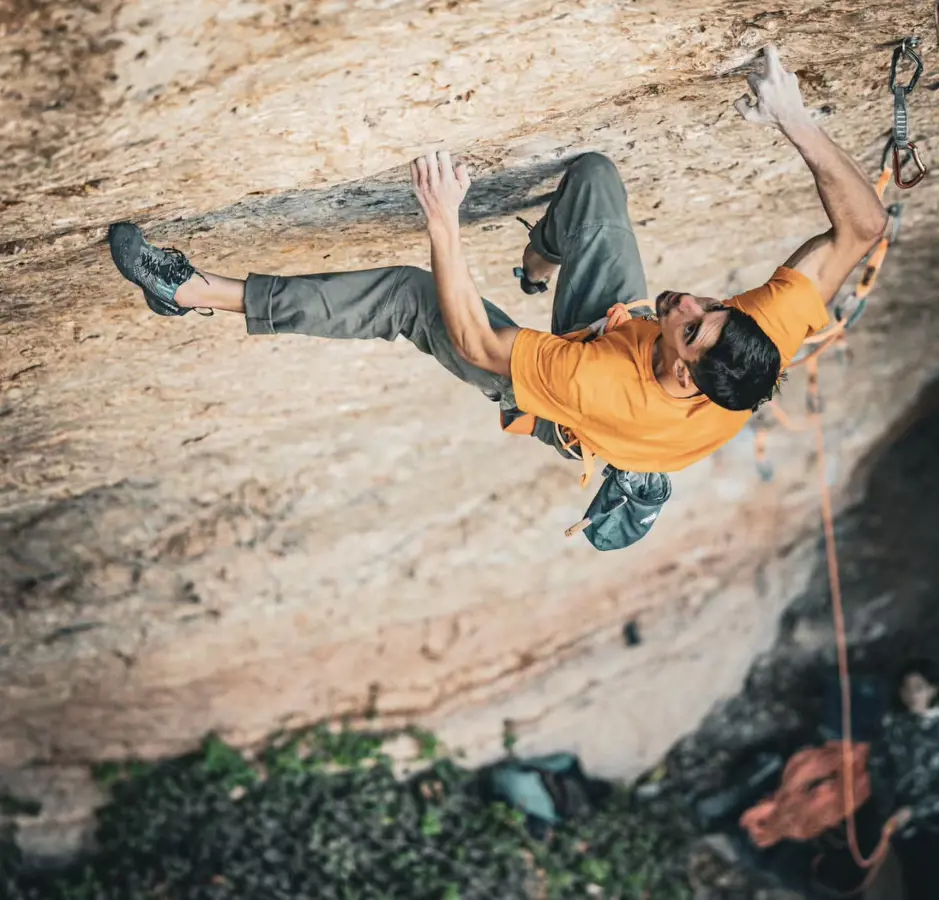
Lรญder negra 9a+ FA by Alex Garriga
Alex Garriga has done his fifth 9a+ in Cuenca the last year by the FA of Lรญder negra, which is a link-up in between Following the Leader 9a+ and La Setra Negra 8c+. In the 8a ranking game, the 22-year-old is #4.

So what is next?
Try to make the lines that are close to my home and train for when I can go outside Cuenca. Now I am working on the hard link, between Following the leader and Circo Iberco and other FAs. I am trying some hard boulders too and a traverse around 9a+ route.

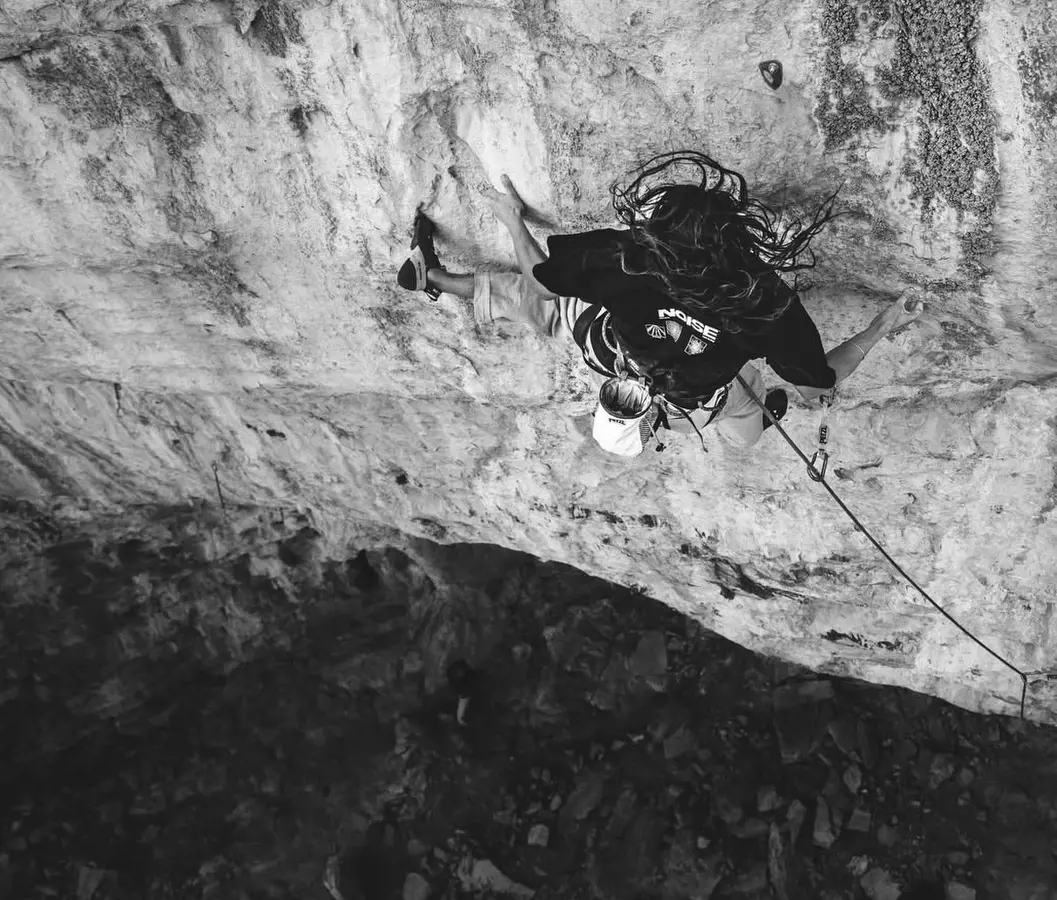
L'espiadimonis 8c by Lukas Sager (15)
Lukas Sager, who has been in Margalef for four months, out of which the last two months without his parents, has done his third 8c, L'espiadimonis, during the last five weeks. (c) Eduardo Ruano Lin

Could you please describe your normal weekly routine with schooling and climbing?
Wake up at ten, having breakfast, e-learning with the French system CNED. Climbing in the afternoon under great conditions. Projecting, onsighting or just spooling. Depending on how I feel, I go ice bathing and stretching. 2 times a week. The last few weeks have been great, I had a lot of fun without my parents.

It was easier to stay motivated to climb than to do some e-schooling. I really progress in English, as I met so many people from all over the world. I will do an exam in May, so yet I will crush some 8b+ school stuff. Working harder than ever.

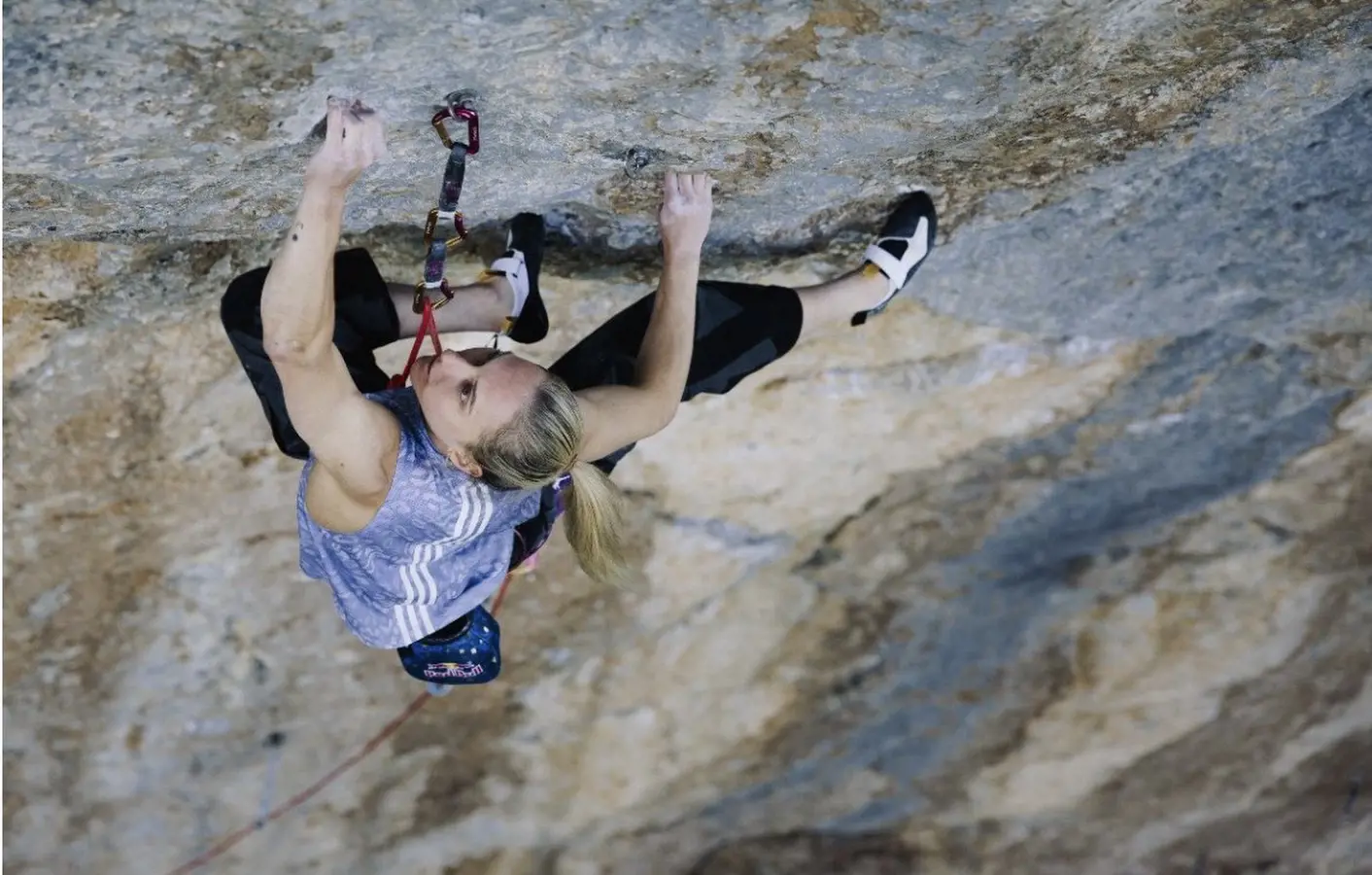
Kantenphysik 8c by Eva Hammelmรผller
Eva Hammelmรผller, who just onsighted her first 8a+ Reine Mรคnnersache, has done her eleventh 8c, Kantenphysik in Achleiten." A powerful and at the same time very technical route, as it requires precise heel hooks and also some tricky slab climbing. After trying it several times last year, I am very happy that it went down so fast this time!" (c) Tobias Lanzanasto

The 20-year-old, who is #3 in the female 8a ranking game, is also an active competition climber but missed Meiringen due to a knee injury. The Austrian has started to work on her first 9a, Kraftplatz put up my David Lama. "I am pretty excited that I could even make some good links. Canโ€™t wait to get back on it!" More info and pics on her Insta.

Janja Garnbret superior again
Janja Garnbret topped all four boulders in just seven tries in the final, after having topped her first nine boulders in the two first rounds in just ten attempts. Overall, this was the Slovenians eighth straight Boulder World Cup victory. Runner-up was Oriane Bertone (16) in her WC debut, looking like she had been on the circuit for many years. Natalia Grossman (19), who previously had #7 as her best result, got the bronze. Noteworthy is that Slovenia had six girls Top-15.

"I really enjoyed it. We haven't had any competitions [in 2021] so far so it's good to be back," Garnbret commented. "I was training hard last year and this year, so I'm feeling confident going into the season with the biggest goal being in August. Back to training!"

1. Janja Garnbret SLO 44 (c) Vladek Zumr
2. Oriane Bertone FRA 24 (8)
3. Natalia Grossman USA 24 (10) Complete results

Adam Ondra wins in style
Adam Ondra won first the qualification and later the semi but then he could not get the first zone in the final. Then it took him five attempts to get the zone on the second boulder and in few seconds he topped it. Topping out the last two, showing a great technical repertoire, he secured another great victory and also creating a great show, saving the route setter from yet a round with too hard boulders. However, all 18 boulders in the three rounds were topped. It should also be mentioned that Japan had four Top-6.

Ondra comments; "I prepared a lot for this competition. In fact, last year and this spring, I was trying to eliminate all my weaknesses in bouldering.

Even though the spectators were not allowed to be here, the competitors and couches themselves created an atmosphere that is definitely worthy of the World Cup. The feeling when I topped the last boulder and the hall basically โ€œthunderedโ€ was absolutely amazing and I will definitely remember this moment for a long time."


1. Adam Ondra 33 CZE (c) Petr Chodura
2. Yushiyuki Ogata 24 JPN
3. Tomoaki Takata 14 JPN
Complete results

It was great to see the first Bouldering World Cup in 20 months but the problems for the qualifications remain the same. As there were 101 participants, these were divided into two groups, meaning that the ten boulders had to go almost straight up. There was no room for parkour running or big sideway dynos etc. For some reason, it seemed to be very few coordination moves also, meaning that it was quite an old school route setting with modern holds.

If IFSC would limit the number of participants or reduce the maximum time to four minutes, like in the European Cup last weekend, just one group would be needed. Reino Horak, head coach of the Norweigan team, has suggested several options to IFSC based on a max quota of two per country plus the ones who have ranking points etc. From one perspective it seems disadvantageous for the World Cup to allow four participants from one country where are all among the last in the results. The competition, including the route setters, would benefit if just 80 would compete in the qualification. One option is of course that more climbers could participate, but then there should be one more round where the best are allowed to compete in the qualification.

Another problem with two starting groups is that they can be quite uneven and also that the route setting can differ as it did for the females in Meiringen.

Furthermore, it is impossible to know how close Jakob Schubert and others were to get into the Top-20 semi. Did he touch any of the three top holds of the problems he did not make? If the scoring were based on points and there could be two zones or possibly three, with the last being awarded based on touching the top, more drama would have been created.

Five flashes/onsights by Janja Garnbret
Janja Garnbret, (c) Vladek Zumr, did all five boulders first try in Meiringen and Slovenia got another five girls to the semi. Also Akiyo Noguchi, Natalia Grossman, Oriane Bertone and Brooke Raboutou topped all five boulders. The biggest disappointment was that Petra Klinger and Kyra Kondie were tied #21 and did not make it to the semi. Other Olympians not making it to the semi were Viktoria Meshkova #23 and Laura Rogora #29. Another negative surprise was Fanny Gibert, finishing #35 among the 70 participants. It should also be mentioned that the results were quite different in the two groups as tied #41 had just 4 zones in one group and 3 tops and 5 zones in the other. Complete results.

Ondra, Japan and Slovenia dominate in Meiringen
Although the Olympians Tomoa Narasaki and Kai Harada did not participate in Meiringen, Japan had its entire team of seven finishing in the Top 25. Slovenia did, as Japan, get four into the semi. Adam Ondra won one group with four tops and two tops and five zones got you in the Top-20 semifinal.

The biggest negative surprise was that Jakob Schubert and Jan Hojer were tied at #23. A total of 101 participated, out of which just half made at least one top. The semi starts tomorrow at 10.00 Euro time. Vladek Zumr - (c) Complete results

Although Adam Ondra won his qualification group in Meiringen and three other of the Olympians made it to the Top-20 semi, it seems many of the guys going to Tokyo have taken a toll on all their Speed training. Jakob Schubert, who was #7 last week in a Euro Cup, was #23, Jan Hojer #27, Michael Piccolruaz #27, Collin Duffy #31, Mickel Mawem #35, Alberto Gines Lopez #73 and Rishat Khaibullin #77. Nine did not participate including Tomoa Narasaki and Kai Harada from Japan.

Roberto Lopez reports that due to the effects of Natura 2000, climbing around Alicante is at risk. Please, fill in this form to show the positive economical impact climbing has in the area.

"The future entry into force of the new regulations that will regulate the Natura 2000 Network in the province of Alicante puts at risk the future of practically all the climbing crags in this province, since in its draft decree it explicitly says that the activities Climbing and canyoning are not compatible with the protection of the environment in the natural areas of this network, which cover almost the entire natural territory of the province.

The local climbing community has already mobilized, giving visibility to this problem, especially through social networks, and working together with the Federation of Mountain Sports and Climbing of the Valencian Community. One of the initiatives launched has been the creation of forms aimed at foreign climbers in order to collect real data on the economic and tourist impact that the climb has in the province of Alicante and to be able to present them to the authorities as an argument for them to rectify the future decree and includes climbing as an outdoor sports activity compatible with the protection and regulation of the natural spaces of the Natura 2000 Network of Alicante.

Therefore, for us it is very important to spread the word about this problem as much as possible and your 8a.nu page is the perfect portal to reach the maximum number of climbers. It would be great if the news and the link to the form appeared on it. Here are the links to the news published by facebook and to the form for climbers from outside of Costa Blanca. Congratulations for 8a.nu and thank you very much for the help you can give us."